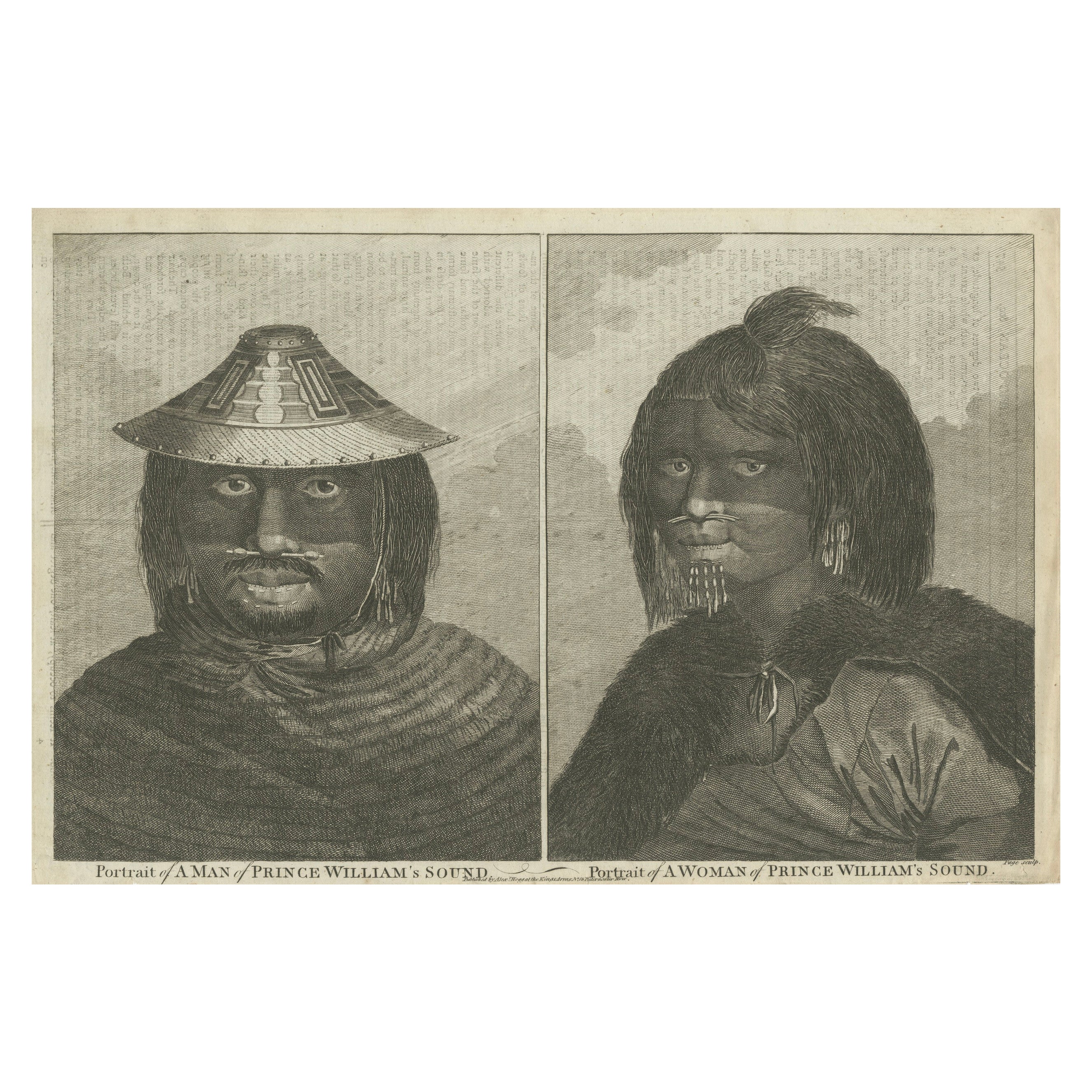
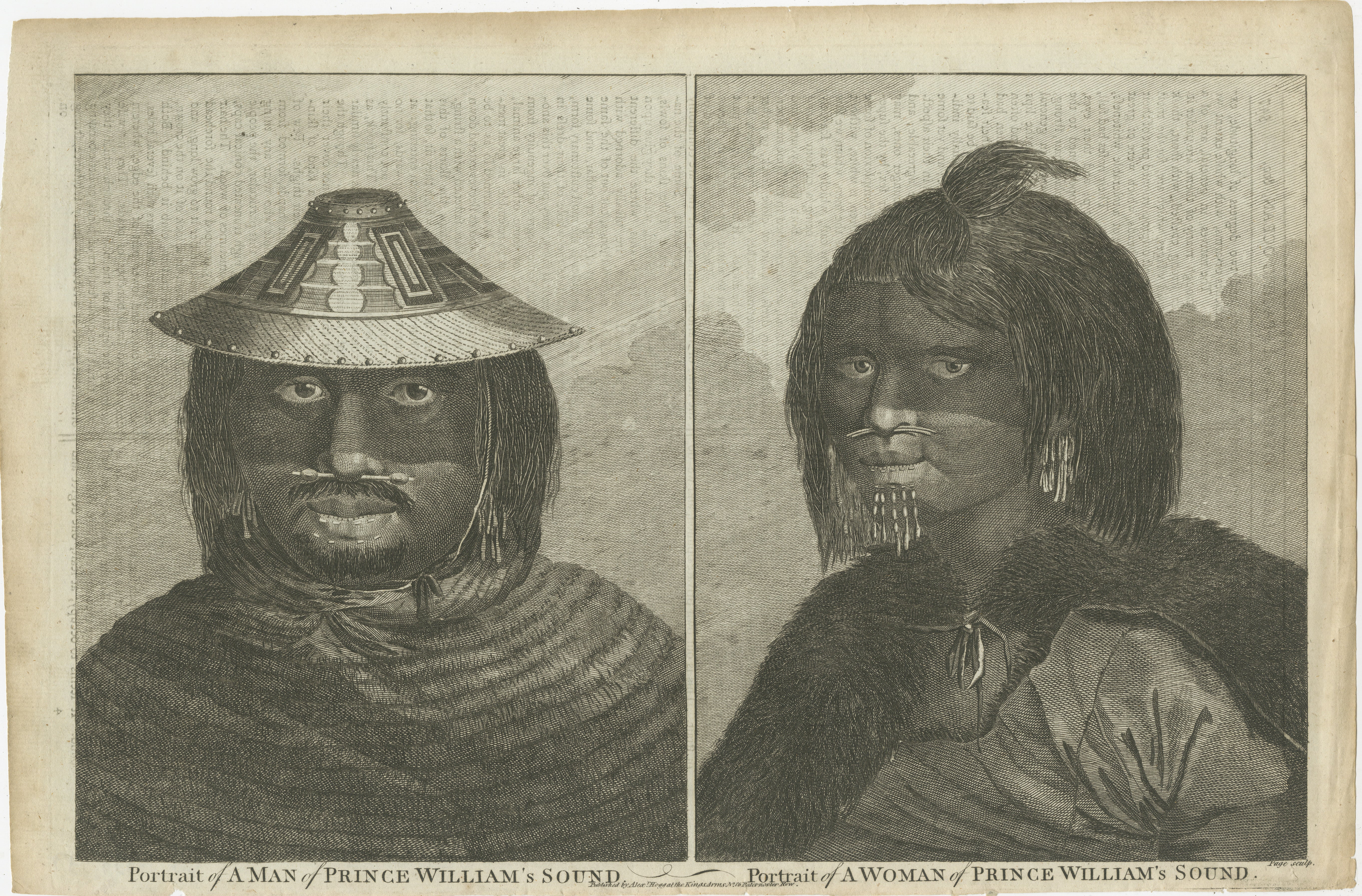
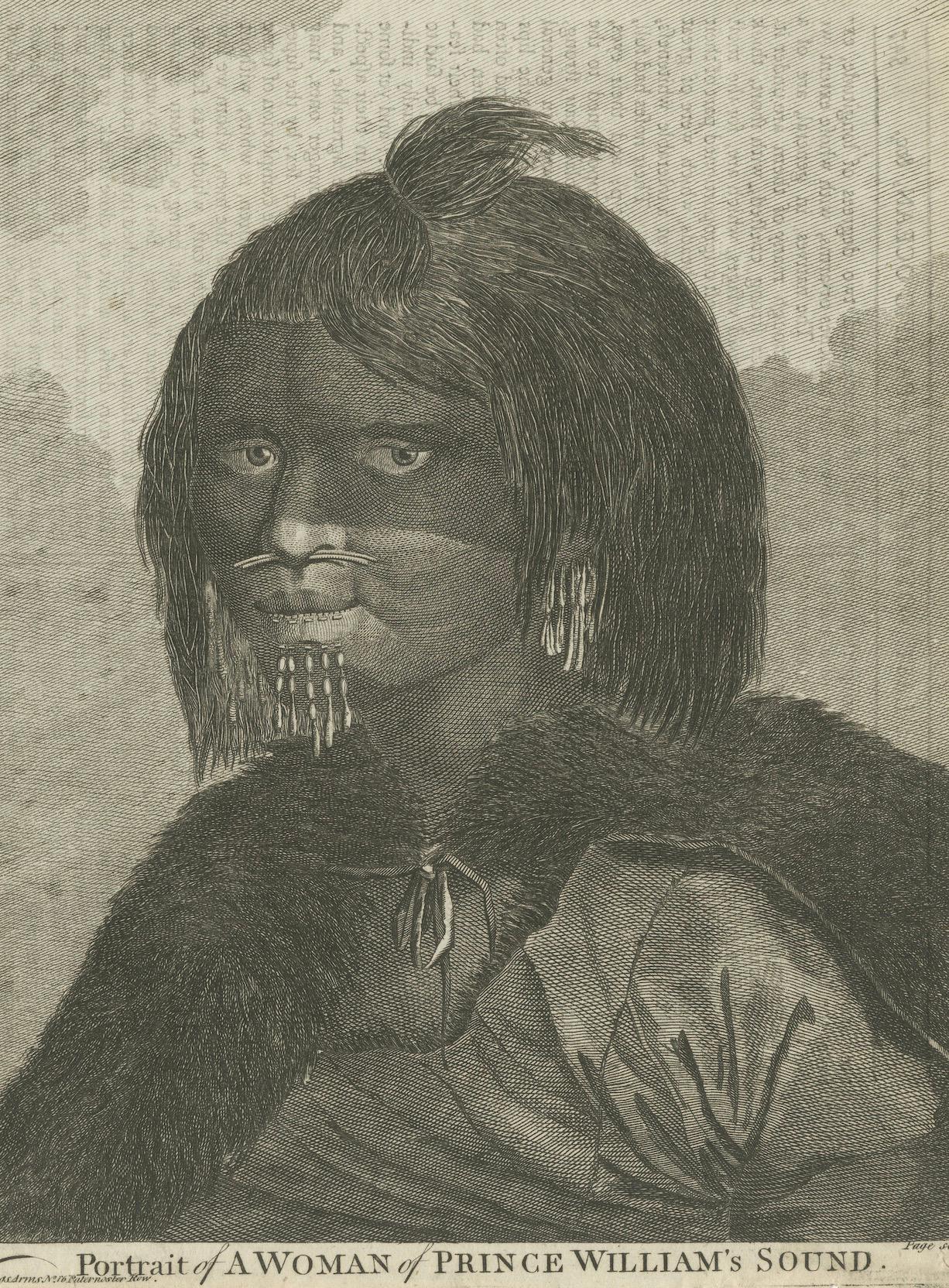
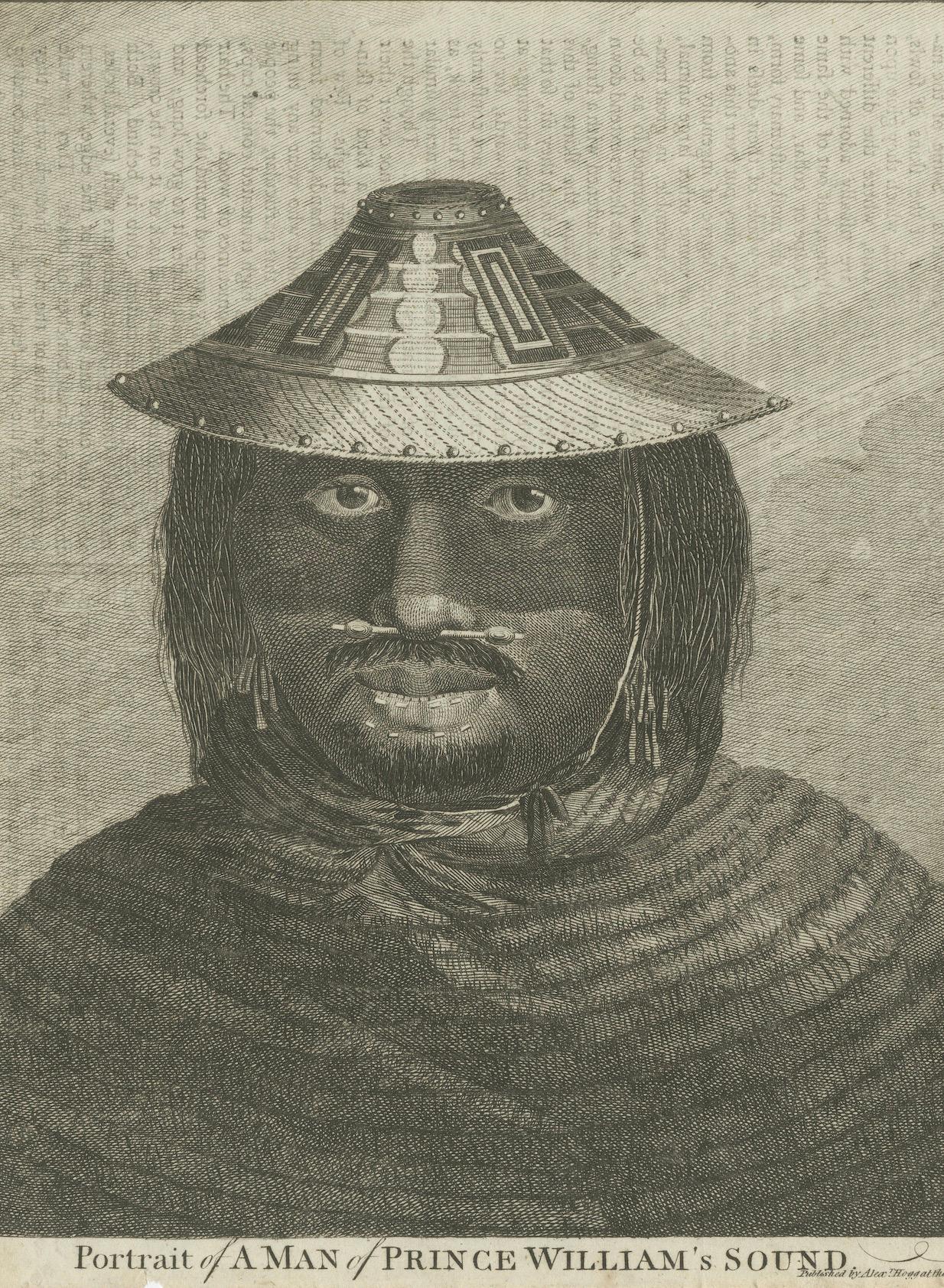
Portraits of Indigenous Alaskans from Prince William Sound, Published in ca.1785
€ 170
One of a kind: this is the sheet in the photographs. Ships from Langweer, the Netherlands.
Date
1785
Sheet size
24.5 × 38 cm (9.6 × 15.0 in)
Condition
Fair
Reference
BG-13597-97
Condition
Fari condition, Aged paper with strong offset from a text leave. Some soiling and foxing, mainly along the edges that cut short at the lower border. Study the images carefully.
About this sheet
The print is from one of Captain Cook's voyages and likely from one of the three major voyages he undertook between 1768 and 1779. The engravings from these voyages were made by artists who accompanied Cook, such as John Webber on the third voyage, or were made based on sketches done by Cook and his crew.
The published works detailing Cook's voyages include "A Voyage Towards the South Pole and Round the World" from his second voyage (1772-1775) and "A Voyage to the Pacific Ocean" for his third voyage (1776-1780). These were published shortly after the voyages in the late 18th century.
Given the detail and the region specified (Prince William's Sound), the image is most likely associated with Cook's third voyage, during which he explored the Pacific Northwest and the Arctic.
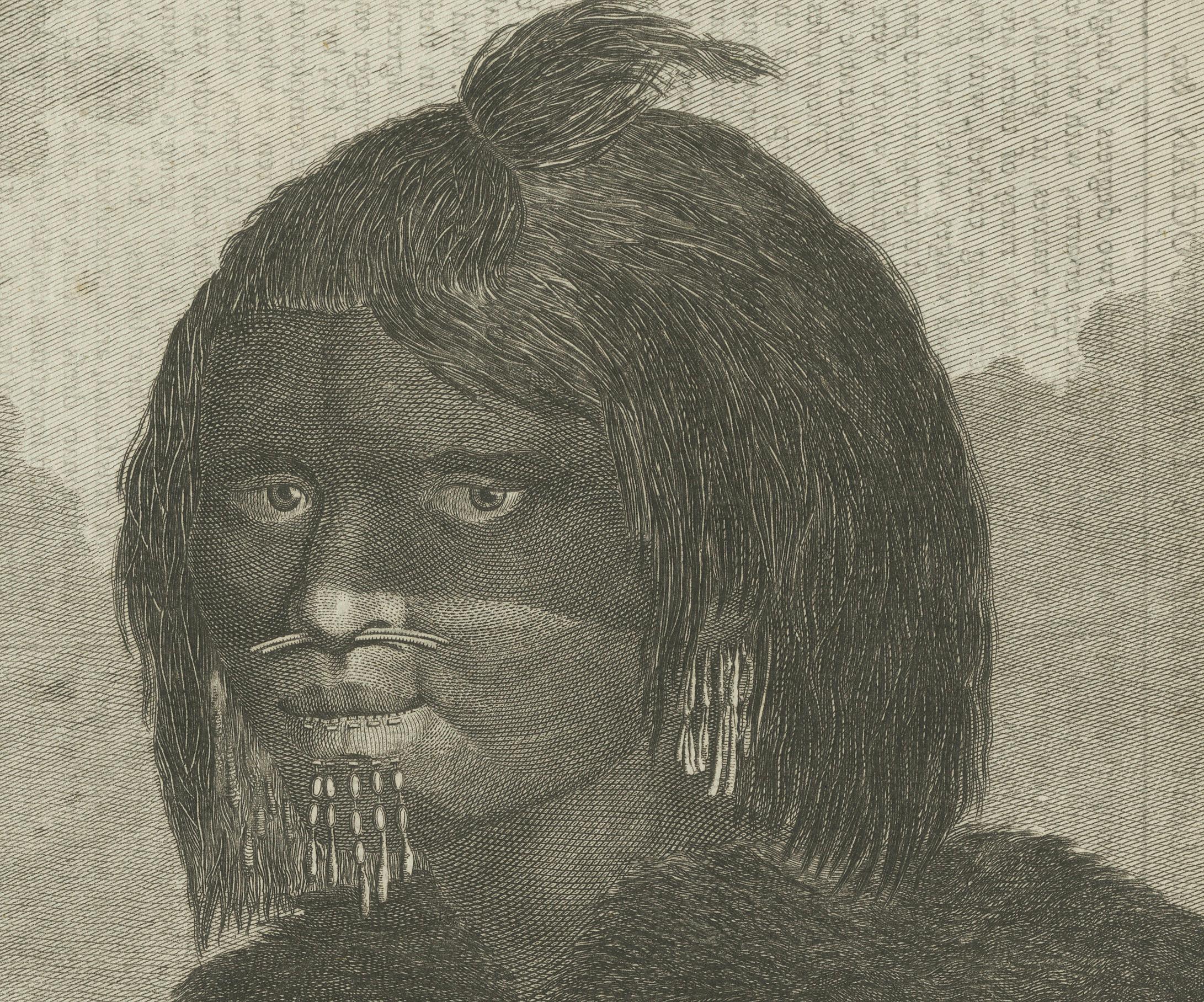
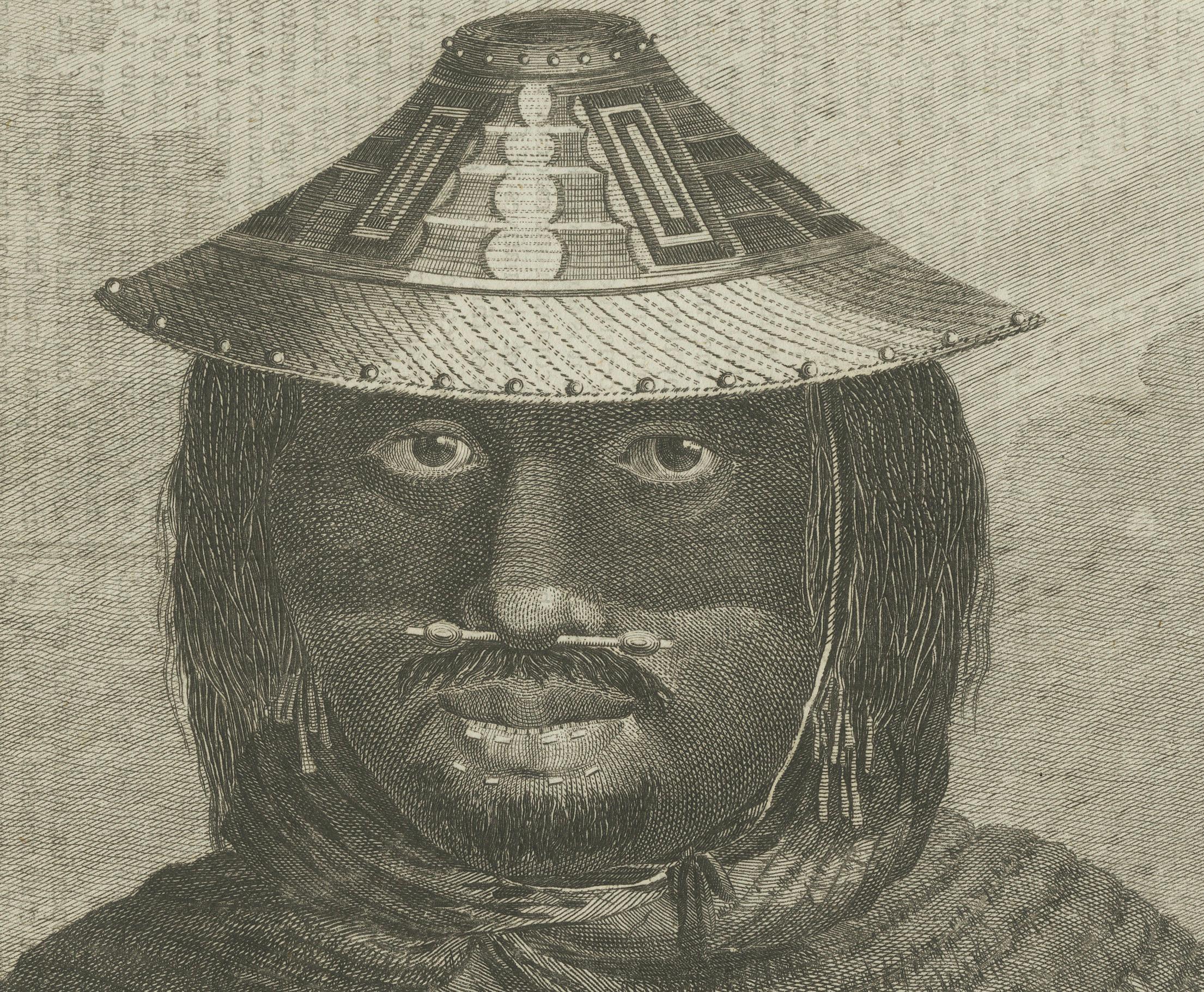
The image depicts two individuals from Prince William's Sound, an area located on the southern coast of Alaska. Here are some details we can infer:
**The Man:** - He is wearing a traditional hat, which appears to be a woven conical hat that could serve as protection against the elements. - His facial features are distinct, and he has facial hair below the lower lip and on the chin, a style that might have been common among men in that region during the time. - The clothing looks sturdy and layered, suggesting a need for insulation against cold weather. - His gaze is direct, and the artist has paid particular attention to the eyes and facial expression.
**The Woman:** - She has what appears to be labret piercings, which are piercings that extend from the mouth. Such adornments were common among indigenous peoples of the Pacific Northwest coast. - Her hair is styled in a way that is likely significant to her culture, possibly indicative of her status or role within the community. - Like the man, she is also wearing sturdy clothing, and she has earrings, which along with her labret piercings, reflect the cultural practices of her people. - The expression captured by the artist is also quite direct and offers a sense of the woman’s personality or disposition.
**General Observations:** - Both individuals are depicted with a great level of detail, suggesting that the artist took care to represent their features and attire accurately. - The style of the engraving is consistent with the period of the late 18th century, and it was common for such images to be accompanied by detailed descriptions of the individuals' cultural practices.
The portrayal of these individuals would have been intended to educate European audiences about the diverse peoples encountered during exploratory voyages. It is important to note that while these images aimed for accuracy, they were also a product of their time, often influenced by the explorers' and artists' perceptions and the broader colonial context.