About this sheet
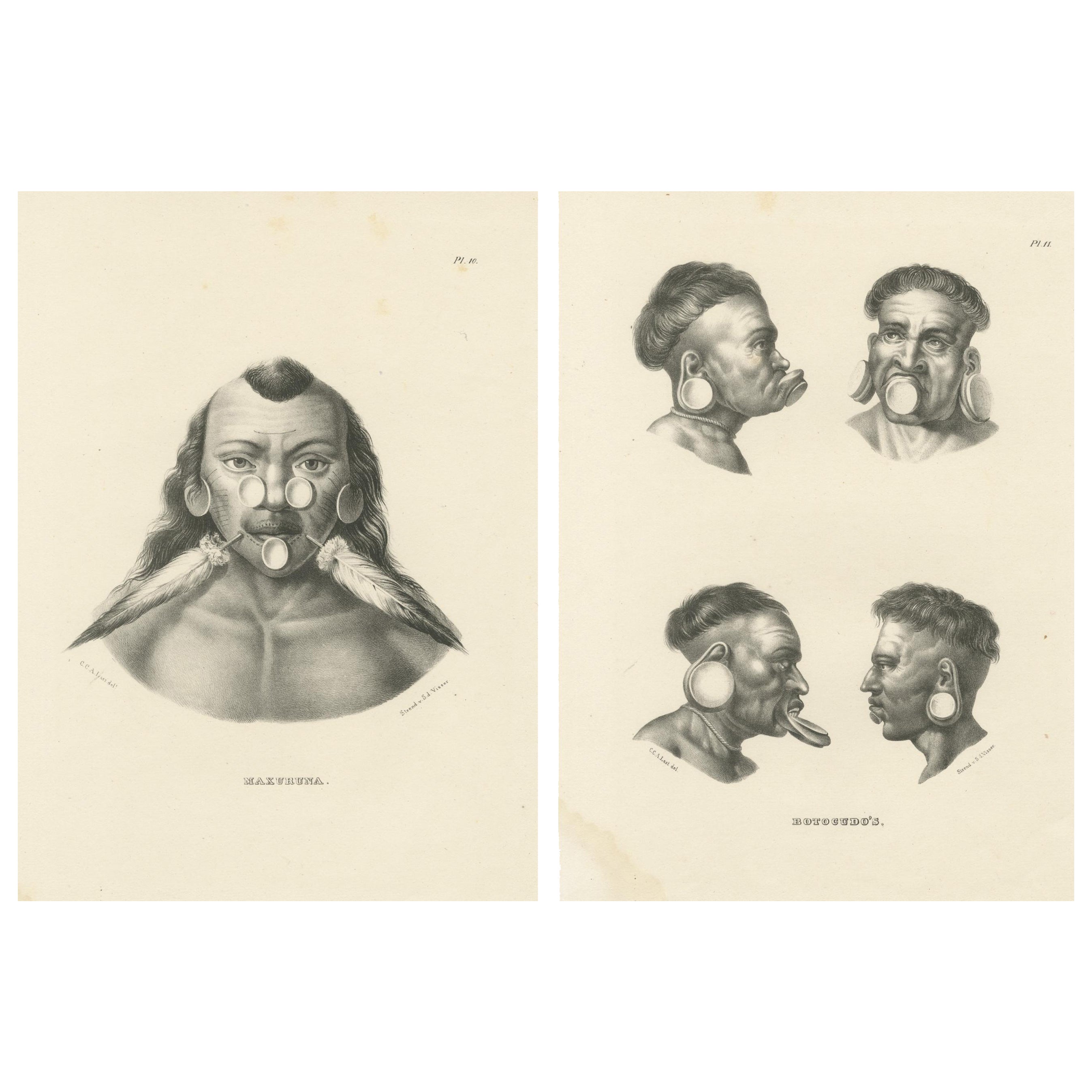
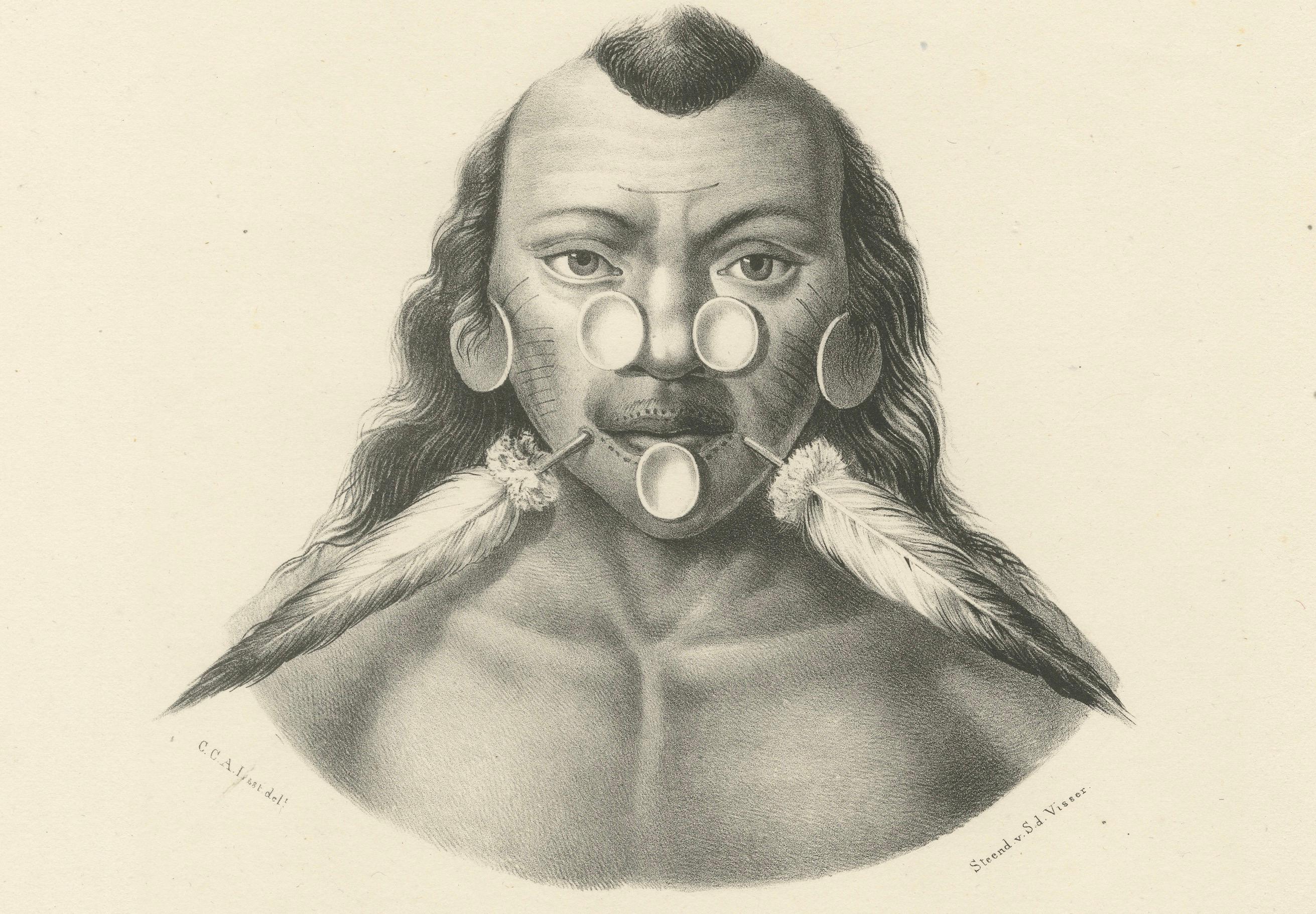
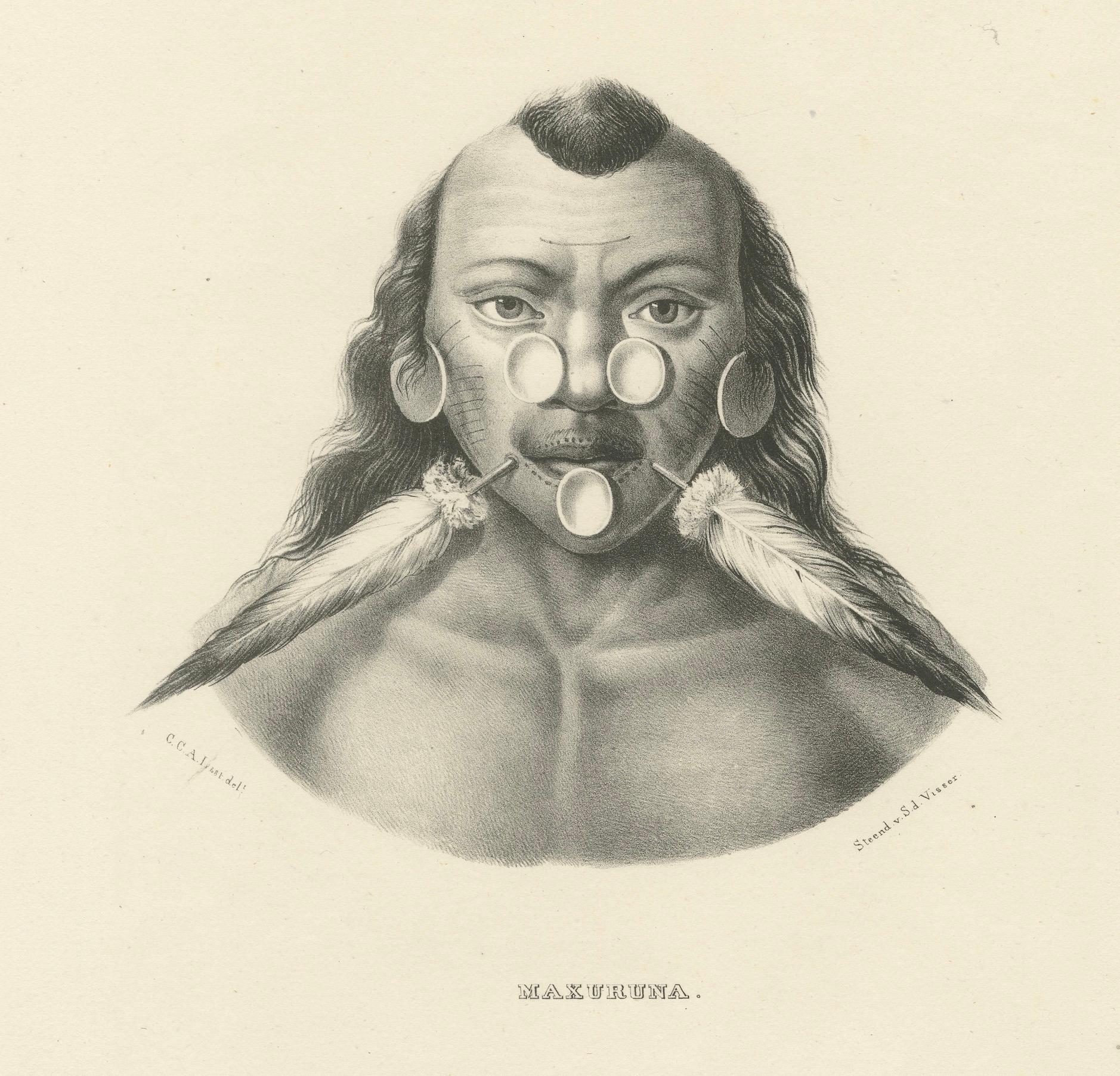
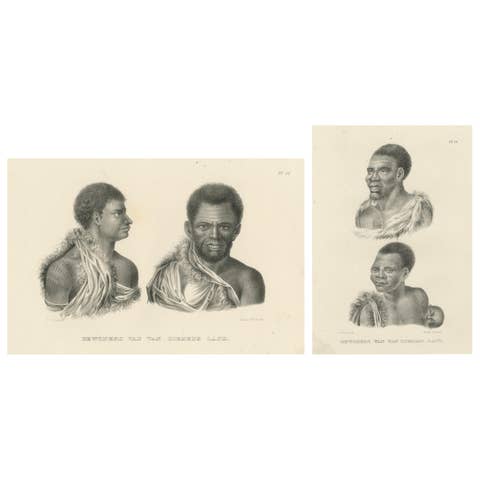
Antique lithographs of Maxuruna and Botocudo tribes, Brodtmann 1827
These original lithographs, produced in 1827 by Karl Joseph Brodtmann, present rare and historically significant depictions of indigenous peoples of South America. Brodtmann (1787–1862), the Swiss lithographer celebrated for his natural history and ethnographic series, created these plates as part of his monumental folios illustrating the physiognomy, attire, and cultural practices of peoples across the world.
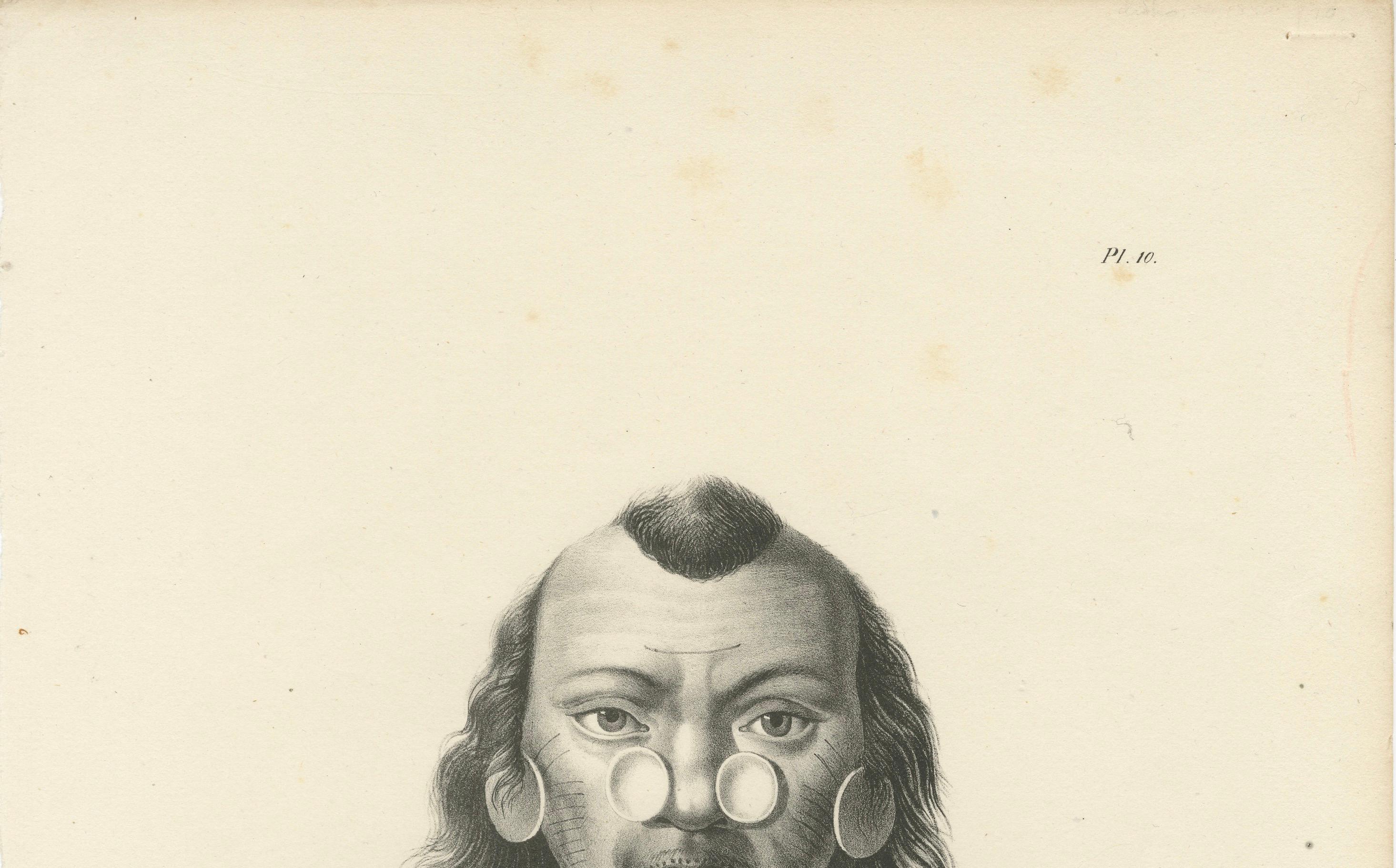
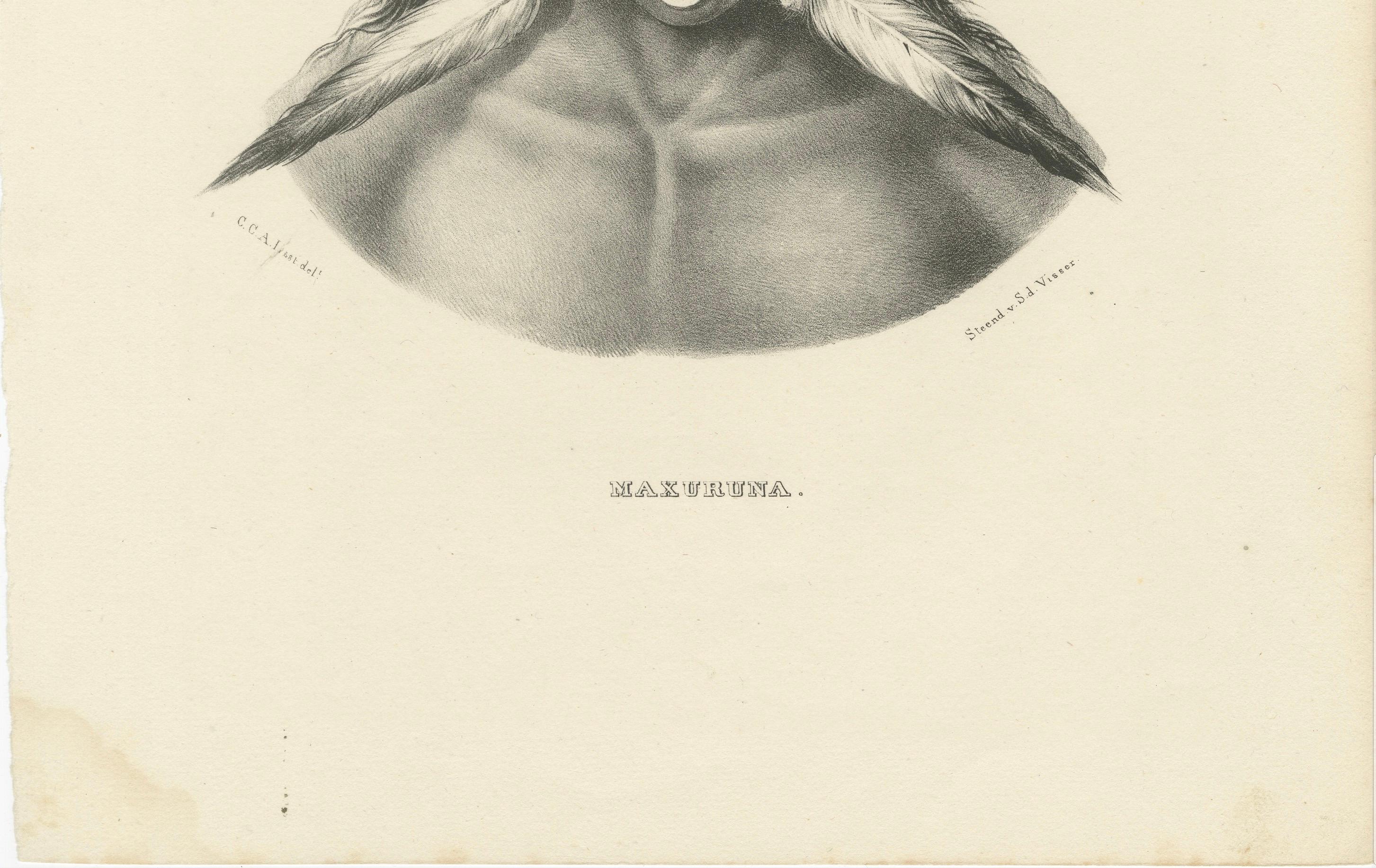
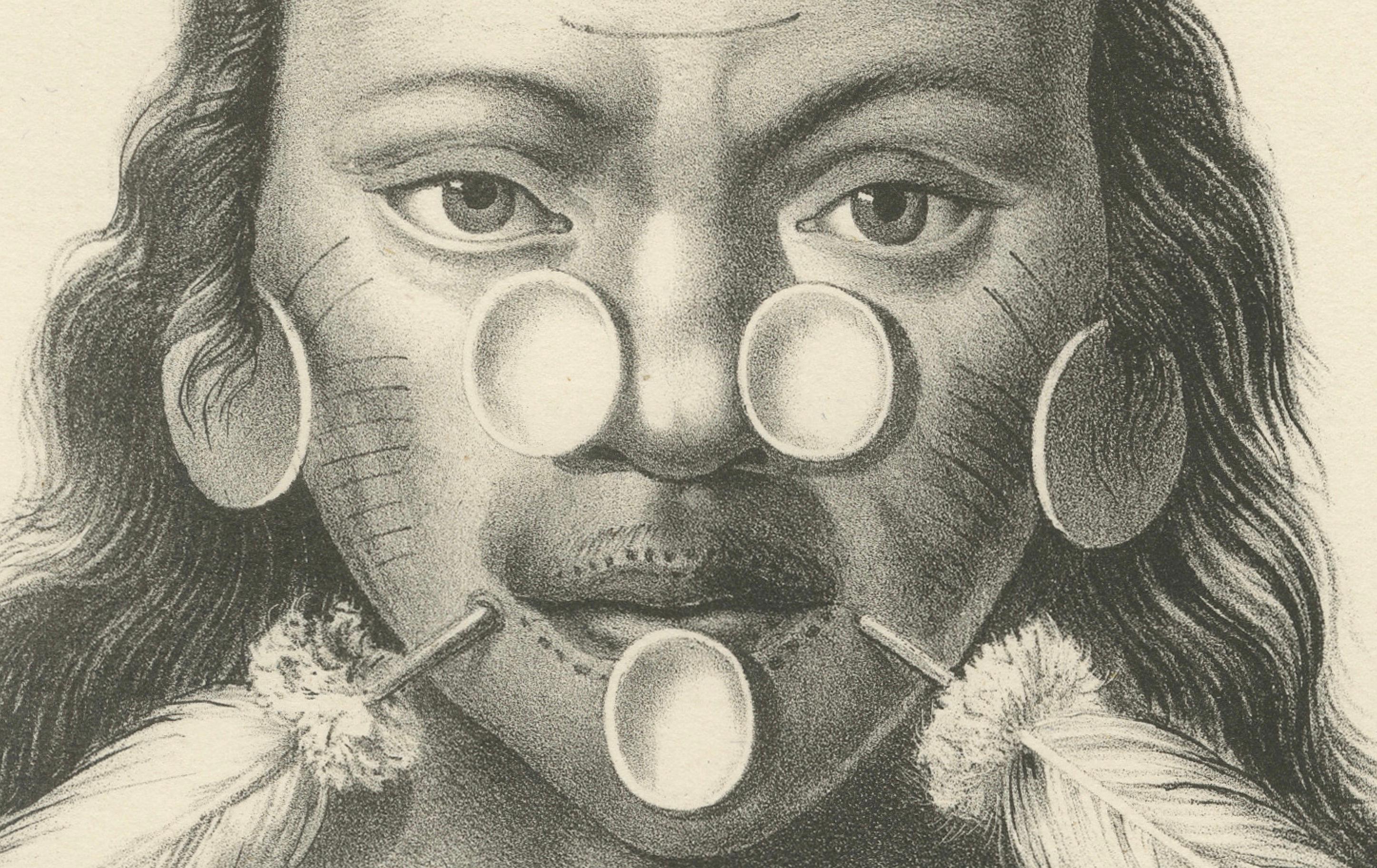
The first plate shows a member of the Maxuruna (Mayoruna) people, a group indigenous to the Amazon region, distinguished here by elaborate feather adornments and striking facial ornaments. The lithograph captures both the solemnity and individuality of the sitter, rendered with Brodtmann’s characteristic precision.
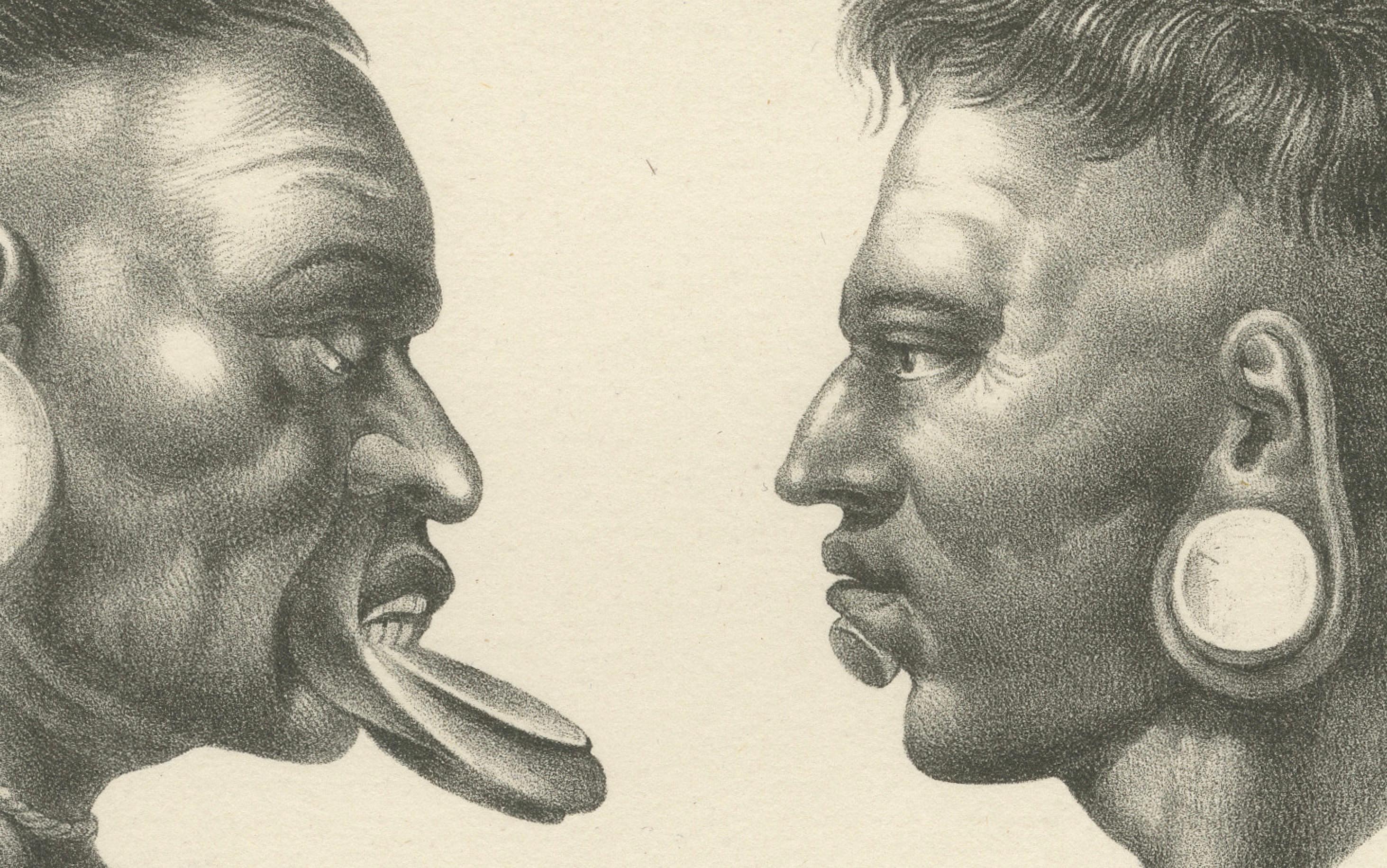
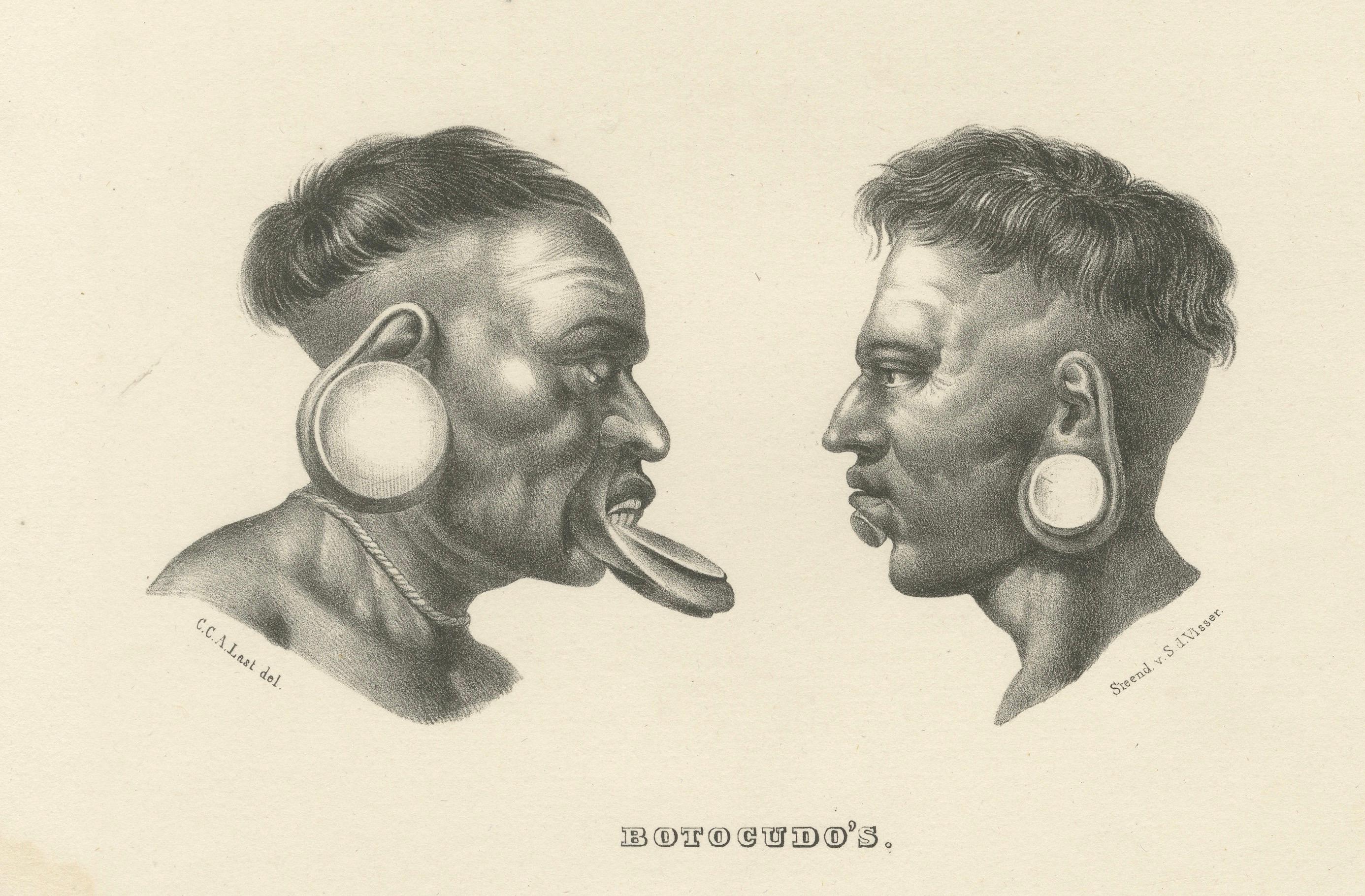
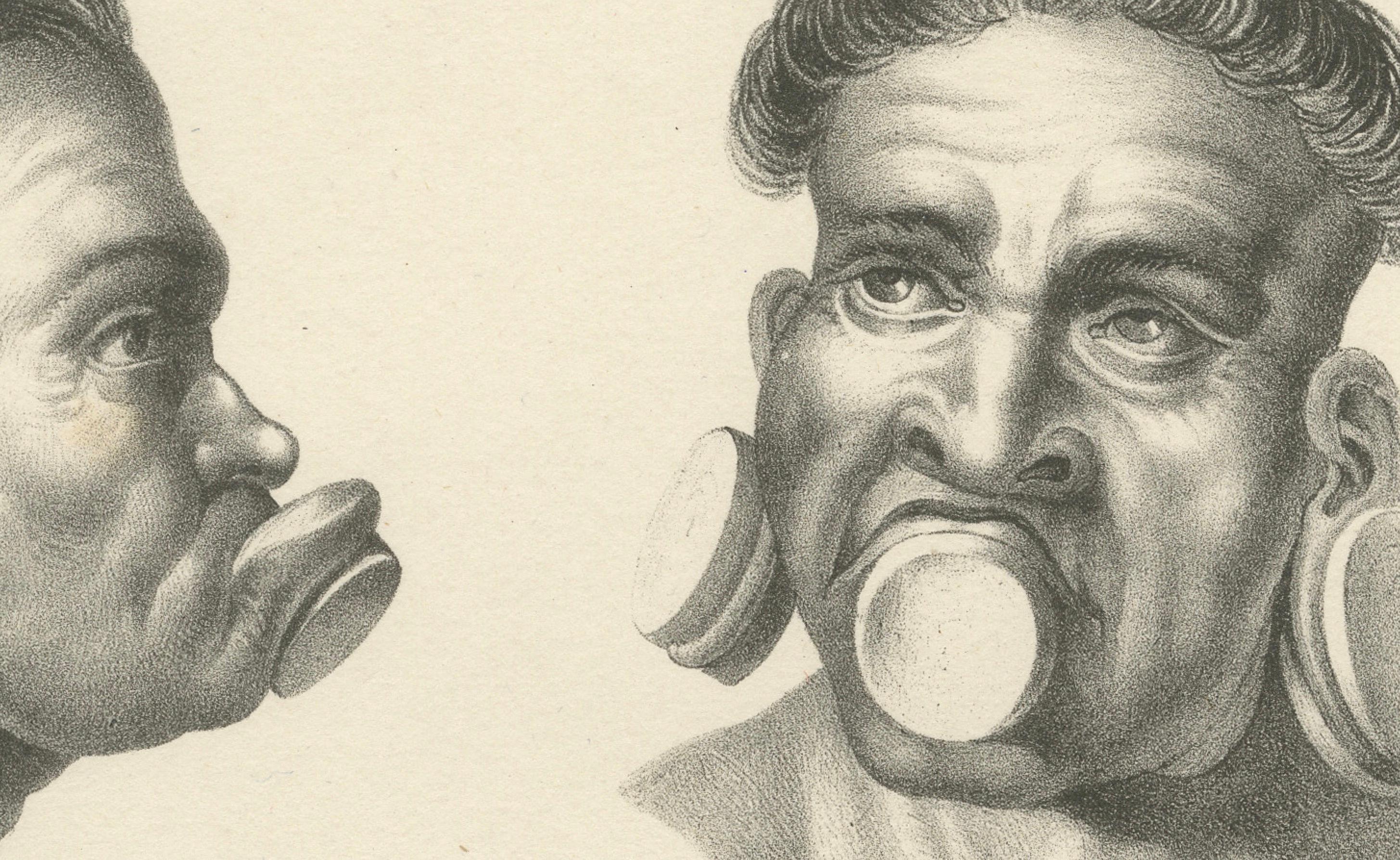
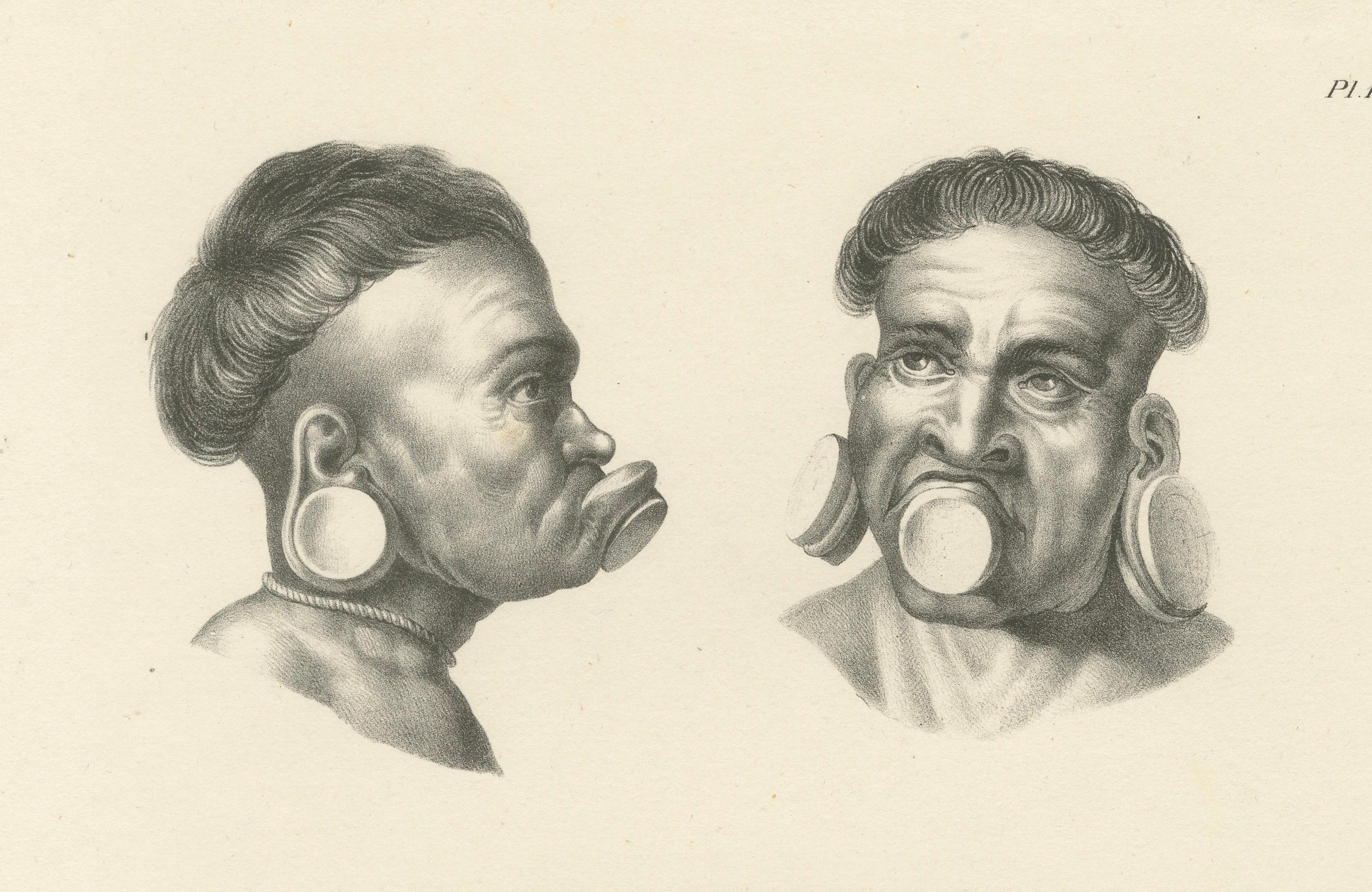
The second plate depicts the Botocudo (Aimoré) people of Brazil, a group known in the 19th century for their distinctive body adornments. Brodtmann presents multiple views of individuals, emphasizing their large wooden lip and ear plugs, which were of great ethnographic interest to European audiences at the time. By showing different profiles, he allows a comparative anthropological study that was central to the goals of such illustrated ethnographies.
Brodtmann’s work combines scientific observation with refined artistry. His lithographs are marked by fine shading, clarity of line, and careful composition, printed on thick, high-quality paper that has preserved the strength of impression over nearly two centuries. They form part of the larger body of 19th-century ethnographic imagery that both documented and shaped European understanding of world cultures.
Collectors of early ethnographic illustration, South American history, or rare natural history folios will appreciate the importance of these works. They stand as artifacts of cultural history, bridging scientific curiosity and artistic achievement.
Condition report: Both plates are in very good condition with clean impressions. Light age toning and scattered foxing in the margins, as well as faint waterstaining at the lower edge, not affecting the central image. Paper remains strong and well-preserved.
Framing tips: These lithographs would be best displayed in understated black or dark brown frames with wide cream or ivory mats. The neutral tones of the mount will highlight the delicate shading of the lithography, while darker frames provide an elegant contrast. As a pair, they make a striking ethnographic display.
Technique: Lithograph
Maker: Karl Joseph Brodtmann, Switzerland, 1827