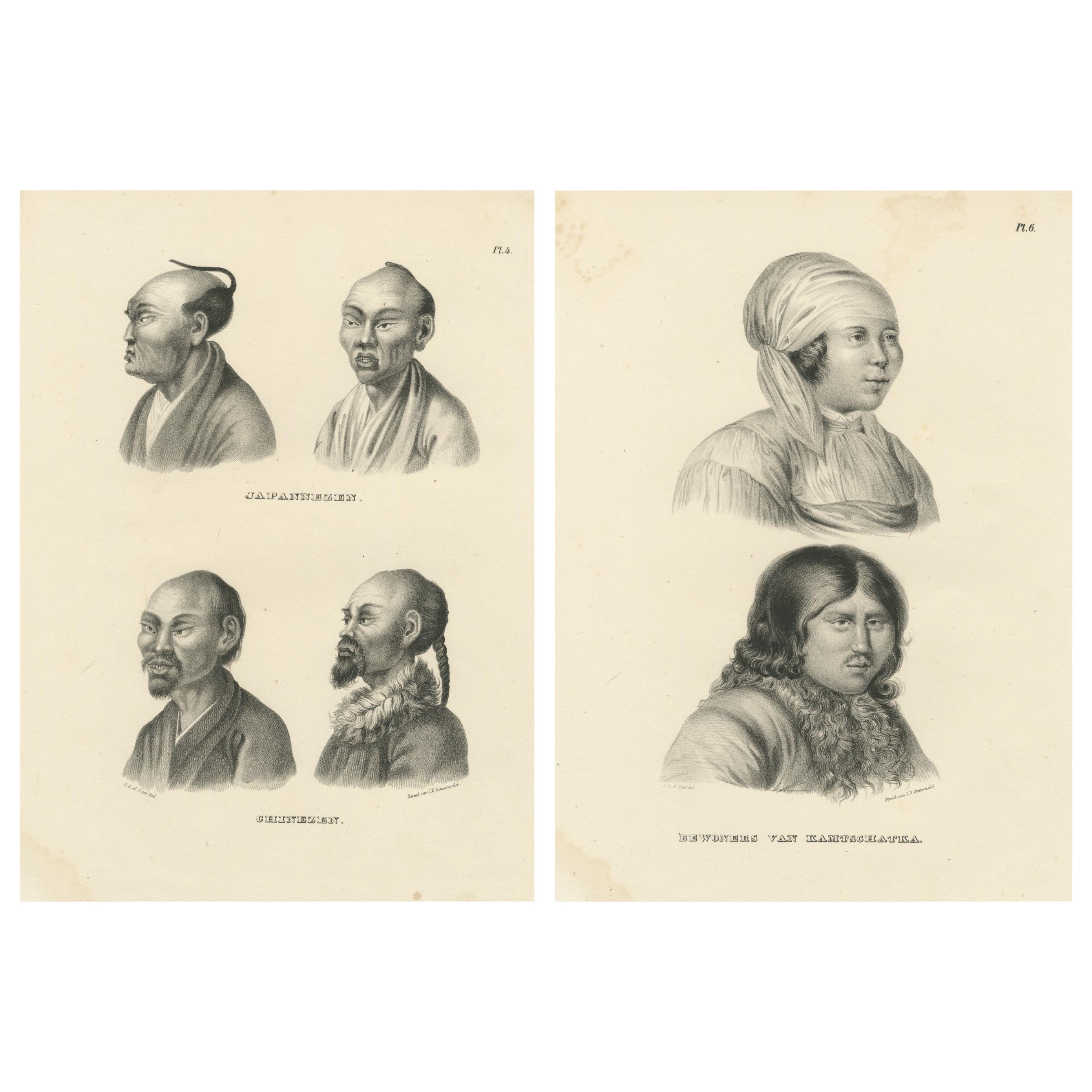
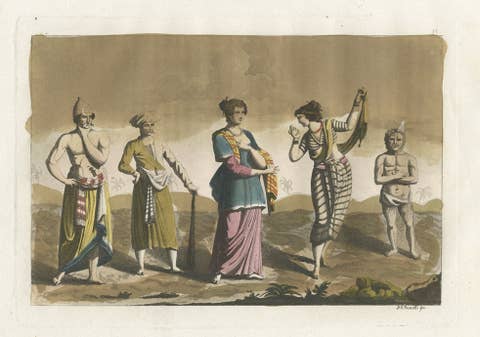
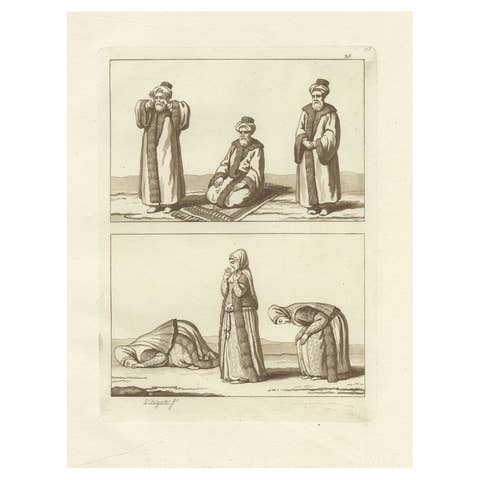
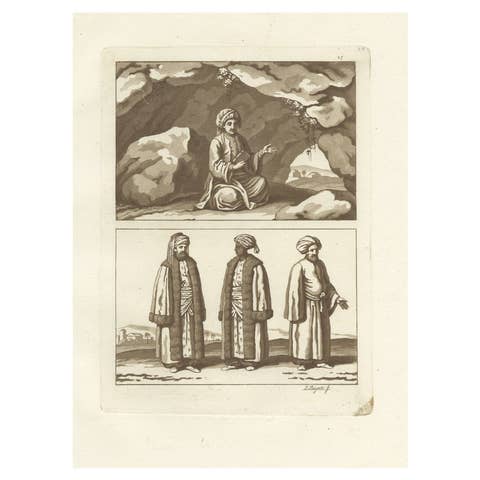
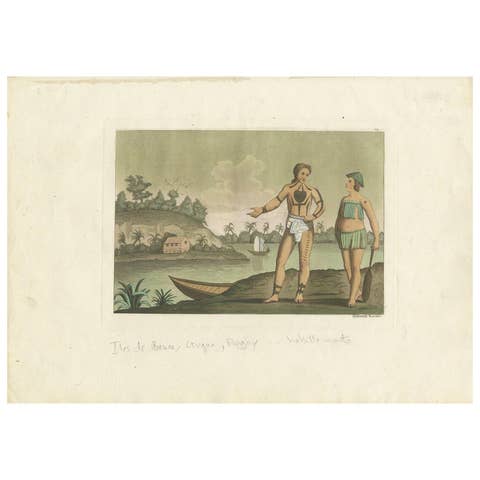
Antique lithographs of Japanese, Chinese, and Kamchatkan peoples, Brodtmann 1827
€ 540
One of a kind: this is the sheet in the photographs. Ships from Langweer, the Netherlands.
Date
1827
Sheet size
26 × 34 cm (10.2 × 13.4 in)
Condition
Good
Reference
BG-13806-106, -107
Condition
Both prints are well preserved, with strong impressions and only minor signs of age. Light foxing and faint waterstaining are visible in the margins, particularly at the lower edge, but the images themselves remain clean and vivid. Paper is strong.
About this sheet
Antique lithographs of Japanese, Chinese, and Kamchatkan peoples, Brodtmann 1827 These original lithographs, published in 1827 by the Swiss natural history artist Karl Joseph Brodtmann, offer fascinating early 19th-century portraits of East Asian and Siberian peoples. Brodtmann (1787–1862) was one of the most skilled and prolific lithographers of his time, producing finely rendered studies of zoological, botanical, and ethnographic subjects. His works combine scientific precision with artistic elegance, making them highly sought-after by collectors today.
The first plate presents portraits of Japanese and Chinese men, titled “Japanners” and “Chinezen.” Each figure is shown in detailed profile and frontal views, with carefully observed facial expressions, hairstyles, and garments. Such images were among the earliest attempts to document Asian physiognomy for a European audience, when direct encounters with Japan and China were still rare.
The second plate depicts “Bewoners van Kamtschatka” (inhabitants of Kamchatka), the remote peninsula in far eastern Russia. Here, Brodtmann portrays a man and a woman in traditional dress, their features and attire reflecting the unique cultural identity of this distant Siberian region. These depictions are not only striking works of art but also serve as important ethnographic records from a period when European knowledge of these peoples was limited and shaped by exploration narratives.
Printed on thick, high-quality paper, these lithographs demonstrate Brodtmann’s mastery of shading and texture. The delicate gradations of tone and the clarity of linework give the portraits a lifelike quality, while the compositions remain elegant and balanced. Together, they highlight the early 19th-century fascination with cataloguing the peoples of the world through art and science.
Condition report: Both prints are well preserved, with strong impressions and only minor signs of age. Light foxing and faint waterstaining are visible in the margins, particularly at the lower edge, but the images themselves remain clean and vivid. Paper is strong and stable.
Framing tips: These lithographs will look particularly refined in dark wood or ebonized frames with wide ivory or cream mats. The neutral mount will accentuate the fine grey tones of the lithography, while the darker frame adds contrast and gravitas. Displayed as a pair, they create a compelling visual narrative of early ethnographic art.
Technique: Lithograph Maker: Karl Joseph Brodtmann, Switzerland, 1827