About this sheet
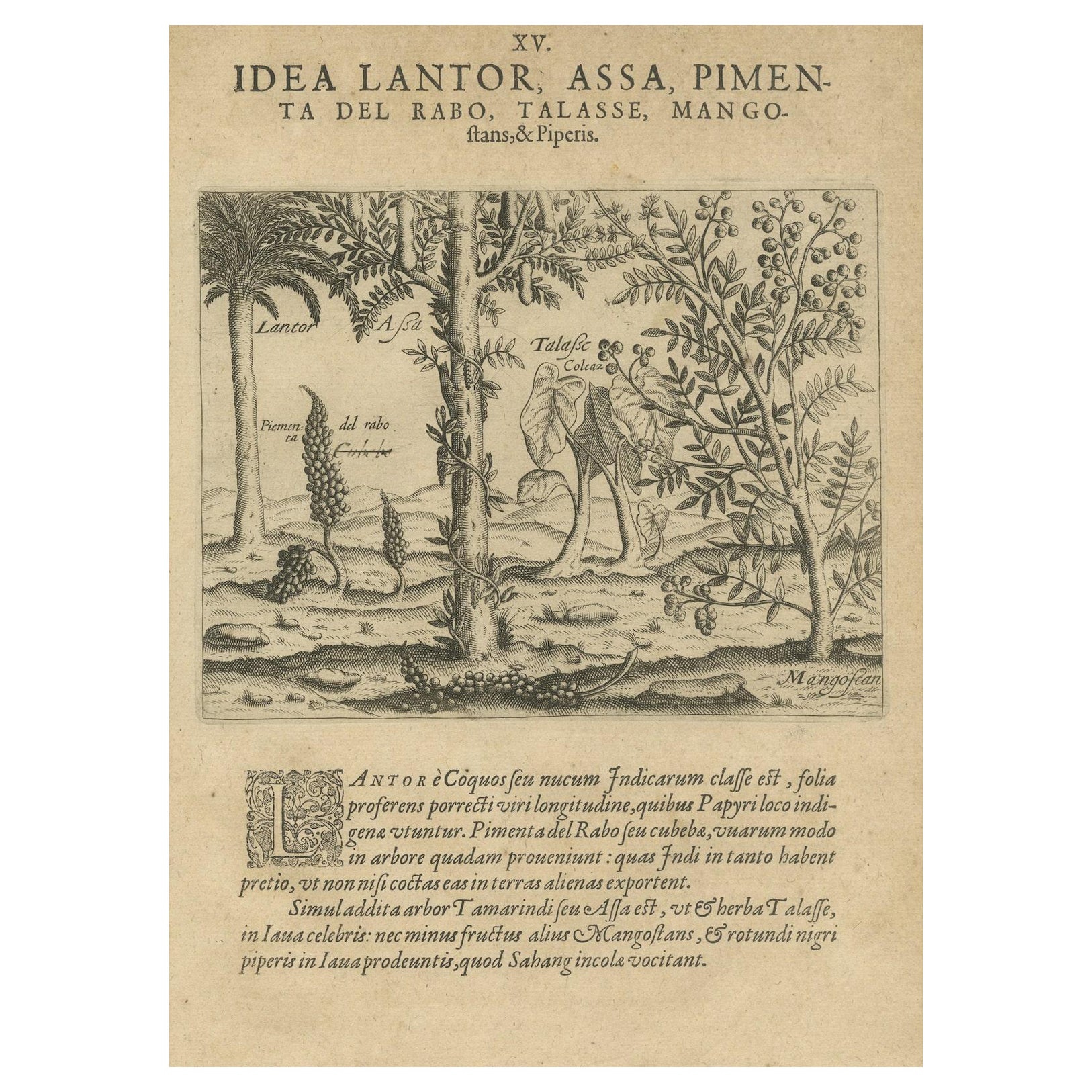
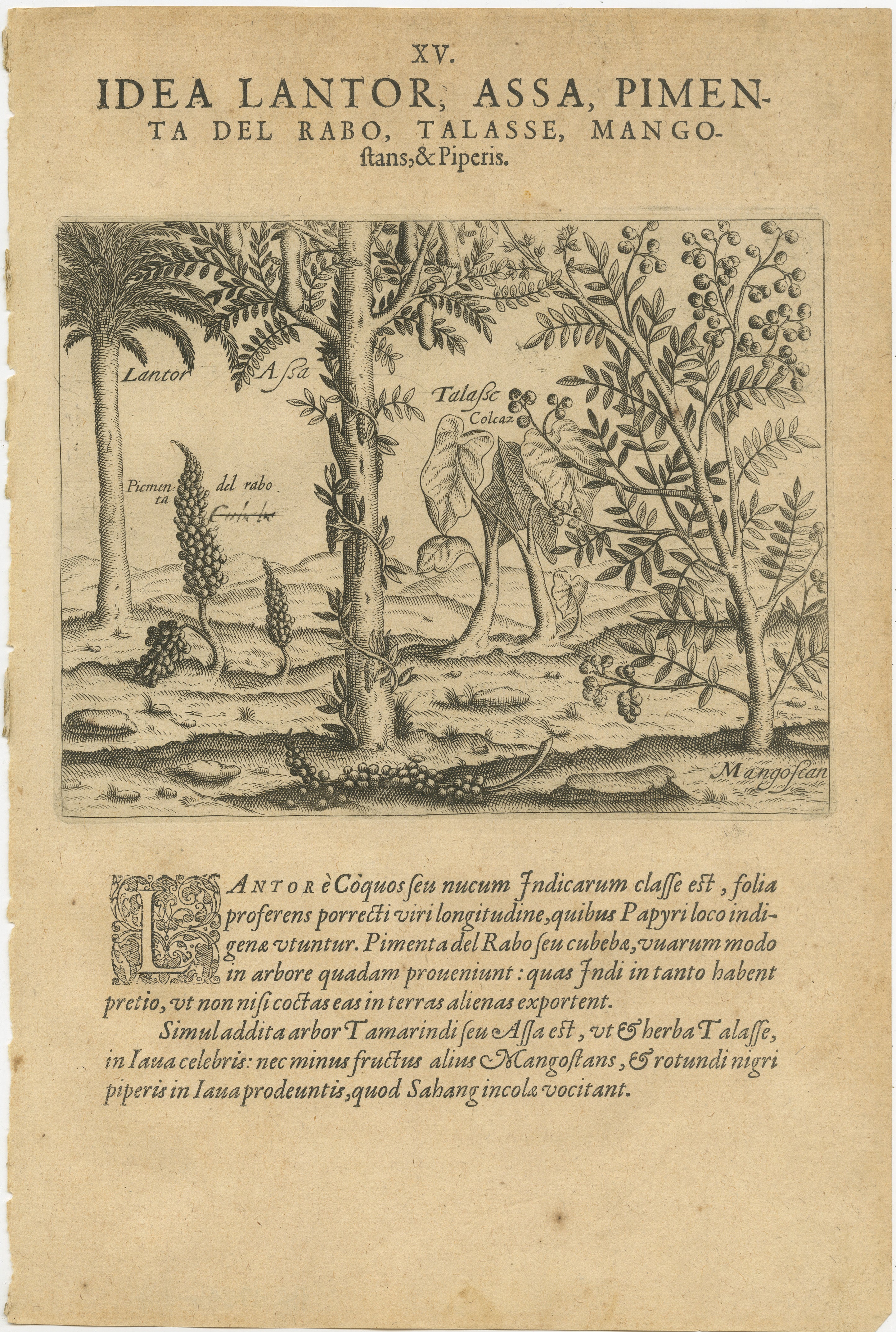
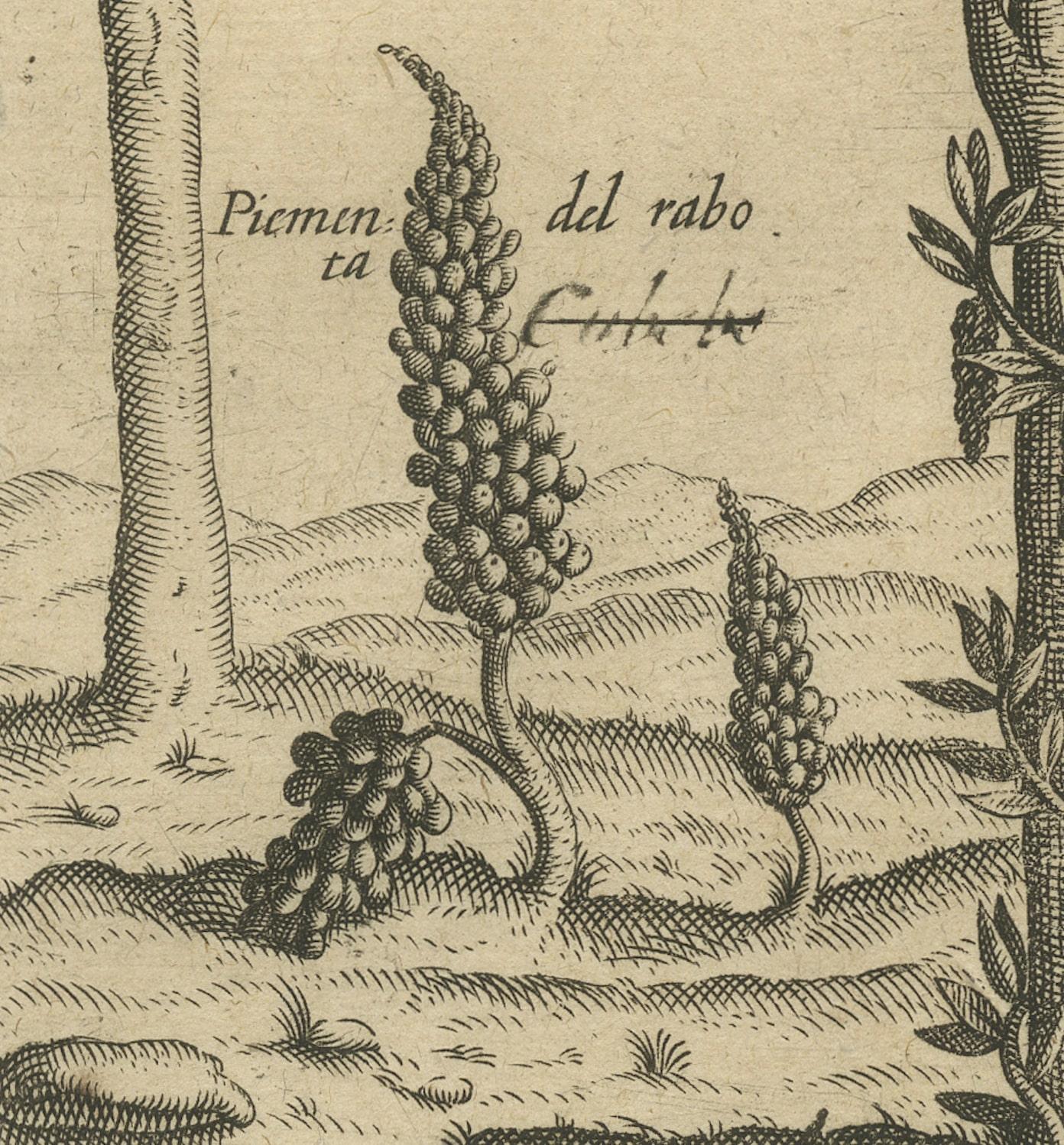
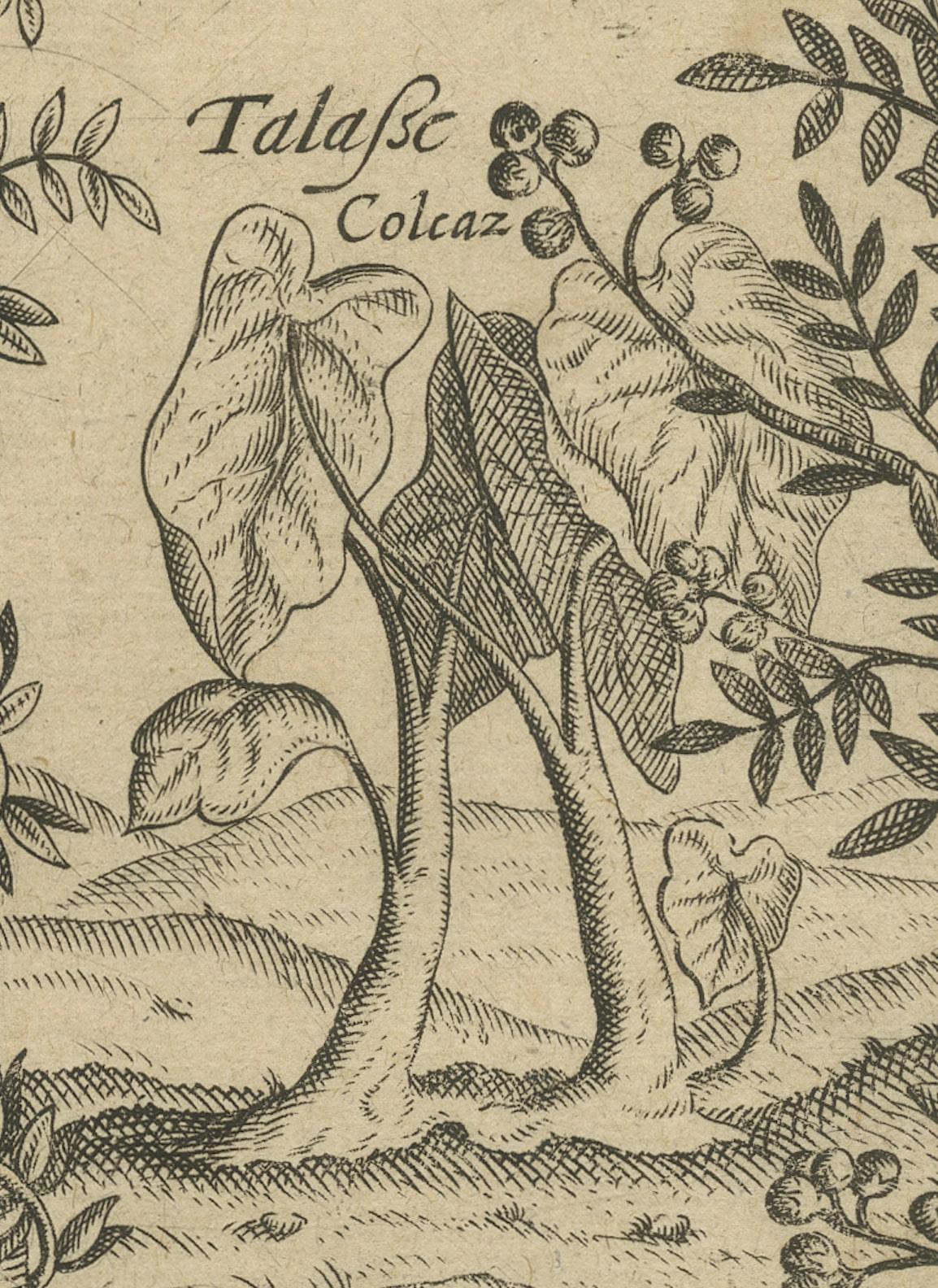
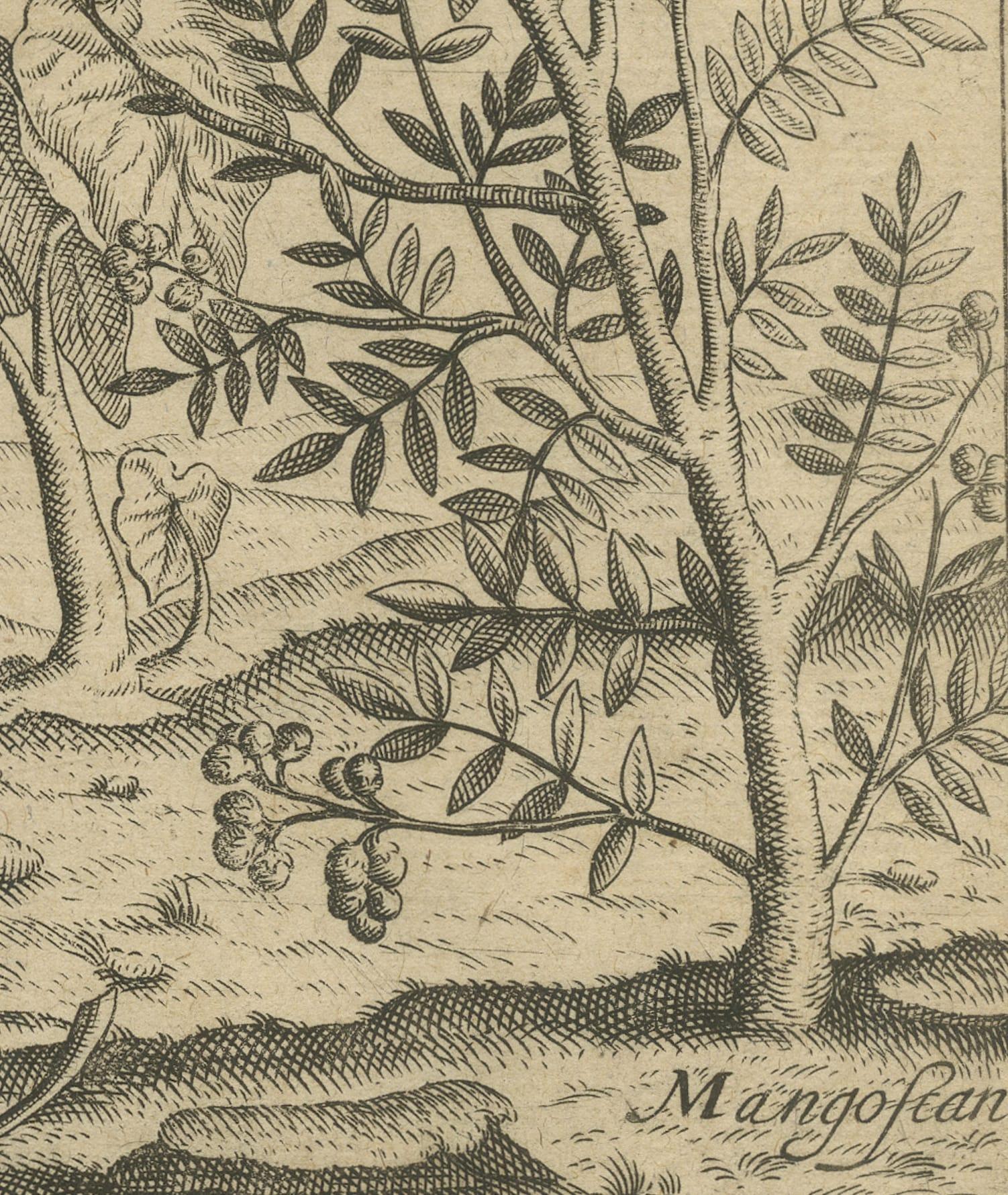
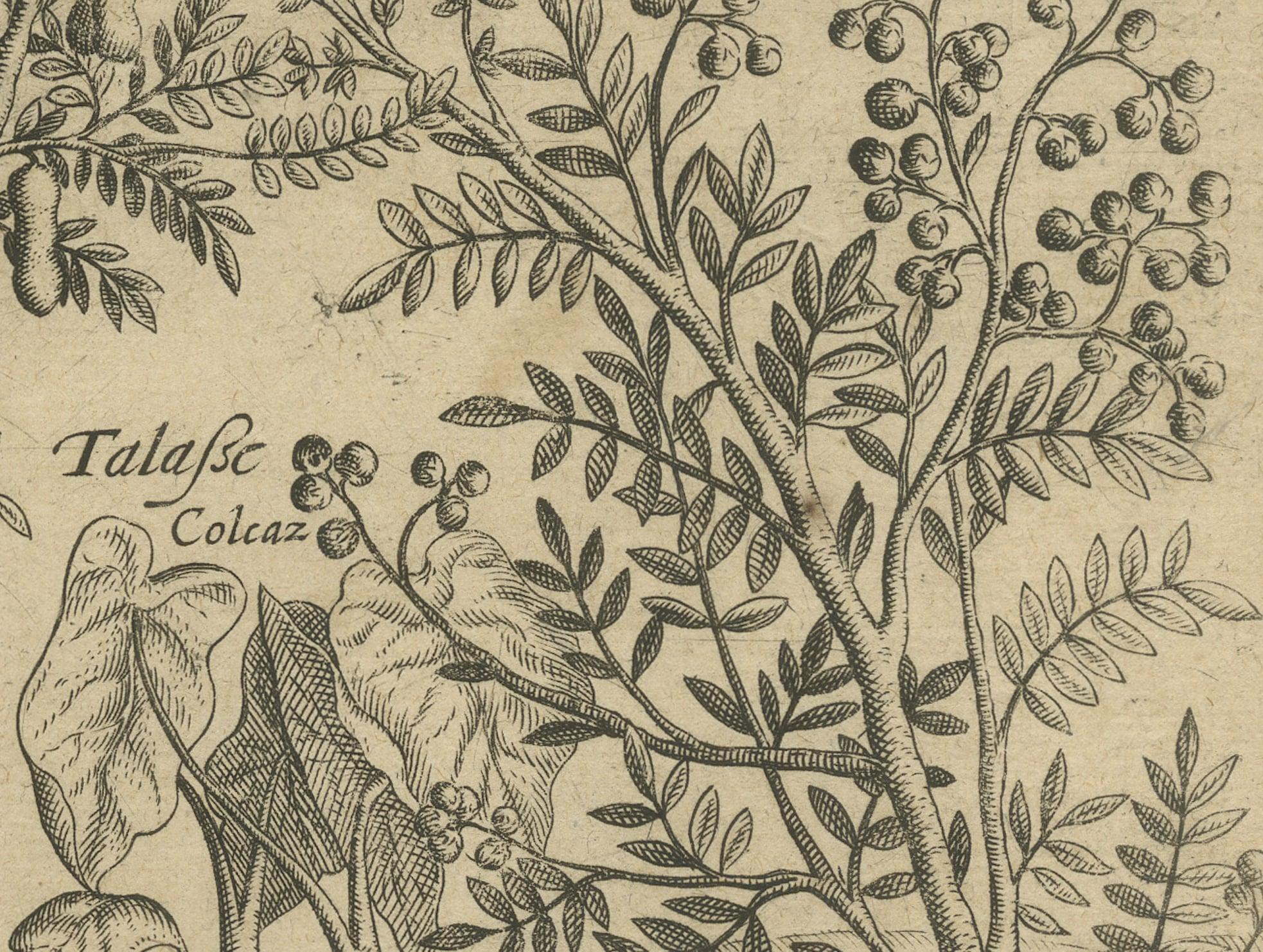
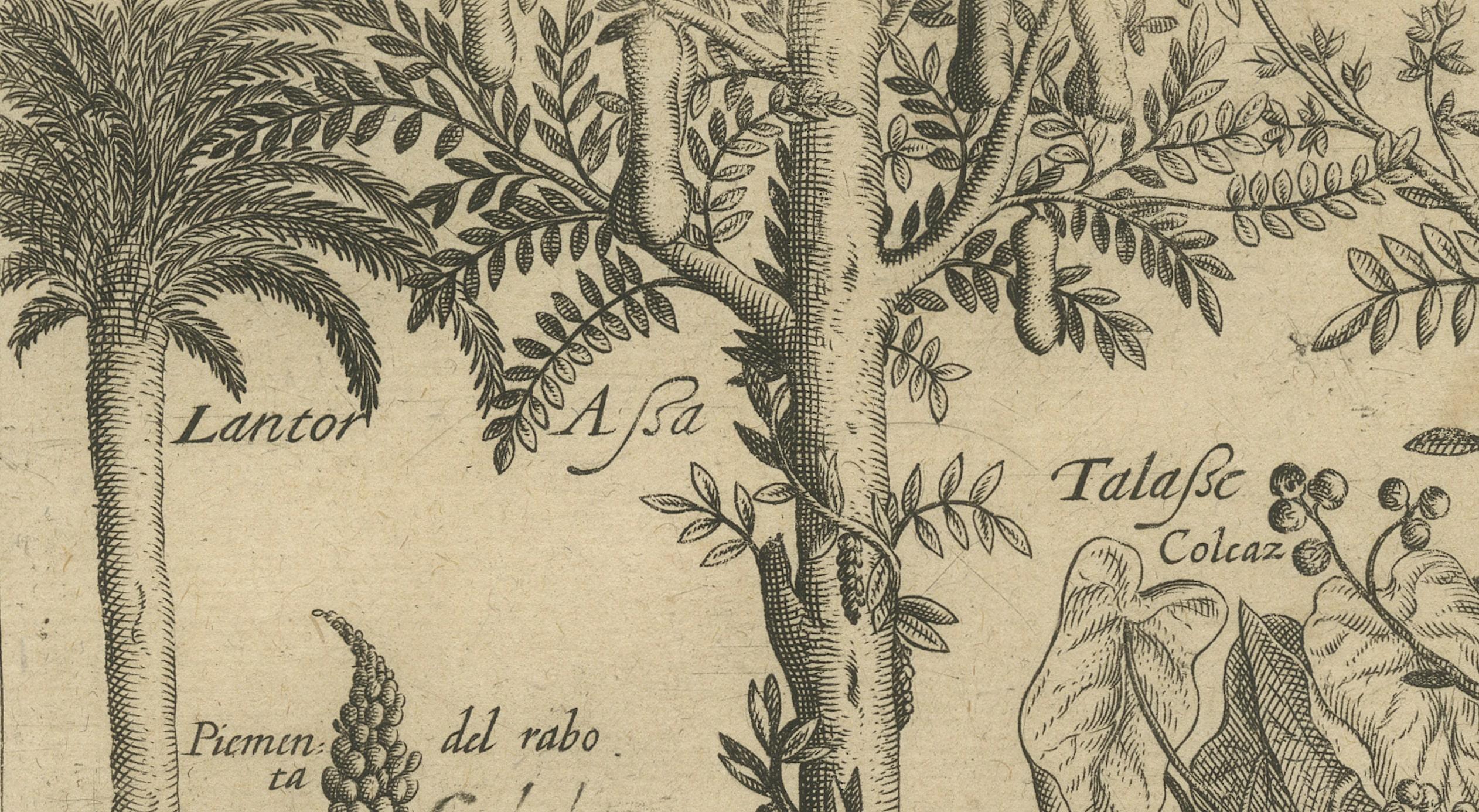
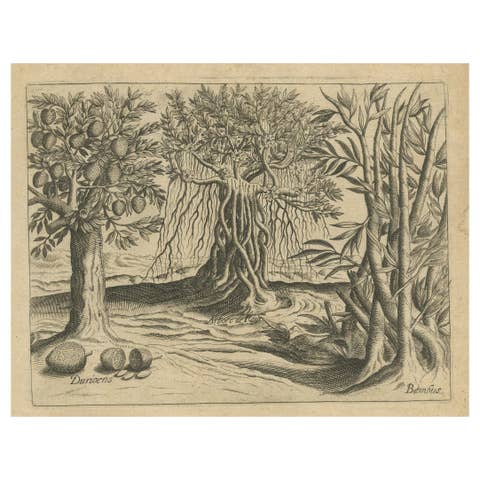
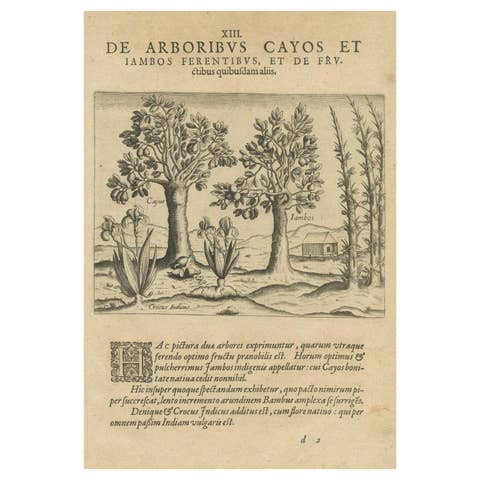
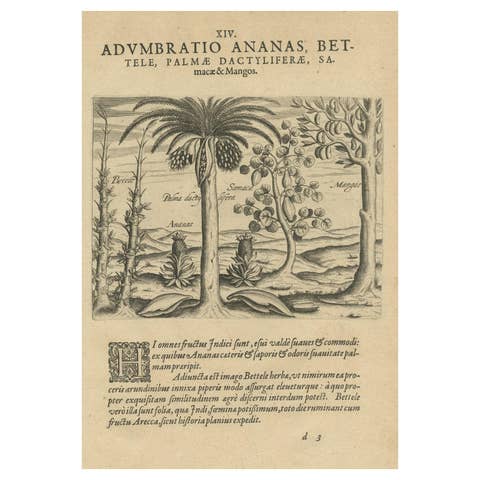
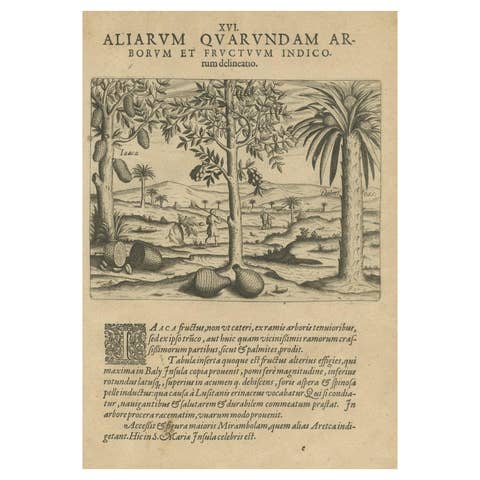
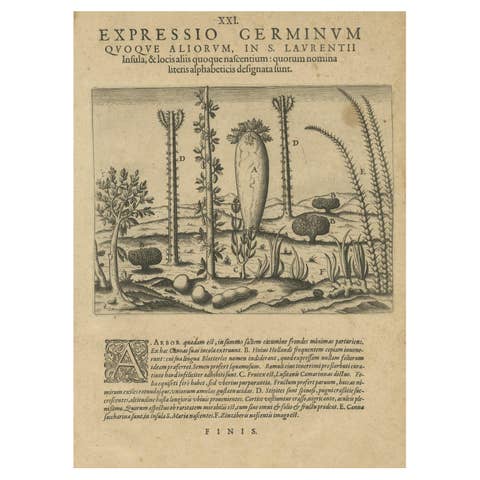
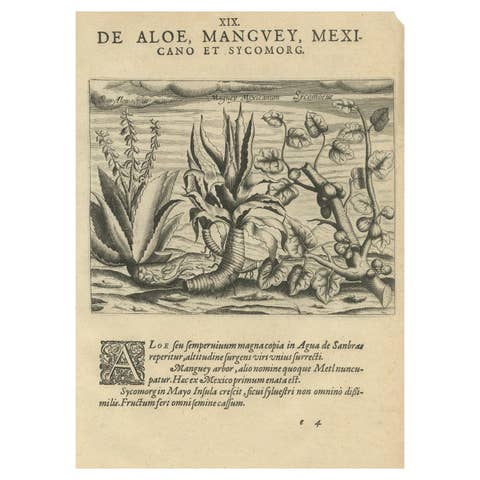
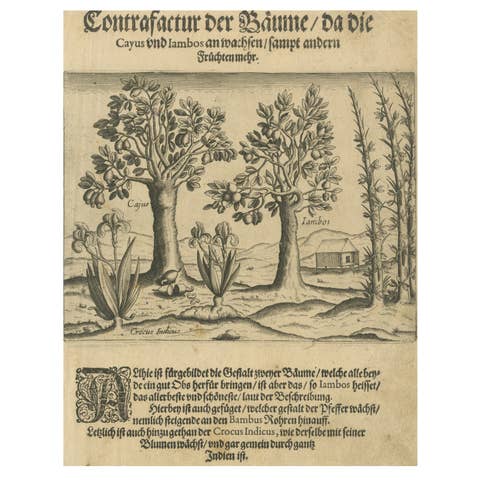
This striking 1601 engraving by Theodore de Bry, titled "IDEA LANTOR, ASSA, PIMENTA DEL RABO, TALASSE, MANGOstans,&Picpris," showcases the rich botanical diversity of India, featuring an array of trees and plants highly valued for their culinary and medicinal properties. The Lantor, possibly a variant of a palm, stands tall with its slender trunk and large leaves. The Assa, likely a type of myrrh, and the Pimenta del Rabo, or tail pepper, hint at the spicy treasures that were eagerly sought by traders. The Talasse tree is shown with its broad, sturdy leaves, and the renowned Mangosteen is depicted with its lush, round fruits famed for their sweet, tangy flavor.
These plants, illustrated with such detail and care, were more than just food sources; they were symbols of the exotic abundance of the East Indies, representing wealth, mystery, and the allure of the unknown to the European audience of the time. De Bry’s engravings were a vital link in the chain of knowledge, bringing the wonders of distant lands into the libraries and salons of Europe, igniting imaginations and driving the fervor for exploration and trade.
Translation of the Latin text:
"Lantor or Cognos is the name for the mucilaginous class of Indian trees, whose leaves are of great length, used by Indians in place of paper. Pimenta del Rabo, also known as cubeb, grows on a certain tree: which the Indians hold in such high esteem that they do not hesitate to export them to foreign lands. Also added is the Tamarind tree, known as Assa, and the herb Talasse, celebrated in India: not to mention the fruit of the Mango tree, and the round black pepper produced in the soil, which the inhabitants of Sabang call ‘voctiant’."
The engraving is a page from Part IV of de Bry's "Petits Voyages," which narrates significant expeditions to the East Indies, including those led by Jan Juygen van Linschoten and Cornelis de Houtman between 1595-97, as well as the journey by Jacob van Neck and Wybrandt van Warwijck in 1598-99. These works were not merely artistic endeavors but also ethnographic records, showcasing indigenous peoples, fauna, flora, and the diverse riches of lands like India, Madagascar, and the East Indies.
Though Theodore de Bry began this ambitious project, it was continued posthumously by his family and later completed by his son-in-law, Matthaus Merian, in 1644. This particular engraving, rich in detail and drama, offers a window into the perilous and wondrous experiences of early explorers, and the ways in which these moments were captured and communicated to a European audience hungry for knowledge of the wider world.