About this sheet
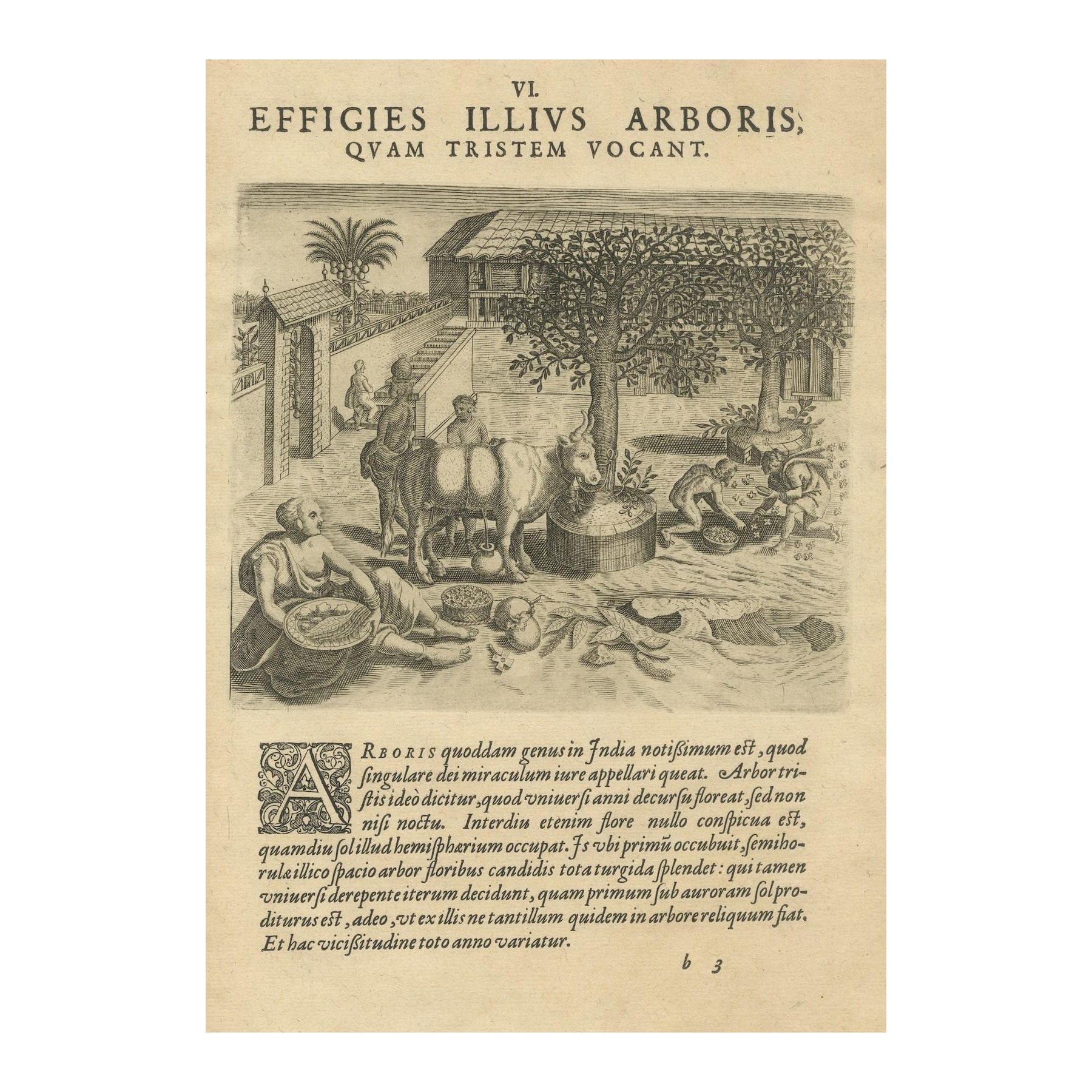
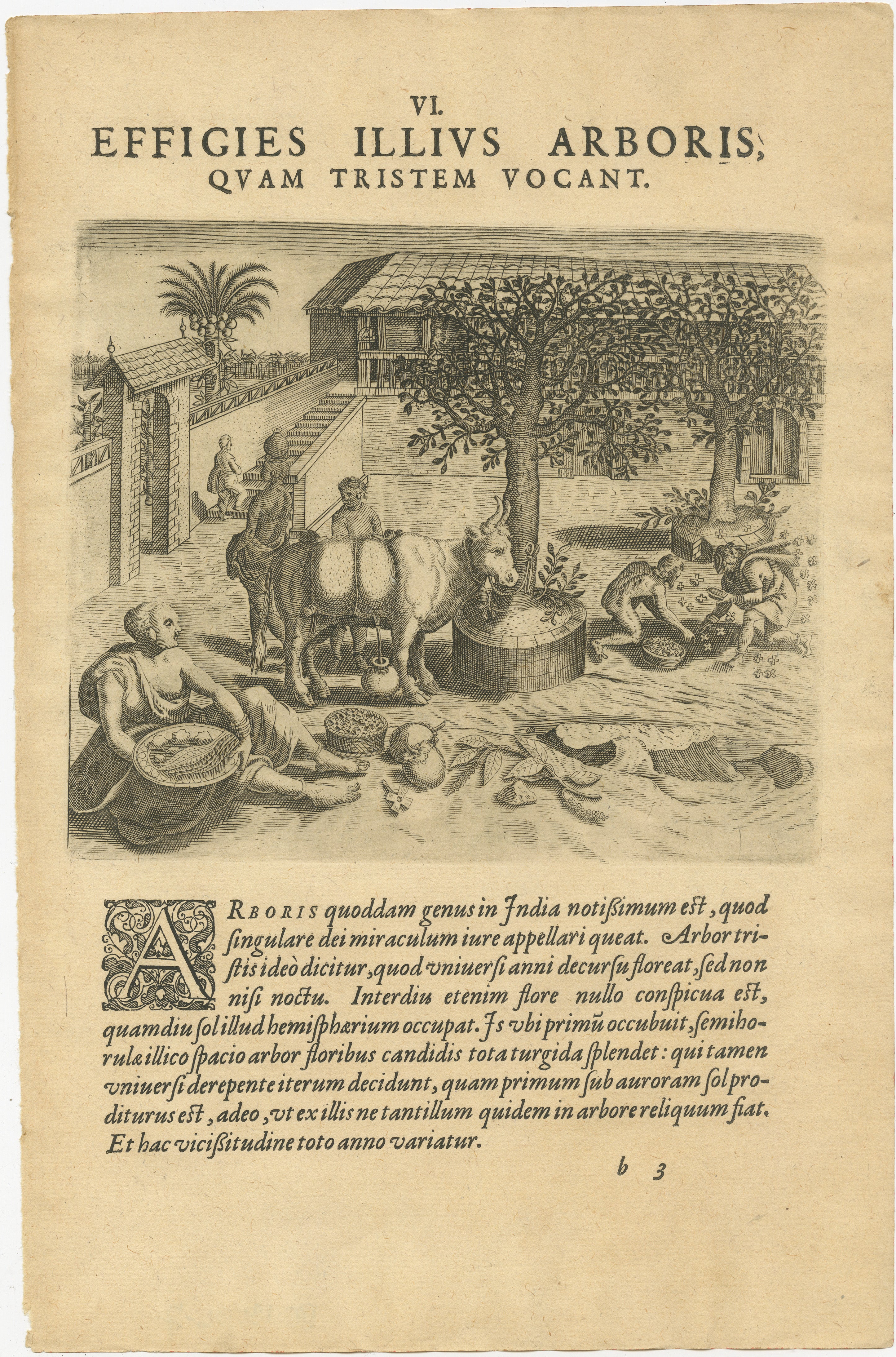
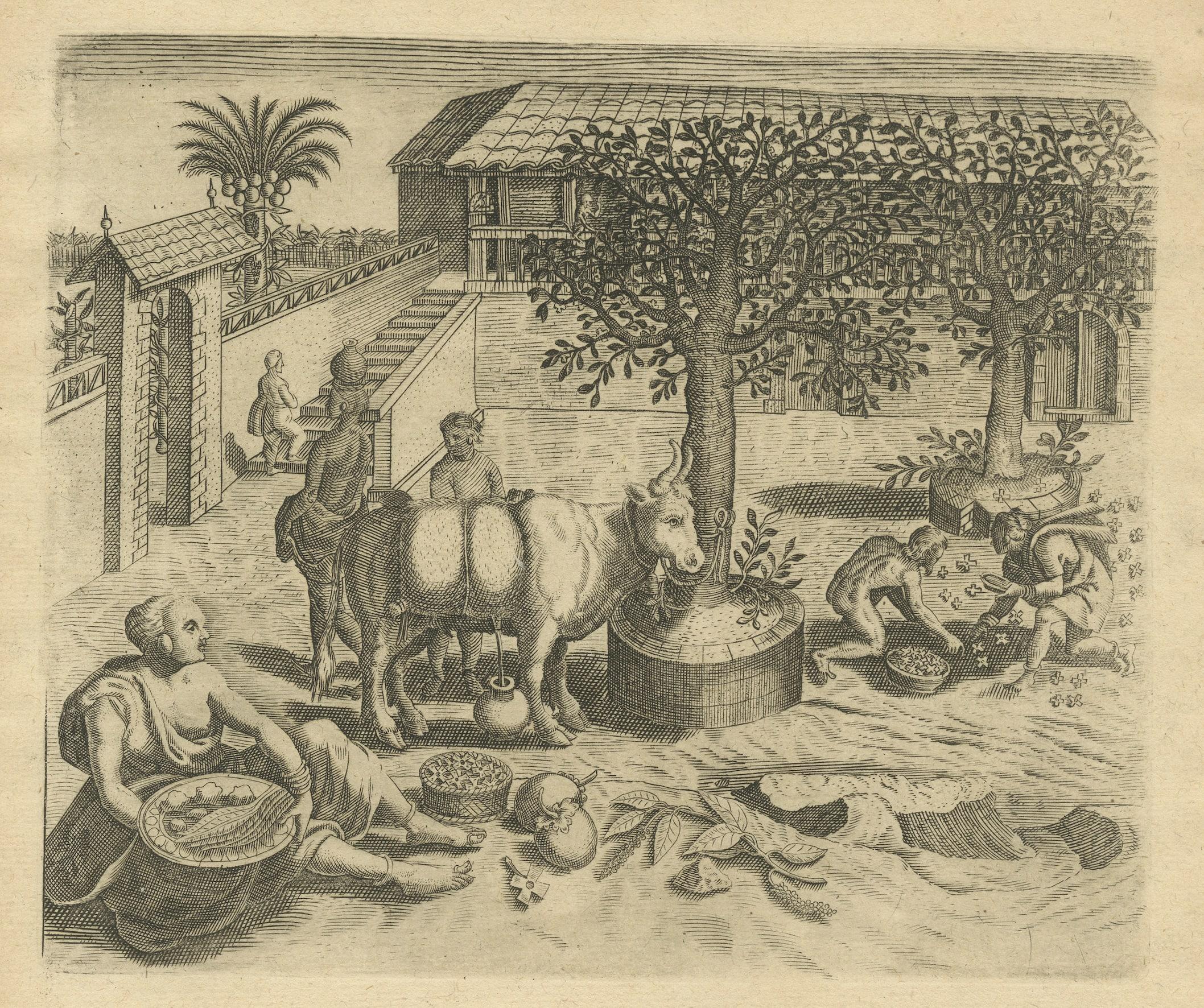
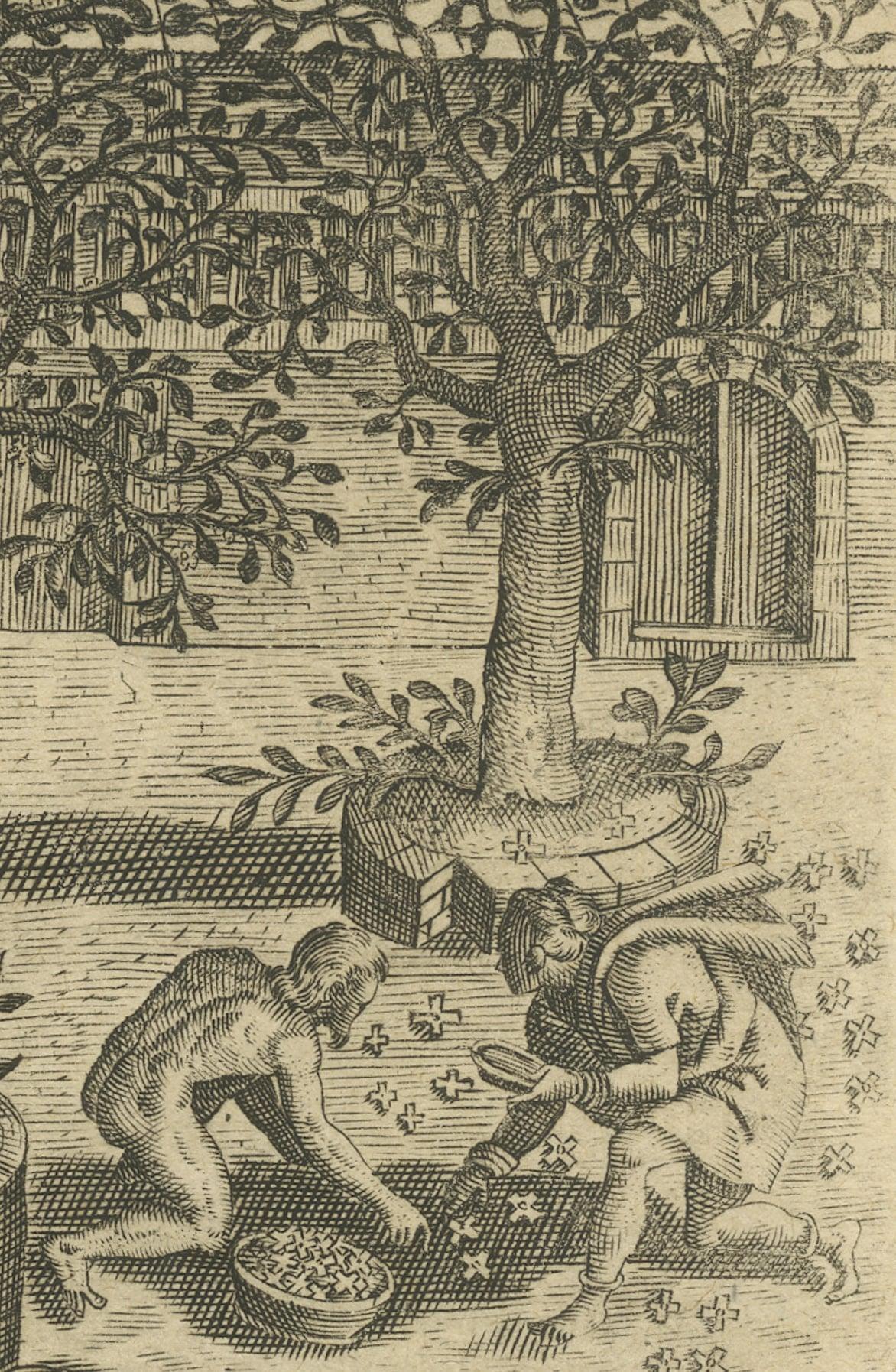
This engraving from Theodore de Bry's "Indiae Orientalis" showcases a serene yet intriguing scene titled "EFFIGIES ILLIUS ARBORIS, QUAM TRISTEM VOCANT," which translates to "The Image of That Tree They Call Sad." Dated 1601 and featured in the first edition of Part III, Plate VI, the work depicts a tree that was noted for its unusual characteristics and was part of De Bry’s extensive "Petit Voyages" series.
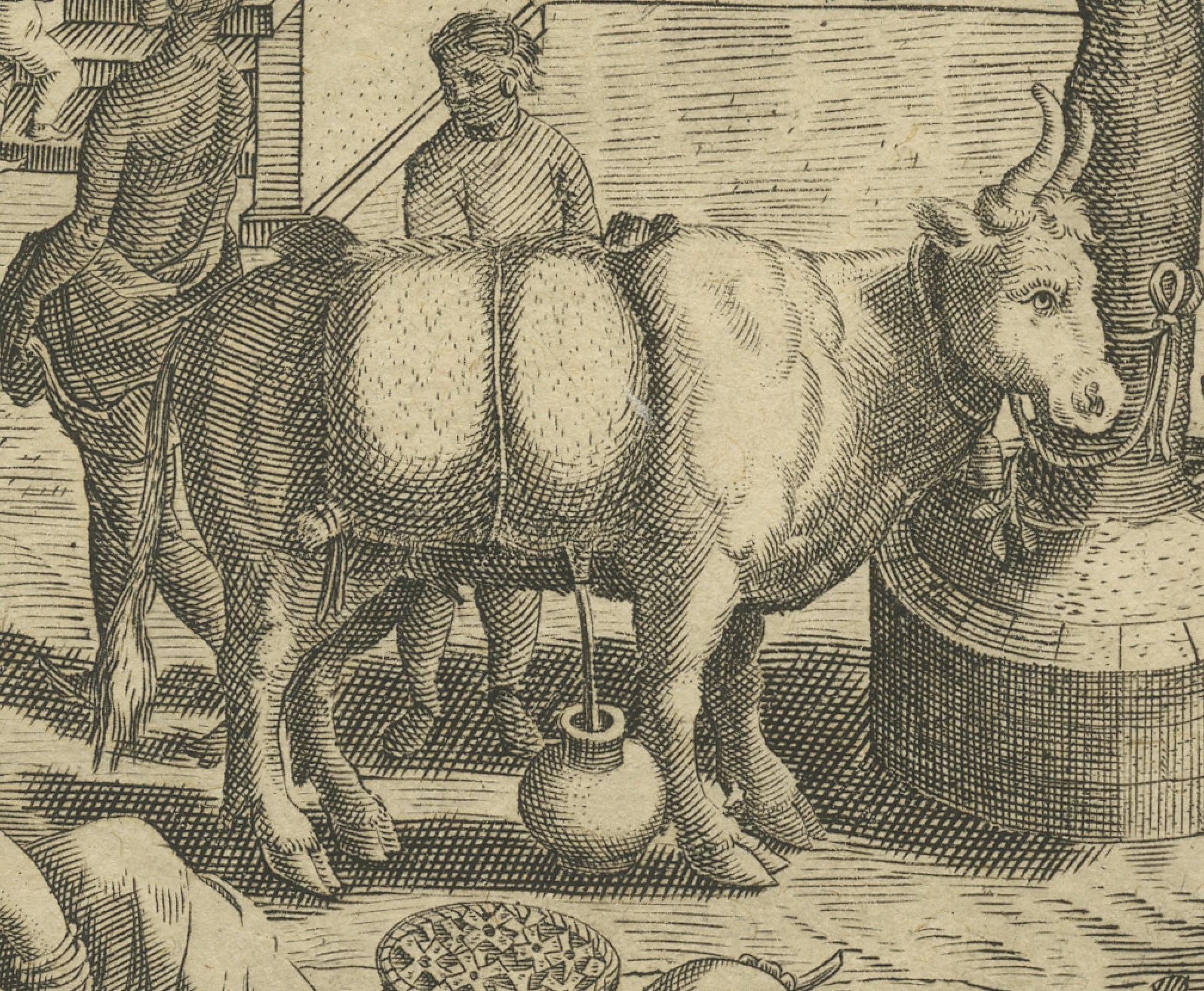
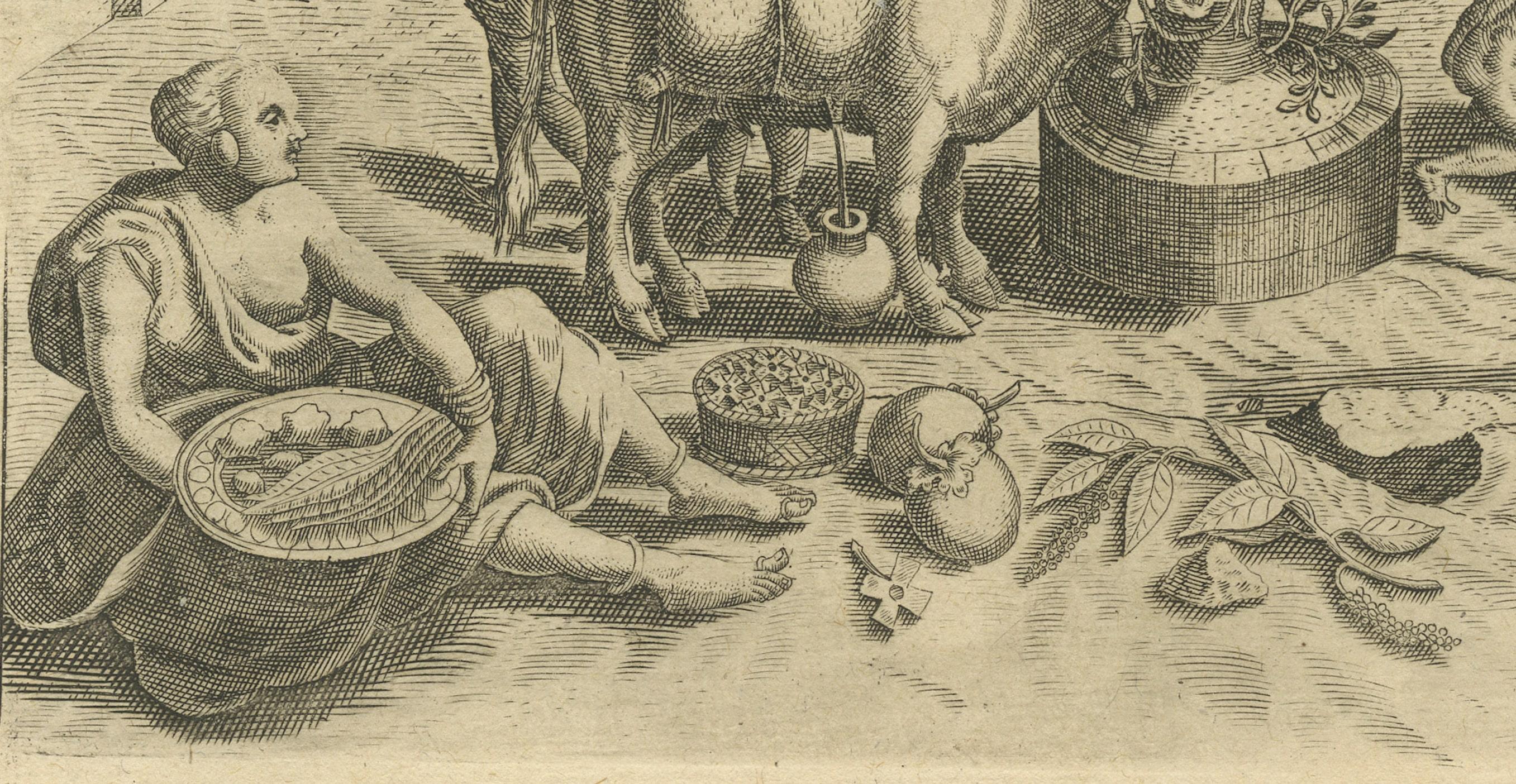
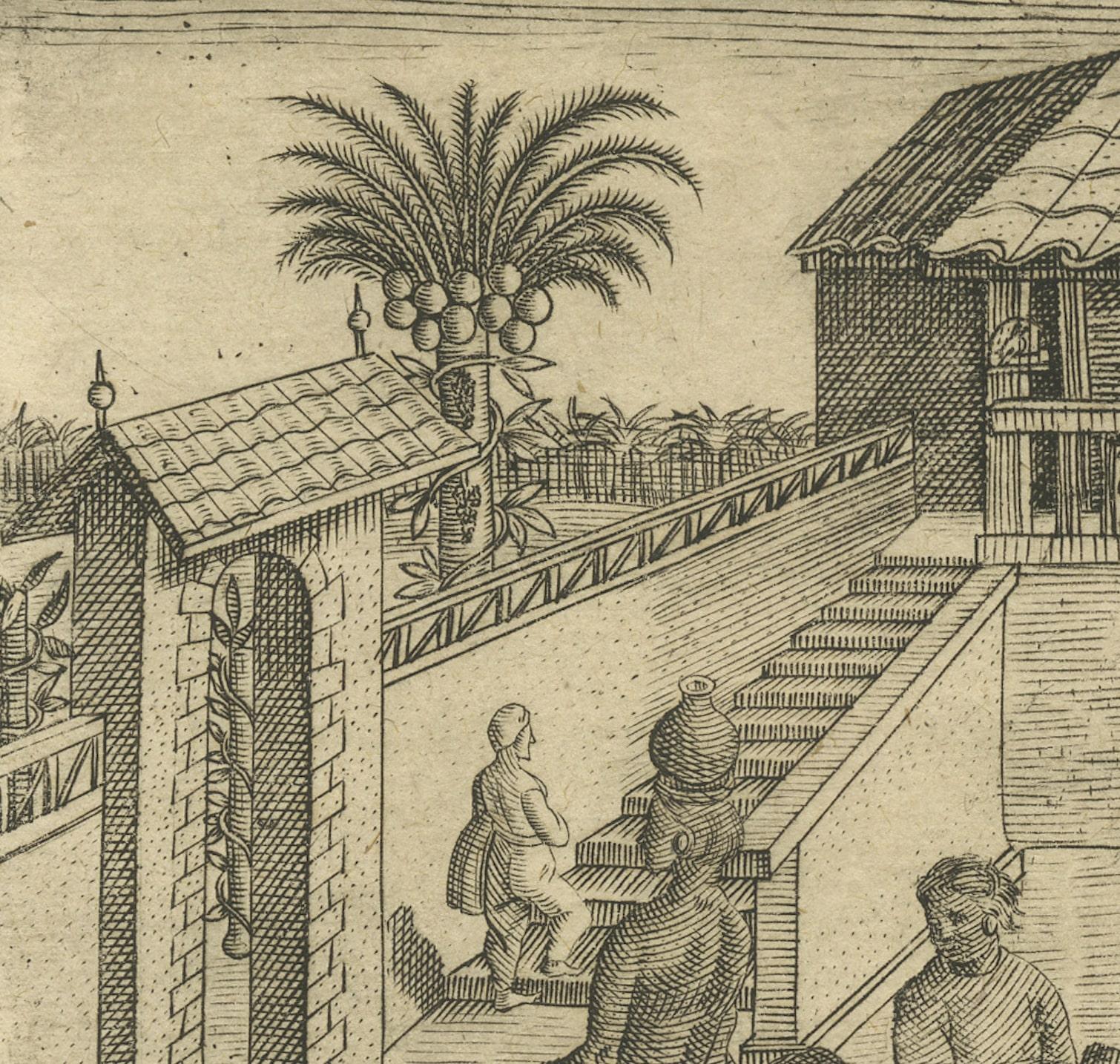
In the image, several figures engage in various activities around the tree and the adjacent building. One person reclines leisurely with a bowl, perhaps enjoying the shade or fruit of the tree, while others appear to be collecting or processing the tree's produce. A couple rides on an ox, adding to the pastoral calm of the setting. The intricate details in the foliage of the tree and the attire of the figures suggest a foreign landscape rich with stories and life, typical of De Bry’s work that aimed to capture and convey the wonders of newly discovered lands to a European audience.
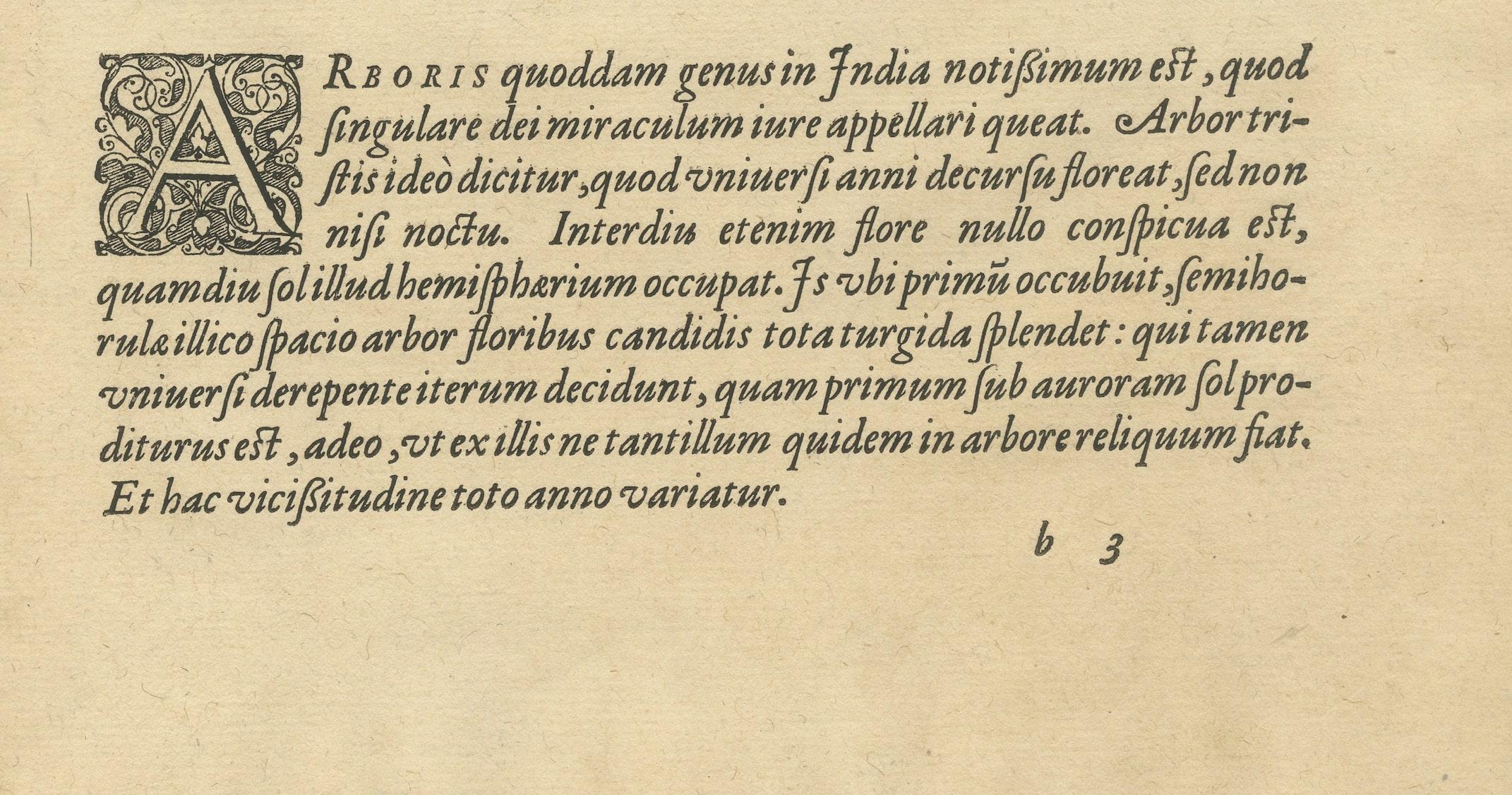
The text in the image appears to be in Latin. Here is the translation to English:
"A certain kind of tree is well-known in India, which by the singular decree of the gods is said to bloom in a miraculous way. It is called Arbor tristis, that is, the 'sad tree,' because it blooms continuously throughout the year, but it does not bloom at night. Indeed, at no time is the flower seen, because as soon as the sun sets, the hemisphere below the earth occupies it. And where it first appears, the whole tree immediately bursts forth with white flowers, which however suddenly fall off as soon as the sun rises, as if they were sorrowful. Thus, not even a little bit of them remains in the tree. And in this way the condition of the place is changed throughout the year."
This plate is part of the "Petit Voyages" or "Small Voyages," a series that complemented the "Grands Voyages" or "Great Voyages." Theodore de Bry, a noted engraver and publisher from Liège, Belgium, began these works to illustrate the New World and the Far East based on accounts and drawings from explorers. His works grew to comprise 30 volumes, with later editions published by his children after his death. This particular engraving is a testament to the enduring allure of the unknown that captivated the minds of Europeans during the Age of Exploration.
This piece forms part of a larger corpus of works produced under the supervision of the de Bry family, a lineage of renowned engravers and publishers based in Frankfurt. Initiated by Theodore de Bry in 1590, this series aimed to visually document the epoch of European global exploration and the encounters with the natural world that ensued.
The engraving is a page from Part IV of de Bry's "Petits Voyages," which narrates significant expeditions to the East Indies, including those led by Jan Juygen van Linschoten and Cornelis de Houtman between 1595-97, as well as the journey by Jacob van Neck and Wybrandt van Warwijck in 1598-99. These works were not merely artistic endeavors but also ethnographic records, showcasing indigenous peoples, fauna, flora, and the diverse riches of lands like India, Madagascar, and the East Indies.
Though Theodore de Bry began this ambitious project, it was continued posthumously by his family and later completed by his son-in-law, Matthaus Merian, in 1644. This particular engraving, rich in detail and drama, offers a window into the perilous and wondrous experiences of early explorers, and the ways in which these moments were captured and communicated to a European audience hungry for knowledge of the wider world.