About this sheet
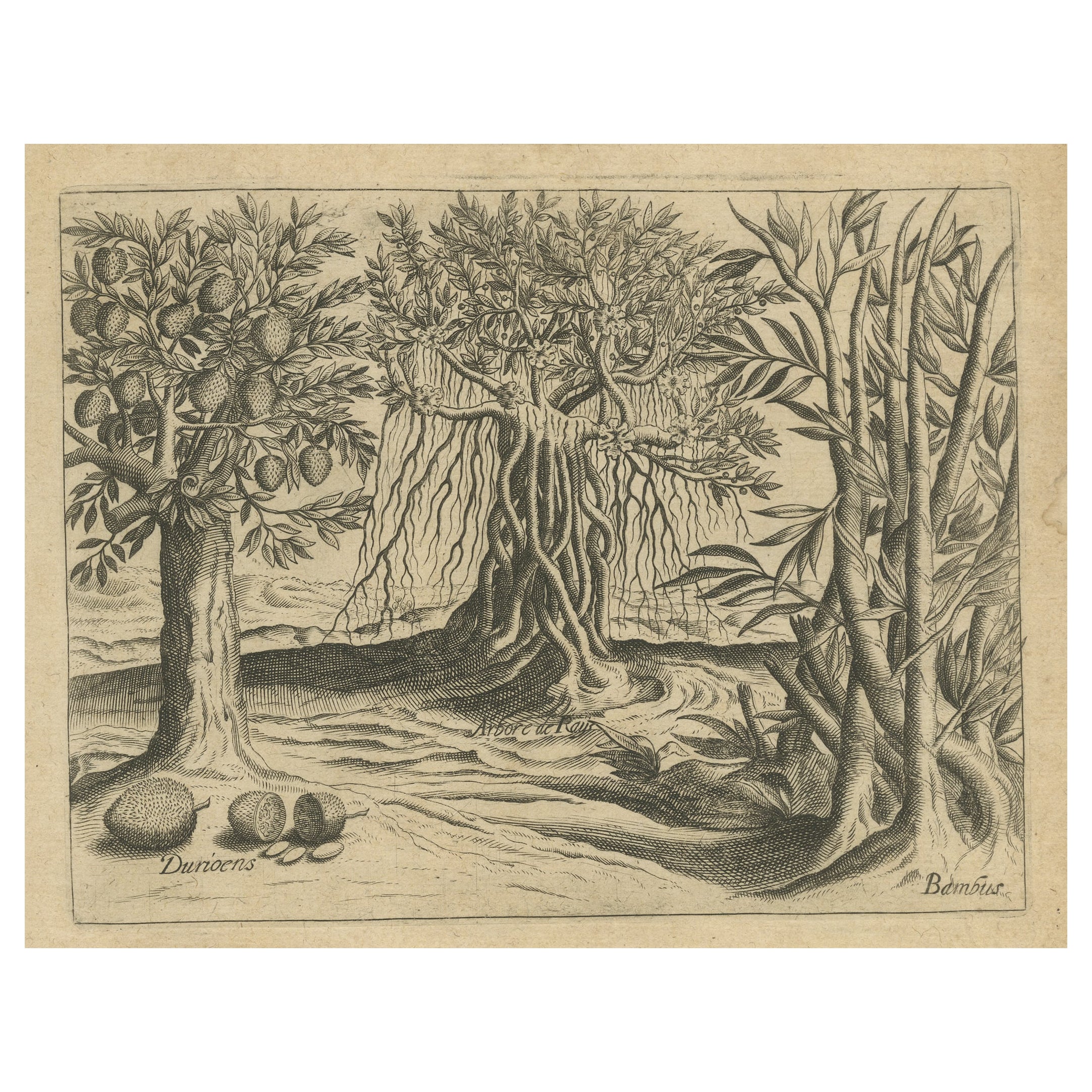
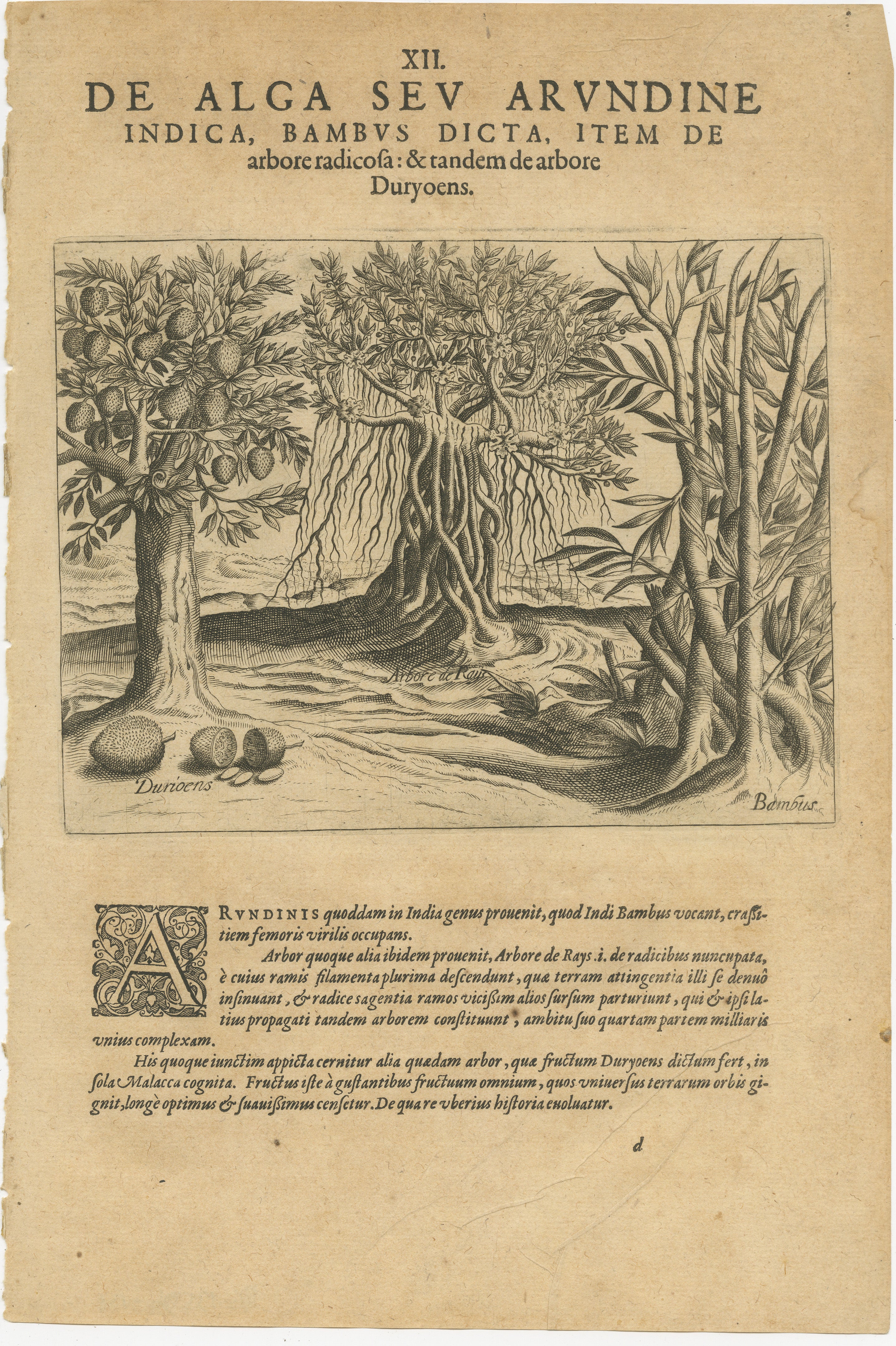
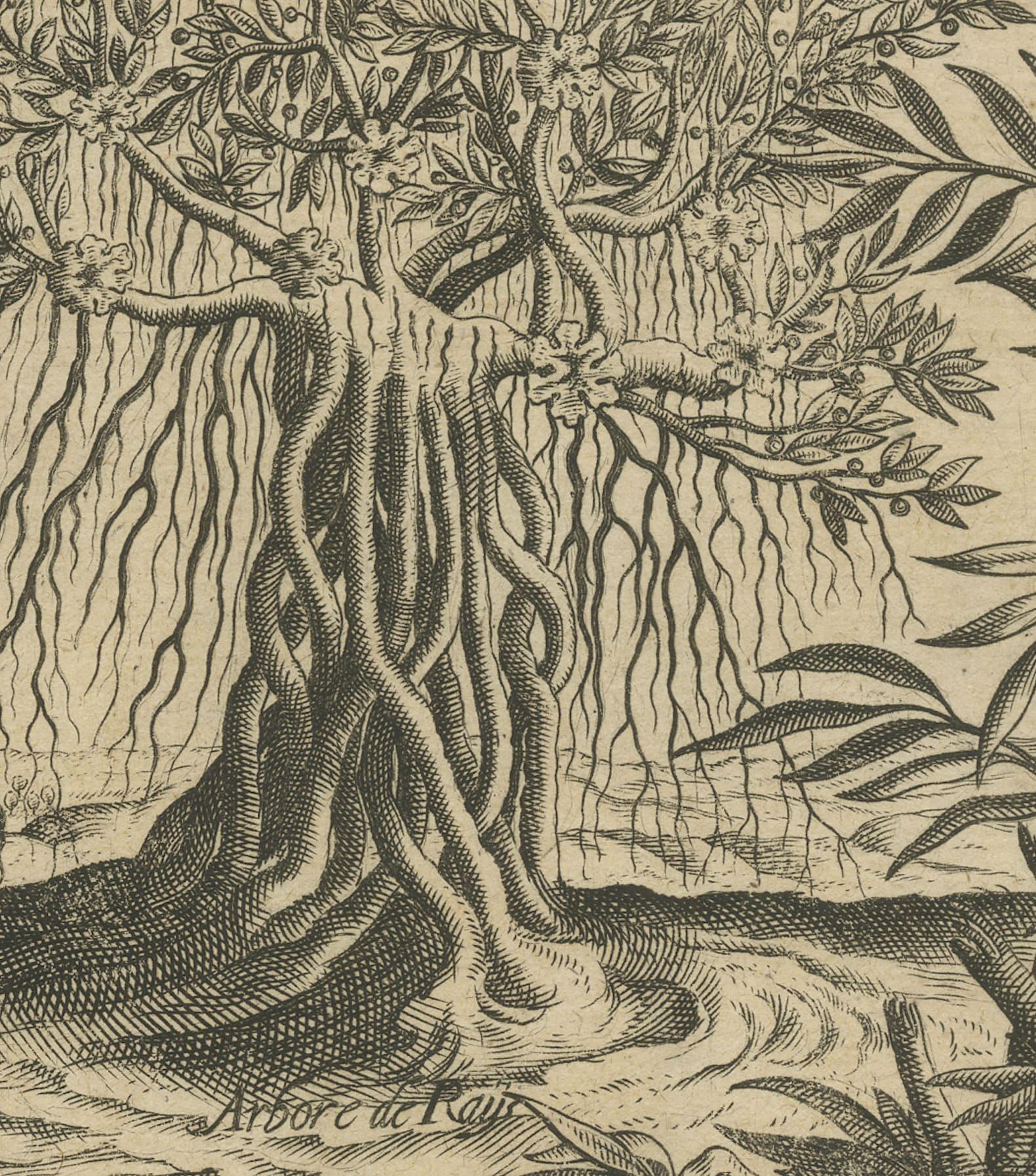
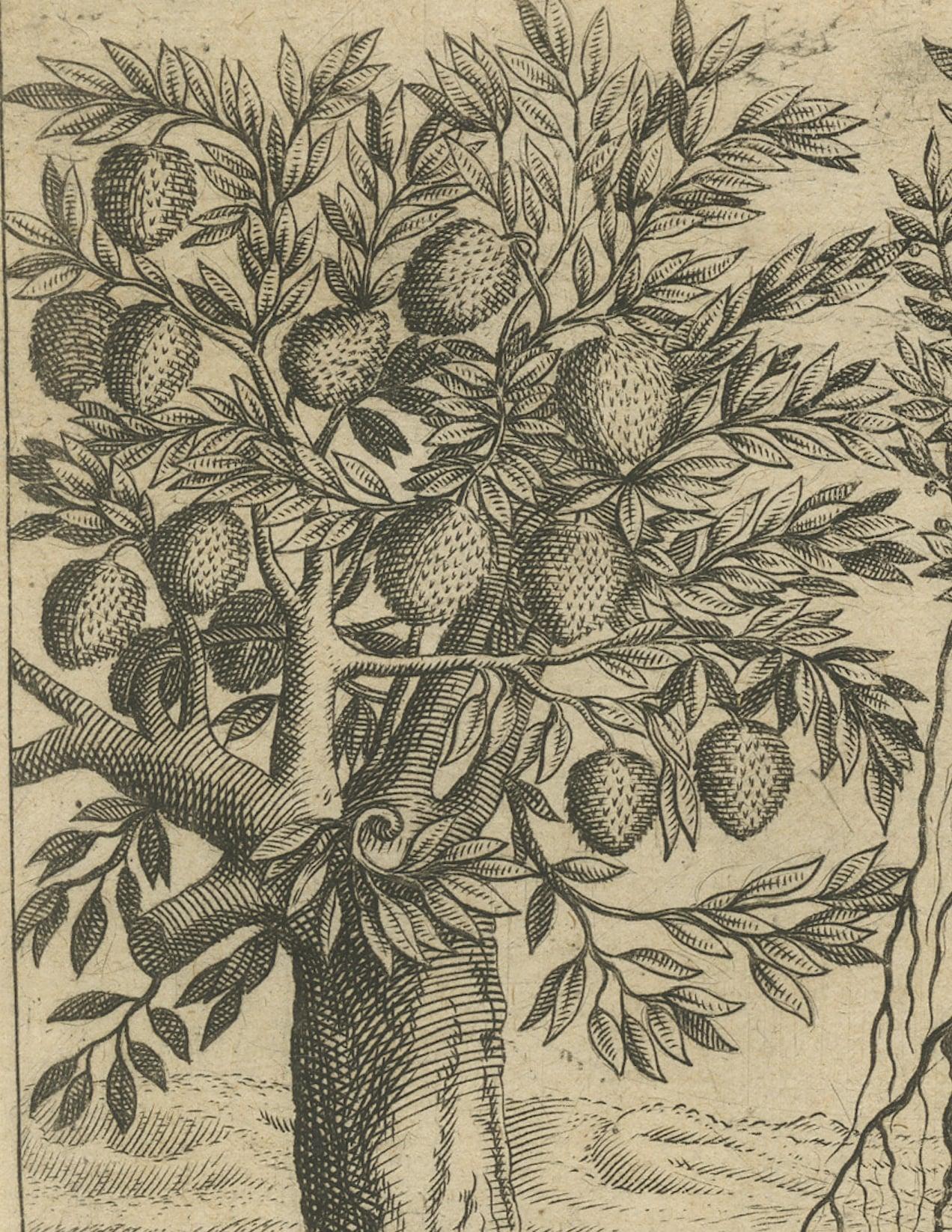
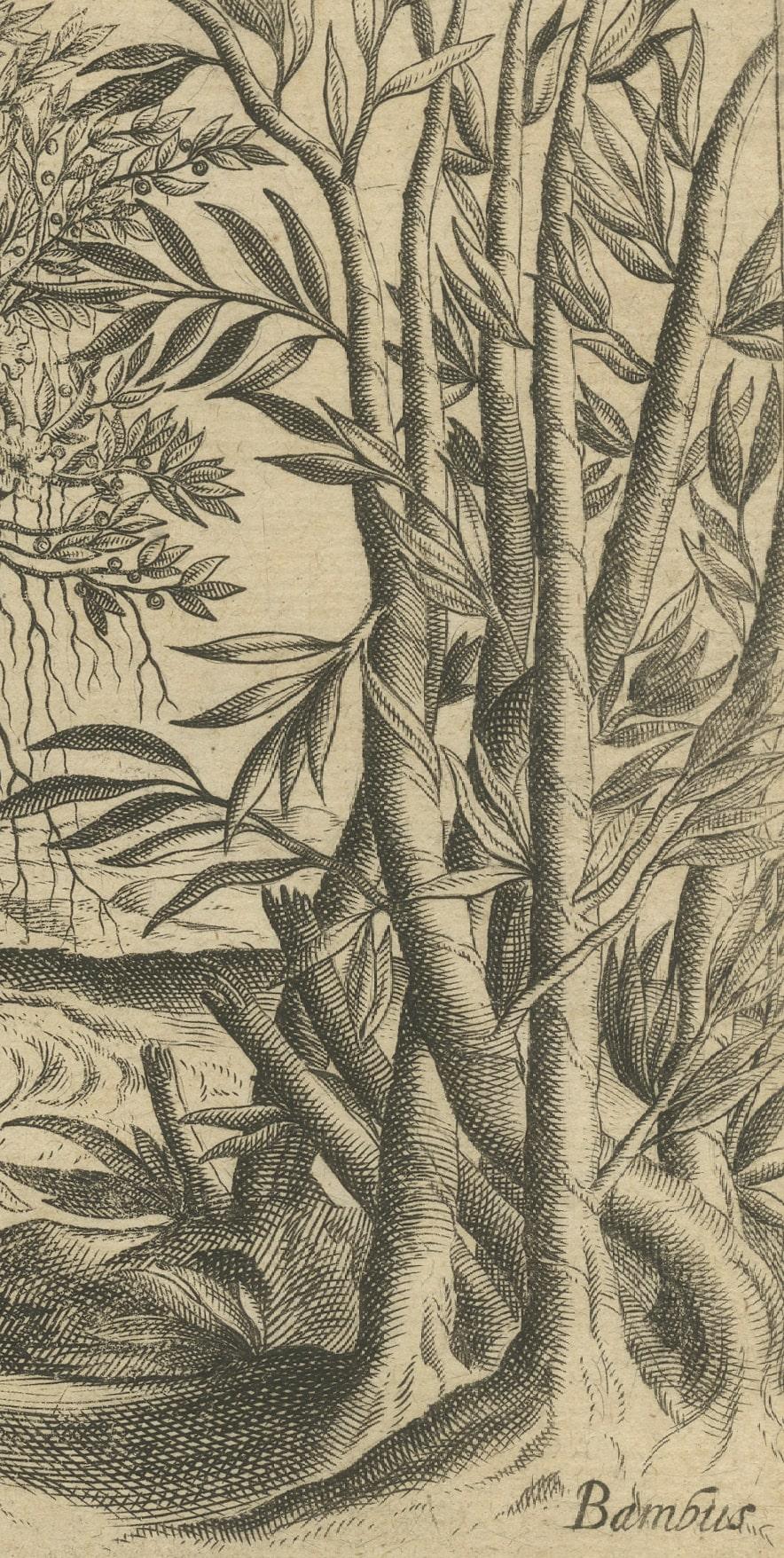
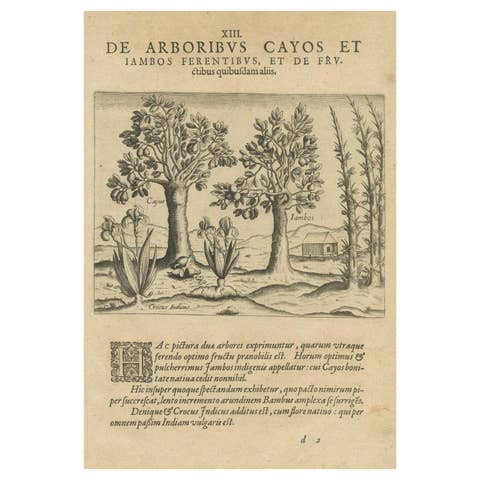
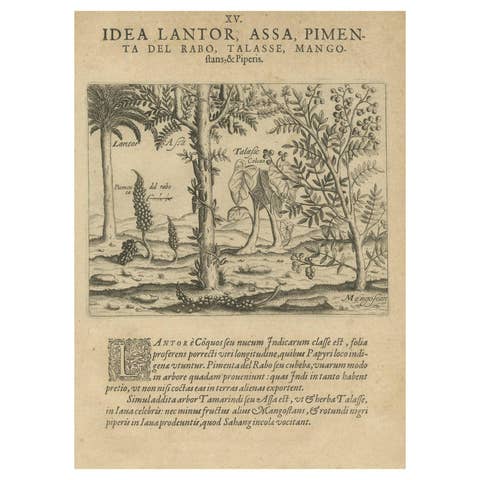
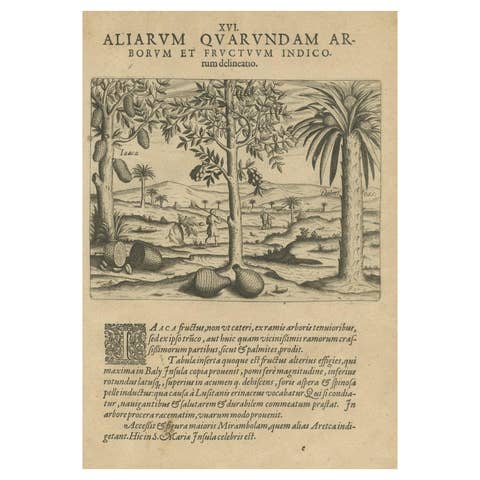
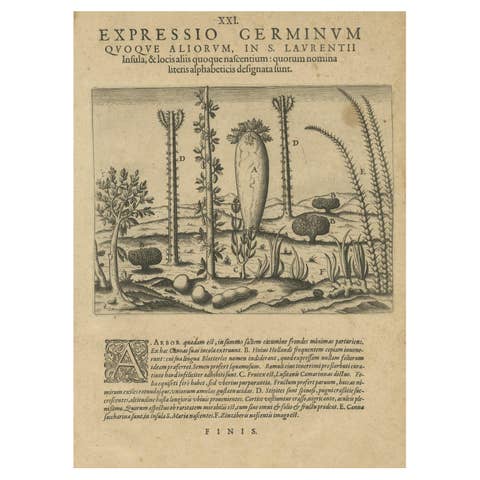
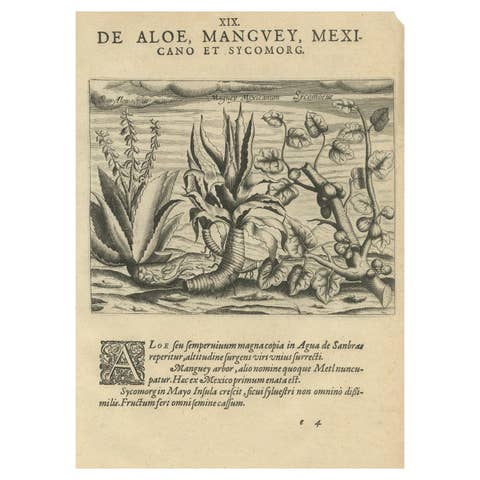
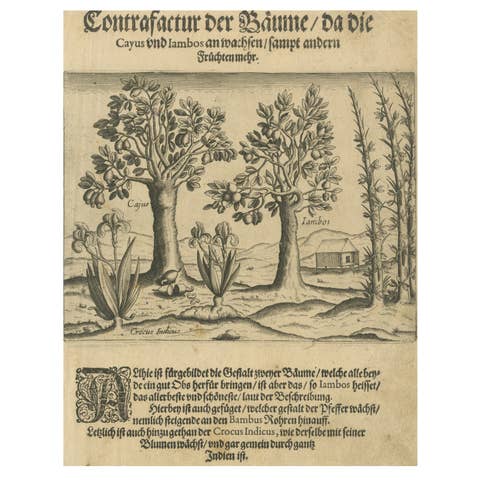
This 1601 engraving by Theodore de Bry, a master engraver and publisher of the late Renaissance period, depicts the flora of India with a remarkable degree of detail and artistry. The print is titled "DE ALGA SEV ARVNDINE INDICA, BAMBVS DICTA, ITEM DE arbore radicosa: & tandem de arbore Duryeons," which translates to "About the Seaweed or Reed of India, called Bamboo, also about the root tree: and finally about the Duryeons tree."
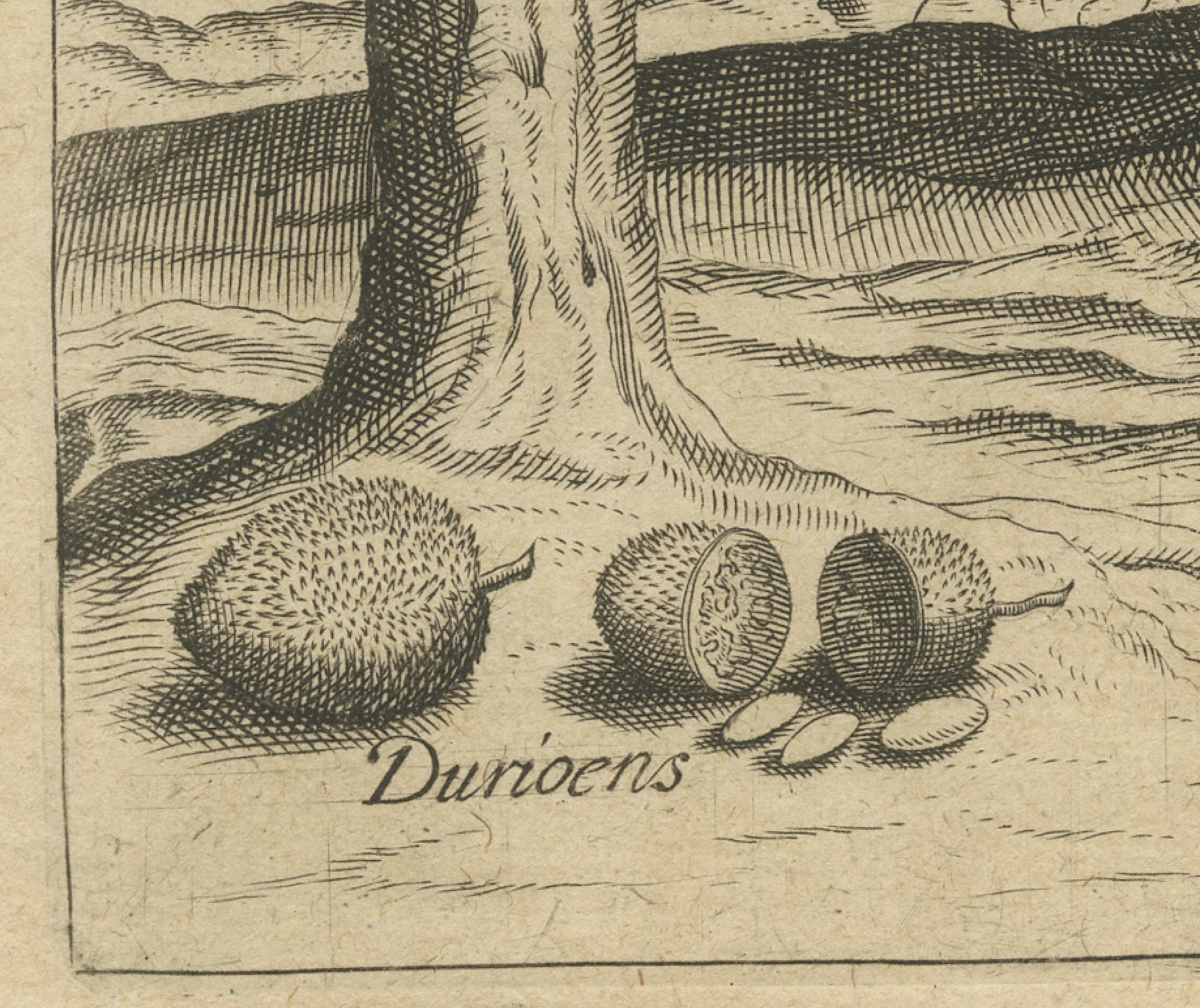
In the illustration, we see a lush depiction of a bamboo grove, with its characteristic tall and slender form, showcasing the plant's extensive root system and dense foliage. To the left, there is a tree bearing large, round fruits, likely the durian, labeled here as "Duryeons." The durian is known for its distinctive size, unique aroma, and spiky husk. The image captures both the exotic appeal and the utilitarian value of these plants, which were of great interest to European audiences unfamiliar with such tropical vegetation.
The visual composition conveys the tropical abundance and biodiversity of the Indian subcontinent. De Bry's engravings like this were highly sought after in Europe for their exotic subject matter and served to educate and fascinate the European public about the natural wonders of the world beyond their borders. As a historical document, this engraving provides insight into the botanical knowledge and the artistic conventions of the period, making it a valuable piece for both its historical significance and its aesthetic beauty.
De Bry's work is renowned for its attention to detail, and this print is a testament to his ability to capture the essence of exotic lands and their natural abundance. His engravings were among the first visual records to reach Europe from the New World and the East, fueling curiosity and fascination with distant lands. This particular piece is not only a work of art but also a historical document, offering insight into the botanical wealth of India as seen through the eyes of early modern Europeans.
As an original piece from the first edition of Part VII of "Indiae Orientalis," this work is a valuable collector's item, not only for its historical significance but also for its aesthetic beauty and the window it opens onto the perceptions and curiosities of a bygone era. It stands as a testament to the wonder and allure that the flora and fauna of India held for the European mind, and it would serve as a prestigious and conversation-evoking piece for any collection.
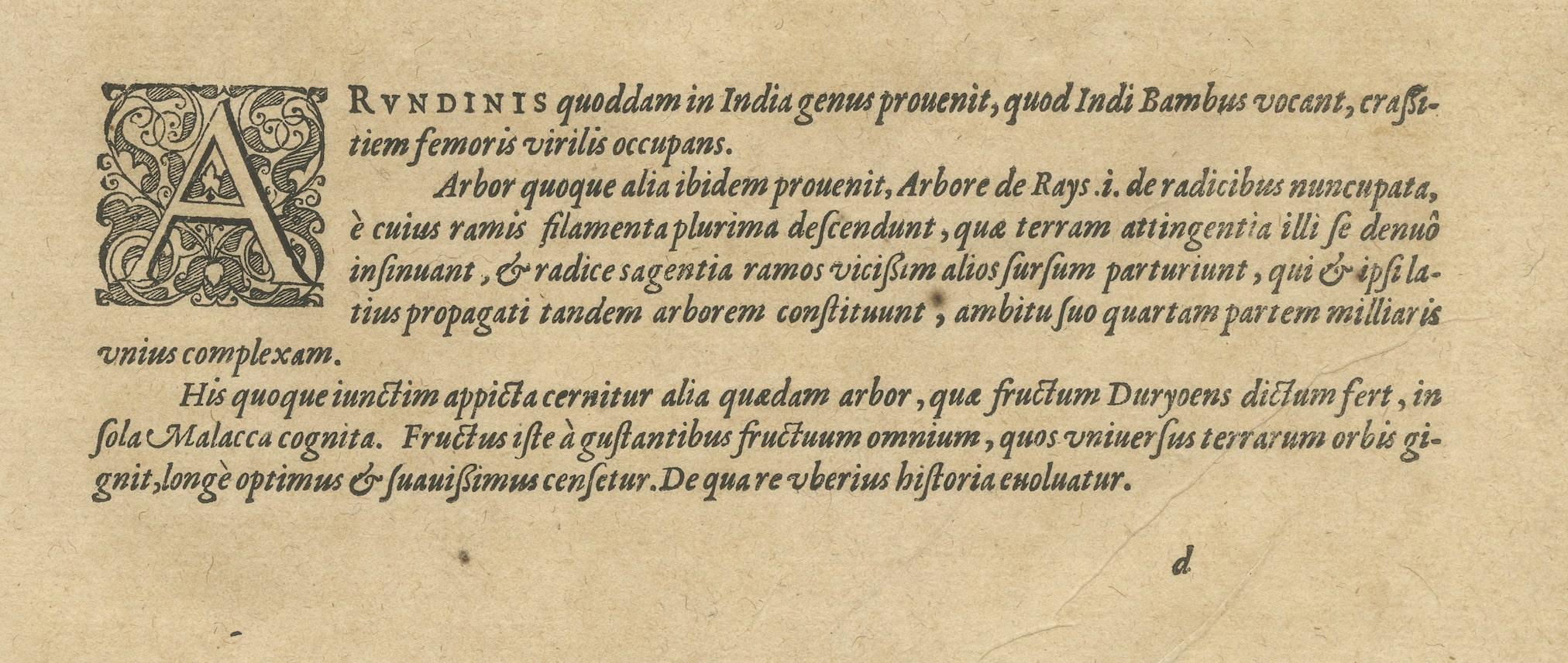
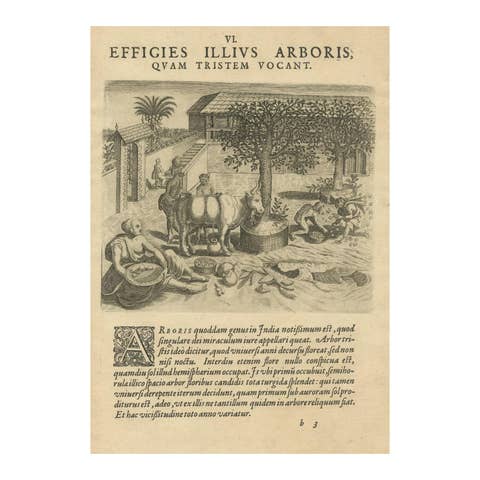
The text provided is in Latin. Here is the English translation:
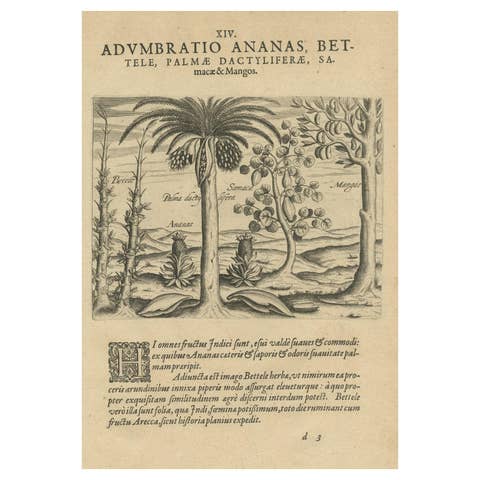
"This palm, or rather nut-bearing tree, is native to India and produces an abundance of fruit. Moreover, the nuts themselves are food, and a very swift drink is also made from them. From this tree, the Indians also obtain the material needed to make the necessary items, such as sails for ships, ropes, and other things of this sort in great quantity; so much so, that life and sustenance for them depend solely on this tree.
This table also expresses the Indian fig, which is consumed throughout the year, and the Indians eat it daily in large amounts.
Finally, the Areca tree is depicted, which bears the Areca fruit, which the Indians, after chewing the leaves of the Betel, consume all day long, as is explained in the history of the fruit itself."
This plate is part of the "Petit Voyages" or "Small Voyages," a series that complemented the "Grands Voyages" or "Great Voyages." Theodore de Bry, a noted engraver and publisher from Liège, Belgium, began these works to illustrate the New World and the Far East based on accounts and drawings from explorers. His works grew to comprise 30 volumes, with later editions published by his children after his death. This particular engraving is a testament to the enduring allure of the unknown that captivated the minds of Europeans during the Age of Exploration.
This piece forms part of a larger corpus of works produced under the supervision of the de Bry family, a lineage of renowned engravers and publishers based in Frankfurt. Initiated by Theodore de Bry in 1590, this series aimed to visually document the epoch of European global exploration and the encounters with the natural world that ensued.
The engraving is a page from Part IV of de Bry's "Petits Voyages," which narrates significant expeditions to the East Indies, including those led by Jan Juygen van Linschoten and Cornelis de Houtman between 1595-97, as well as the journey by Jacob van Neck and Wybrandt van Warwijck in 1598-99. These works were not merely artistic endeavors but also ethnographic records, showcasing indigenous peoples, fauna, flora, and the diverse riches of lands like India, Madagascar, and the East Indies.
Though Theodore de Bry began this ambitious project, it was continued posthumously by his family and later completed by his son-in-law, Matthaus Merian, in 1644. This particular engraving, rich in detail and drama, offers a window into the perilous and wondrous experiences of early...