About this sheet
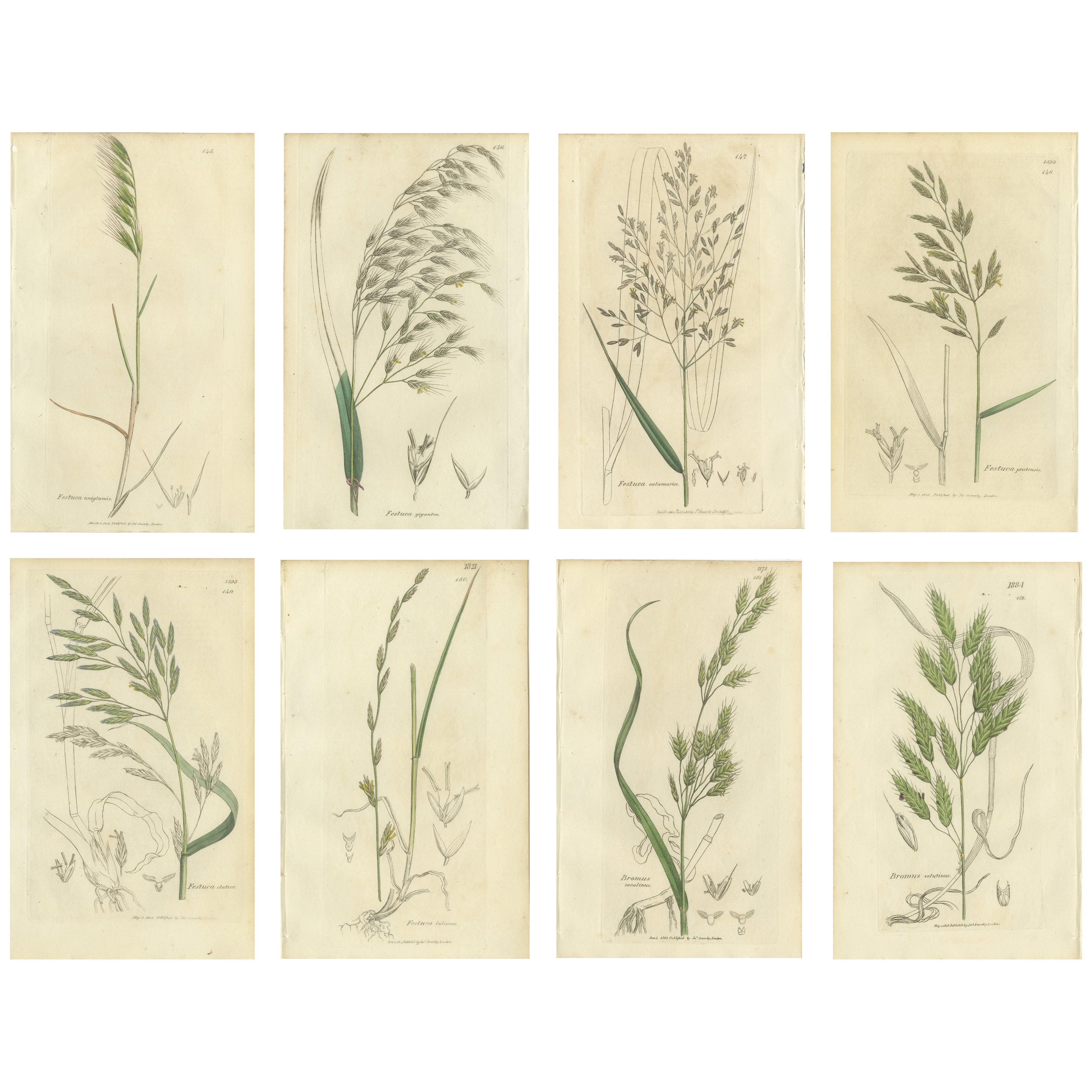
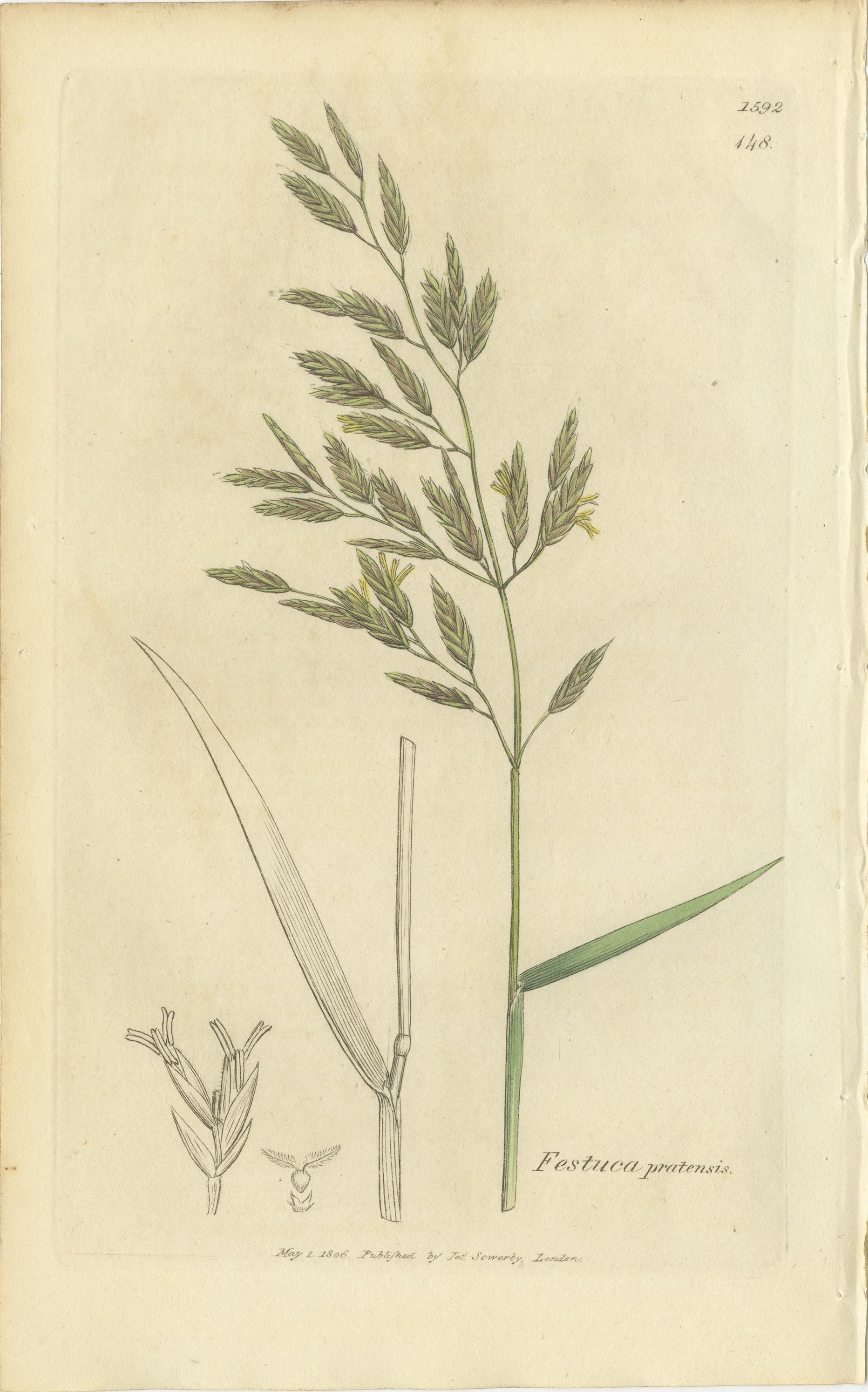
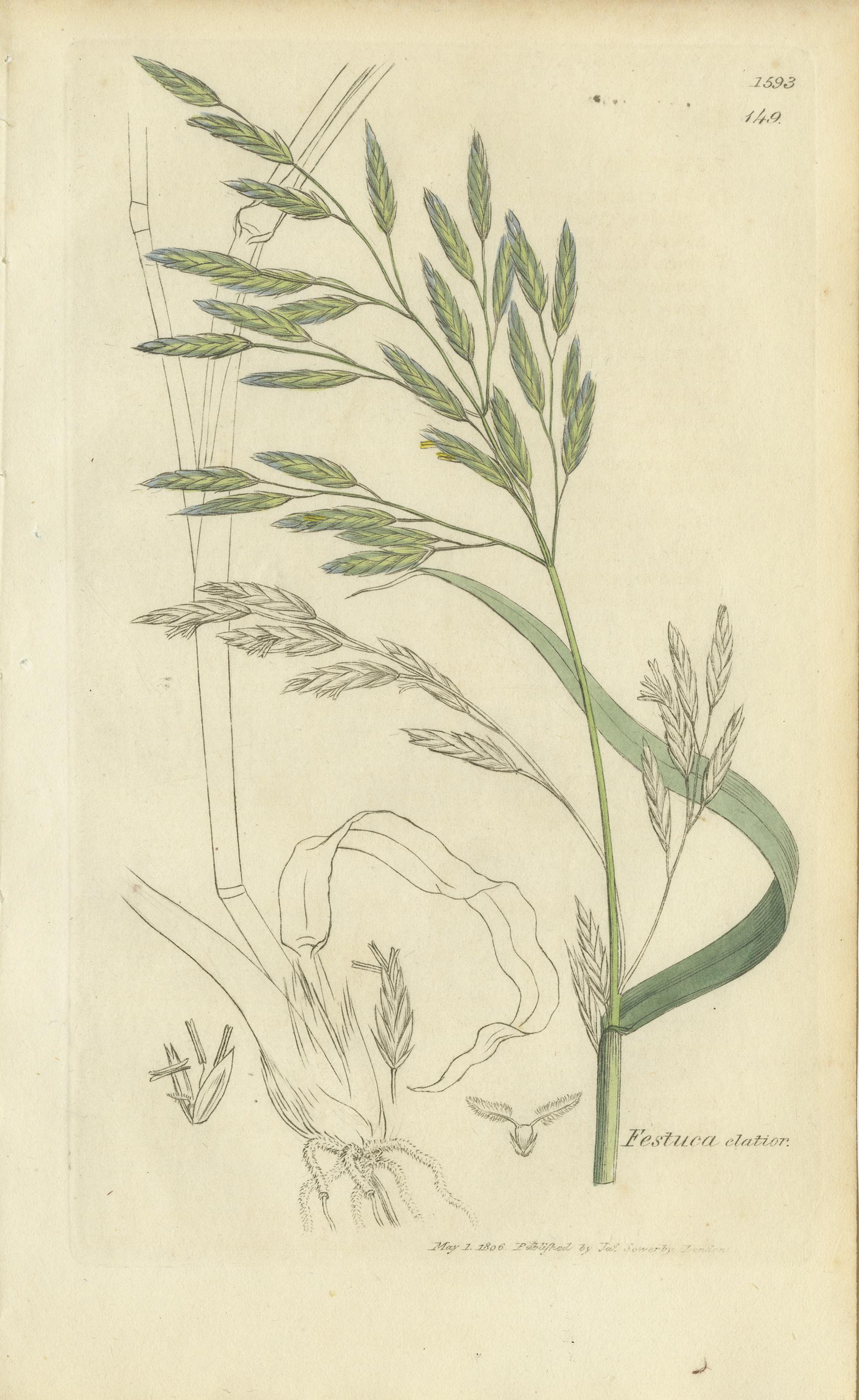
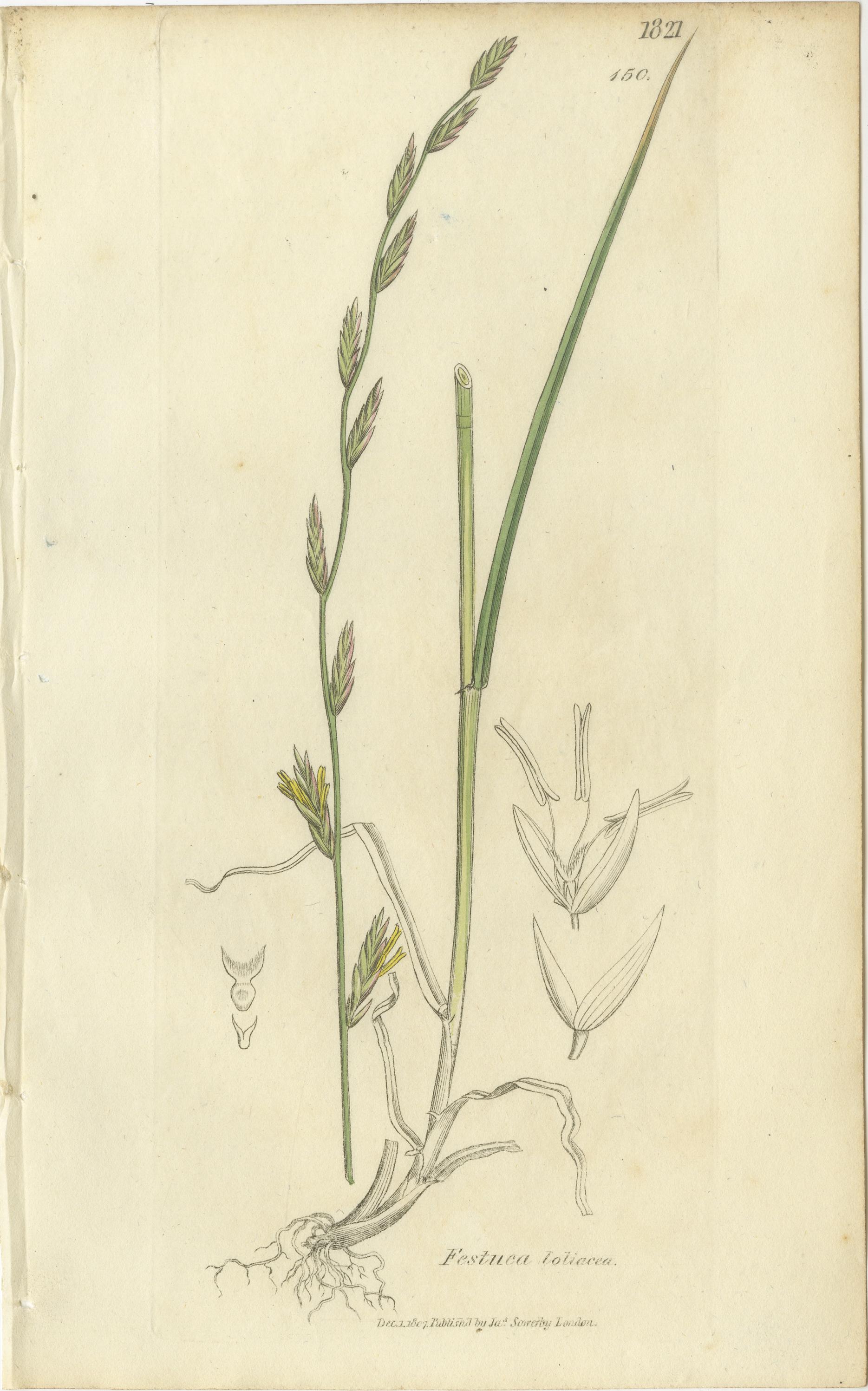
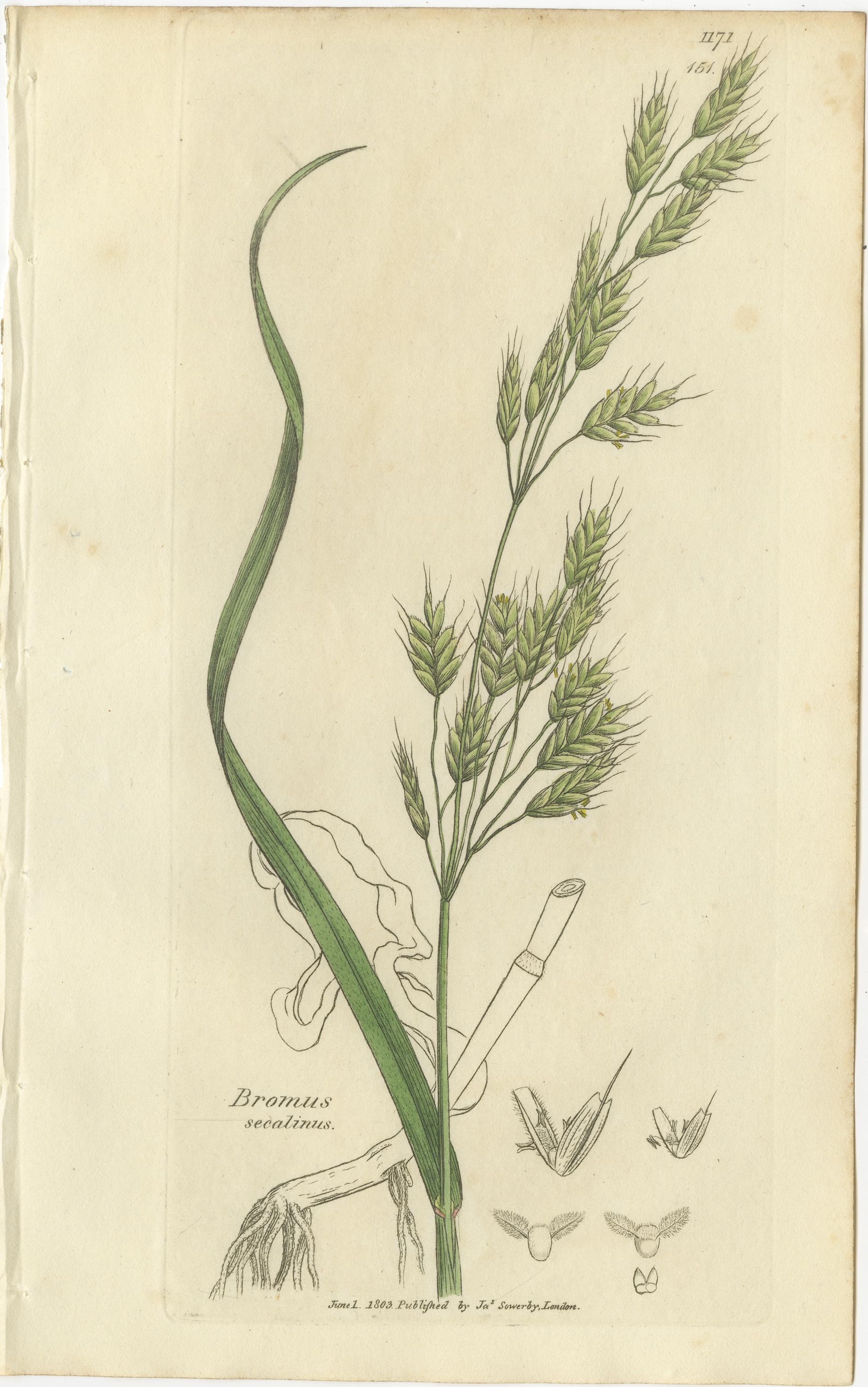
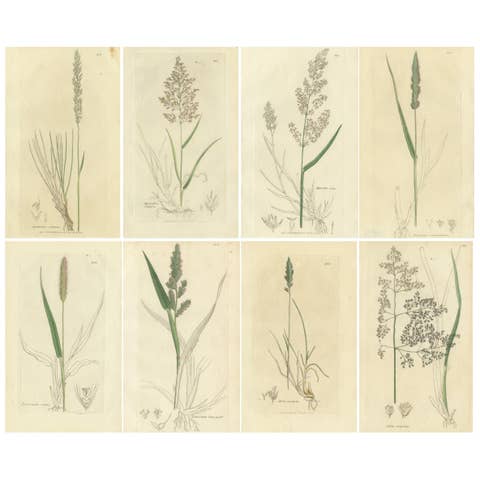
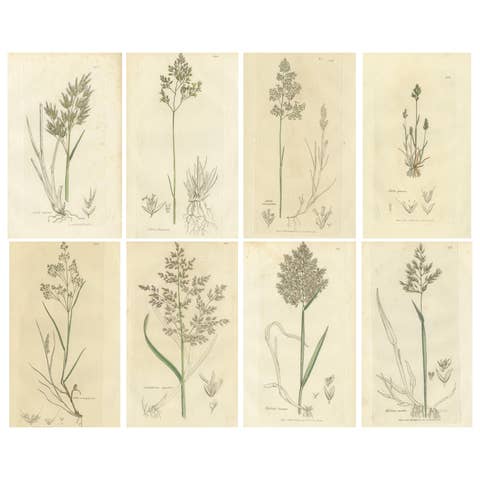
Set of 8 Antique Botanical Engravings of Festuca & Brome Grasses, c.1830
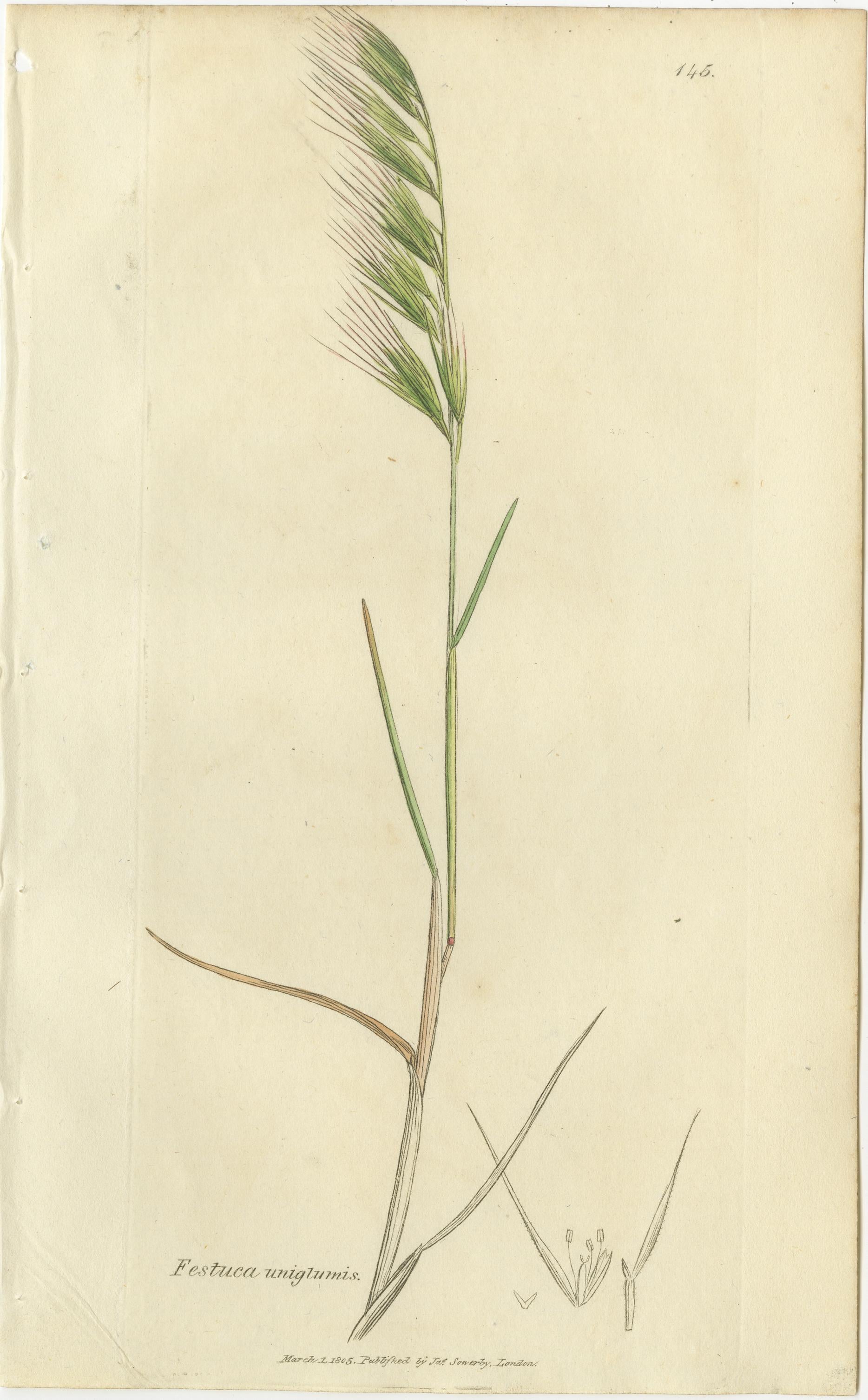
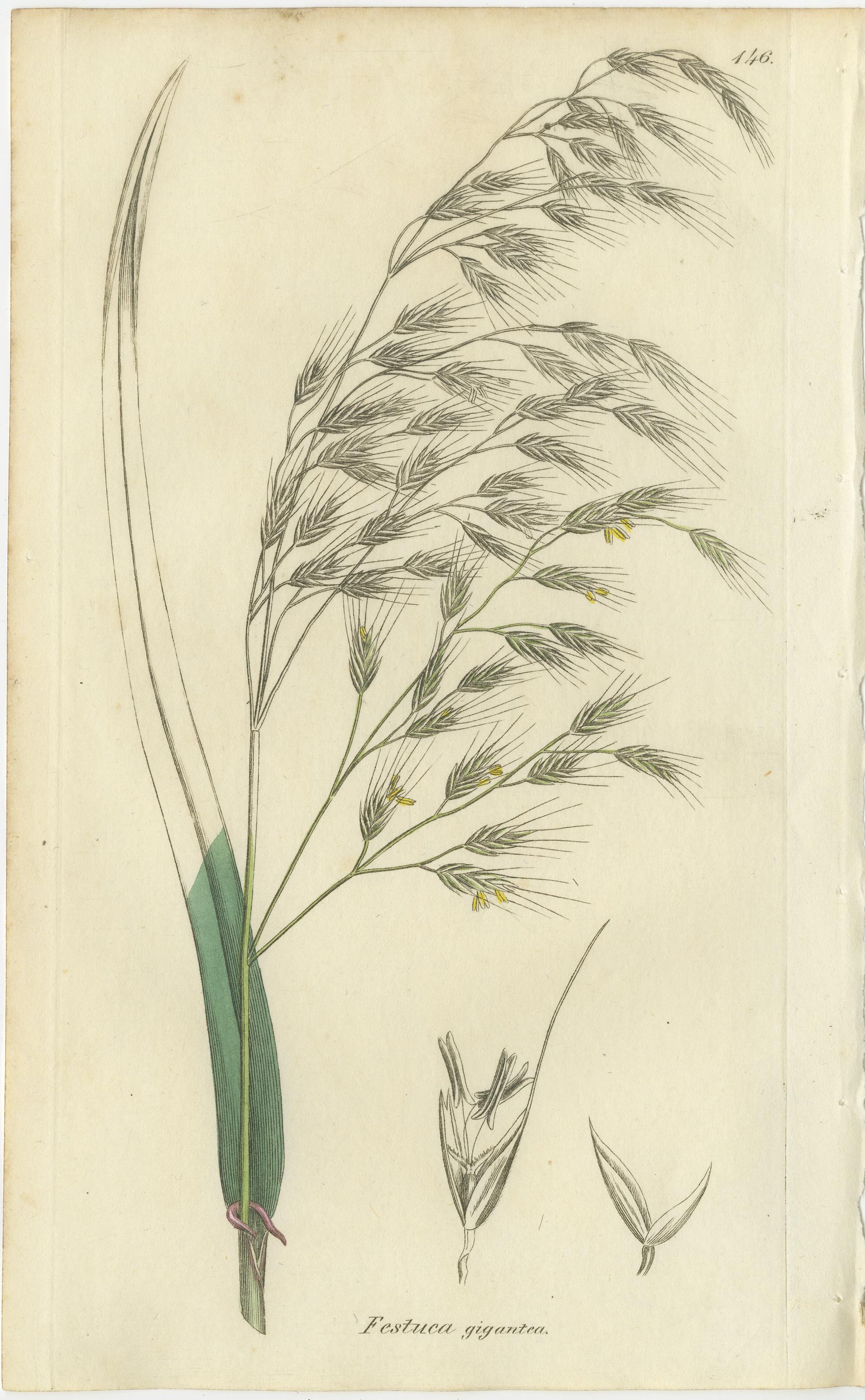
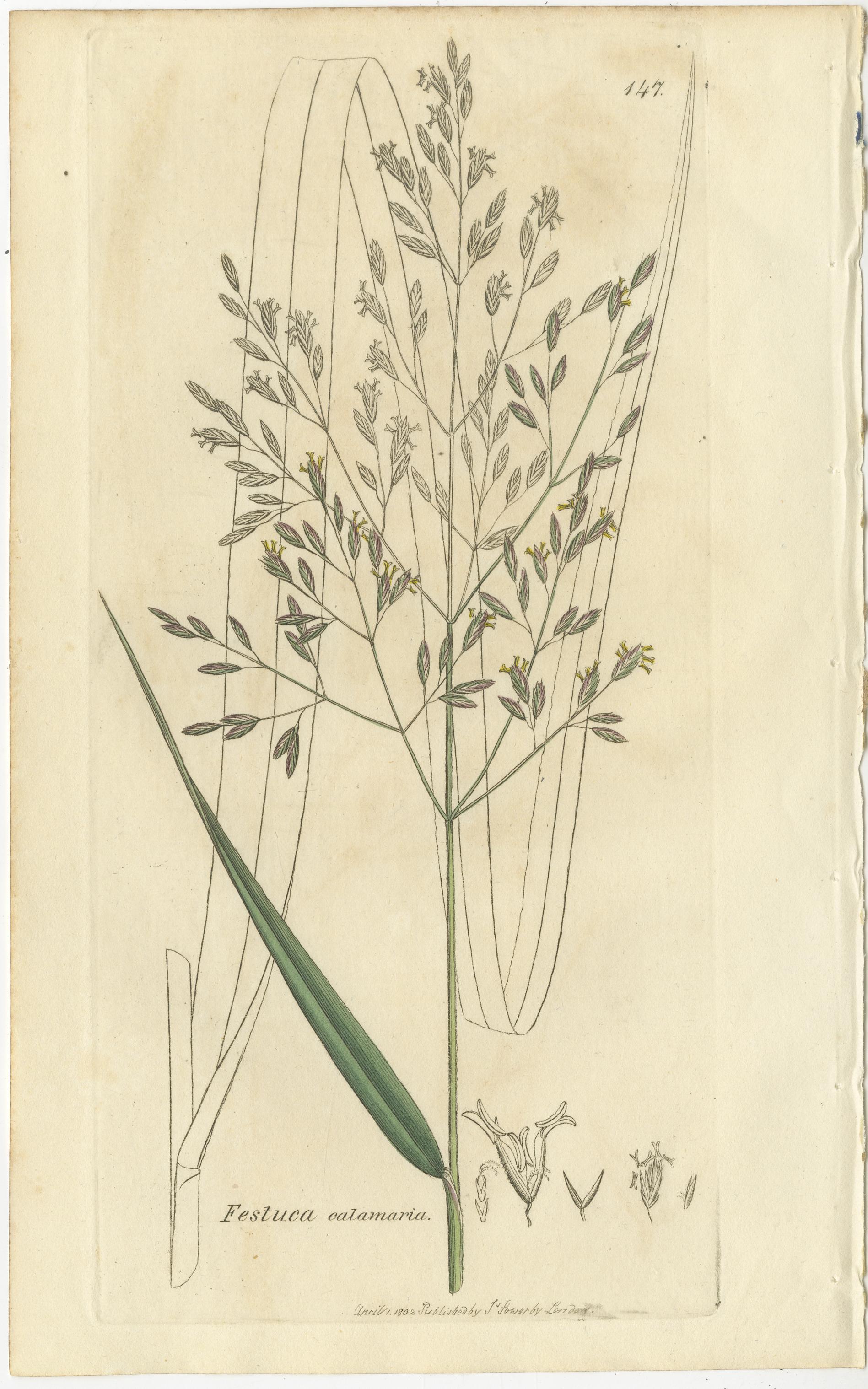
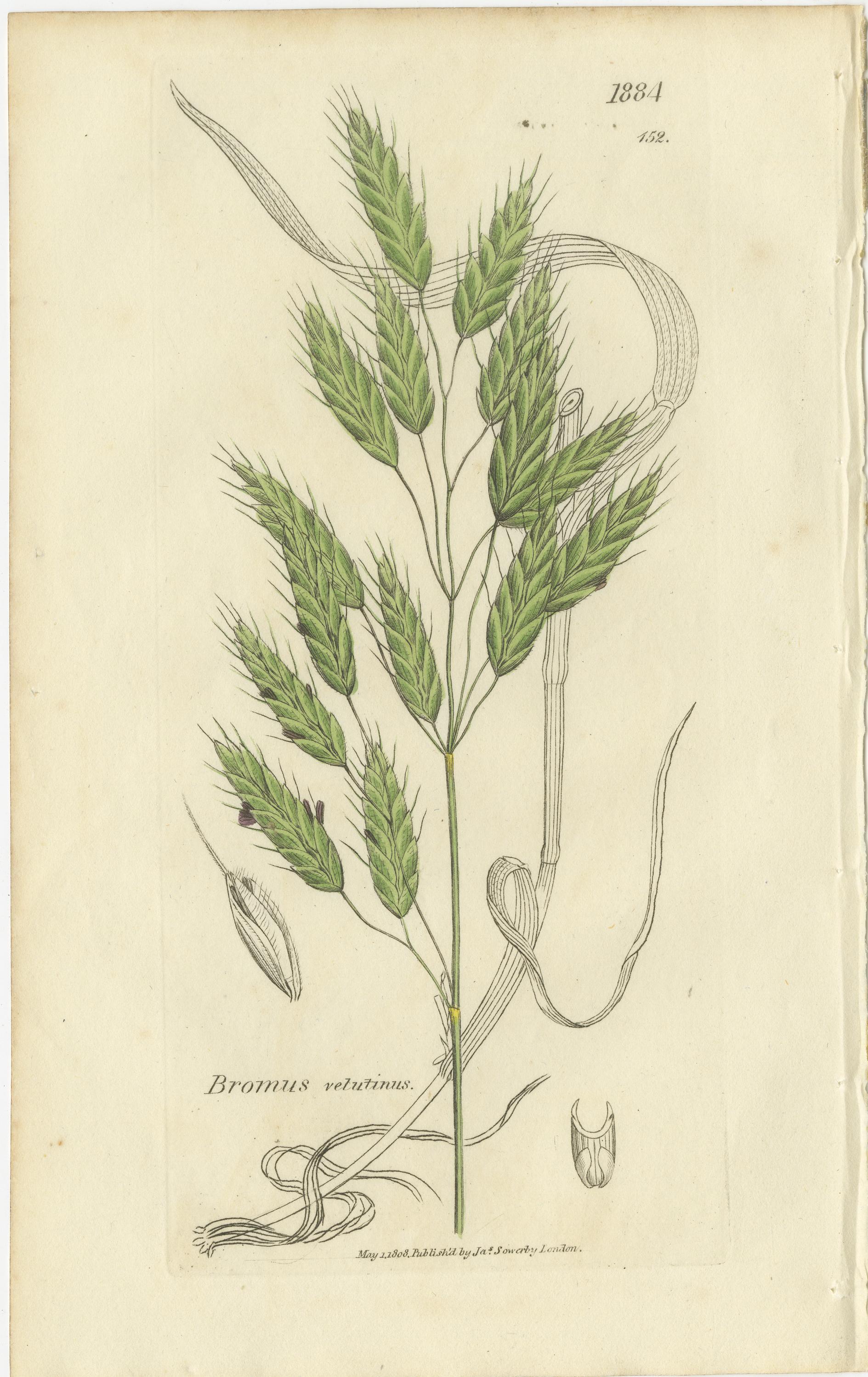
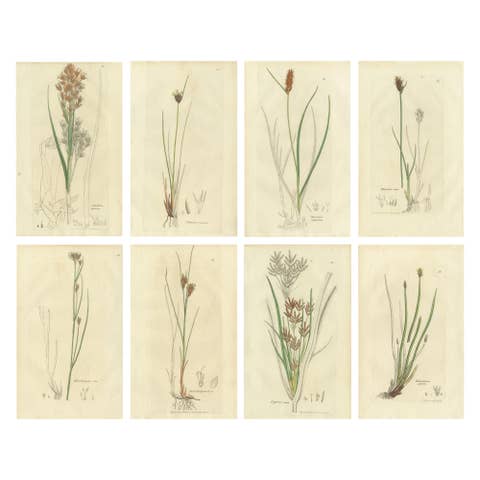
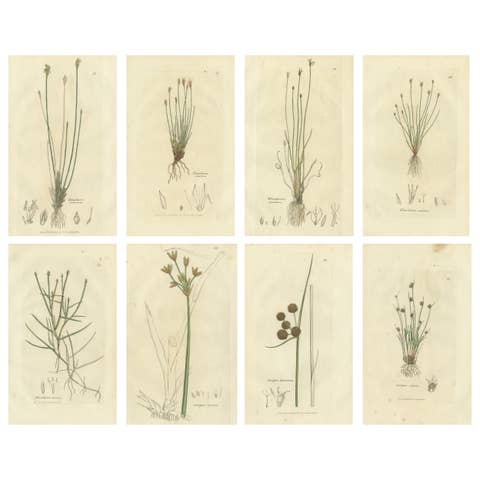
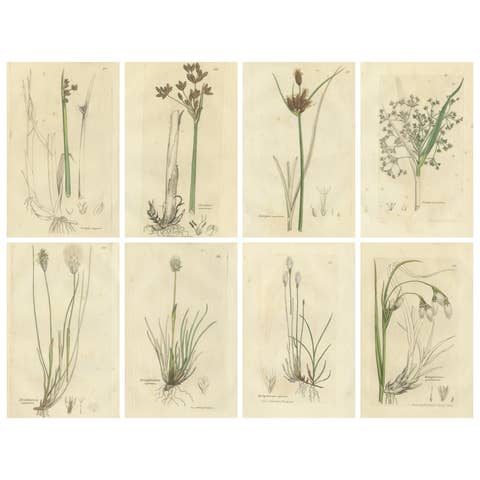
This beautifully unified set of eight early 19th-century botanical engravings features several fine species of Festuca (Fescue) and Bromus (Brome), two of the most elegant and characteristic grass groups of the European landscape. Published circa 1830, the plates were engraved with exceptional precision and lightly hand-colored to highlight the delicate greens and pale seed tones of these graceful species.
Included in the set are Festuca superba, Festuca rigida, Festuca pratensis, Festuca duriuscula, and Festuca elatior, along with two handsome brome species—Bromus erectus and Bromus ramosus. Each plate presents the plant in full habit, accompanied by detailed scientific vignettes of spikelets, florets, glumes, and seeds. The compositional balance of line engraving and subtle tinting gives the set a refined naturalistic character that is both decorative and scientifically accurate.
These plates display especially well together thanks to their consistent proportions, vertical orientation, and harmonious rendering style. In a gallery wall, hallway, study, conservatory, or botanical-themed interior, they bring a calm, textural rhythm to the room. Their crisp outlines and soft natural coloring also make them ideal for interiors with Scandinavian, country, cottage, farmhouse, and light modern aesthetics.
Condition Report:
Good antique condition with light foxing, gentle toning, and minor edge wear associated with early 19th-century paper. Plate marks are strong and clean on all sheets. No tears or repairs. Coloring remains fresh, delicate, and well preserved.
Framing Tips:
Warm white or ivory mats complement the fine lines and pale green tones beautifully. Light wood frames—birch, oak, maple—create a natural and contemporary look, while slim gilt frames lend a more classical feel. Leave the plate mark visible for maximum authenticity and visual depth.
Technique: Copperplate engraving with original hand coloring
Maker: James Sowerby, London, c.1830