About this sheet
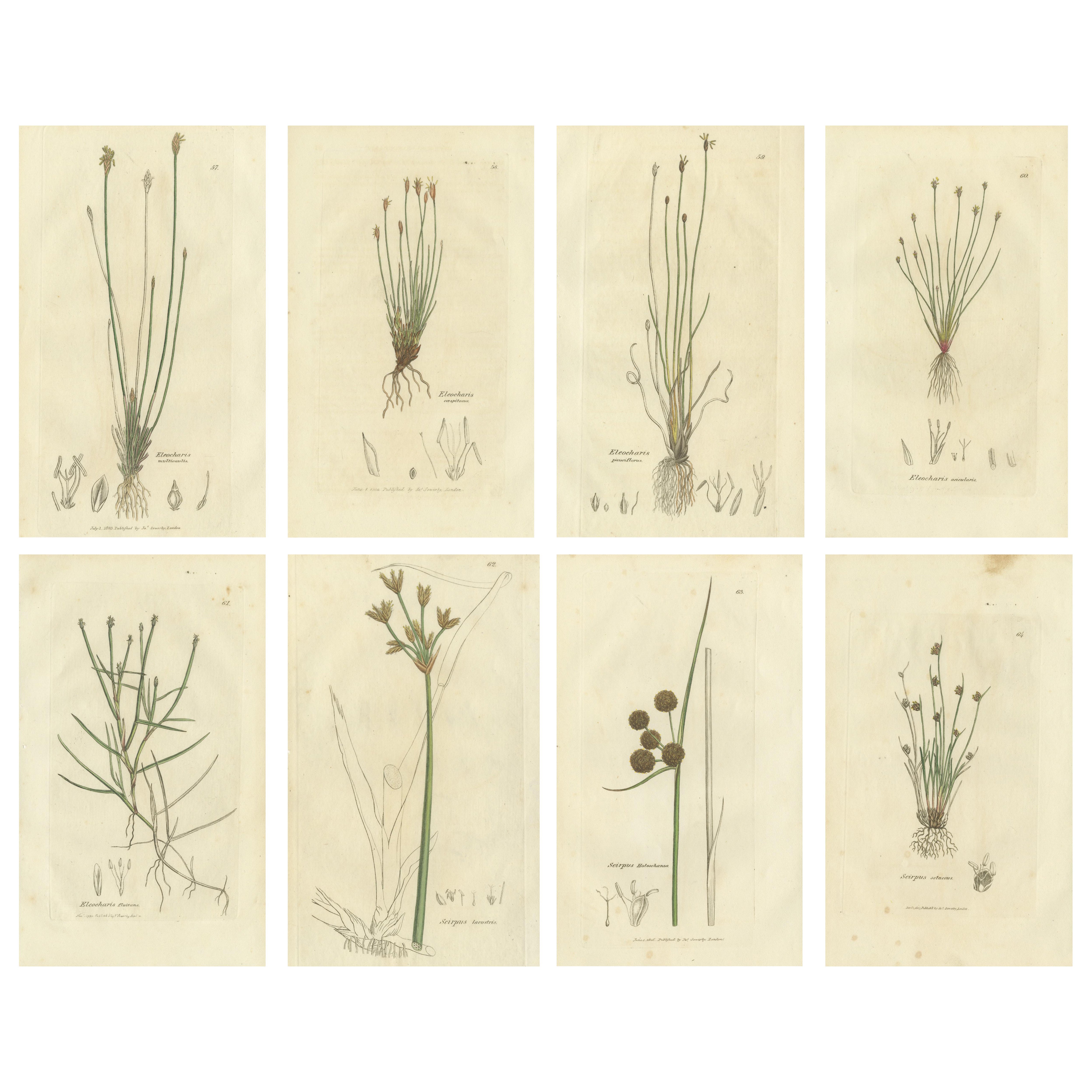
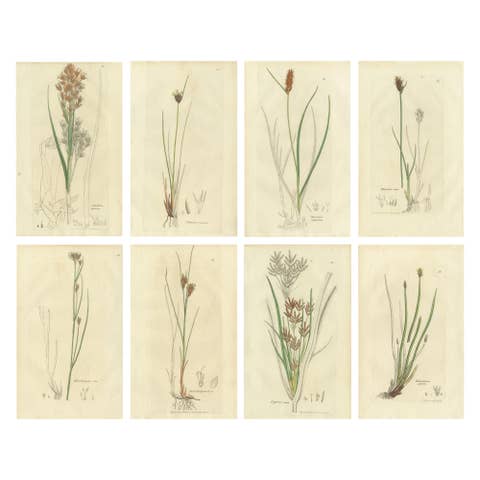
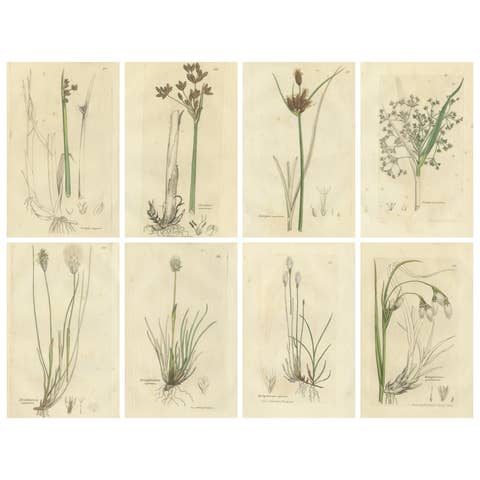
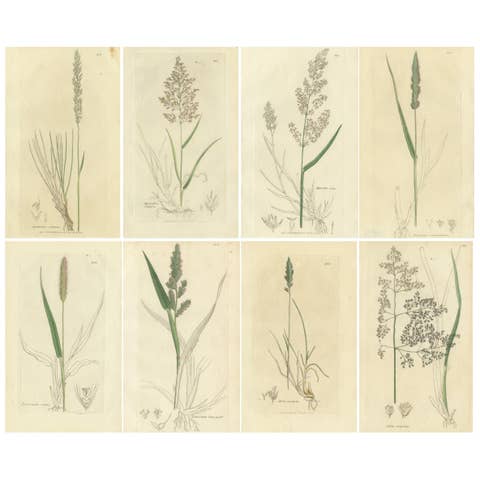
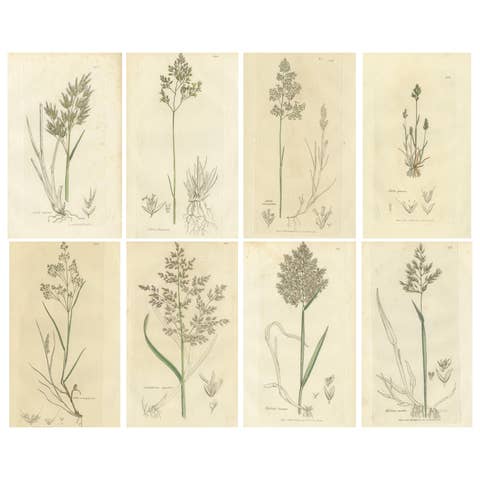
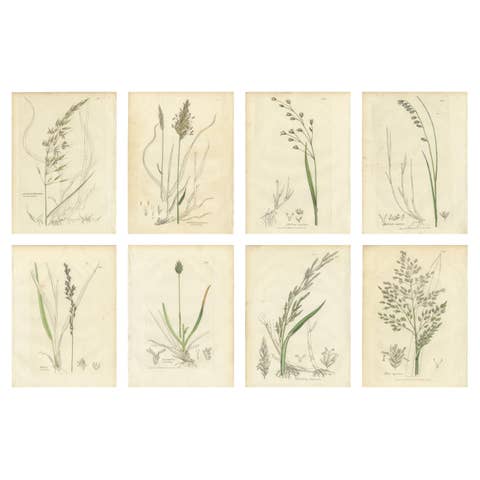
Set of 8 Antique Botanical Engravings of Spike-Rush and Bulrush Species, c.1830
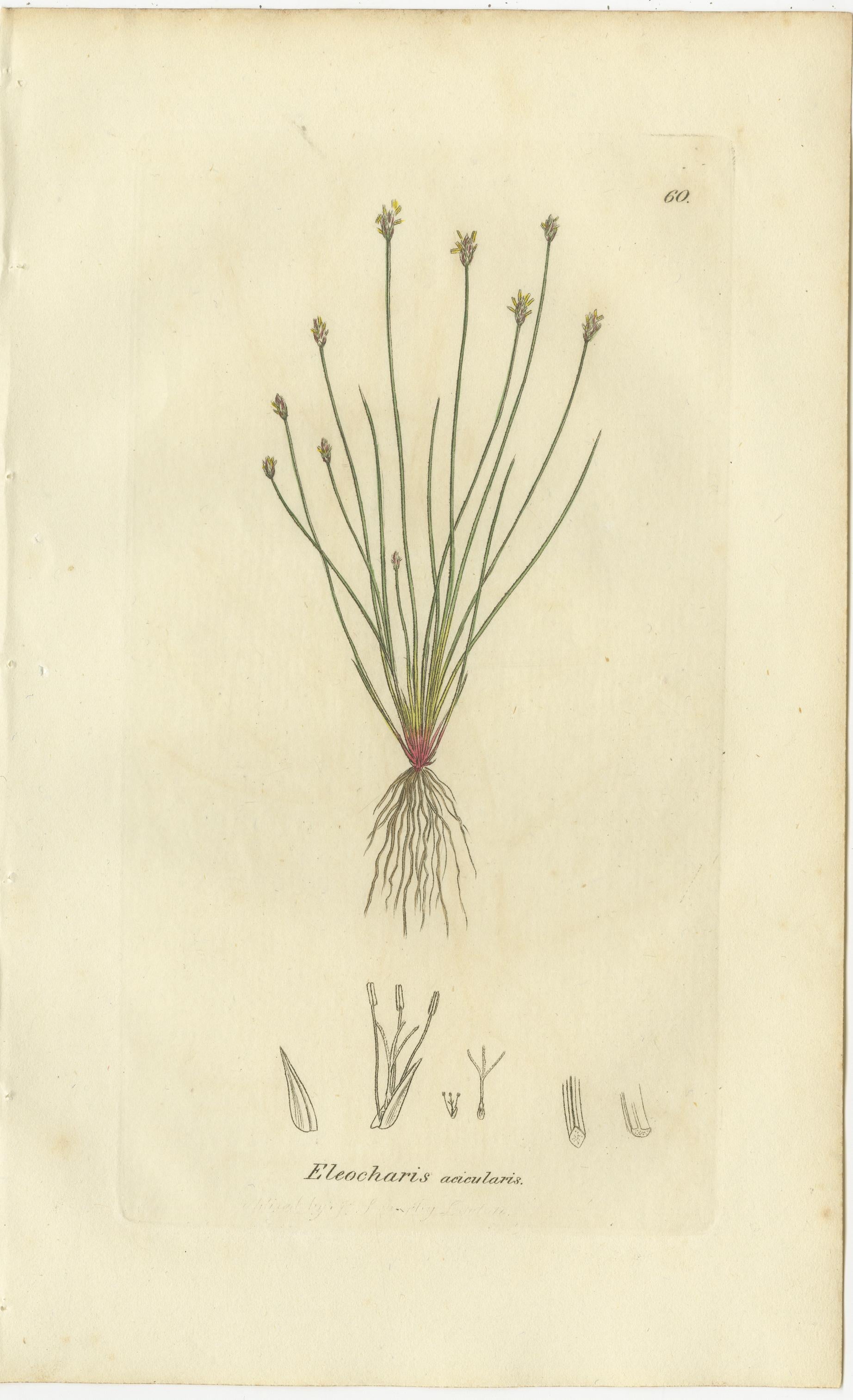
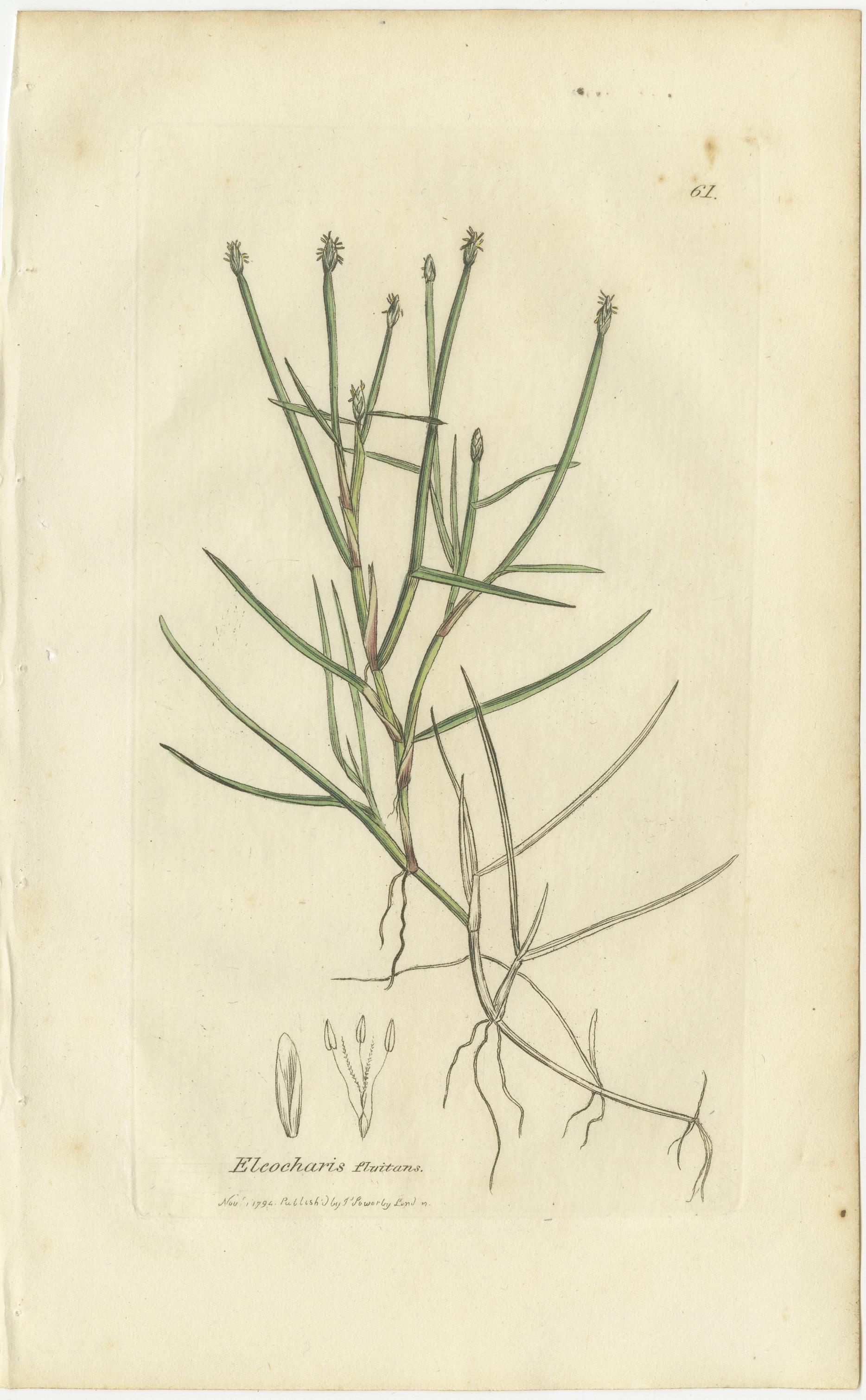
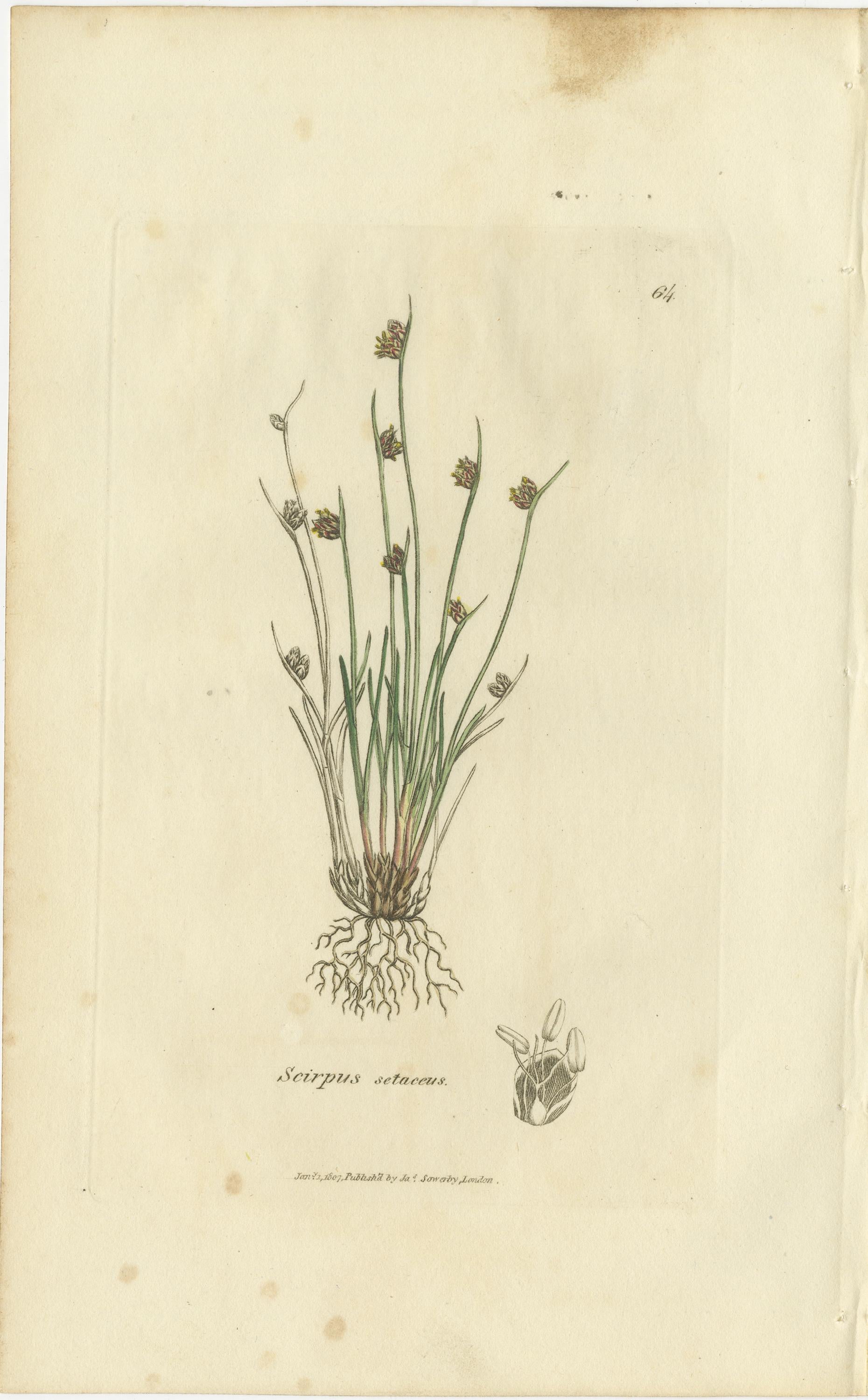
This set of eight antique botanical engravings presents a refined selection of early nineteenth-century British wetland plants, focusing on the elegant and architecturally striking genera Eleocharis and Scirpus. Produced around 1830, these engravings capture the subtle beauty of spike-rushes and bulrushes—plants admired for their fine, upright growth and distinctive seed heads. The simple linear forms, delicate stems, and small inflorescences create a naturally minimalistic aesthetic that works exceptionally well in modern and classical interiors alike.
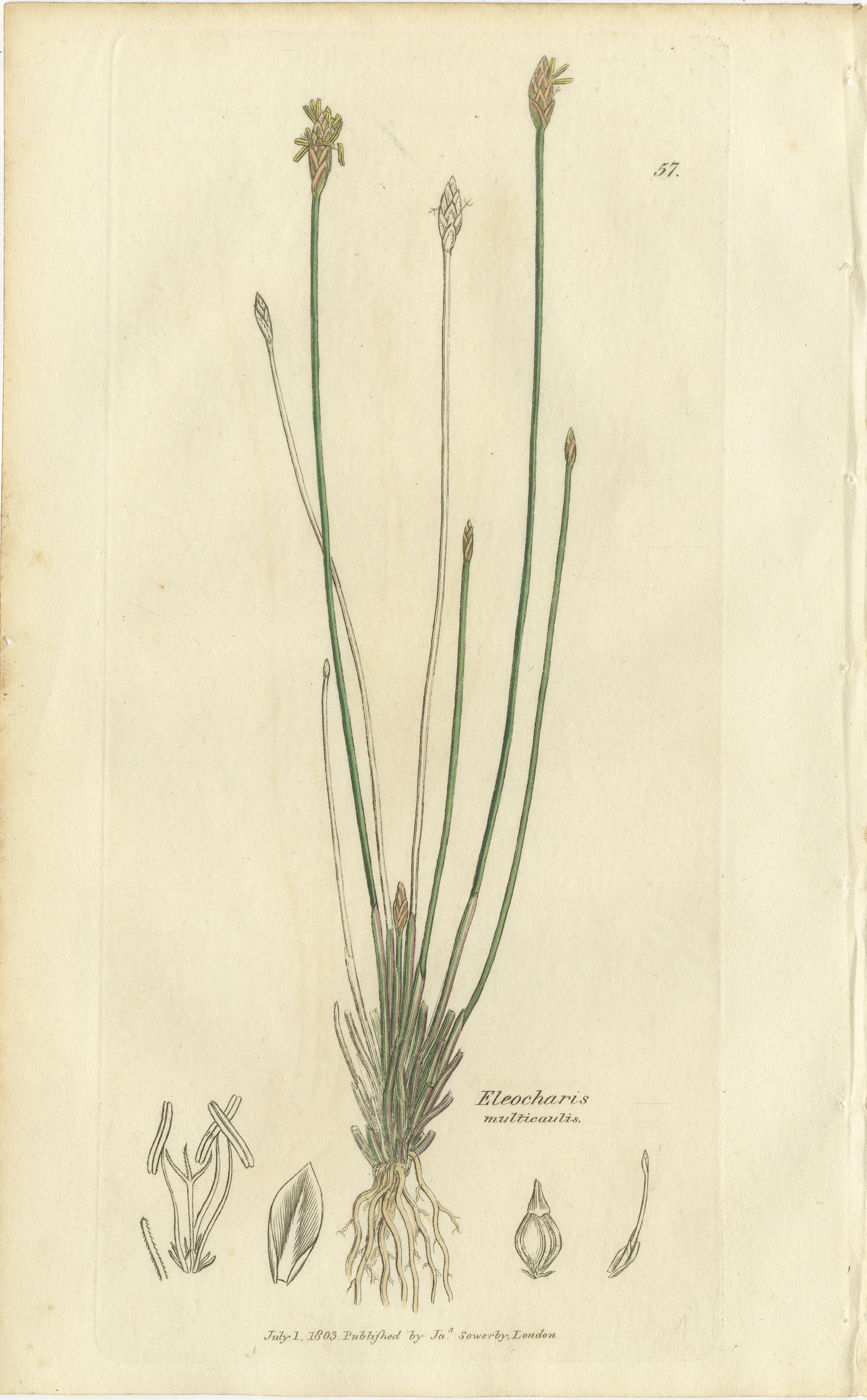
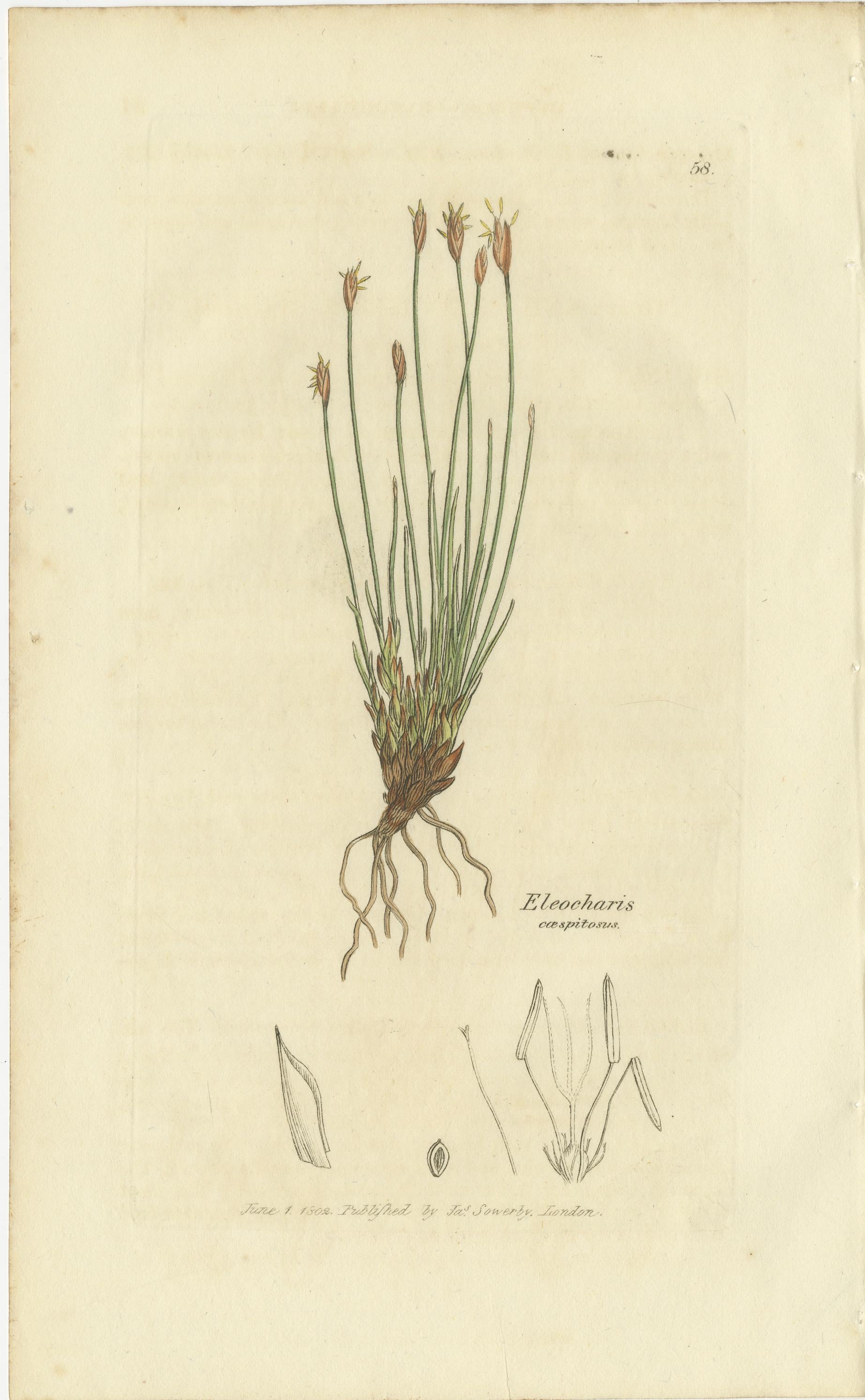
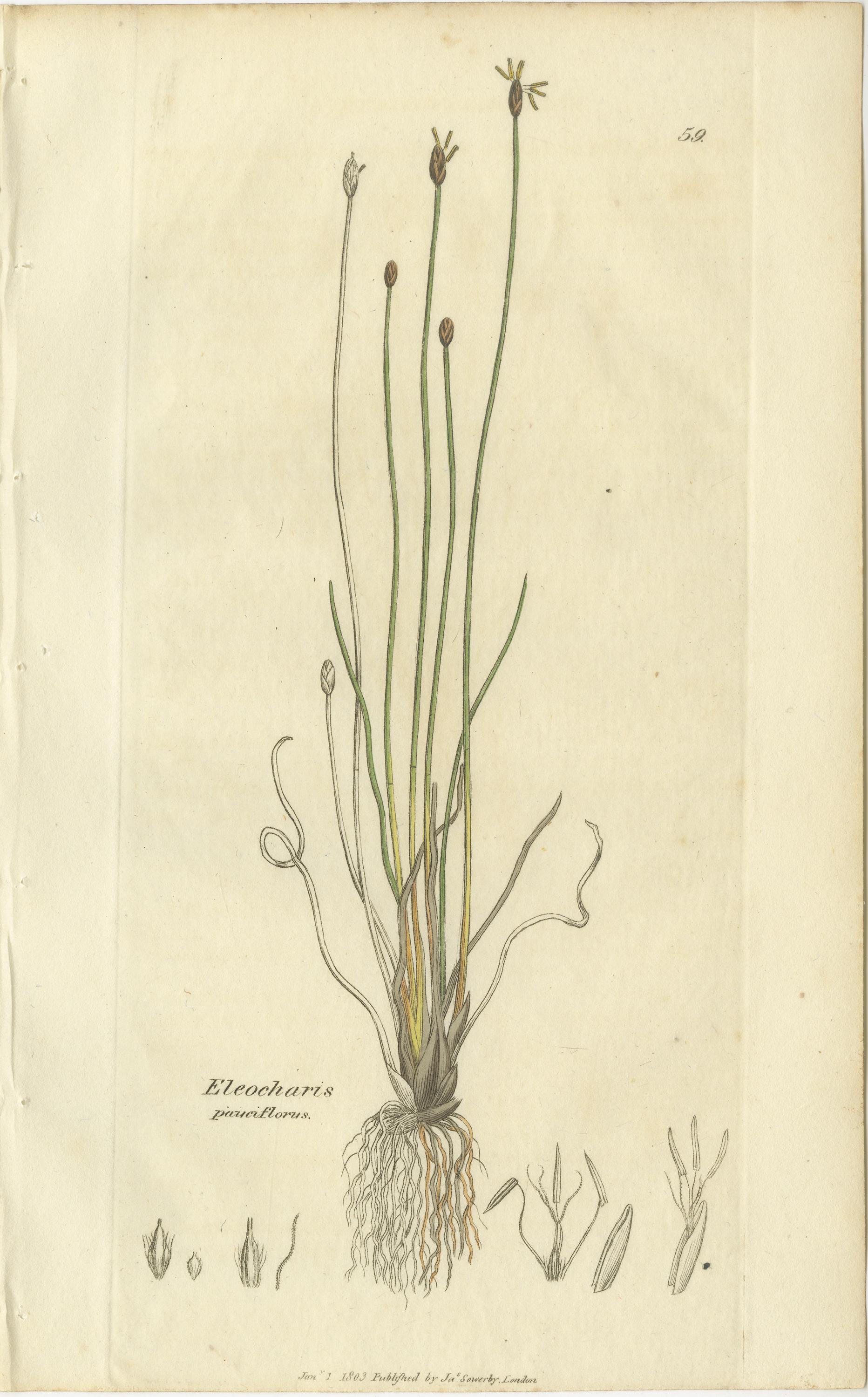
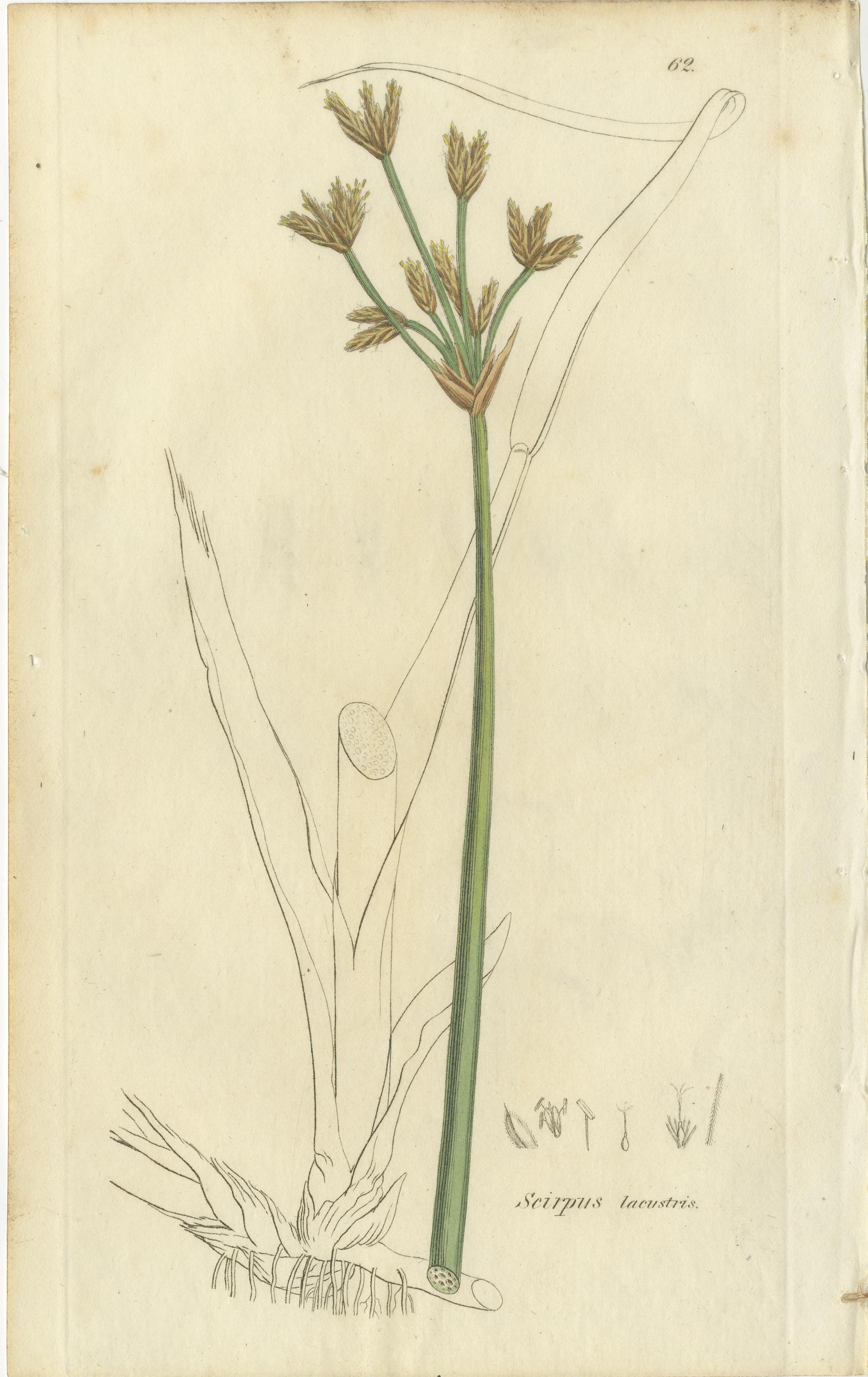
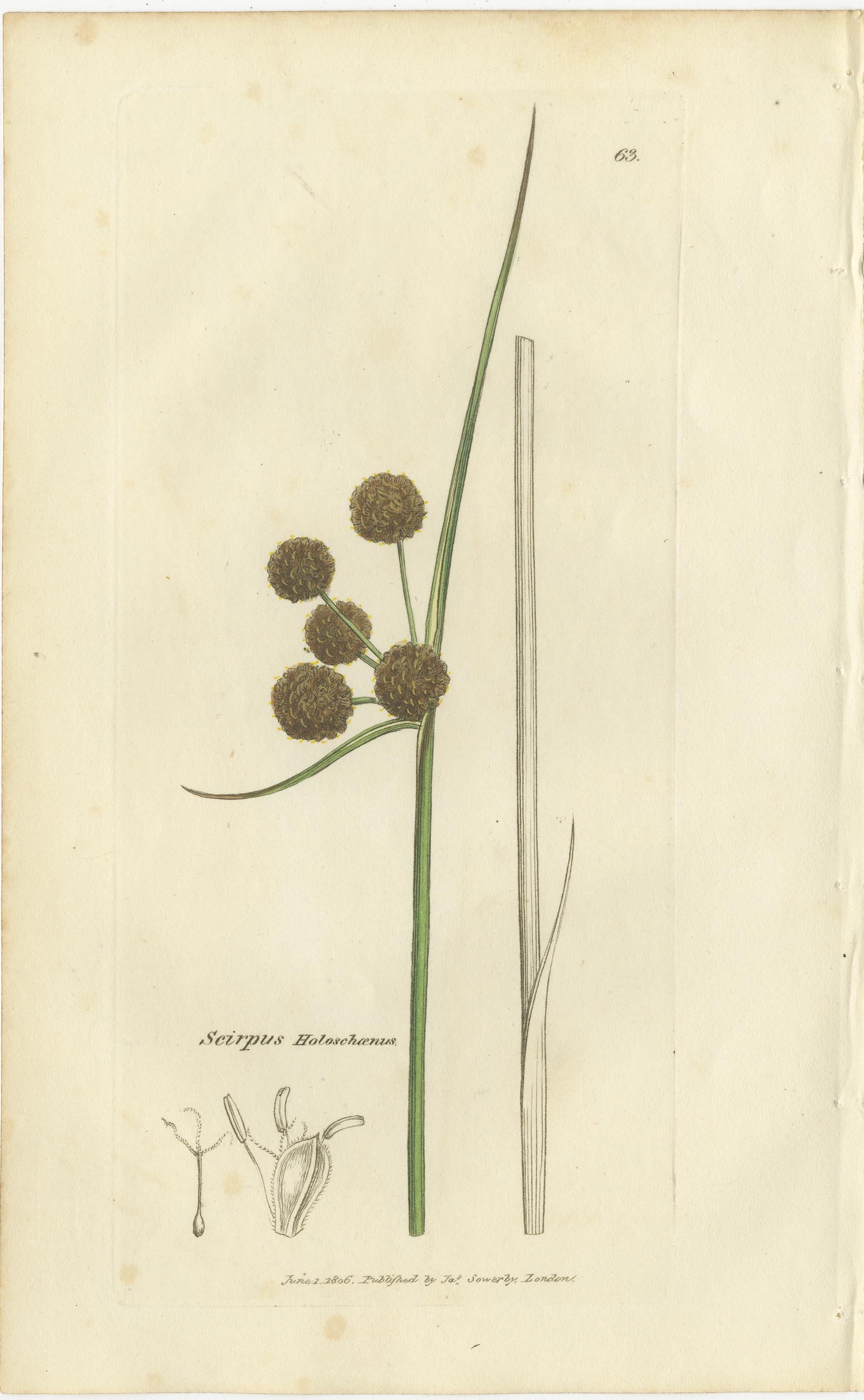
The first six plates depict multiple Eleocharis species, each showing the plant’s slender cylindrical stems, compact root structures, and tiny spikelets. These engravings highlight the variations between species—from the more delicate, grass-like forms to those with stronger architectural presence. The final plates feature Scirpus lacustris (the common bulrush) and Scirpus savii, both illustrated with their rounded seed clusters and characteristic tall habit. Analytical details on each sheet show floral parts, seeds, and structural features with the clarity typical of early botanical illustration.
Together, the eight prints form a cohesive visual grouping, unified by their vertical layout, consistent paper tone, and crisp plate marks. The restrained hand coloring emphasizes natural hues of russet, olive, and soft green, enhancing the fine engraved lines without overwhelming the composition. When framed in two rows of four, this set forms a graceful botanical panel ideal for hallways, living spaces, studios, and contemporary nature-inspired interiors.
Condition Report:
Good condition with light age toning and occasional foxing, typical for early nineteenth-century paper. Plate marks are clearly visible. Edges show minor wear but no tears or losses. Strong impressions and well-preserved surfaces make these prints excellent for display.
Framing Tips:
These engravings pair beautifully with narrow wood or brushed metal frames. A warm white mat highlights the tall, slender structure of the plants, while double matting can add depth and emphasize the plate mark. Natural wood frames (oak, ash, beech) complement the minimalist style especially well.
Technique: Copperplate engraving with original hand coloring
Maker: James Sowerby, London, c.1830