About this sheet
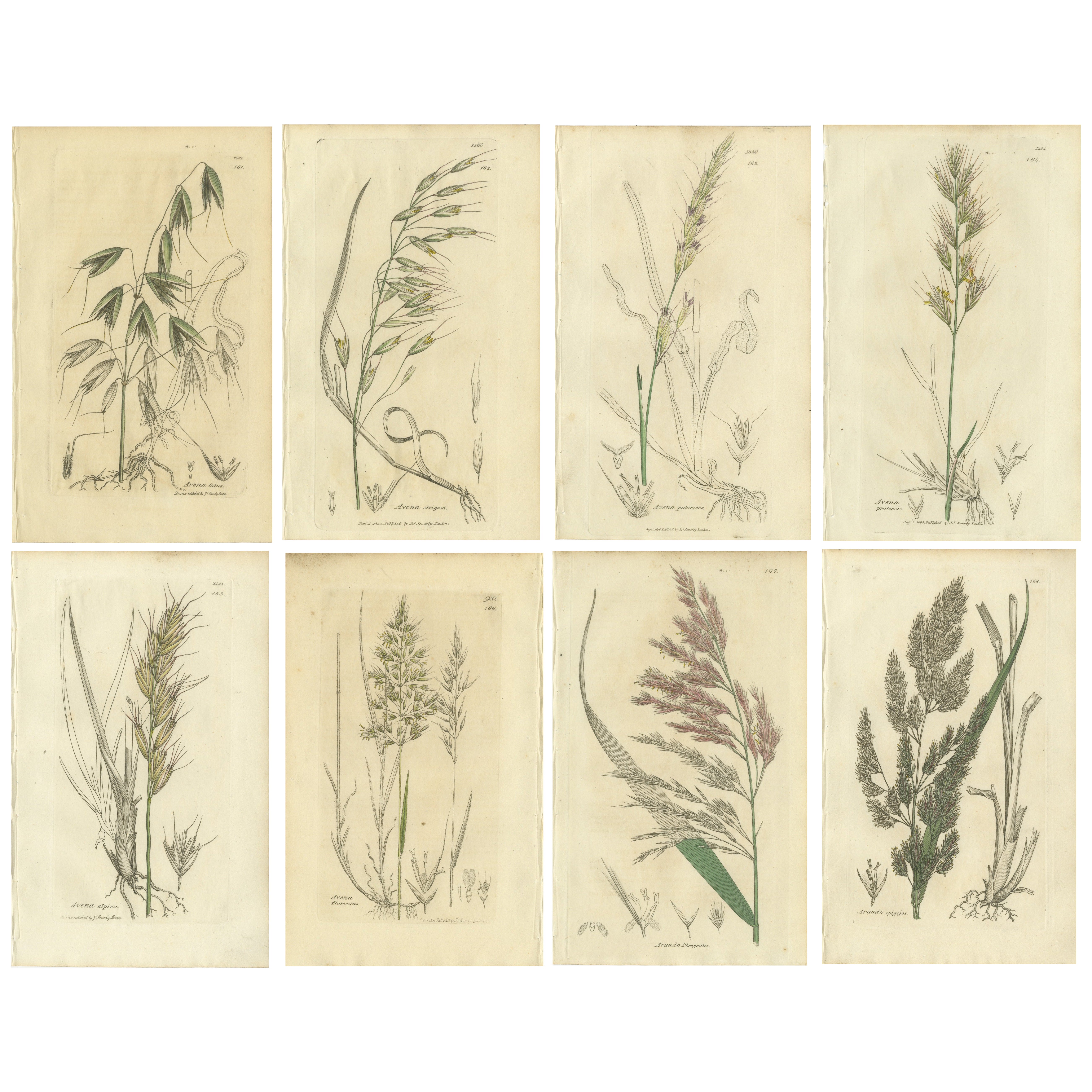
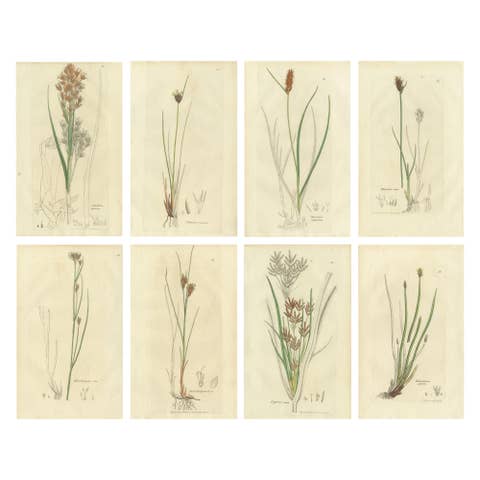
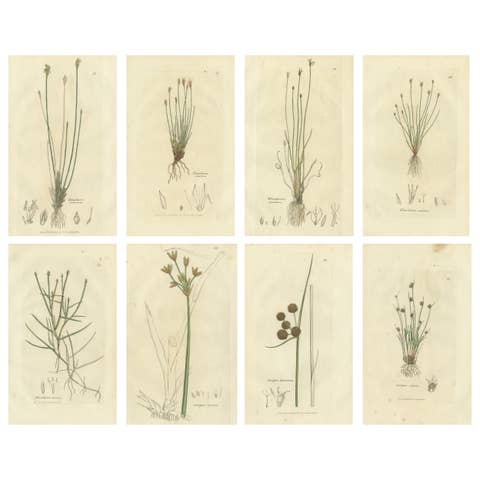
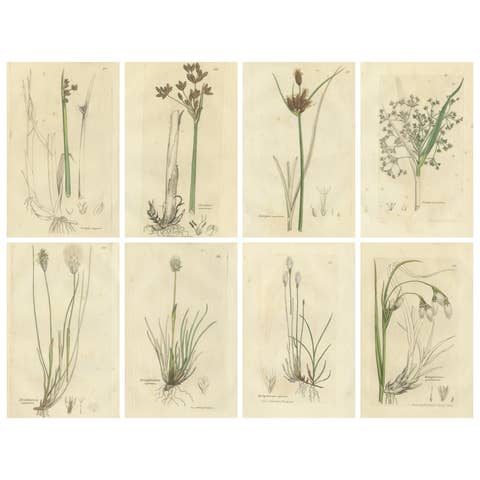
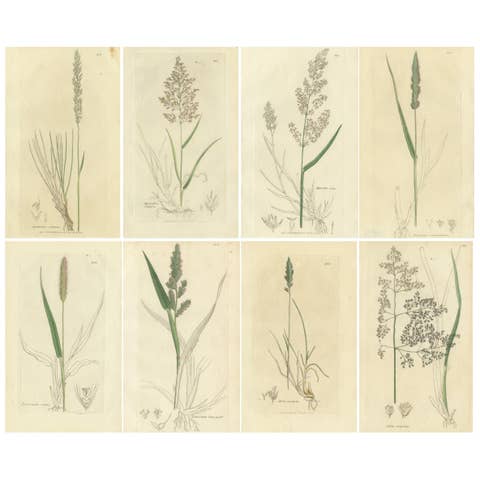
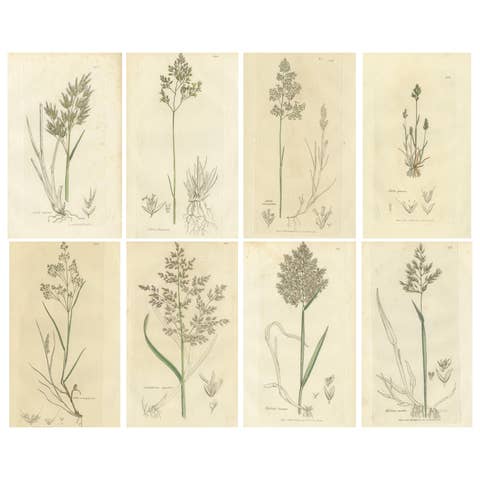
Set of 8 Antique Botanical Engravings of Avena, Arundo and Meadow Grasses, c.1830
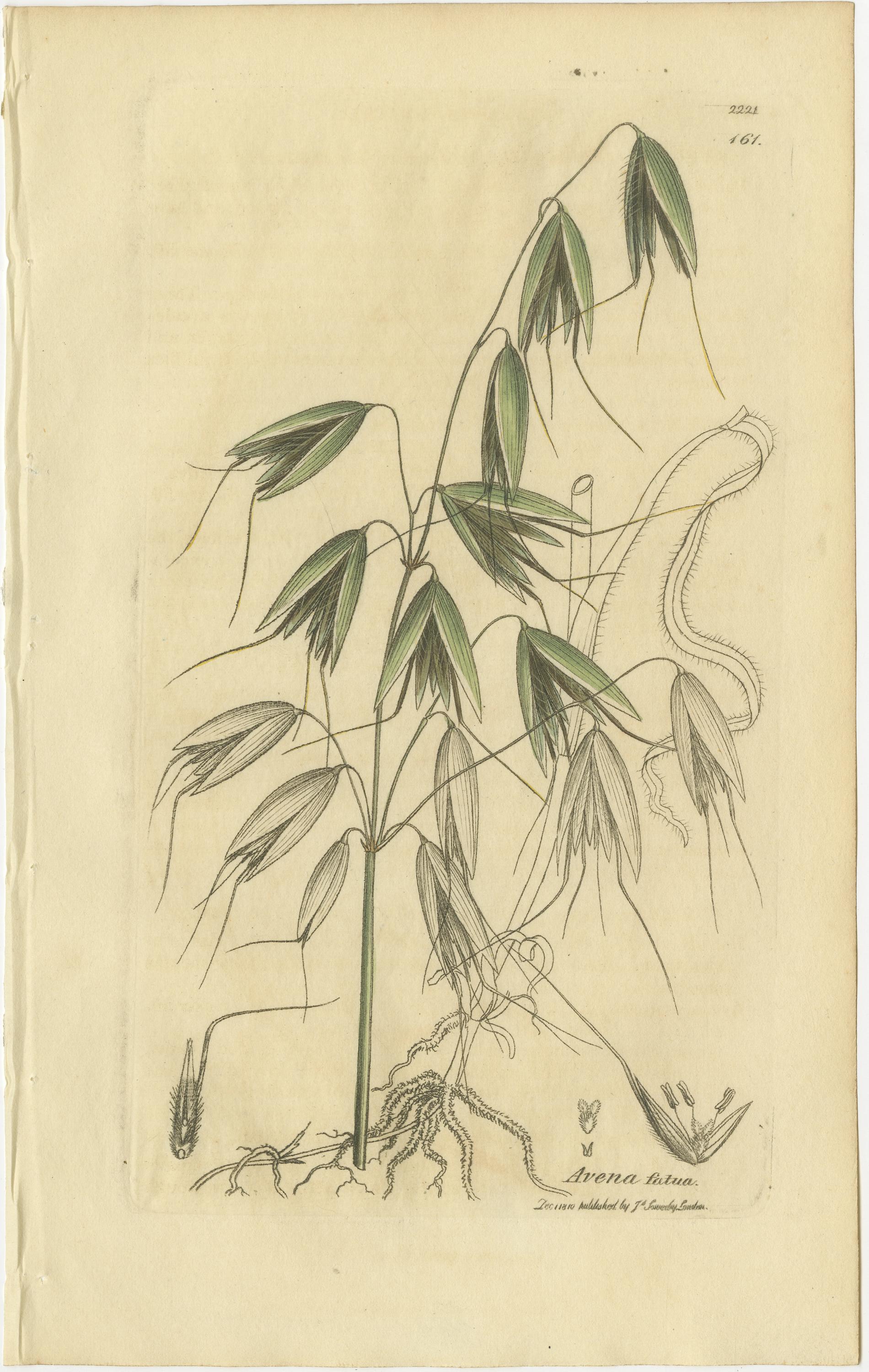
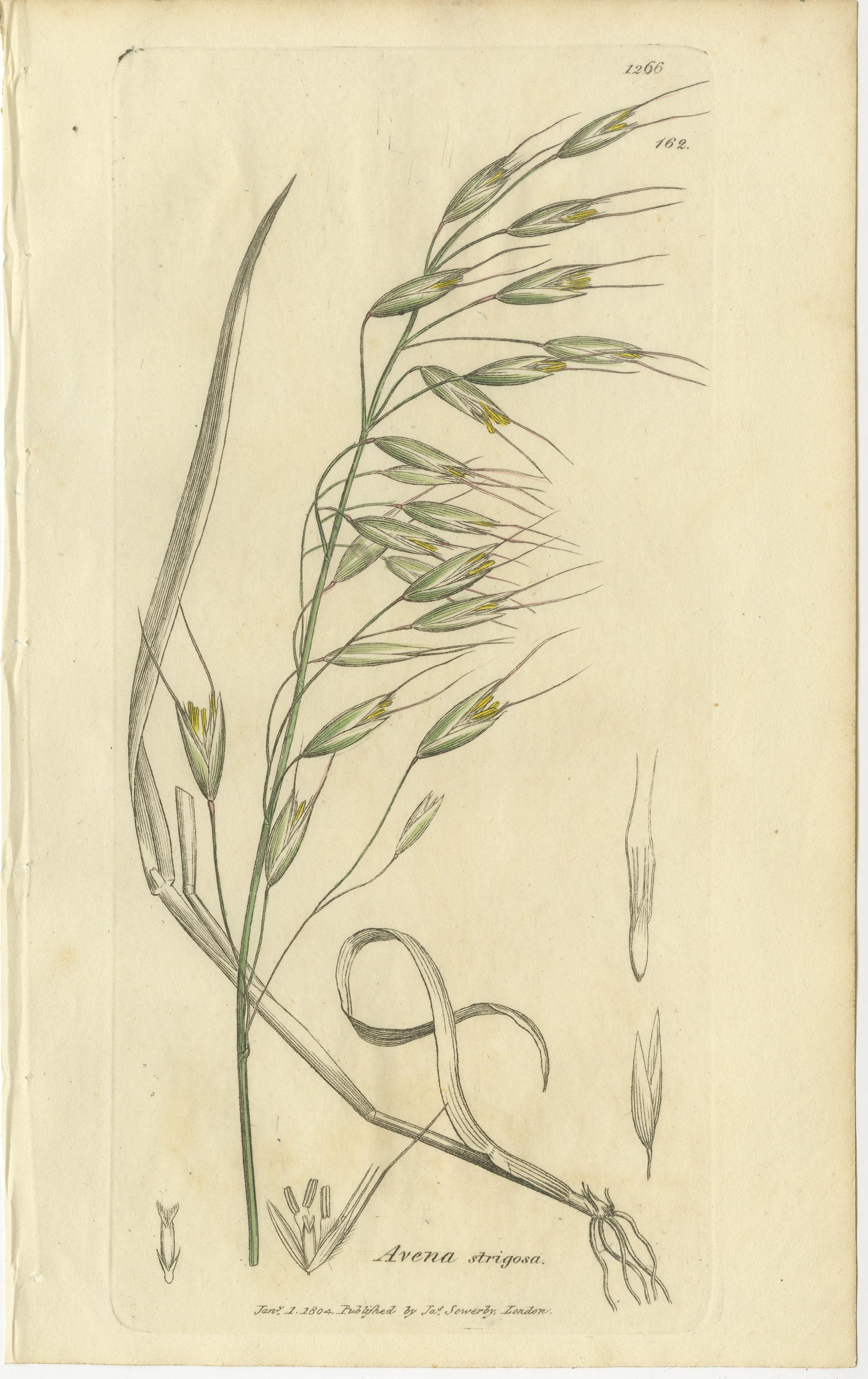
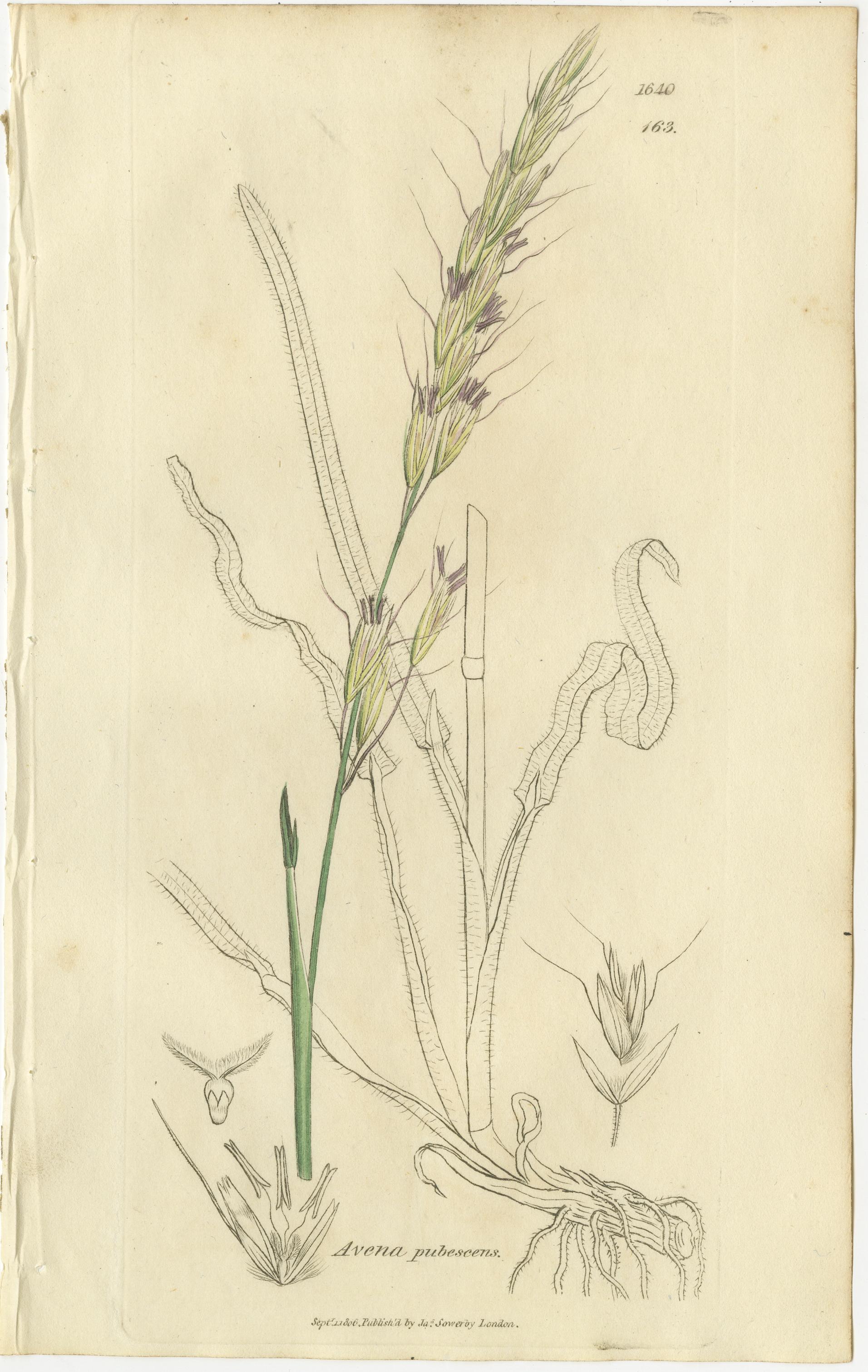
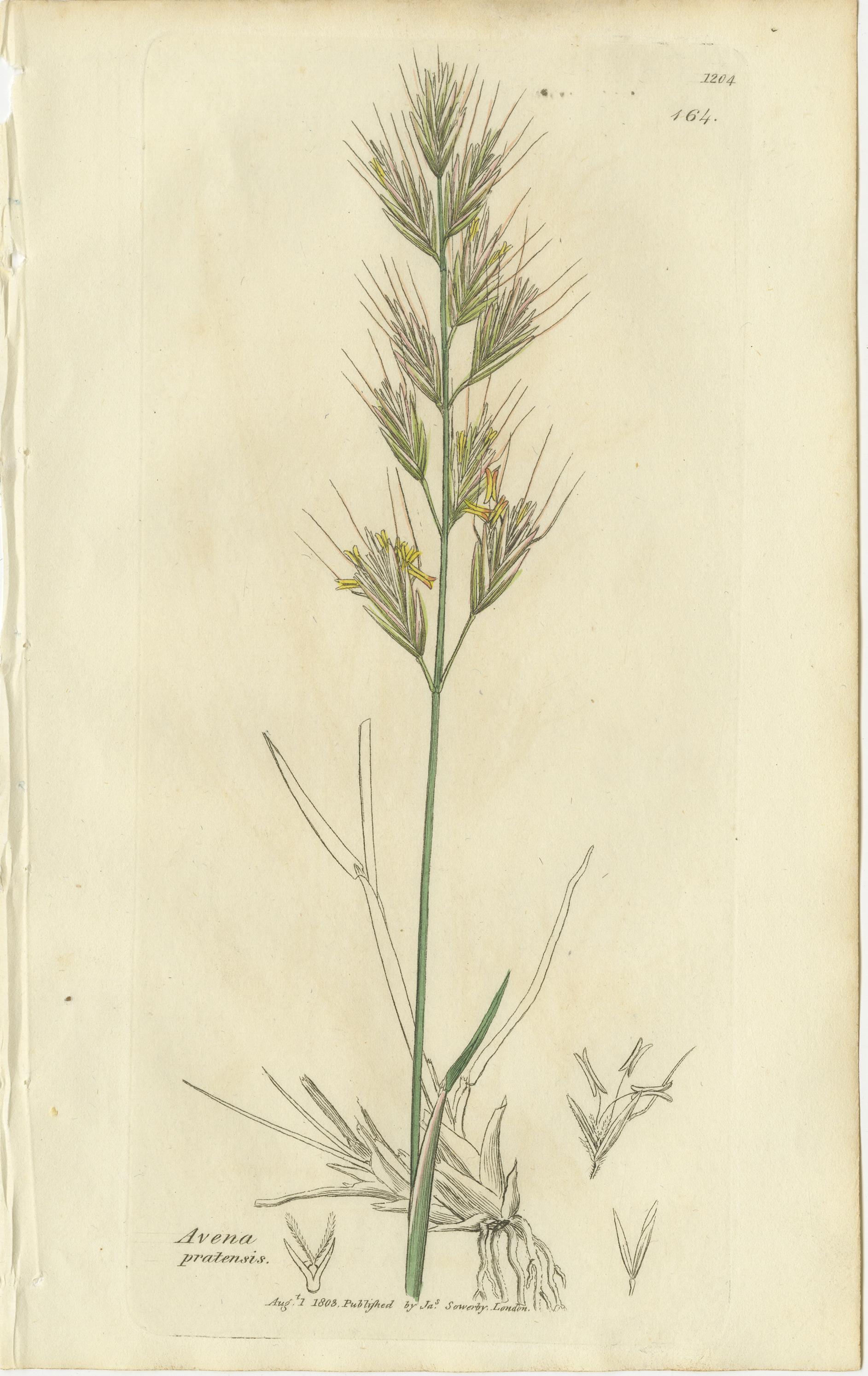
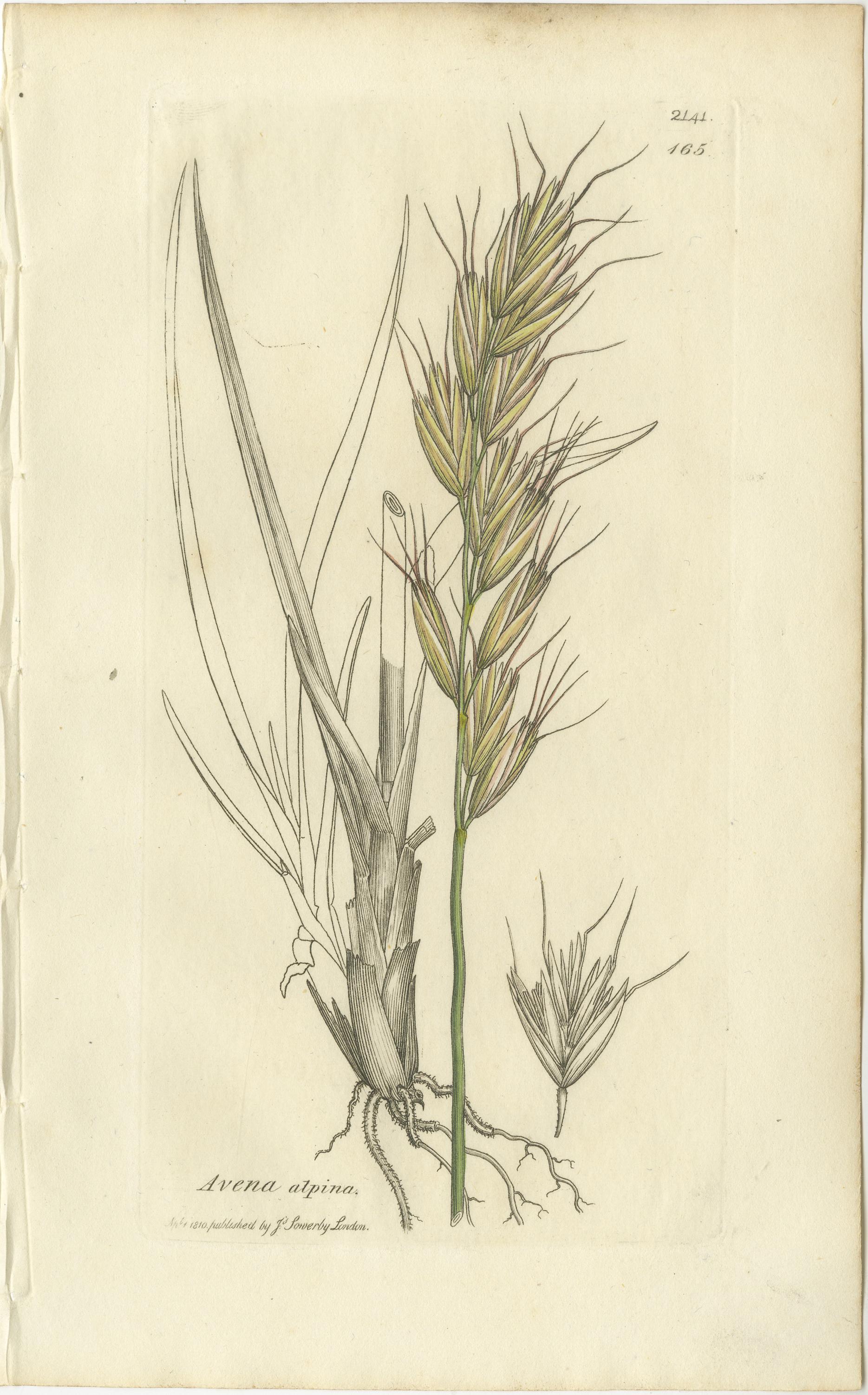
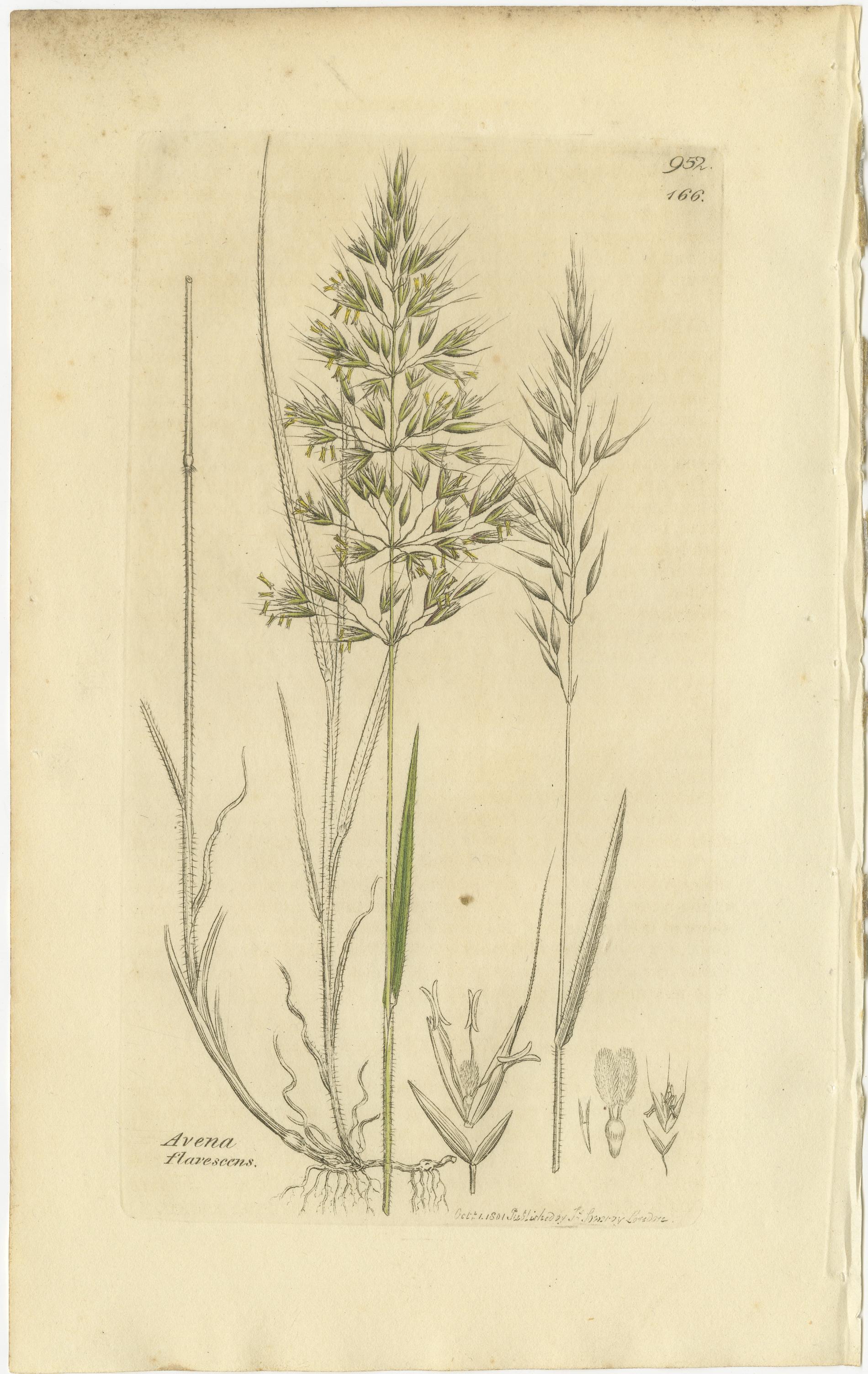
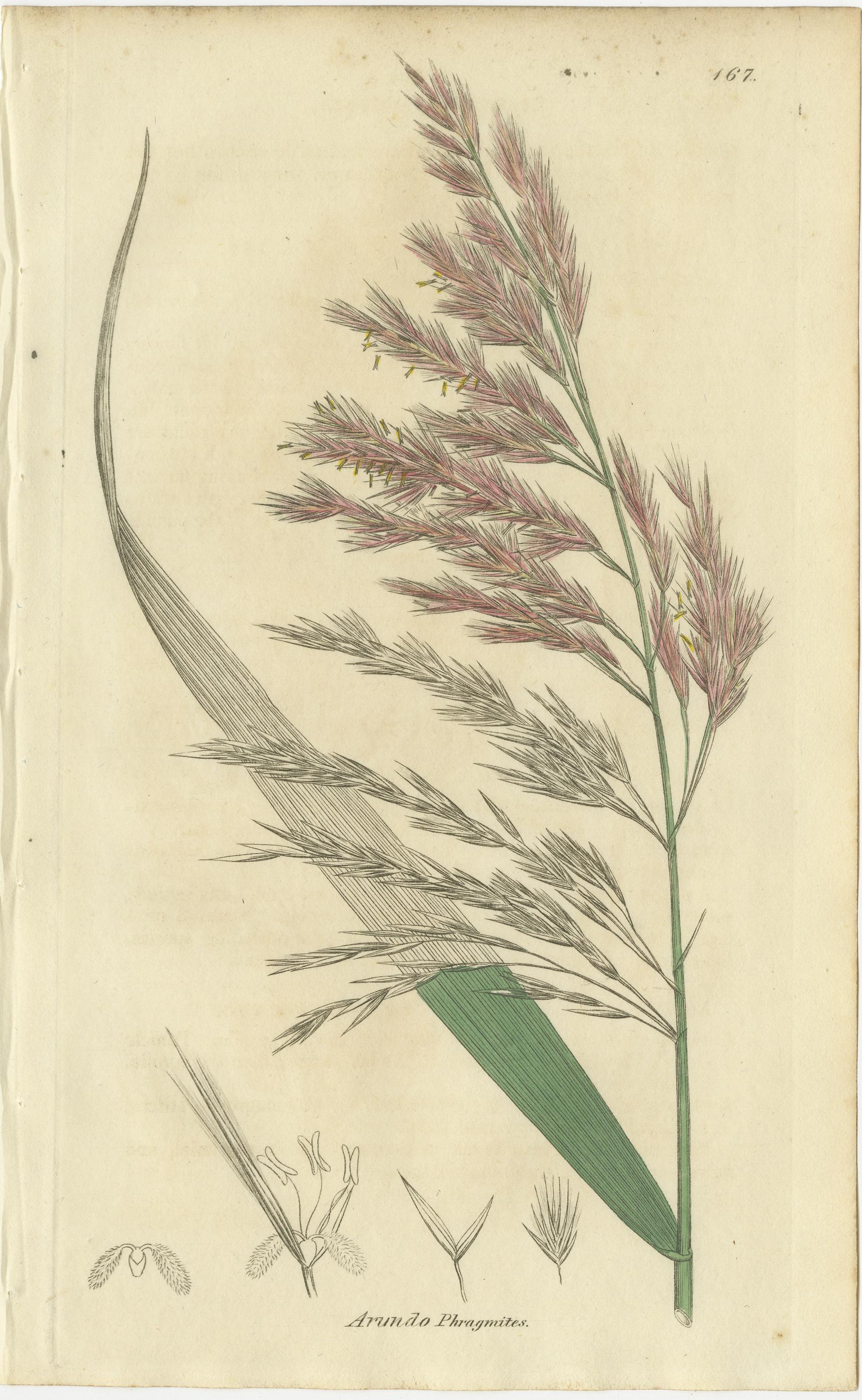
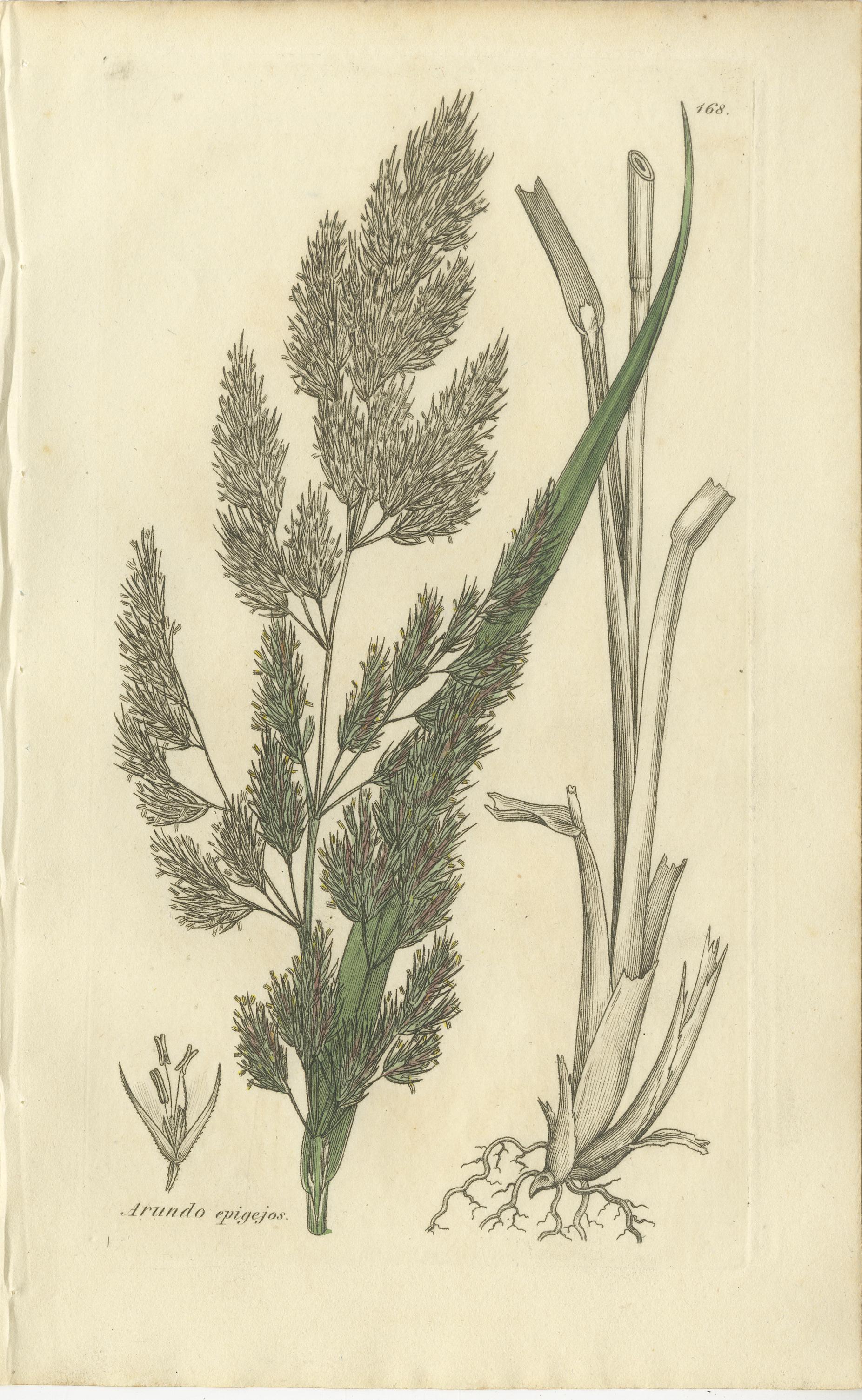
This refined set of eight early nineteenth-century botanical engravings features a beautifully varied selection of wild European grasses, including Avena flavescens (Wild Oat), Avena strigosa, Avena pratensis, Avena pubescens, and two striking reed species of the Arundo family. These plants are known for their elegant arching stems, drooping spikelets and tall plume-like heads, all characteristic of the oat-grass and reed groups. Produced around 1830, the plates display the combination of scientific accuracy and artistic delicacy typical of the period.
Each engraving is finely executed in copperplate technique and finished with soft hand coloring. The graceful movement of the oat spikelets, the upright structure of the meadow grasses and the feathery flowering heads of Arundo are all rendered with precise linework and naturalistic shading. Additional inset details of glumes, florets, seeds and root forms provide valuable botanical context and give each sheet a rich, layered composition.
Because all eight engravings share the same size, proportions and engraving style, they form an especially harmonious decorative set. When framed together, they create a rhythmic, airy wall display ideally suited for garden rooms, hallways, country houses, studios, libraries or any interior that benefits from fresh natural texture. Their subtle palette of greens, ochres and pale tones makes them compatible with both traditional and modern design schemes.
Condition Report:
Good antique condition with minor age toning, scattered foxing and small margin wear consistent with prints of this age. Plate marks strongly visible on all sheets. No tears or repairs noted. Hand coloring remains soft and clear.
Framing Tips:
Use warm white or ivory mats to highlight the engraving lines and pale coloration. Simple natural wood frames such as oak, birch or maple create a clean contemporary presentation, while slim gilt frames provide a more classical botanical look. Leaving the plate impression visible enhances authenticity.
Technique: Copperplate engraving with original hand coloring
Maker: James Sowerby, London, c.1830