About this sheet
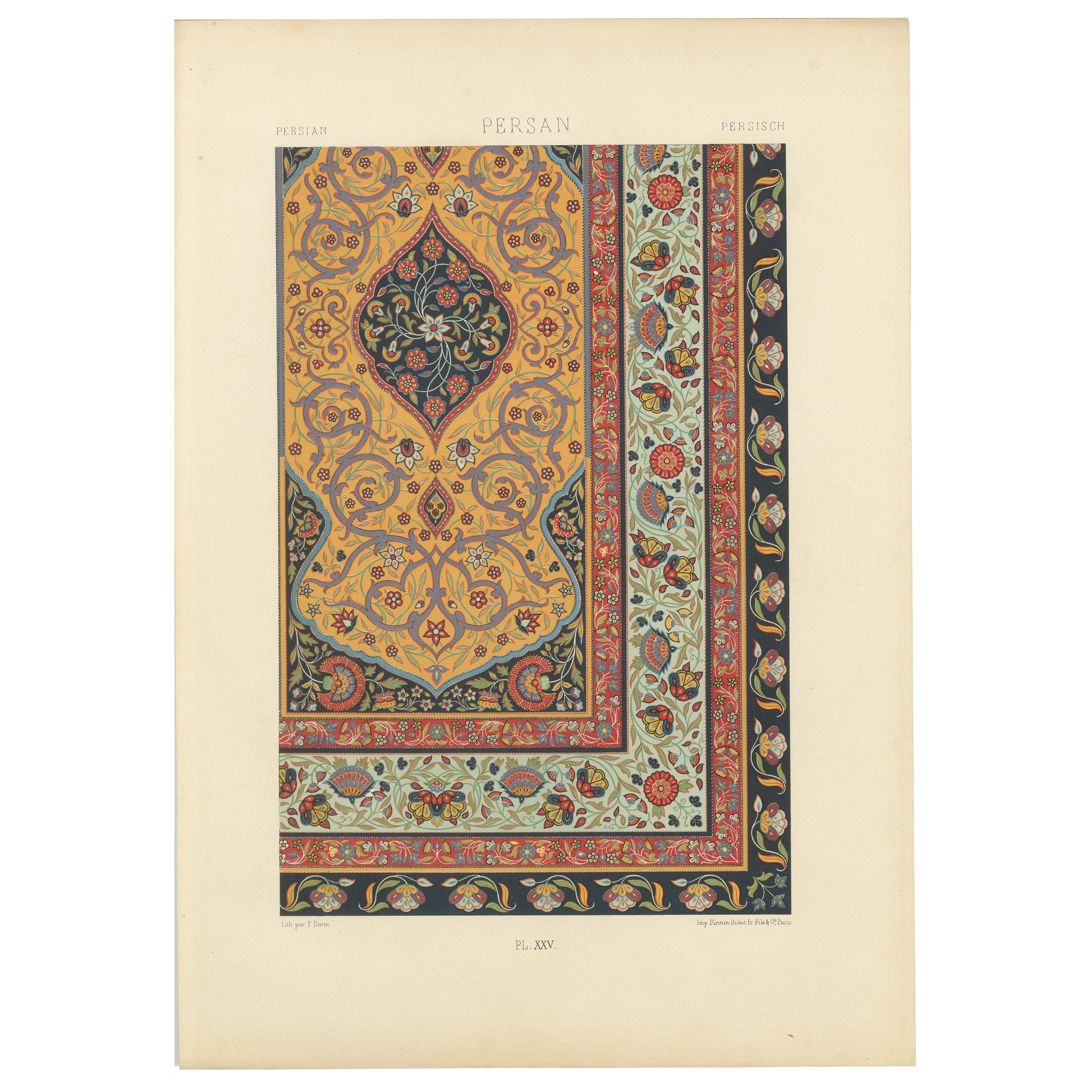
Persian Carpet Border Print – Antique Lithograph of Floral Rug Ornament, c.1869
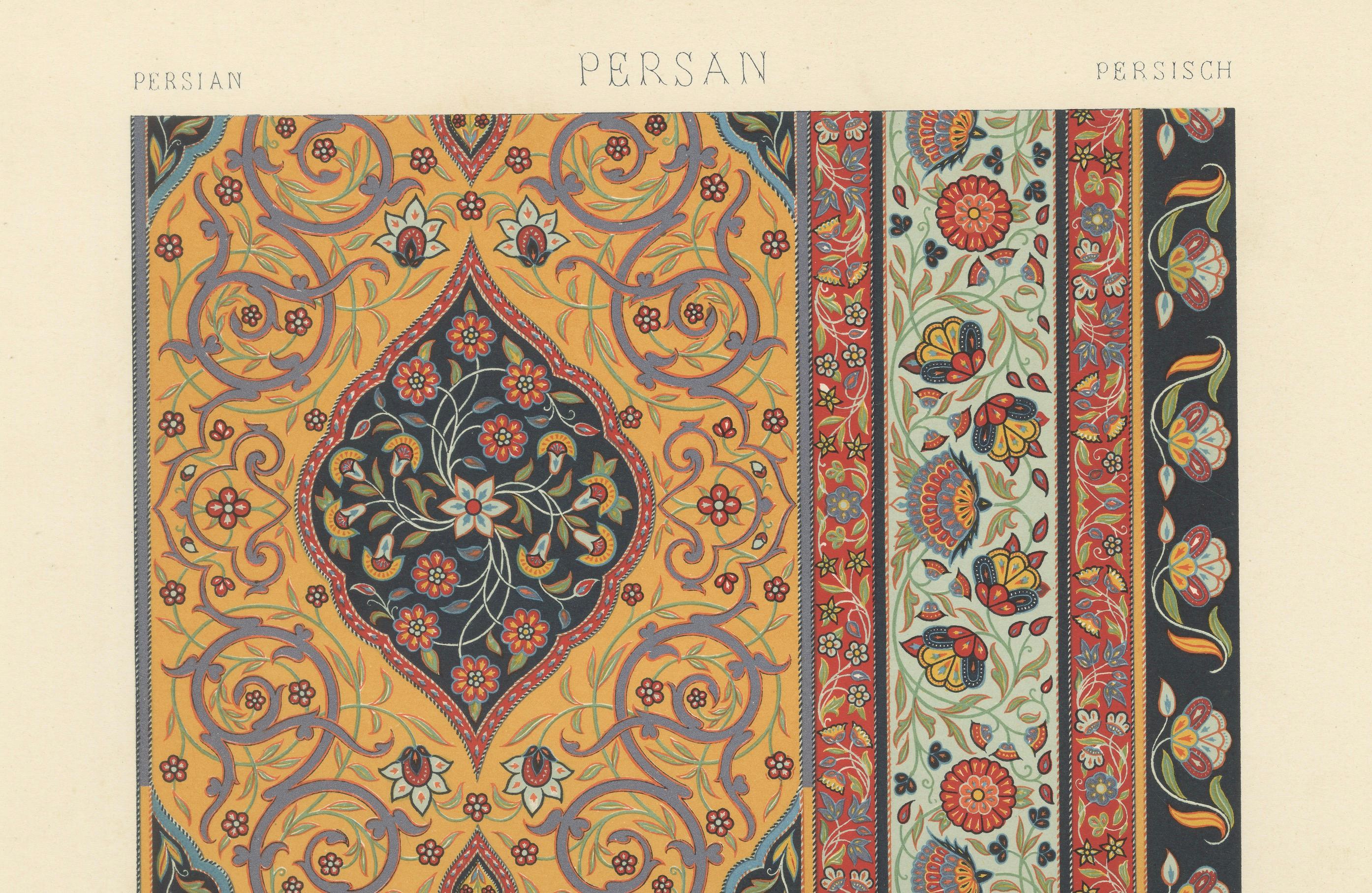
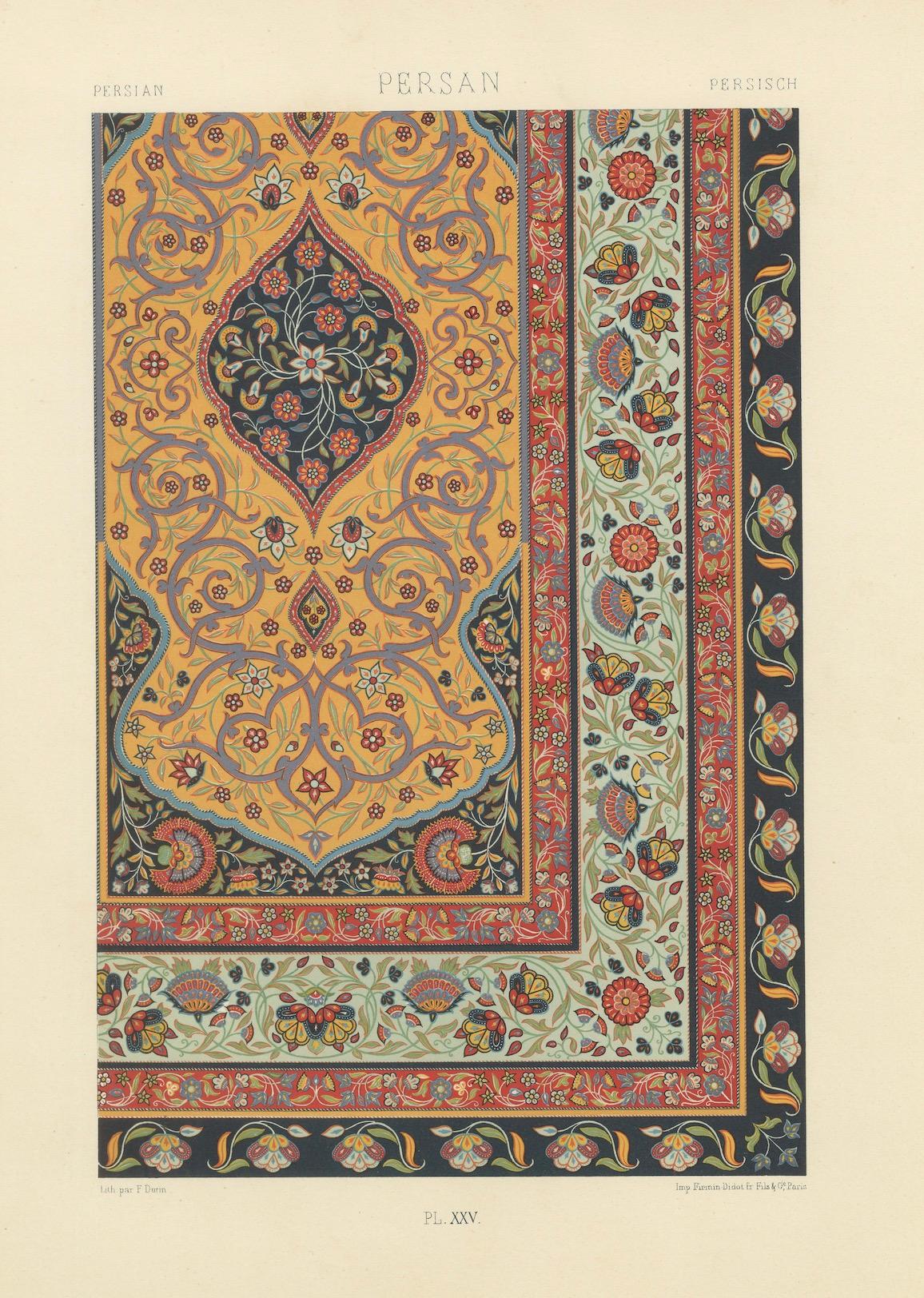
This richly detailed chromolithograph presents a masterful reproduction of Persian carpet design, showcasing a section of an ornate medallion pattern and its surrounding borders. Plate XXV from L'Ornement Polychrome, this image celebrates the intricate craftsmanship and harmonious color schemes that have made Persian rugs among the most prized textile artworks in history.
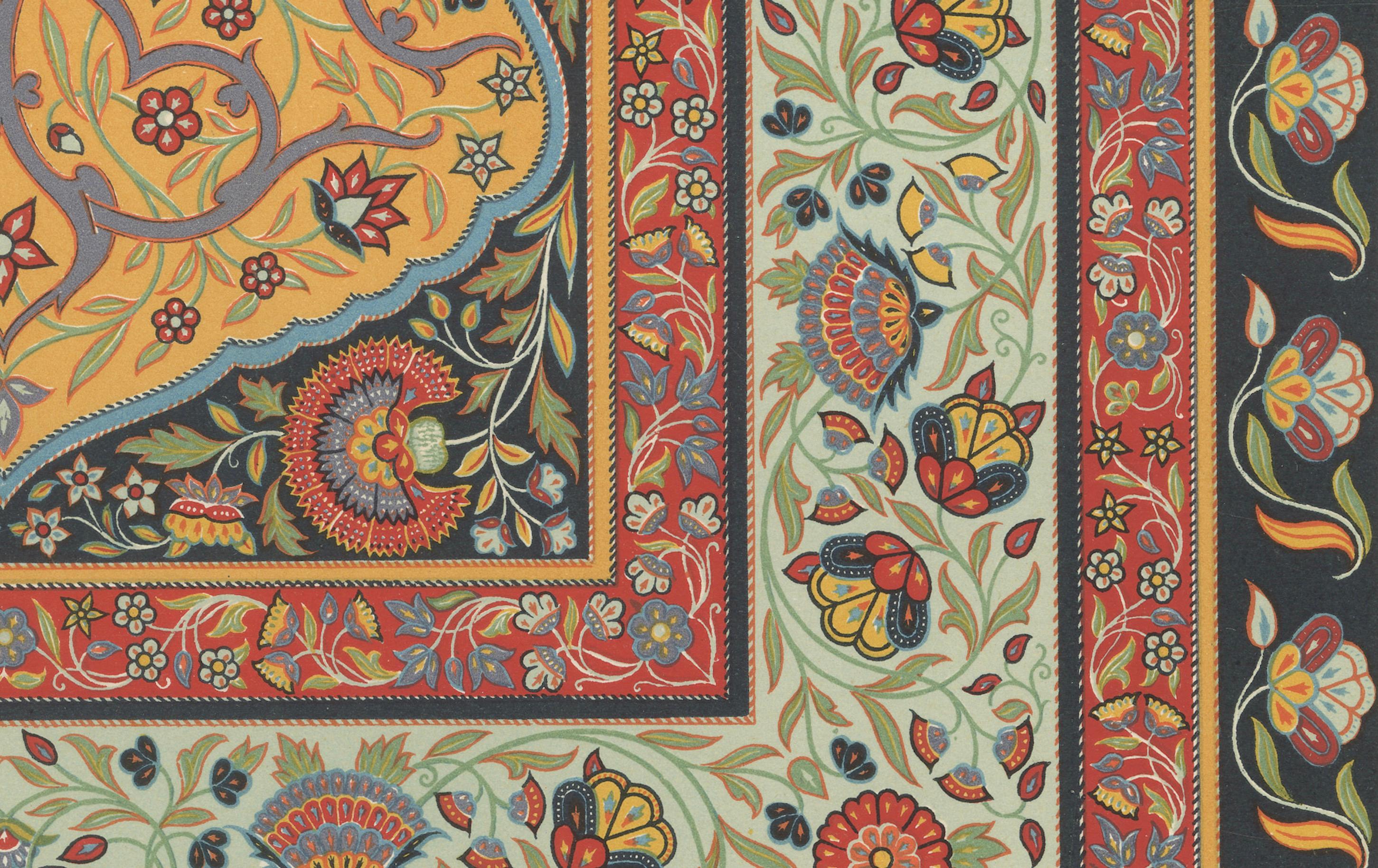
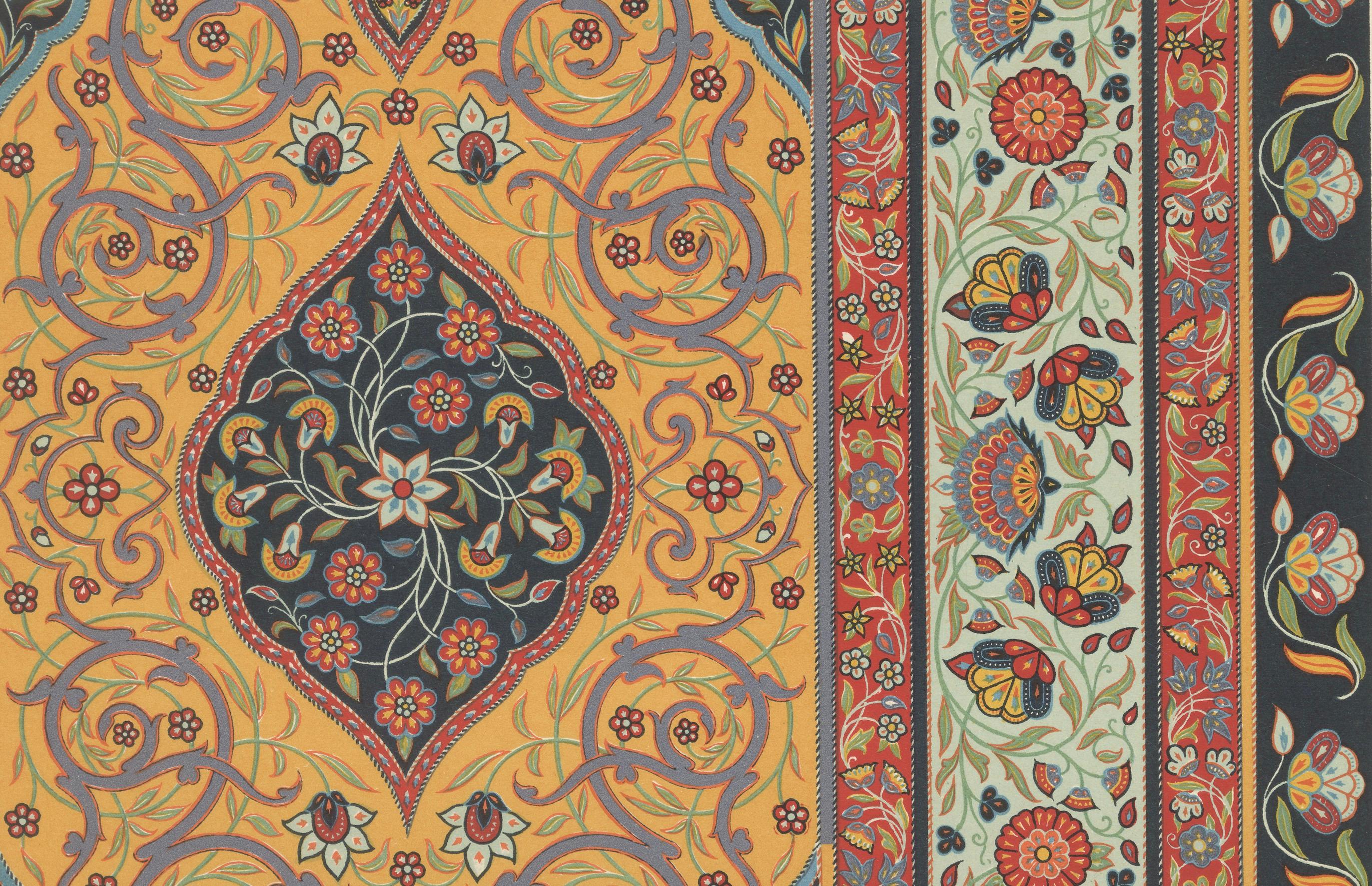
Dominating the left side of the composition is a stylized central medallion on a vibrant saffron ground. The medallion, rendered in midnight blue, is filled with floral rosettes and symmetrical vines, its pointed oval shape framed by scrolling arabesques and floral sprays in muted lavender and red. The precision of the drawing reflects the mathematical and artistic sophistication of Persian weaving traditions, particularly from the Safavid period (16th–17th century), when carpet design reached its zenith.
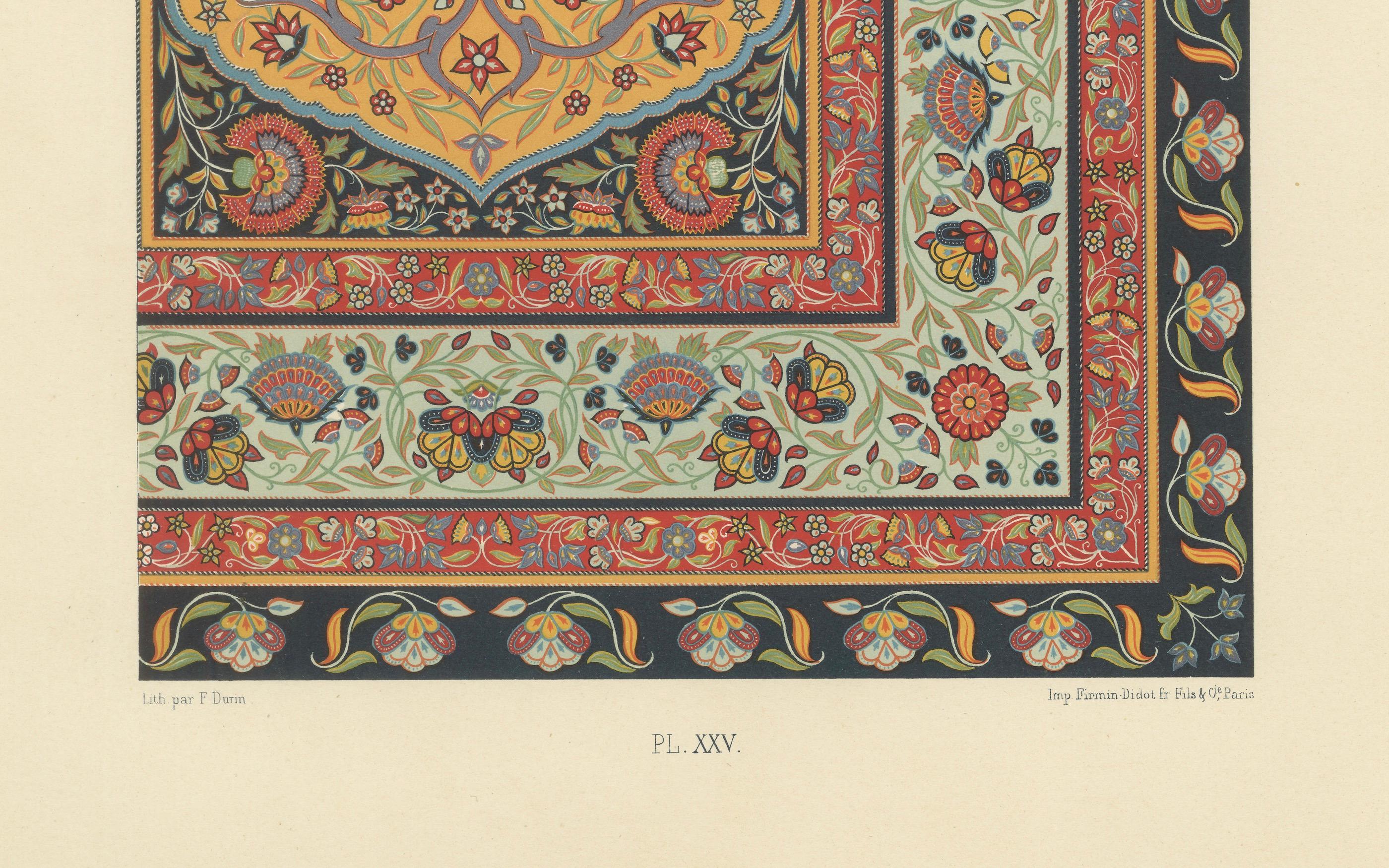
To the right, a series of interlocking decorative borders showcase complementary motifs: densely layered blossoms, palmettes, spiraling tendrils, and stylized tulips in alternating color bands. Each layer features distinct color schemes—pale mint green, coral red, black, and ivory—demonstrating the mastery of chromatic balance and pattern repetition found in Persian rugs.
This lithograph was printed in Paris around 1869 by Firmin-Didot and lithographed by Durin after designs selected under the direction of Albert Racinet. Produced using the chromolithographic method, the print captures the vibrancy and fine detail of handwoven carpets with stunning accuracy, serving as both a study tool and decorative object for 19th-century artists and collectors.
Historically significant and visually compelling, this print not only documents Persian textile heritage but also illustrates the influence of Islamic art on 19th-century European design movements such as Arts and Crafts, Aestheticism, and Art Nouveau.
Condition: Excellent condition. The sheet is clean and stable with saturated colors. Very light marginal toning and a few faint foxing spots outside the printed image. No tears or restorations.
Framing tips: An antique gold or dark walnut frame will echo the opulence of Persian design. Pair with a cream, deep blue, or warm terracotta mat to harmonize with the ornate border details and bring depth to the composition.
Technique: Chromolithograph
Maker: Firmin-Didot, Paris, after A. Racinet, c.1869