About this sheet
Indian Architectural Ornament – Mughal Floral and Geometric Motifs, Plate XVI
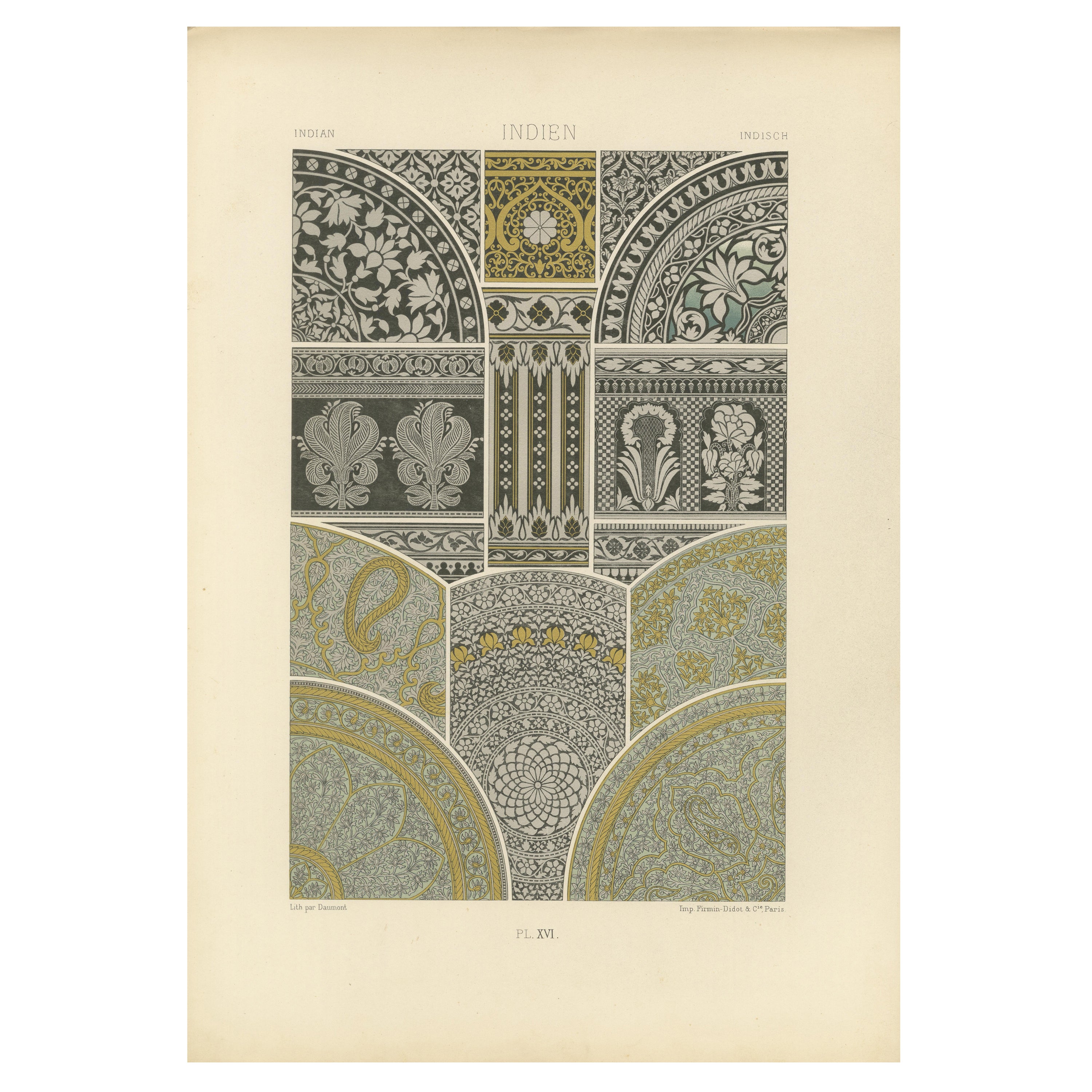
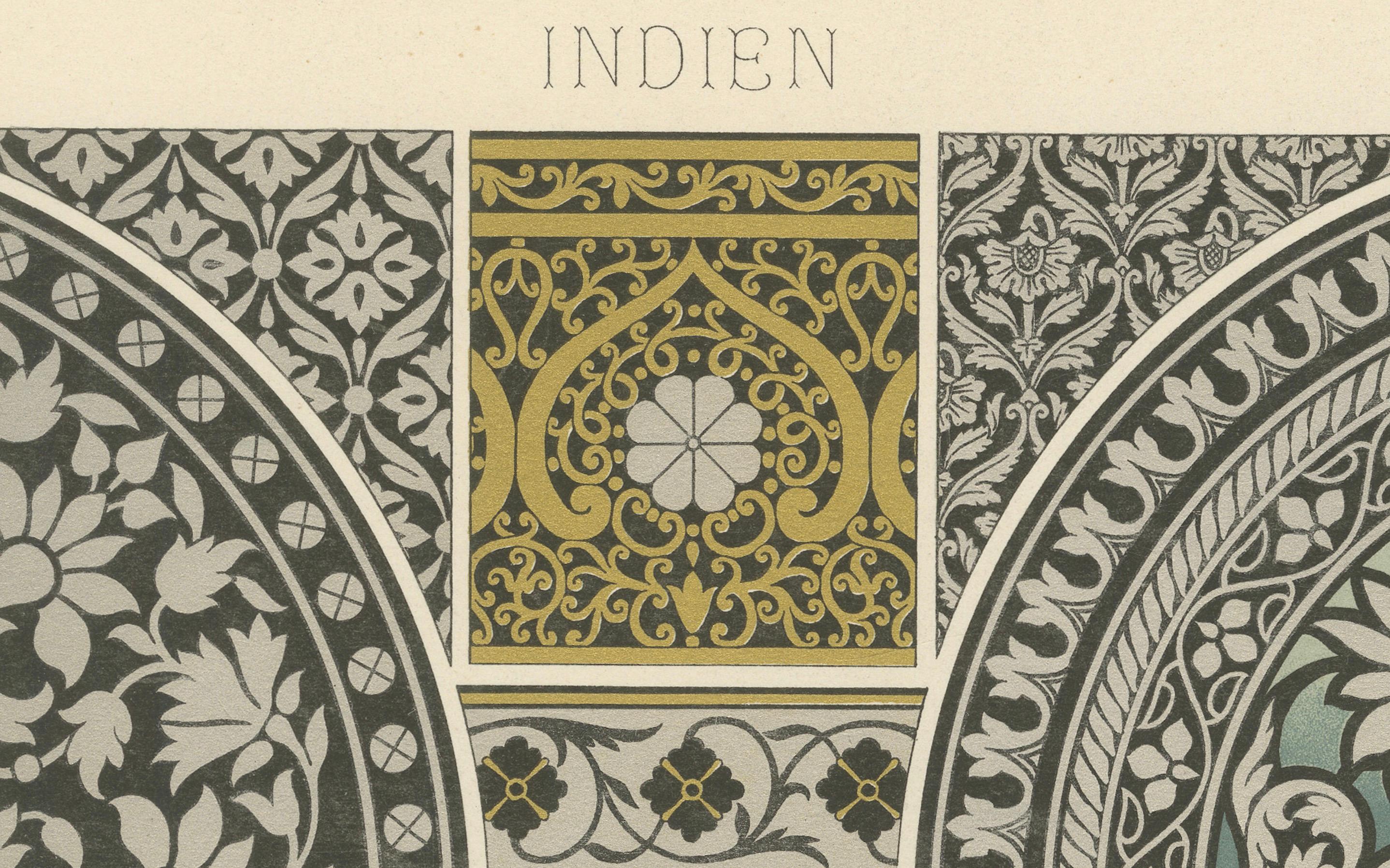
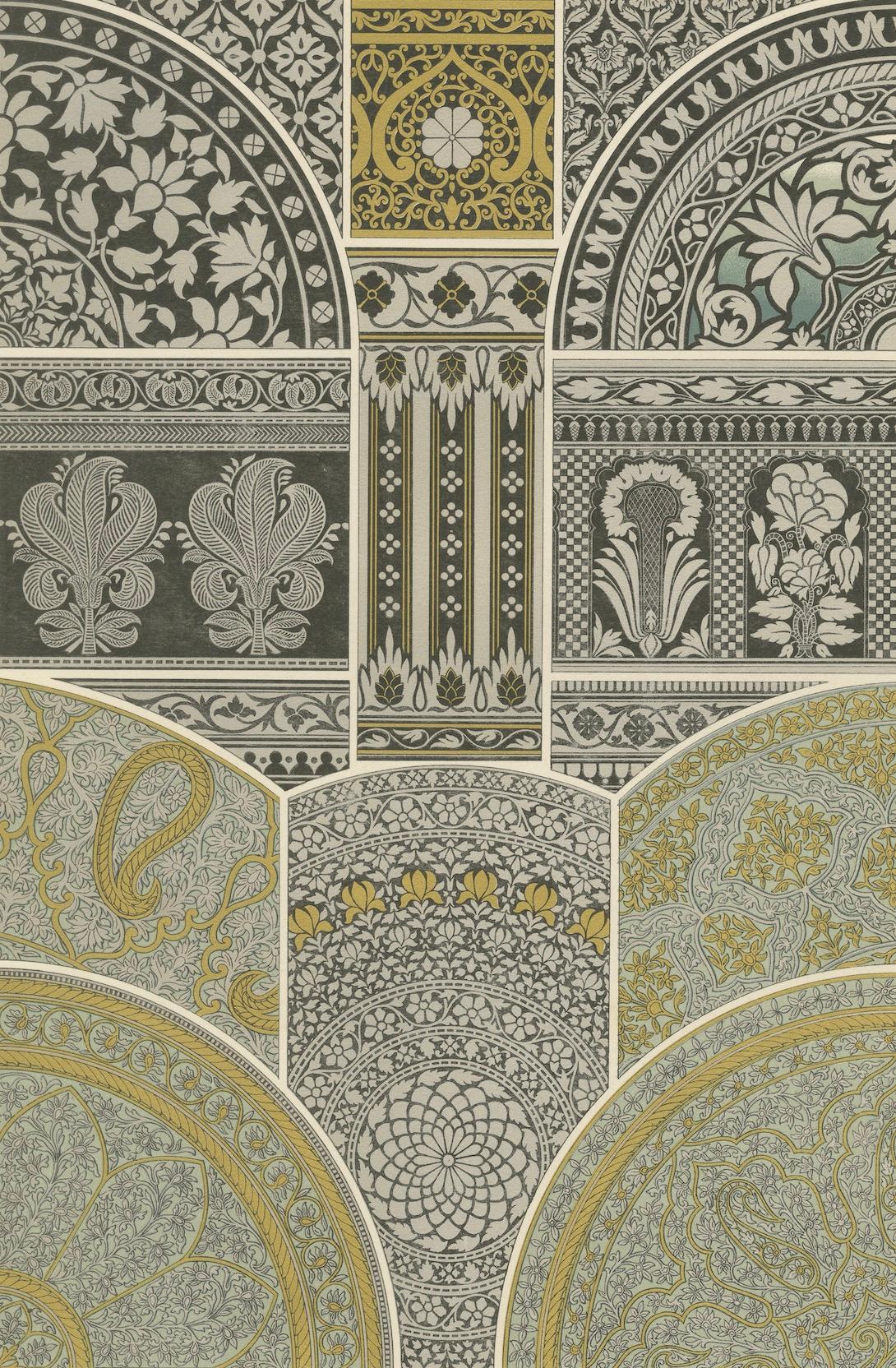
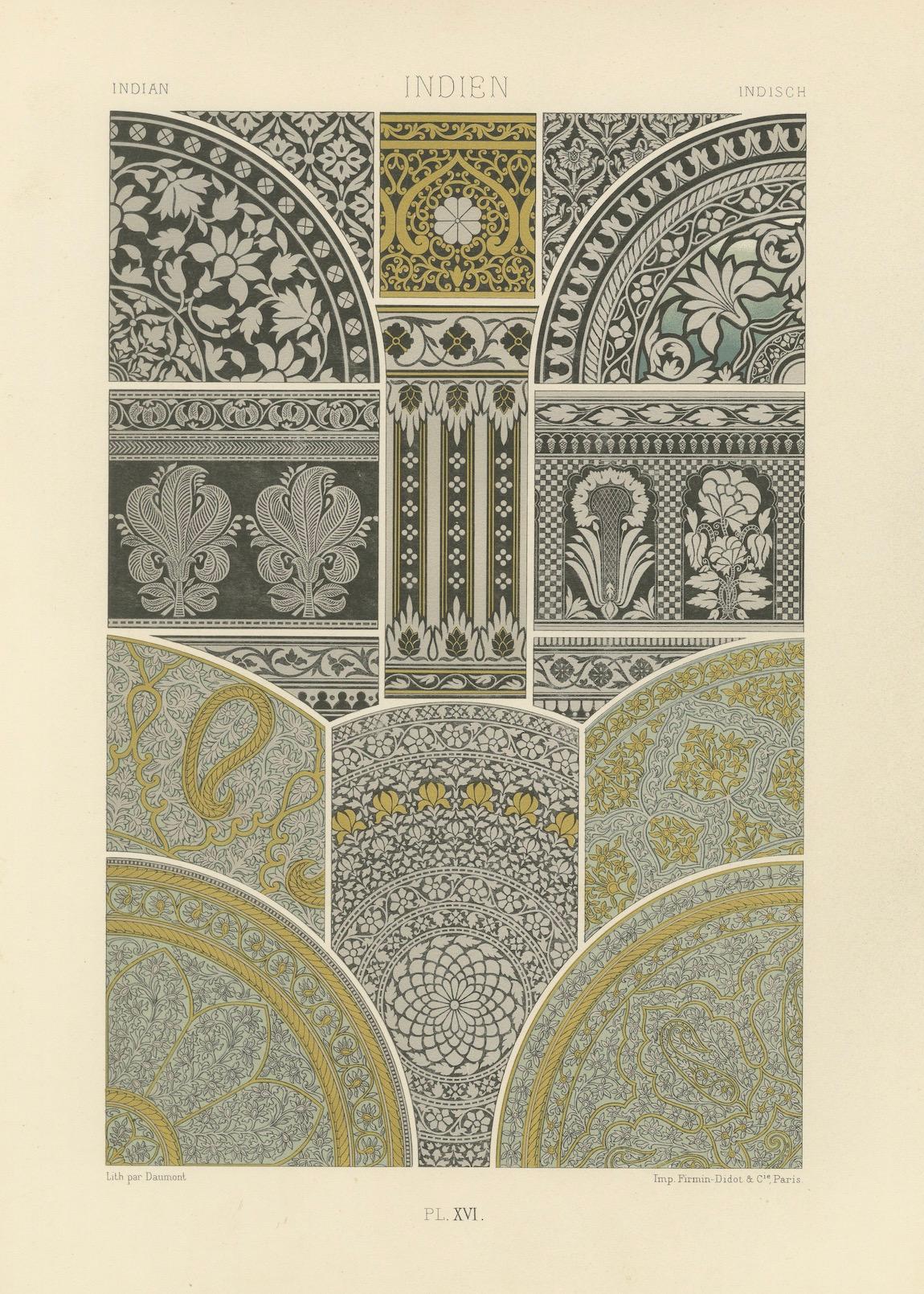
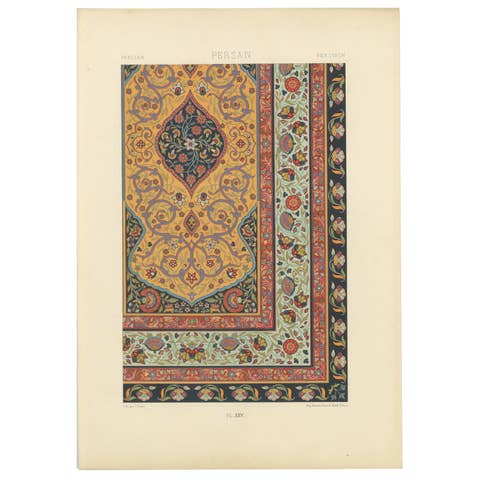
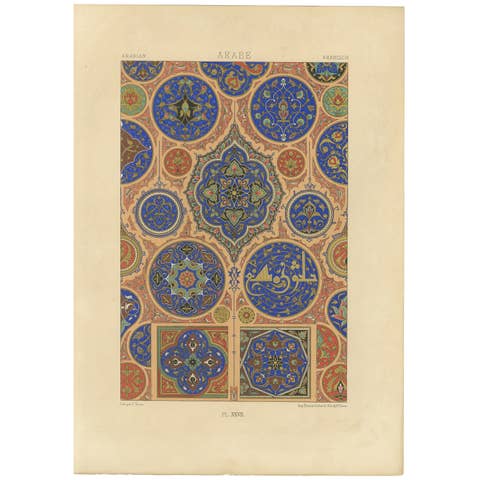
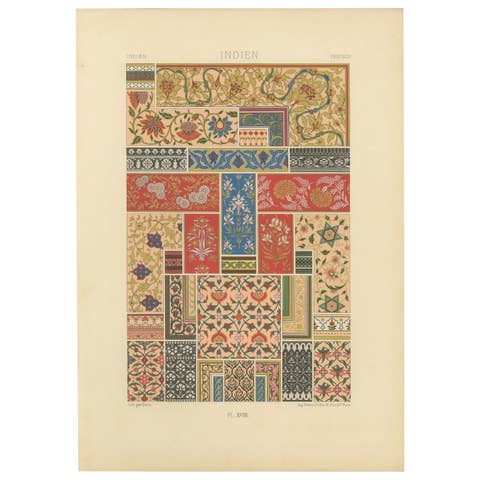
This striking 19th-century chromolithograph from *L'Ornement Polychrome*, Plate XVI, showcases a curated collection of ornamental designs drawn from Indian—particularly Mughal—architecture and decorative art. These motifs reflect the high refinement of Indo-Islamic aesthetics, blending intricate vegetal arabesques, stylized floral arrangements, and balanced geometric symmetry.
The designs illustrated here echo the carved marble inlays, jali (lattice) screens, and tile decorations found in Mughal palaces and mosques, such as the Red Fort in Delhi or the Taj Mahal in Agra. The upper register features detailed floral and vine motifs arranged within arched niches and borders, many of which appear inspired by stone carving and pietra dura techniques. The use of interlocking petals, palmettes, and stylized acanthus leaves recalls Persian influence, while the medallion forms suggest local adaptations in Indian court design.
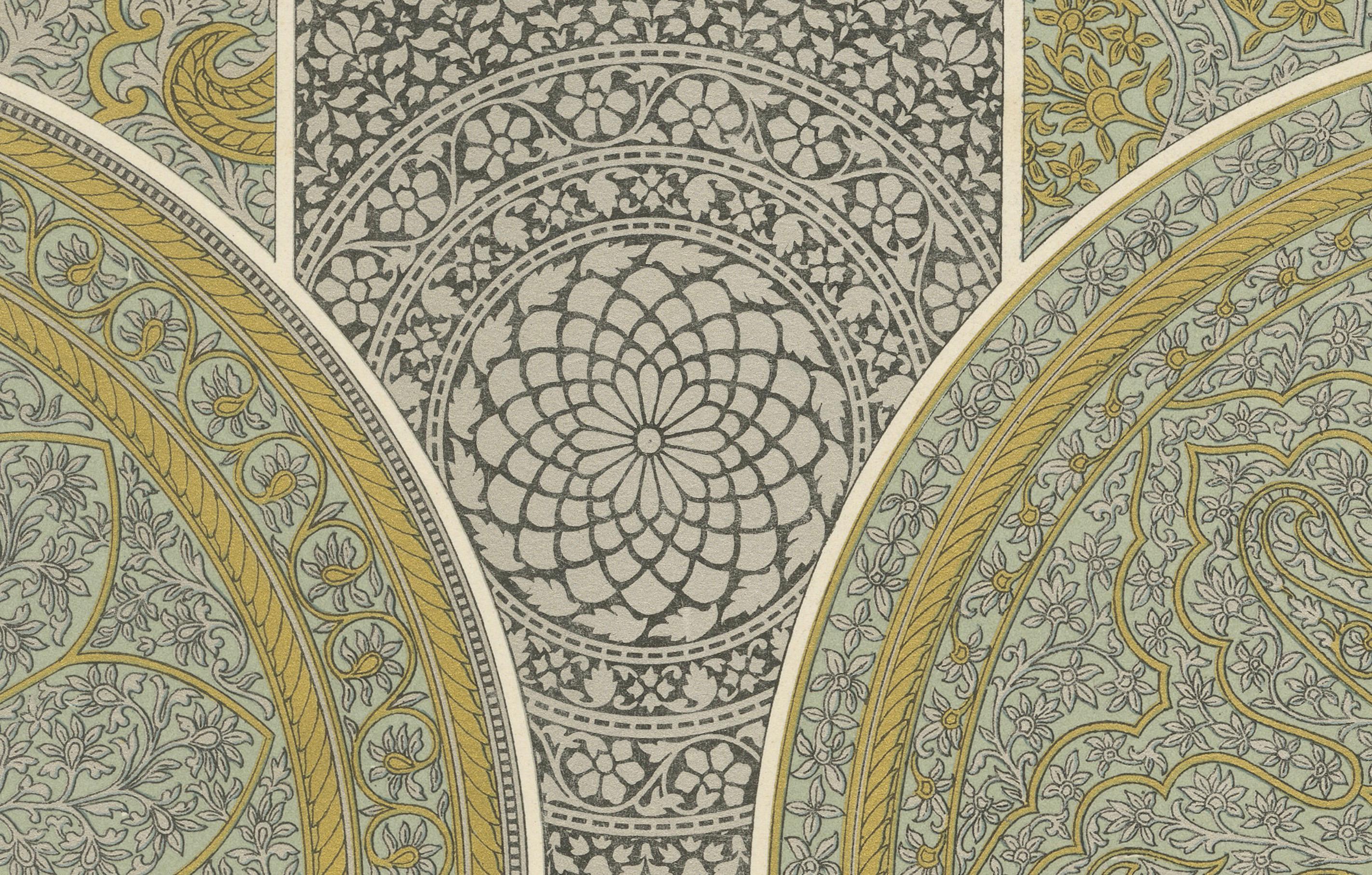
The lower half of the composition is particularly dominated by radial geometric patterns and rosettes, likely inspired by the ceilings, domes, and floor mosaics of Indian Islamic architecture. Several panels employ gold and pale green hues to evoke the delicate inlay work seen in sandstone and marble.
Lithographed by Dammont and printed by Firmin-Didot & Cie in Paris around 1869, this plate was part of Auguste Racinet’s monumental series, which documented and revived global decorative styles for 19th-century artists, architects, and designers. It served as a reference during the Orientalist revival in Europe, when Indian and Islamic aesthetics were widely admired for their elegance and complexity.
Condition: Very good. Slight edge toning with minor corner wear; printed surface clean and sharp. No tears, foxing, or creases.
Framing tips: Best suited to a deep black or warm gold frame to echo the graphic strength of the design. A white or cream mat will allow the intricate lines and subtle colorwork to shine, while emphasizing its historical and cultural richness.
Technique: Chromolithograph
Maker: Dammont after Racinet, Paris, c.1869