Original antique · The actual sheet photographed · Certificate of authenticity on request · Sold unframed · Worldwide shipping from € 15 (rates)
Date
1825
Sheet size
26.7 × 17.5 cm (10.5 × 6.9 in)
Condition
Good
Reference
BG-13261-173
What the condition grades mean
Excellent
Bright and clean, with no faults worth mentioning.
Very good
Only light signs of age, such as faint toning.
Good
Normal signs of age for a sheet of this period: toning, some foxing, small marks or neat old repairs.
Fair
Clear faults such as staining, tears or repairs, priced to match.
Every fault we see is written in the condition note, and the whole sheet is shown uncropped in the photos.
Condition
Good condition. Original hand-coloring and strong plate impression. Minor age toning to margins and faint foxing, mostly outside the image area. Paper remains stable and clean, suitable for display or archival collection.
About this sheet
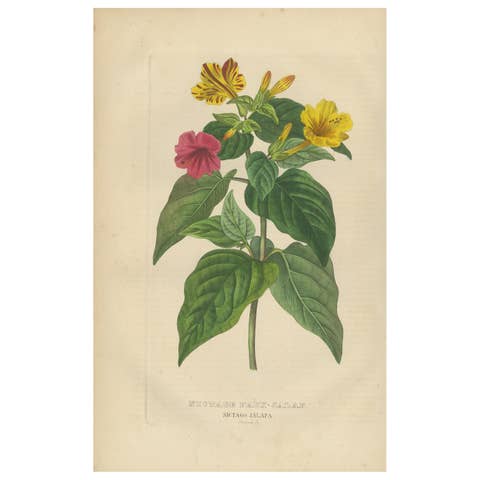
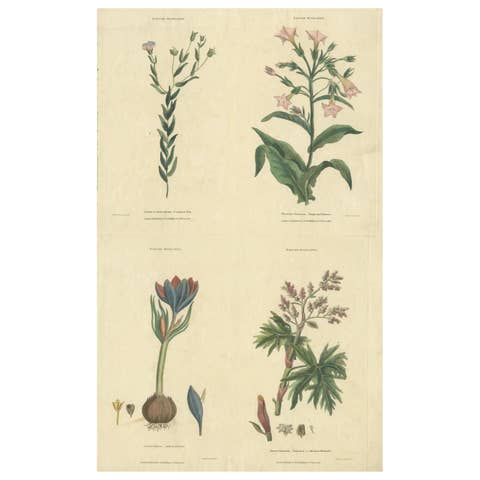
Martynia Proboscidea (Unicorn Plant) – Hand-Colored Botanical Engraving by Desmares, circa 1825 This original hand-colored copperplate engraving depicts Martynia proboscidea, commonly known as the unicorn plant or devil’s claw. Labeled in French as "Martynie à Trompe," the plant is illustrated with its signature tubular, speckled flowers and large, prominently veined leaves. The engraving is signed “Desmares, Sculp.,” indicating it was engraved by Louis Desmares, a noted botanical engraver of early 19th-century France.
This plate was published by Panckoucke in Paris around 1825 as part of the acclaimed series Le Jardin des Plantes: Histoire Naturelle des Plantes, produced in collaboration with the Muséum national d'Histoire naturelle. The print reflects the refined scientific and artistic standards of the period, combining botanical accuracy with elegant composition and color.
A striking and uncommon floral subject, ideal for collectors of botanical art or early natural history illustration.
Condition Summary: Good condition. Original hand-coloring and strong plate impression. Minor age toning to margins and faint foxing, mostly outside the image area. Paper remains stable and clean, suitable for display or archival collection.
Framing Tips: Pair this botanical engraving with a soft cream or warm ivory acid-free mat to highlight the natural tones. A dark green or antique bronze frame will enhance the botanical richness. UV-protective glazing is recommended. Consider float mounting to show the full plate mark and engraved attribution.