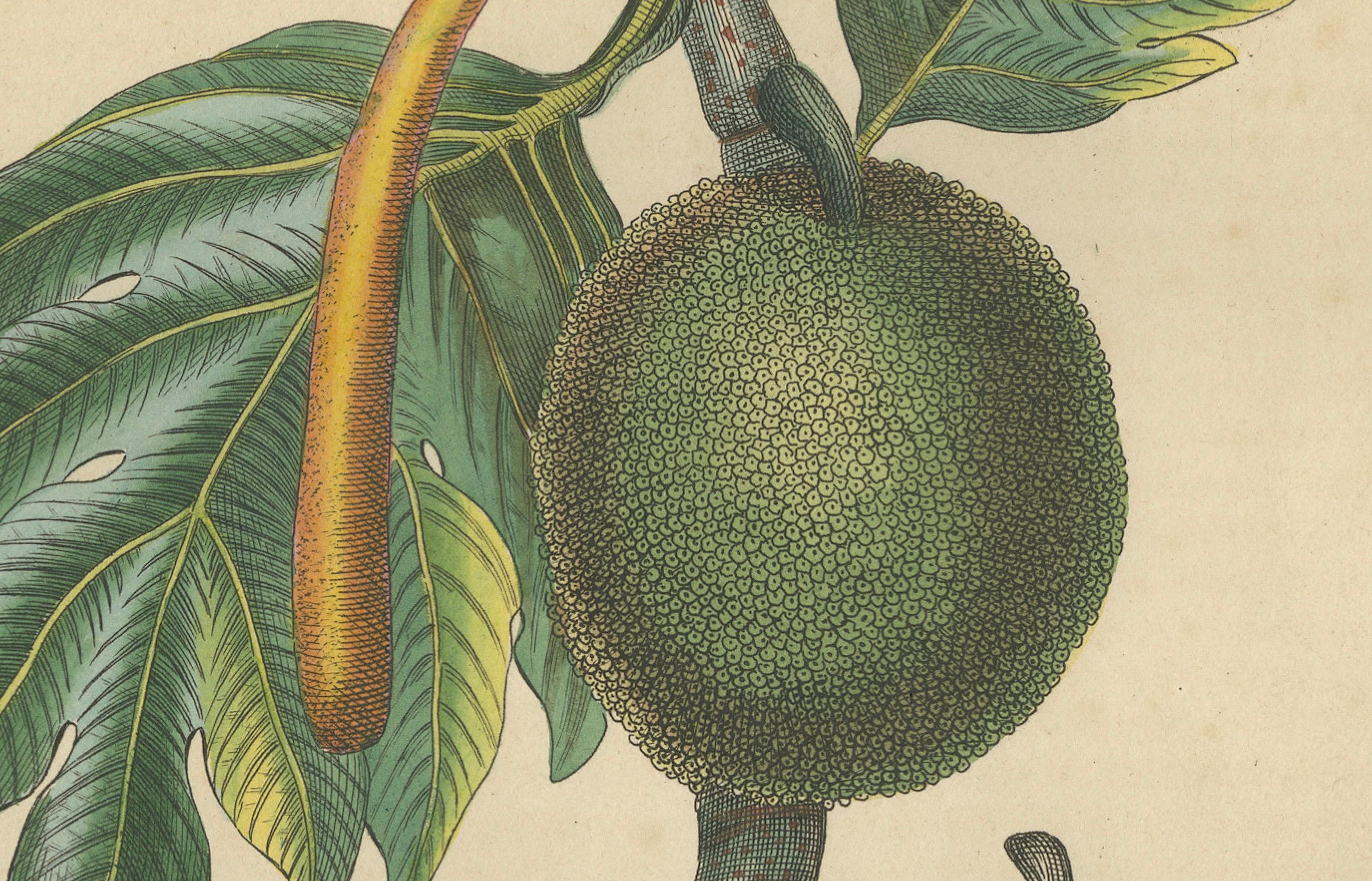
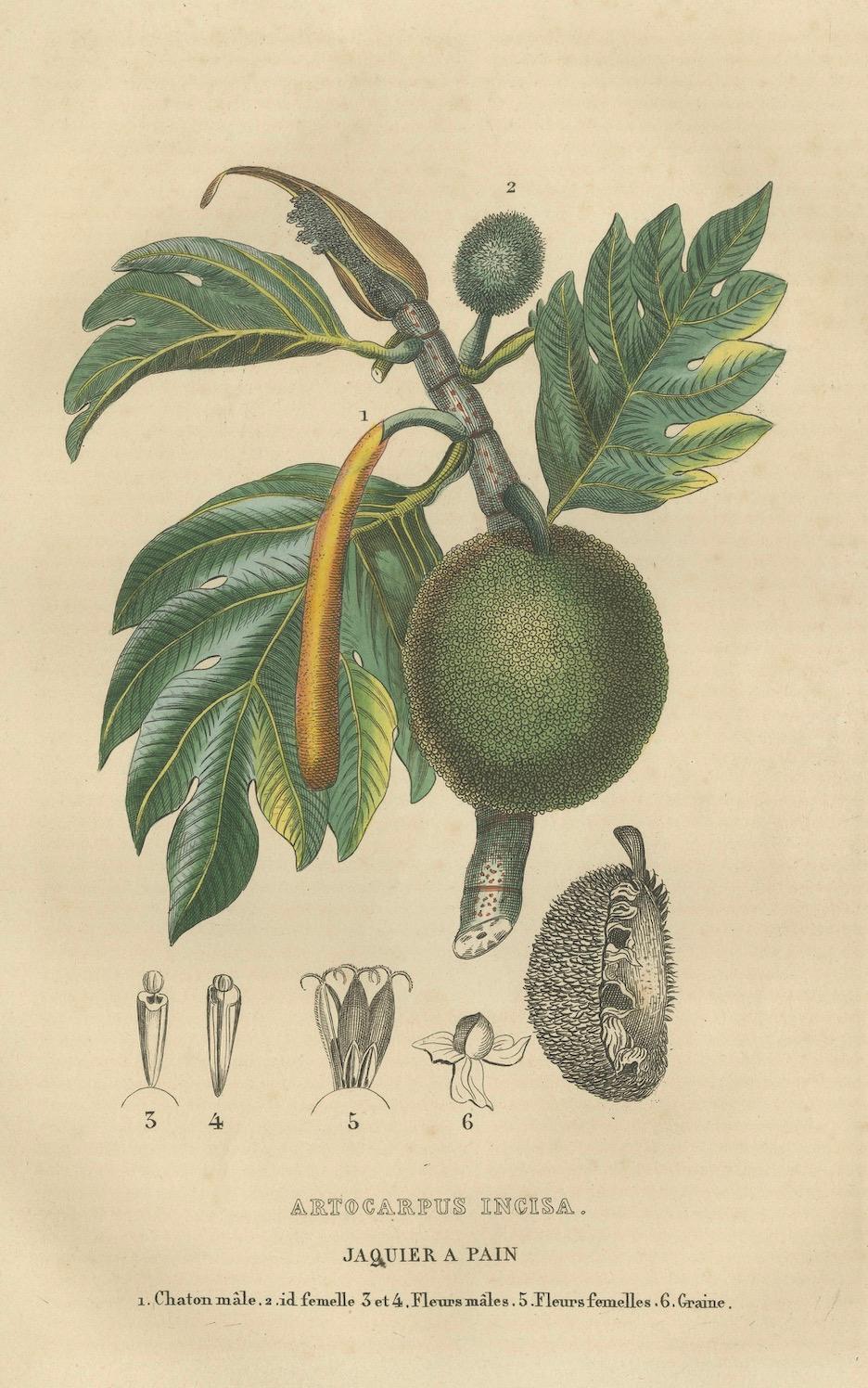
Artocarpus incisa (Breadfruit Tree) – Hand-Colored Botanical Engraving, ca. 1825
€ 140
One of a kind: this is the sheet in the photographs. Ships from Langweer, the Netherlands.
Date
1825
Sheet size
26.7 × 17.5 cm (10.5 × 6.9 in)
Condition
Good
Reference
BG-13261-174
Condition
Good condition. Crisp plate impression and richly preserved hand-coloring. Minor age toning and some light scattered foxing, mostly in the margins. Paper remains strong, clean, and suitable for framing.
About this sheet
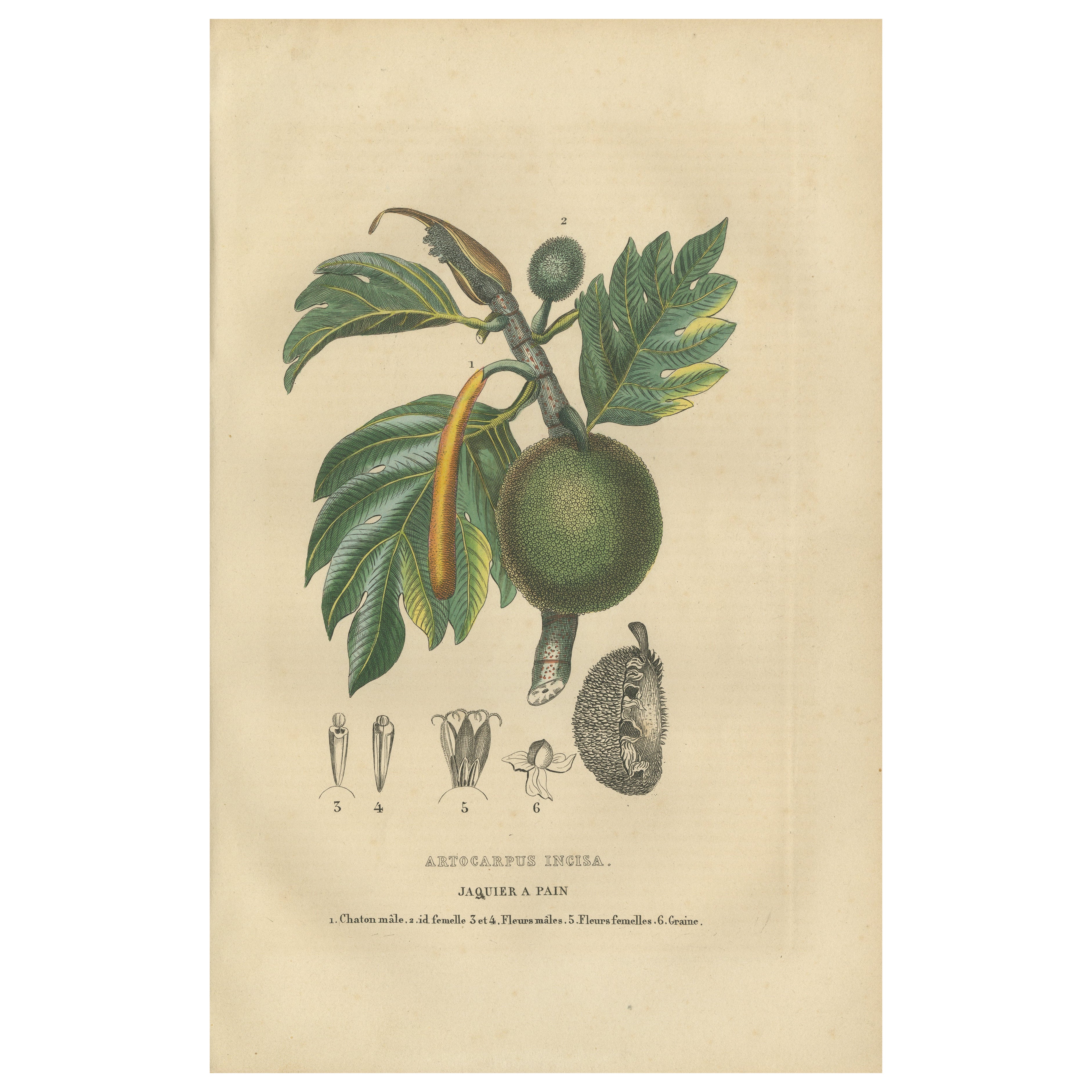
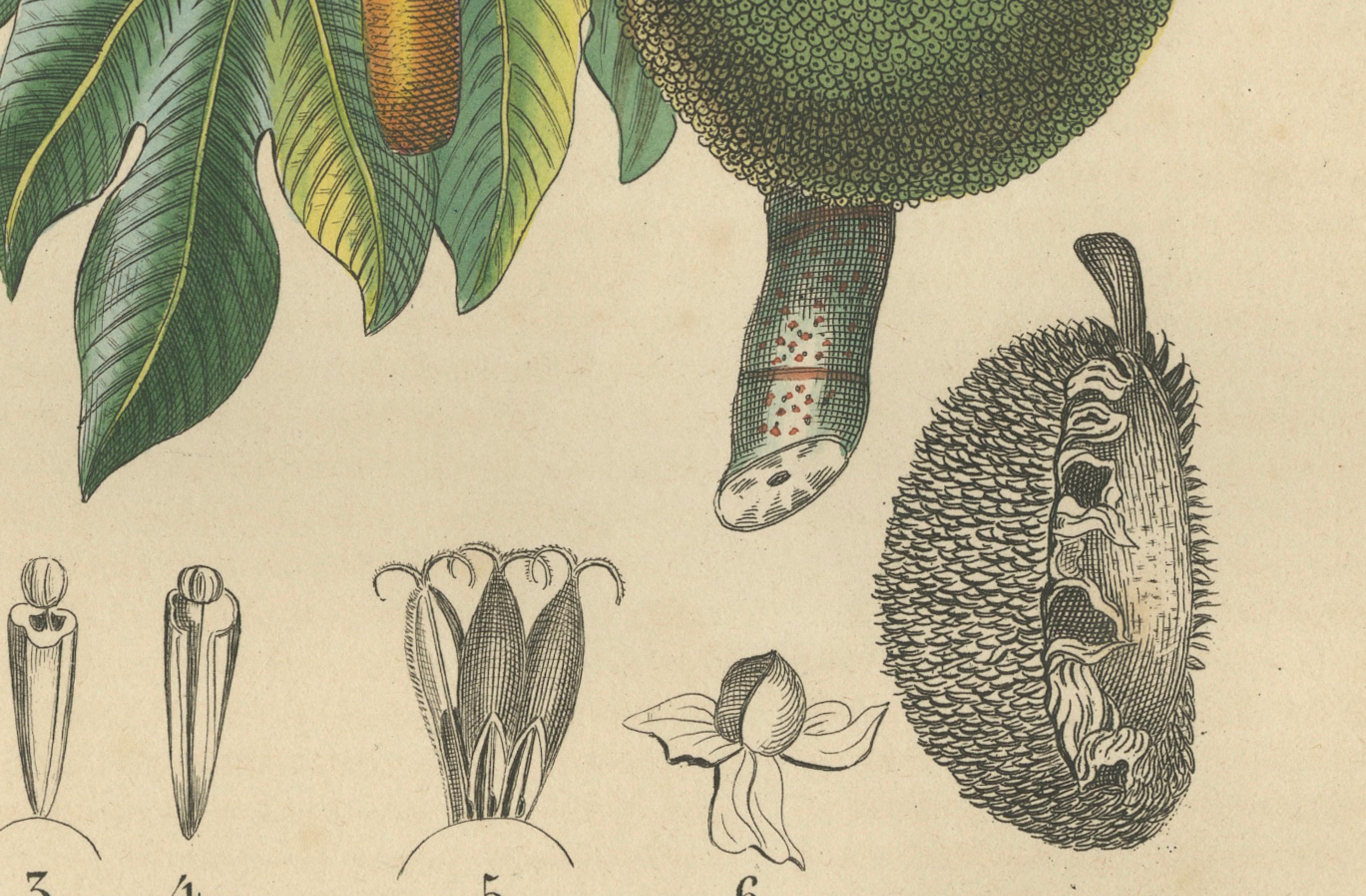
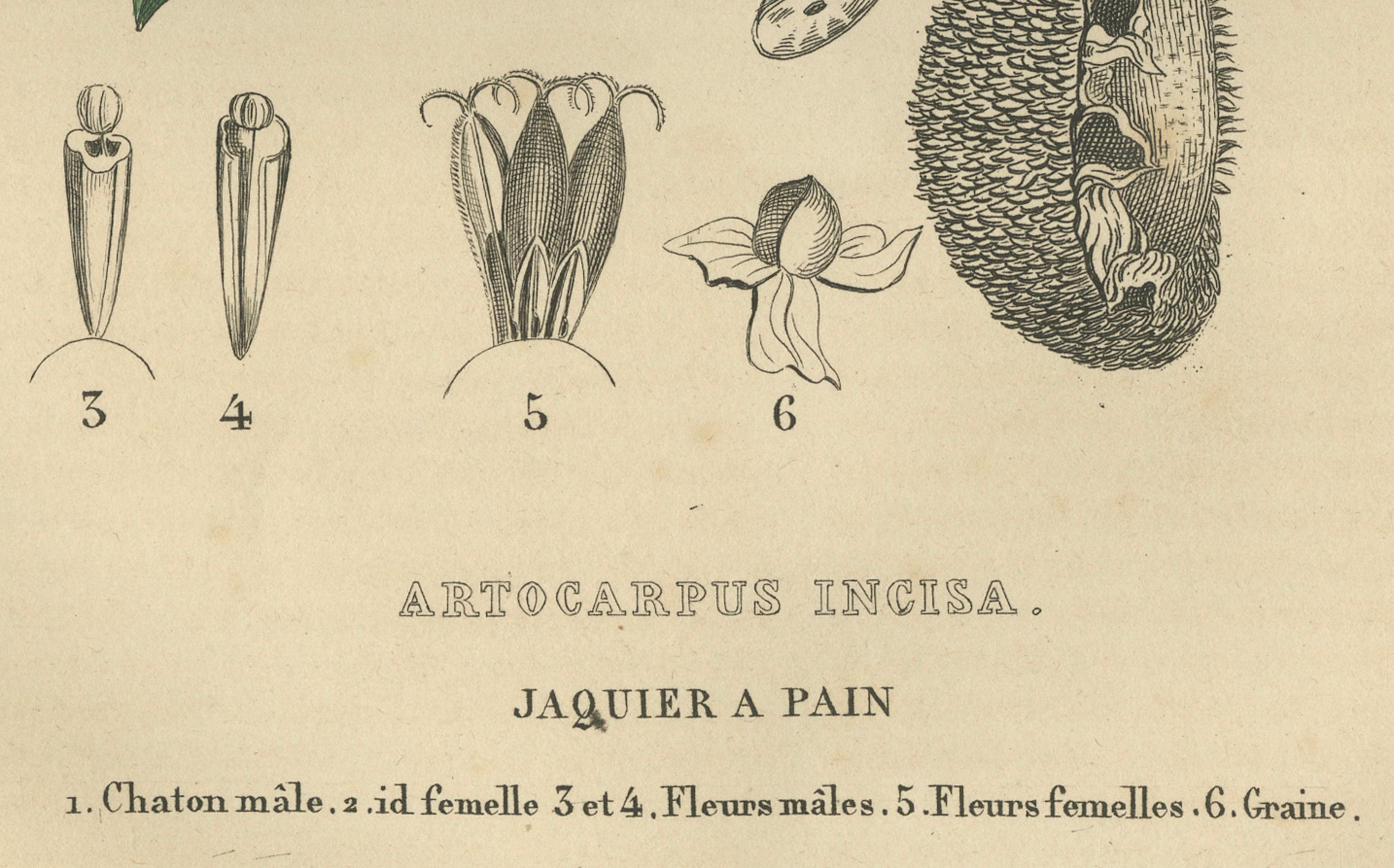
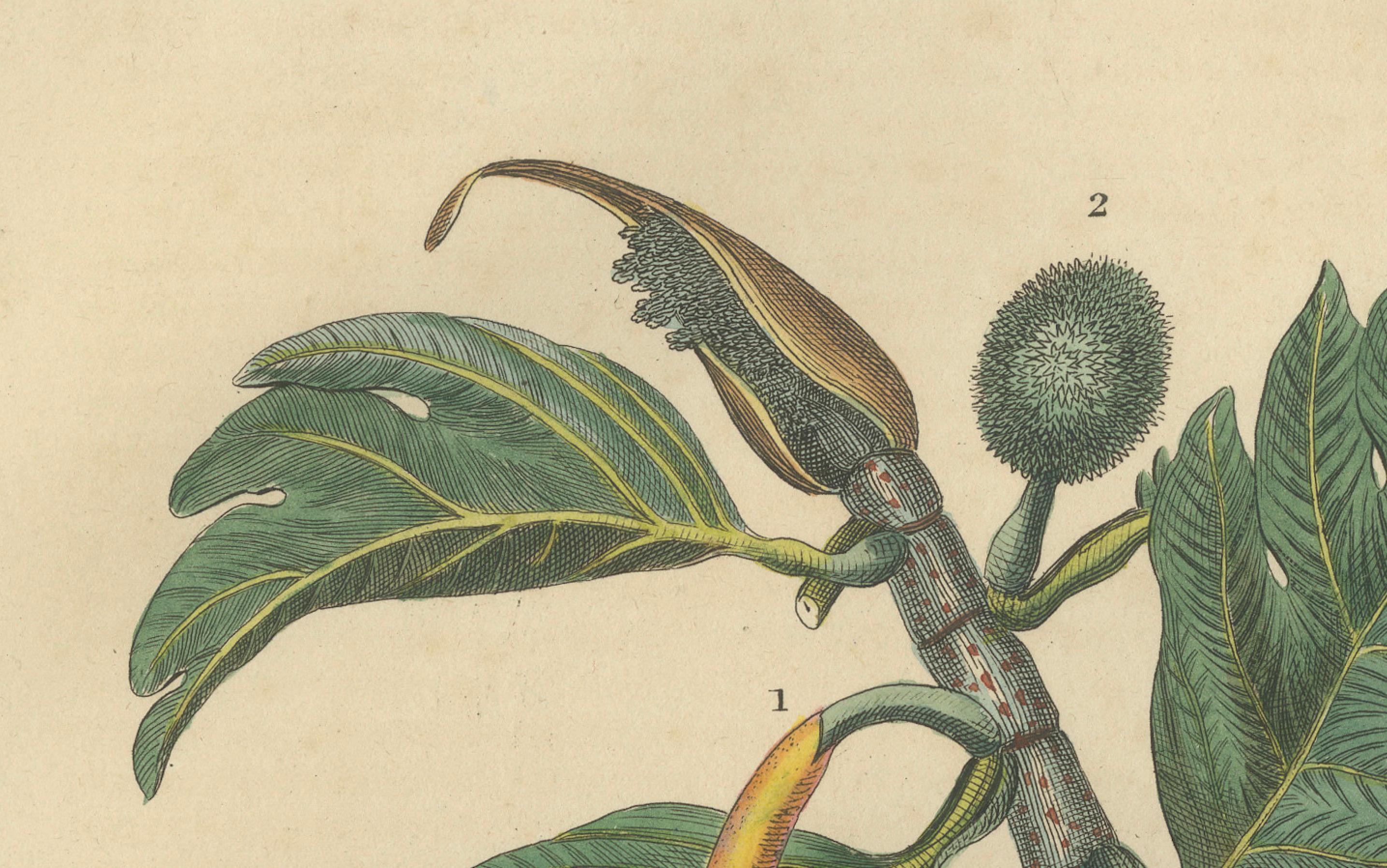
Artocarpus incisa (Breadfruit Tree) – Hand-Colored Botanical Engraving, circa 1825 This striking hand-colored copperplate engraving features *Artocarpus incisa, commonly known as the breadfruit tree. Titled in French as Jaquier à Pain," this detailed botanical study illustrates the large compound leaves, a mature fruit, male and female catkins, flowers, and seed structure. The numbered diagram at the bottom offers a breakdown of the plant's reproductive parts, serving both scientific and educational purposes.
This plate originates from the esteemed botanical series Le Jardin des Plantes, published by Panckoucke in Paris around 1825. The illustration reflects the scientific rigor and artistic refinement typical of early 19th-century French natural history publications. It would have been produced with the collaboration of the Muséum national d'Histoire naturelle and engraved by specialists such as Louis Desmares.
Breadfruit was a plant of great economic and botanical interest in the Age of Exploration, famously associated with Captain Bligh’s voyage on the Bounty. This plate captures the exotic appeal and structural complexity of the tree in meticulous detail.
Keywords: breadfruit tree print, Artocarpus incisa, Jaquier à Pain, antique botanical engraving, hand-colored botanical, Panckoucke Paris, Jardin des Plantes, French botanical art, 19th-century tropical plant print, breadfruit illustration, natural history of the South Pacific
Condition Summary: Good condition. Crisp plate impression and richly preserved hand-coloring. Minor age toning and some light scattered foxing, mostly in the margins. Paper remains strong, clean, and suitable for framing.
Framing Tips: Frame with an acid-free ivory or pale beige mat to accentuate the natural green tones of the foliage and the warm hues of the fruit. A teak, rosewood, or dark bronze frame complements the tropical subject. UV-protective glazing is recommended. Float mounting is ideal for showcasing the full sheet, including the engraved title and botanical key.