About this sheet
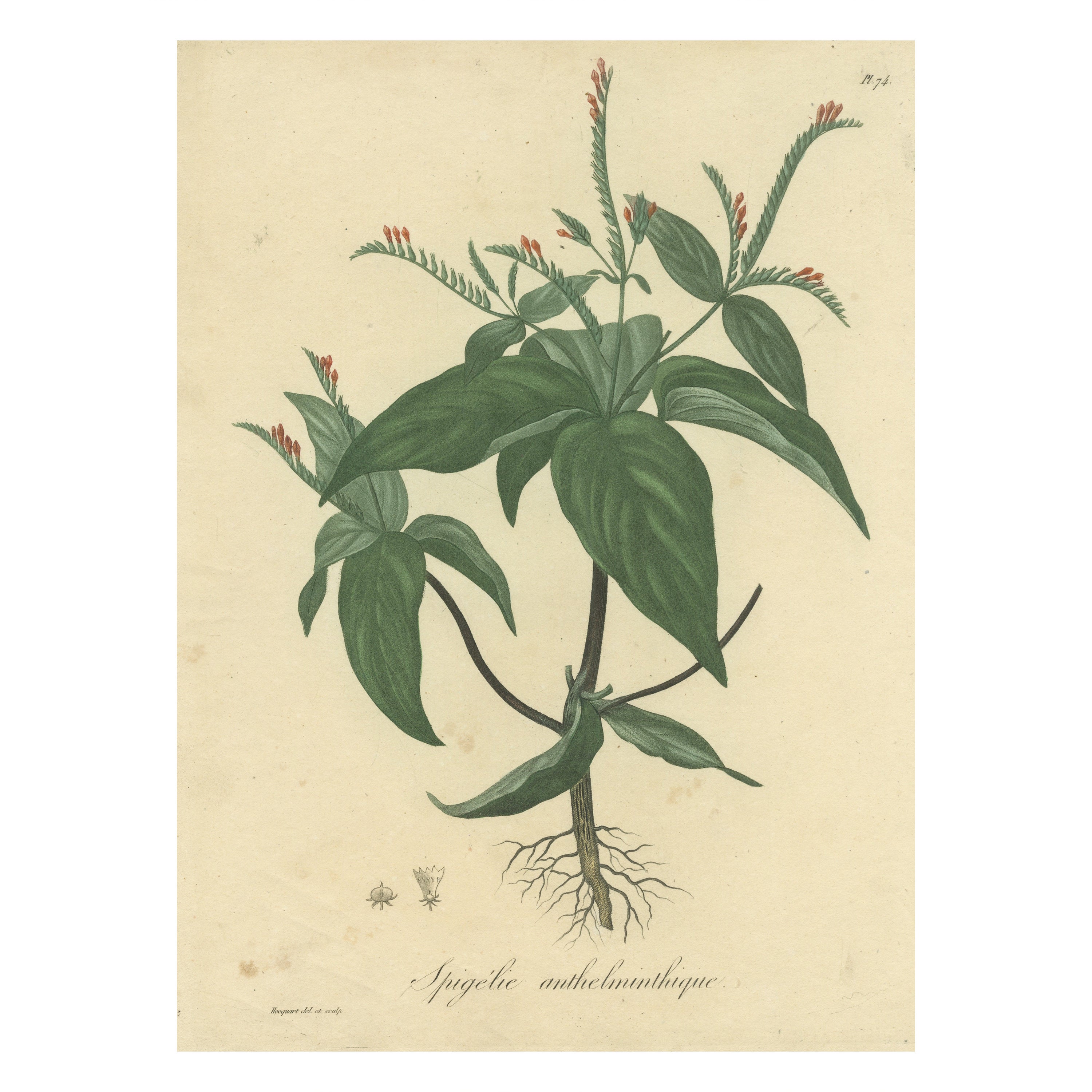
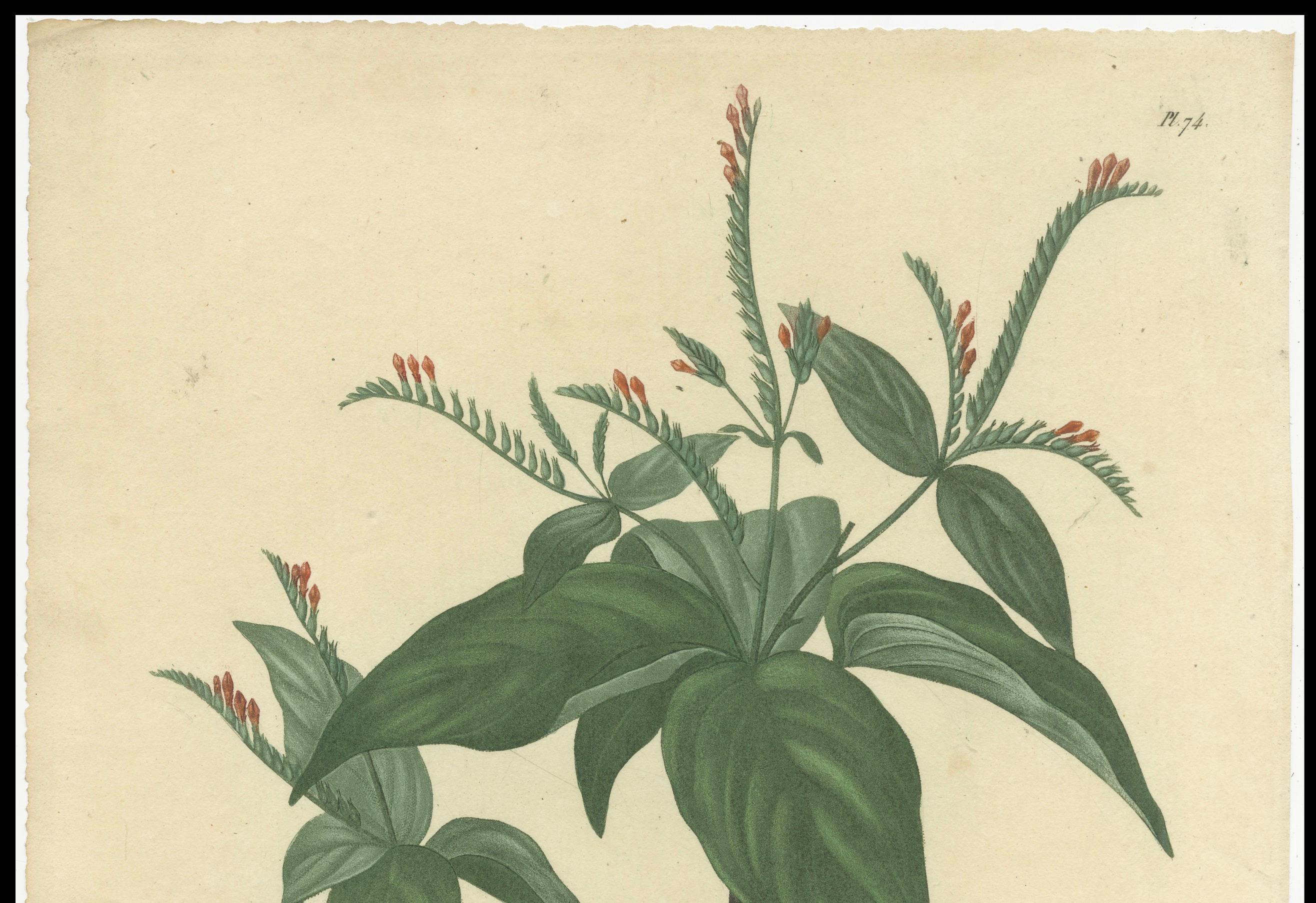
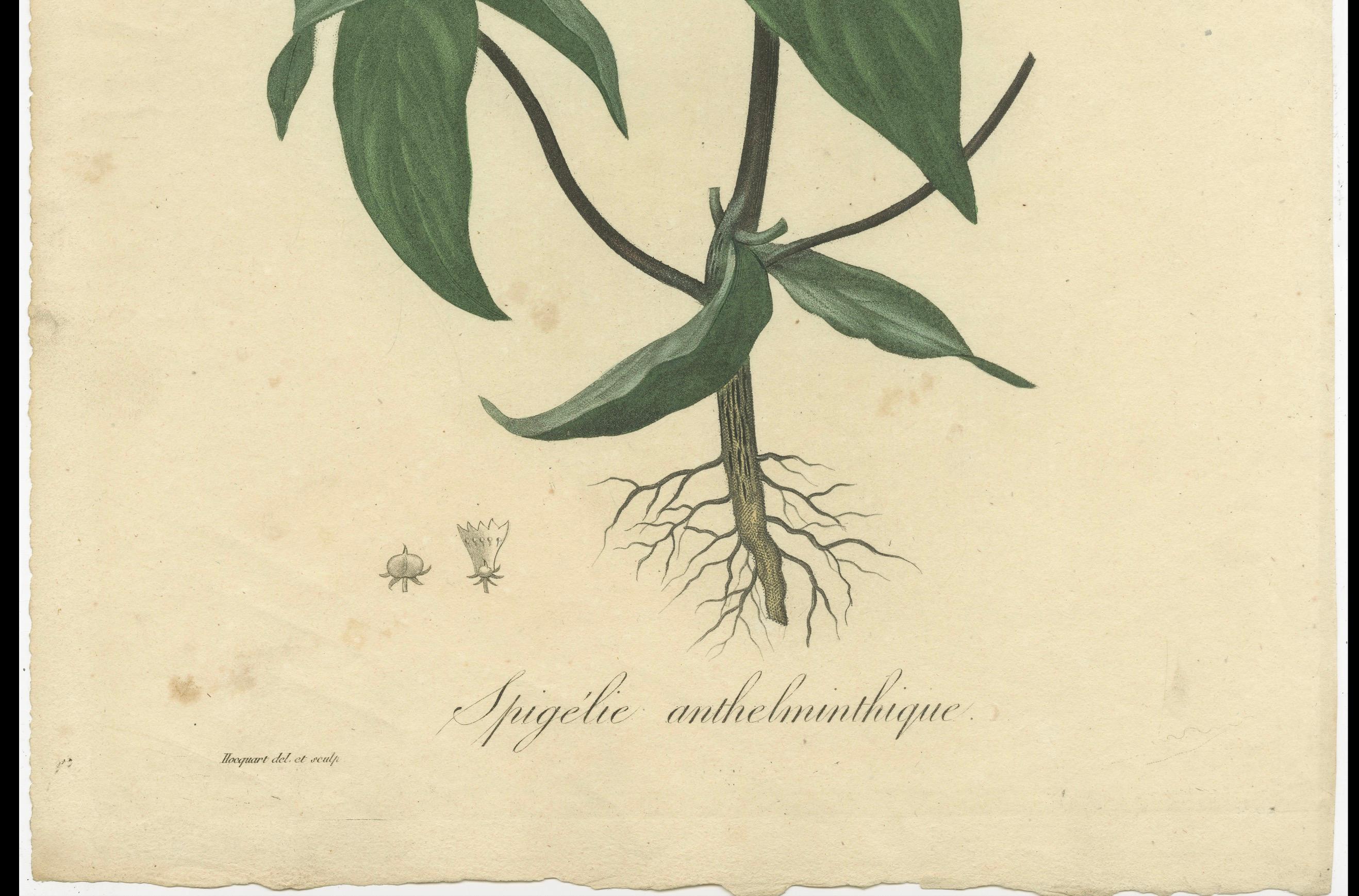
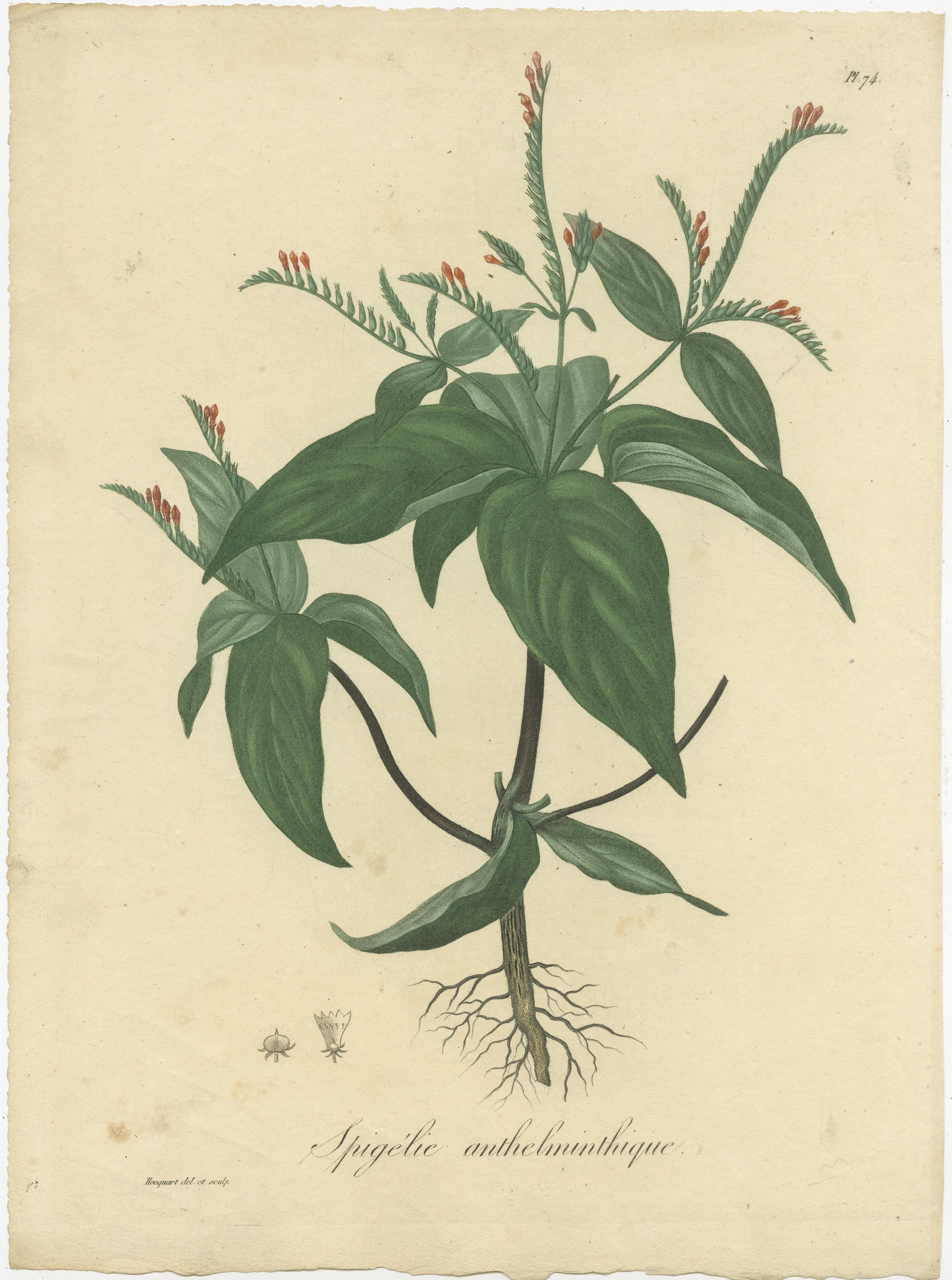
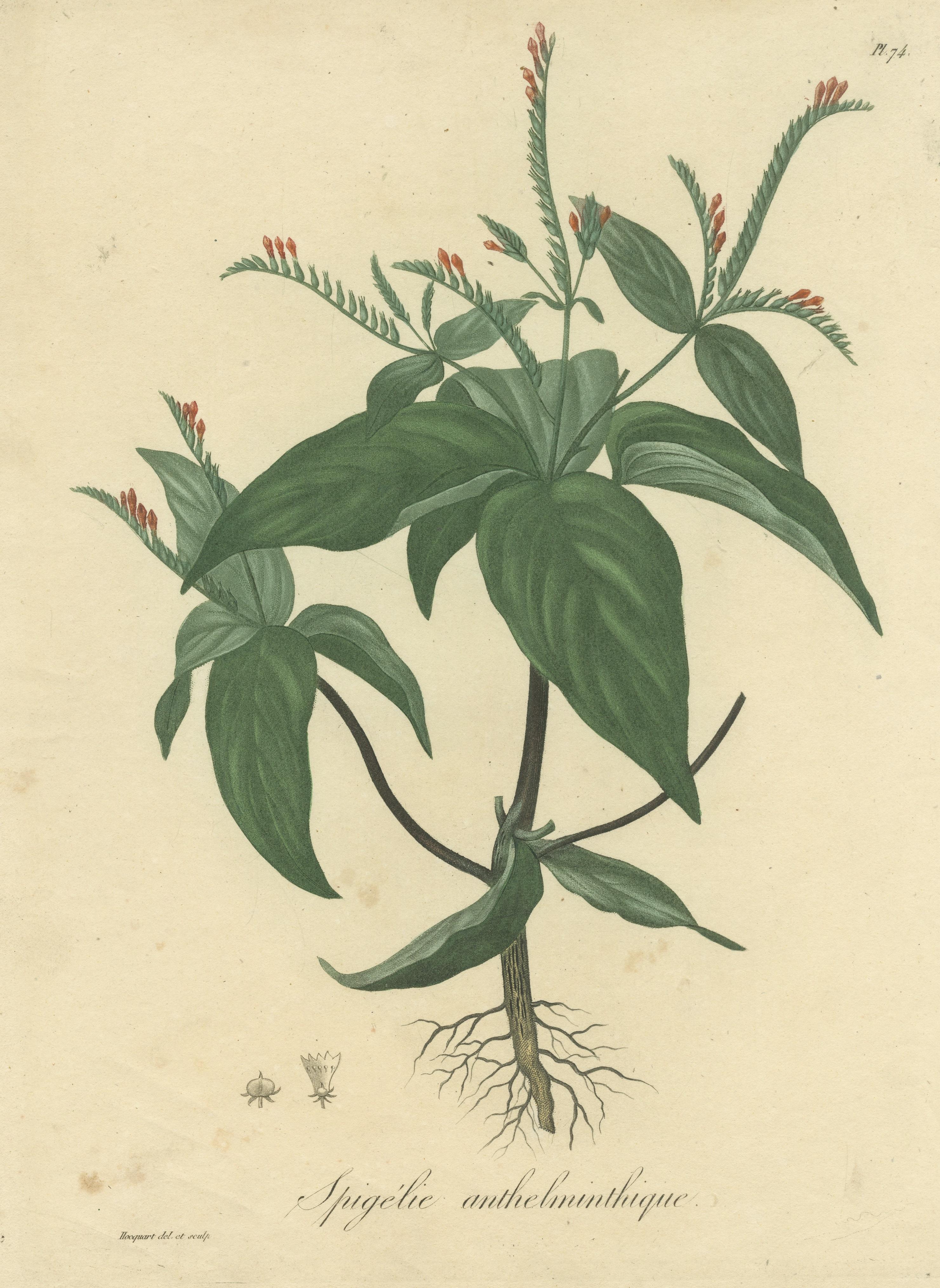
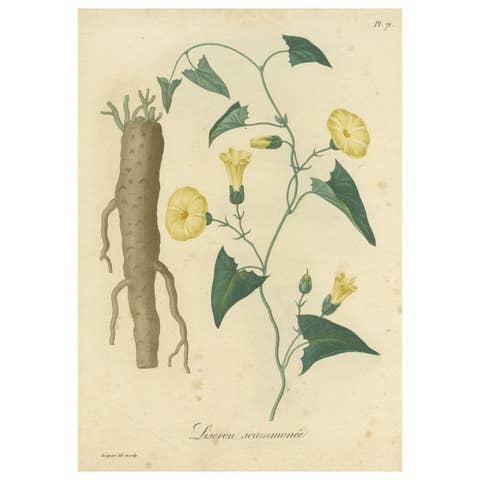
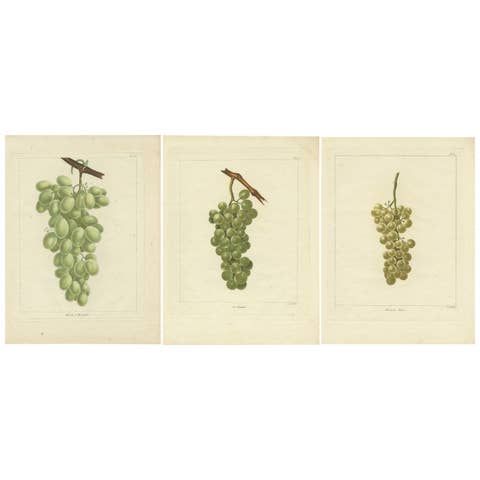
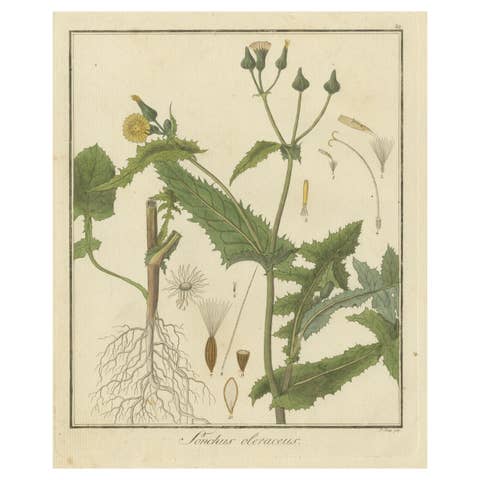
Antique botanical print titled 'Spigelia Anthelminthique'. This print shows the a Spigelia species, pinkroot is a common name for plants in this genus. Spigelia is a genus of flowering plants in the family Loganiaceae. It contains around 60 species, distributed over the warmer parts of the Americas, from the latitude of Buenos Aires to the Southern United States. It was named after Adriaan van den Spiegel (Adrianus Spigelius) by Carl Linnaeus in his 1753 Species Plantarum; the type species is Spigelia anthelmia. This print originates from 'Phytographie Medicale' by Joseph Roques. Engraved by Édouard Auguste Patrice Hocquart. Published circa 1821.
Édouard Auguste Patrice Hocquart (1789–1870), frequently cited as L. F. J. Hoquart, was a French publisher, writer, artist and engraver, noted for his colour plates illustrating Joseph R. Roques's (1772–1850) materia medica publication Phytographie médicale of 1821–1824.
More details of the plant:
The Spigelia genus, including the Spigelia anthelmintica, is special for several reasons:
1. **Medicinal Properties**: Spigelia is historically renowned for its medicinal properties, particularly as an anthelmintic, used to expel parasitic worms. The name "anthelmintica" itself suggests its use in traditional medicine for treating worm infections.
2. **Attractive Flowers**: Plants in the Spigelia genus are known for their strikingly beautiful flowers, which often have vivid colors and a unique, star-shaped appearance. The contrast between the bright pink or red petals and the yellow or greenish center makes them highly attractive and visually appealing.
3. **Habitat Diversity**: Spigelia species are adapted to a wide range of habitats in the warmer parts of the Americas. Their ability to thrive in various environmental conditions from Buenos Aires to the Southern United States showcases their ecological diversity and adaptability.
4. **Botanical Interest**: Named by Carl Linnaeus in honor of Adriaan van den Spiegel, Spigelia species hold historical significance in botany. Their classification and naming underscore the rich history of plant discovery and nomenclature.
5. **Garden Value**: Due to their striking appearance and medicinal properties, Spigelia species are valued in gardens and landscapes. They attract pollinators like hummingbirds and butterflies, adding ecological value to their aesthetic appeal.
6. **Rare and Endemic Species**: Some species within the Spigelia genus are rare or endemic to specific regions, making them of particular interest to conservationists and botanists. Their presence contributes to biodiversity and the ecological richness of their native habitats.
In summary, the Spigelia genus encompasses plants that are not only beautiful but also beneficial, historically significant, and ecologically important, making them truly special.