About this sheet
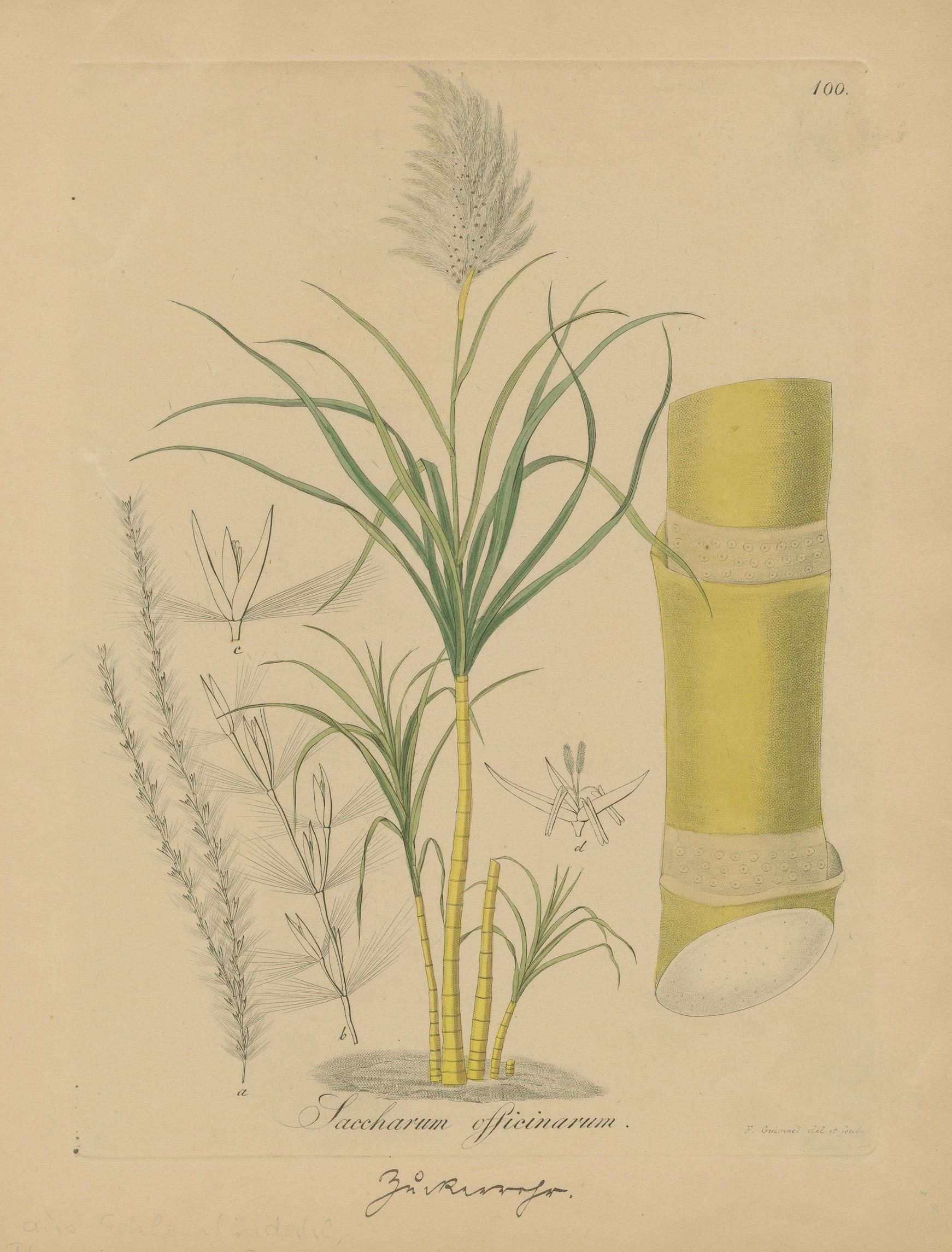
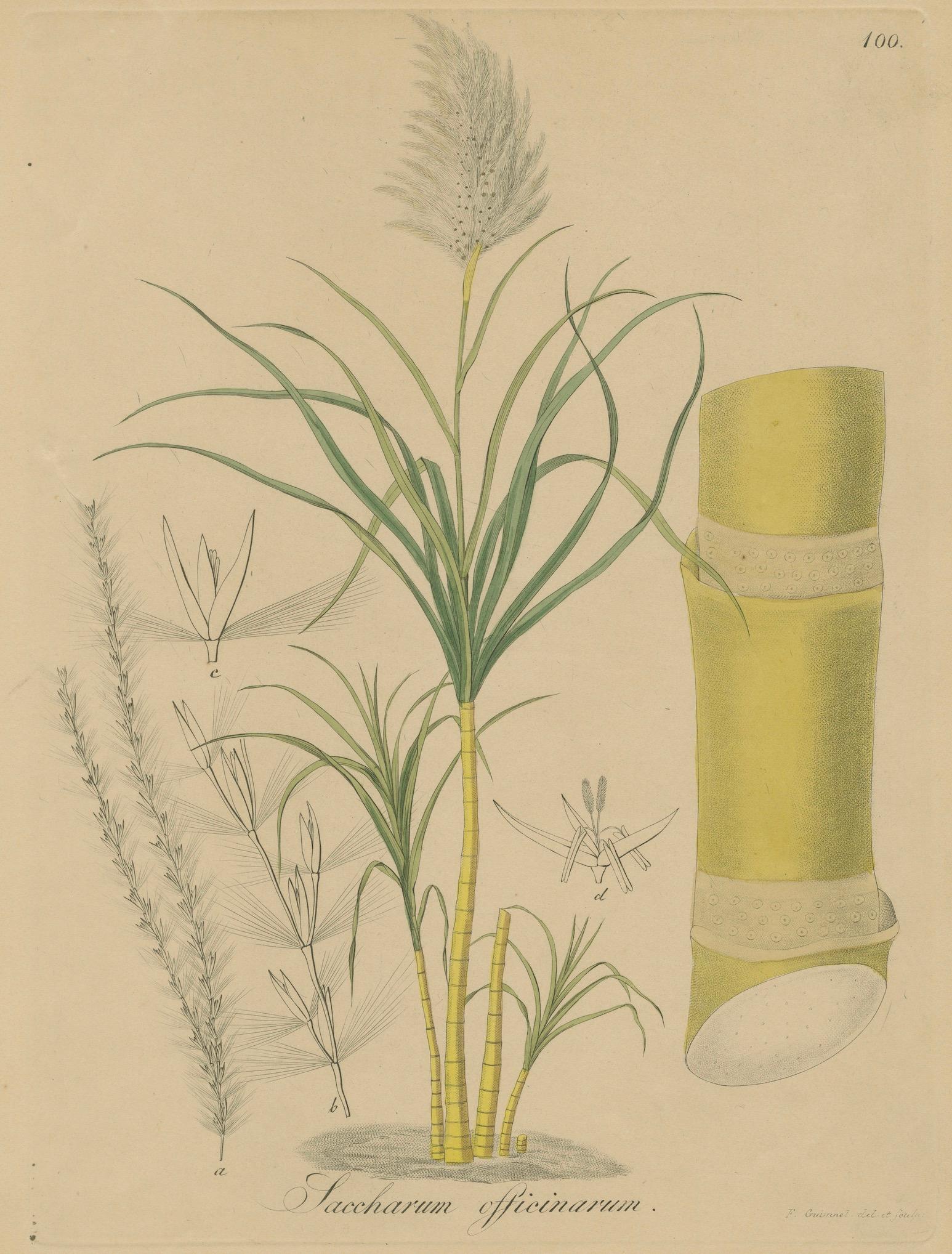
Antique Sugarcane Botanical Print – Saccharum officinarum, Hayne Plate 100
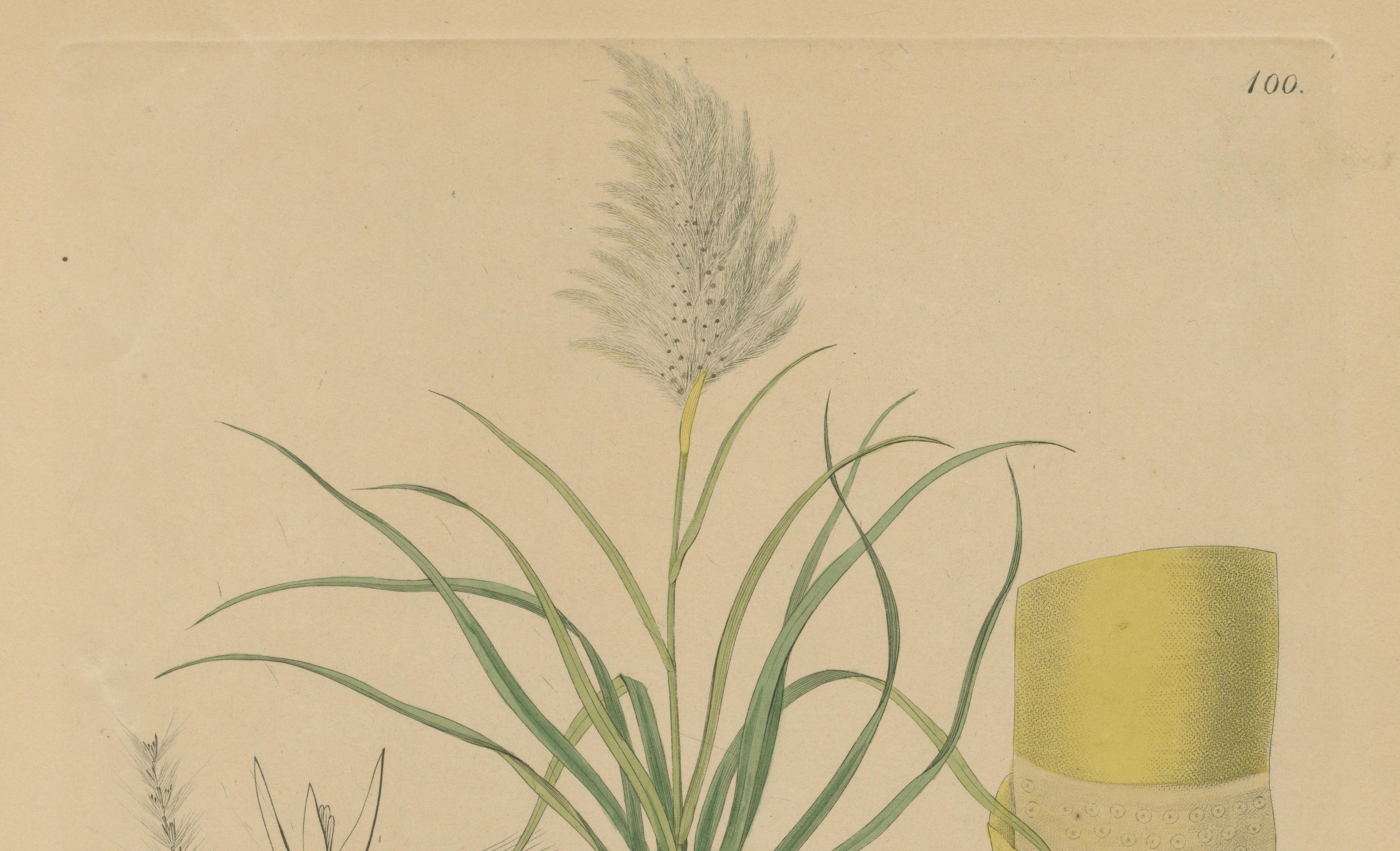
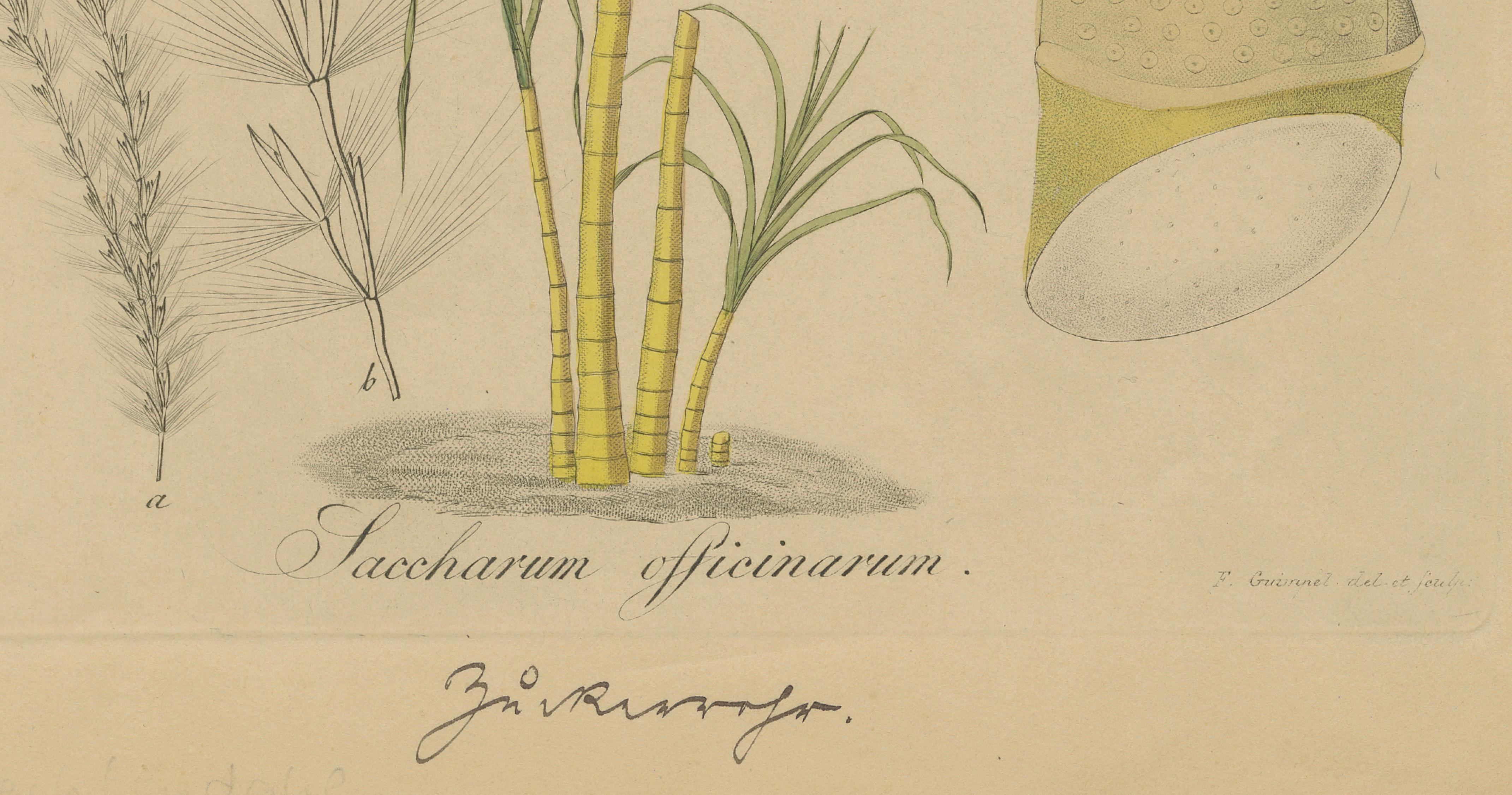
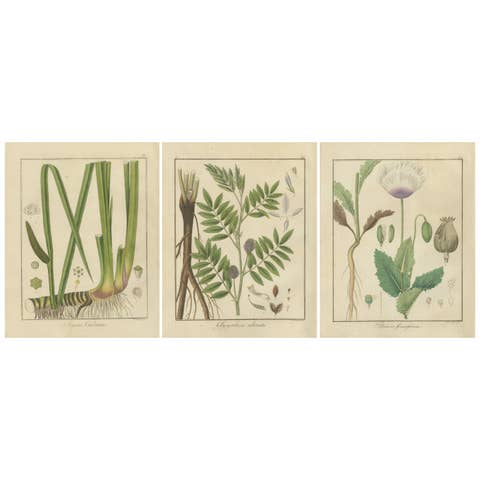
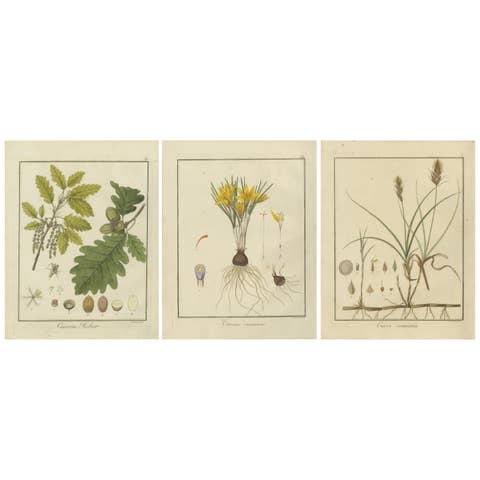
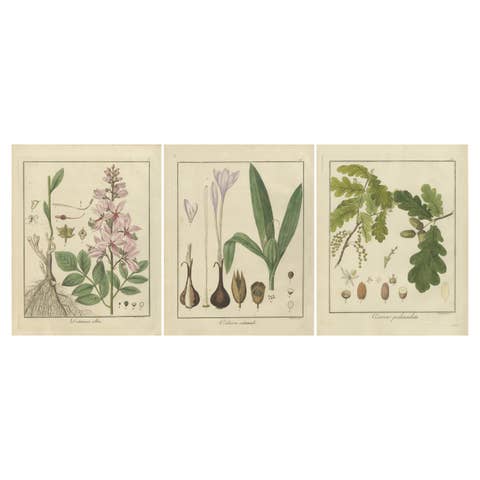
This finely executed botanical engraving depicts Saccharum officinarum, the sugarcane plant, shown with scientific clarity and quiet elegance. The composition presents the full growth habit with segmented canes and flowering plume, accompanied by precise analytical details of the inflorescence and spikelets, as well as a separate cross-section of the cane. The balance between clarity and restraint is characteristic of early German academic botany at its best.
The print originates from Friedrich Gottlob Hayne’s monumental work Getreue Darstellung und Beschreibung der in der Arzneykunde gebräuchlichen Gewächse, published in Berlin in the early 19th century. Hayne was one of the most important botanical authors of his time, and his work played a crucial role in standardizing the visual language of medicinal and economic botany across Europe. Each plate was engraved on copper and then carefully hand colored, combining scientific accuracy with refined aesthetic appeal.
Sugarcane held enormous economic and medicinal importance in the 18th and 19th centuries, linked to global trade networks, colonial agriculture, and the production of sugar as both food and pharmaceutical ingredient. As such, this plate carries strong historical resonance beyond its botanical subject, appealing equally to collectors of natural history, economic botany, and early scientific illustration.
Visually, the print works exceptionally well as a stand-alone sheet. The calm composition, generous margins, and soft hand coloring make it particularly attractive for interior settings, from classic libraries to contemporary spaces where natural history prints are used as architectural accents.
Condition report:
Good antique condition. Light, even age toning to the paper consistent with age. Minor surface marks and soft handling wear visible on close inspection. Plate impression visible. No major tears or losses.
Framing tips:
This print benefits from a wide mat to emphasize its scientific elegance. Recommended combinations include a black or dark walnut frame with an ivory or parchment mat for a classic look, or a slim natural oak frame with an off-white mat for a lighter, contemporary presentation. Avoid overly dark mats, which can overpower the delicate hand coloring.