About this sheet
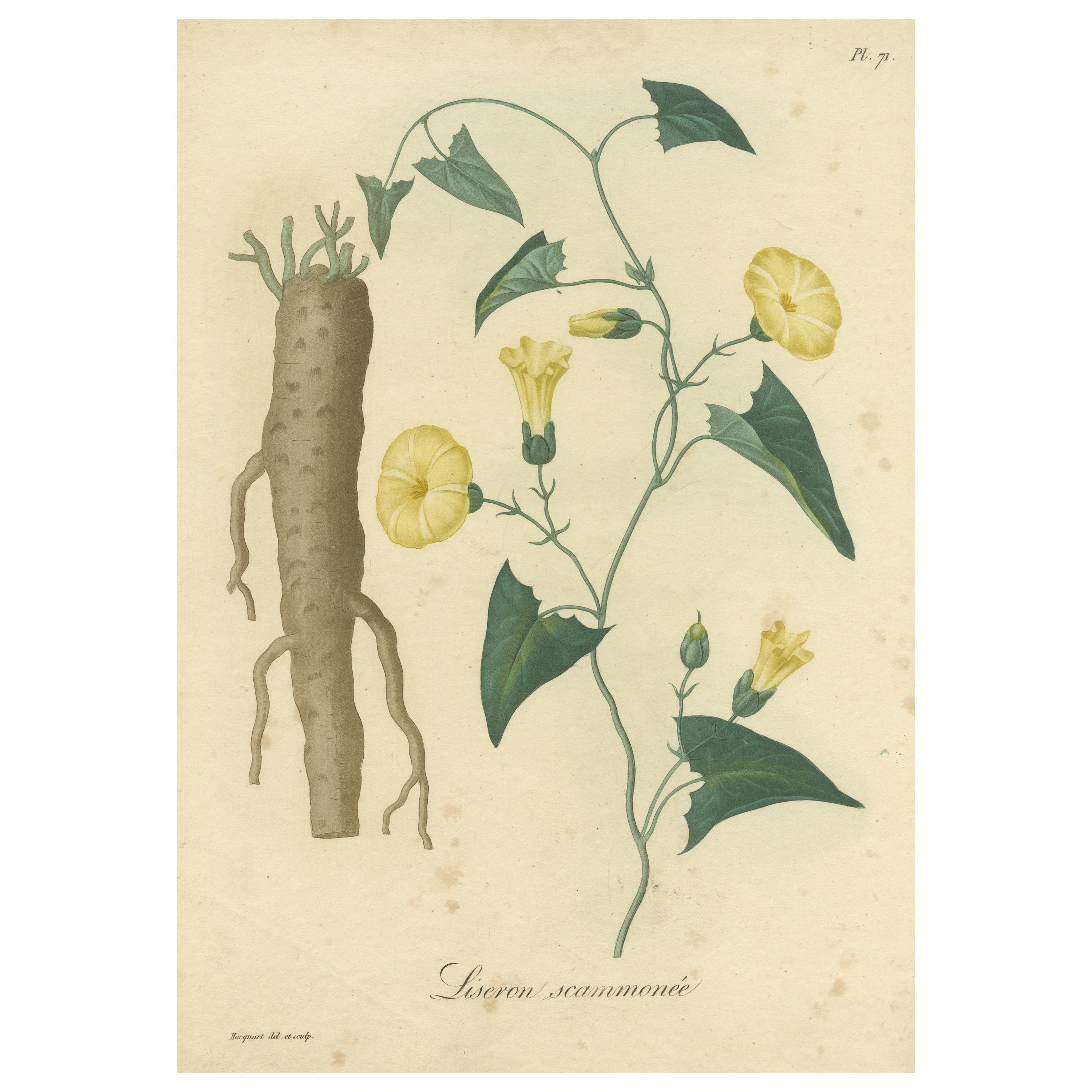
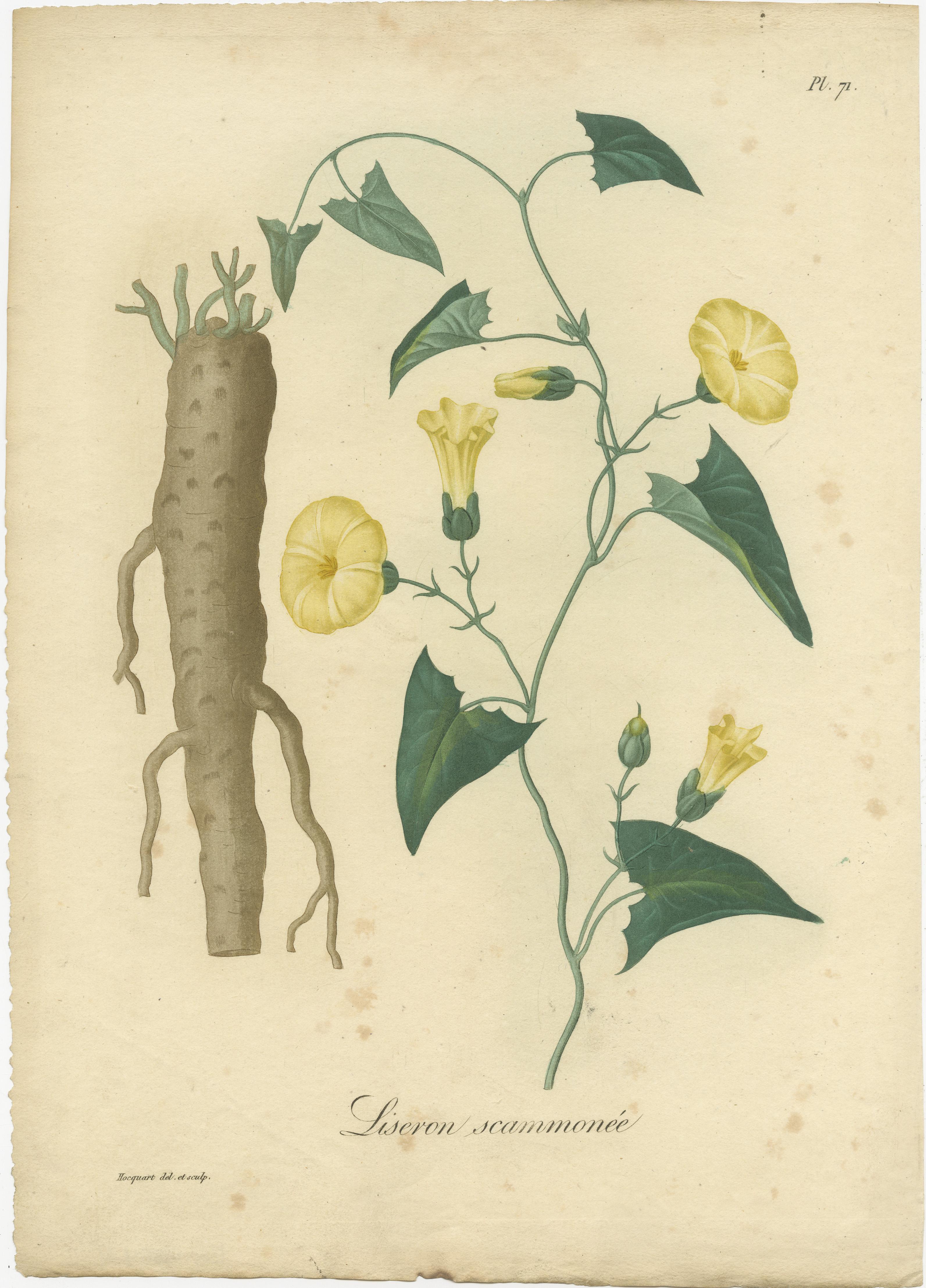
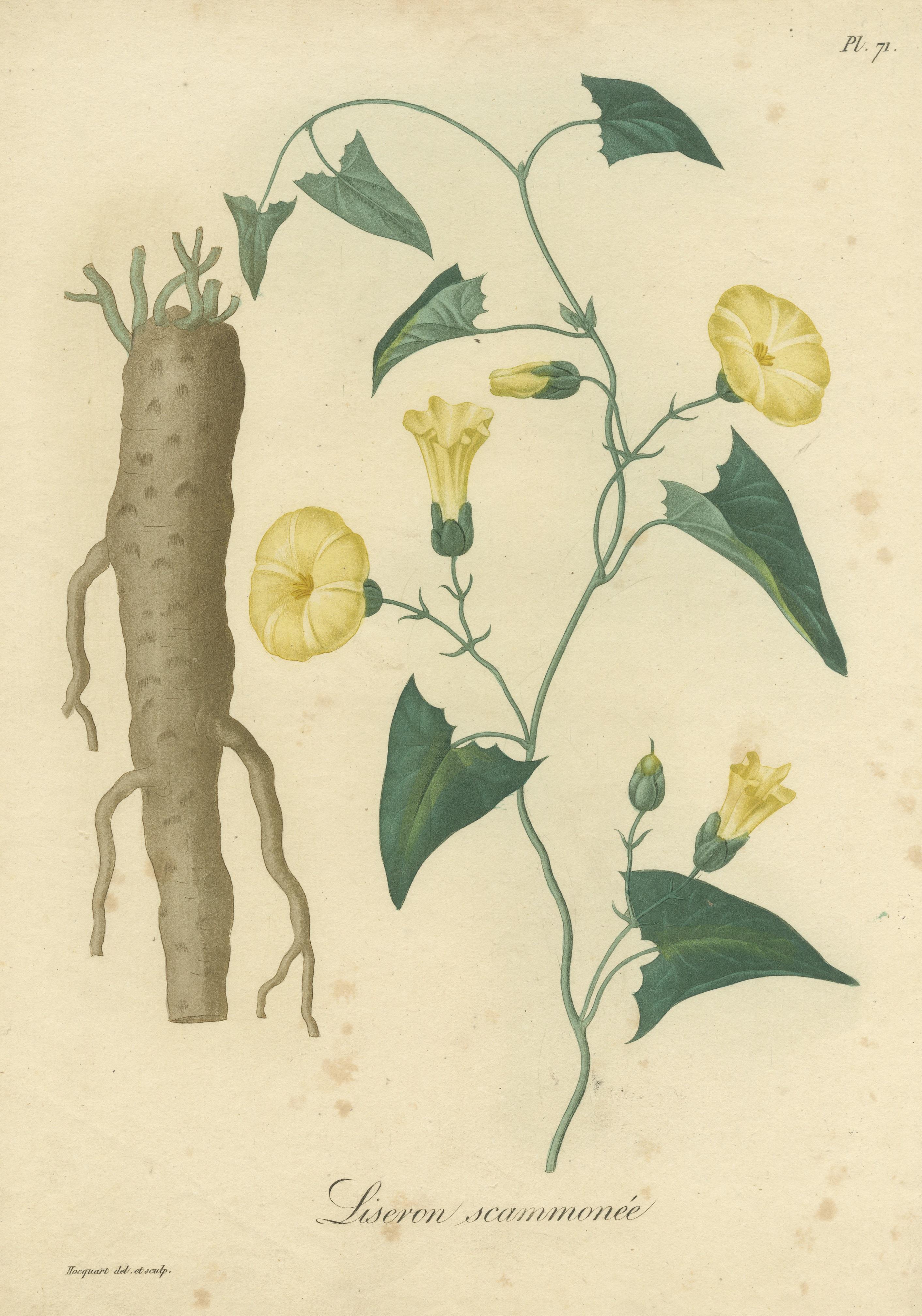
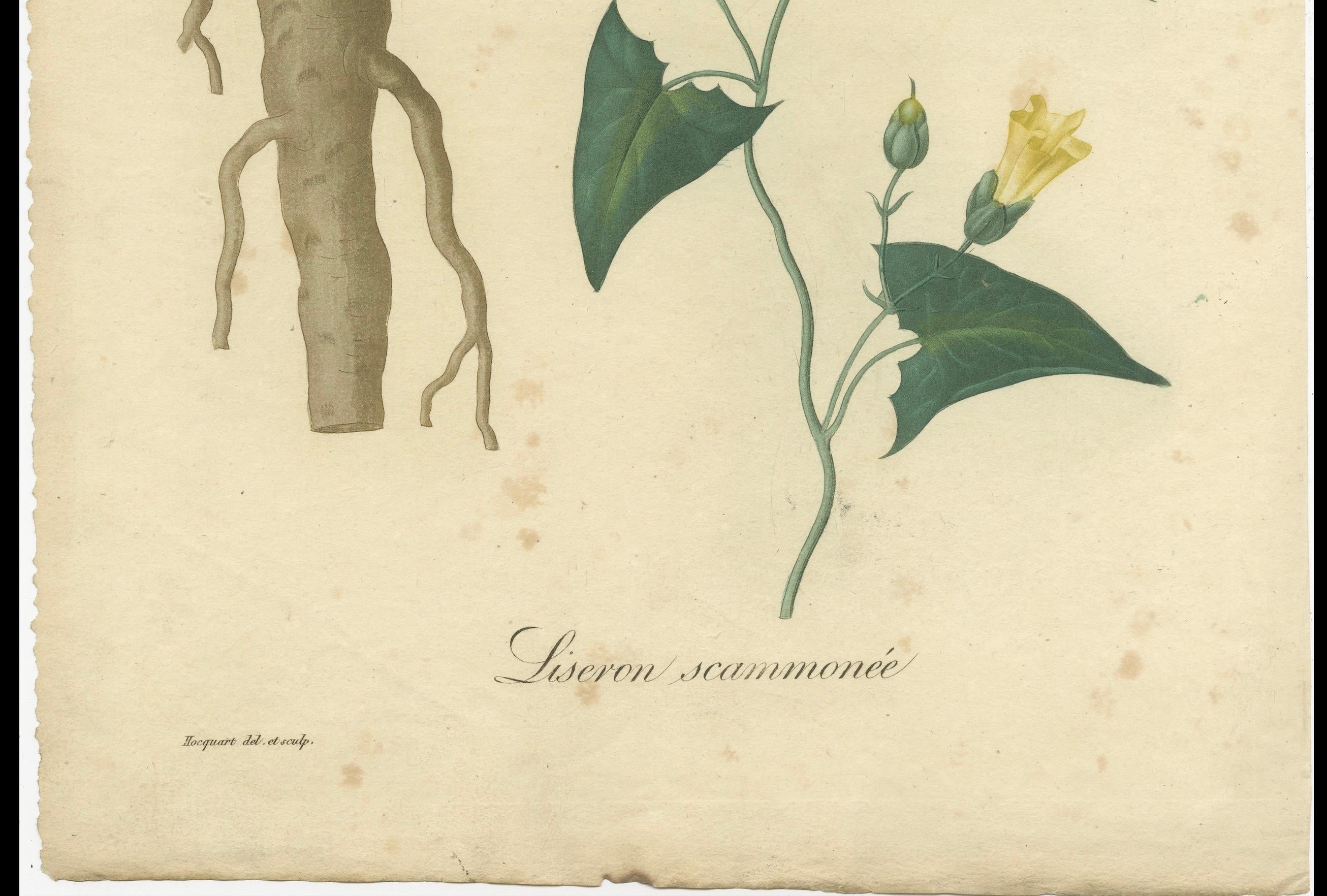
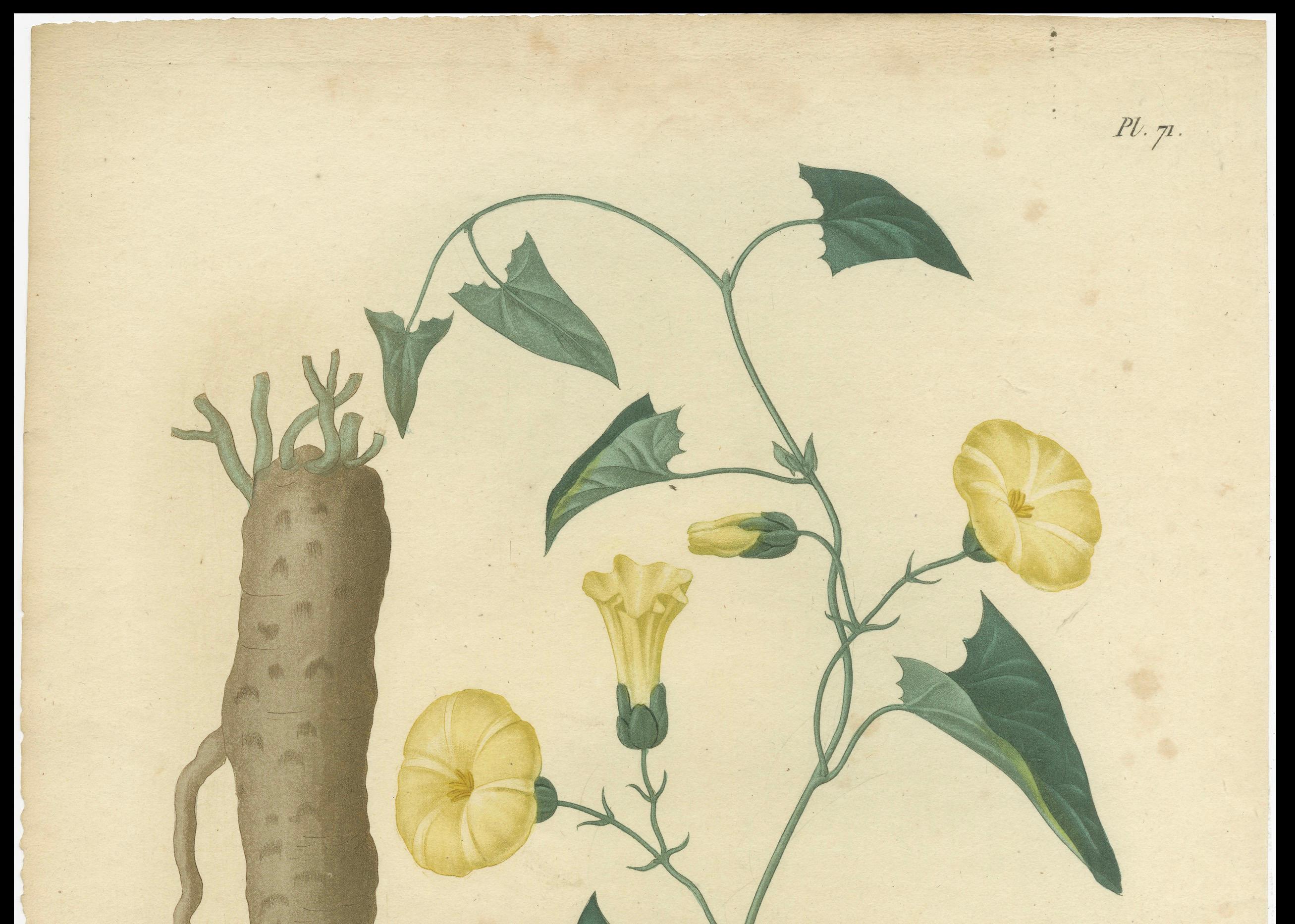
Antique botanical print titled 'Liseron Scammonée'. This print shows the Convolvulus Scammonia, commonly known as scammony. It is a bindweed native to the countries of the eastern part of the Mediterranean basin; it grows in bushy waste places, from Syria in the south to Crimea in the north, its range extending westward to the Greek islands, but not to northern Africa or Italy. It is a twining perennial, bearing flowers like those of Convolvulus arvensis, and having irregularly arrow-shaped leaves and a thick fleshy root. This print originates from 'Phytographie Medicale' by Joseph Roques. Engraved by Édouard Auguste Patrice Hocquart. Published circa 1821.
Édouard Auguste Patrice Hocquart (1789–1870), frequently cited as L. F. J. Hoquart, was a French publisher, writer, artist and engraver, noted for his colour plates illustrating Joseph R. Roques's (1772–1850) materia medica publication Phytographie médicale of 1821–1824.
More in detail:
The Convolvulus Scammonia, or scammony, is special for several reasons that highlight its uniqueness in the botanical world and its historical uses:
1. **Unique Habitat**: Scammony thrives in the specific climates and terrains of the eastern Mediterranean basin, from Syria to Crimea and the Greek islands. Its adaptation to bushy waste places in this particular geographic region underscores its ecological niche and specialized growth requirements.
2. **Medicinal Root**: One of the most distinguishing features of scammony is its thick, fleshy root, which has been used historically for medicinal purposes. The root contains a milky juice that, when dried, forms a gum-like substance known as scammonium. This substance has been used as a powerful purgative or laxative in traditional medicine.
3. **Twining Growth and Flowers**: Scammony is a twining perennial, which means it grows by spiraling around other plants or supports. This growth habit, combined with its flowers that resemble those of the common bindweed (Convolvulus arvensis), adds an aesthetic value to the plant. The irregularly arrow-shaped leaves further contribute to its distinctive appearance.
4. **Botanical Interest**: Its place within the Convolvulus genus, which includes a variety of species with different growth habits and ecological adaptations, makes scammony a subject of interest for botanists and plant enthusiasts. Studying its characteristics can provide insights into the diversity and evolution of plants within this genus.
5. **Historical and Cultural Significance**: The use of scammony's root in traditional medicine connects it to the cultural and historical practices of the regions where it is native. Its role in herbal medicine and the trade of medicinal plants adds layers to its significance beyond its botanical characteristics.
These aspects make the Convolvulus Scammonia a plant of interest not just for its visual beauty and ecological adaptation, but also for its historical, medicinal, and cultural significance.