About this sheet
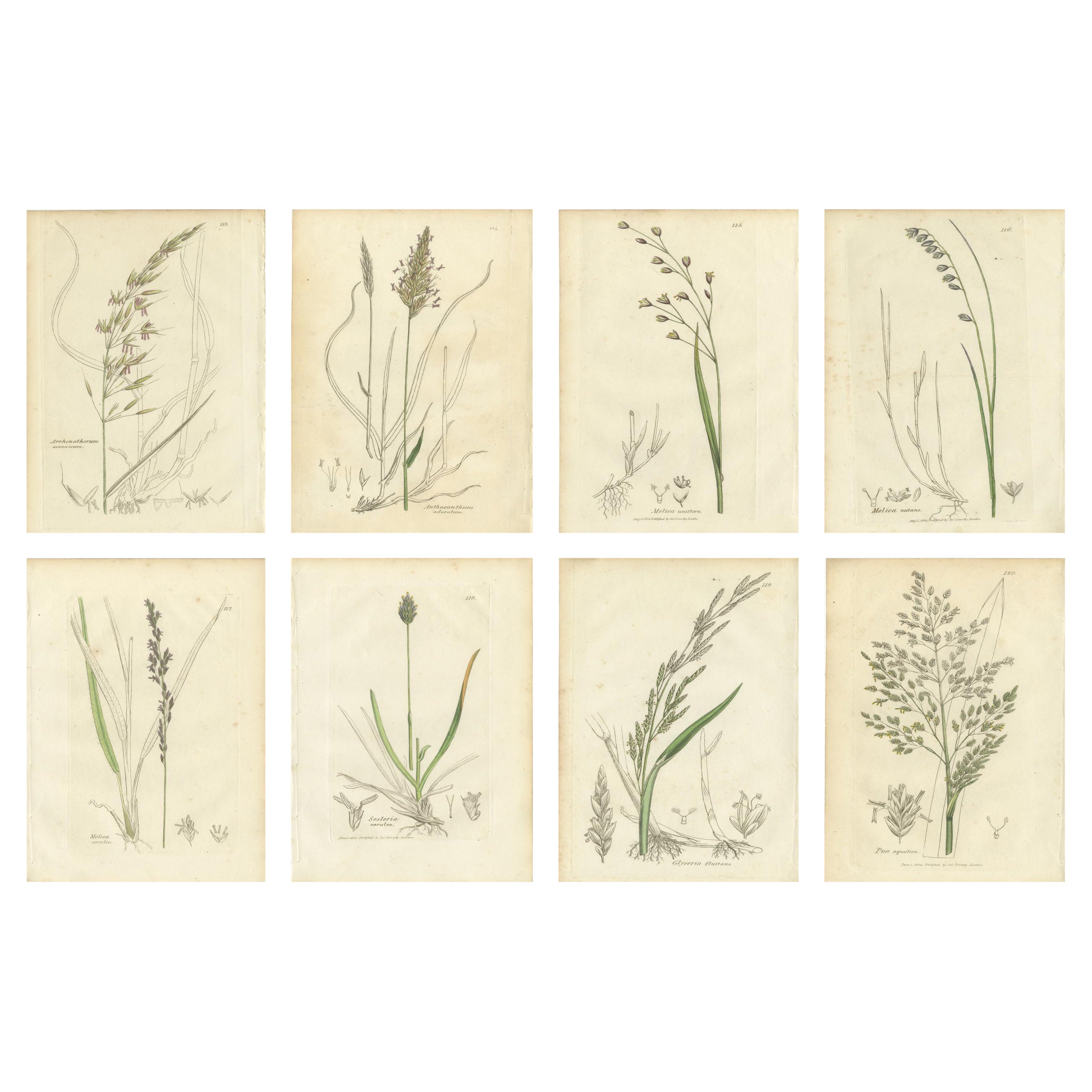
Antique Grasses & Sedges – Hand-Colored Botanical Engravings, c.1830 (Set of 8)
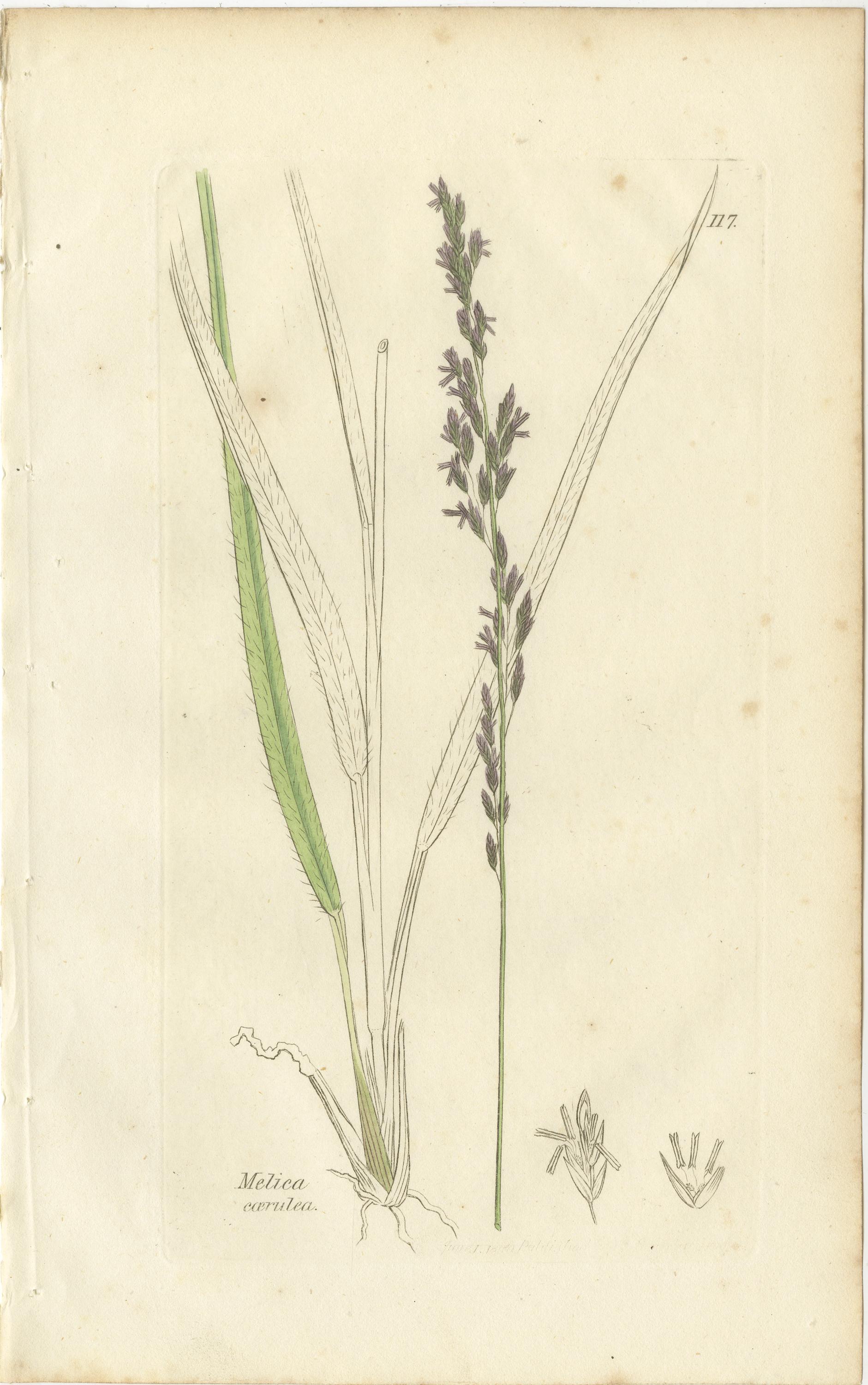
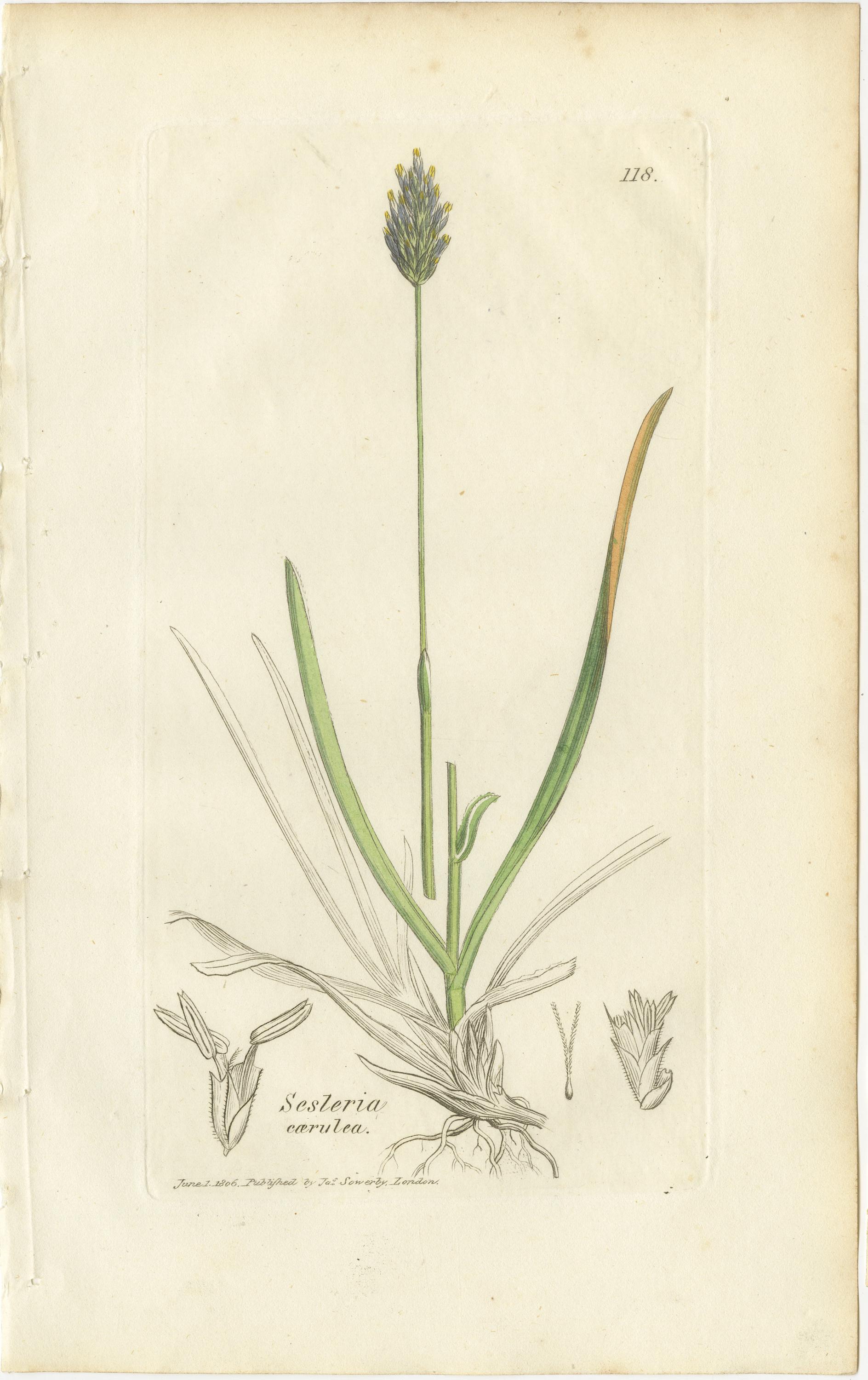
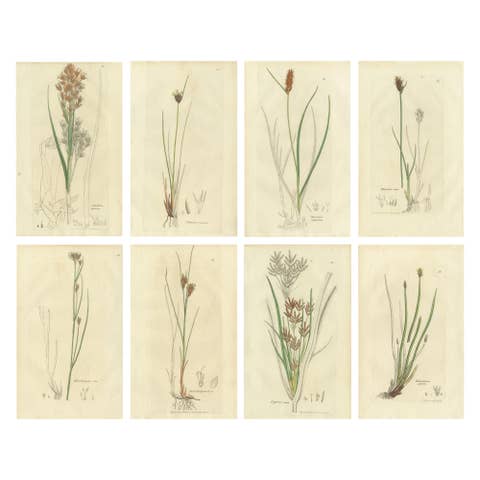
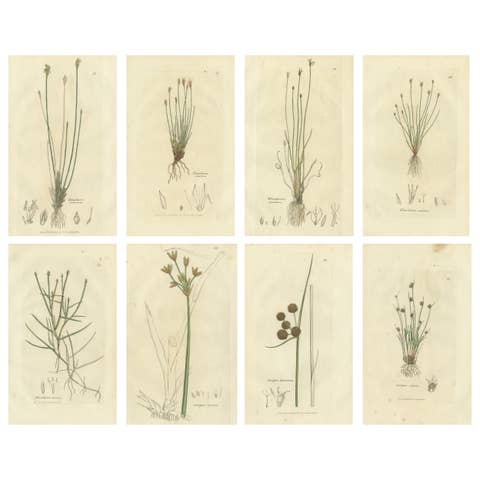
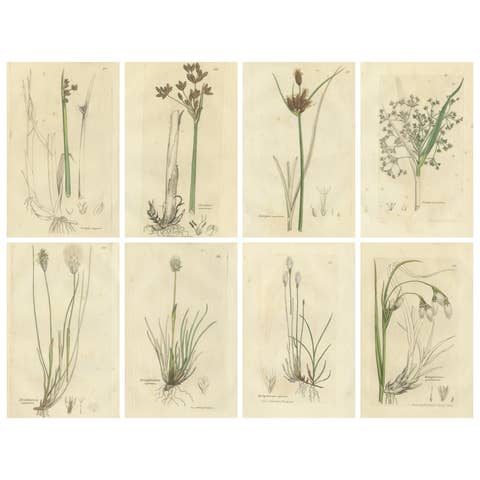
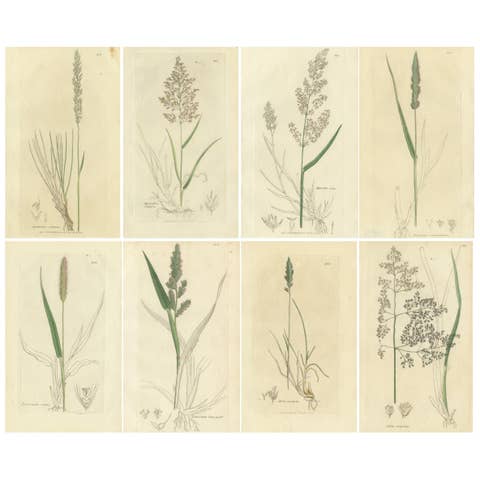
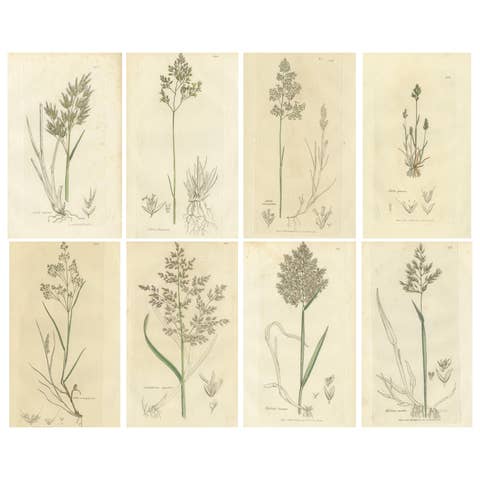
This beautifully preserved set of eight antique hand-colored botanical engravings features a variety of grasses and sedges, each drawn with scientific precision and elegant clarity. Likely published around 1830 in a European botanical compendium, these plates combine both aesthetic appeal and botanical accuracy, showcasing species that include sweet vernal grass, melic, sedge, and reed meadow-grass.
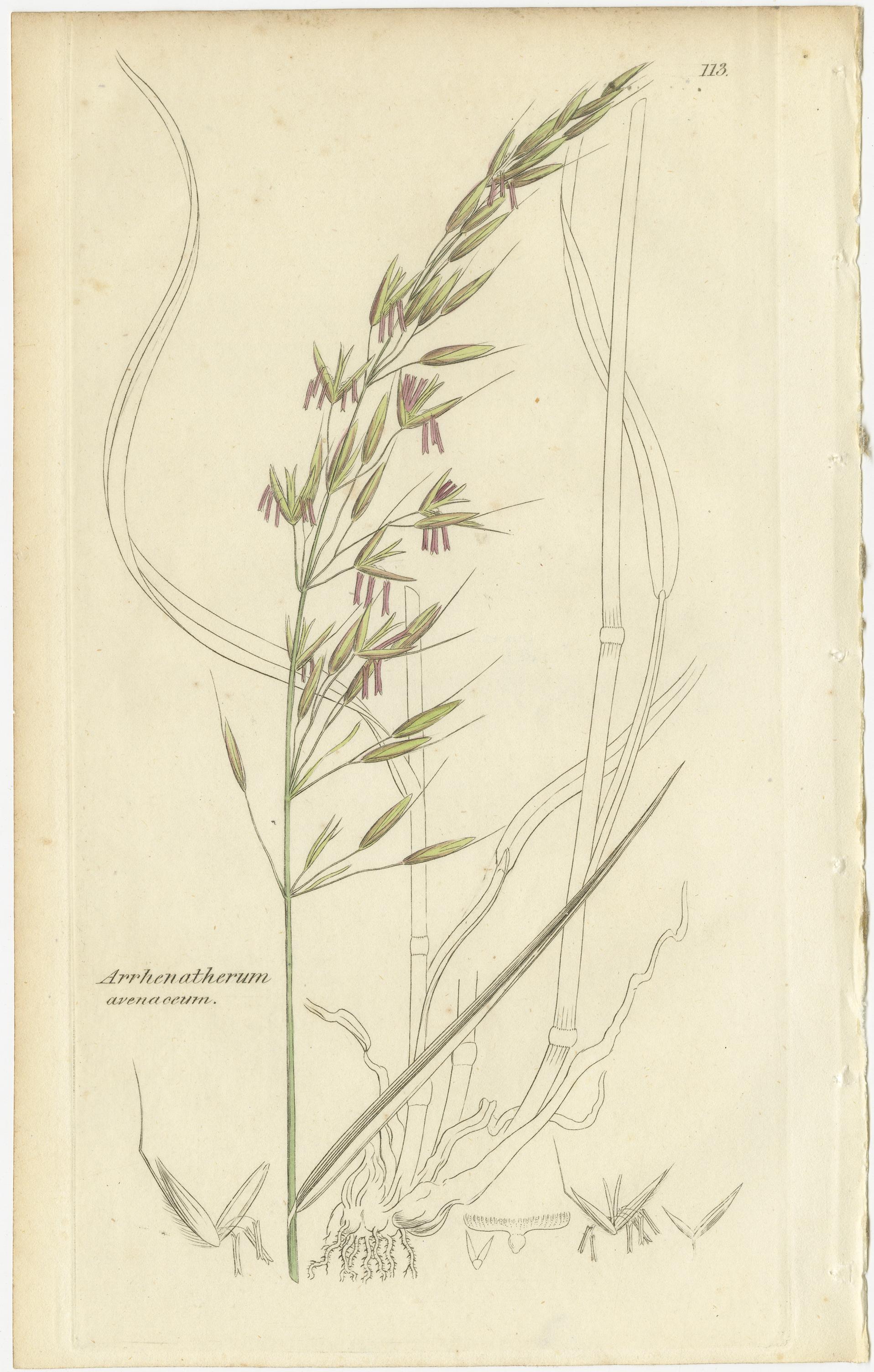
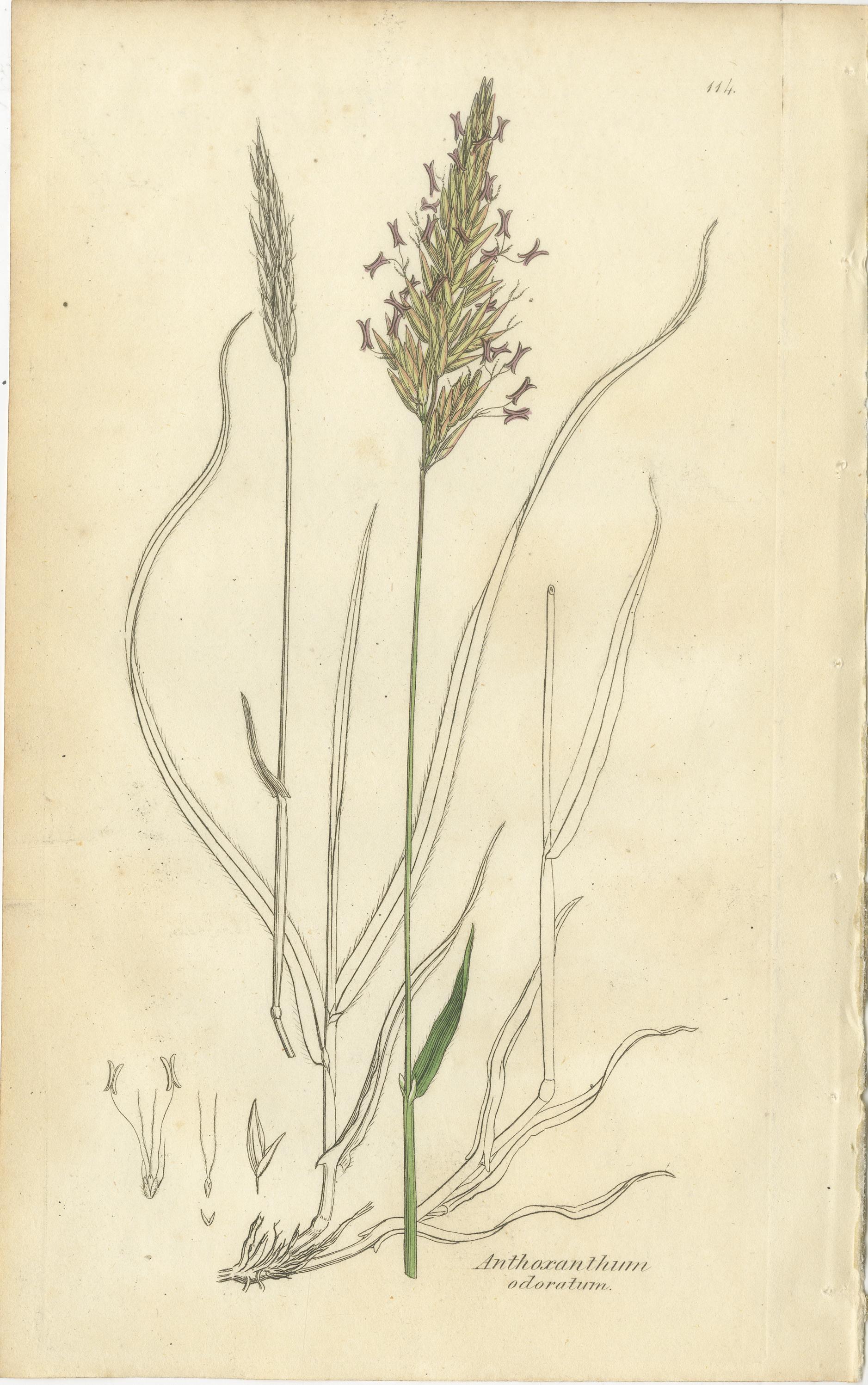
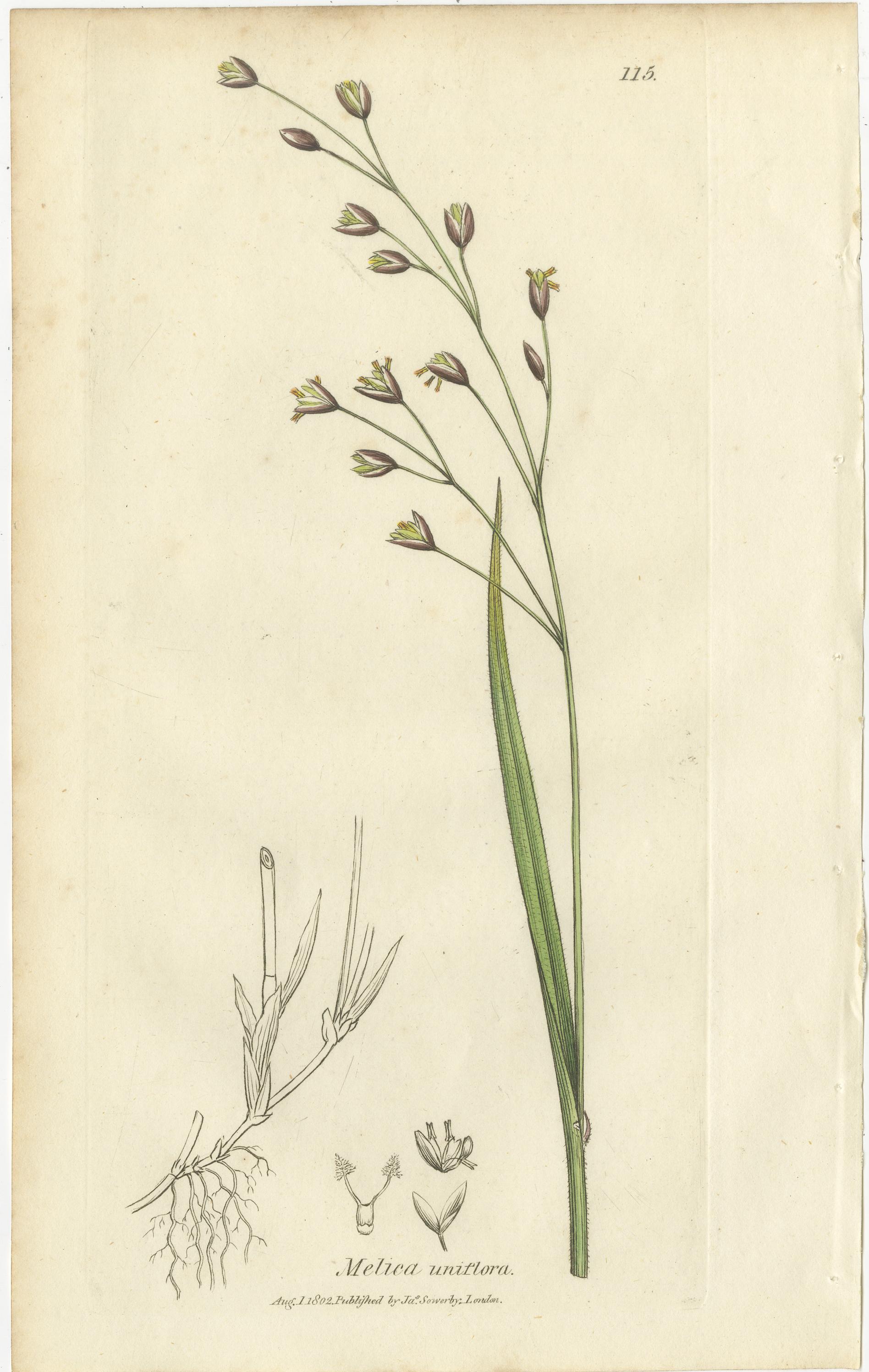
Each illustration presents a full specimen with roots, leaves, and flower or seed structures, accompanied by precise Latin annotations and fine stippled detailing in black and white. The subtle hand-coloring on select elements—such as stems and flowering parts—provides delicate contrast without overpowering the naturalist intention of the work.
The following species are represented in this set:
1. *Arthrostachys* – a slender grass with upright habit
2. *Anthoxanthum odoratum* – Sweet Vernal Grass, known for its fragrant dried scent
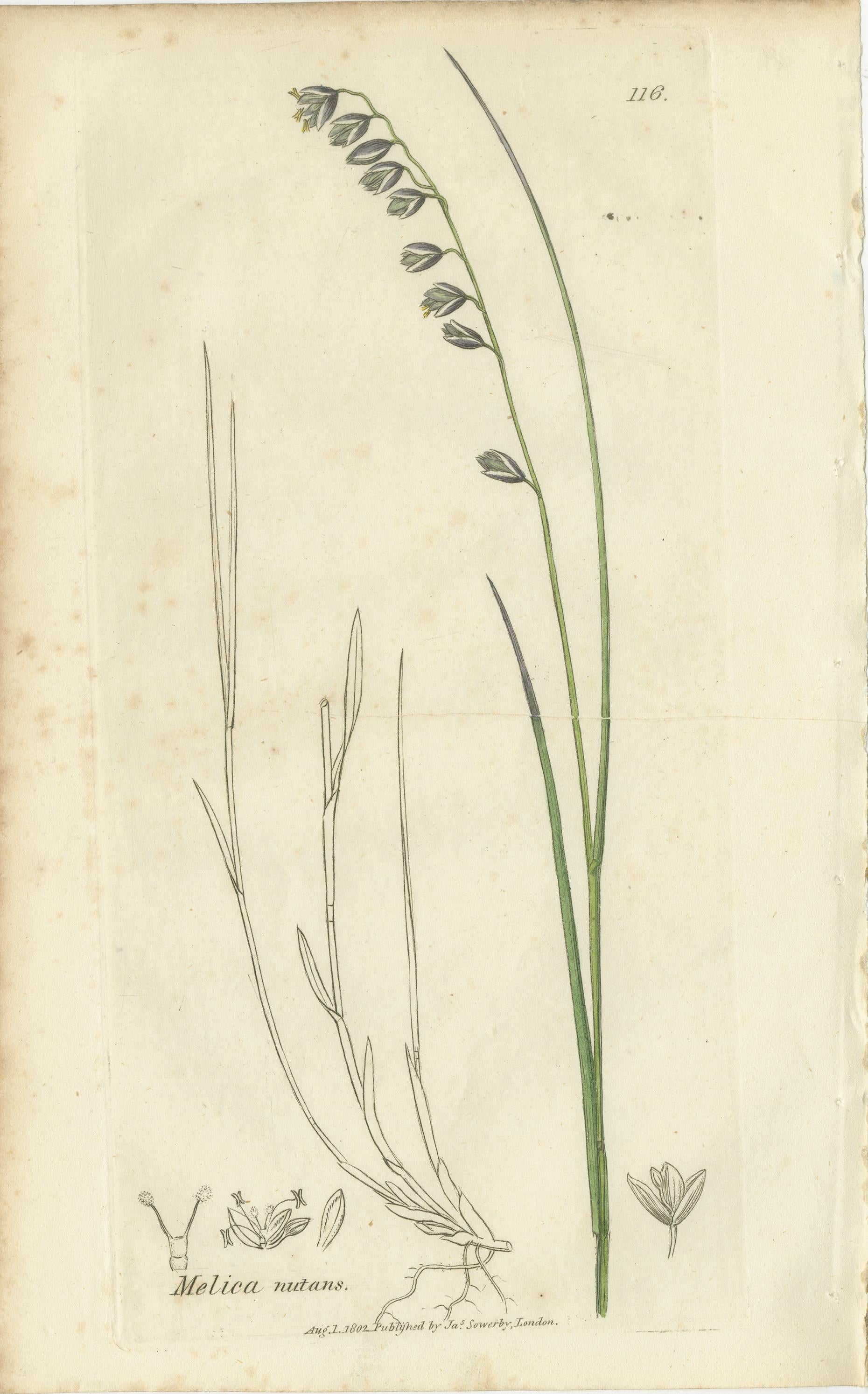
3. *Melica nutans* – Nodding Melic, illustrated in two variations
4. *Melica uniflora* – Wood Melic, common in deciduous forests
5. *Scirpus acicularis* (now *Isolepis acicularis*) – Slender Club-rush, a sedge with fine foliage
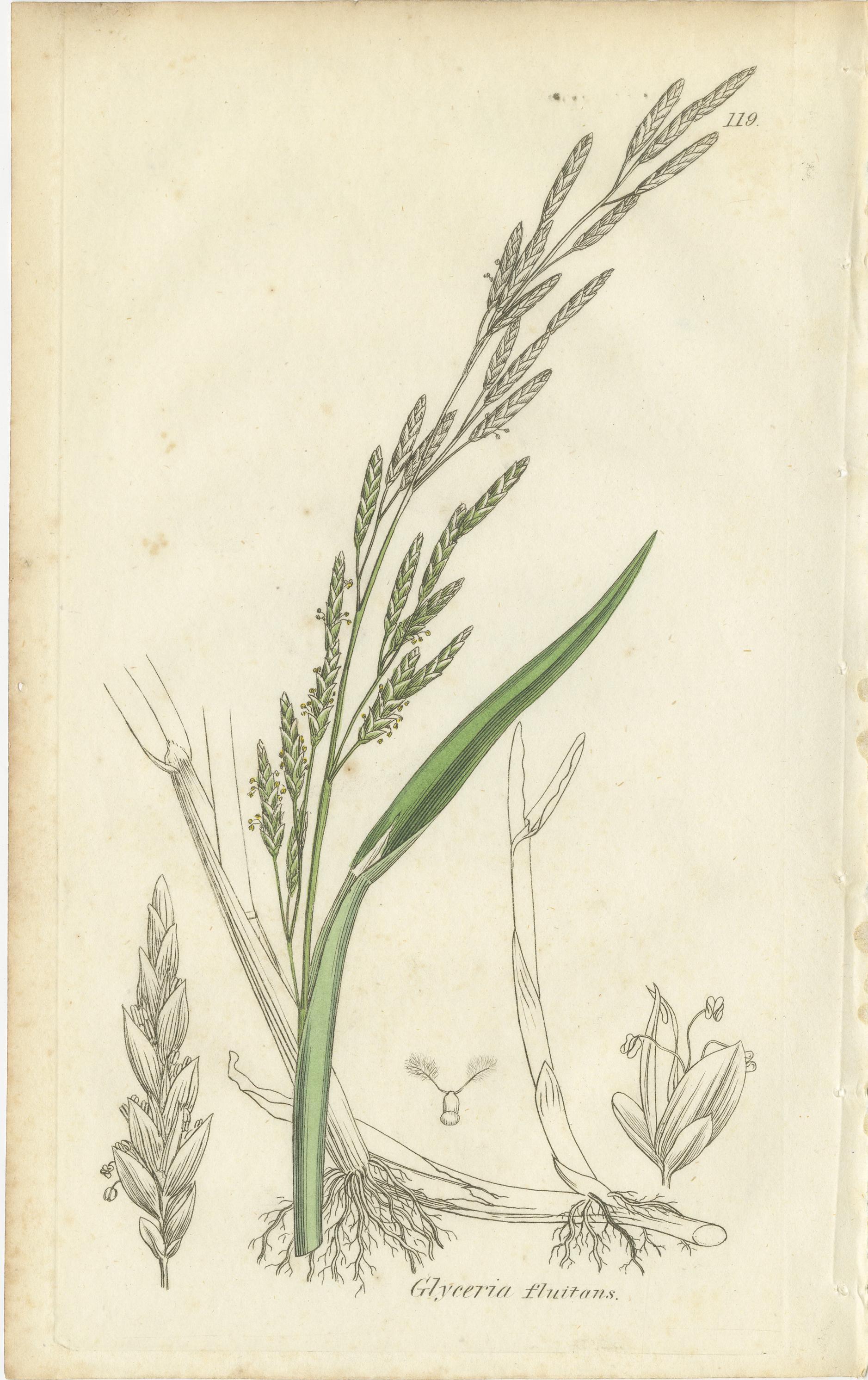
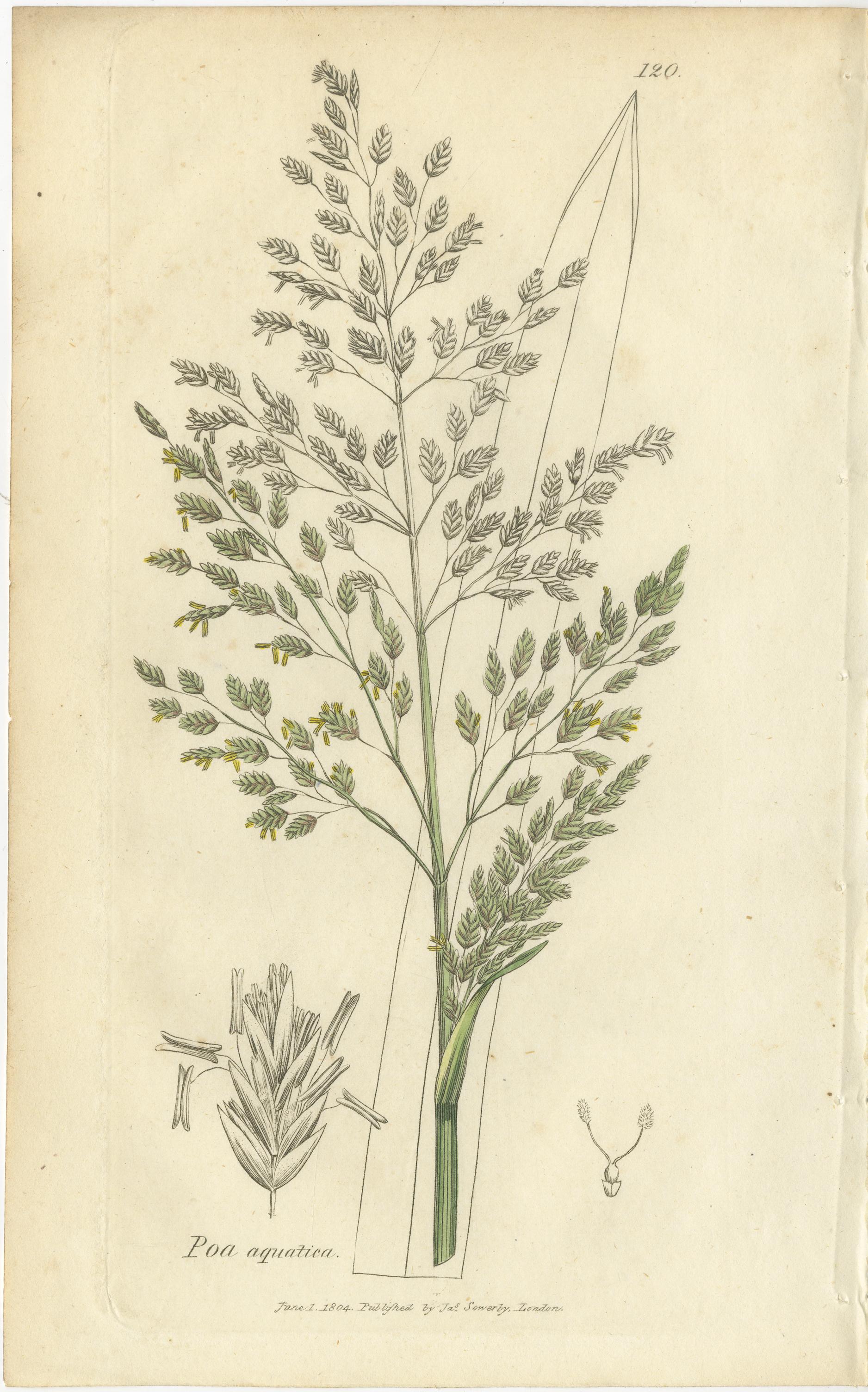
6. *Glyceria fluitans* – Floating Sweet-grass, an aquatic grass with edible seeds
7. *Poa aquatica* – often referred to today as *Glyceria maxima*, a vigorous reed-like grass
These engravings are scientifically significant and visually pleasing, making them ideal for interior decoration in naturalist, cottagecore, or academic settings. Their fine-lined aesthetic and muted palette lend themselves well to minimalist or vintage interiors.
This set is perfect for collectors of botanical art, landscape designers, or anyone with an appreciation for the understated elegance of native grasses and sedges. Displayed together, they offer a harmonious visual narrative of Europe’s wetland and woodland flora.
Condition report:
Good condition overall. Slight age toning to margins and a few minor foxing spots, mostly confined to outer edges. Paper is stable with visible plate marks around the image. No tears or major stains. Colors are soft but well preserved.
Framing tips:
These prints work beautifully in a grid of two rows of four, ideally in thin natural wood or black frames with generous ivory or off-white mats. To emphasize the botanical character, consider using archival double matting with a narrow inner green or beige rim. Perfect for hanging in garden rooms, libraries, or hallways.
Technique: Copperplate engraving with original hand coloring
Maker: Anonymous engraver, likely German or French, c.1830