About this sheet
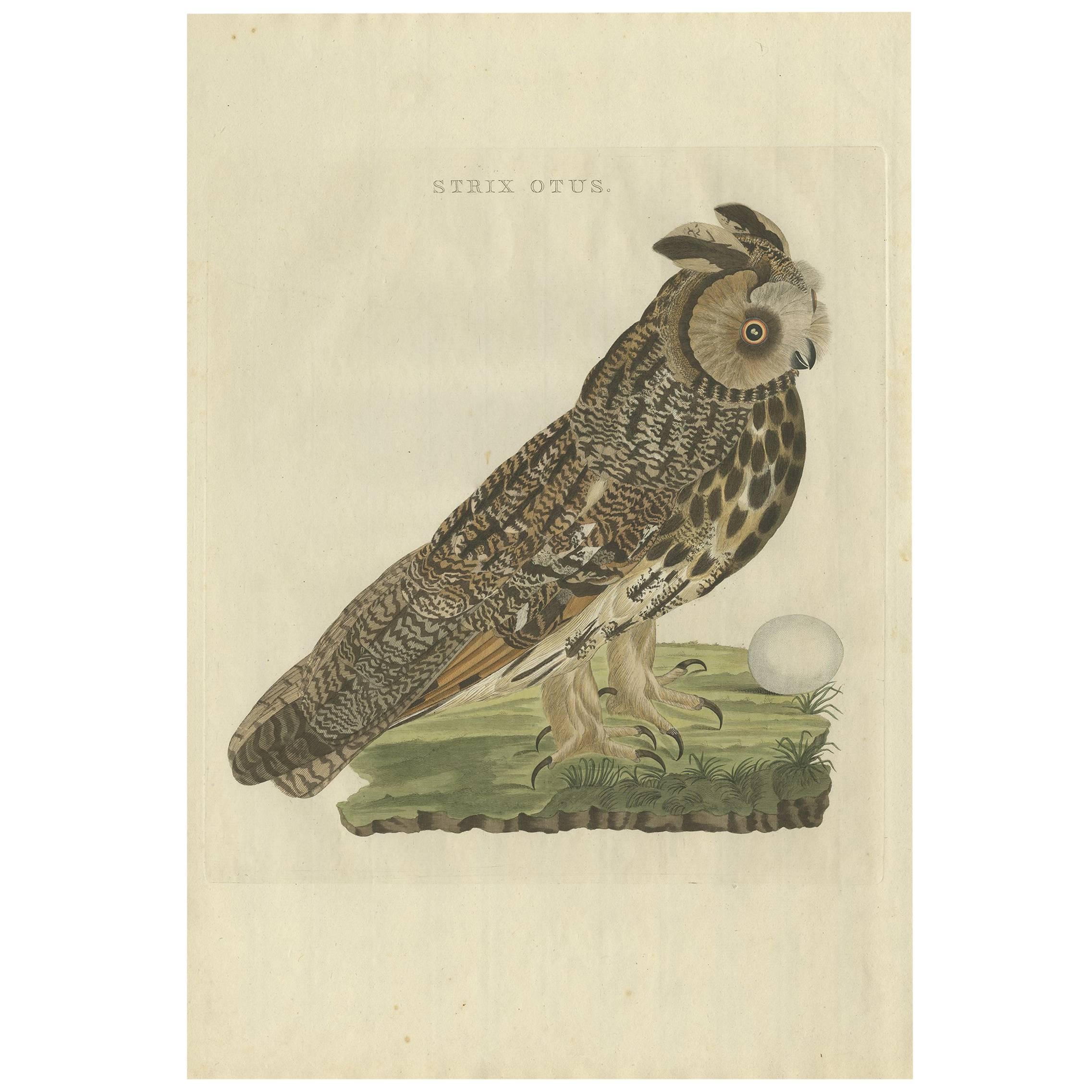
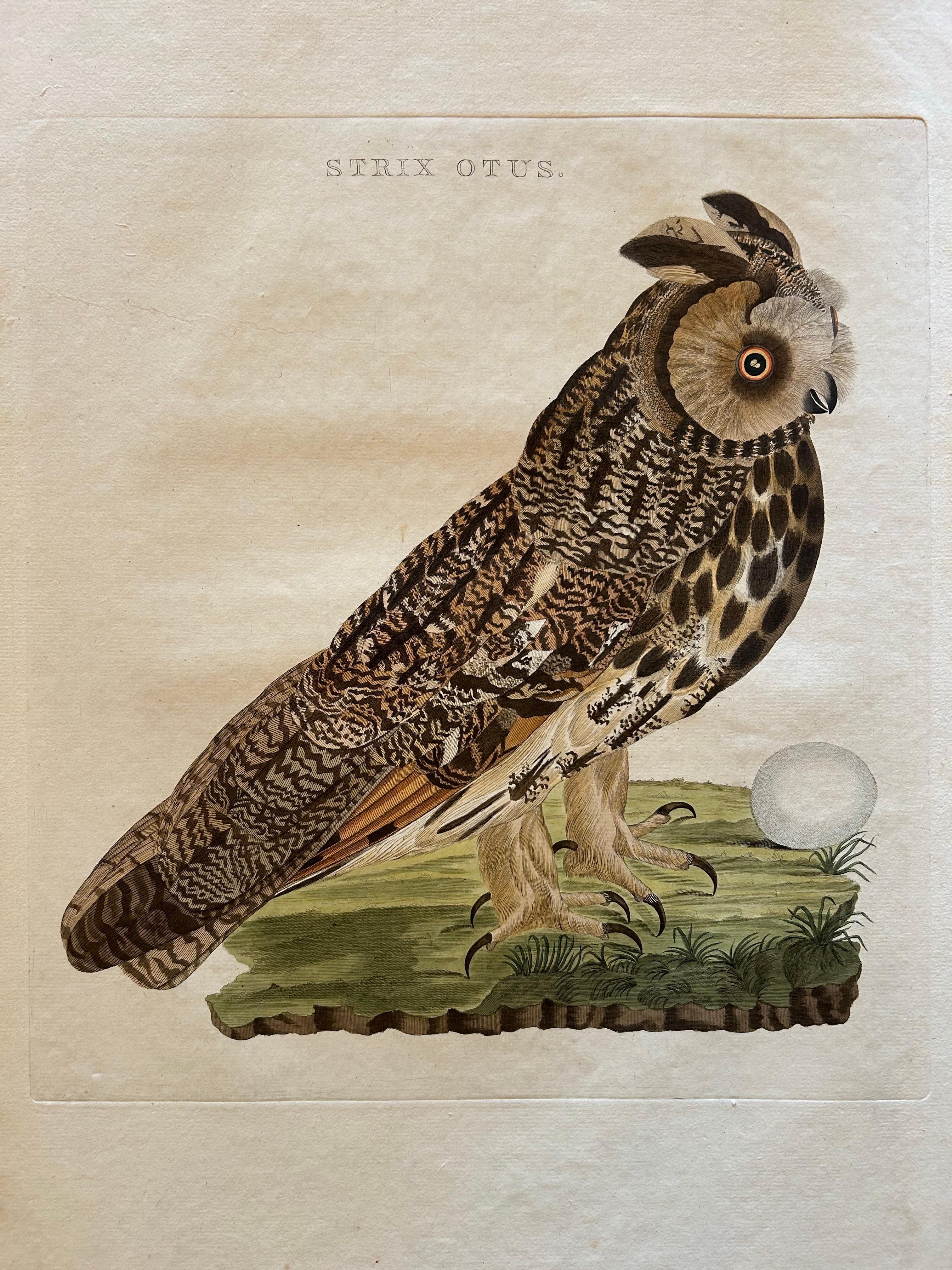
Strix Otus – Antique Long-Eared Owl Print by Nozeman & Sepp, 1809
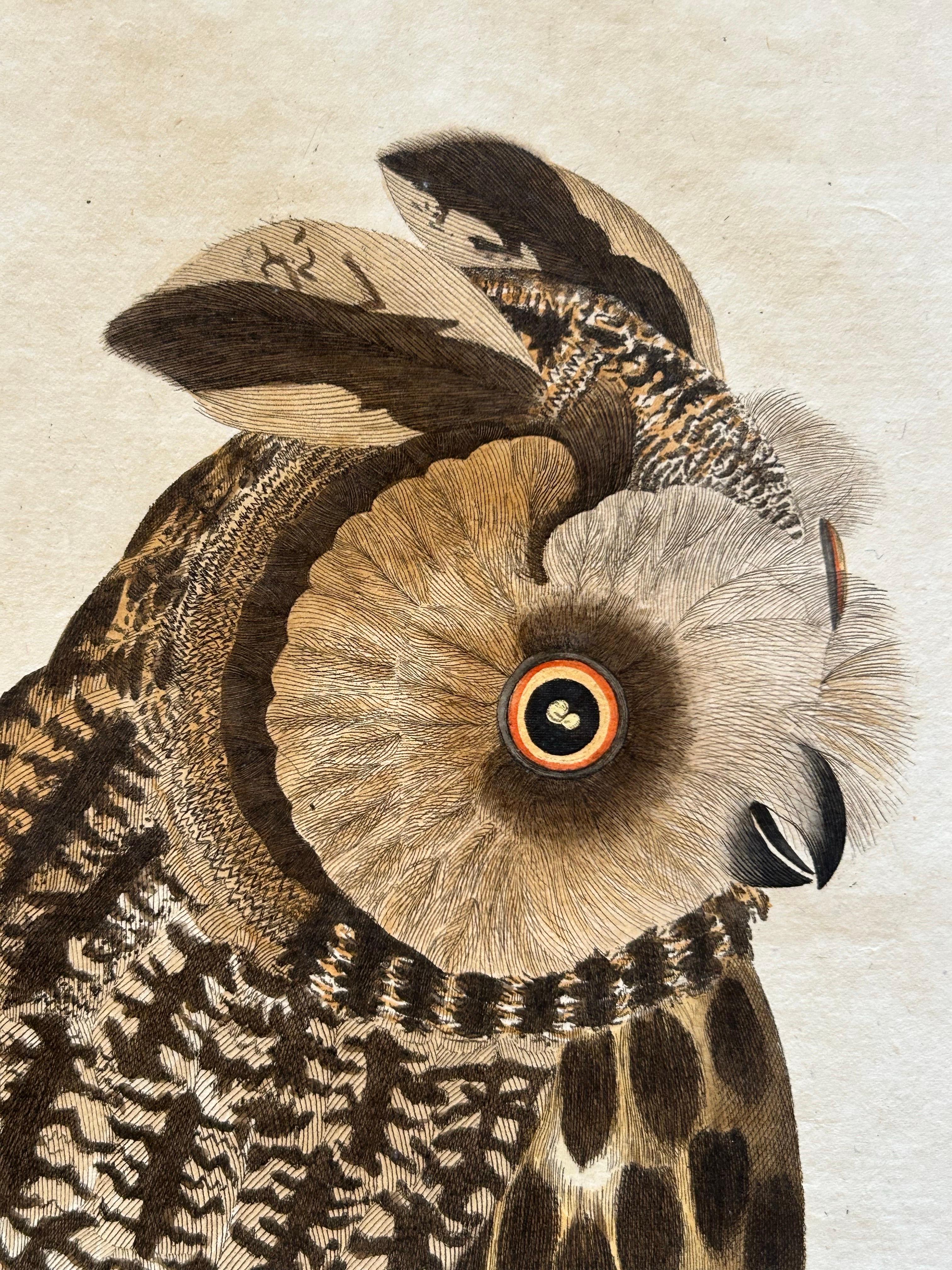
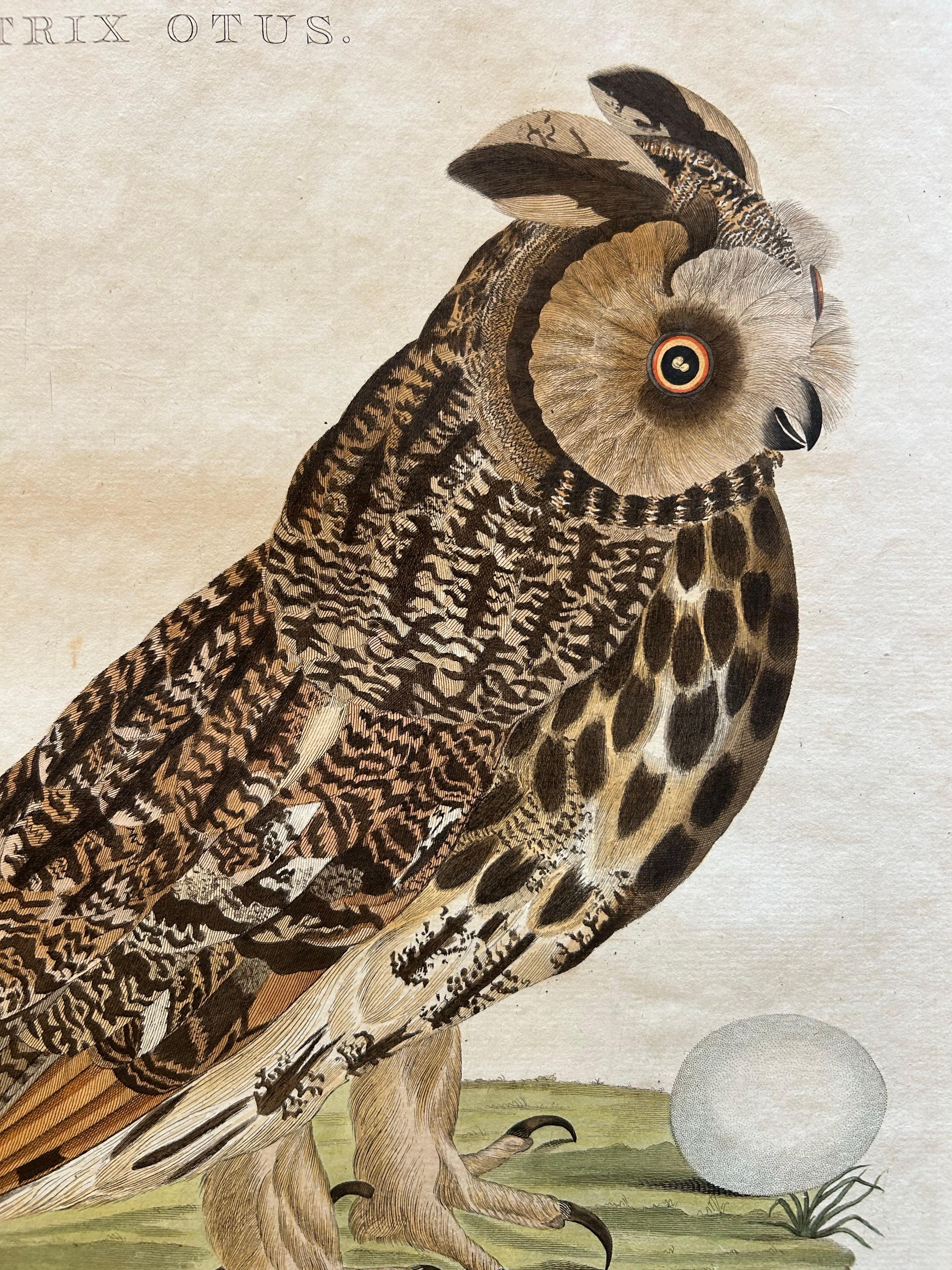
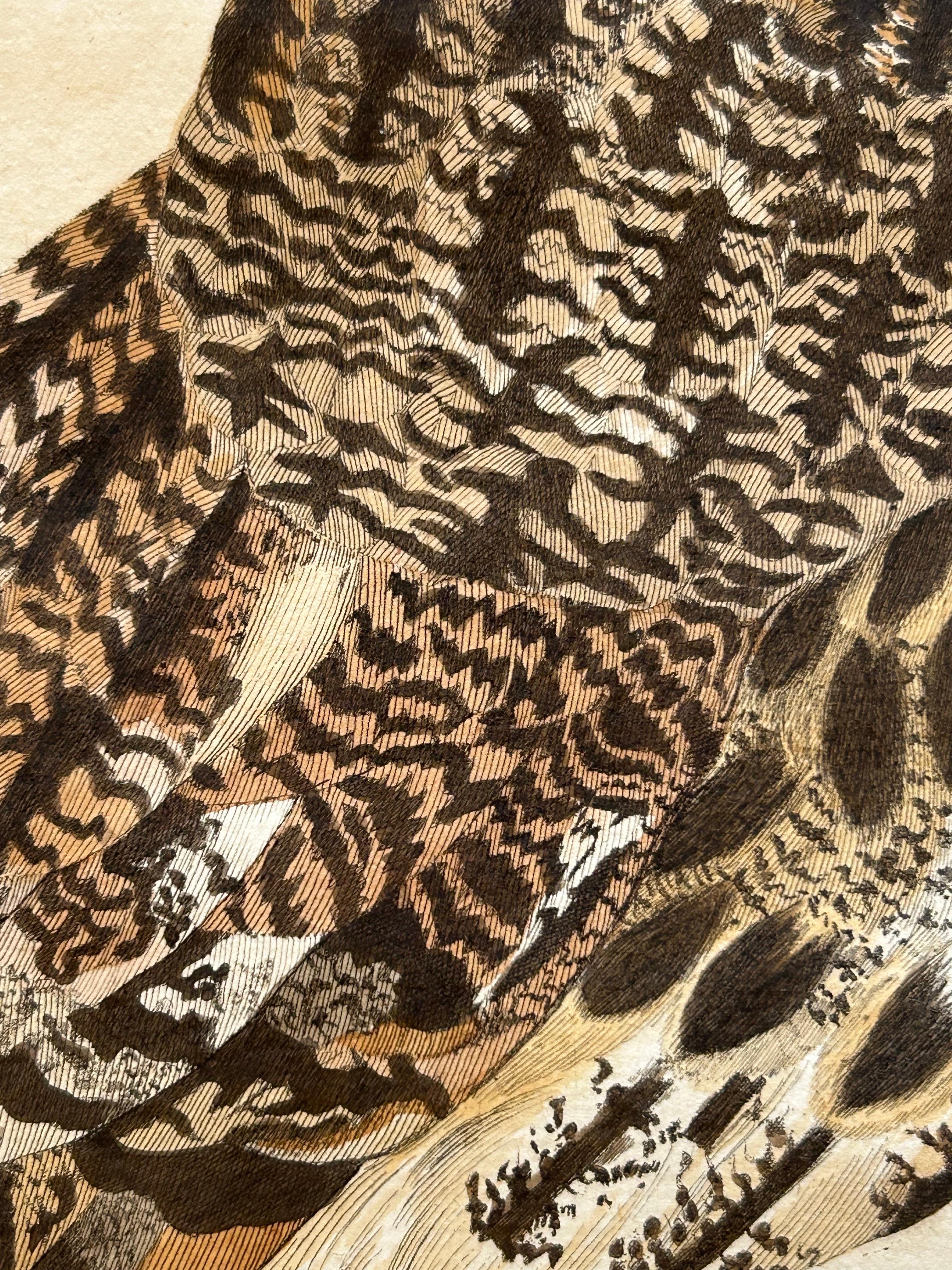
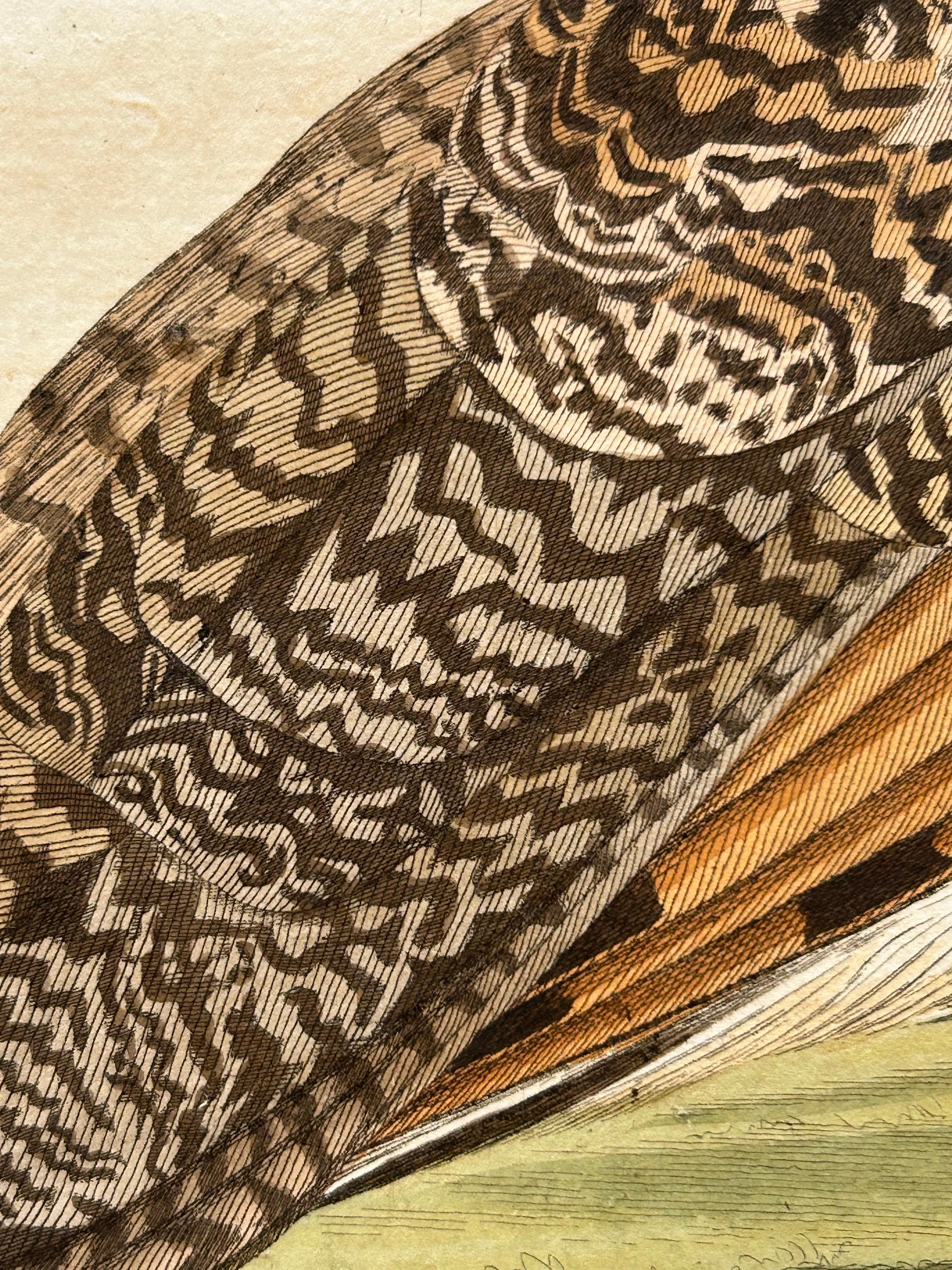
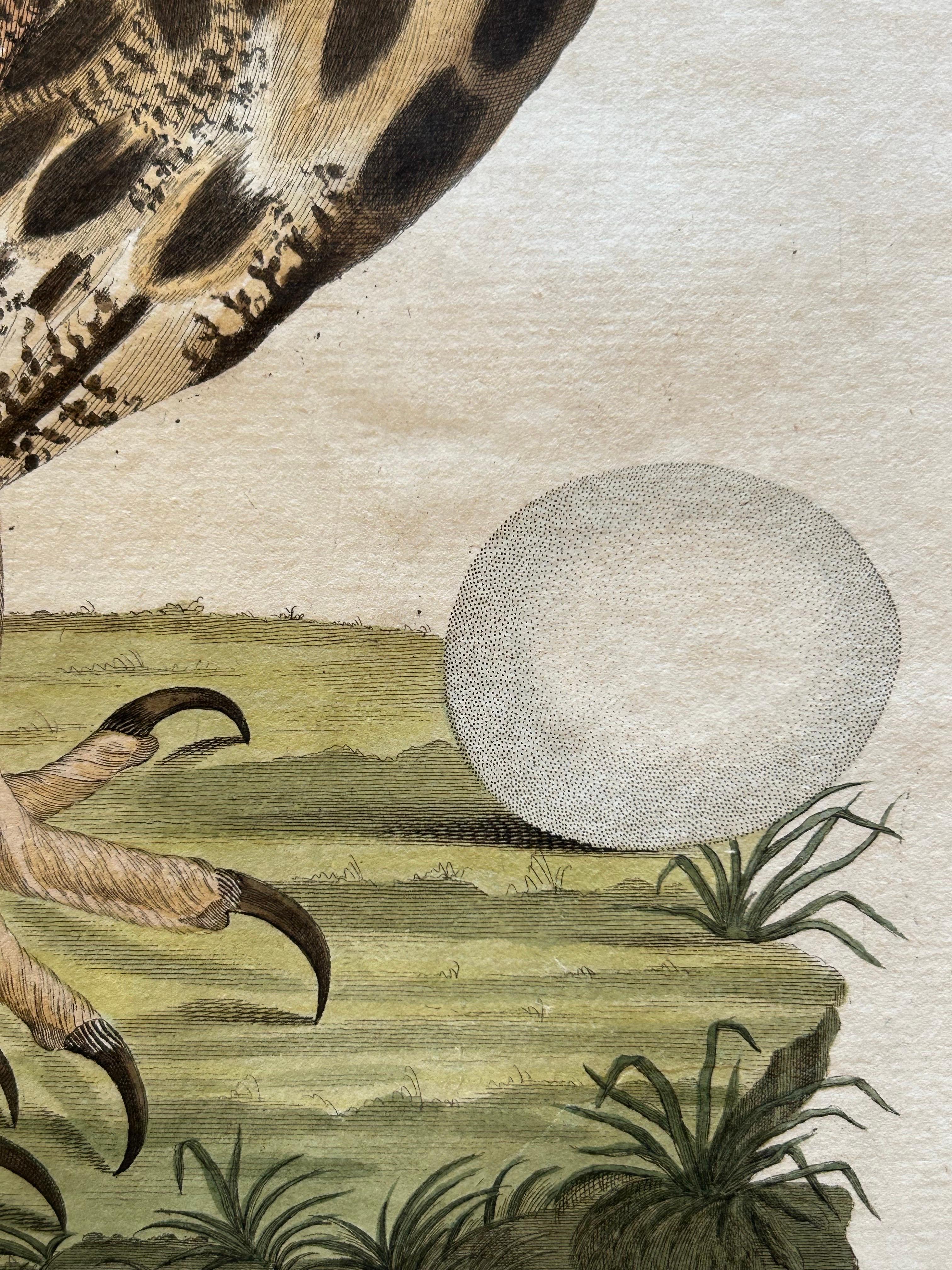
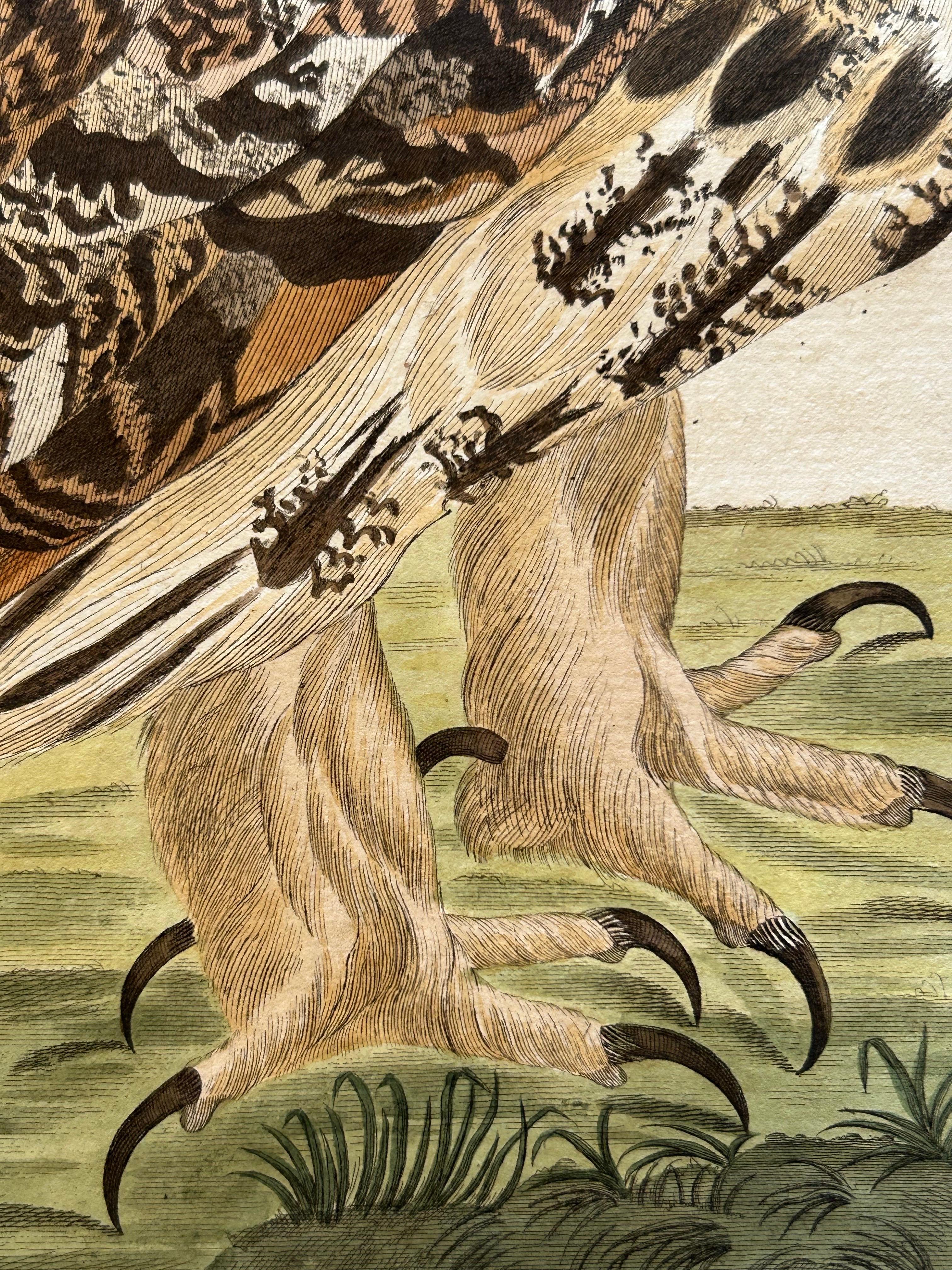
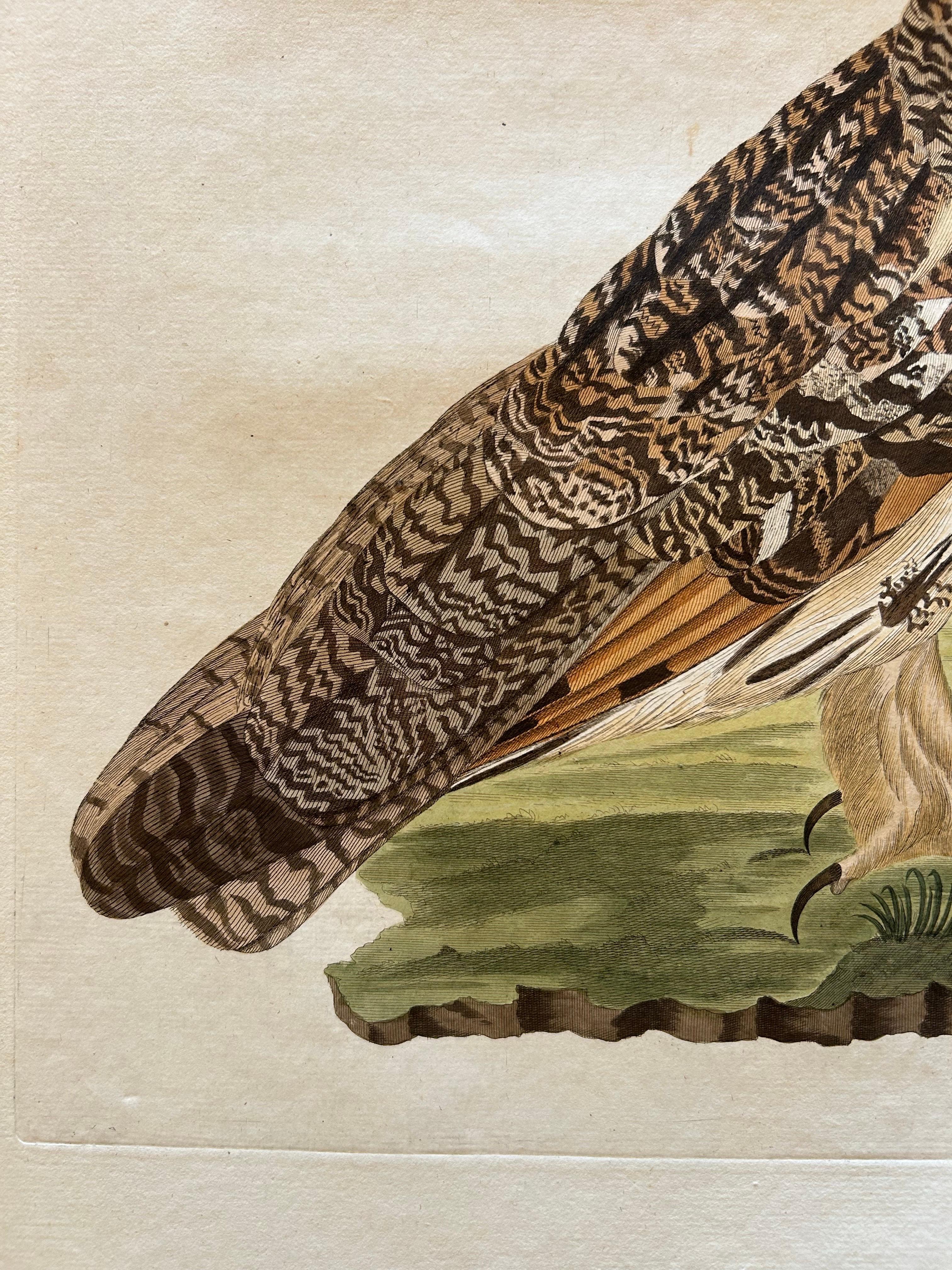
This finely hand-coloured engraving features the long-eared owl (Asio otus), known in Dutch as the “ransuil.” The artist captures the owl’s defining characteristics: its tall, upright ear tufts, striking orange eyes, and intricately patterned plumage of mottled browns and creams. The bird stands alert on a patch of grassy earth beside a single egg, reflecting its ground-nesting habits in sheltered locations.
The plate originates from Nederlandsche Vogelen; volgens hunne huisdouding, aert, en eigenschappen beschreeven (Amsterdam, 1770–1829), the first comprehensive ornithological work published in the Netherlands. Created by Cornelis Nozeman, Martinus Houttuyn, and Jan Christiaan Sepp, this monumental series is celebrated for its scientific accuracy, naturalistic settings, and exquisite hand-colouring. Printed on laid paper, each plate was meticulously coloured by hand, producing vivid yet harmonious tones that convey lifelike realism.
Distributed across Europe, Asia, and North America, the long-eared owl is a widespread and adaptable species within the typical owl family, Strigidae. The accompanying period text in Nederlandsche Vogelen provides fascinating insight into its behaviour, diet, and seasonal habits as understood in the late 18th and early 19th centuries.
Highly sought after by collectors for its combination of historical, scientific, and artistic value, this plate is a fine example of Dutch natural history illustration at its peak.
Condition: Very good. Clean sheet with mild, even age toning, few spots and strong plate impression. Original text pages present and very good, with mild toning and a few small scattered spots; two tiny holes in the margins, no tears or repairs. Please study images.
Framing tips: Pair with a warm ivory or soft beige mount to complement the bird’s rich earth-toned plumage. A dark wood or antique gold frame will enhance the period character, while float-mounting can elegantly reveal the plate mark. UV-protective glazing is recommended to preserve the delicate hand-colouring.