About this sheet
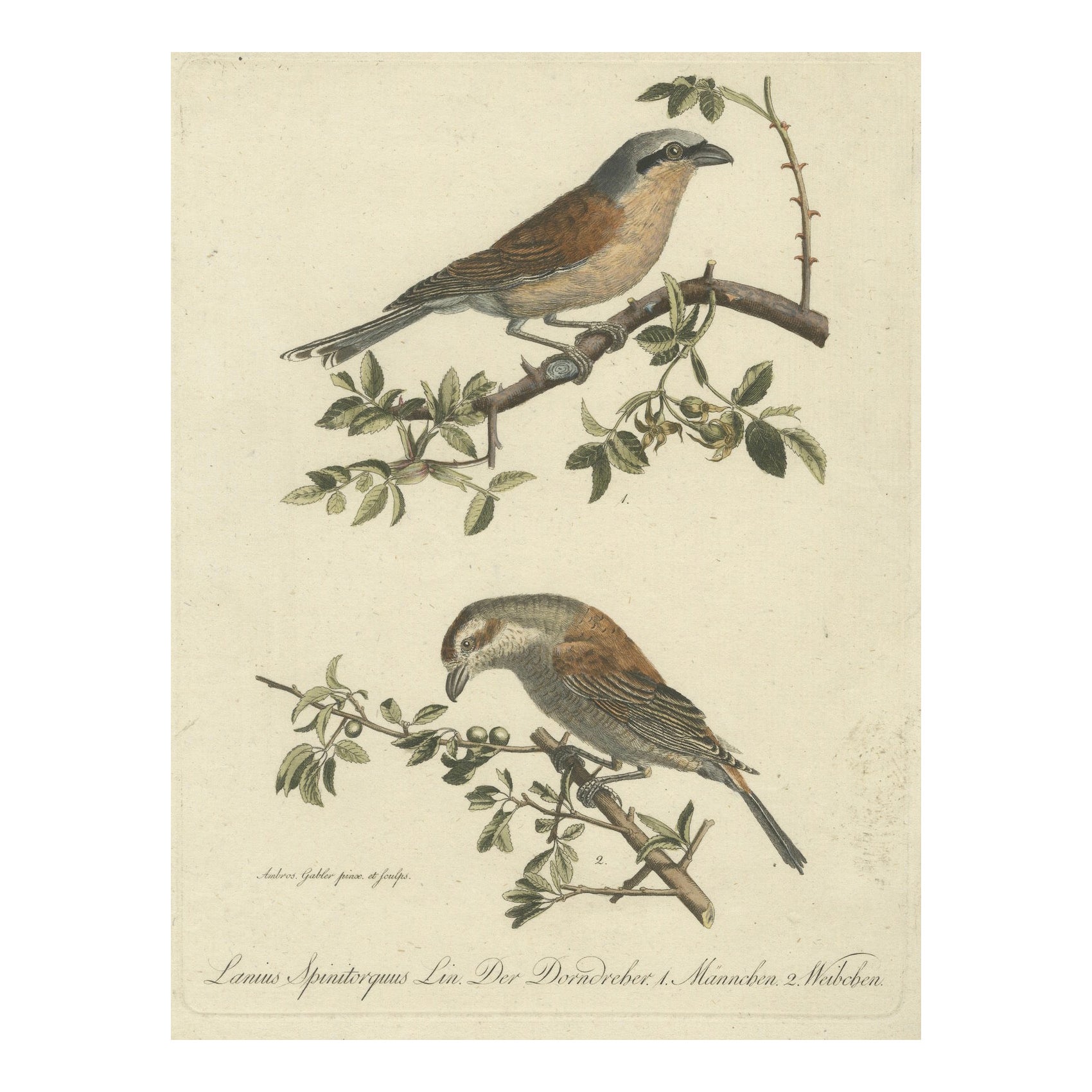
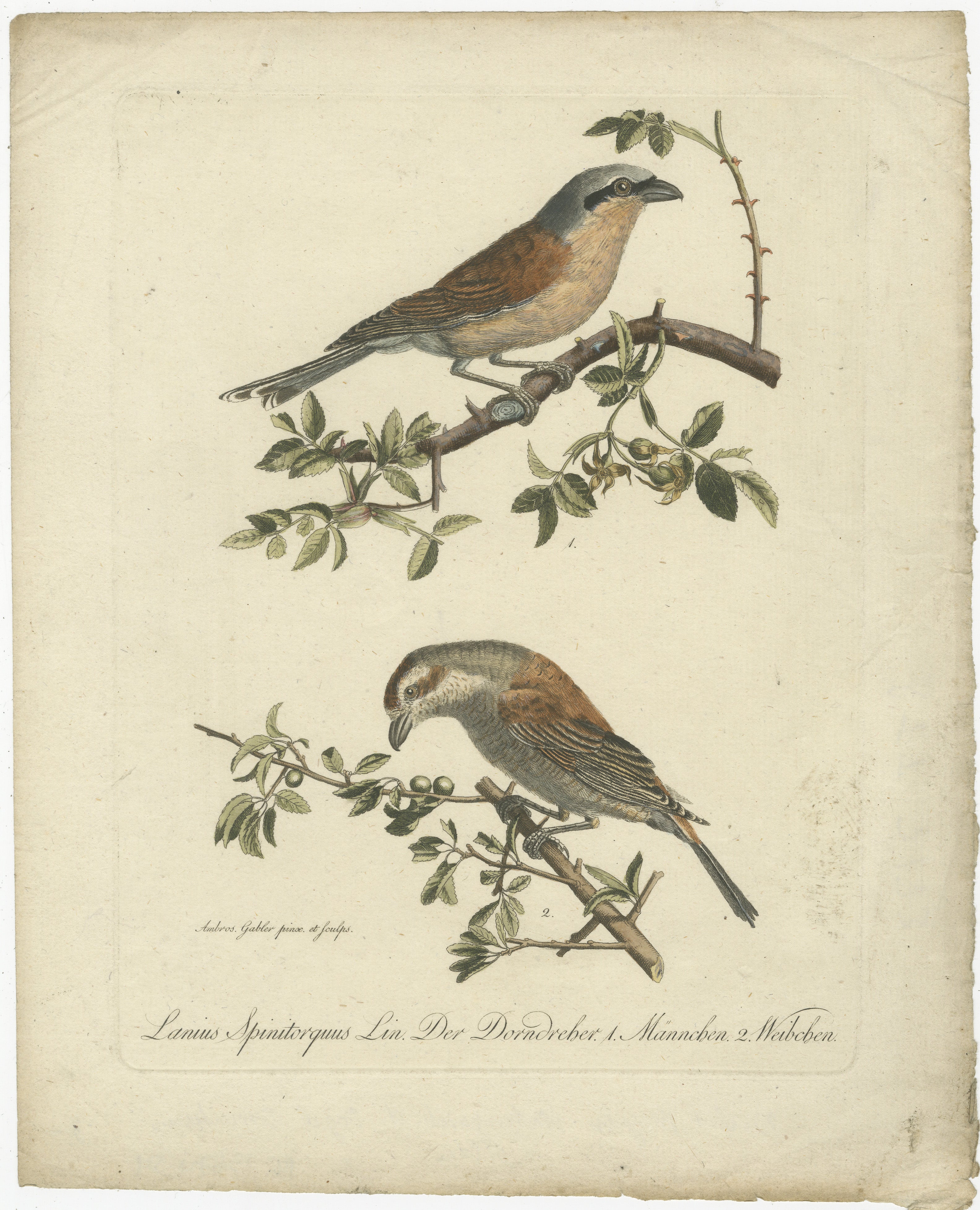
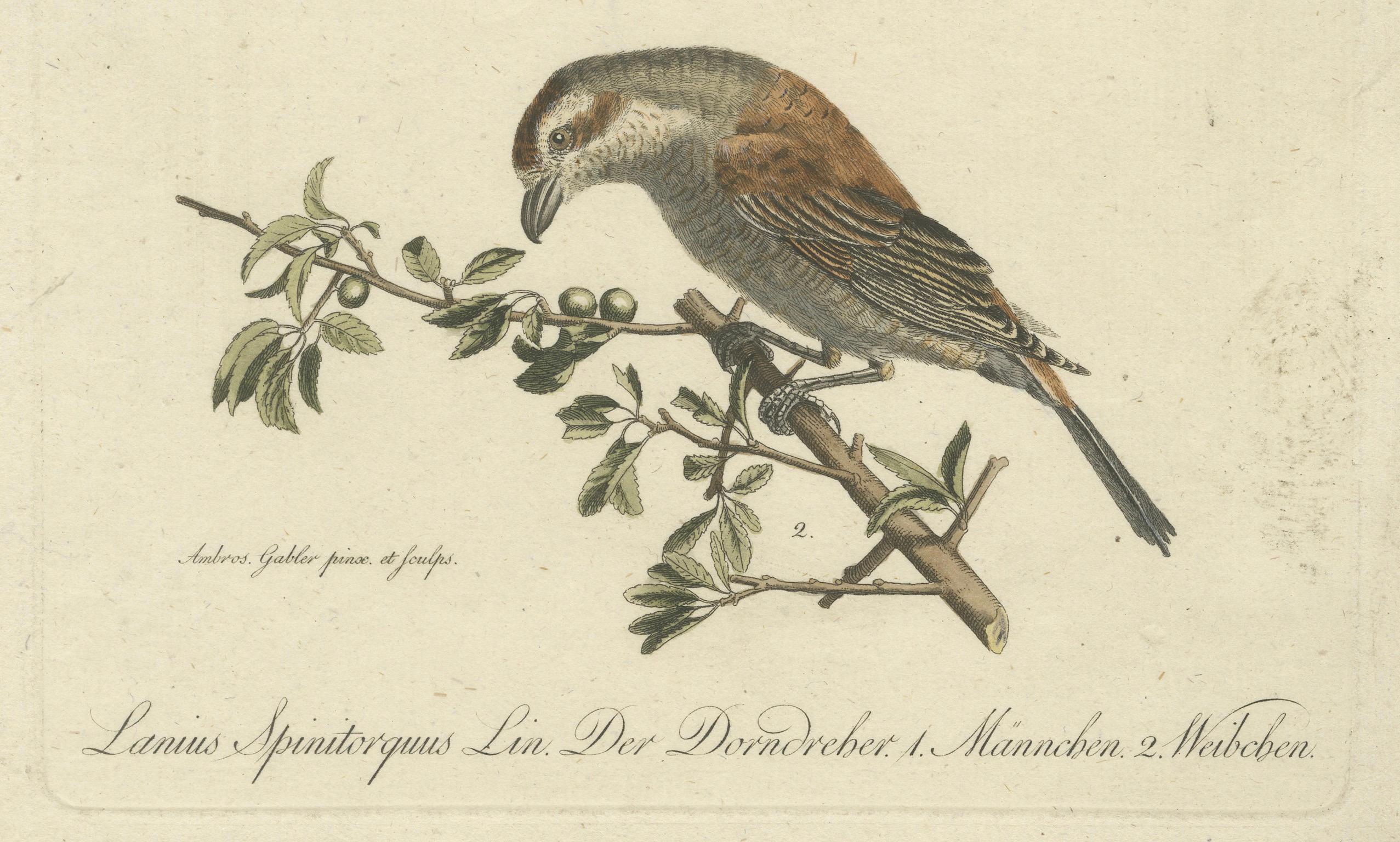
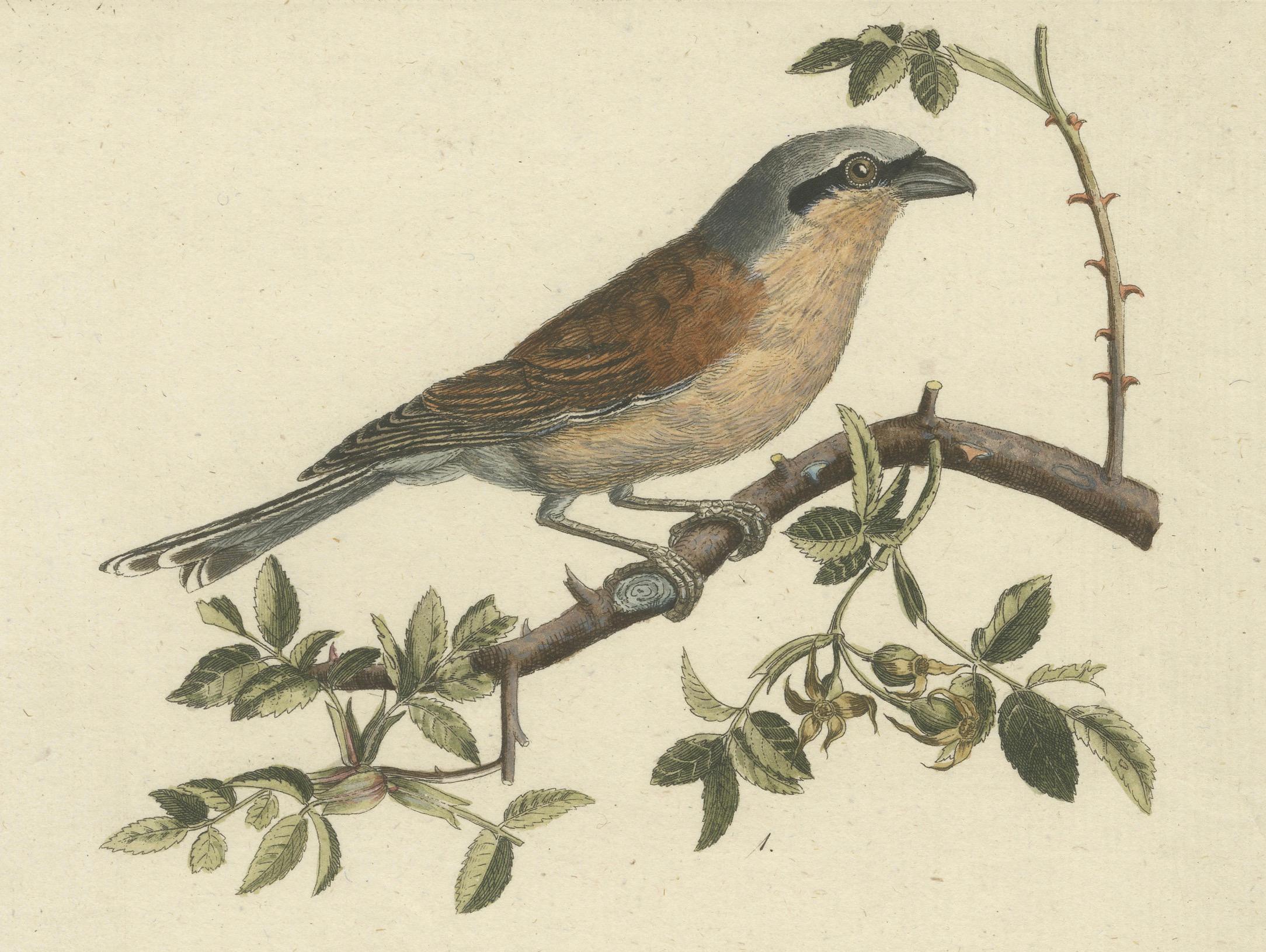
This illustration depicts two shrikes, specifically identified as "Lanius Spinitorquus Lin.," which is likely an old scientific name used in the past. The text "Drondrecher 1.Mannchen 2.Meischen" suggests that the two birds are a male (Männchen) and a female (Weibchen), although the spelling seems a bit off from contemporary German, which may be indicative of the age of the print or regional orthographic differences of the time.
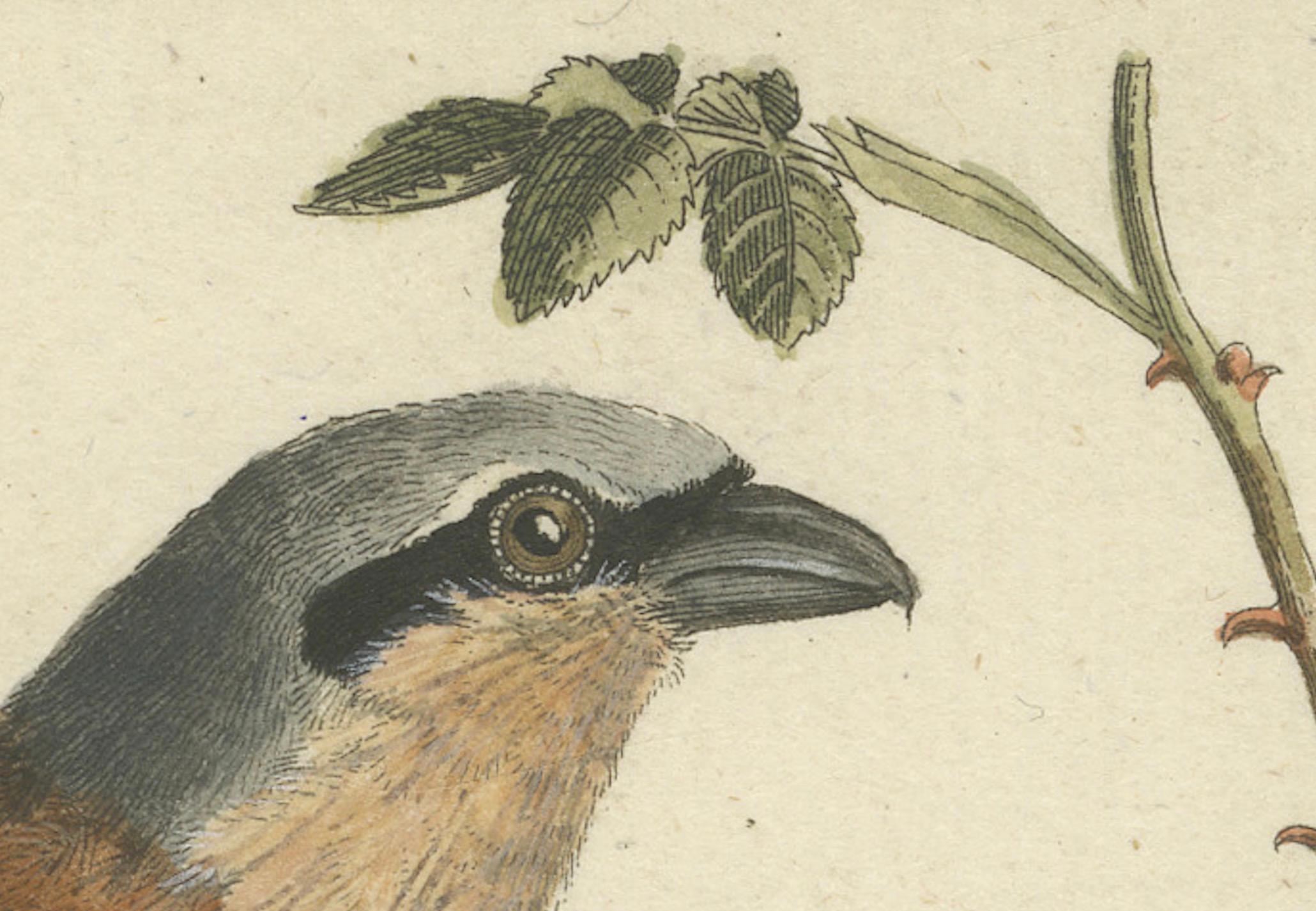
"Ambros Gabler pinx. et Sculps." signifies that Ambros Gabler was the artist (pinx - painted by) and engraver (sculps - engraved by) of the image. The style and technique used for this print, like the previous one, also appear to be hand-colored engraving, which was a typical method for natural history illustrations during this period. The detail and coloration of the birds and foliage are meticulously done, suggesting a high level of craftsmanship.
Ambrosius Gabler, active in the late 18th and early 19th centuries, was known for his work in scientific illustration, particularly in natural history. While specific details of all his commissions may not be widely known, his bird prints, such as the one you've shown, were often created for natural history works that aimed to catalog and describe various species. These prints would have been included in comprehensive volumes of the time, which were used for educational and scientific purposes.
One of Gabler's notable works includes illustrations for Johann Matthäus Bechstein's "Gemeinnützige Naturgeschichte Deutschlands nach allen drey Reichen" (Natural History of Germany), which was a significant natural history reference of the period. Bechstein was a respected ornithologist and naturalist, and his books aimed to provide detailed descriptions and illustrations of the wildlife found in Germany and beyond.
Gabler's illustrations were characterized by their detail and accuracy, which was particularly important for scientific works where the illustrations served not just as art but also as tools for species identification and study. If Gabler's bird prints are from a different work or have a specific title, it would likely be mentioned in the same context as his association with Bechstein or within the documentation of his career as an illustrator. For a detailed account, one would need to refer to historical archives or catalogs that specialize in the history of scientific illustration.
The condition of this print, based on the provided image, appears to be quite good. The paper maintains its integrity without obvious tears or significant discoloration. The colors remain vibrant, indicating that the print has likely been kept away from direct sunlight and damaging environmental factors. The edges show some signs of wear, which is common for prints of this age. Overall, the print's condition is consistent with a well-preserved piece from the late 18th or early 19th century.f