About this sheet
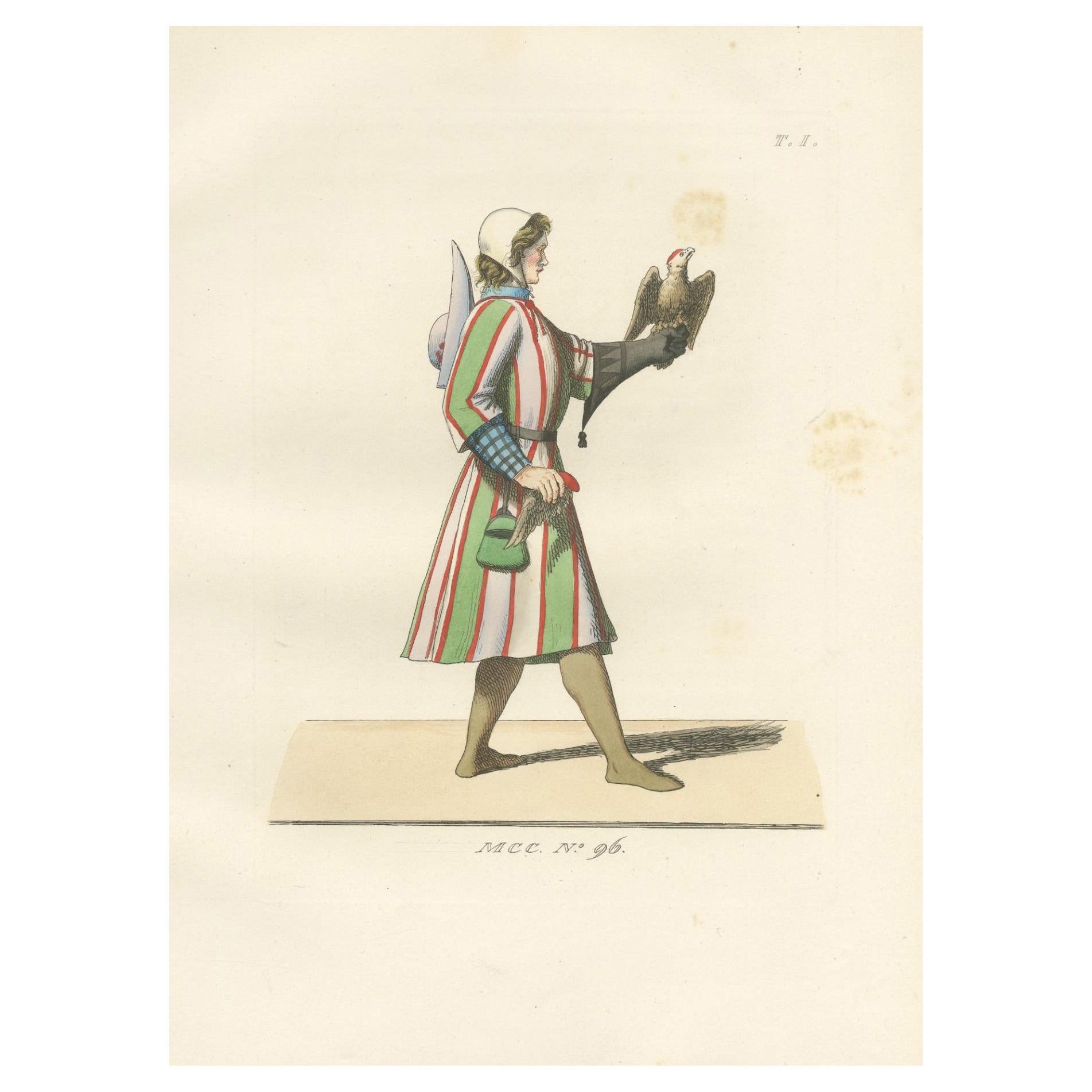
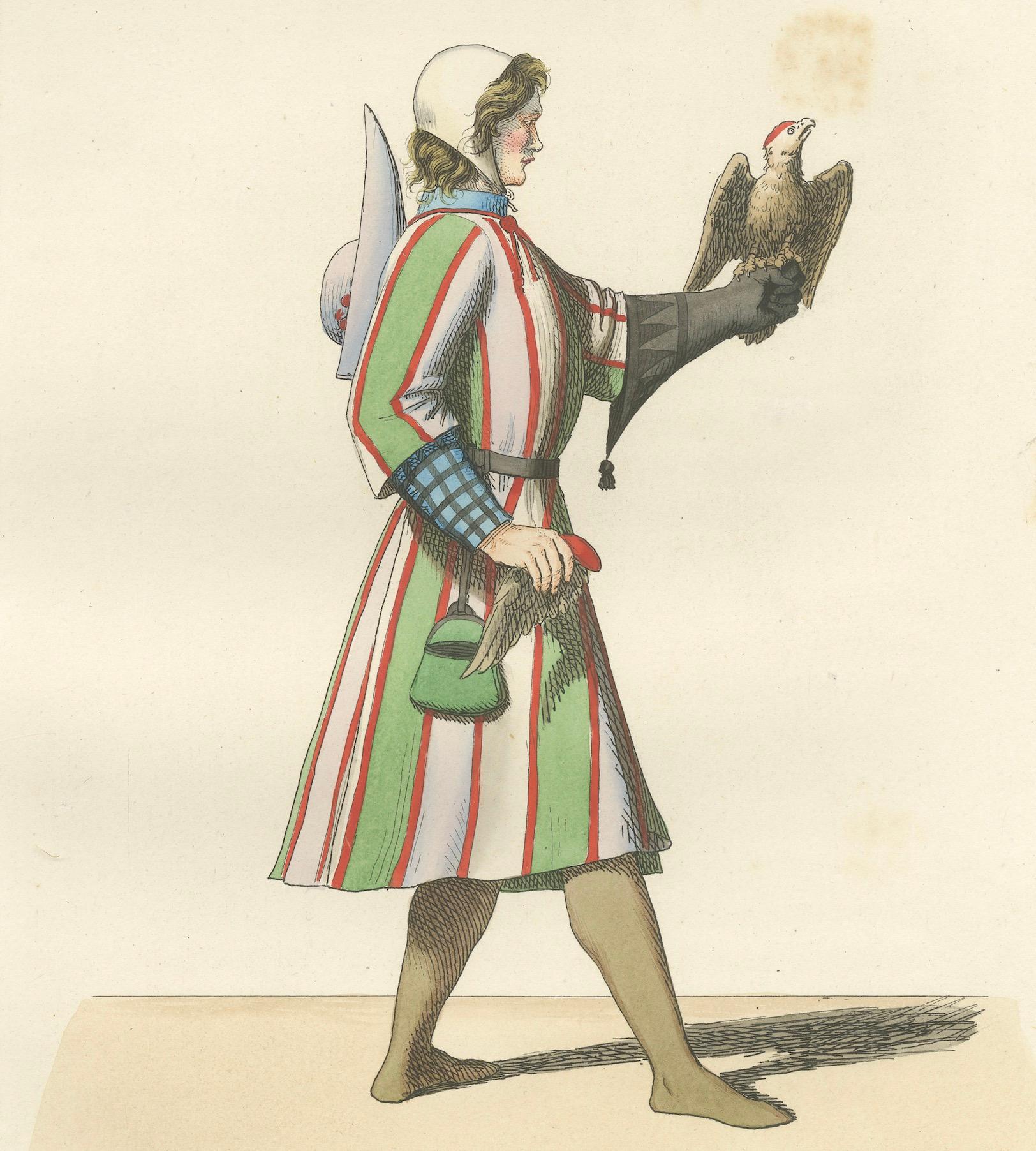
Falconer in Striped Livery with Hunting Hawk, circa 15th Century
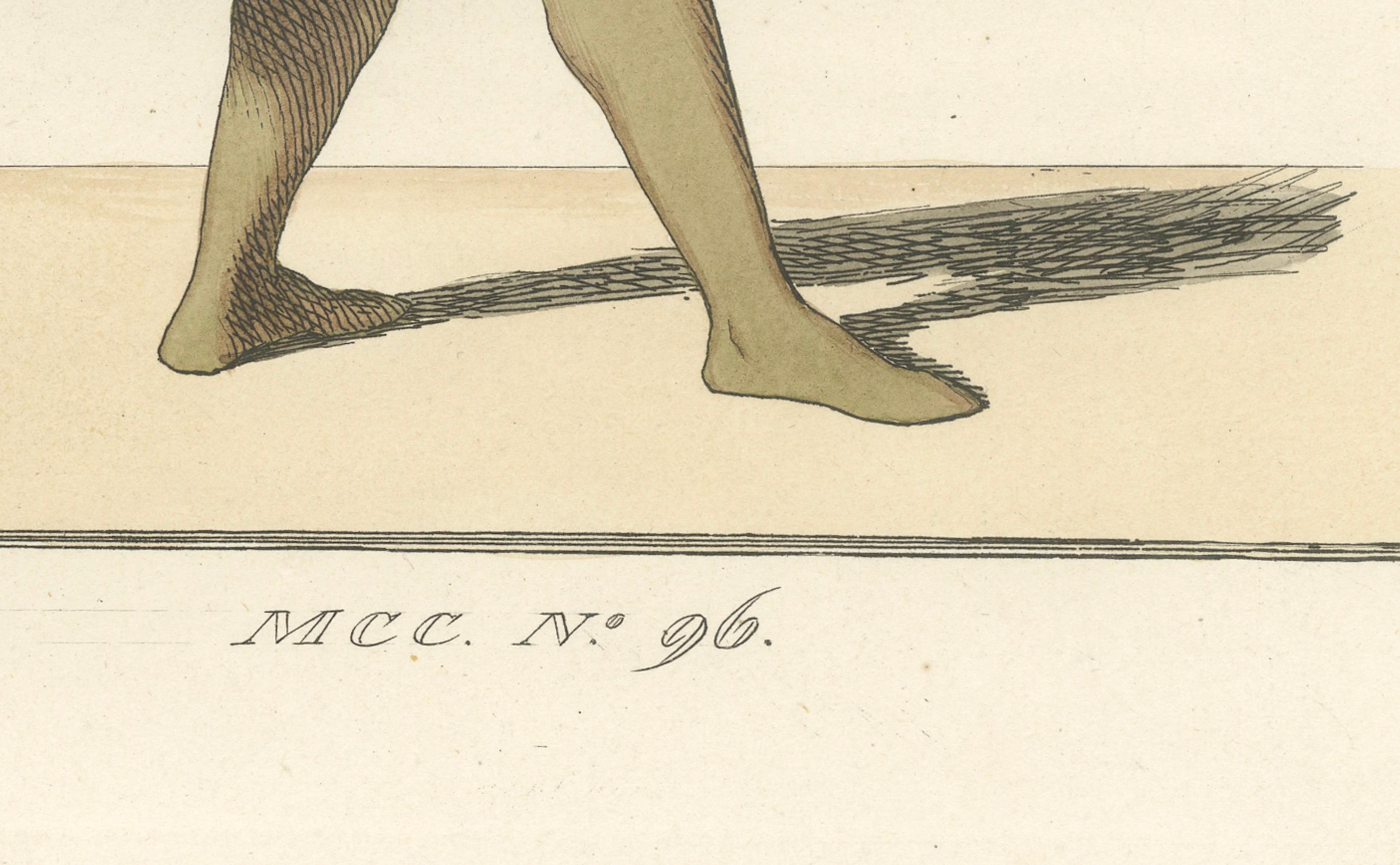
This engaging hand-coloured engraving, plate MCCC No 96 from the celebrated 1845 publication Costumes Historiques des XIIIe, XIVe et XVe Siècles, portrays a court falconer mid-stride, his gloved left hand supporting a hooded hunting hawk. Few medieval pursuits were as revered as falconry, a pastime reserved for nobility and one that signified prowess, leisure, and refined skill. This image distils that aura of privilege and discipline into a single, crisply rendered figure.
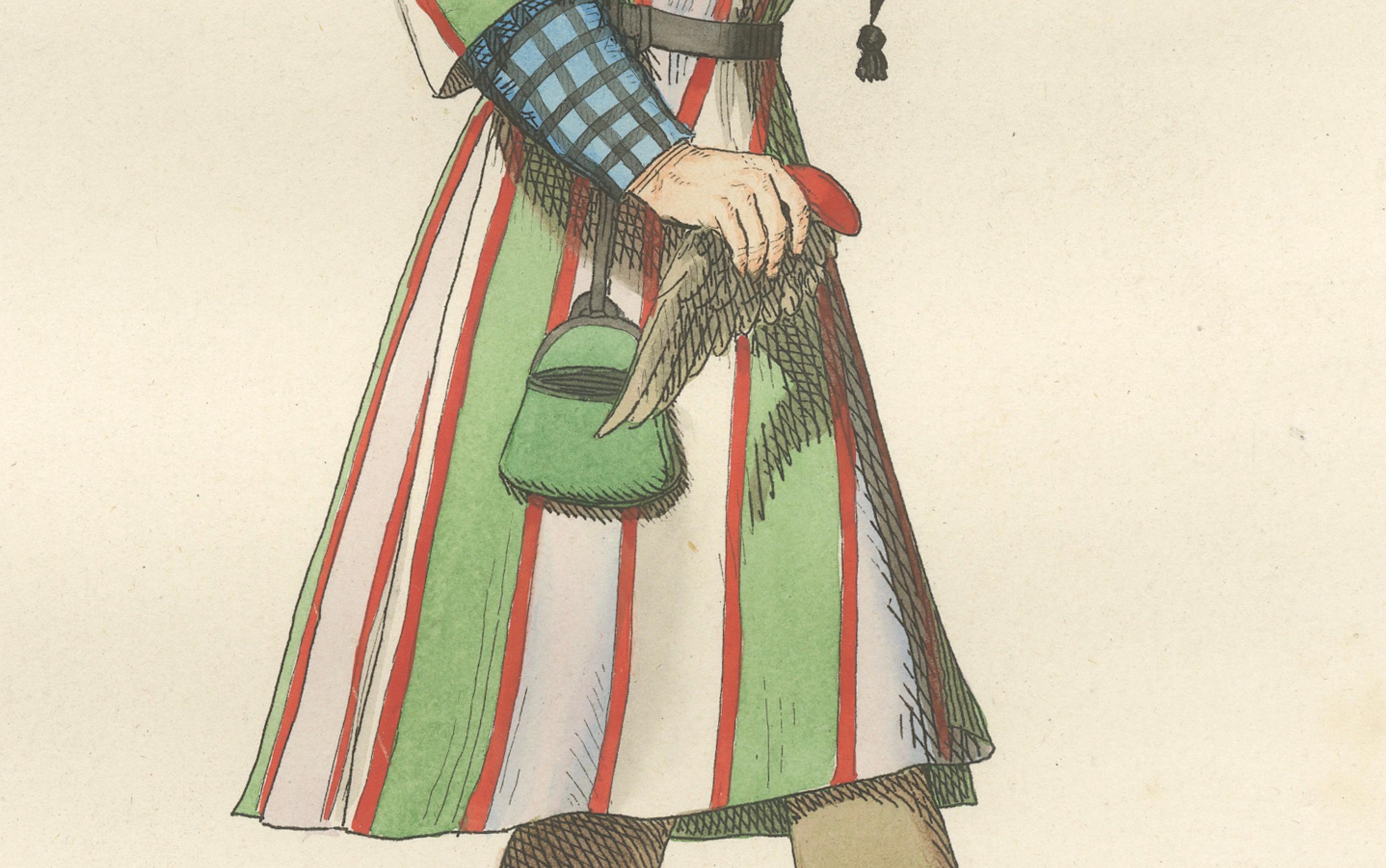
The falconer’s tunic is particularly eye-catching: vertical bands of ivory alternate with vivid crimson and soft green, creating a lively rhythm that suggests the heraldic colours of a great house. The garment falls just above the knee and is cinched at the waist by a narrow belt, allowing freedom of movement essential for handling birds of prey. Beneath the slashed sleeves a chequered blue gambeson peeks through, hinting at protective padding. Simple hose and sturdy ankle boots give the ensemble a practical foundation.
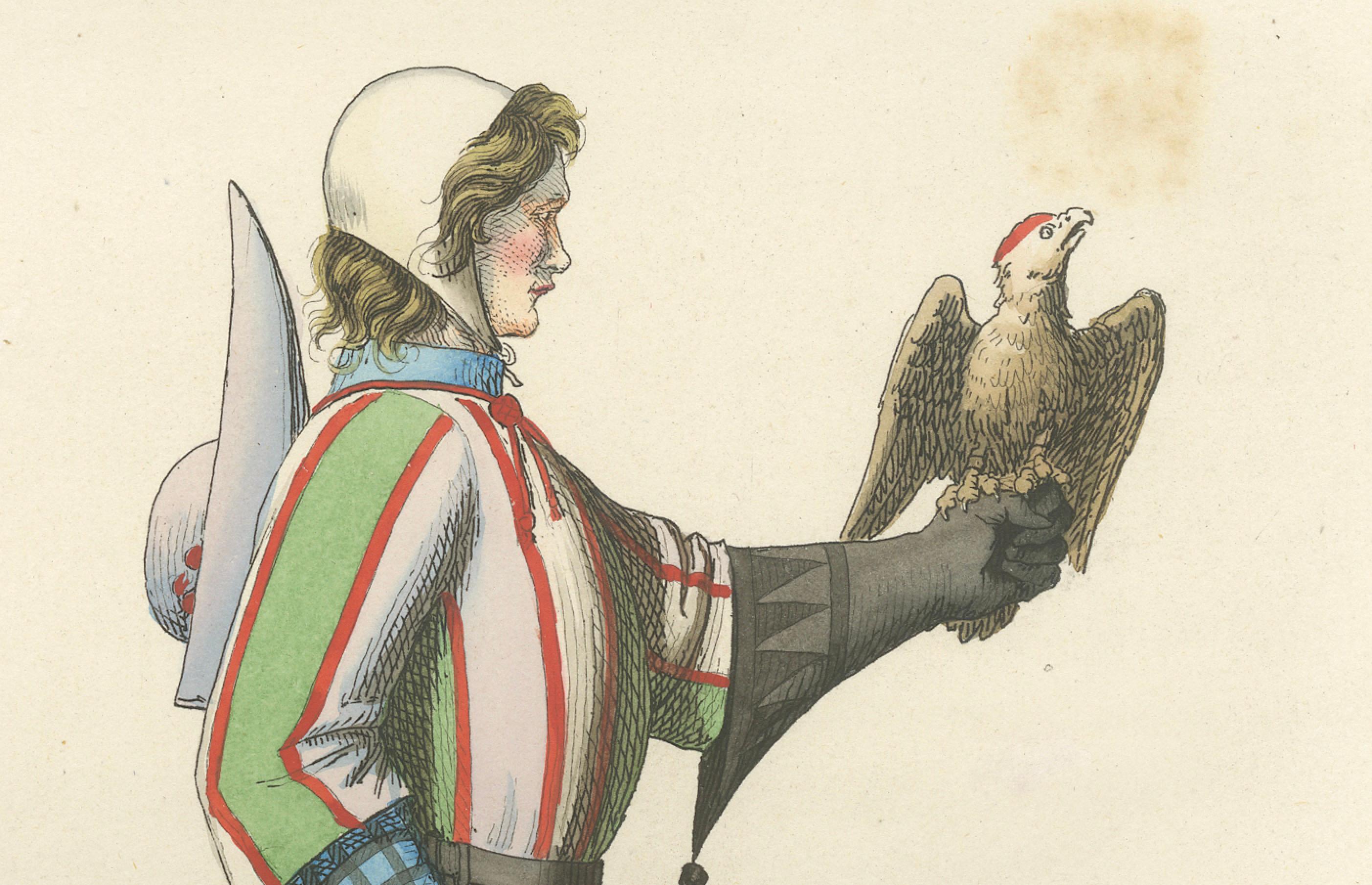
Attention immediately shifts to the hawk. Perched calmly upon a thick leather gauntlet, it wears a tiny scarlet hood—a device that keeps the bird docile until the precise moment of release. The falconer carries a green game bag at his side, and from his belt hangs a small lure used to recall the hawk in flight. On his back rests a spare hood and jesses, attesting to the meticulous equipment required for the sport. His pale skullcap protects his hair from talons and the elements alike.
For today’s collector, this print offers a vivid window onto medieval field sport, social hierarchy, and textile design. Designers will appreciate the bold yet harmonious colour scheme, while historians will value the faithful depiction of falconry accoutrements. Hung in a study, library, or sporting lodge, the piece becomes an evocative talking point that bridges art, history, and the timeless bond between human and raptor.
Condition
Condition is good: image area clean with bright, unfaded pigments; faint foxing confined to outer margins; paper strong, with full plate impression visible and no repairs or tears.
Framing tips
Mount the plate on an archival off-white mat that echoes the natural paper tone, then frame in dark walnut or lightly distressed oak to complement the earthy hunting theme. A double mat with a narrow moss-green inner line will accent the falconer’s tunic stripes. If displayed alongside other sporting or medieval prints, maintain equal spacing and identical mouldings to create a cohesive gallery row.