About this sheet
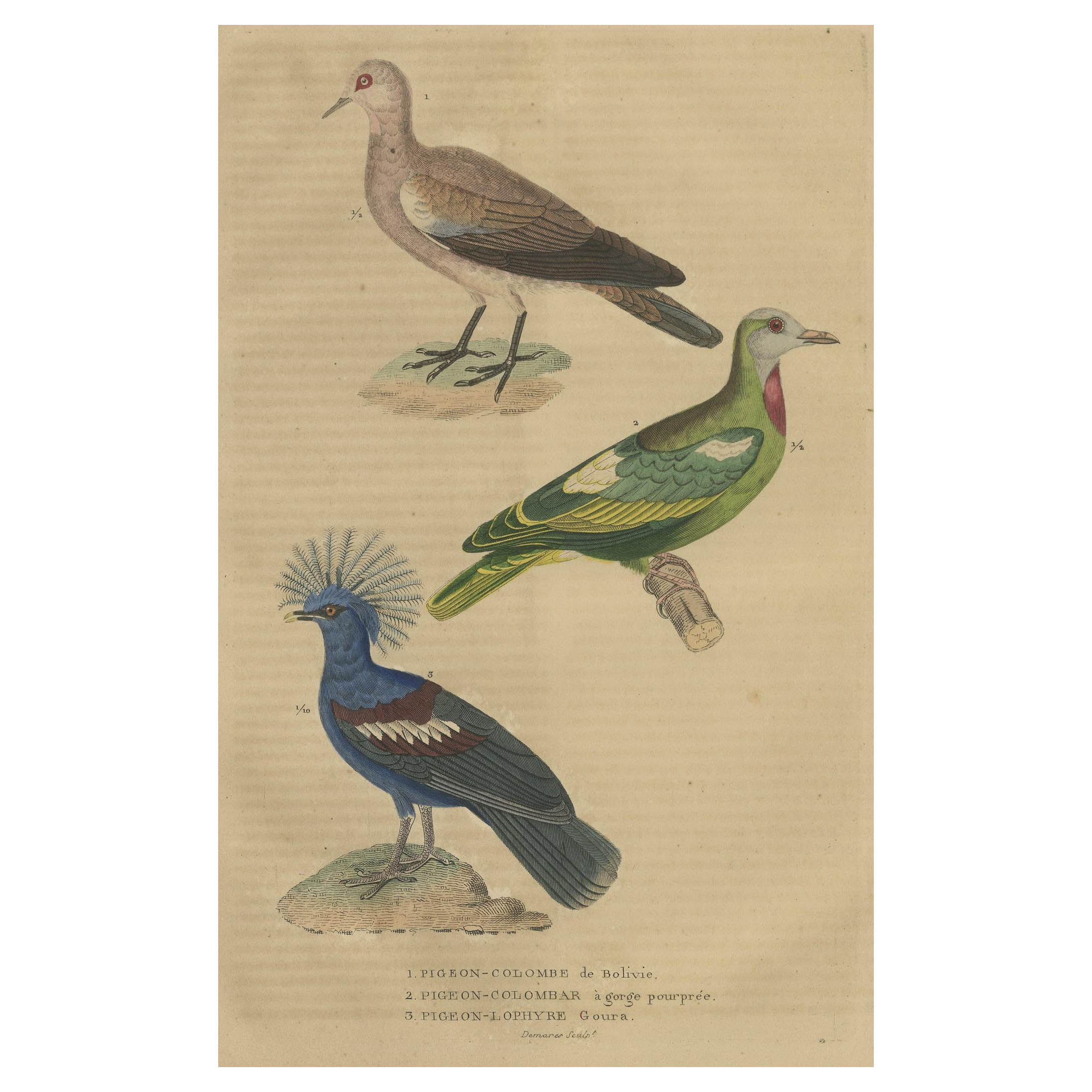
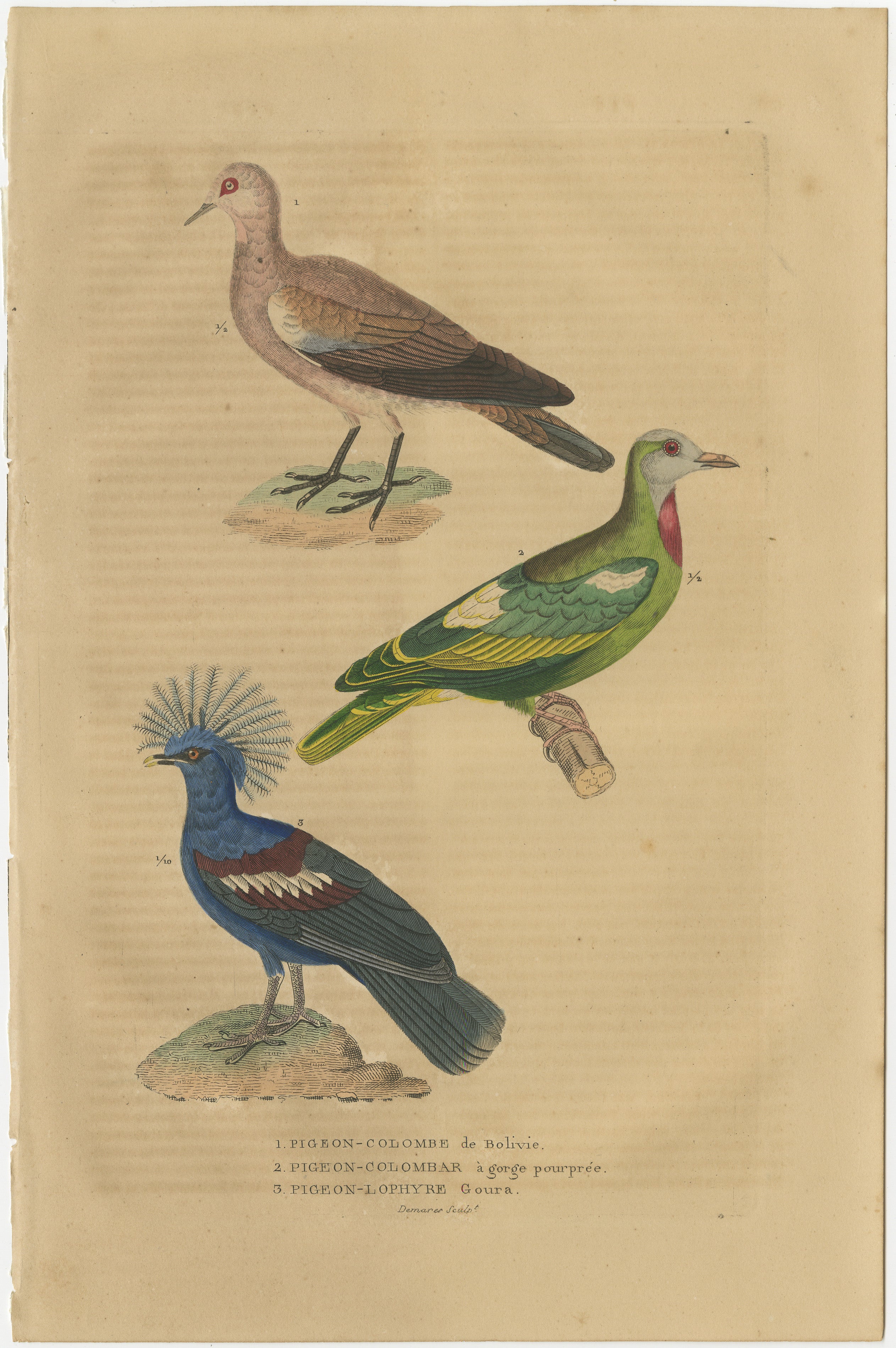
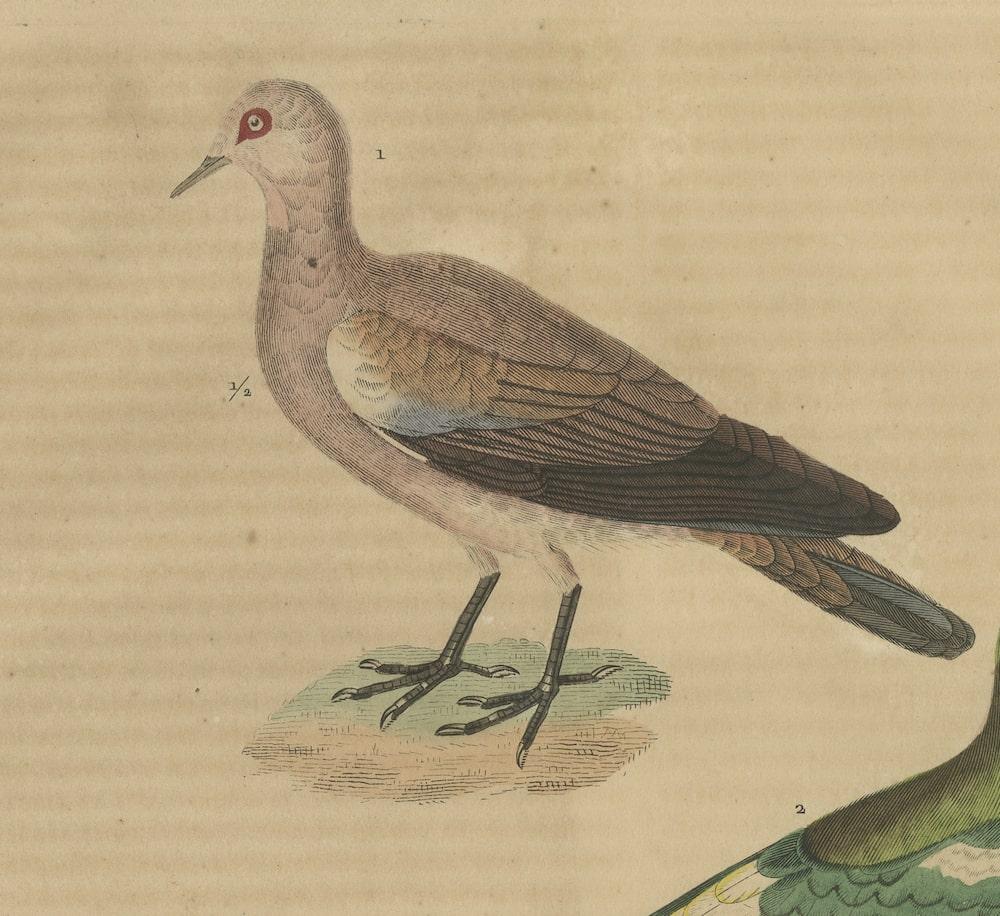
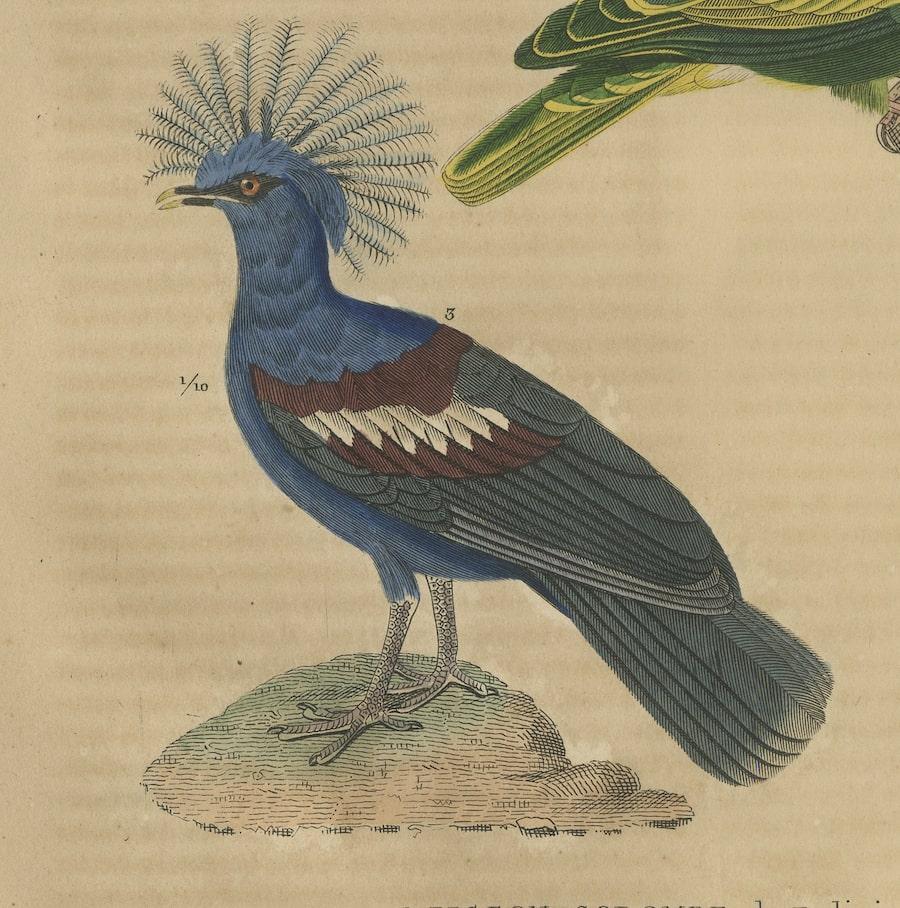
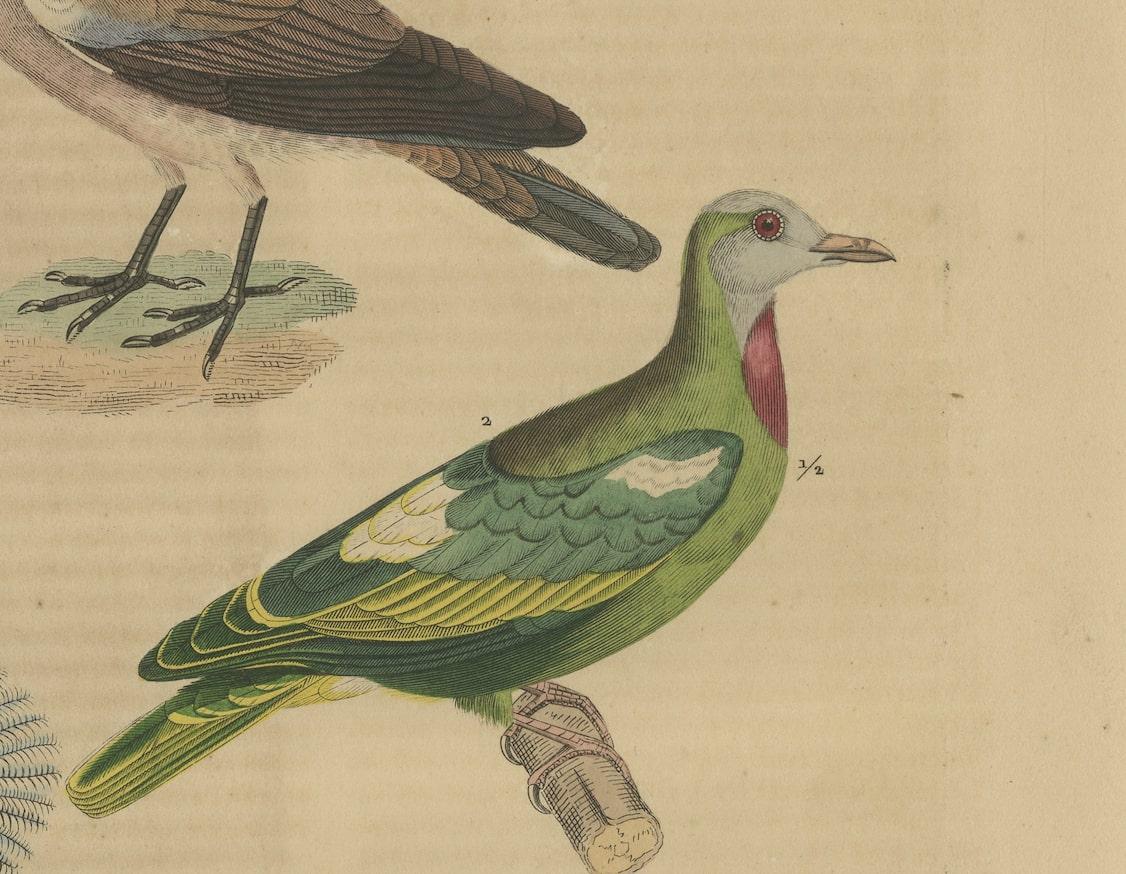
1. PIGEON-COLOMBE DE BOLIVIE, 2. PIGEON-COLOMBAR A GORGE POURPREE, 3. PIGEON-LOPHYRE GOURA.
– (1. Bare-faced Ground Dove, 2. African Green Pigeon, 3. Goura, crowned pigeon.)
The Ground Dove, a diminutive marvel, sports subtle earthy tones and intricate patterns, blending seamlessly with its terrestrial habitat. Its unassuming demeanor belies a tender elegance, often seen foraging delicately among foliage for seeds and small insects, exuding a quiet charm in its movements.
The African Green Pigeon, adorned in vibrant hues of emerald and olive, graces the African canopy with its iridescent plumage. With a penchant for fruit, it navigates the verdant foliage in flocks, its distinctive coloration a beacon amidst lush canopies, contributing to the vivid tapestry of the tropical landscape.
The Goura, or crowned pigeon, stands as a regal symbol with its majestic size and ornate crest. Cloaked in shades of blue and violet, it moves with deliberate grace through the forest understory, its imposing yet elegant presence lending an air of grandeur to the forest floor.
More info on the book in which it was published:
The 'Dictionnaire Classique des Sciences Naturelles' by Pierre Auguste Joseph Drapiez stands as a remarkable testament to 19th-century natural sciences. Published in Brussels in 1845, this work represents an expansive collation of knowledge, building upon the pioneering works of Buffon, Daubenton, Lacepede, Cuvier, de Jussieu, and other influential naturalists.
The prints within this compendium likely showcase a rich amalgamation of artistic precision and scientific accuracy. Drapiez, himself a Belgian naturalist, would have aimed for detailed representations of flora, fauna, and scientific phenomena, mirroring the illustrative styles prevalent during his time. Given the era's emphasis on illustration, these prints were likely engraved meticulously, possibly portraying intricate anatomical details or lifelike depictions of the natural world.
With Drapiez's background in natural history, the prints might bear testament to his commitment to scientific authenticity, aiming to educate and inspire scholars and enthusiasts alike. These engravings would have complemented the text, offering visual aids that elucidate the concepts and specimens discussed in the volume.
Overall, the prints of 'Dictionnaire Classique des Sciences Naturelles' likely serve as both artistic representations and invaluable scientific resources, encapsulating the essence of 19th-century natural history exploration and documentation.