About this sheet
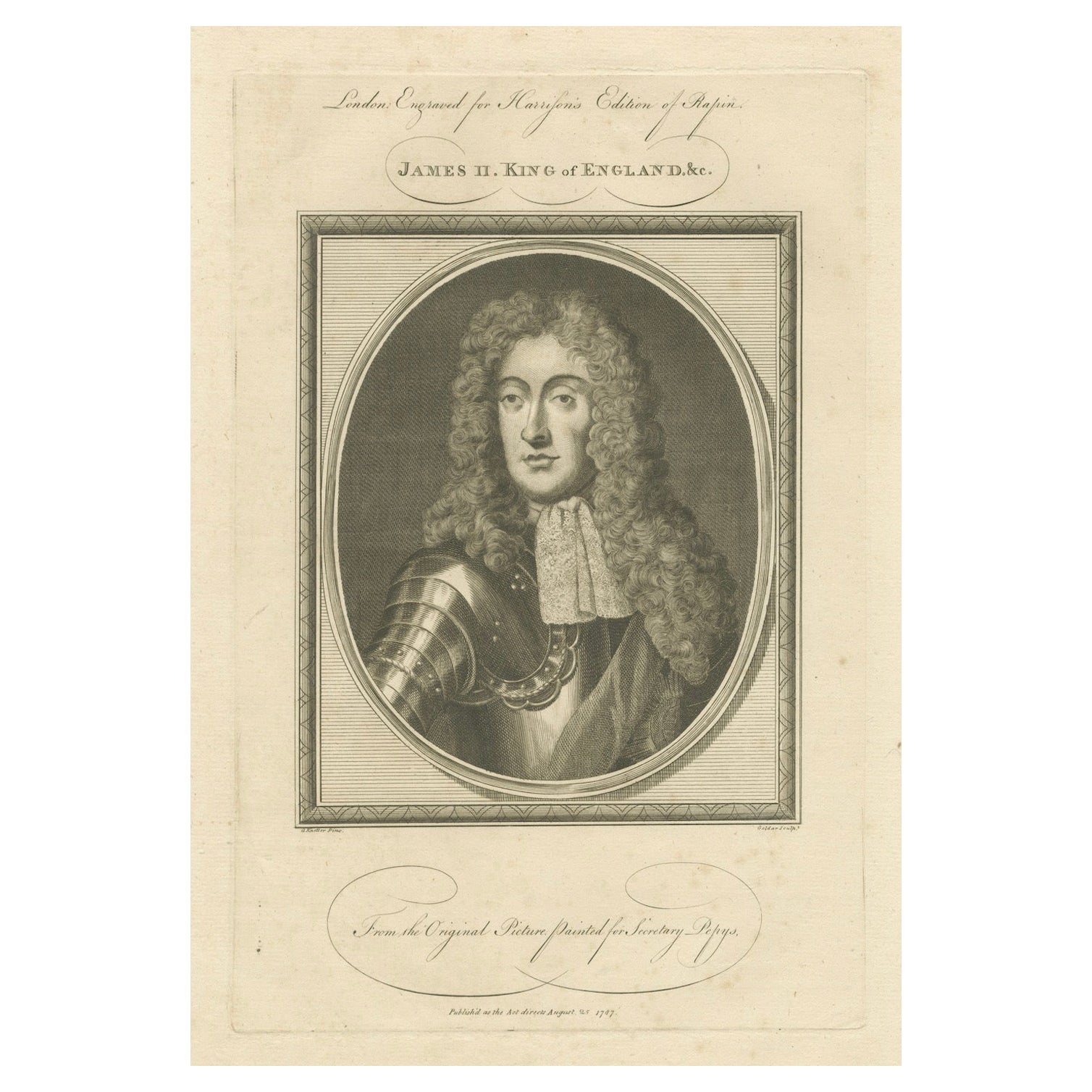
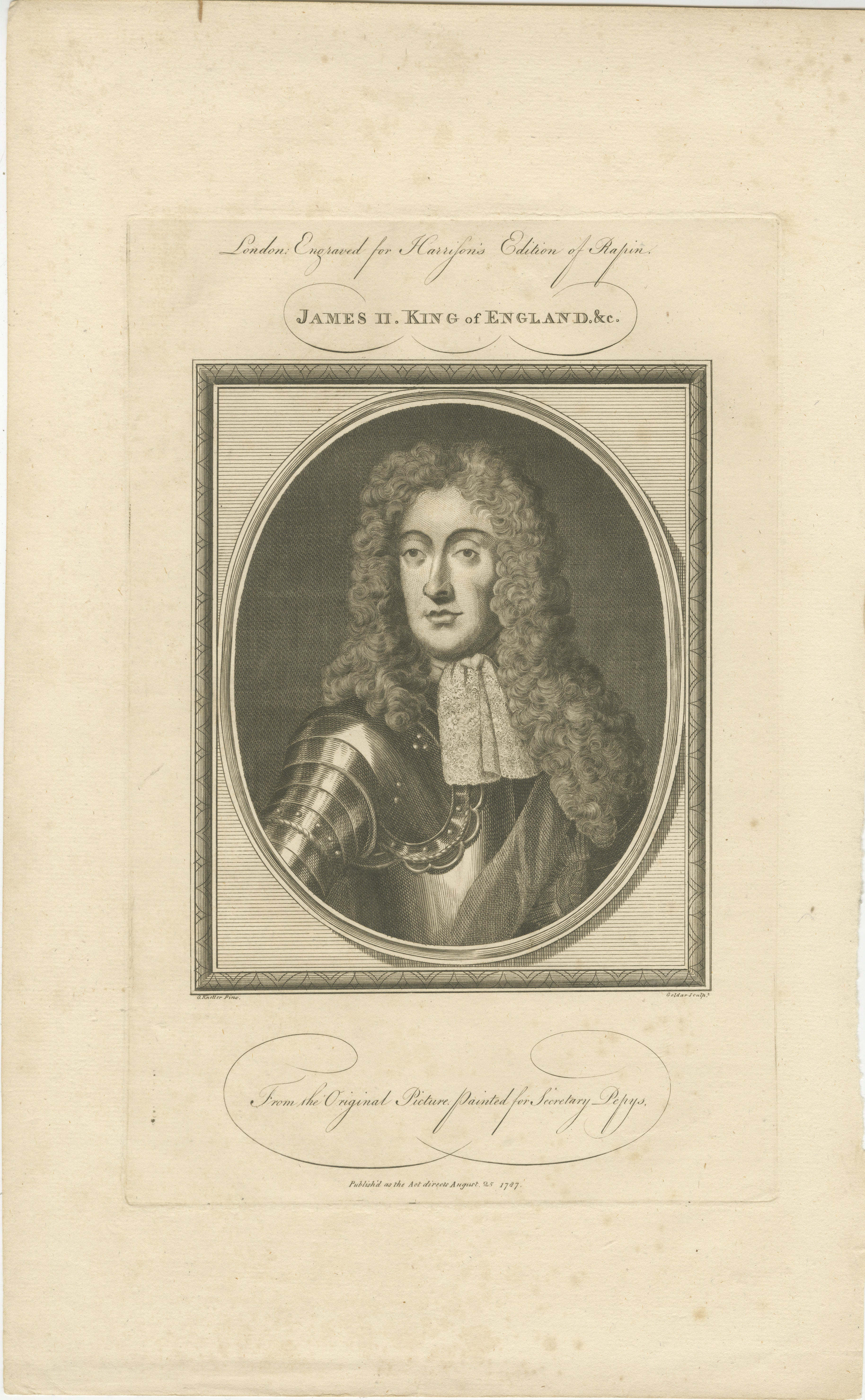
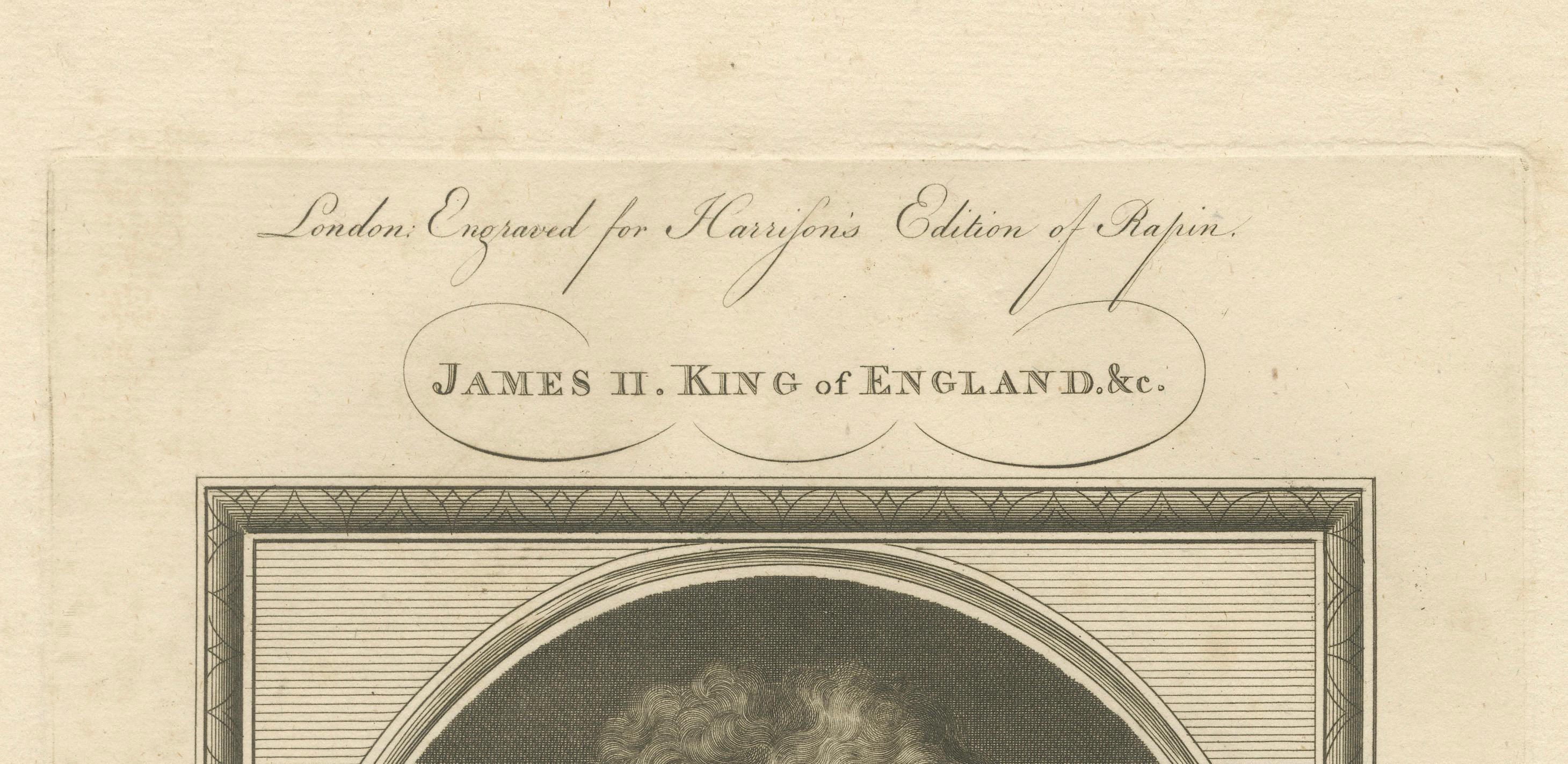
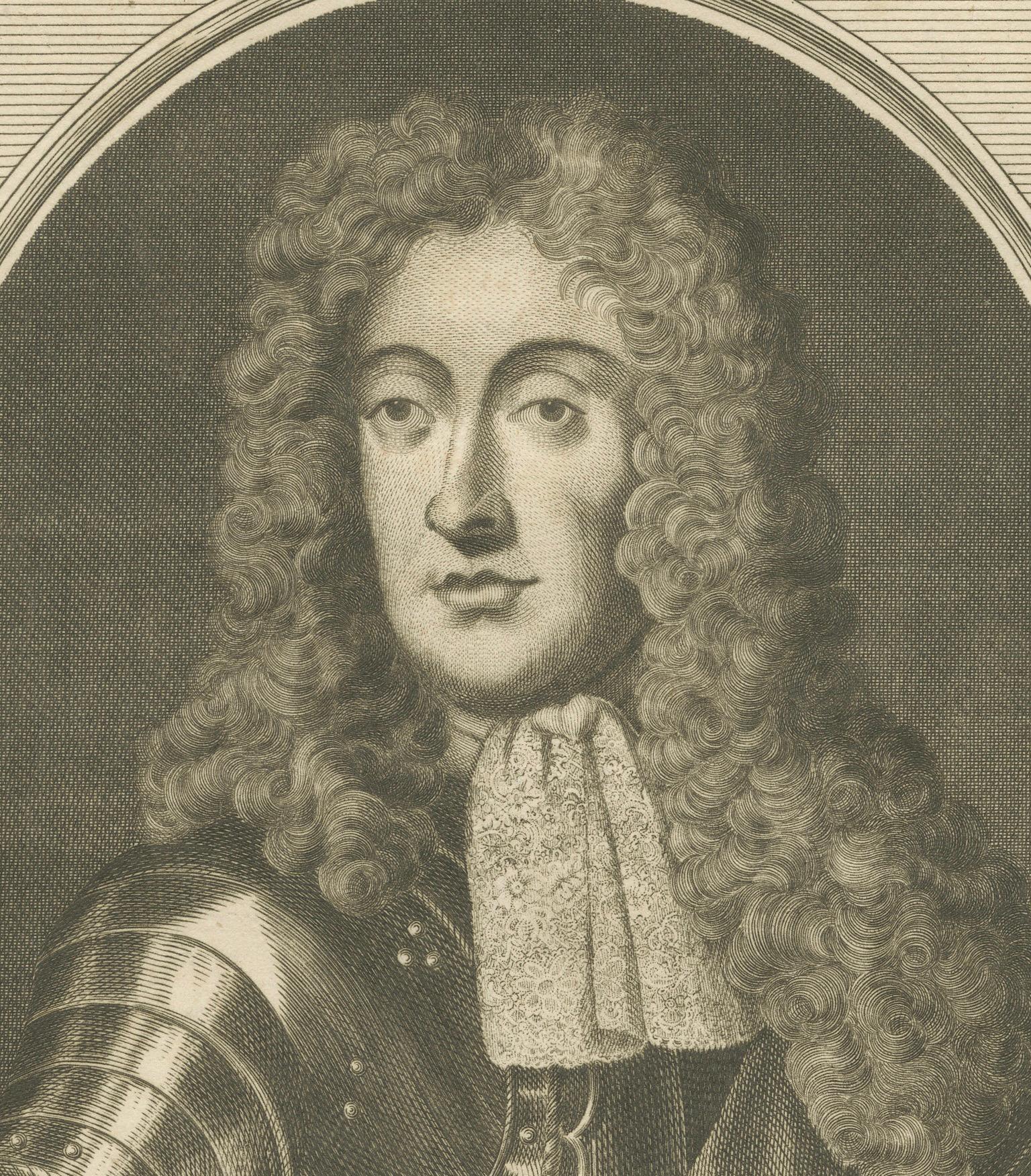
An original engraved portrait of James II, King of England.
The style of the engraving and the attire of the individual are consistent with late 17th-century fashion, aligning with James II's reign from 1685 to 1688.
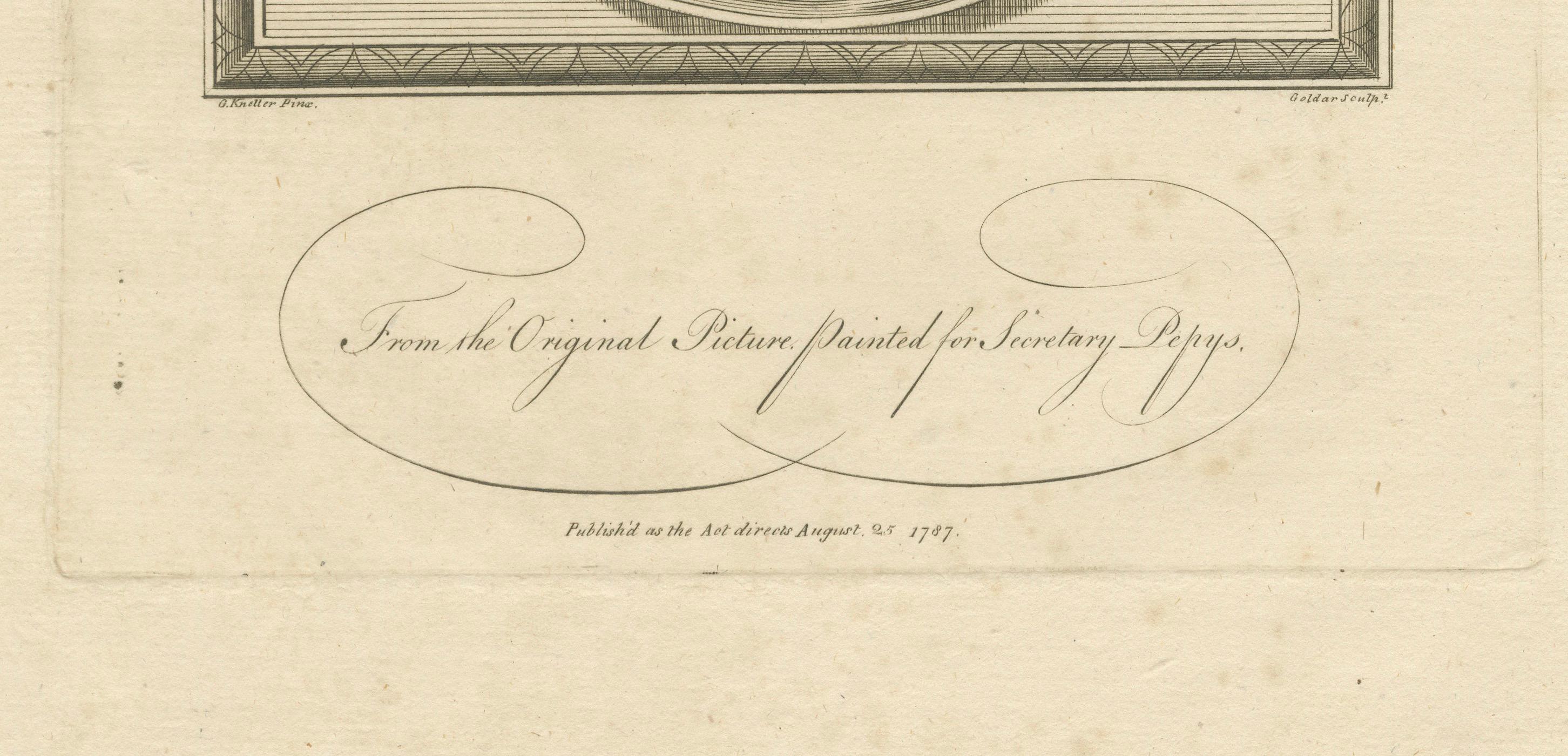
The text beneath the image indicates that it was published as part of the same historical work by Rapin de Thoyras, and this specific print was made from an original picture painted by Sir Godfrey Kneller, a leading portrait painter of that time. The engraving was published as the act directs on August 1st, 1789, showing that it was also intended to be protected under copyright law.
This inscription indicates that the portrait of James II, King of England, was originally painted by Godfrey Kneller (referred to as G. Kneller Pinx, with "Pinx" being an abbreviation for "pinxit," Latin for "painted by") and engraved by John Goldar (referred to as Goldar Sculp, with "Sculp" being short for "sculpsit," Latin for "engraved by").
James II of England, who was also James VII of Scotland, was born on October 14, 1633, and reigned from 1685 until he was deposed in the Glorious Revolution of 1688. He was the last Roman Catholic monarch to rule over England, Scotland, and Ireland. His religious beliefs and the policies he sought to implement played a significant role in his eventual overthrow.
James was the second surviving son of Charles I and became king after the death of his elder brother, Charles II. Unlike his brother, who maintained a Protestant policy while having Catholic sympathies, James was an open and devout Catholic, which was a contentious issue at a time when political power was closely tied to the Church of England.
His reign was marked by tensions over his attempts to promote religious tolerance for Catholics and other religious minorities, which many Protestant English subjects feared would lead to a reversing of the Protestant Reformation and a return to Catholic hegemony.
Several events during his reign increased these fears, including the appointment of Catholics to positions of power and the birth of a Catholic heir, which threatened to establish a Catholic dynasty. This led to the invitation by a group of Parliamentarians and Protestant nobles to William of Orange, a Protestant who was married to James's daughter Mary, to invade England and claim the throne.
William's successful invasion, known as the Glorious Revolution, led to James's deposition. James fled to France, and William and Mary were declared joint sovereigns. The revolution had a lasting impact, not only in curtailing the power of the monarchy but also in ensuring the dominance of a Protestant monarchy and the eventual passage of the Act of Settlement 1701, which requires the British monarch to be Protestant.
James attempted to reclaim the throne with the support of his Irish and French allies, leading to the Williamite War in Ireland, which ended in defeat at the Battle of the Boyne in 1690. James lived out the rest of his life in exile in France under the protection of his cousin and ally, King Louis XIV, until his death in 1701.