Easter Island's Enigmatic Legacy: Moai Statues Engraved and Published in 1794
€ 340
Original antique · The actual sheet photographed · Certificate of authenticity on request · Sold unframed · Worldwide shipping from € 15 (rates)
Date
1794
Sheet size
25.5 × 38.5 cm (10.0 × 15.2 in)
Condition
Good
Reference
BG-13597-49
What the condition grades mean
Excellent
Bright and clean, with no faults worth mentioning.
Very good
Only light signs of age, such as faint toning.
Good
Normal signs of age for a sheet of this period: toning, some foxing, small marks or neat old repairs.
Fair
Clear faults such as staining, tears or repairs, priced to match.
Every fault we see is written in the condition note, and the whole sheet is shown uncropped in the photos.
Condition
Good condition. Visible signs of aging such as edge wear, paper browning, and foxing spots (outside the image) are apparent. Most wear is around the edges. Please review the images for further condition details.
About this sheet
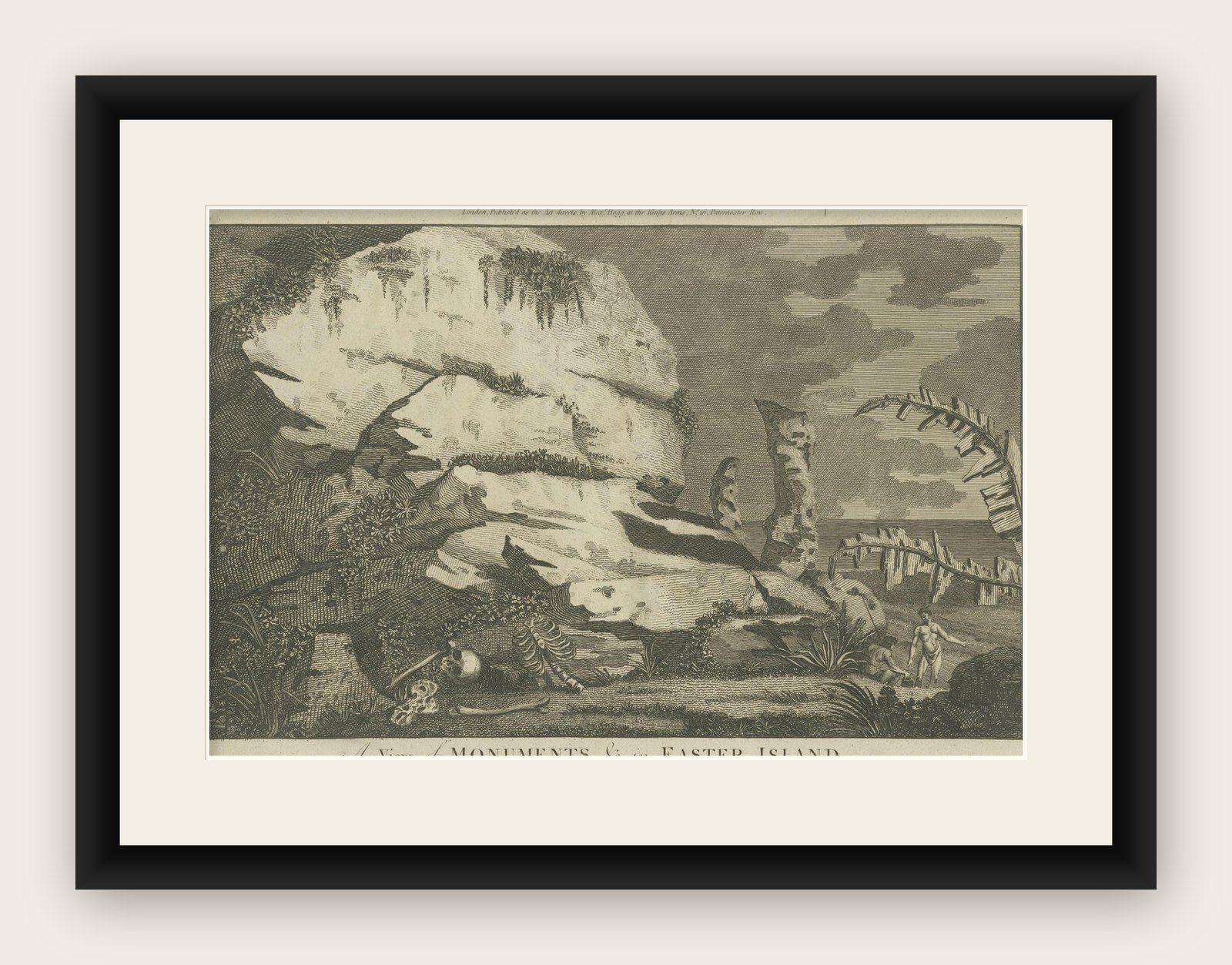
This original antique engraving is a historical depiction of Easter Island, known for its monumental statues called Moai. The image is titled "A View of Monuments, &c. in Easter Island," and it was published by Alex Hogg at the King's Arms, No. 16 Paternoster Row, London.
It likely is from the publication of Portlock's "New Collection of Voyages and Travels," which was published in 1794. Captain Nathaniel Portlock was an English navigator and a contemporary of Captain James Cook, and he also undertook significant voyages in the Pacific.
The scene is rich with detail, showing several Moai statues, some standing and others fallen, which is indicative of the island's landscape as encountered by early European explorers. The Moai are carved from volcanic tuff and are emblematic of the Rapa Nui culture. The presence of skeletons in the foreground suggests a commentary on the passage of time and the decline of the ancient Rapa Nui civilization, a subject that was of considerable fascination to European audiences at the time.
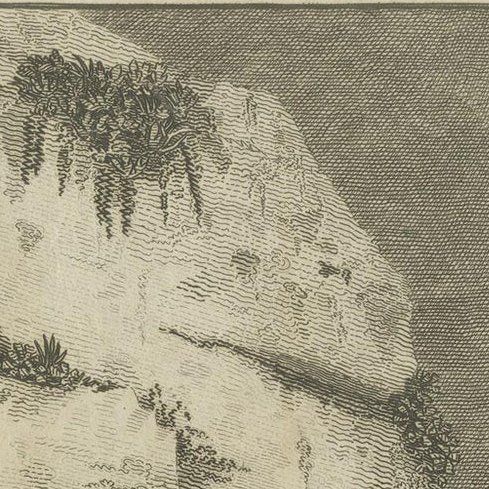
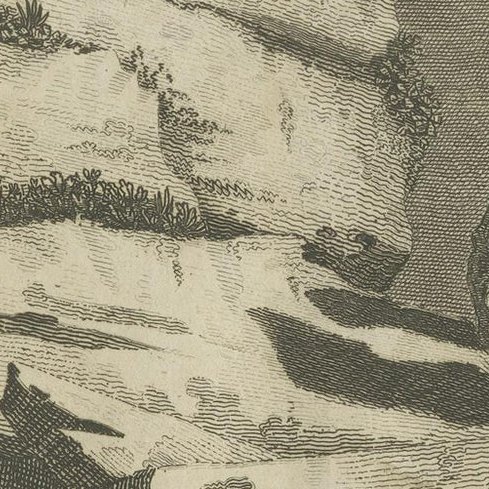
The engraving style is typical of the late 18th to early 19th century, with fine lines and detailed shading used to create depth and texture. It reflects the European interest in exotic locations and "discovered" landscapes during the Age of Exploration. The print would have been used to illustrate travel narratives or works of natural history, providing a visual account of the mysterious and remote island to readers back in Europe.
As for the condition, visible signs of aging such as edge wear, paper browning, and foxing spots outside the image are apparent. However, these do not significantly detract from the historical value or the visual impact of the piece. Such prints are cherished for their artistry and as records of cultural encounters during a pivotal era in global exploration.