About this sheet
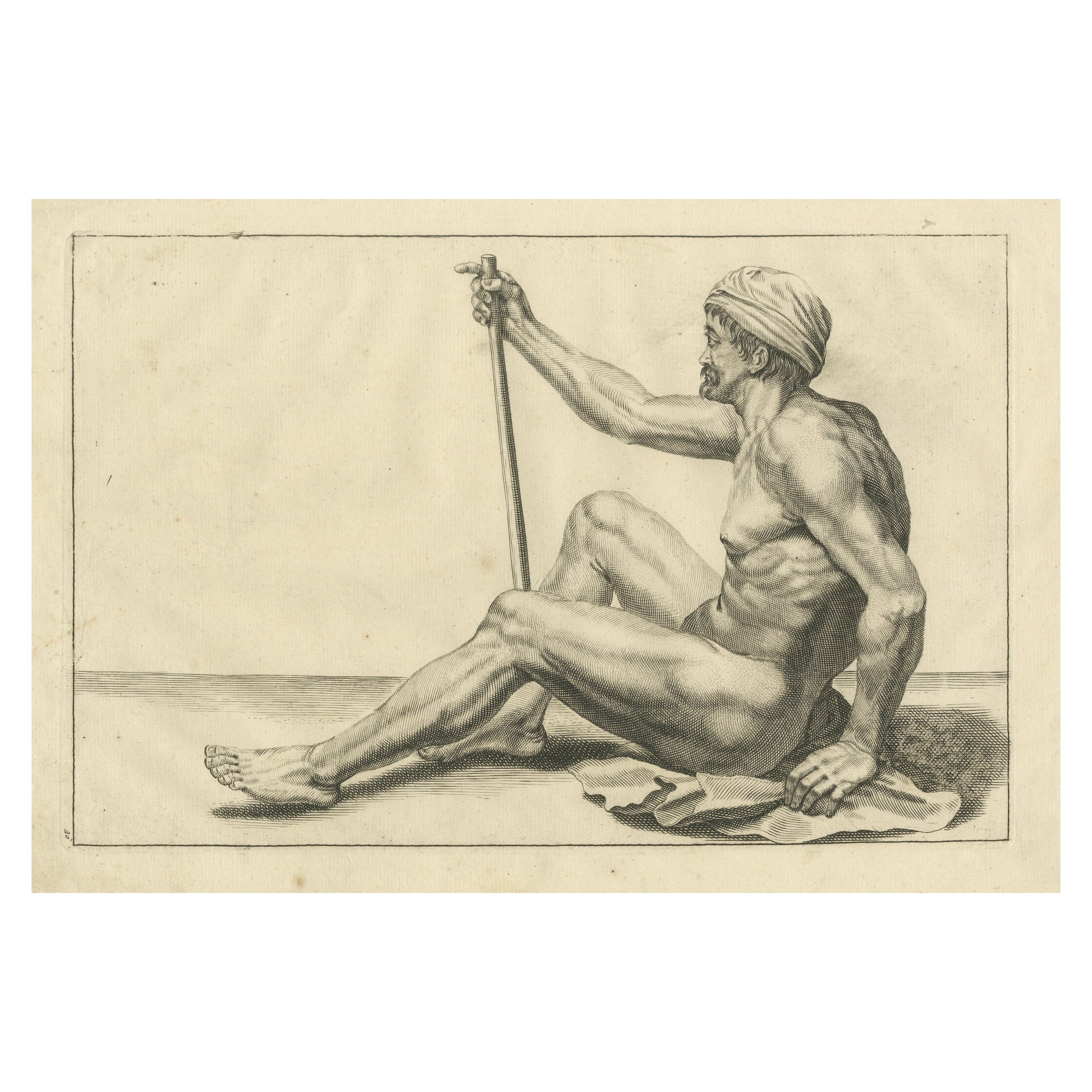
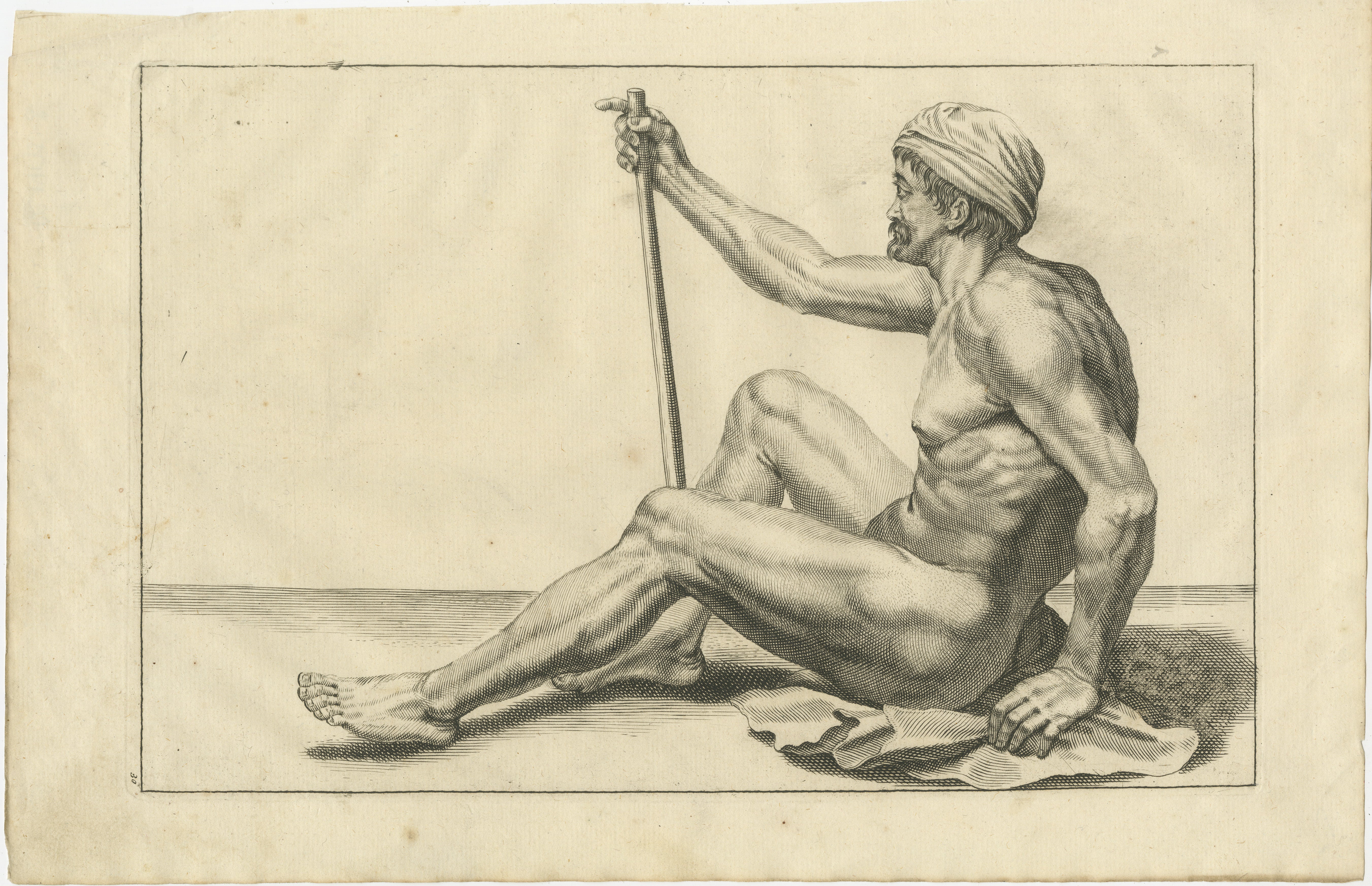
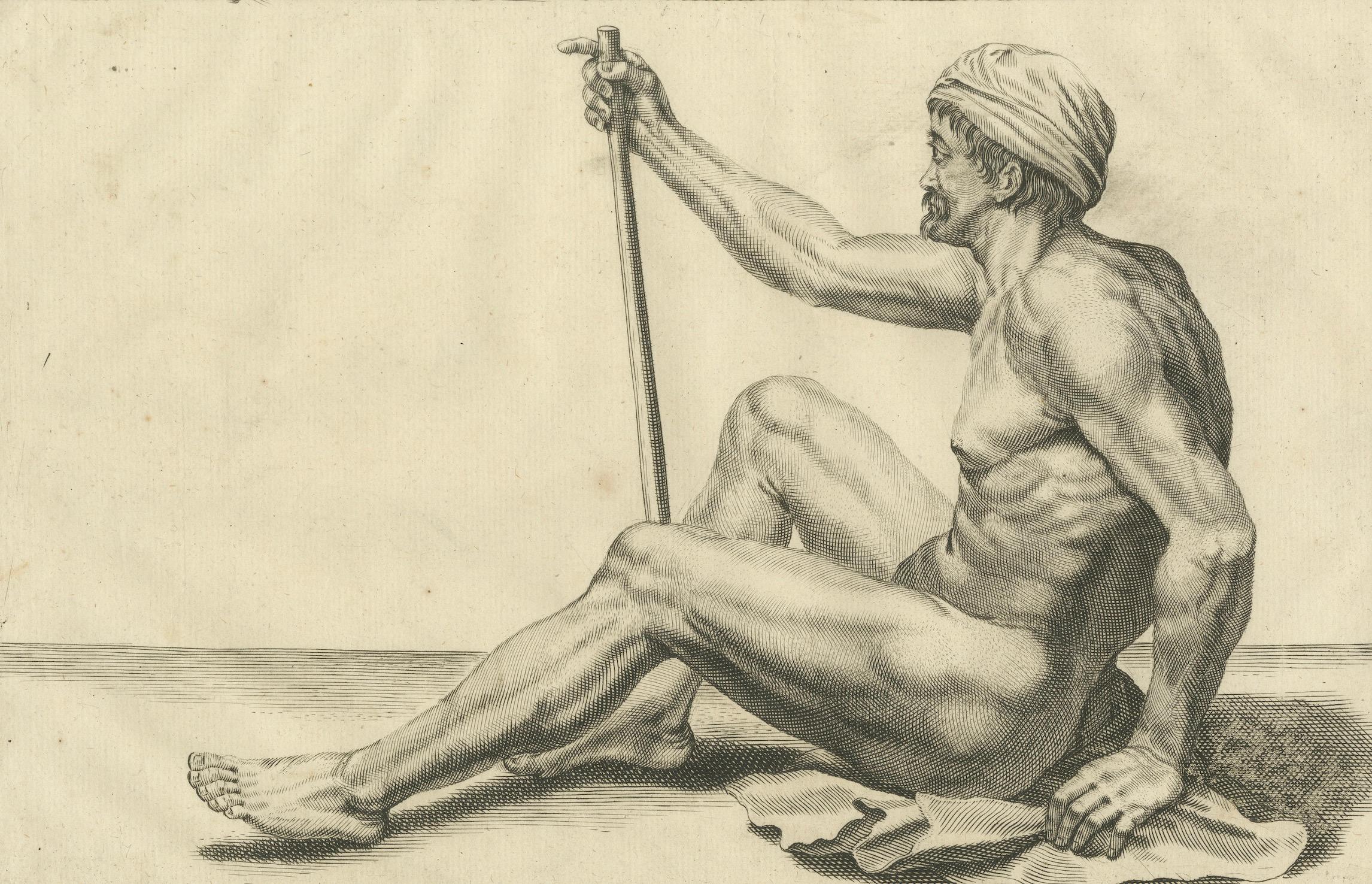
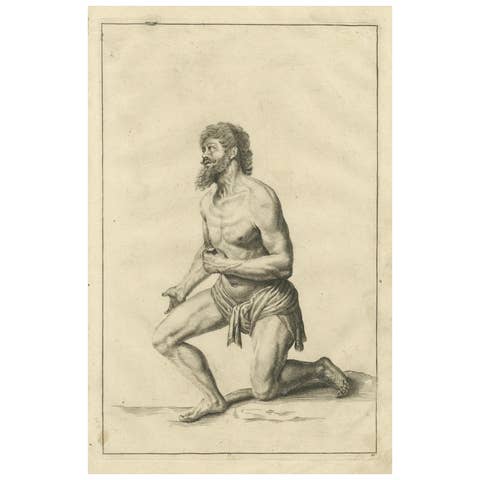
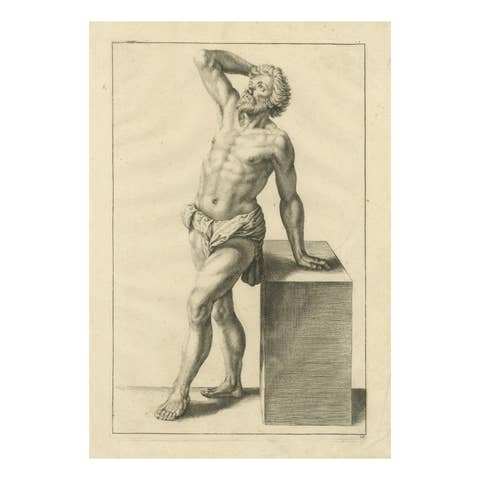
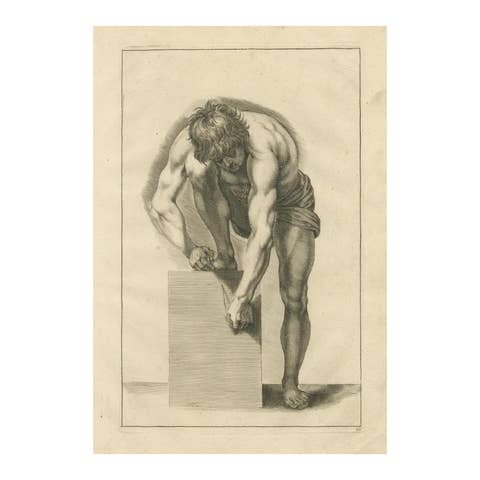
Seated Male Nude with Staff after de Lairesse German Drawing Manual c1745
This refined academic study of the male nude originates from the German edition of Gérard de Lairesse’s influential drawing manual *Principes de dessin*, published in the mid-18th century, circa 1745. Gérard de Lairesse was one of the most important artistic theorists of the late Baroque and early Enlightenment period, and his systematic approach to anatomy, proportion, and classical form shaped academic art training across Europe well into the 18th century.
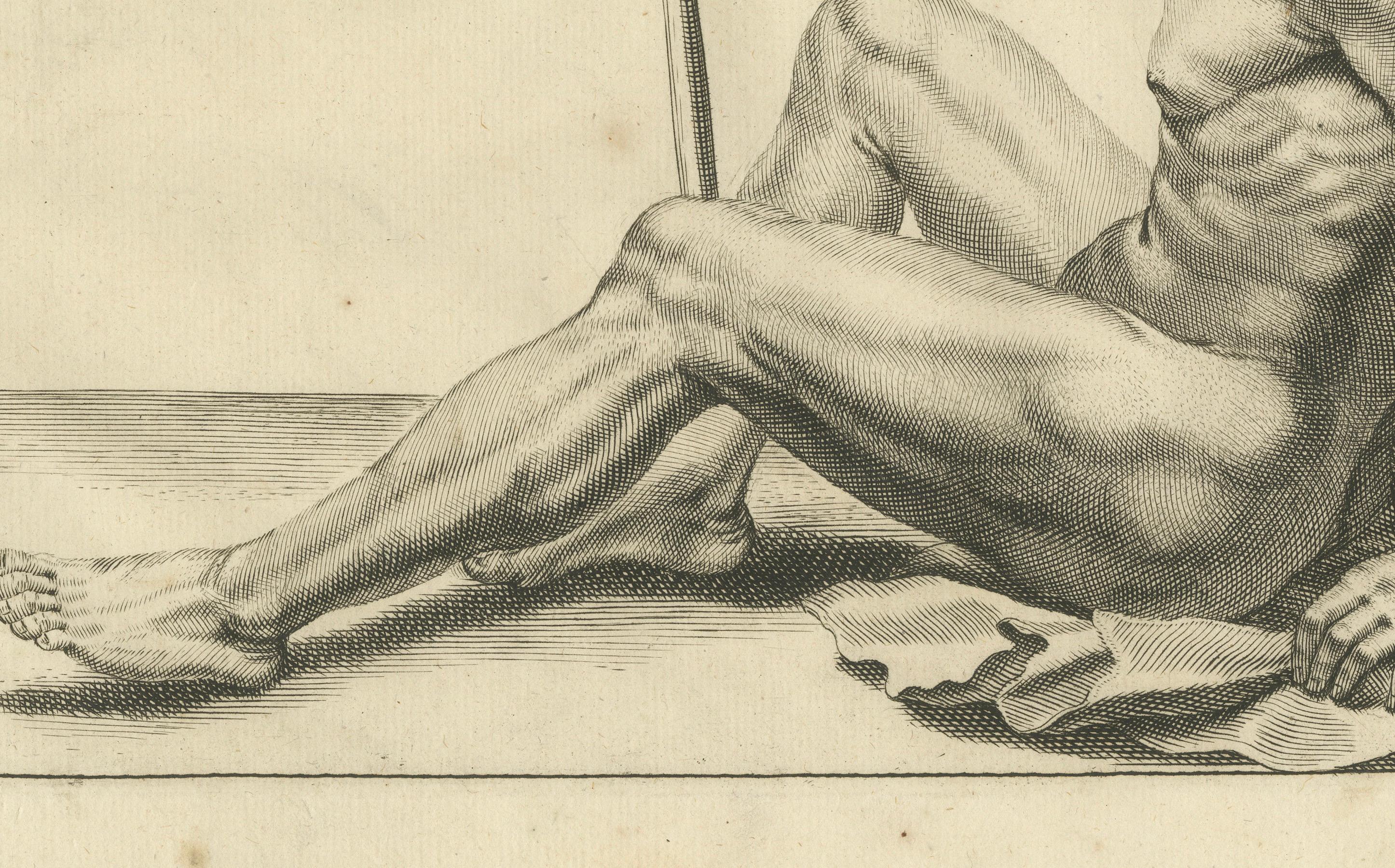
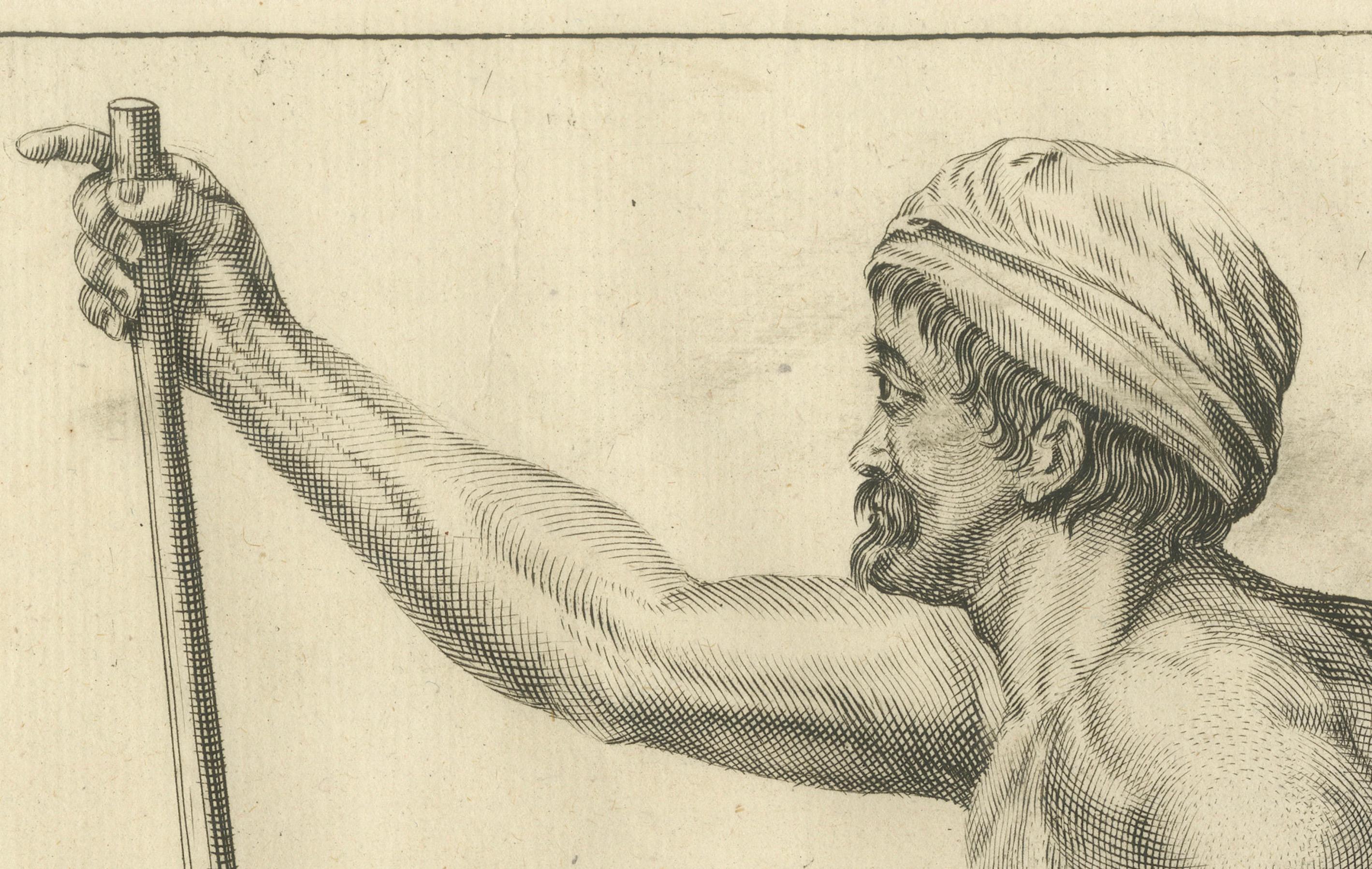
The plate depicts a seated male figure resting on the ground, one leg extended and the other bent, while the figure supports himself with a vertical staff held firmly in the raised hand. The pose is calm yet structurally complex, offering a clear study of balance, musculature, and foreshortening. The twist of the torso and the interaction between arms, legs, and staff create a harmonious rhythm that exemplifies academic ideals of controlled movement and proportional clarity.
Executed as a line engraving with delicate and precise cross-hatching, the figure is rendered with strong anatomical definition and a convincing sense of volume. Light and shadow are carefully modulated to emphasize the musculature of the torso, arms, and legs, while the restrained background keeps the viewer’s focus on the figure itself. As with other plates from this series, the image is intended as an artistic model rather than a medical illustration, emphasizing idealized anatomy and classical balance.
Plates from the German editions of de Lairesse’s manuals were extensively used in academies and workshops and were often subject to heavy handling. As a result, well-preserved impressions such as this are increasingly sought after by collectors of academic art, figure studies, and Enlightenment-era instructional material. The print also works exceptionally well as a stand-alone decorative object in both classical and modern interiors.
Condition report:
Good antique condition. Light, even age-related toning throughout the sheet. Minor scattered spotting and small stains, mainly in the margins. Some light handling wear and faint creases consistent with age. Margins present. The engraved image remains crisp and well-defined. A clear plate mark is visible.
Framing tips:
This print frames beautifully in both classic and contemporary settings. A walnut, dark-stained, or ebonized wooden frame with a wide off-white or light grey mat enhances the warm tone of the paper and the sculptural quality of the figure. Museum glass is recommended for optimal protection.
Technique: Line engraving
Maker: After Gérard de Lairesse, from the German edition of *Principes de dessin*, circa 1745