About this sheet
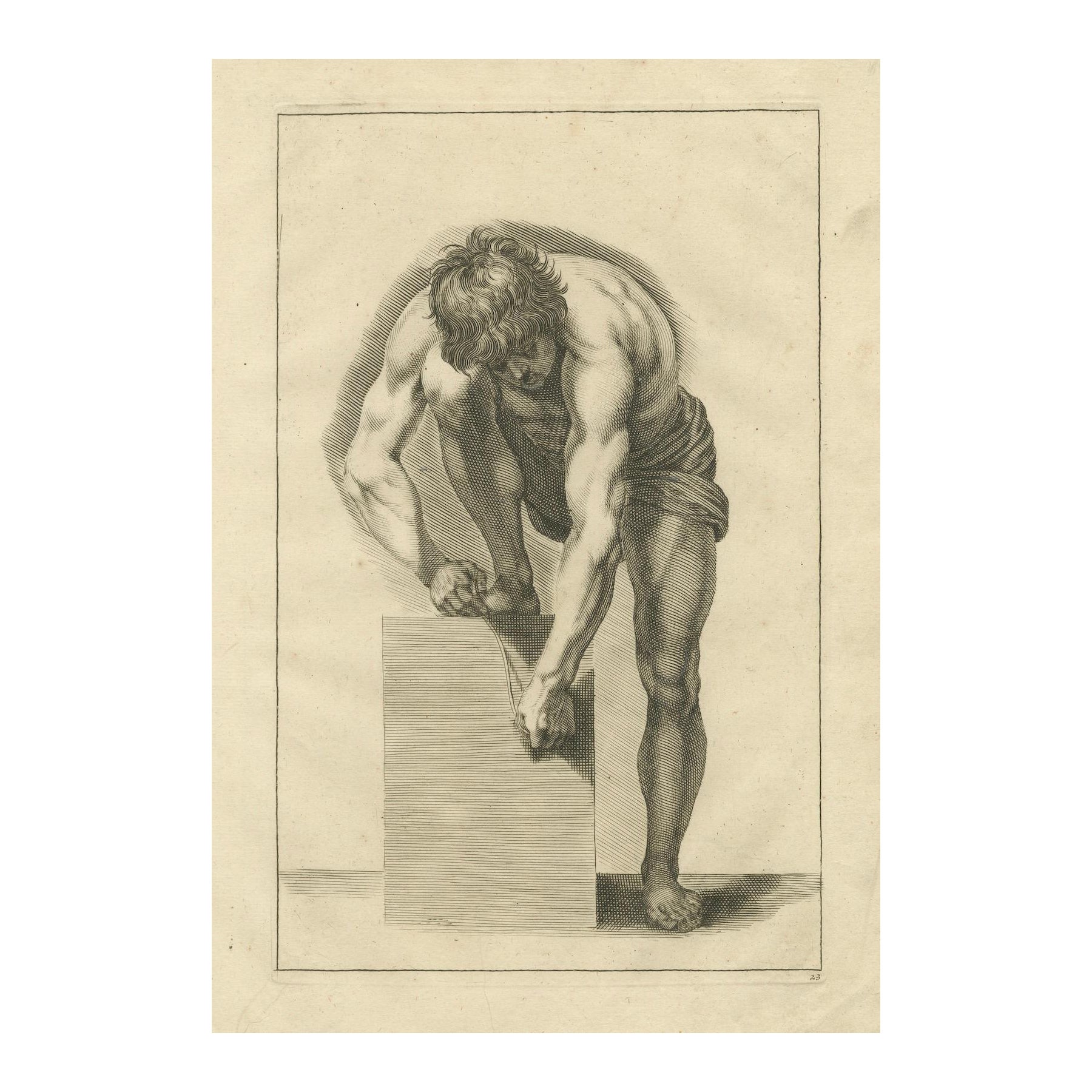
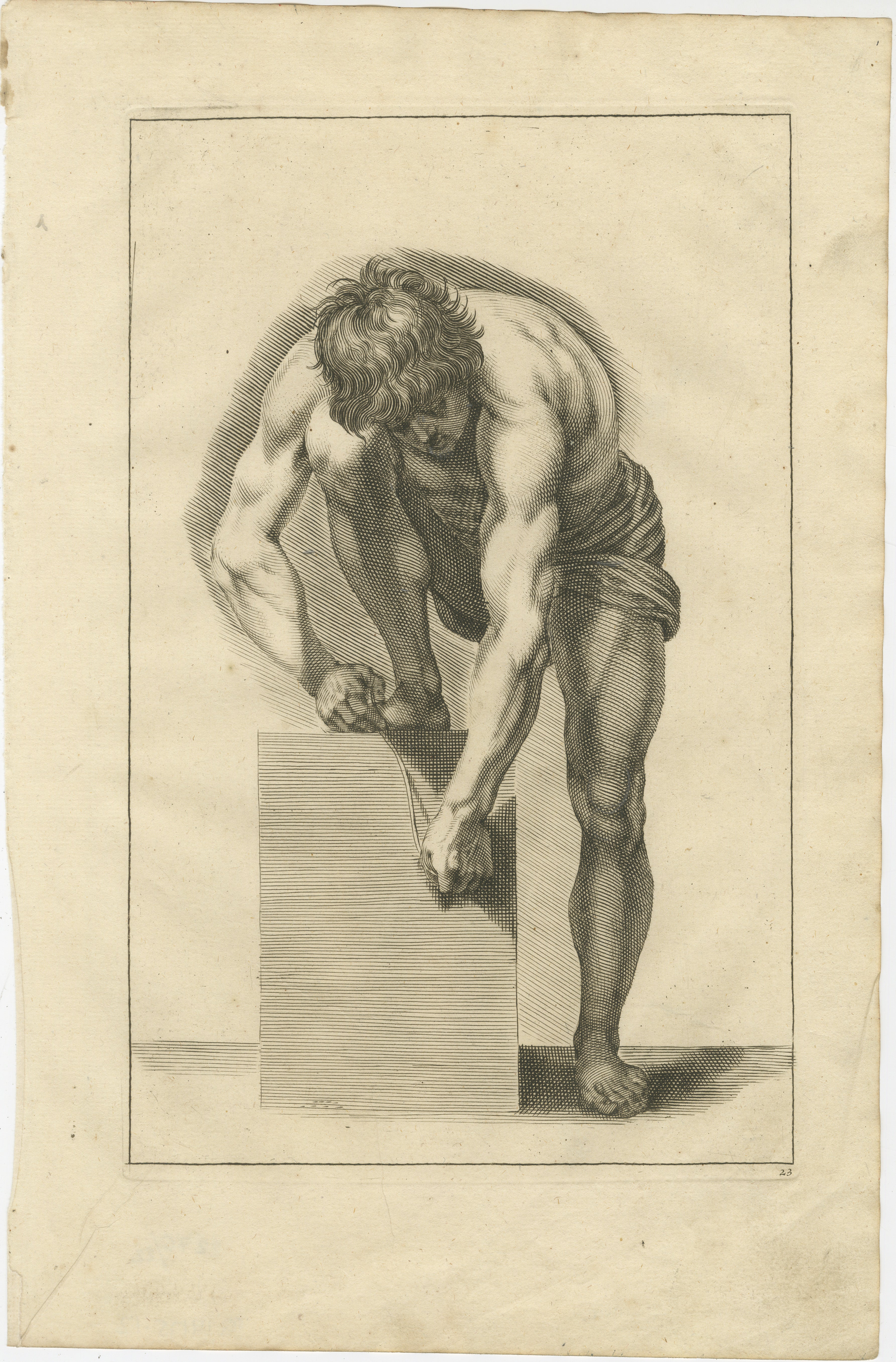
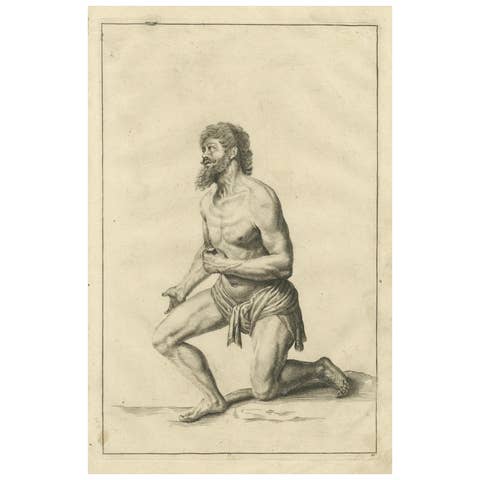
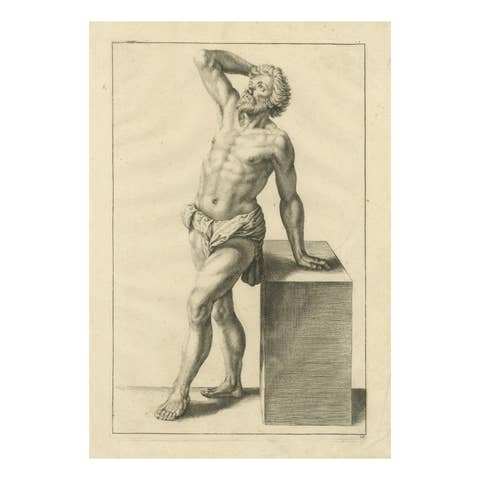
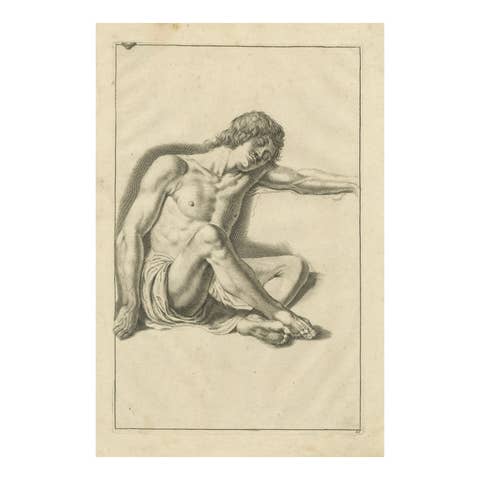
Bending Male Nude Study after de Lairesse German Drawing Manual c1745
This compelling academic study of the male nude originates from the German edition of Gérard de Lairesse’s influential drawing manual *Principes de dessin*, published in the mid-18th century, circa 1745. Gérard de Lairesse was one of the most important artistic theorists of the late Baroque and early Enlightenment period, and his teachings on anatomy, proportion, and classical form became fundamental to academic art training throughout Europe.
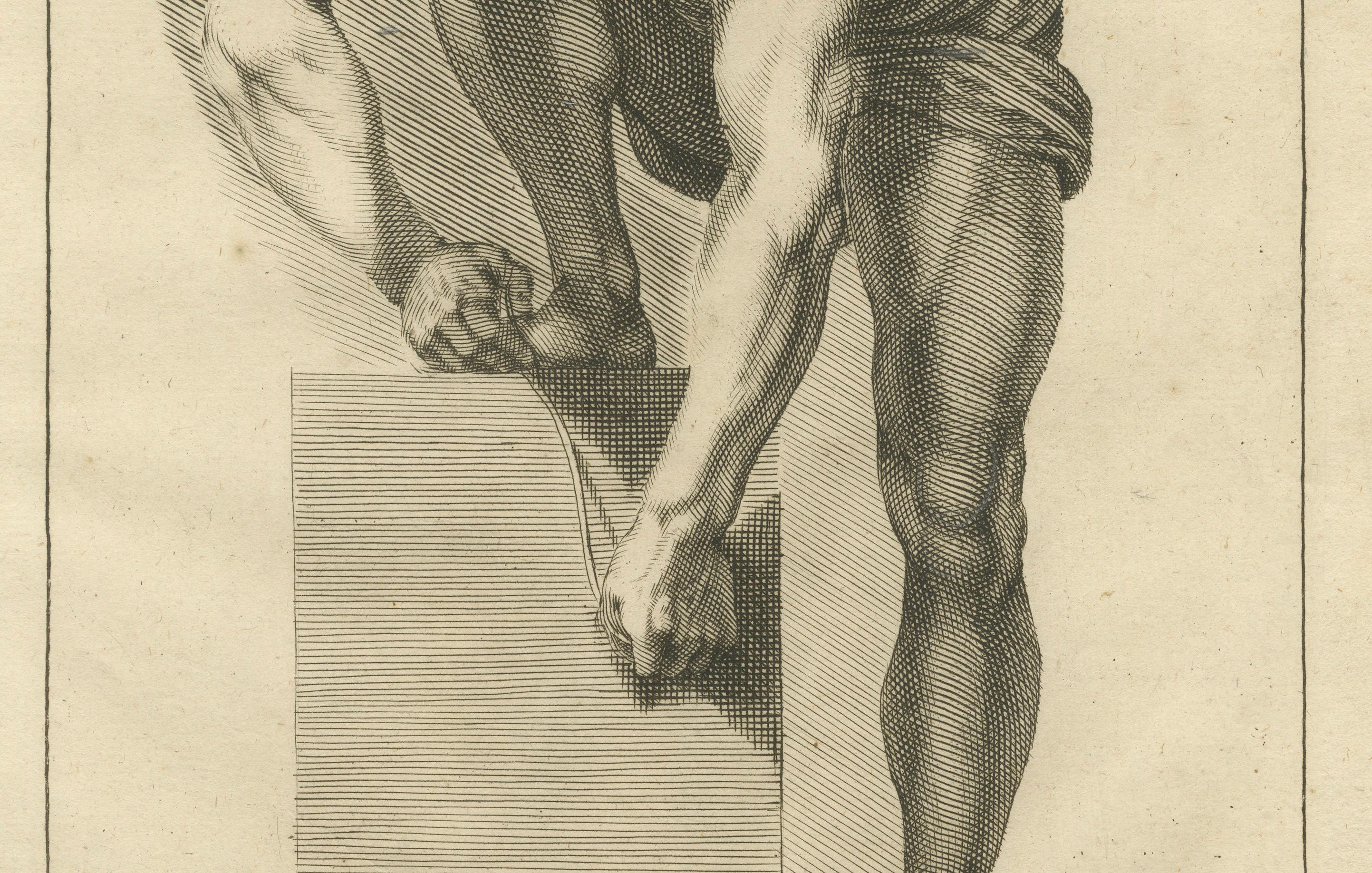
The plate depicts a standing male nude bending forward over a rectangular block, his body forming a strong arching curve from shoulders to hips. One arm supports the figure on the block while the other reaches downward, creating a complex interaction between balance, gravity, and muscular tension. The pose is specifically designed to demonstrate the structure of the back, shoulders, arms, and legs, as well as the effects of flexion and compression on the musculature.
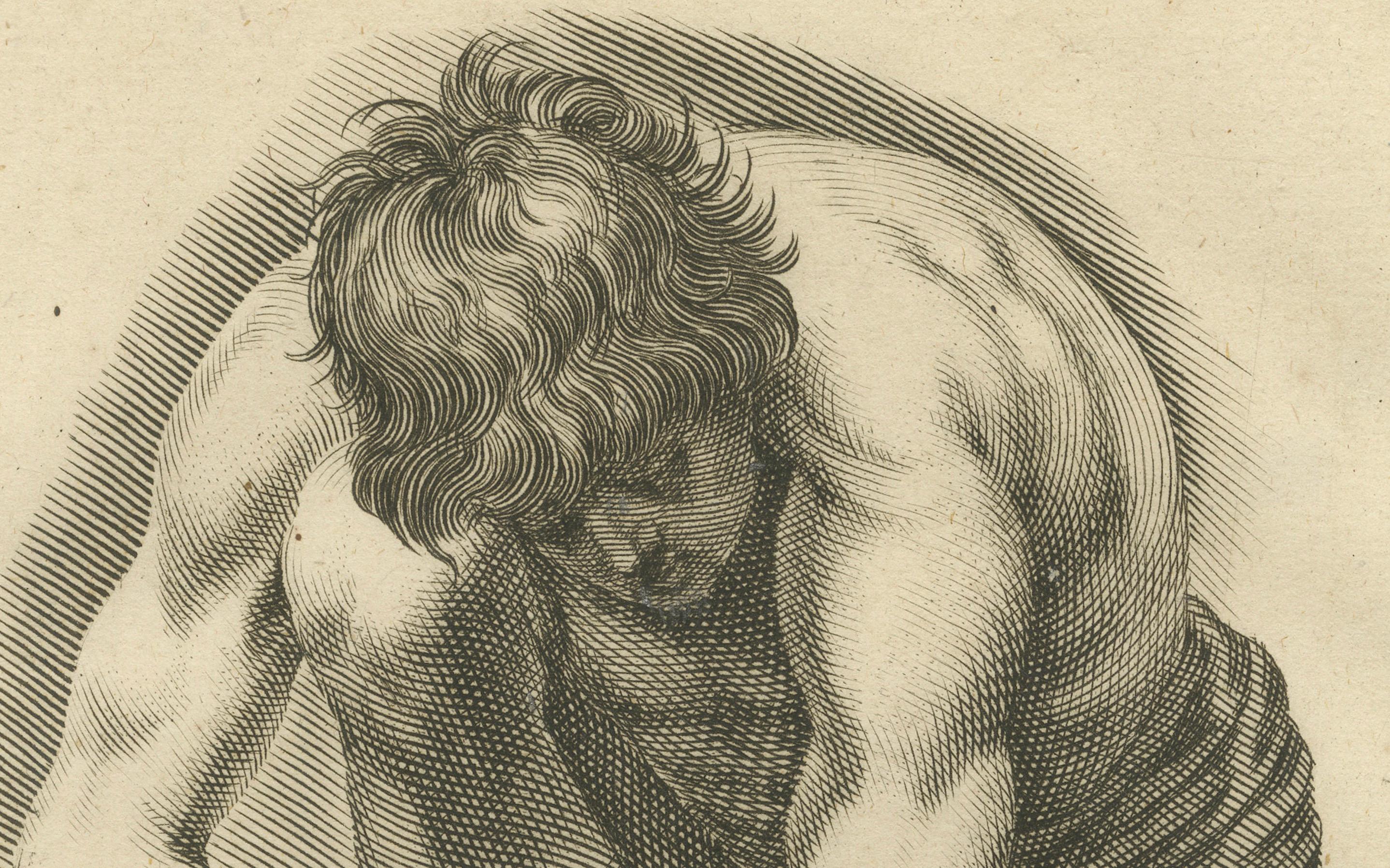
Executed as a finely detailed line engraving, the figure is rendered with precise cross-hatching and controlled line work that produces a strong sense of volume and anatomical clarity. Light and shadow are carefully modulated to articulate the muscles of the torso, limbs, and joints, while the restrained background keeps the viewer’s focus entirely on the figure itself. As with other plates from this series, the image emphasizes idealized artistic anatomy rather than medical realism.
Plates from the German editions of de Lairesse’s manuals were extensively used in academies and drawing schools and were often subject to heavy handling. As a result, well-preserved impressions are increasingly scarce and sought after by collectors of academic art, classical figure studies, and Enlightenment-era instructional material. This print also functions beautifully as a decorative object, offering both visual strength and historical depth.
Condition report:
Good antique condition. Light, even age-related toning throughout the sheet. Minor scattered spotting and small stains, mainly in the margins. Some light handling wear and faint creases consistent with age. Margins present. The engraved image remains crisp and well-defined. A visible plate mark is present.
Framing tips:
This print frames exceptionally well in both traditional and contemporary interiors. A walnut, ebonized, or dark-stained wooden frame with a wide off-white or light grey mat enhances the warm tone of the paper and emphasizes the sculptural, dynamic posture of the figure. Museum glass is recommended for optimal protection.
Technique: Line engraving
Maker: After Gérard de Lairesse, from the German edition of Principes de dessin, circa 1745