About this sheet
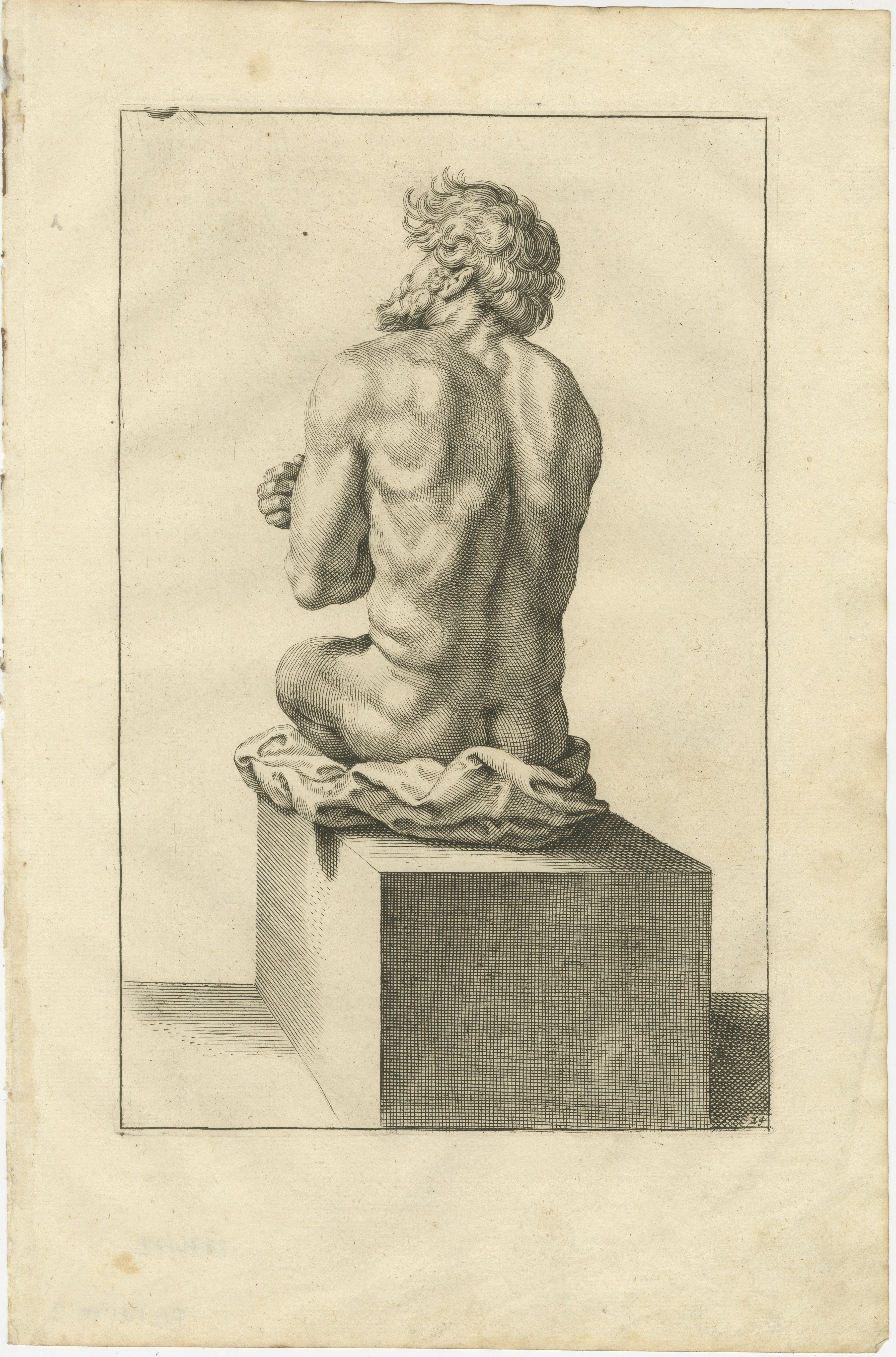
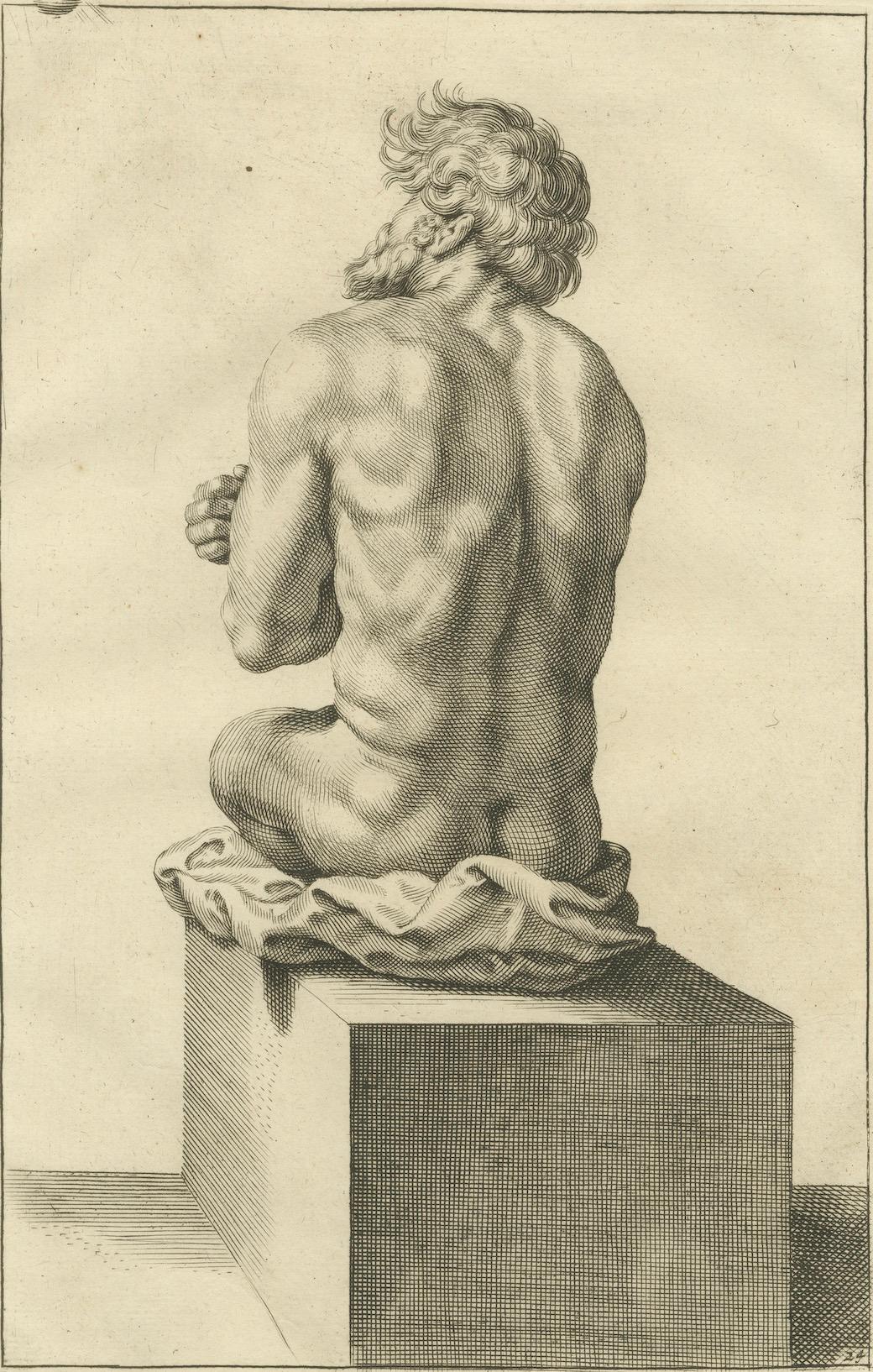
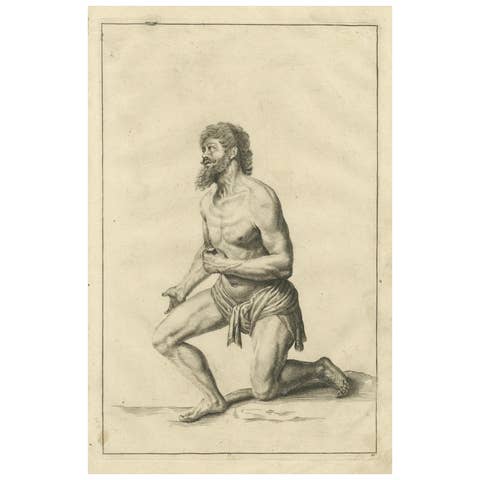
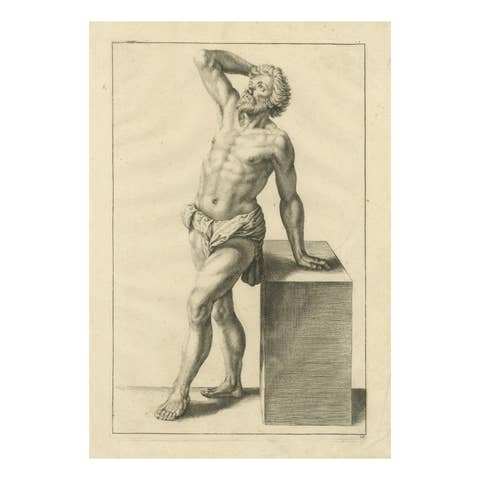
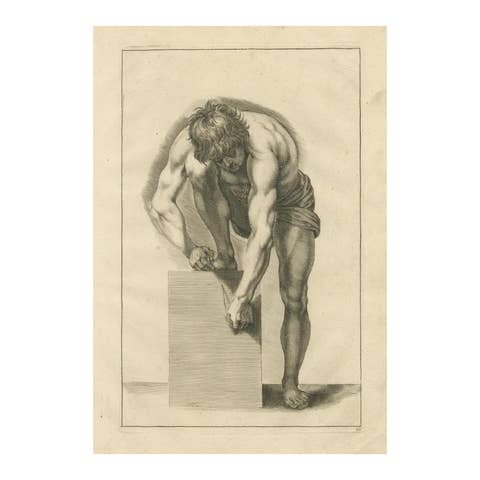
Seated Male Nude from Behind after de Lairesse German Drawing Manual c1745
This refined academic study of the male nude is taken from the German edition of Gérard de Lairesse’s influential drawing manual Principes de dessin, published in the mid-18th century, circa 1745. De Lairesse was among the most important artistic theorists of his era, and his teachings on proportion, anatomy, and idealized form became foundational within European academic art education.
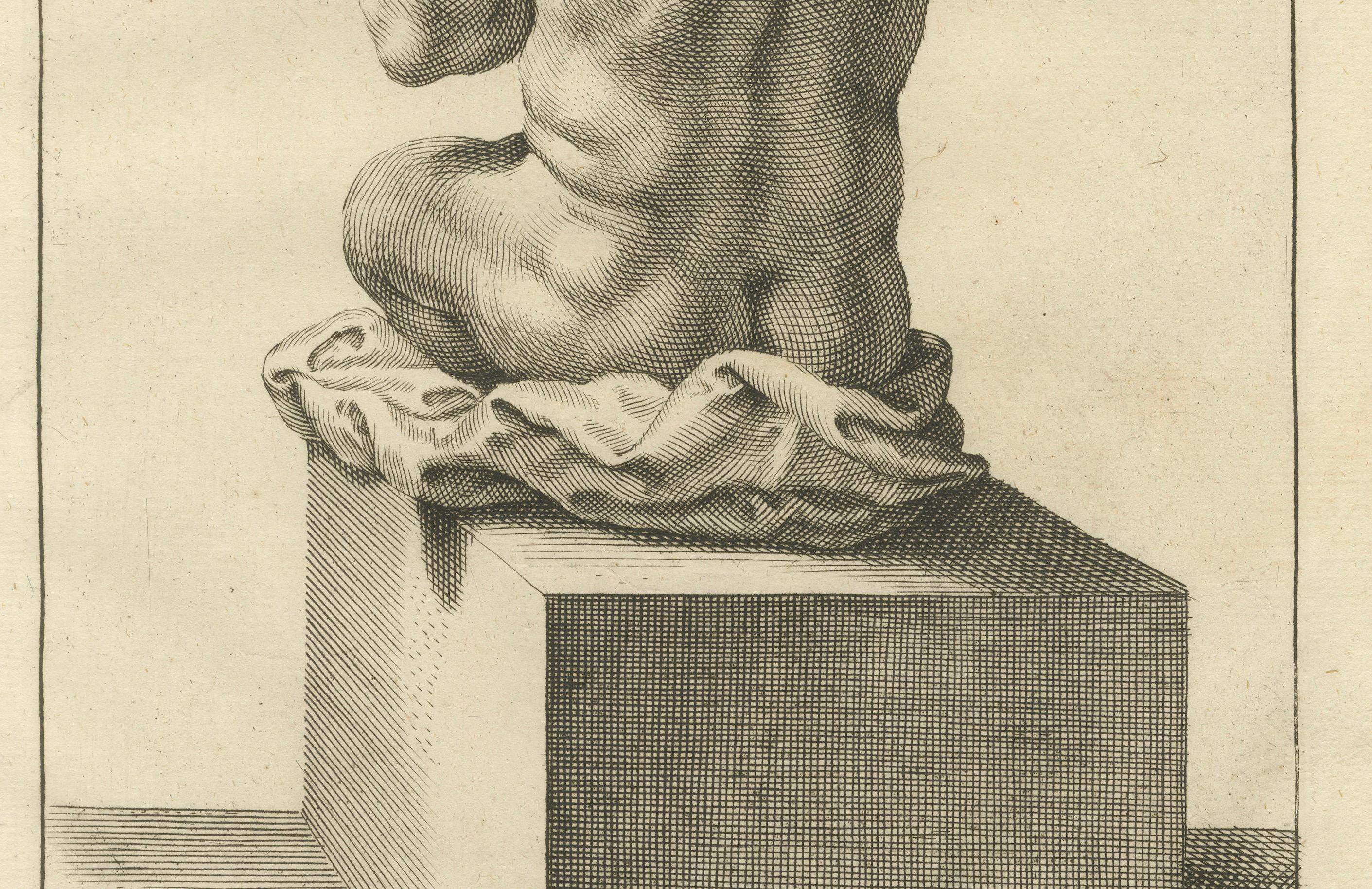
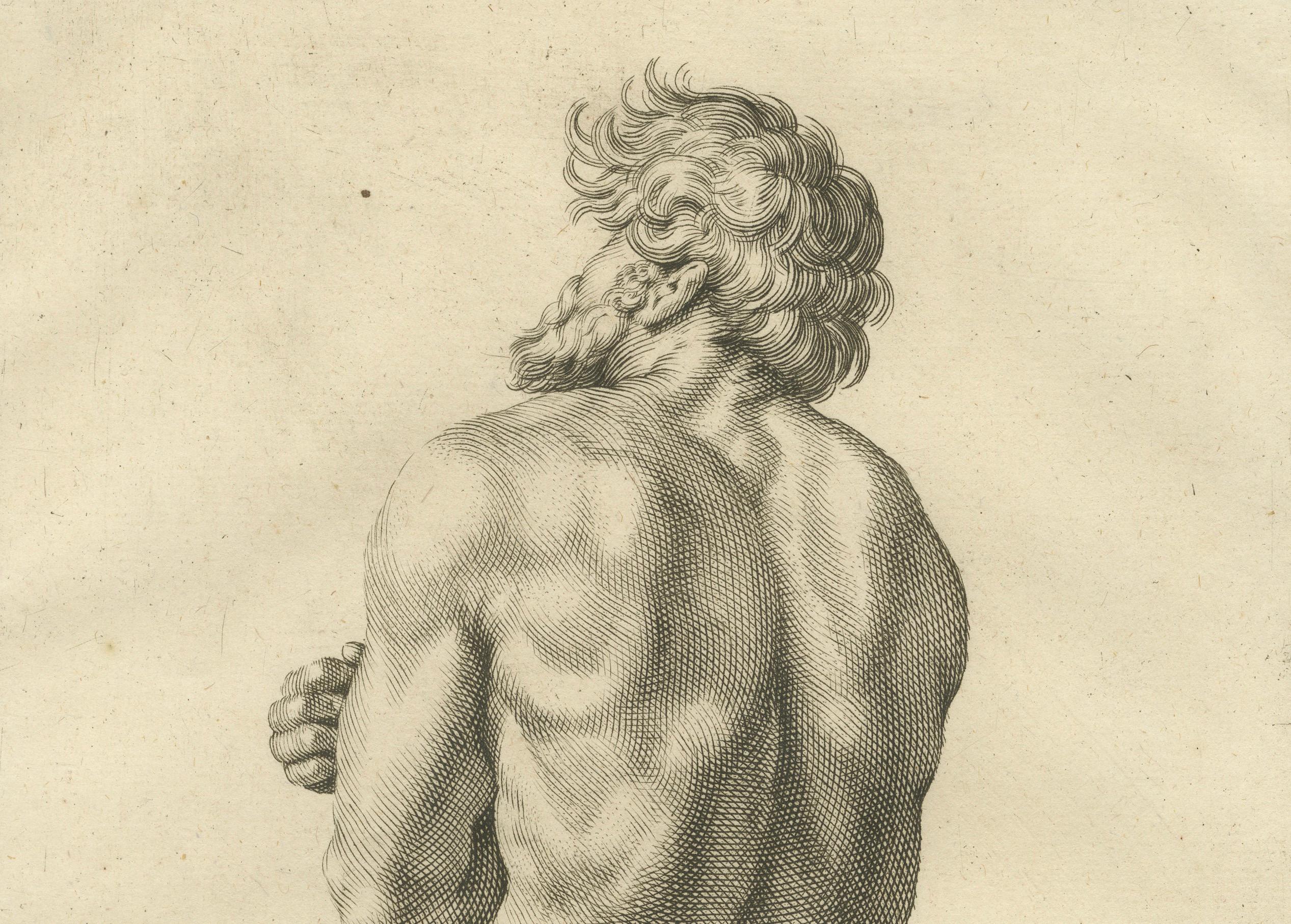
The plate depicts a seated male figure viewed from behind, positioned on a geometric block partially draped with cloth. The composition focuses on the structure of the back, shoulders, arms, and torso, offering a clear study of musculature, posture, and balance. The restrained pose and neutral background allow the anatomy to be examined without distraction, while the careful engraving emphasizes volume and form through controlled parallel and cross-hatching.
This print belongs to the tradition of artistic anatomy and figure drawing rather than medical illustration. It was intended as a teaching model for painters, draughtsmen, and engravers studying the classical human figure. Plates from the German editions of de Lairesse’s work were widely used in academies and workshops and were often subjected to heavy handling, making well-preserved impressions increasingly uncommon today.
With its calm composition, classical ideal, and strong graphic presence, this plate has lasting appeal for collectors of academic art, figure studies, and Enlightenment-era instructional prints. It also works exceptionally well as a decorative object in both contemporary and classical interiors.
Condition report:
Good antique condition. Light, even age-related toning throughout the sheet. Minor scattered spotting and small stains, mainly in the margins. Slight handling wear and a few faint creases consistent with age. Margins present. The engraved image remains crisp and well-defined. A clear plate mark is visible.
Framing tips:
This print frames beautifully in a classic or modern interior. A walnut, ebonized, or black wooden frame with a wide off-white or light grey mat complements the warm tone of the paper and emphasizes the clarity of the engraving. Museum glass is recommended for protection and reduced glare.
Technique: Line engraving
Maker: After Gérard de Lairesse, from the German edition of Principes de dessin, circa 1745