About this sheet
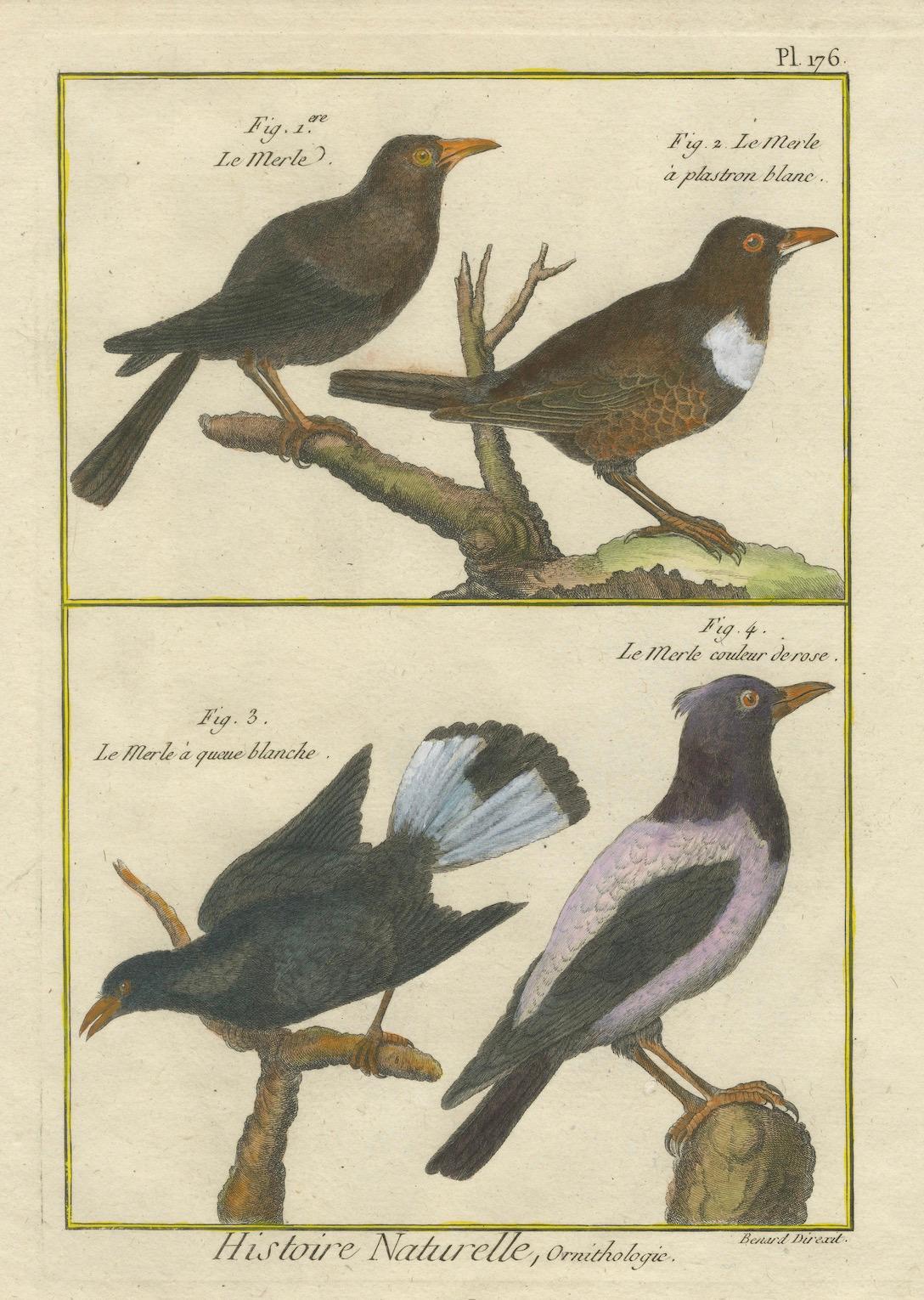
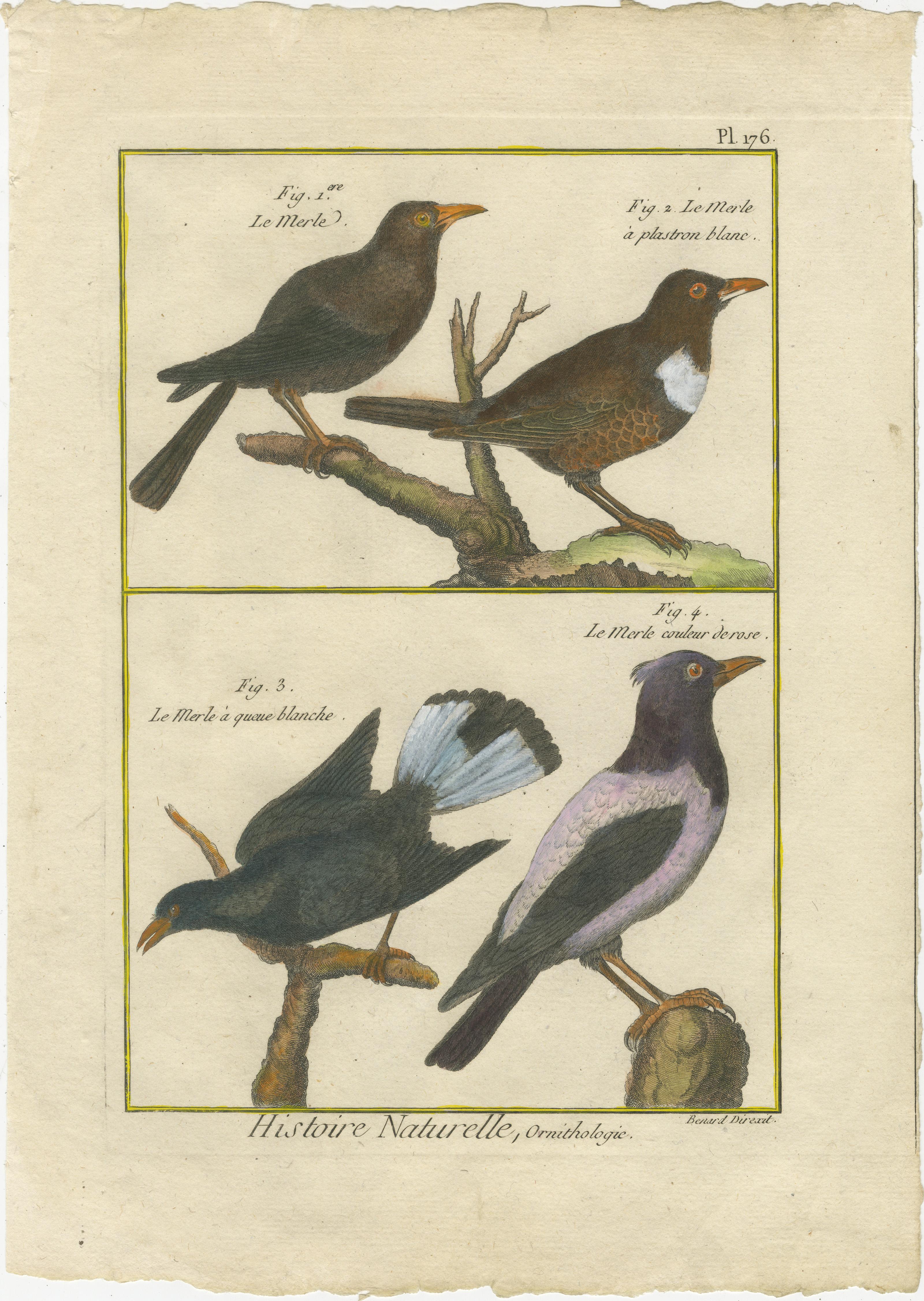
This hand-colored copperplate engraving by Robert Benard, part of the *Histoire Naturelle* from the *Encyclopédie Méthodique* (circa 1790), showcases four species of blackbirds or thrushes (*Merles*), highlighting their unique features. These birds are depicted with meticulous attention to detail and color, reflecting the diversity in this bird family.
Birds Depicted (Translation and Descriptions):
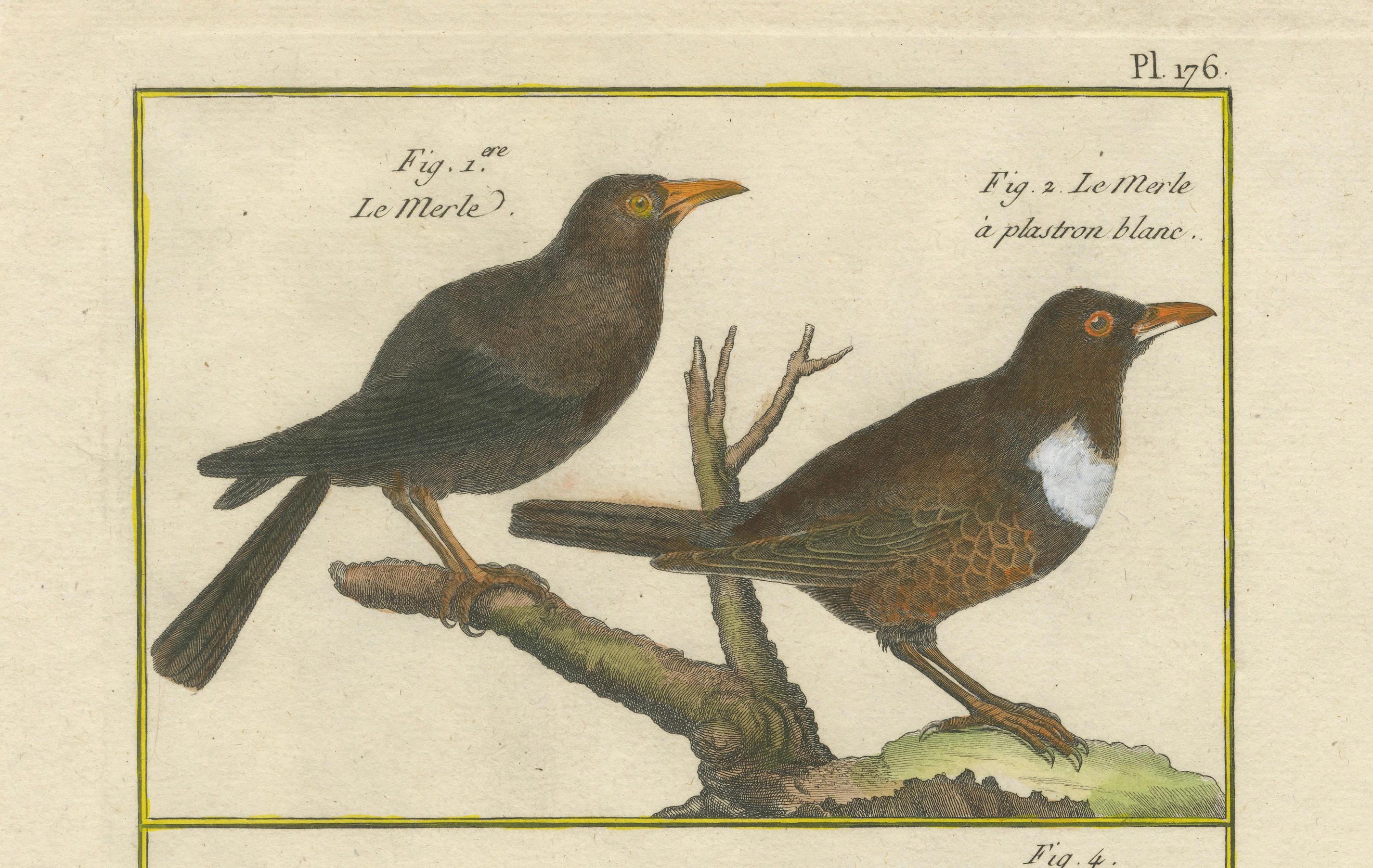
1. Fig. 1: Le Merle (Common Blackbird):
- This is a representation of the Common Blackbird (*Turdus merula*), found across Europe, Asia, and parts of North Africa. The engraving shows the bird with its typical black plumage and bright orange-yellow beak. It is one of the most familiar birds in gardens and woodlands, known for its melodious song.
2. Fig. 2: Le Merle à plastron blanc (White-breasted Blackbird):
- This bird is depicted with a white patch on its breast, likely representing a variant of the Ring Ouzel (*Turdus torquatus*), a close relative of the Common Blackbird. The Ring Ouzel is found in upland areas of Europe and is distinguished by its white crescent-shaped marking on the chest.
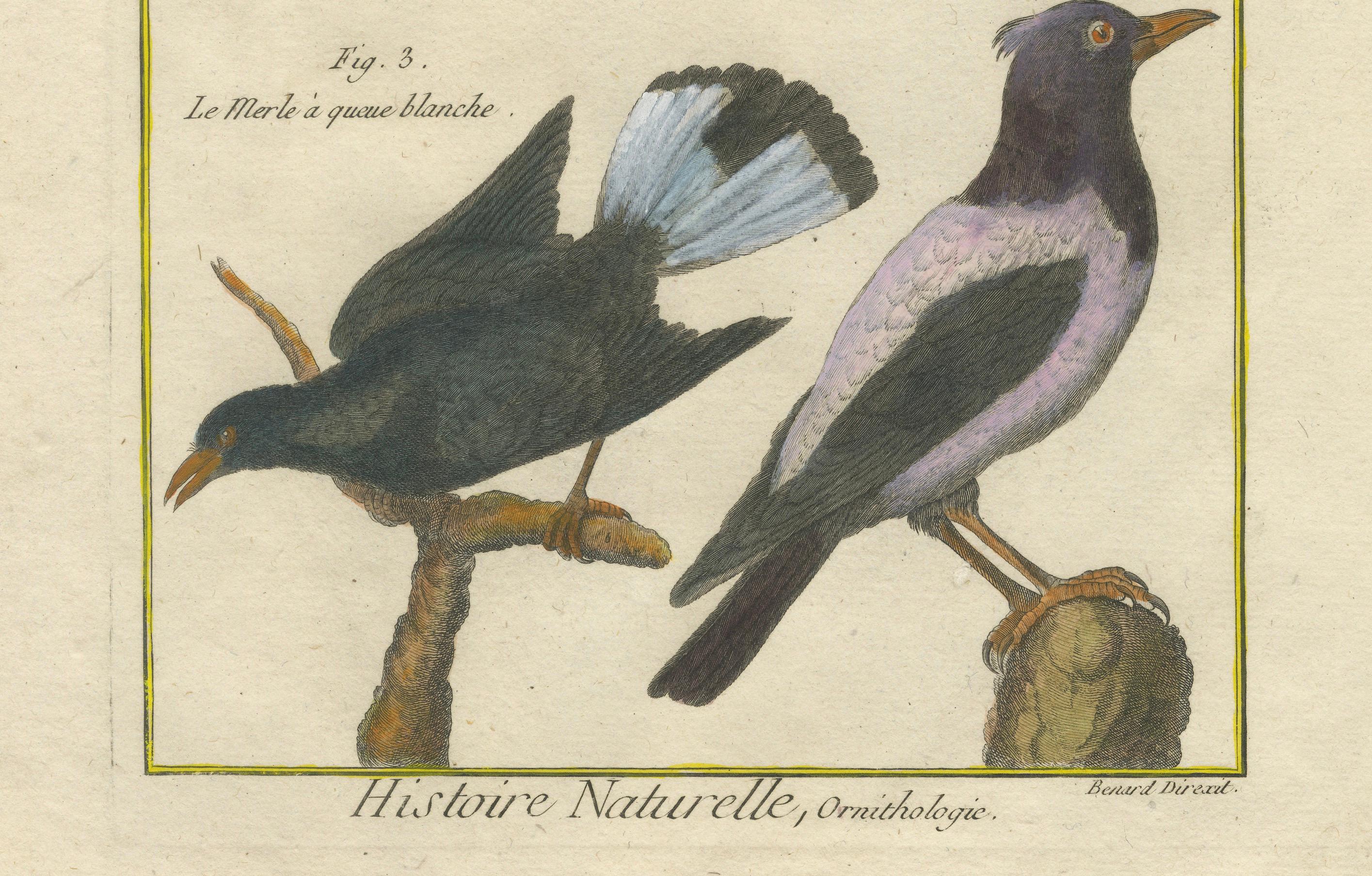
3. Fig. 3: Le Merle à queue blanche (White-tailed Blackbird):
- This bird is shown with a distinct white tail, indicating it could represent a variation of a blackbird or a thrush species with prominent white markings. This feature is likely symbolic of a species found in mountainous or forested regions, where such adaptations are common.
4. Fig. 4: Le Merle couleur diverse (Varied-colored Blackbird):
- The bird shown in this figure appears to be a more exotic variety, with purple and black coloring. It could be a representation of a bird like the Asian Fairy Bluebird (*Irena puella*) or another colorful blackbird species. The engraving emphasizes its striking plumage, which contrasts with the darker, more subdued birds above.
Current Habitat and Conservation Status:
- Common Blackbird: Found across Europe, Asia, and North Africa, with a stable population in woodlands, gardens, and parks.
- Ring Ouzel: Found in upland areas across Europe, with a declining population due to habitat loss.
- White-tailed Thrush (possible species): Species with distinct tail markings are often found in forests and mountainous regions, where they inhabit dense foliage.
- Varied-colored Blackbird: Likely an exotic species from Asia or Africa, birds with colorful plumage are typically found in tropical forests. Their conservation status depends on the specific species, but many face threats from habitat destruction.
Printmaking Technique:
As with the previous engravings, this image is produced using the copperplate engraving technique. The fine lines and attention to detail are enhanced by hand coloring, which brings out the birds' vibrant features. The careful use of watercolors highlights the natural beauty of the birds, providing both scientific accuracy and artistic appeal.
This particular engraving reflects the Enlightenment's focus on documenting the natural world, illustrating the diversity of bird species, particularly within the thrush and blackbird families. These plates would have helped inform a European audience about the variety of bird species across the world.