About this sheet
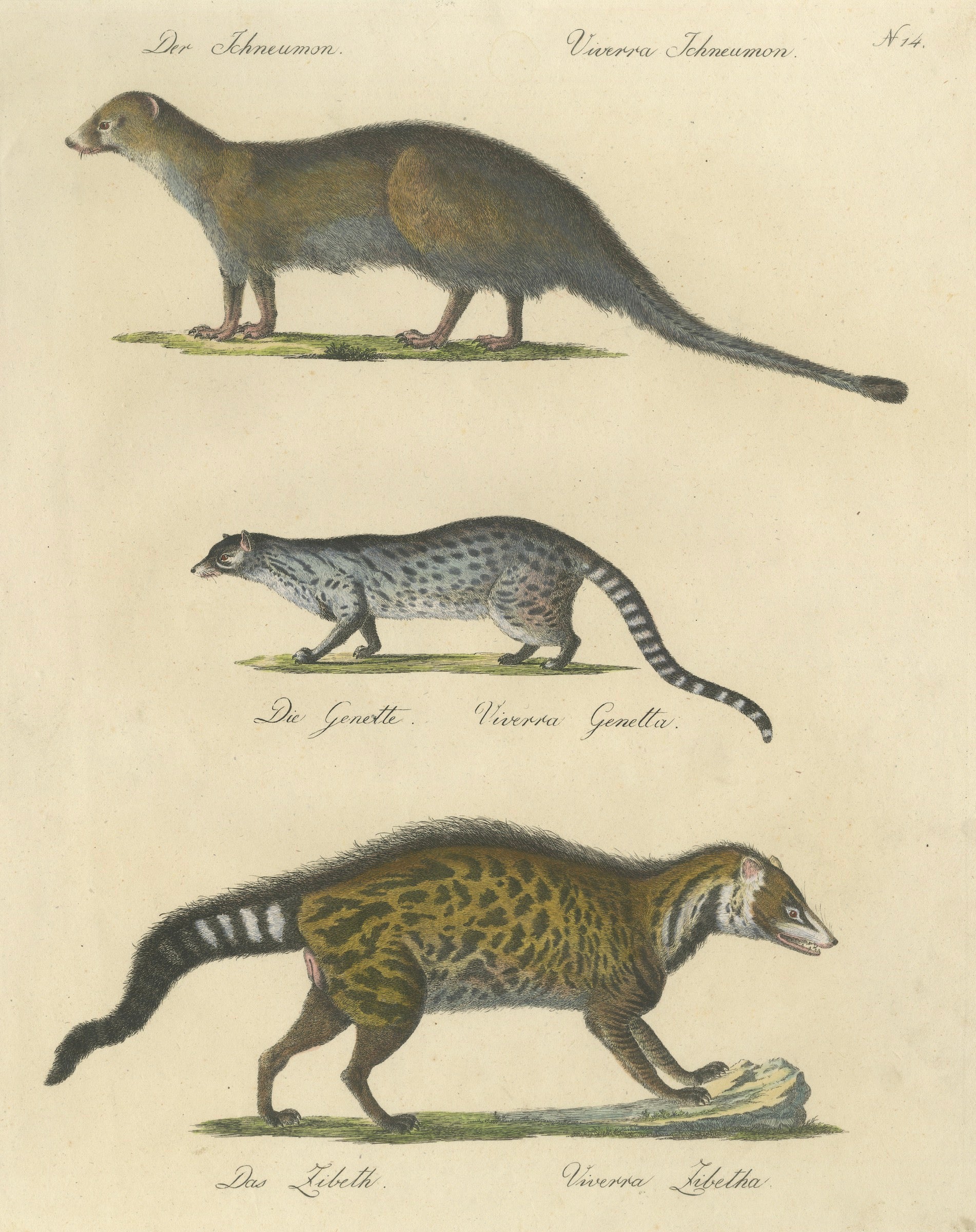
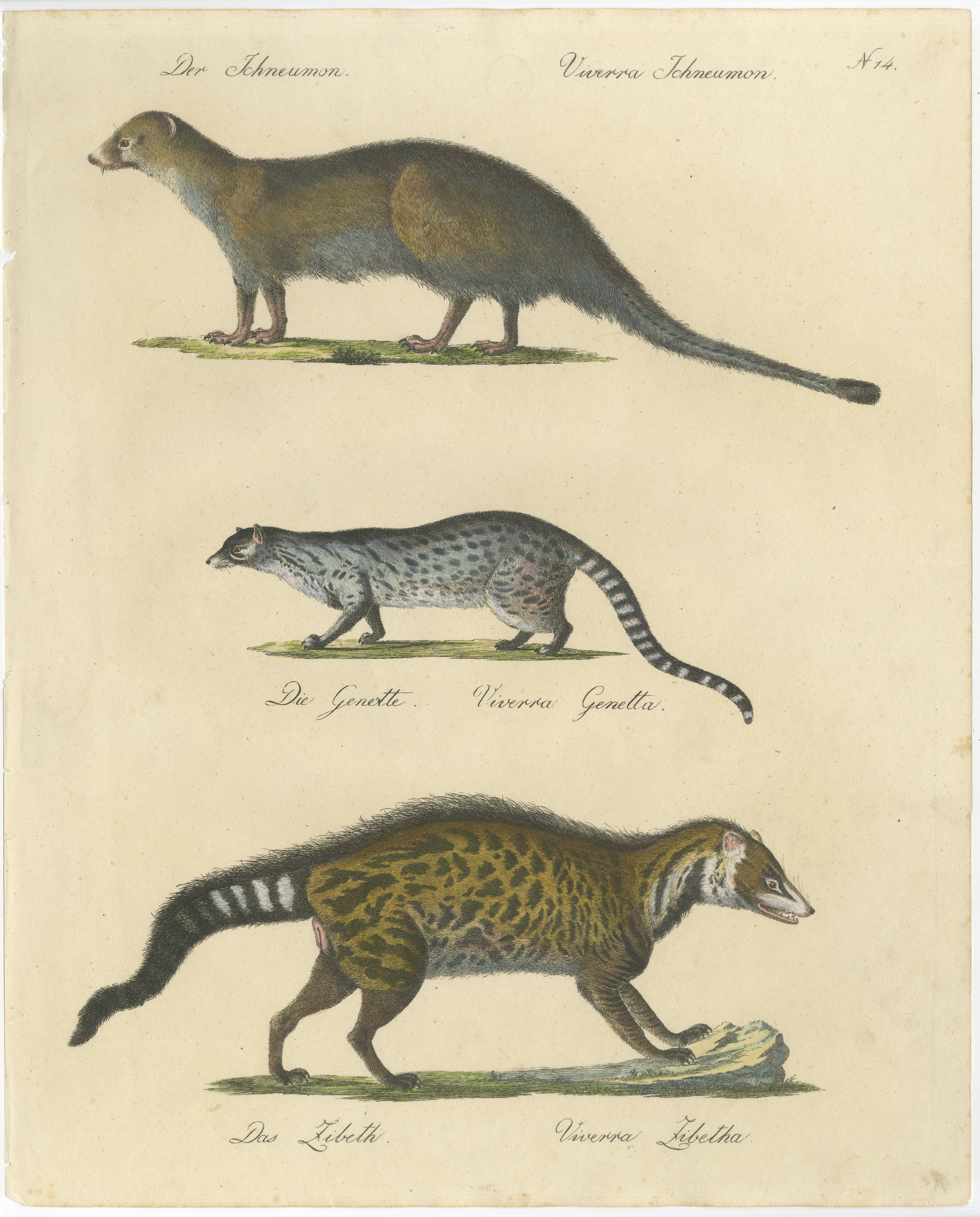
Egyptian Mongoose, Genet & Civet, Brodtmann Natural History Lithograph, 1816
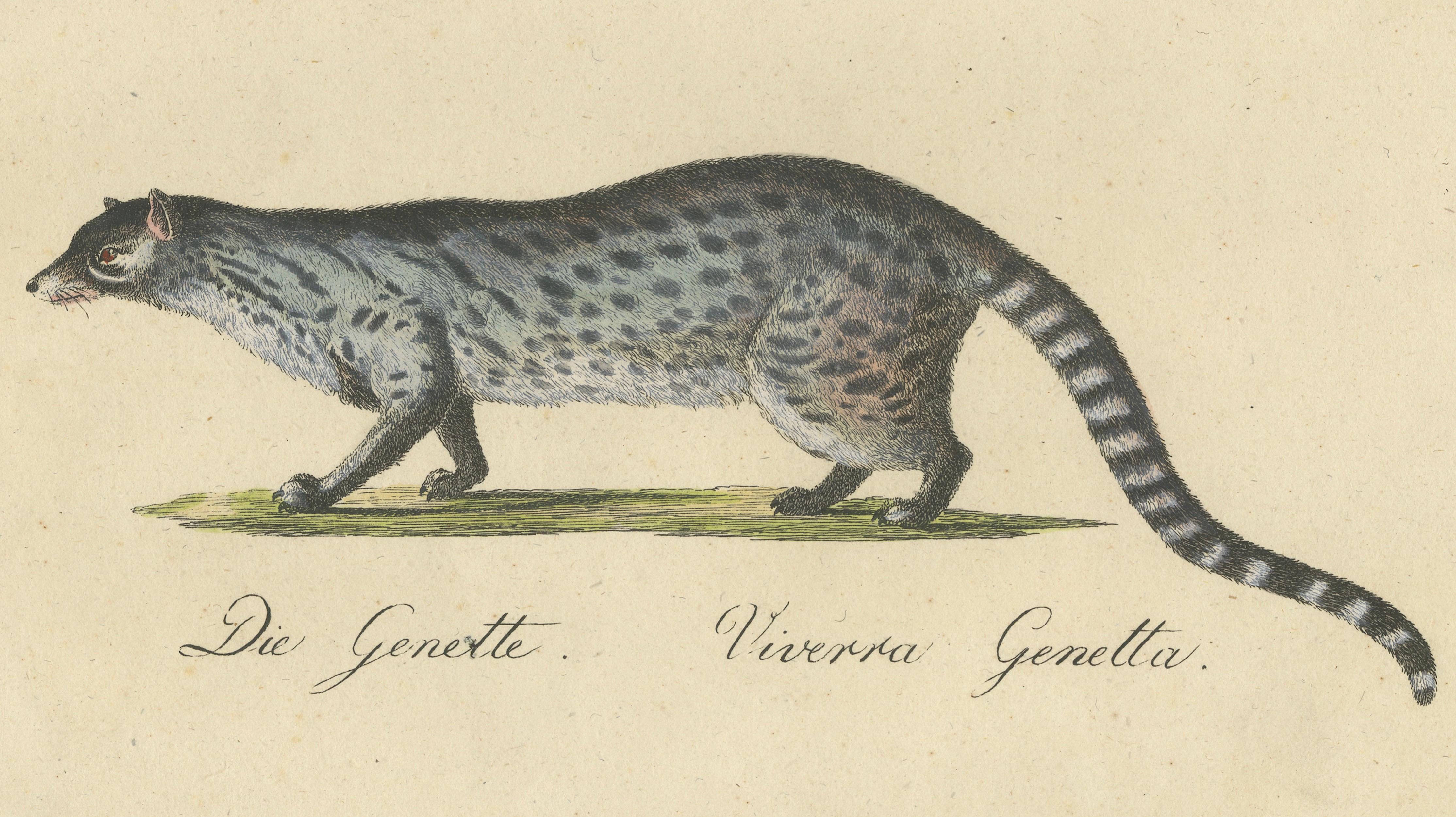
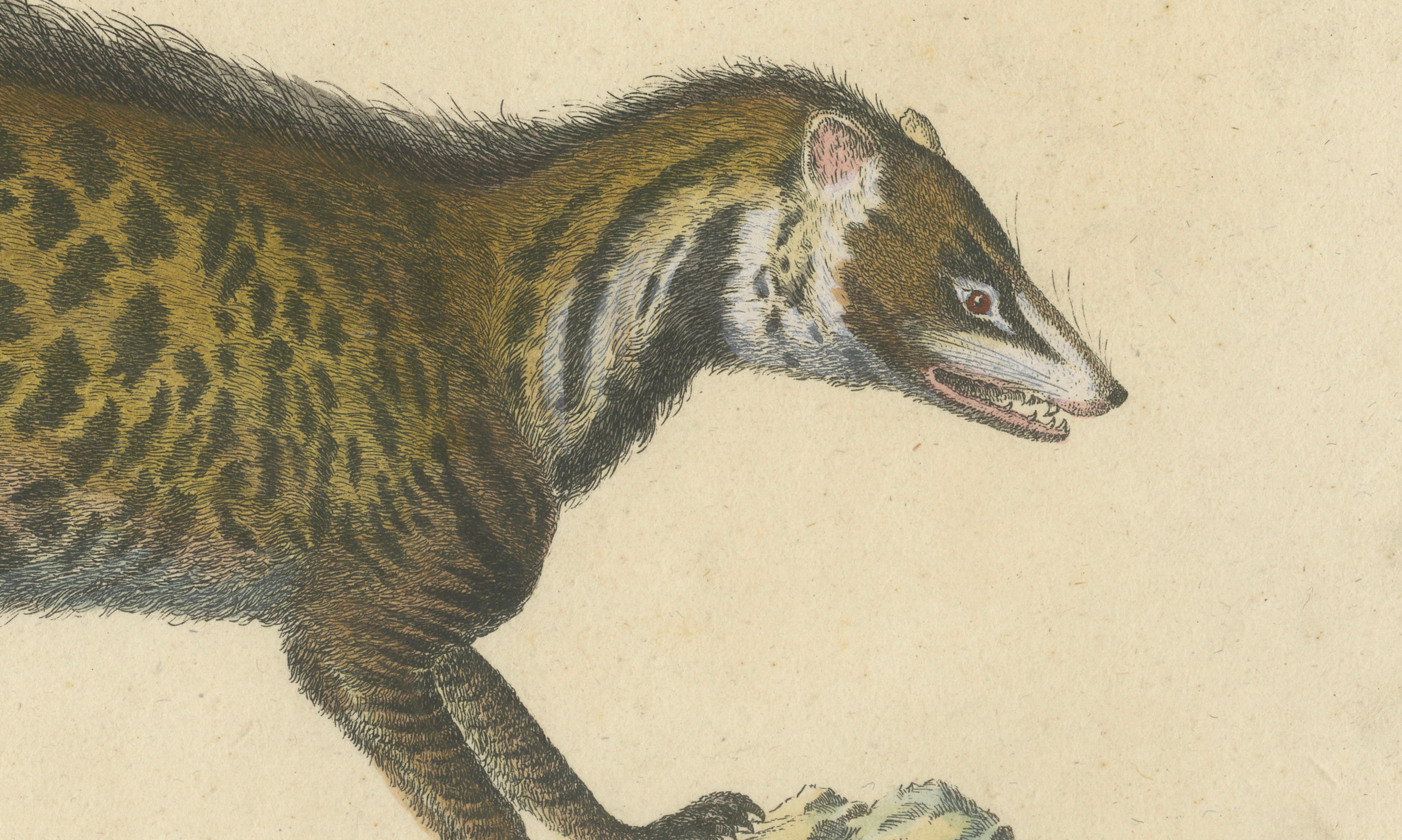
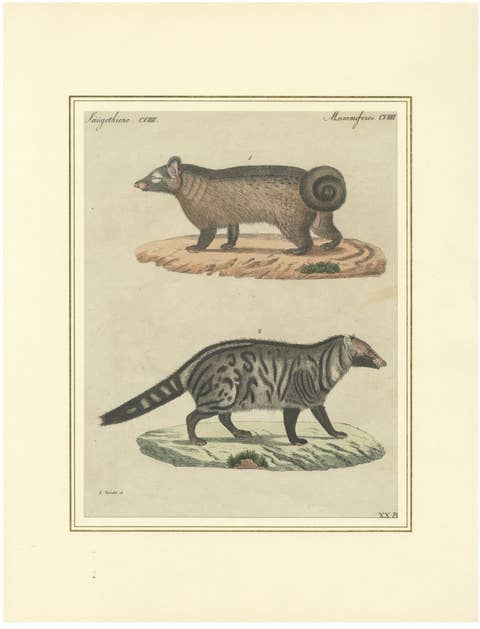
This original hand-colored lithograph presents three fascinating members of the civet and mongoose family, illustrated with the scientific precision and artistic elegance characteristic of early nineteenth-century natural history publications. The sheet depicts the Egyptian Mongoose (*Viverra Ichneumon*), the Common Genet (Viverra Genetta), and the African Civet (Viverra Civetta), each carefully rendered in profile to highlight their distinctive anatomy, markings, and proportions.
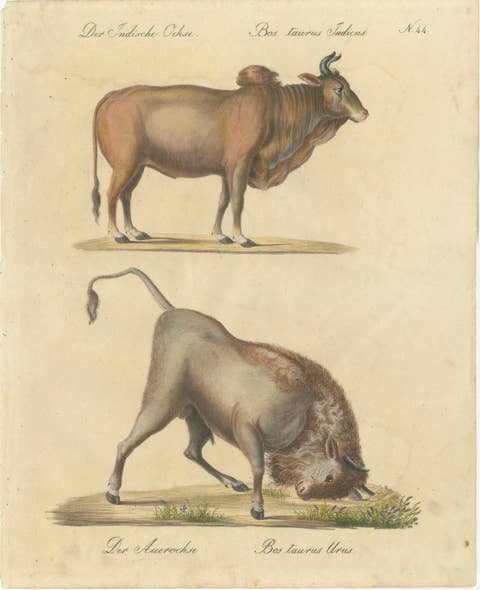
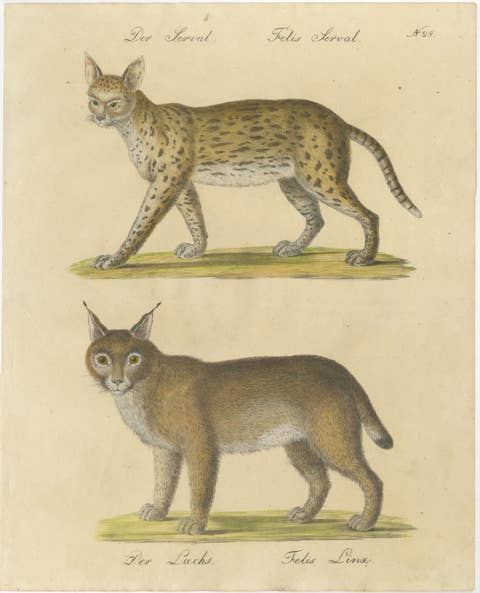
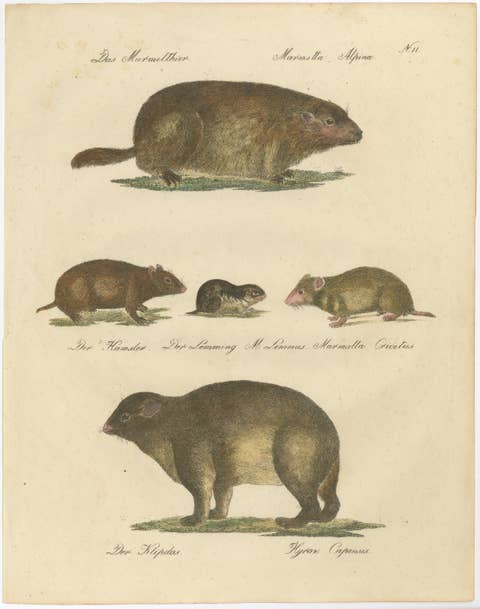
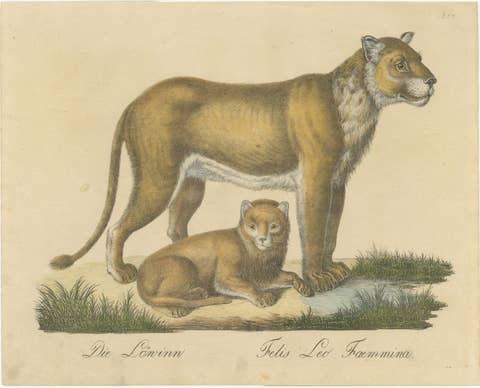
The print was created by Swiss artist and natural history illustrator Karl Joseph Brodtmann (1787–1862) and published in Lindau in 1816 as part of the celebrated Naturhistorische Bilder-Gallerie aus dem Thierreiche. Produced during the pioneering years of lithographic printing, the series sought to document the diversity of the animal kingdom through accurate and visually appealing illustrations.
At the top of the composition appears the Egyptian Mongoose, historically renowned for its ability to hunt snakes and other small prey. Native to Africa and parts of the Middle East, it has been admired since antiquity and was frequently associated with ancient Egypt.
The center image depicts the elegant Common Genet, distinguished by its spotted coat and ringed tail. This agile nocturnal predator is native to Africa and was later introduced to parts of southern Europe, where it became one of the continent's most unusual small carnivores.
Dominating the lower section is the African Civet, perhaps the most visually striking animal on the sheet. Its boldly patterned coat, facial markings, and ringed tail are rendered in exceptional detail. The civet has long been known for producing civet musk, a substance historically prized in perfumery and trade.
Brodtmann's ability to combine scientific observation with refined artistic technique is evident throughout the composition. The restrained backgrounds focus attention on the animals themselves, allowing collectors to appreciate the subtle variations in fur texture, coloration, and form.
Today, original Brodtmann natural history lithographs are highly sought after by collectors of zoology, wildlife art, scientific illustration, African fauna, and early lithography. The combination of three exotic carnivores on a single sheet makes this an especially attractive and decorative example from the series.
Keywords: African Civet, Civet, Egyptian Mongoose, Ichneumon, Common Genet, Genetta Genetta, Viverra Civetta, Viverra Ichneumon, Viverra Genetta, African Wildlife, Carnivores, Zoology, Natural History, Karl Joseph Brodtmann, Hand-Colored Lithograph, Scientific Illustration, Exotic Animals, Wildlife Art, African Mammals, Antique Natural History Print, Early Lithography, Lindau 1816.
Condition report:
Good condition considering age. Light age toning, occasional foxing, and minor handling wear consistent with a print more than 200 years old. Original hand coloring remains attractive and well preserved. Please examine the photographs carefully.
Framing tips:
This print displays beautifully in a dark walnut, black-gilt, or ebonized frame with an ivory museum mat. The spotted and striped coats of the animals pair particularly well with warm natural wood tones and safari-inspired interiors. An excellent choice for libraries, studies, wildlife collections, and curiosity cabinets.
Technique: Hand-colored lithograph
Maker: Karl Joseph Brodtmann, Switzerland, published in Lindau, 1816.