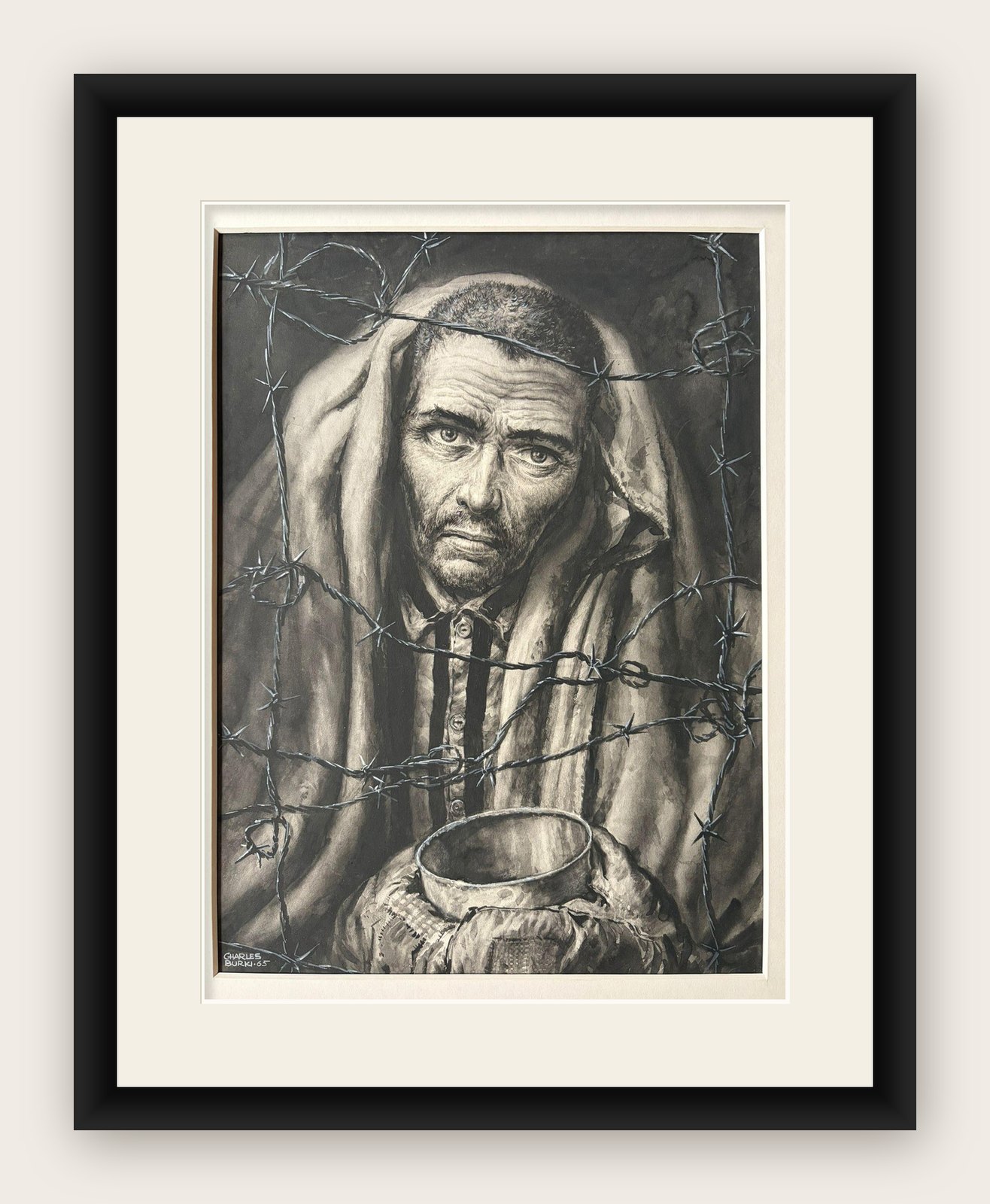
The Prisoner – Original Illustration by Charles Burki, 1965
€ 1 850
Original antique · The actual sheet photographed · Certificate of authenticity on request · Sold unframed · Worldwide shipping from € 15 (rates)
Date
1965
Mapmaker / artist
Charles Burki, Dutch, 1965
Technique
Gouache and ink on paper
Sheet size
43.5 × 32 cm (17.1 × 12.6 in)
Condition
Excellent
Reference
BG-Bea27
What the condition grades mean
Excellent
Bright and clean, with no faults worth mentioning.
Very good
Only light signs of age, such as faint toning.
Good
Normal signs of age for a sheet of this period: toning, some foxing, small marks or neat old repairs.
Fair
Clear faults such as staining, tears or repairs, priced to match.
Every fault we see is written in the condition note, and the whole sheet is shown uncropped in the photos.
Condition
For its age, with strong contrasts and rich tonality. Very light toning to the sheet edges, with original studio mounting still present.
About this sheet
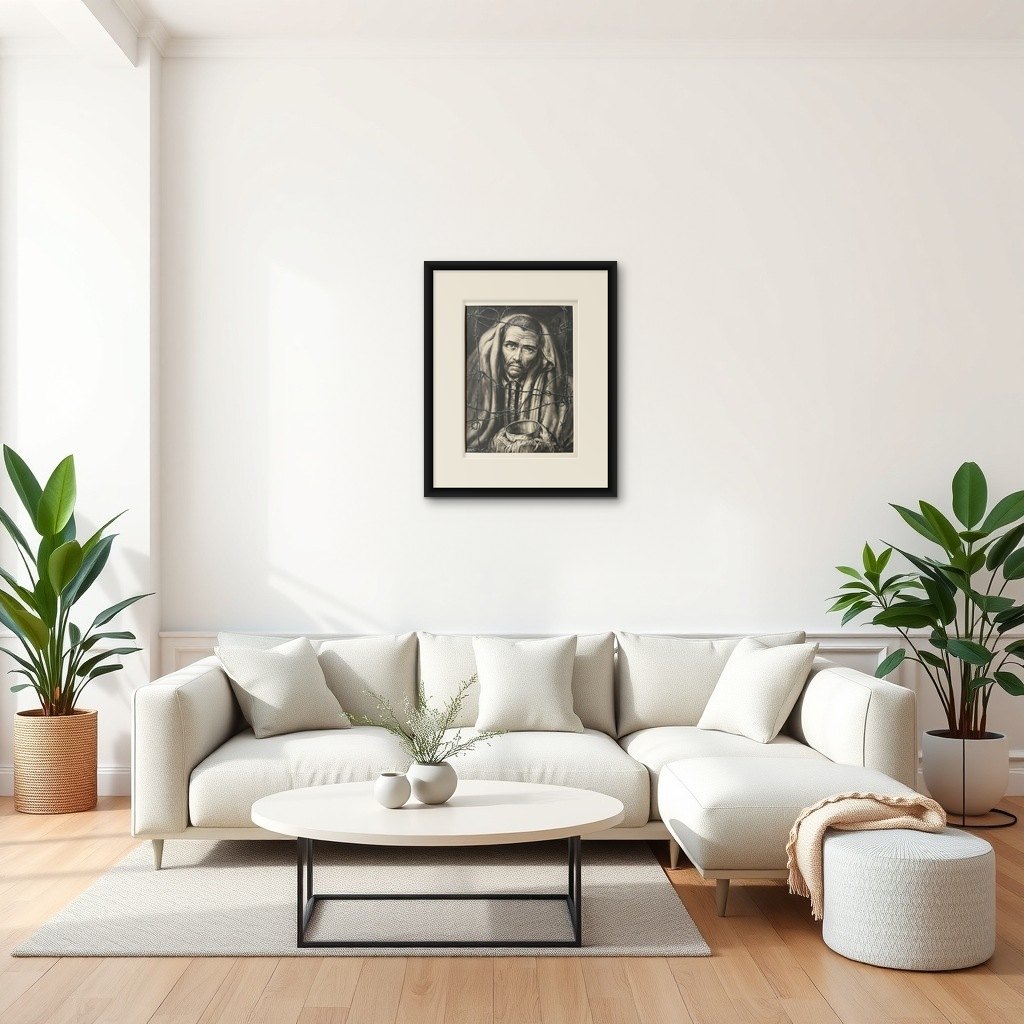
The Prisoner – Original Illustration by Charles Burki, 1965
This haunting original gouache illustration by Charles Burki (1909–1994), signed and dated 1965, stands among the artist’s most powerful and emotionally charged works. It portrays a gaunt prisoner behind barbed wire, his striped uniform and hollow eyes evoking both human suffering and the resilience of spirit. Draped in a thin blanket, the man holds an empty metal bowl — a simple but devastating symbol of deprivation and survival.
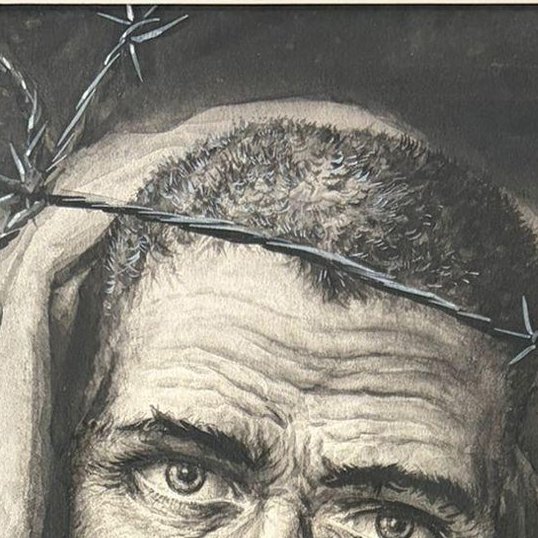
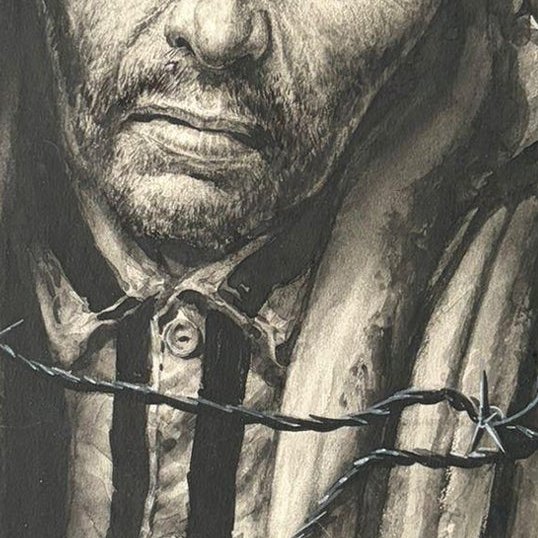
The stark monochrome palette, heightened by Burki’s characteristic use of light and shadow, creates a deeply moving psychological portrait. Every brushstroke conveys empathy rather than sentimentality: the weary eyes, cracked lips, and torn fabric speak of endurance, not despair. Burki’s precision and restraint make the image all the more striking — a universal reminder of the cost of war and the fragility of humanity.
This work gains particular resonance when viewed in the context of Burki’s own life. Born in Bandung, Dutch East Indies, Burki was a gifted architect and artist whose career was interrupted by World War II. He was imprisoned by the Japanese, surviving both the bombing of a prisoner transport ship and the atomic bombing of Nagasaki. These traumatic experiences shaped his worldview and artistic expression, infusing his postwar illustrations with empathy, realism, and moral weight.
Created two decades after the war, The Prisoner reflects Burki’s continuing confrontation with memory — a visual elegy to the millions who endured captivity and loss. It was likely executed for a postwar publication or exhibition addressing the human consequences of war and survival.
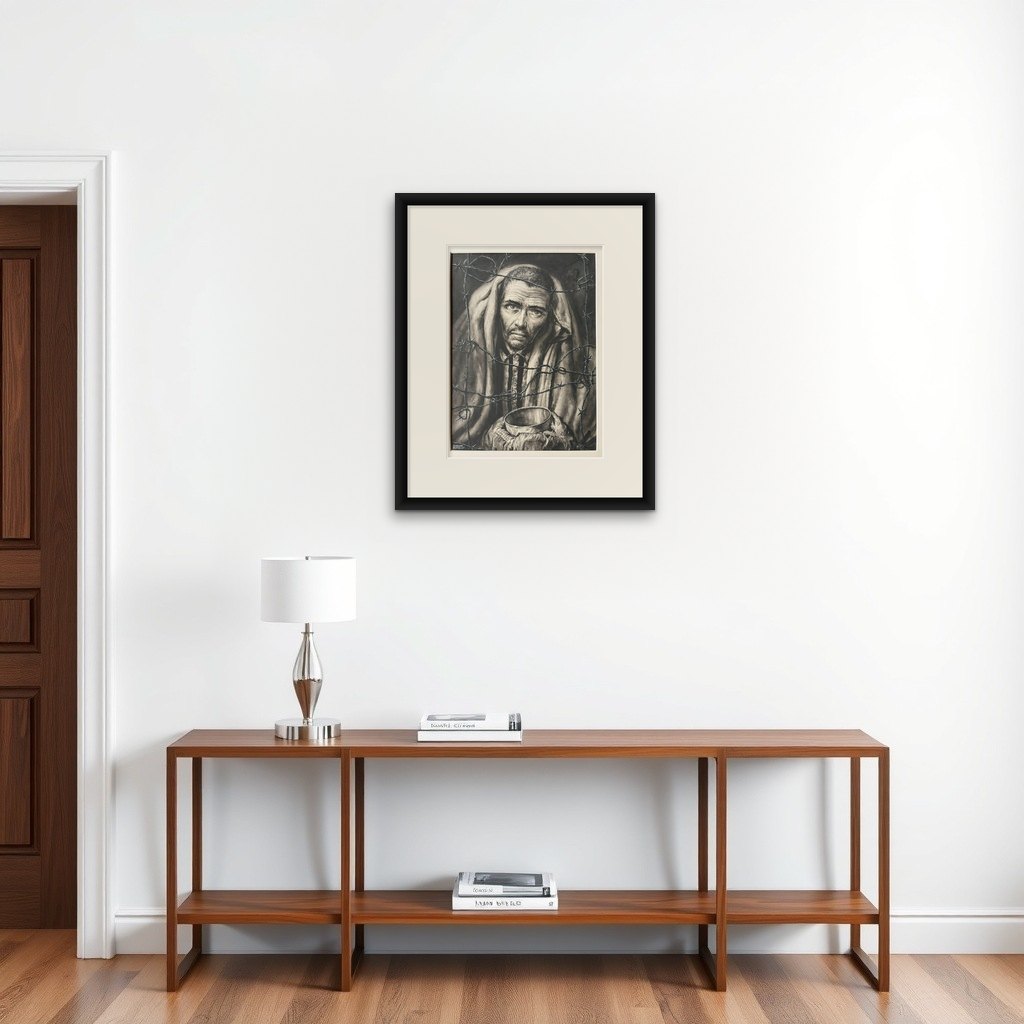
Framing tips: Best presented in a simple black or dark oak frame with a neutral off-white mat. The monochrome tones and emotional intensity benefit from understated presentation and non-reflective glass.