About this sheet
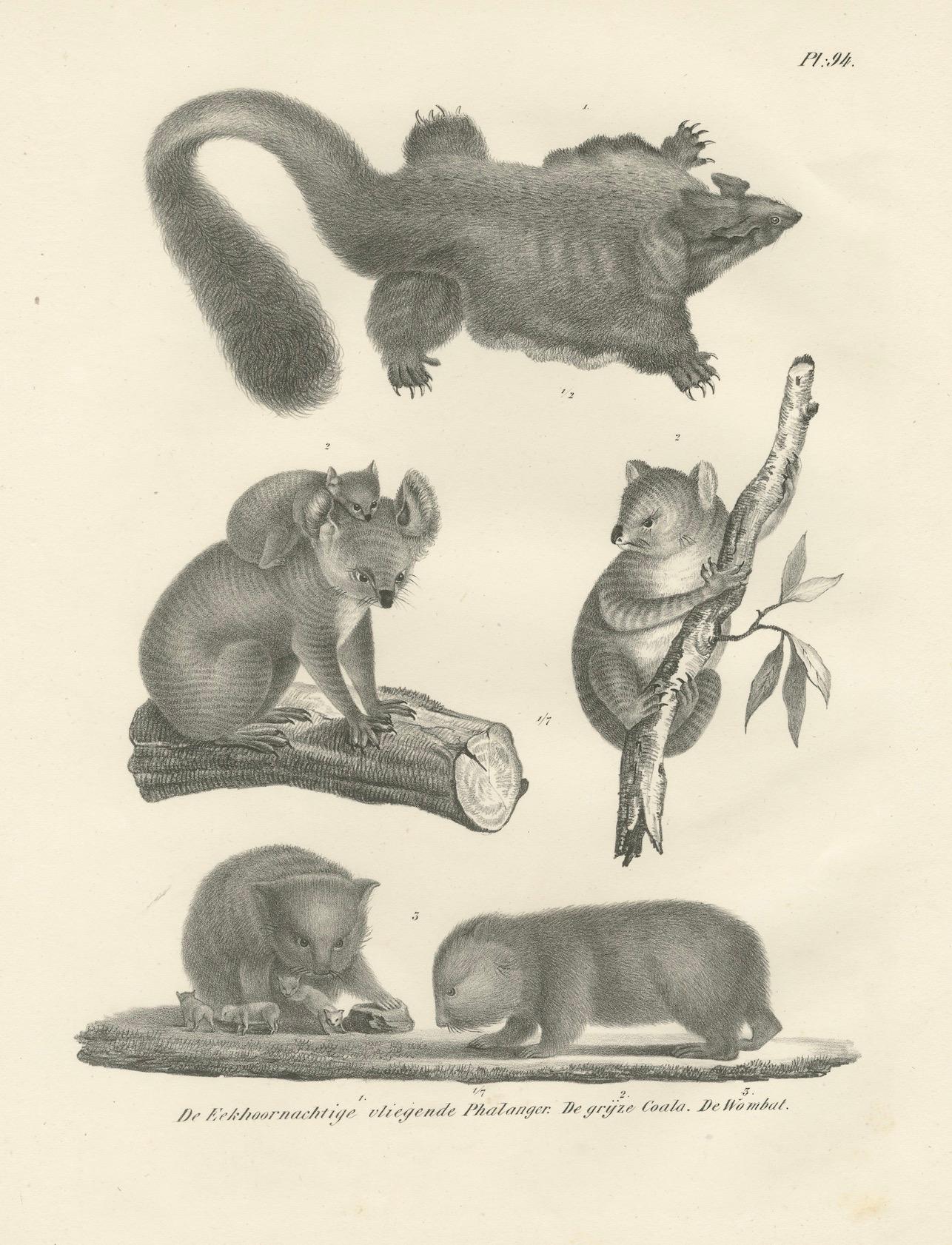
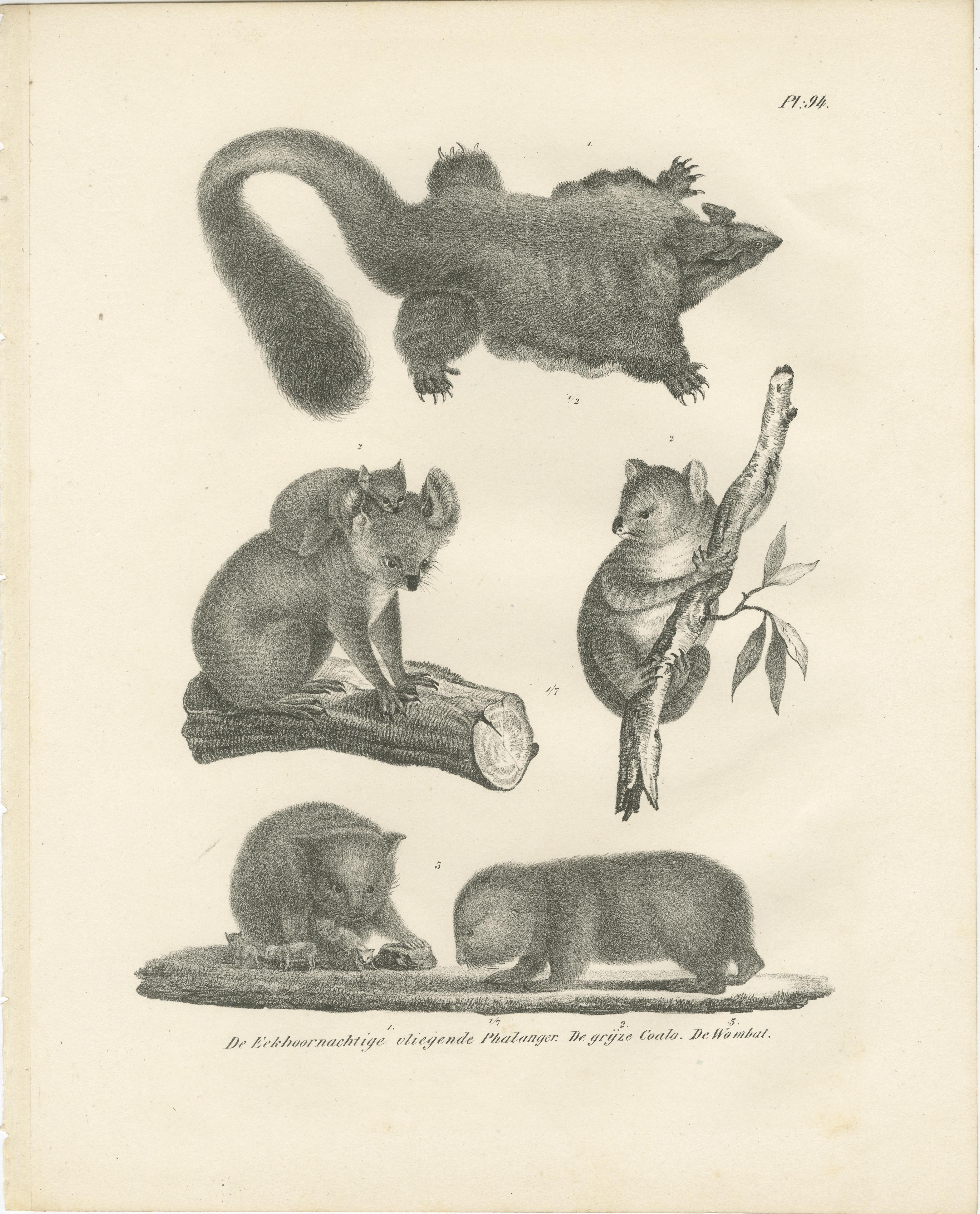
Exquisite 19th-Century Lithograph of Exotic Marsupials: Koala, Wombat & Phalanger
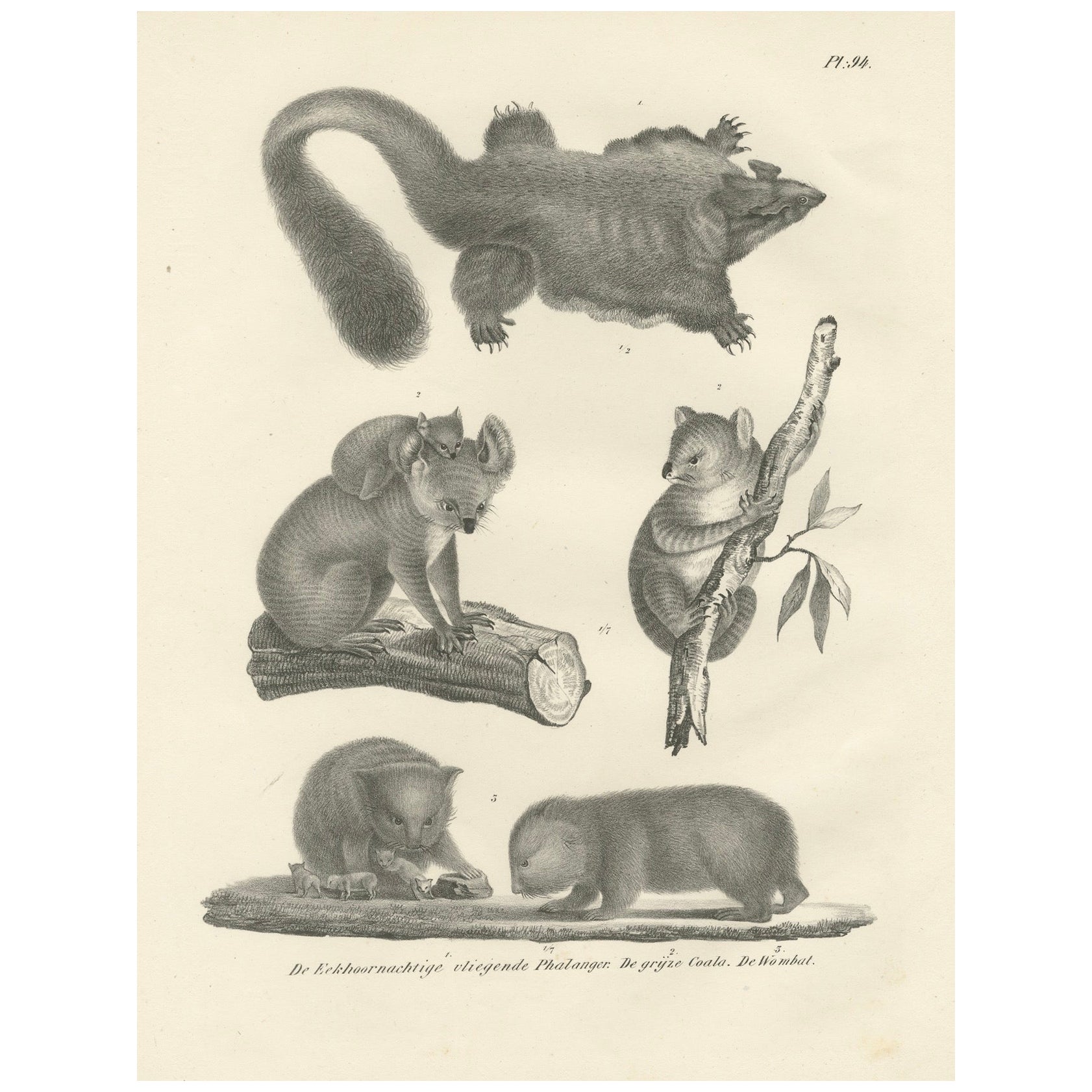
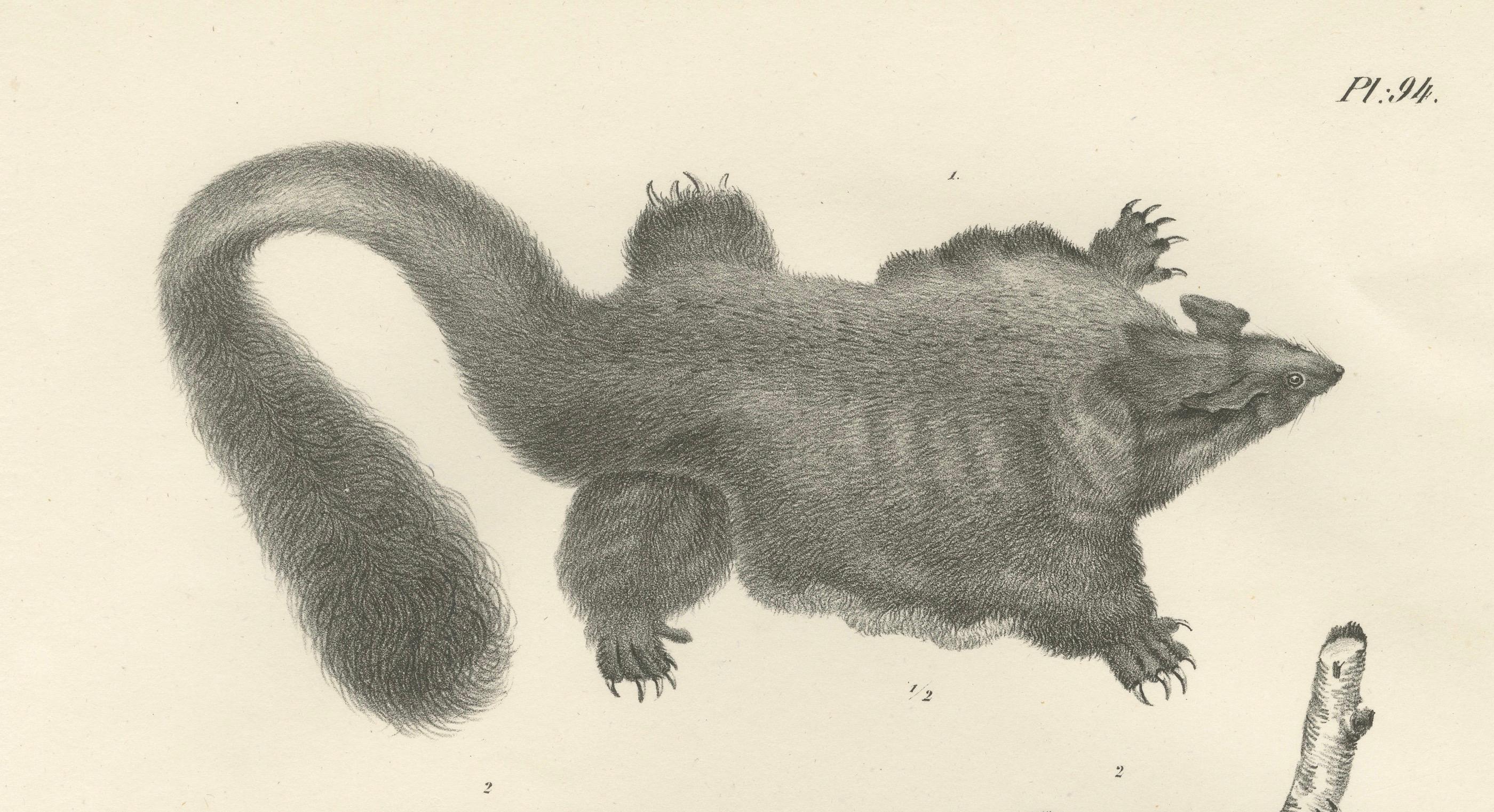
This finely detailed 19th-century lithograph showcases a collection of marsupial species, including a flying phalanger, a grey koala, and a wombat. The engraving is part of an extensive zoological series that aimed to document and illustrate rare and exotic mammals from around the world. The print is attributed to the work of celebrated natural history illustrators of the period, executed with precision and artistry to capture the distinctive characteristics of these fascinating creatures. The lithograph was produced using high-quality techniques that reflect the scientific enthusiasm of the 19th century, a period when European explorers and naturalists were bringing back discoveries from distant lands, including Australia.
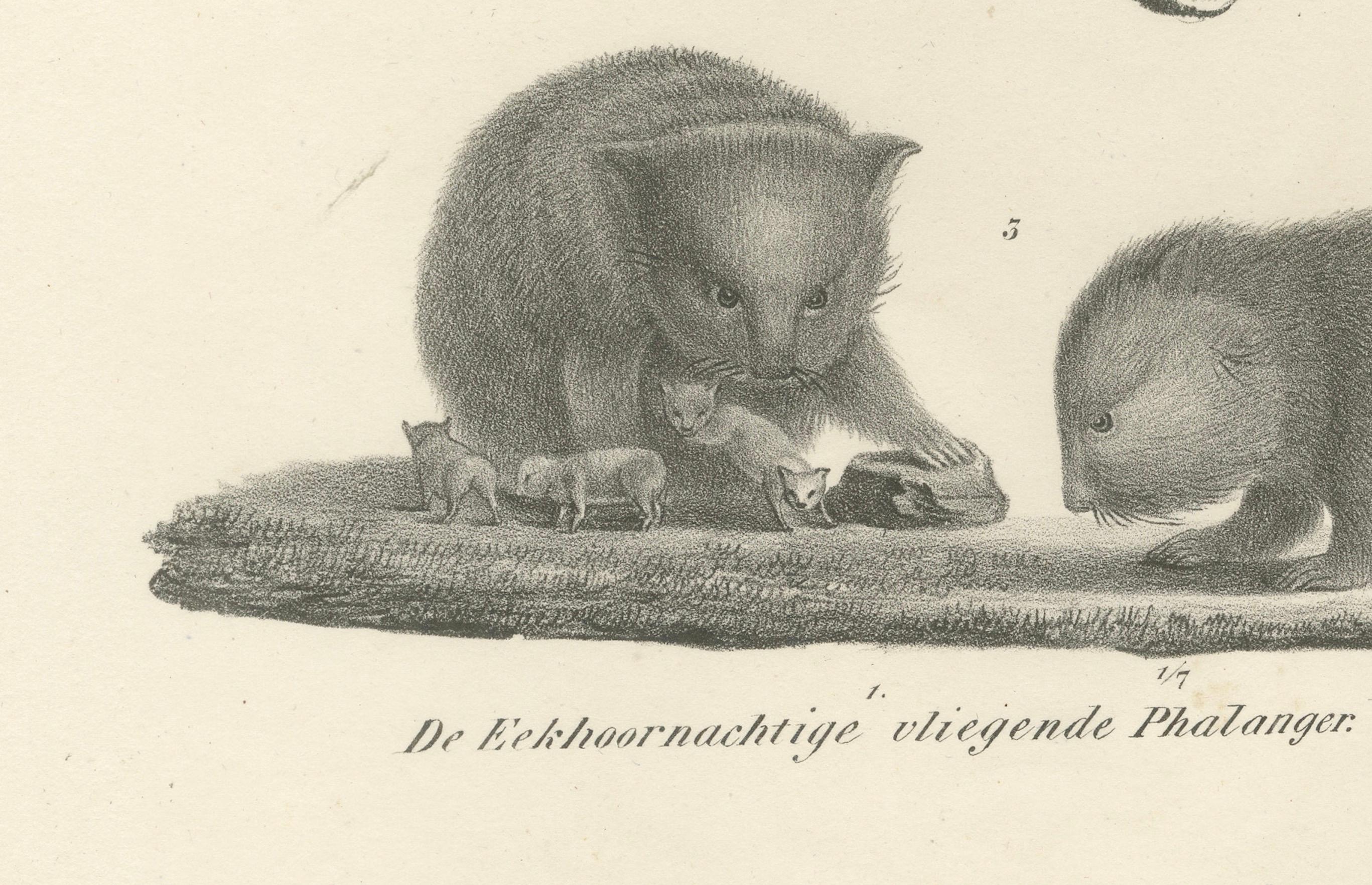
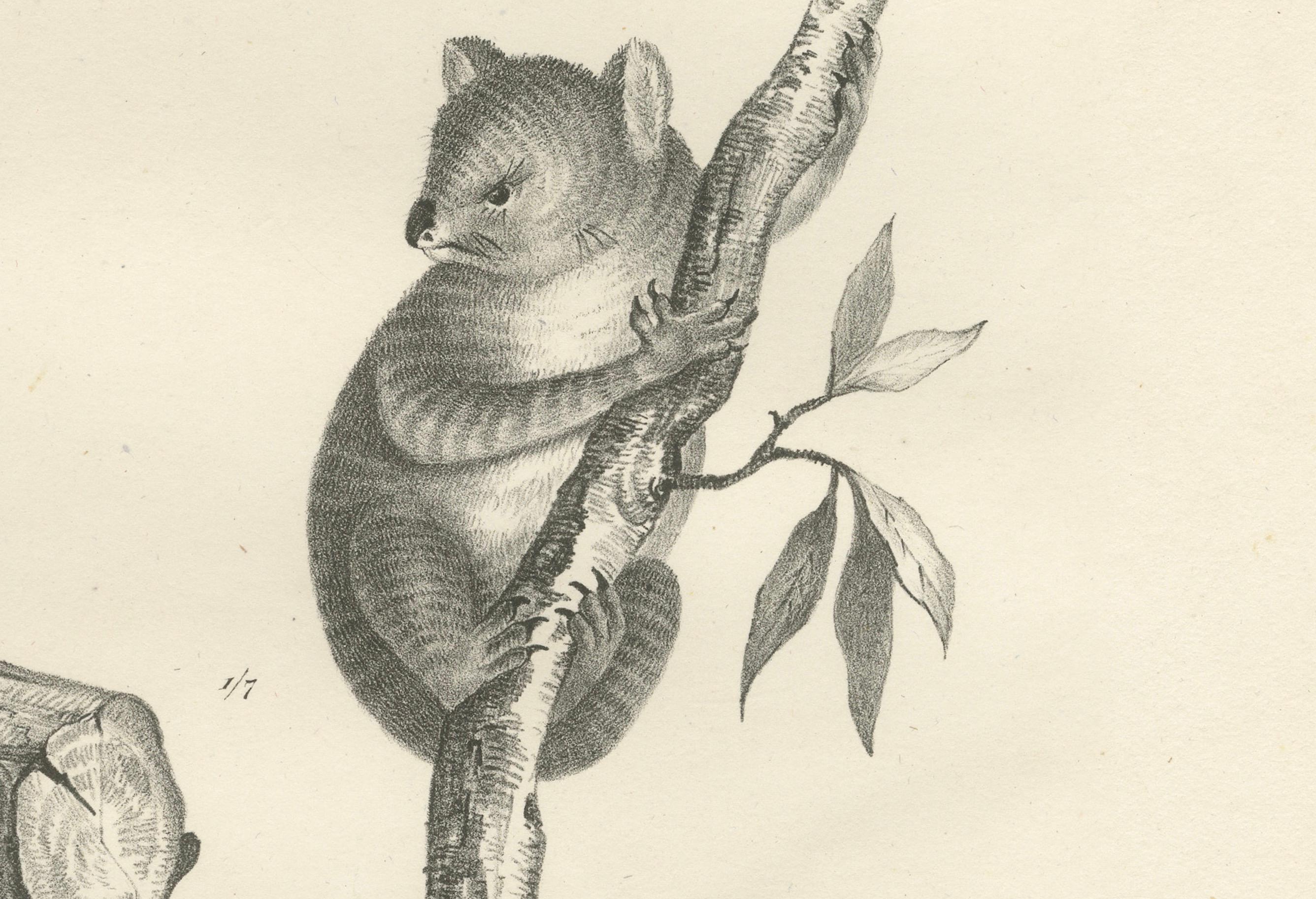
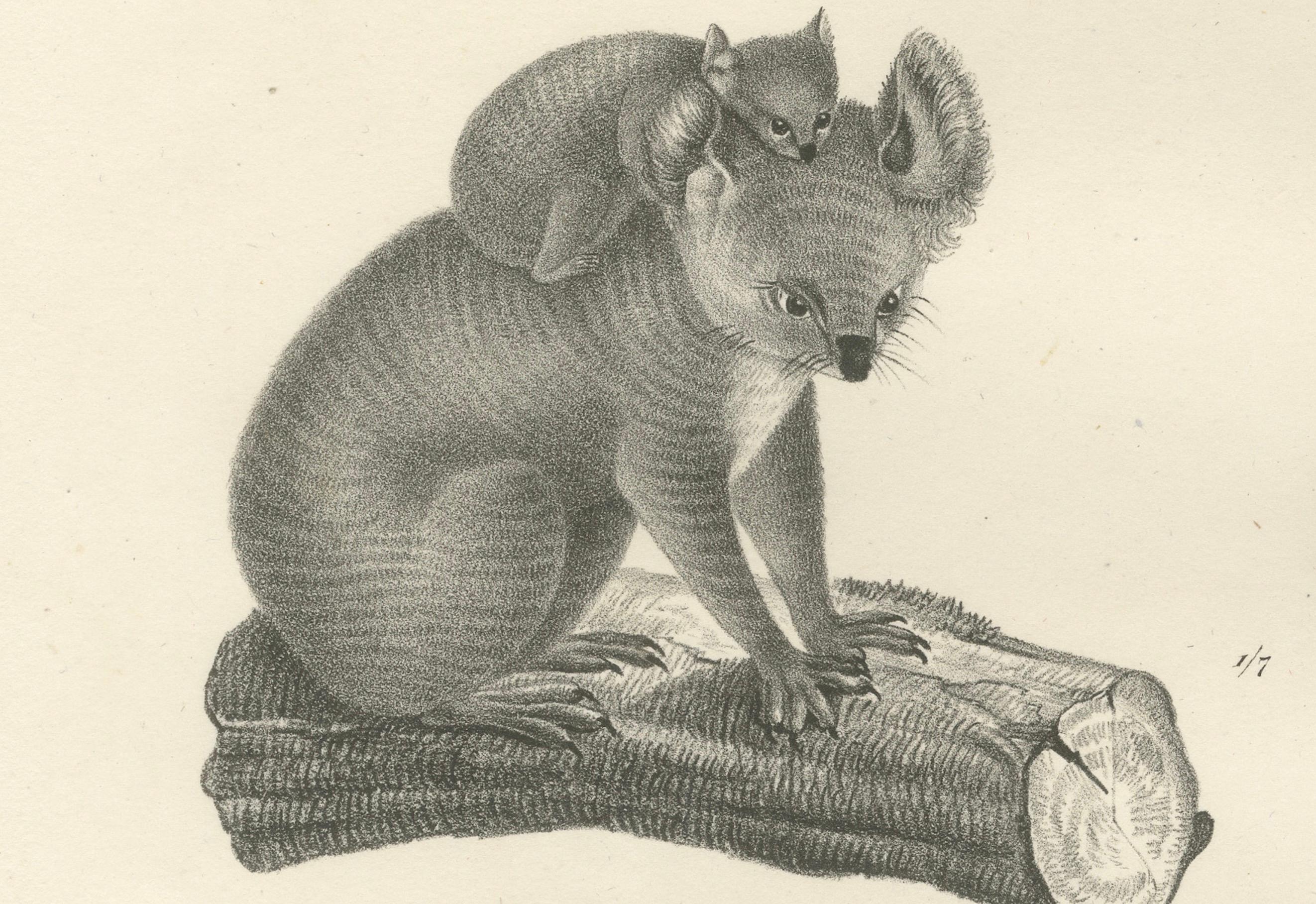
The artwork highlights the squirrel-like flying phalanger, gliding with its extended patagium, the grey koala, shown clinging to a eucalyptus branch, and the wombat, depicted on the ground with its characteristic sturdy build. Each animal is meticulously rendered, emphasizing their fur textures and natural postures, making it not only a valuable scientific document but also a beautiful decorative piece.
This print is an exceptional example of natural history illustration, making it ideal for collectors of zoological engravings, museum-quality art enthusiasts, or those with an interest in Australian wildlife.
Keywords: antique animal print, natural history lithograph, marsupial engraving, 19th-century zoological art, scientific illustration, flying phalanger, koala, wombat, vintage wildlife print, Australian fauna.
Condition Summary:
This antique print is in very good condition, considering its age. The paper retains its original texture and has minimal discoloration, with only slight foxing along the margins. The fine lines and tonal variations of the lithographic shading are crisp and well-preserved. There are no significant tears or creases, and the image remains sharp with a pleasing contrast against the off-white background. The plate number and species labels are clearly visible, adding to its historical and educational value.
Framing Tips:
To best preserve and display this print, use UV-protective glass to prevent fading. A neutral, archival-quality mat in cream or off-white will complement the aged paper, while a simple black or dark wood frame will enhance the depth of the illustration without overwhelming the delicate details. For a more period-authentic look, consider a vintage gold-gilded frame. Framing behind museum-grade, acid-free backing will ensure longevity. If displayed in a well-lit area, avoid direct sunlight and excessive humidity to maintain the print’s integrity.