About this sheet
Pénitencier: Handcolored Print of a Confessor with Acolyte, Plate 18, 1862
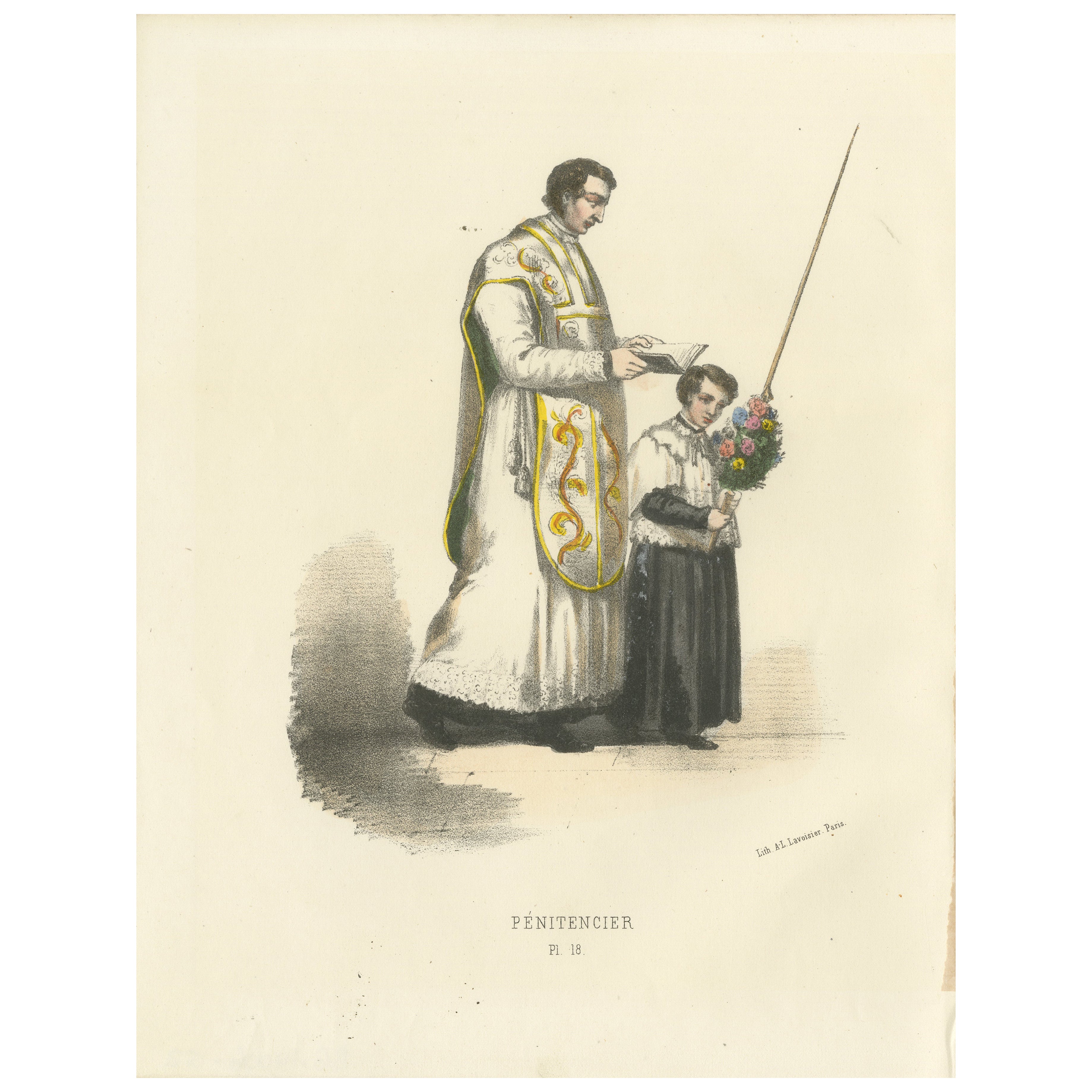
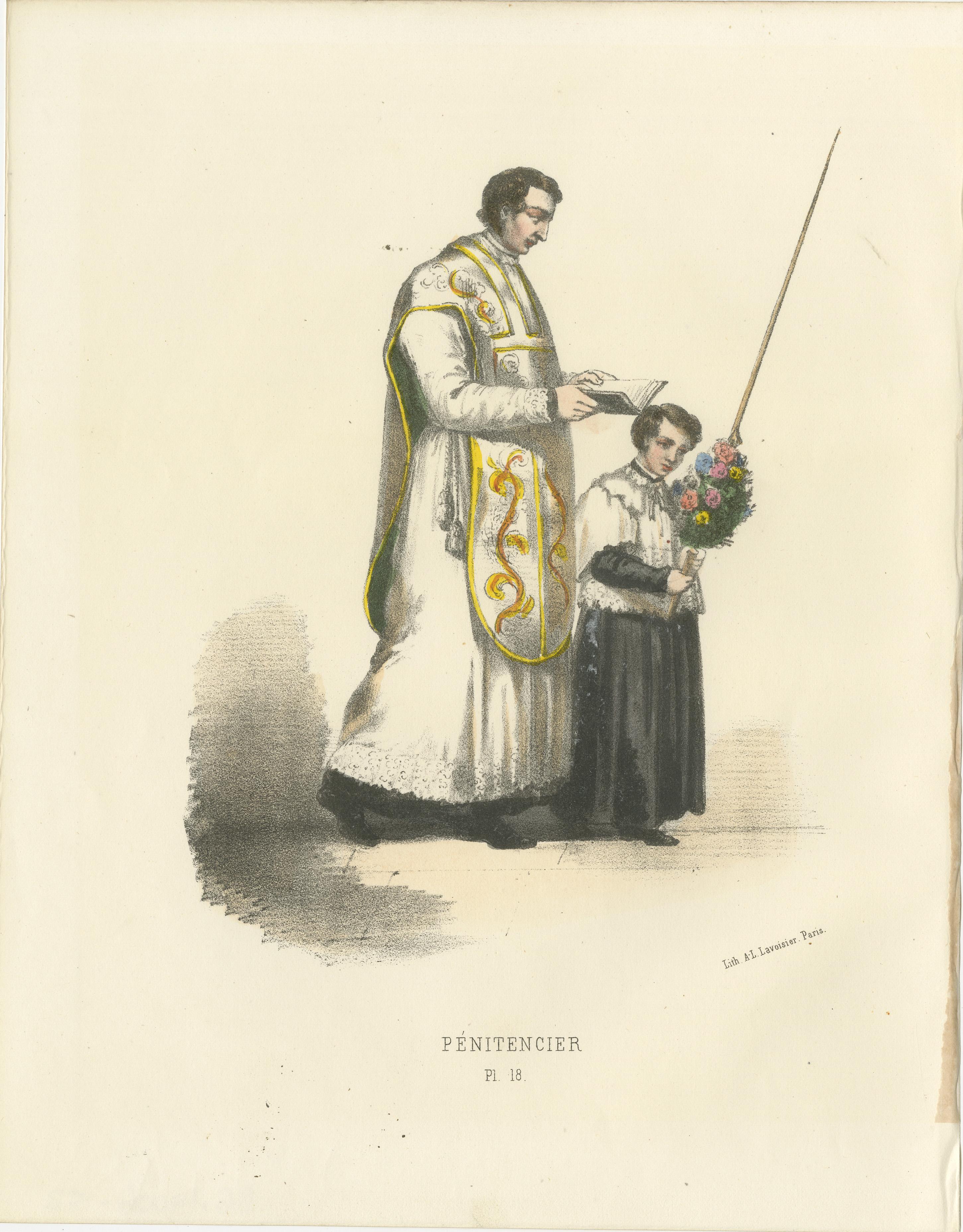
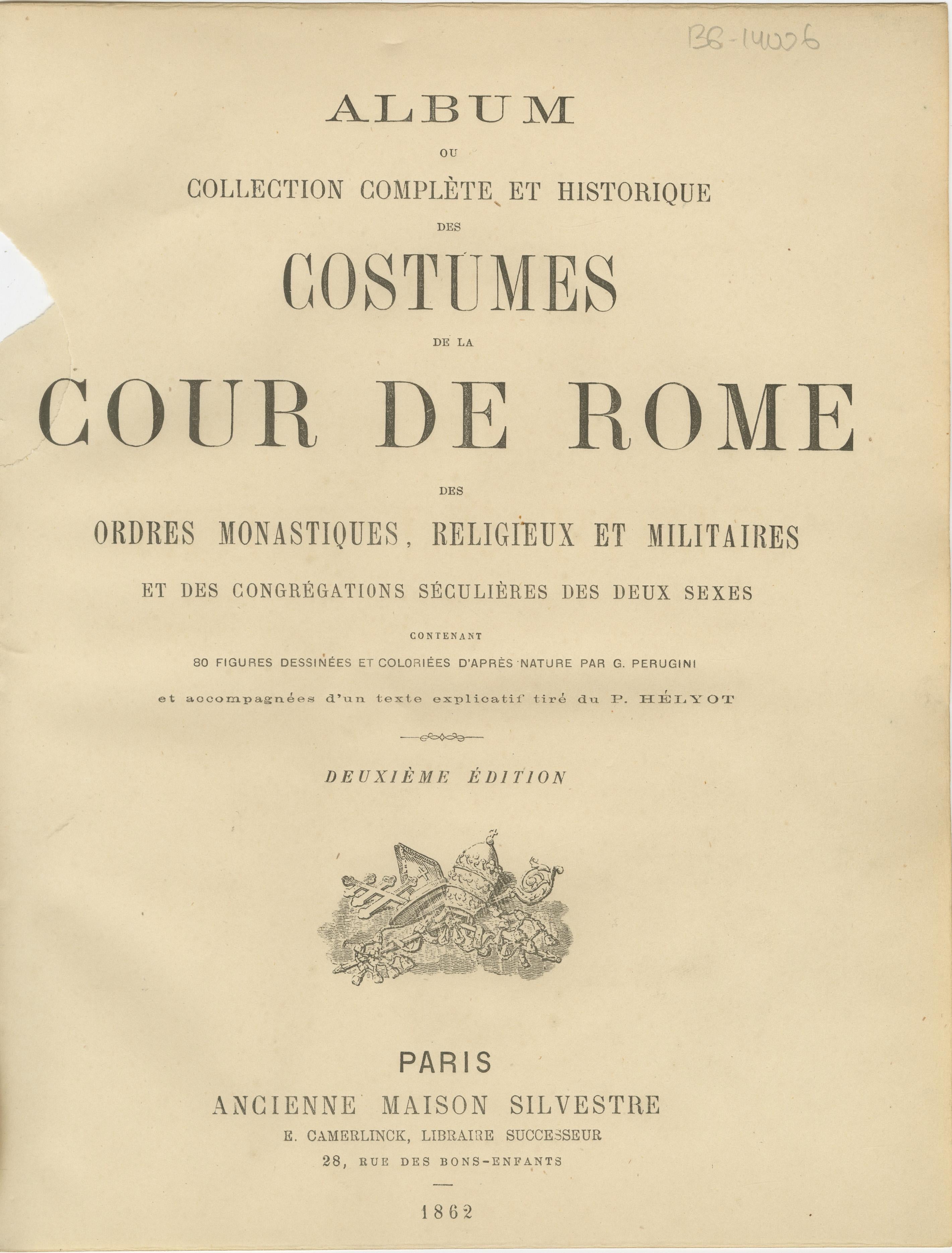
This beautifully handcolored lithograph, Pénitencier (Confessor), is Plate 18 from the 1862 second edition of Album ou Collection Complète, et Historique des Costumes de la Cour de Rome, created by G. Perugini. The artwork portrays a confessor, a clergy member responsible for administering the Sacrament of Penance, accompanied by a young acolyte holding a floral bouquet and a ceremonial staff.
The priest is depicted wearing a richly embroidered white vestment adorned with golden scrollwork, emphasizing his sacred role within the Catholic Church. The young acolyte, dressed in a white lace surplice over a black robe, adds a sense of humility and innocence to the scene. This depiction reflects the solemnity of the confessor's duties, which include guiding penitents toward forgiveness and reconciliation with God.
The role of the confessor is deeply embedded in Catholic tradition and continues to this day, highlighting the Church's focus on repentance and spiritual healing. The ceremonial attire worn by the priest and the acolyte underscores the importance of this sacrament, which has been a cornerstone of Catholic faith for centuries.
The lithograph is a masterful representation of 19th-century ecclesiastical art, with vibrant colors and meticulous detail. It offers a fascinating glimpse into the history and traditions of the Catholic Church, making it a prized addition to any collection of religious art, antique prints, or historical costumes.
Introduction Text Translation:
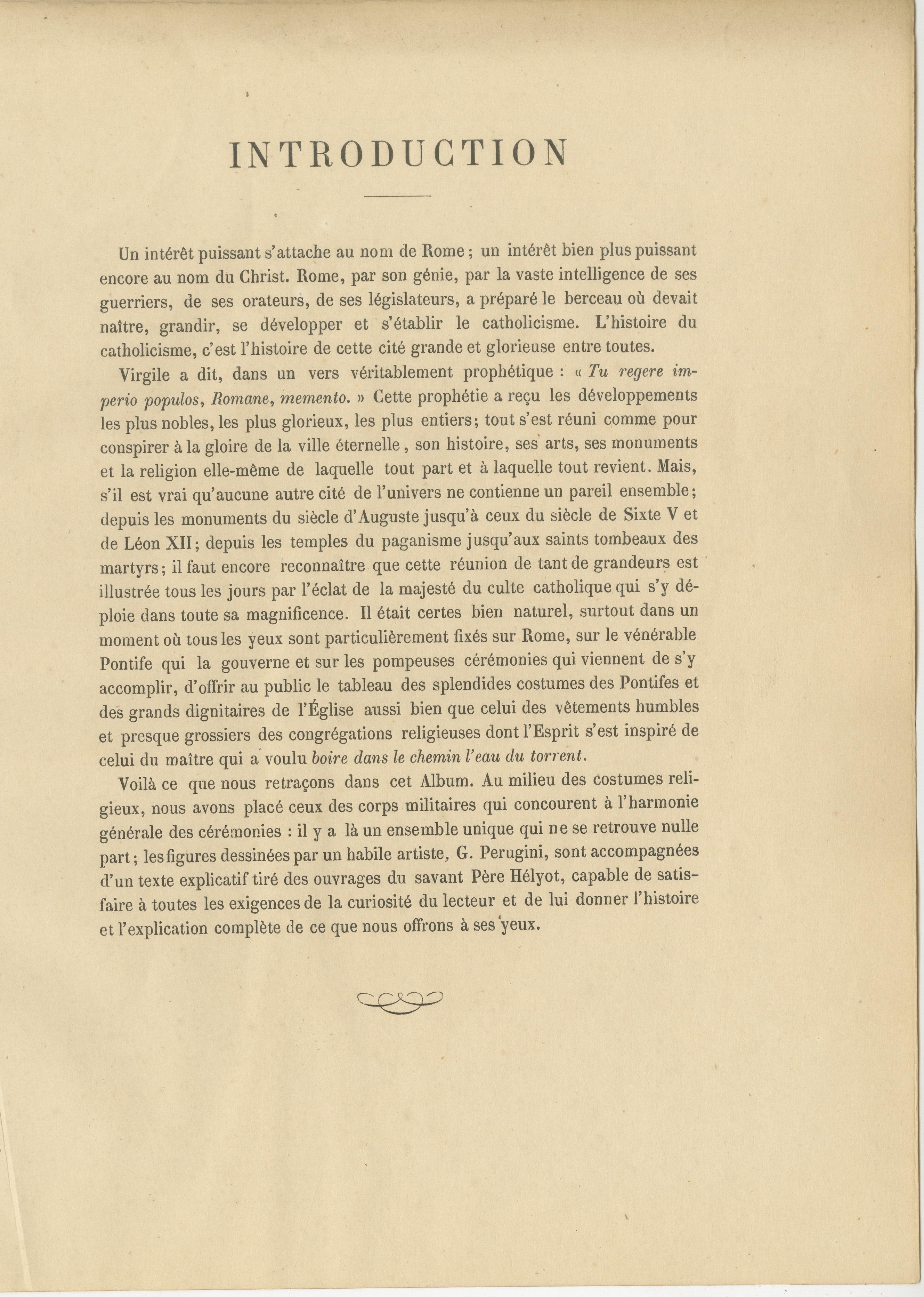
A powerful interest is attached to the name of Rome, an interest even greater in the name of Christ. Rome, through its genius, the vast intelligence of its warriors, orators, and legislators, prepared the cradle where Catholicism was born, grew, developed, and established itself. The history of Catholicism is the history of this great and glorious city among all others.
Virgil said in a truly prophetic verse: “To rule peoples, Roman, remember.” This prophecy received the most glorious, complete developments: all conspired for the glory of the eternal city—its history, its arts, monuments, and the religion from which everything starts and to which everything returns. Yet, no other city in the universe contains such a collection: from the monuments of Augustus' time to those of Sixtus V and Leo XII; from pagan temples to saints’ tombs and martyrs, all illustrate daily the majesty of Catholicism in its splendor.
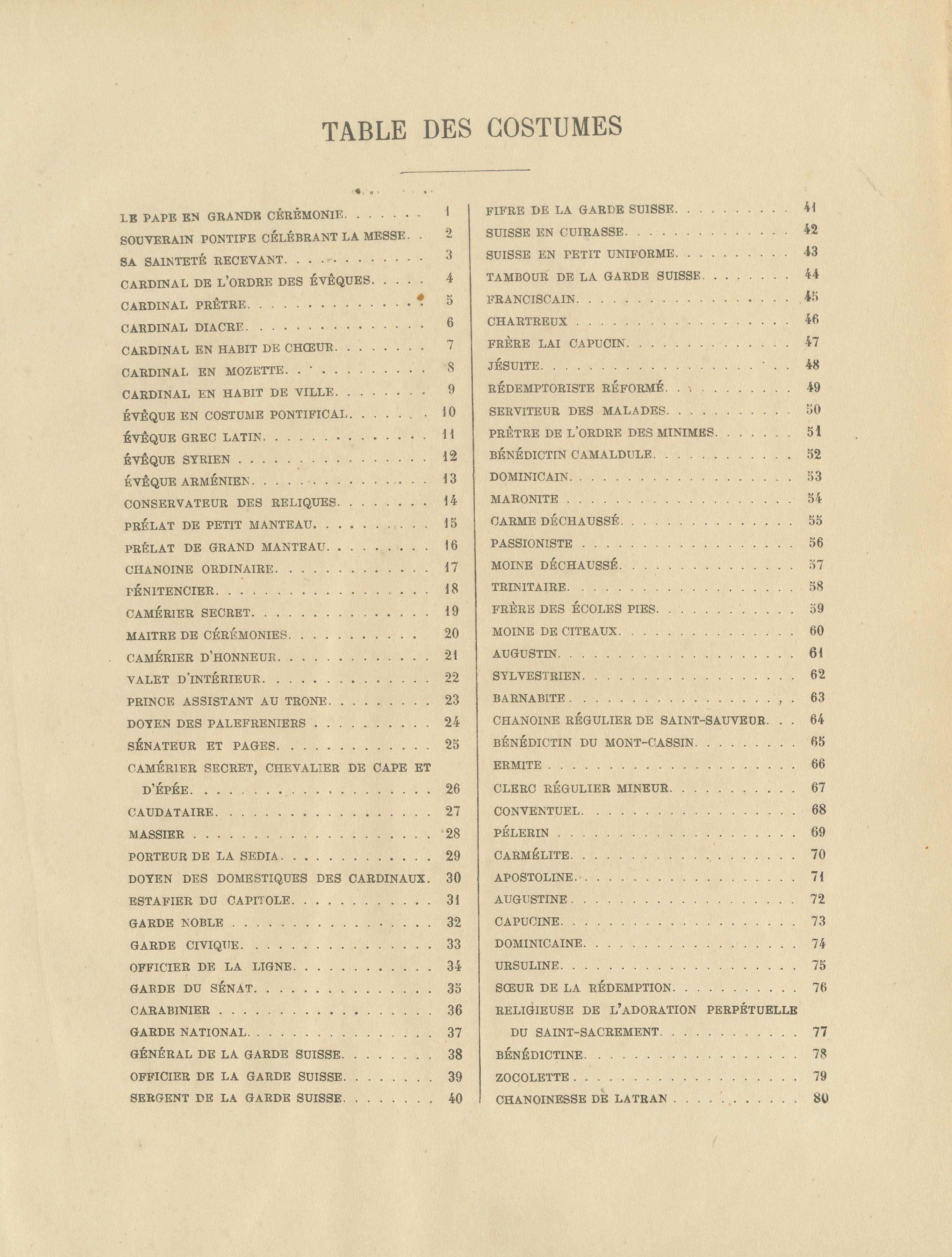
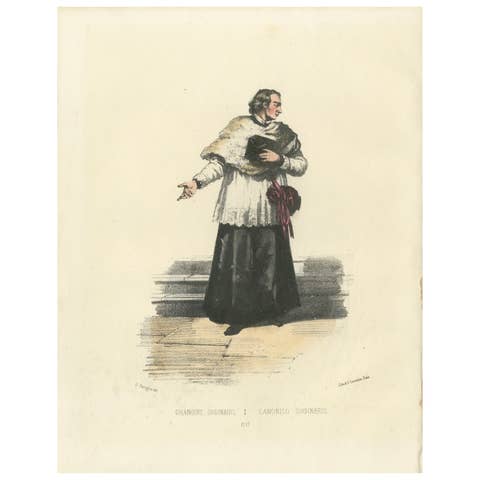
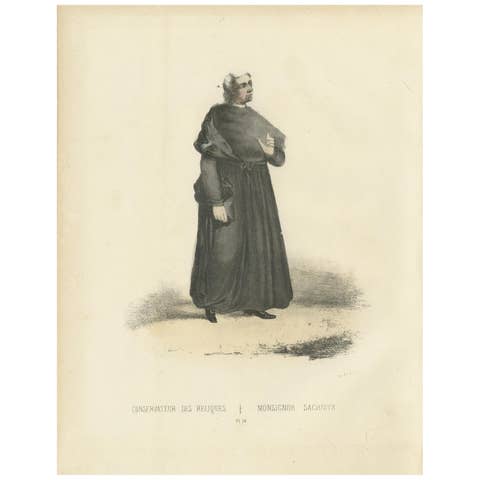
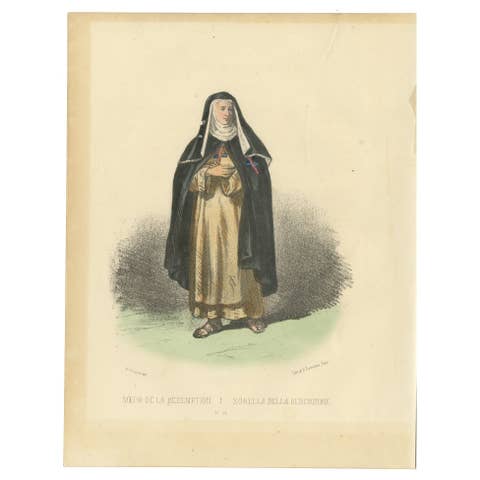
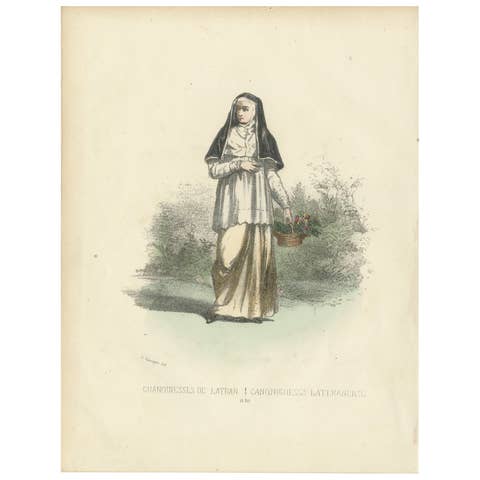
It was natural to offer the public the tableau of the splendid costumes of the Pontiffs and great dignitaries, as well as those of the humble garments of religious congregations. This is what we retrace in this Album. Amid the religious costumes, we have also included military corps contributing to the harmony of ceremonies. These figures, drawn by the skilled artist G. Perugini, are accompanied by explanatory texts derived from the works of the learned Father Hélyot.
Table of Costumes in English (selected for relevance):
- The Pope in Grand Ceremony
- Cardinal in Choir Attire
- Bishop in Pontifical Costume
- Franciscan
- Capuchin Friar
- Jesuit
- Reformed Redemptorist
- Sister of Redemption (Plate 76)
- Religious Sister of Perpetual Adoration (Plate 77)
- Benedictine (Plate 78)
- Zocolette (Plate 79)
- Lateran Canoness (Plate 80)
- Senator and Pages (Plate 25)
- Secret Chamberlain (Plate 26)
- Confessor (Pénitencier, Plate 18)
- Capitoline Estafier (Plate 31)
- Noble Guard (Plate 32)
- Garde Civique Officer (Plate 33)
- Officer of the Line (Plate 34)
- Senate Guard (Plate 35)
- Swiss Guard Sergeant (Plate 40)
- Swiss Guard Piper (Plate 41)
- Swiss Guard in Cuirass (Plate 42)
- Dean of Palfreniers (Plate 94)
This lithograph is an exquisite portrayal of the solemn and sacred role of a confessor, capturing the essence of Catholic tradition with elegance and historical significance. It is a remarkable collectible for enthusiasts of religious art and history.