About this sheet
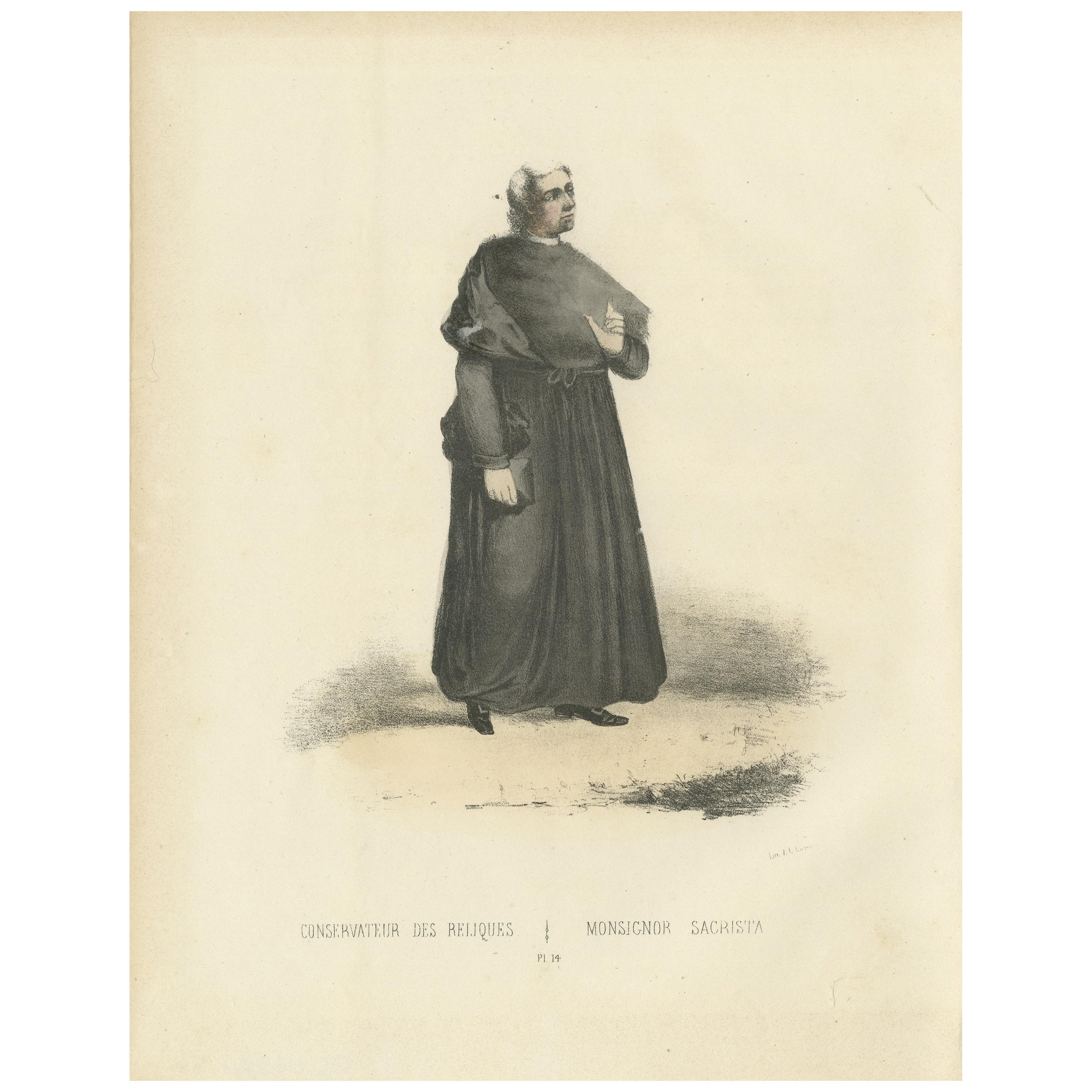
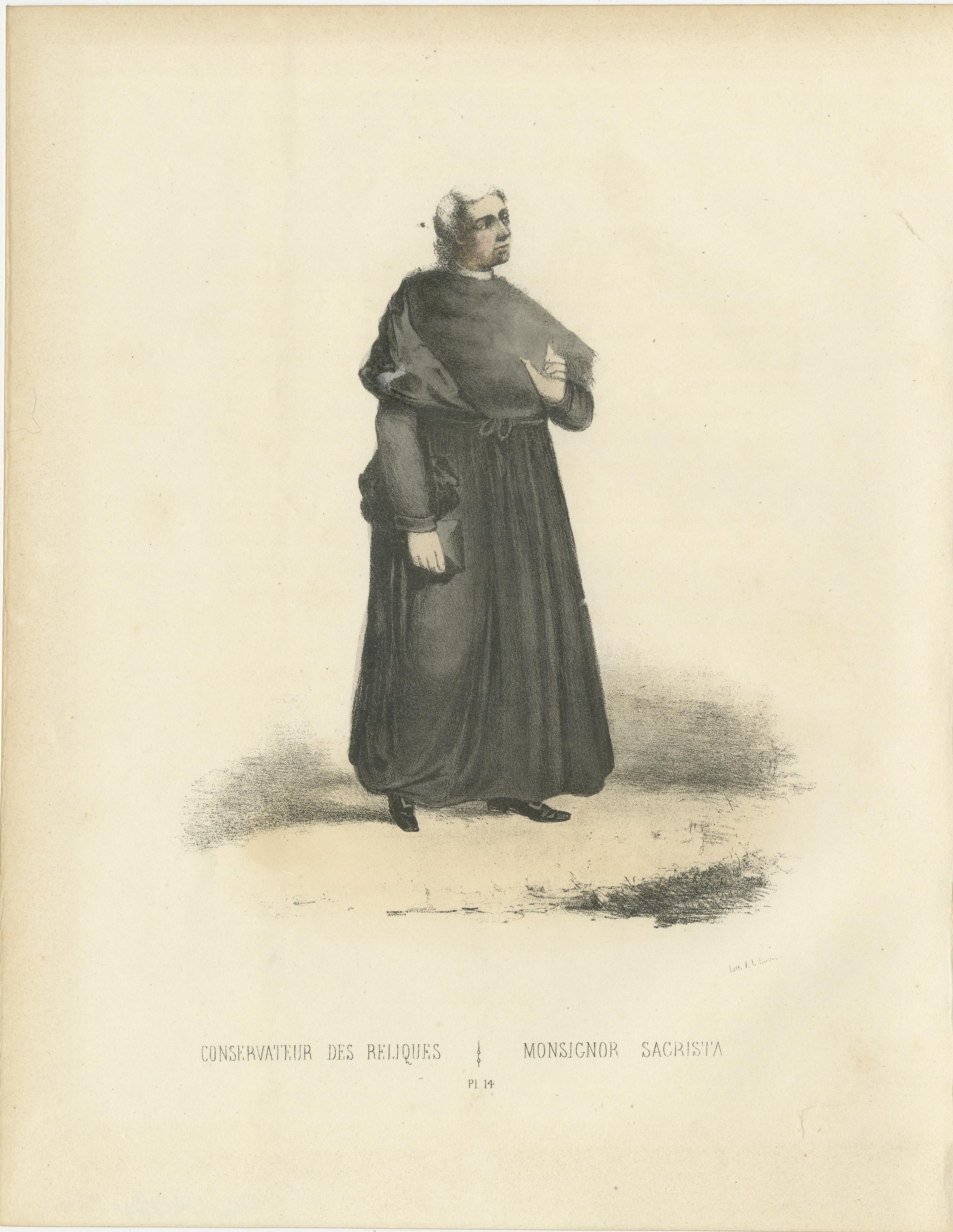
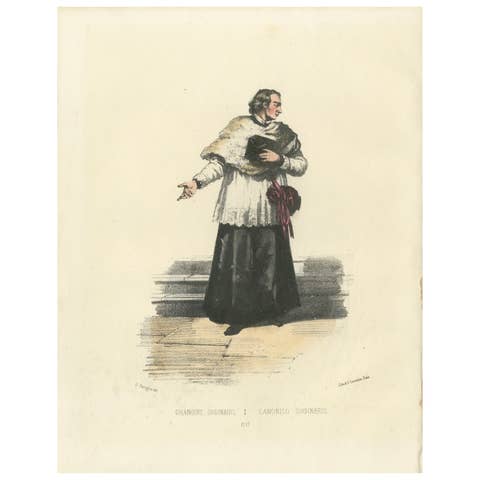
Handcolored Lithograph of Conservateur des Reliques (Custodian of Relics), Plate 14, 1862
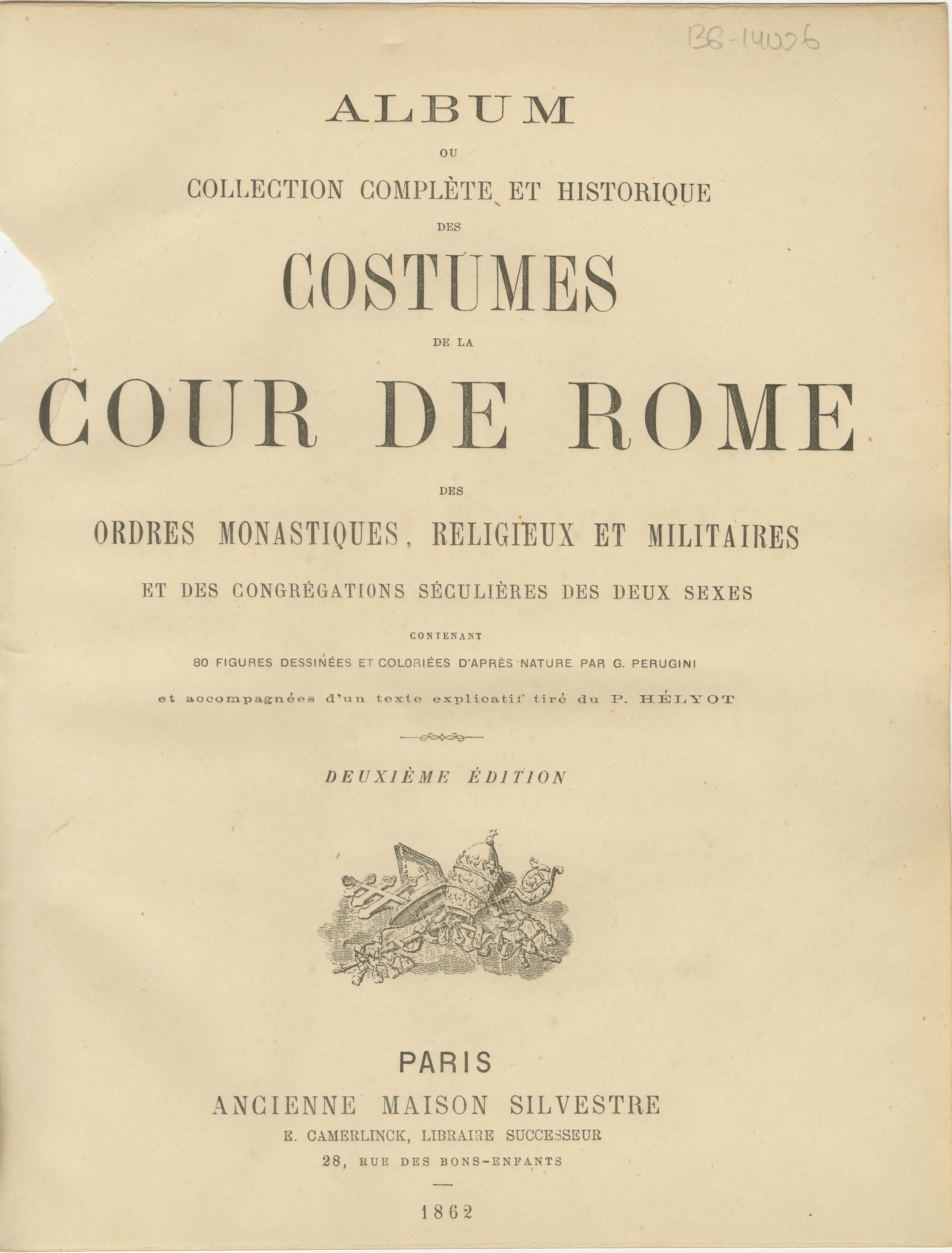
This exquisite handcolored lithograph, titled Conservateur des Reliques (Custodian of Relics), is Plate 14 from the 1862 second edition of Album ou Collection Complète, et Historique des Costumes de la Cour de Rome by G. Perugini. It features the solemn figure of a monsignor tasked with the sacred responsibility of preserving and managing holy relics.
The custodian wears a plain black cassock, embodying the modesty and reverence befitting his role. His somber attire is accentuated by a short black shoulder cape (ferraiolo), a common feature of clerical dress in the 19th century. The book he holds likely symbolizes his dedication to liturgical and administrative duties.
The position of custodian of relics was historically significant within the Catholic Church. Relics, often physical remains or objects associated with saints, were venerated for their spiritual power and historical importance. These custodians ensured the integrity and safekeeping of these sacred items, often housed in cathedrals or basilicas.
Today, while modern practices have shifted, many relics remain key to Catholic devotion, especially in pilgrimage sites such as St. Peter's Basilica in Rome. This lithograph immortalizes the quiet yet crucial role of the custodian, highlighting the Church's devotion to preserving its spiritual heritage.
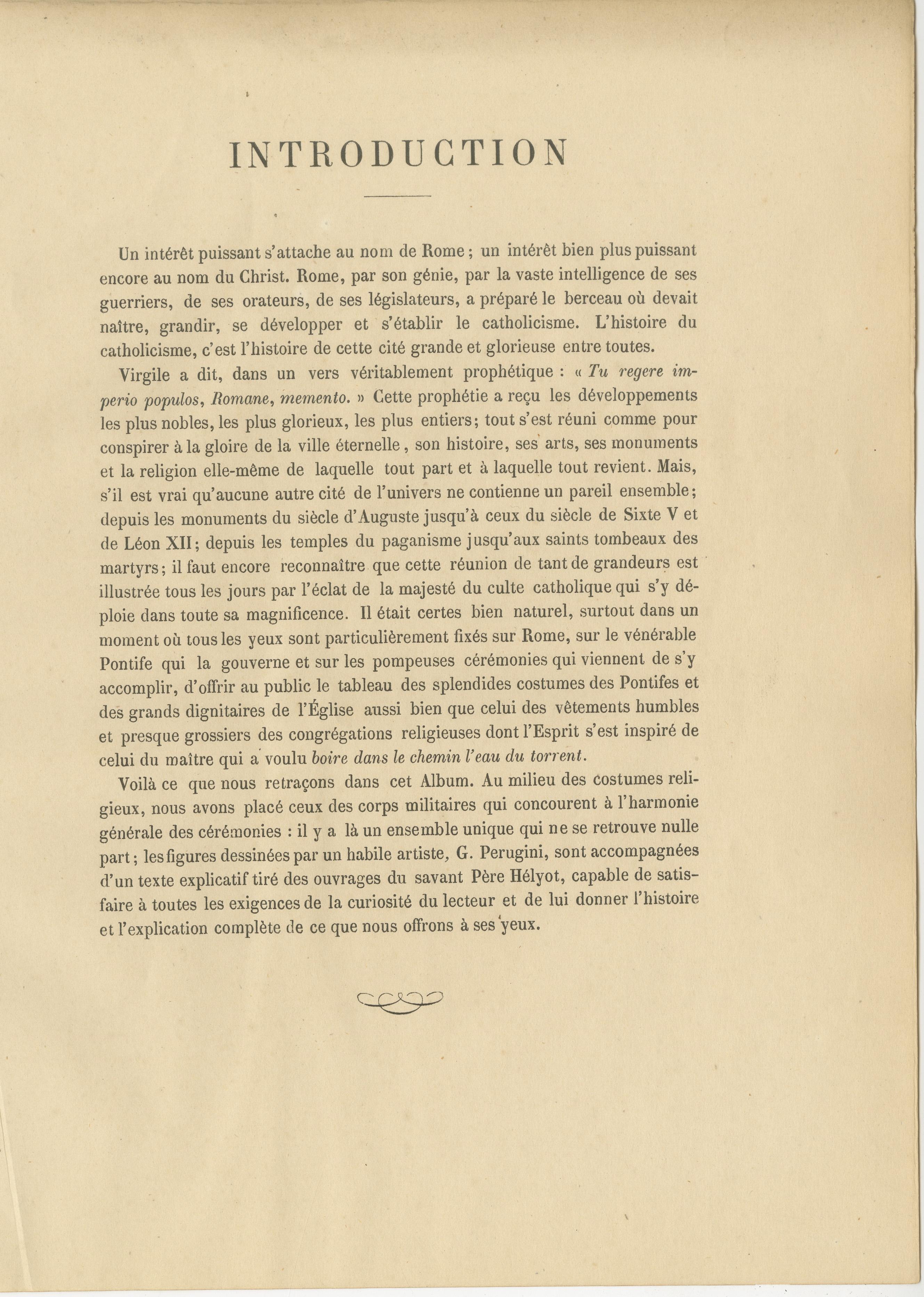
Introduction Text Translation:
A powerful interest is attached to the name of Rome, an interest even greater in the name of Christ. Rome, through its genius, the vast intelligence of its warriors, orators, and legislators, prepared the cradle where Catholicism was born, grew, developed, and established itself. The history of Catholicism is the history of this great and glorious city among all others.
Virgil said in a truly prophetic verse: “To rule peoples, Roman, remember.” This prophecy received the most glorious, complete developments: all conspired for the glory of the eternal city—its history, its arts, monuments, and the religion from which everything starts and to which everything returns. Yet, no other city in the universe contains such a collection: from the monuments of Augustus' time to those of Sixtus V and Leo XII; from pagan temples to saints’ tombs and martyrs, all illustrate daily the majesty of Catholicism in its splendor.
It was natural to offer the public the tableau of the splendid costumes of the Pontiffs and great dignitaries, as well as those of the humble garments of religious congregations. This is what we retrace in this Album. Amid the religious costumes, we have also included military corps contributing to the harmony of ceremonies. These figures, drawn by the skilled artist G. Perugini, are accompanied by explanatory texts derived from the works of the learned Father Hélyot.
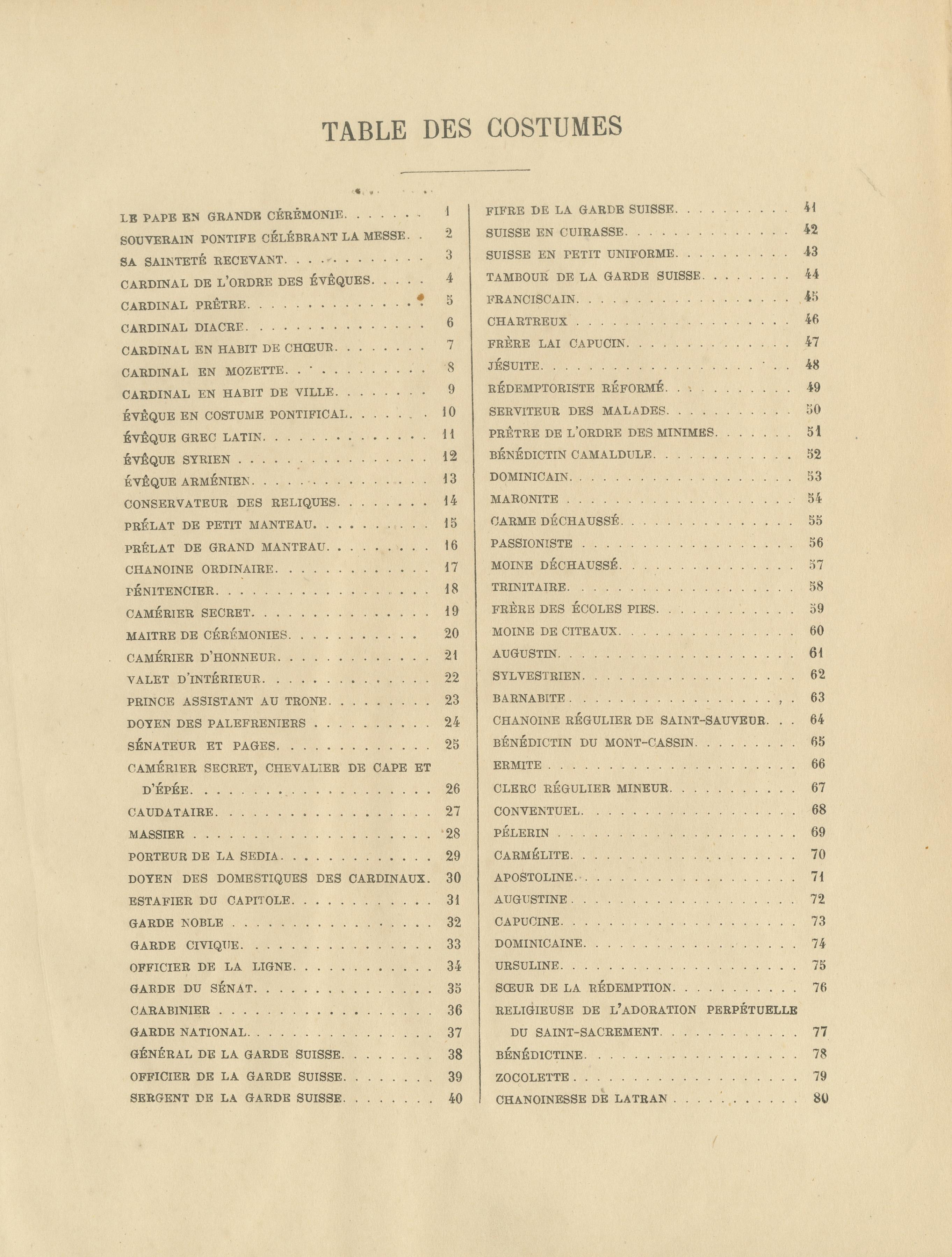
Table of Costumes in English (selected for relevance):
- The Pope in Grand Ceremony
- Cardinal in Choir Attire
- Bishop in Pontifical Costume
- Prelate in Mantelletta (Plate 15)
- Custodian of Relics (Plate 14)
- Franciscan
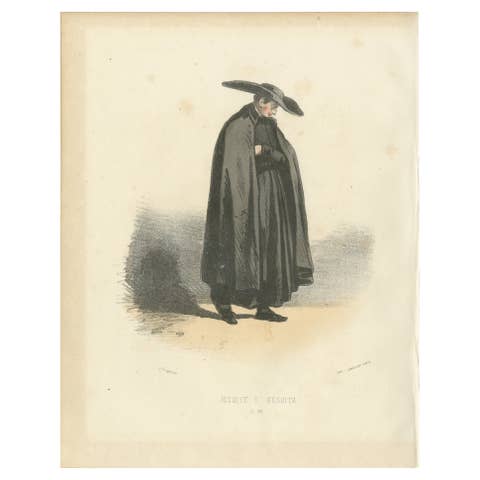
- Jesuit
- Religious Sister of Perpetual Adoration (Plate 77)
- Swiss Guard in Cuirass (Plate 42)
This lithograph serves as an elegant visual documentation of the Church's rich history and traditions, offering a glimpse into its meticulous hierarchy and reverence for sacred duties.