About this sheet
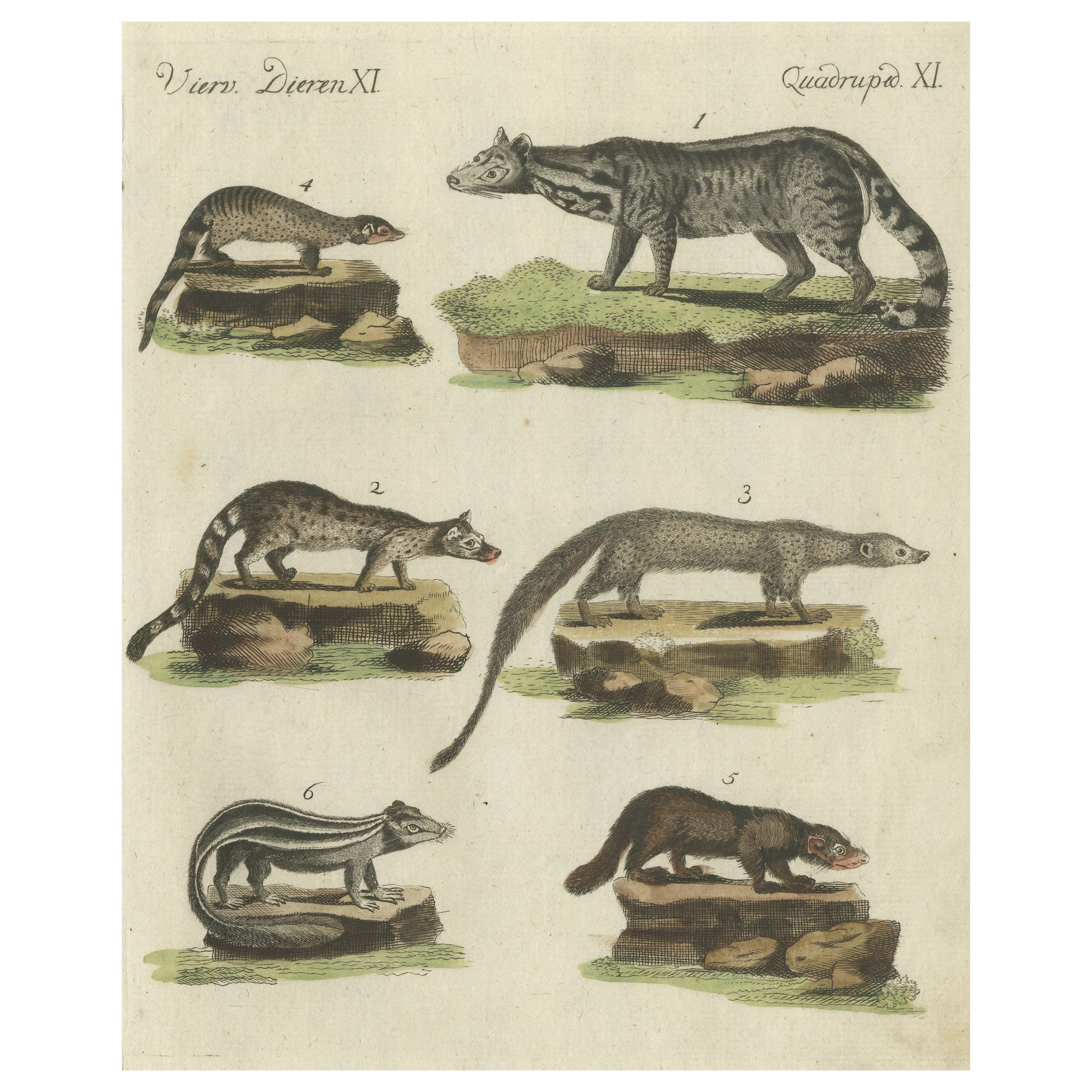
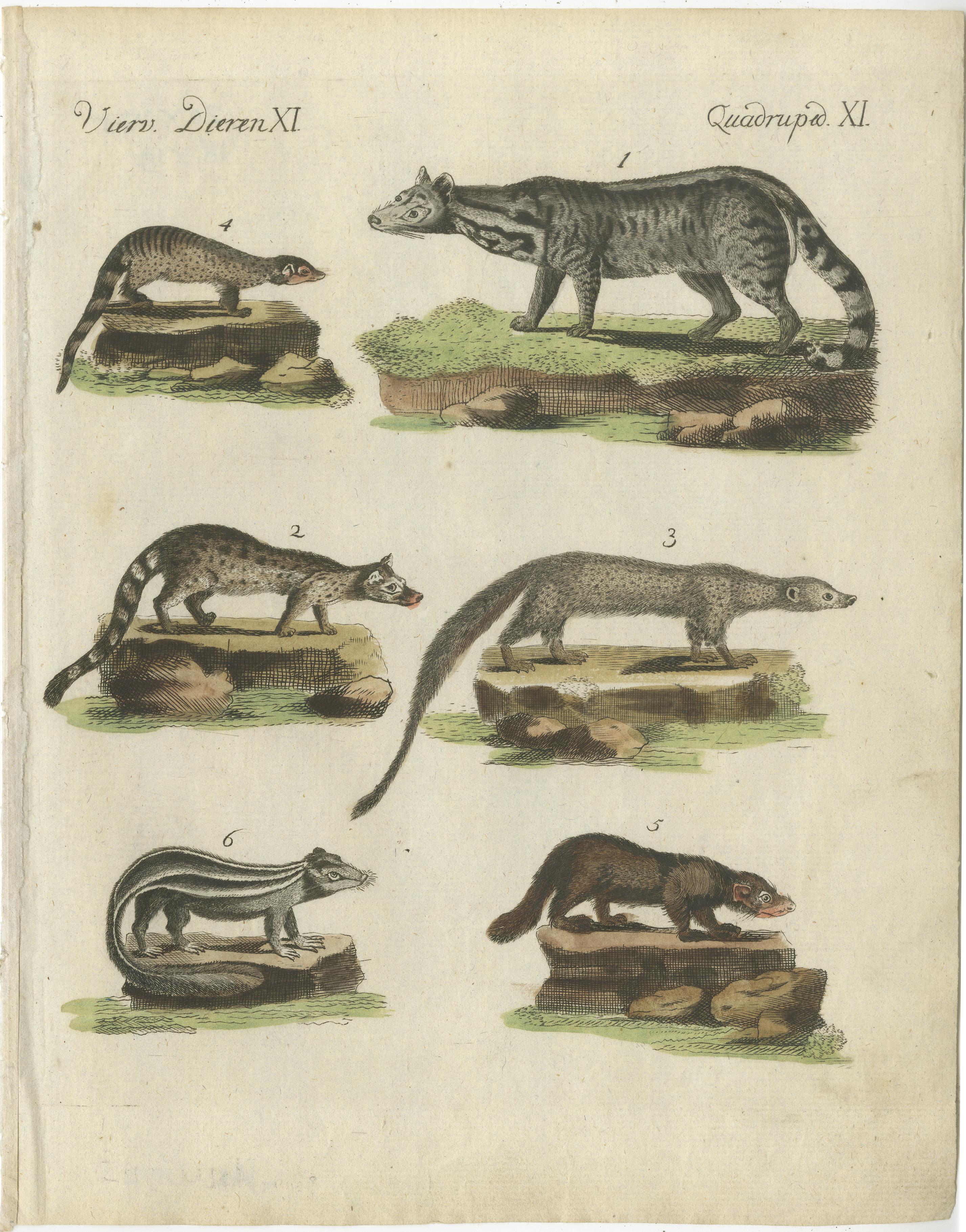
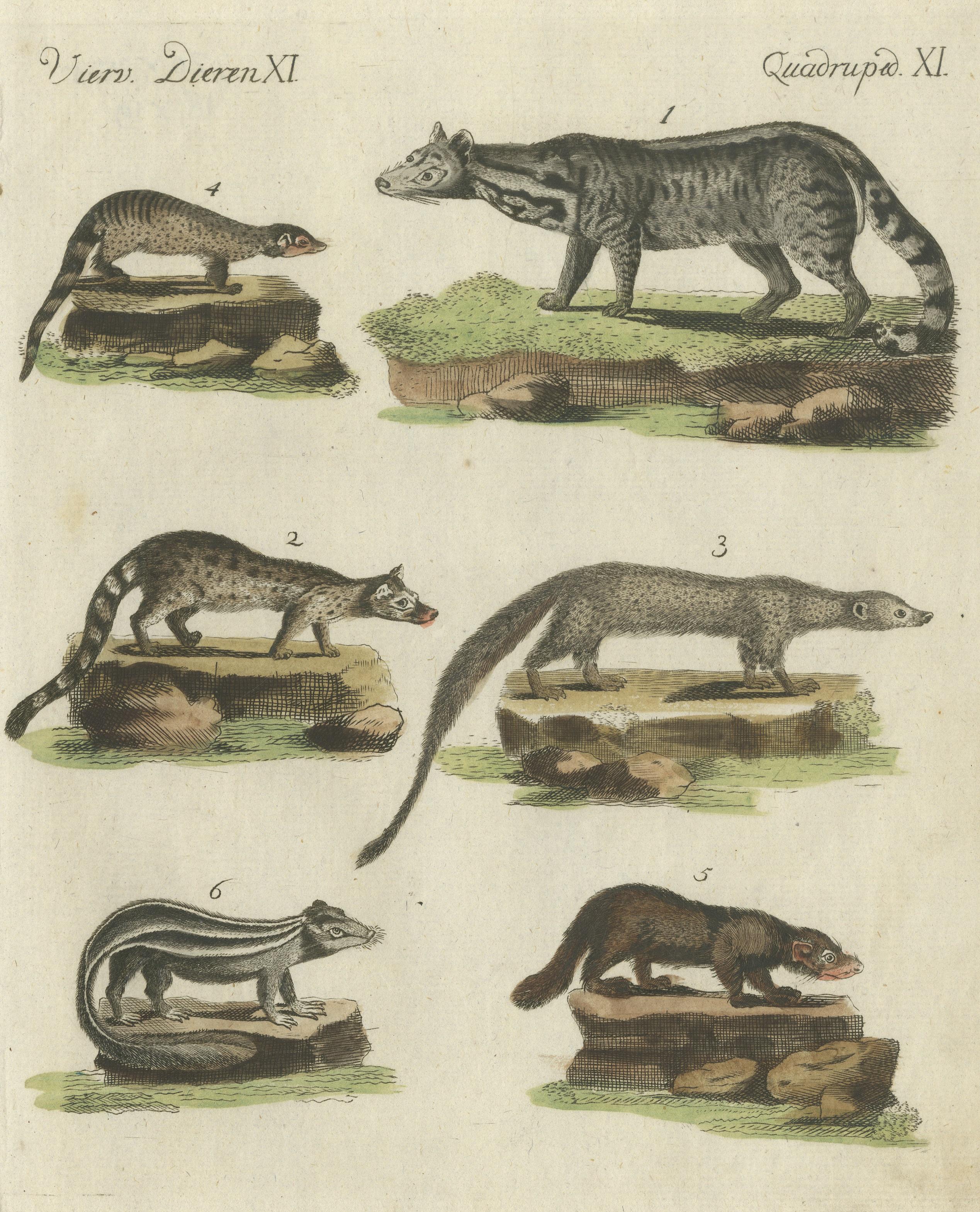
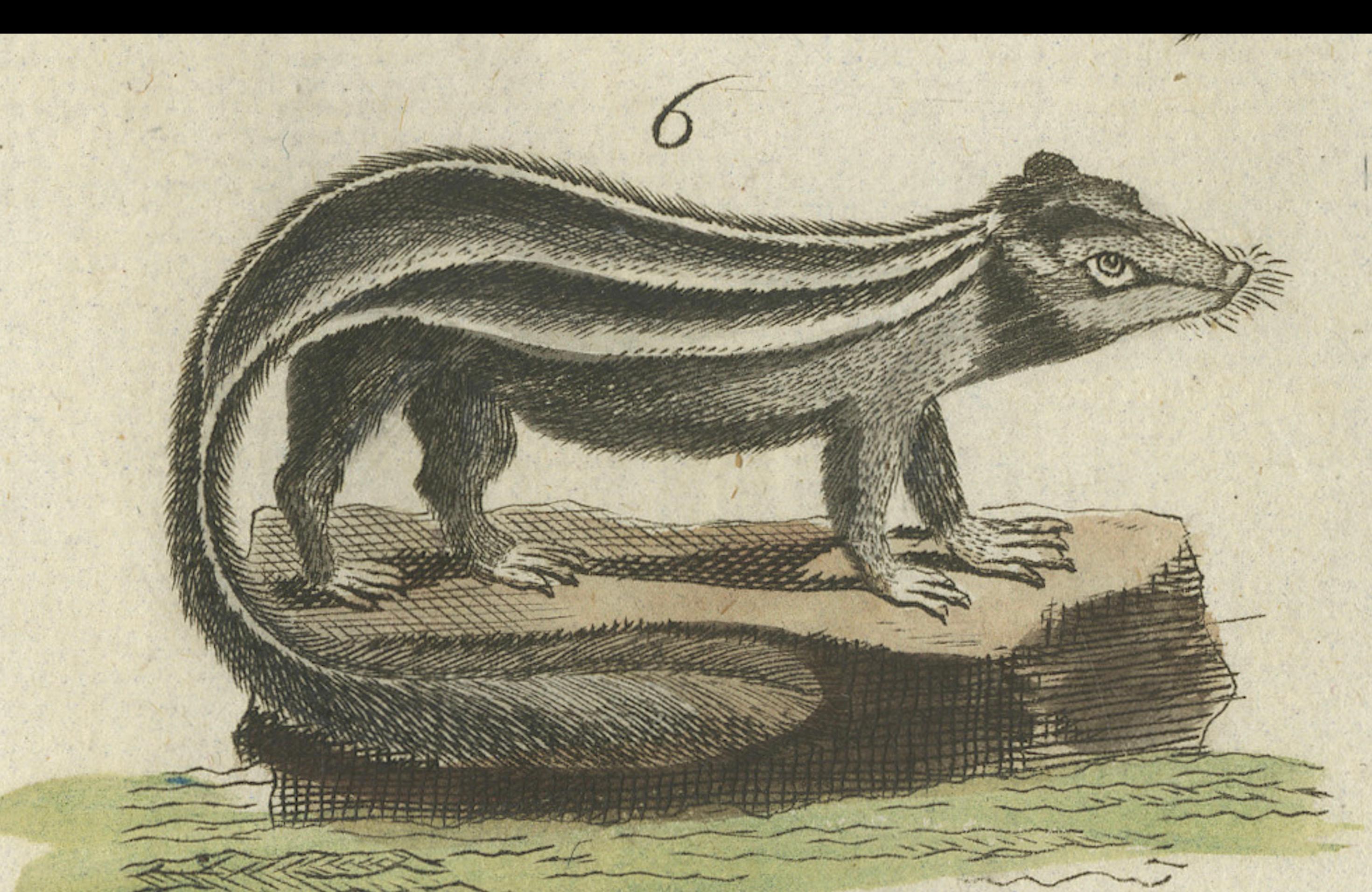
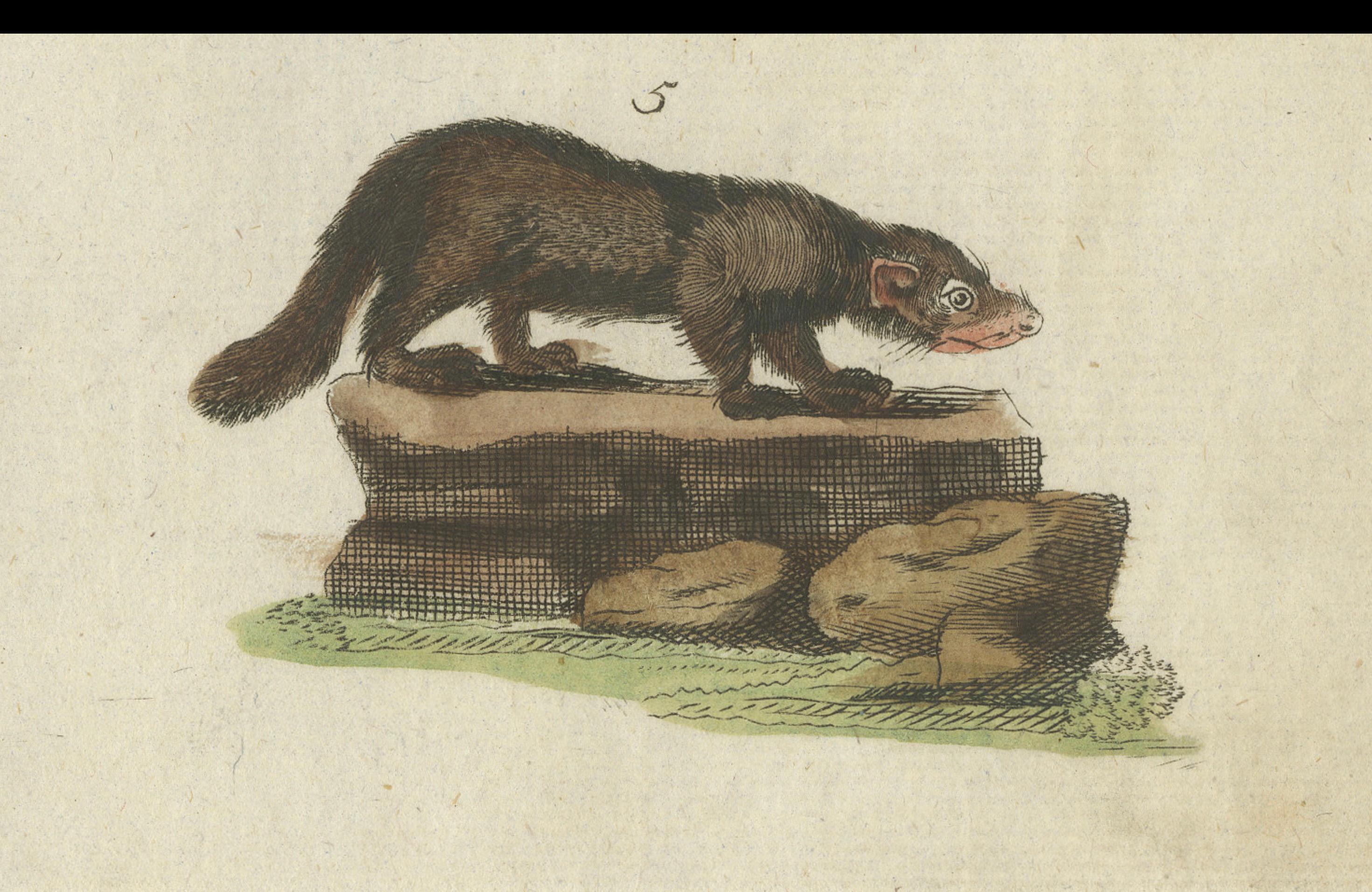
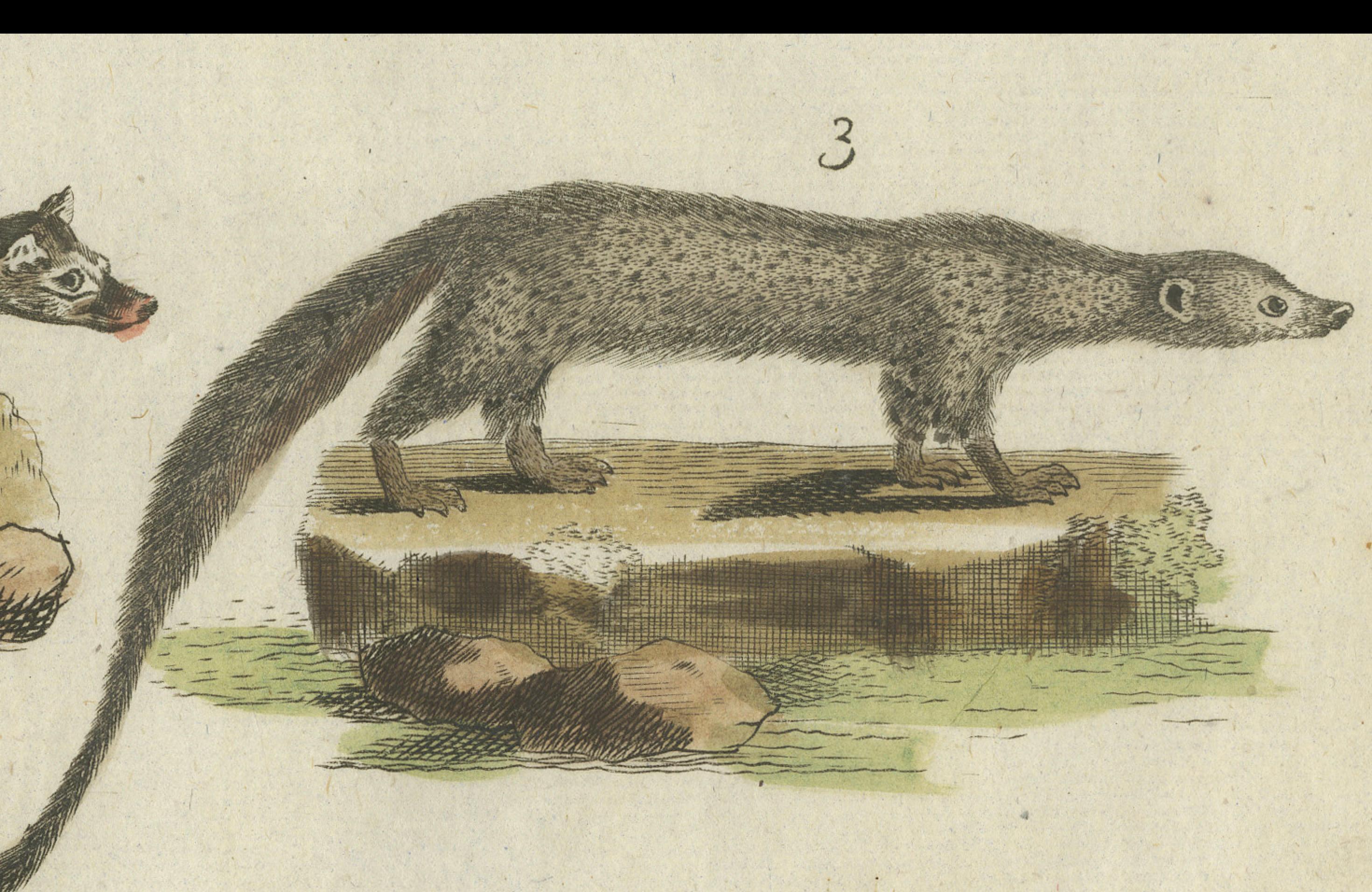
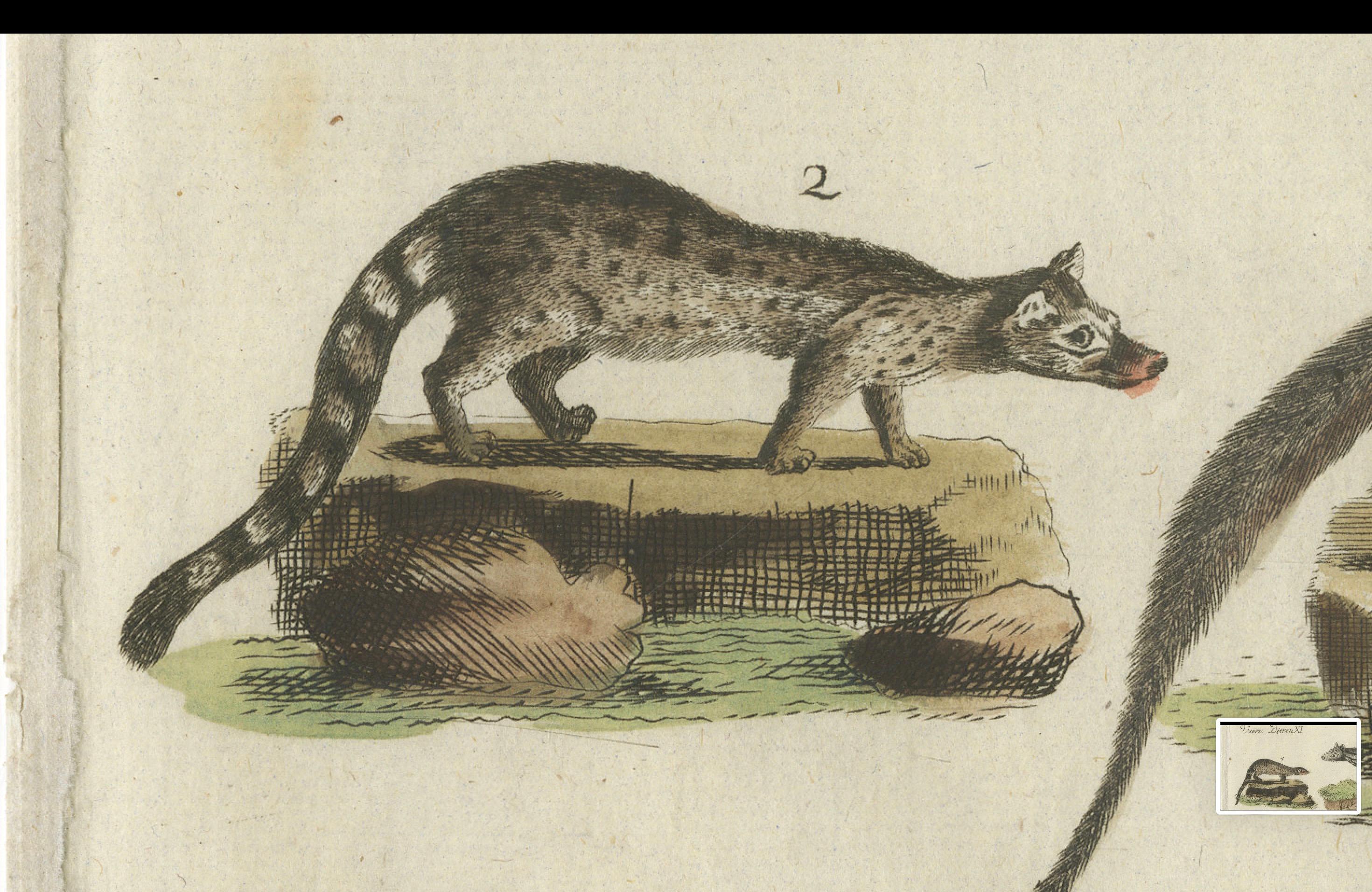
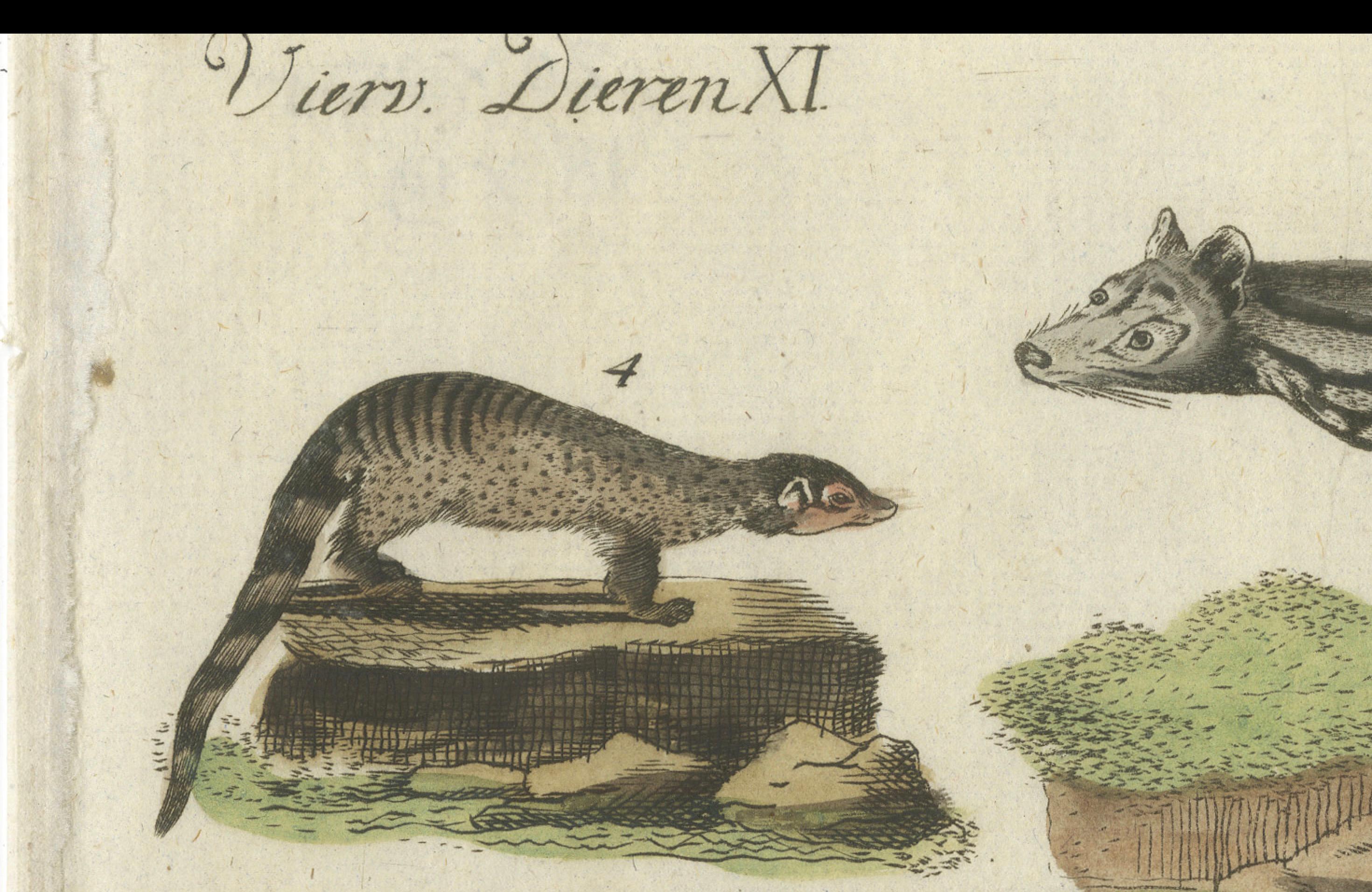
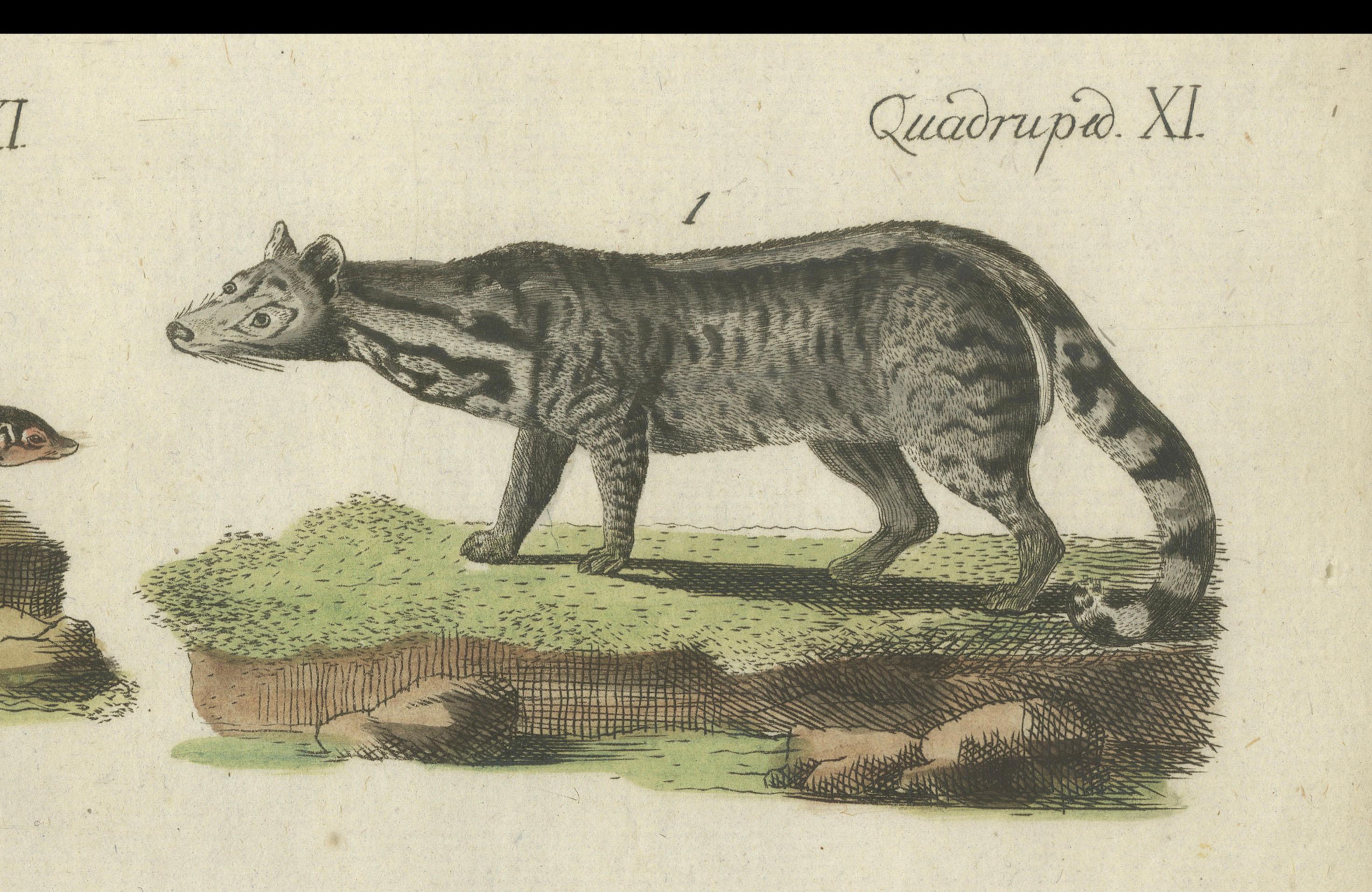
Original antique print of a civet and skunks. This engraved print originates from a very rare unknown Dutch work. The plates are similar to the plates in the famous German work: ‘Bilderbuch fur Kinder' by F.J. Bertuch, published 1790-1830 in Weimar. This could be Dutch edition of this work (no references found), or a work that used the Bertuch plates. Published circa 1820.
In more detail:
This is an engraving from a vintage book It is labeled "Viverr. Dieren XI" and "Quadrup. XI," suggesting that these are illustrations of the eleventh grouping of viverrids (a family of medium to small-sized mammals, the Viverridae) and quadrupeds in the series.
Starting from the top:
1. A large striped mammal, possibly a civet or related species, stands atop a grassy mound. Its distinctive striped pattern and elongated body are characteristic of several viverrid species.
2. Below to the left is a creature resembling a genet, a small nocturnal carnivore, also part of the Viverridae family, identified by its spotted coat and long ringed tail.
3. To the right of the genet, there is an animal with a slender body and a long tail, possibly a mongoose, known for their elongated bodies and agility.
4. In the middle row on the left, there is a depiction of a creature attacking or feeding on a snake. This could be an illustration of a mongoose, which are known for their snake-fighting abilities.
5. Next to it, there's an animal in a crouched position that appears to be another mongoose species, given the shape and posture.
6. On the bottom row, the leftmost image depicts a sleek animal with a distinctively marked face and a long body, which could be another type of civet or related species.
7. Lastly, on the bottom right, there is a creature with a more robust and round body, potentially a binturong or another animal of the Viverridae family, which are typically more stocky in appearance.
The style of the engravings is featuring high detail and an emphasis on the animals' physical characteristics. Each animal is placed in a small vignette with some environmental context, like grass or logs, which may suggest their natural habitat or behaviors. The numbering presumably corresponds to a text description or index elsewhere in the book. These engravings are likely from a time when such detailed illustrations were essential for sharing knowledge about wildlife from different parts of the world.