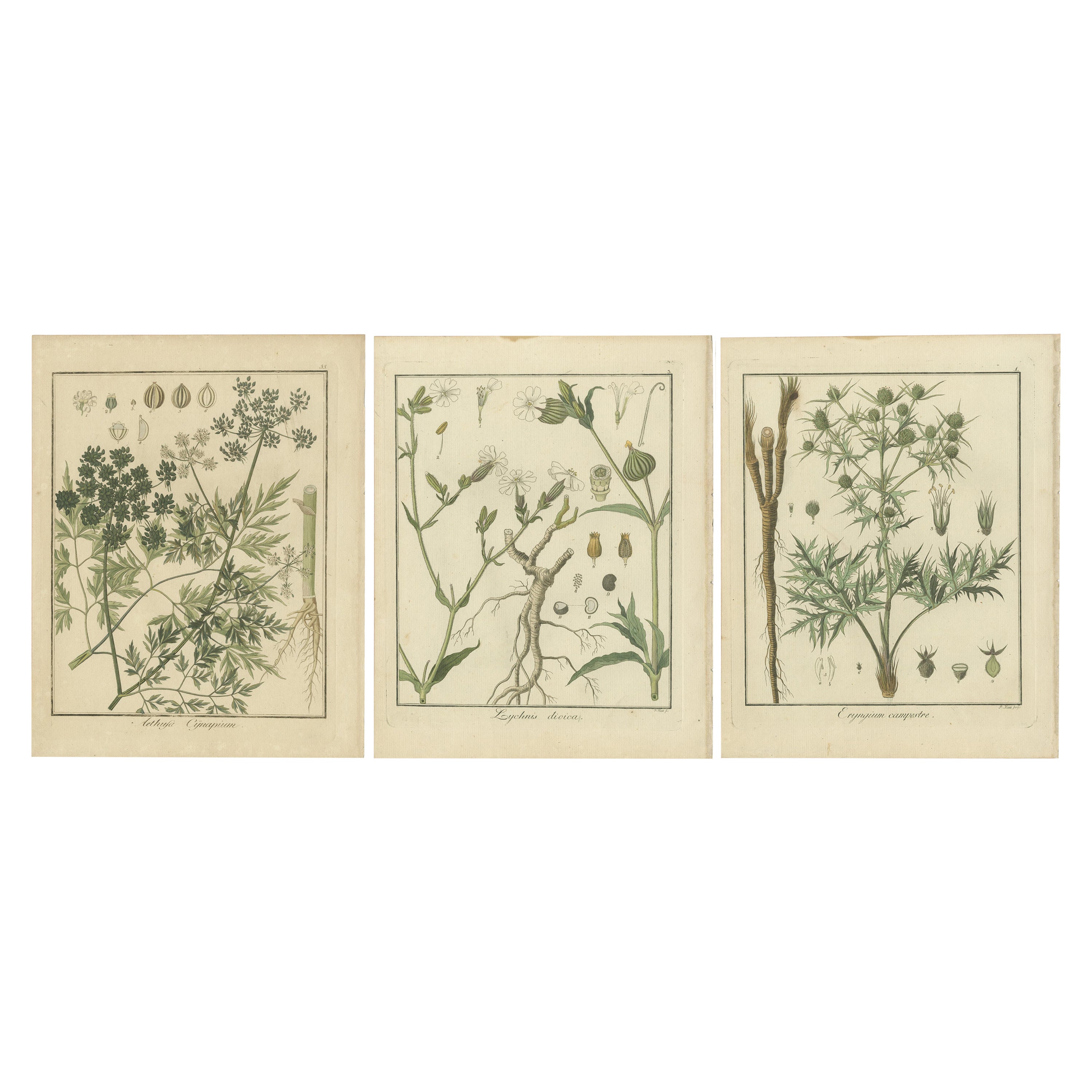
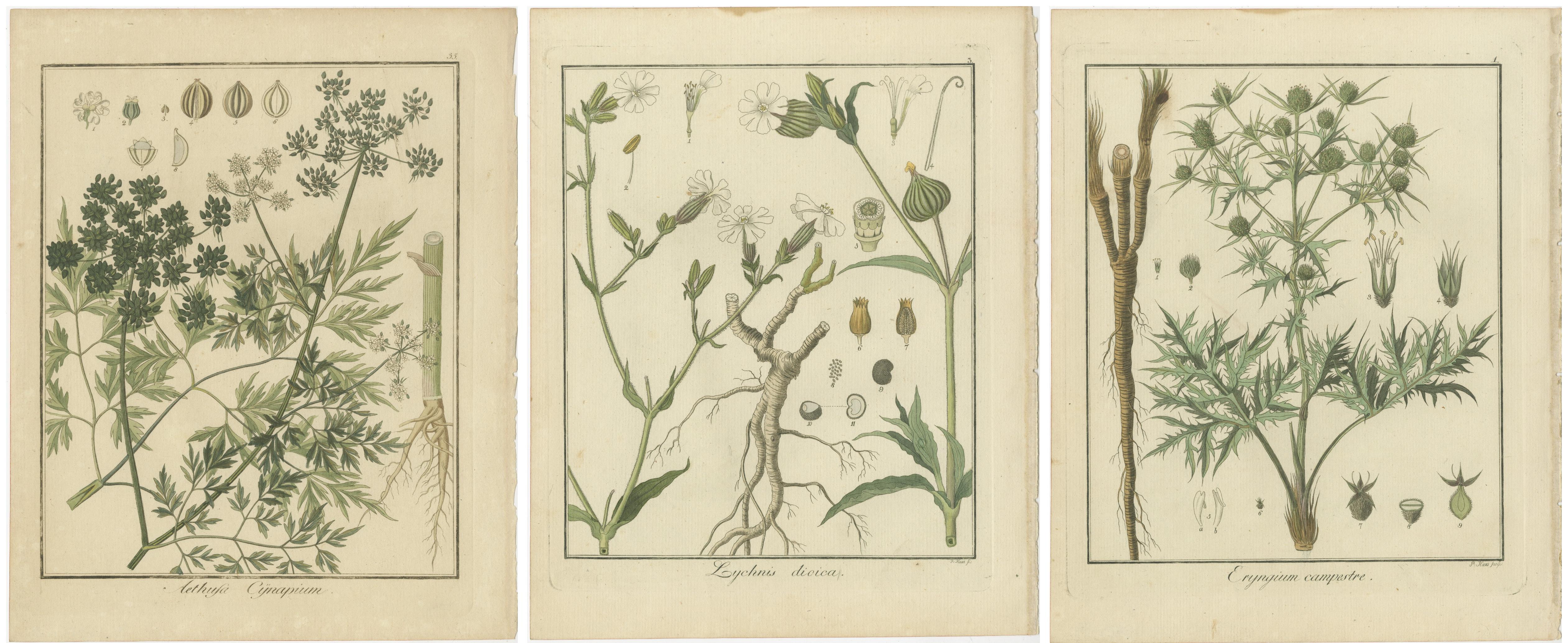
Engravings of Fool's Parsley, Red Campion, and Field Eryngo, Published in 1819
€ 590
One of a kind: this is the sheet in the photographs. Ships from Langweer, the Netherlands.
Date
1819
Sheet size
27.5 × 21.7 cm (10.8 × 8.5 in)
Reference
BG-13747-13, BG-13747-14, BG-13747-15
Condition
excellent given age. General age-related toning and/or occasional minor defects from handling. Original hand-colored etching / engraving on hand laid (verge) paper with matermark. The Please study scans carefully.
About this sheet
Description of the Plants in the three combined original antique engravings:
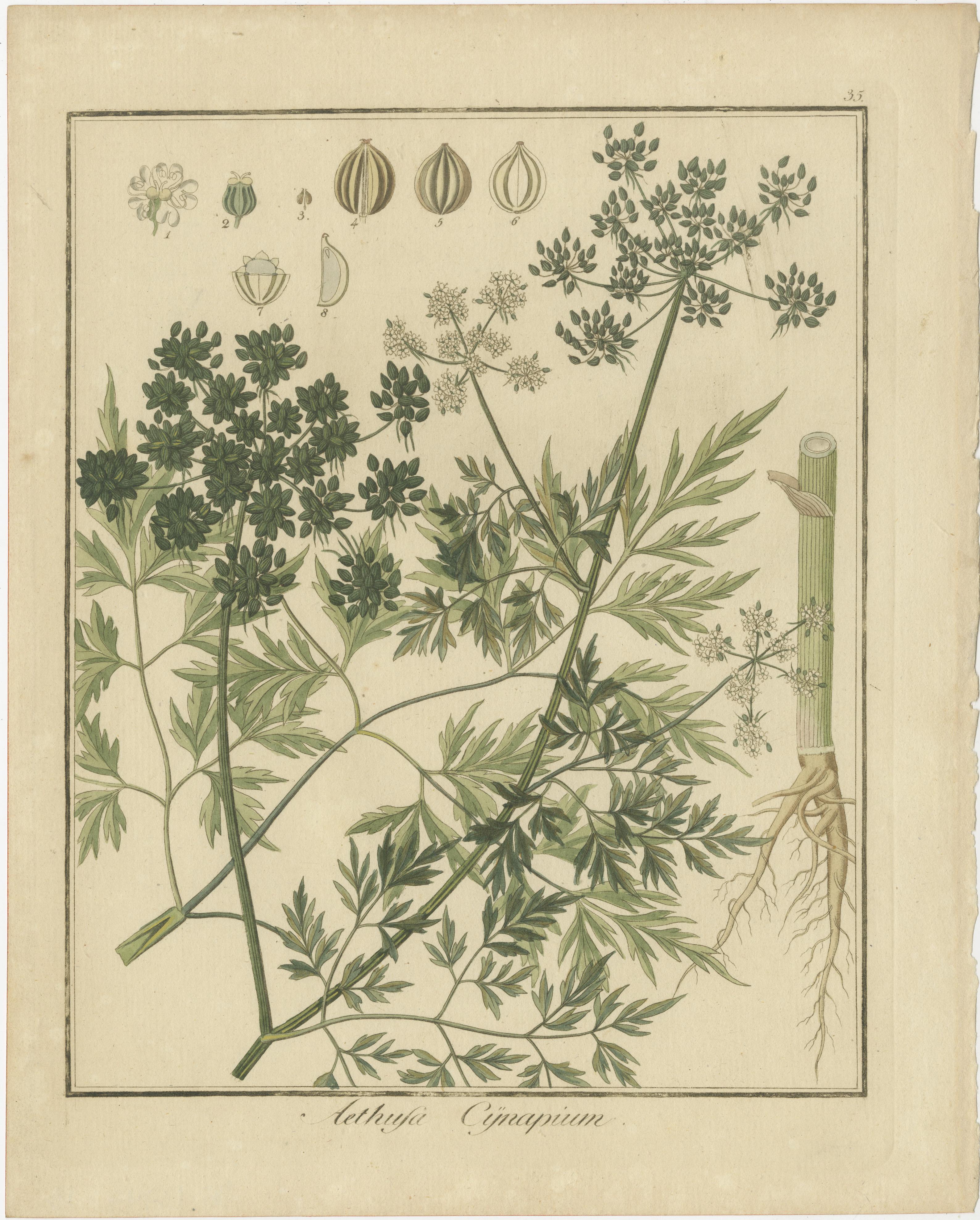
1. Aethusa cynapium (Common Name: Fool's Parsley) - This engraving depicts Aethusa cynapium, commonly known as Fool's Parsley. It resembles common parsley but is toxic and has historically been mistaken for it, leading to poisoning. It grows in temperate regions, often in gardens, fields, and disturbed soils. It is characterized by finely divided leaves and umbels of small white flowers. The plant's toxicity was noted in traditional medicine, and it was used with caution.
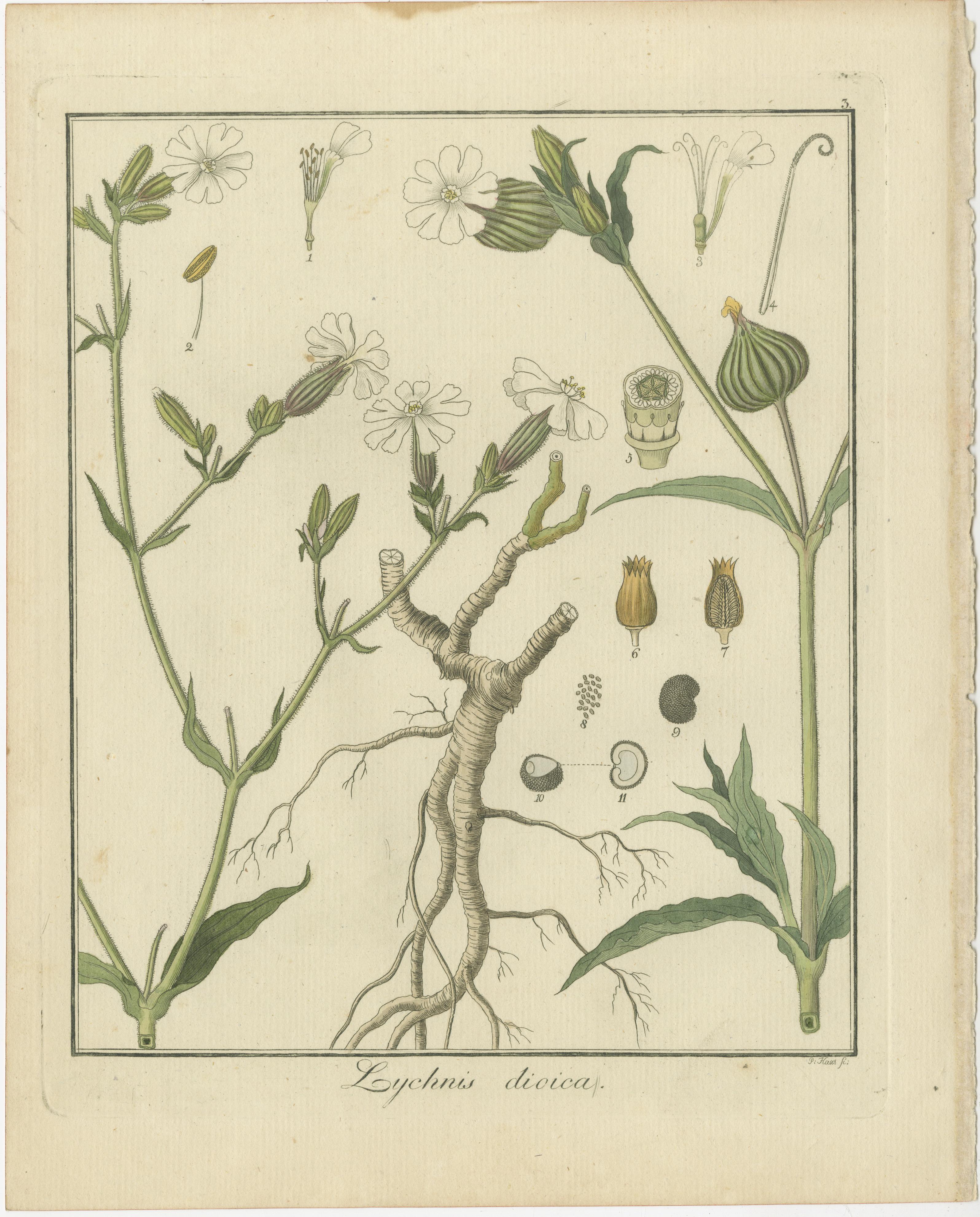
2. Lychnis dioica (Common Name: Red Campion) - Lychnis dioica, also known as Red Campion, is illustrated in this engraving. It is a flowering plant native to Europe, commonly found in woodlands, meadows, and along roadsides. The plant has distinct pink to red flowers and opposite leaves. While not widely used medicinally, Red Campion has been appreciated for its ornamental value and is sometimes used in herbal remedies.
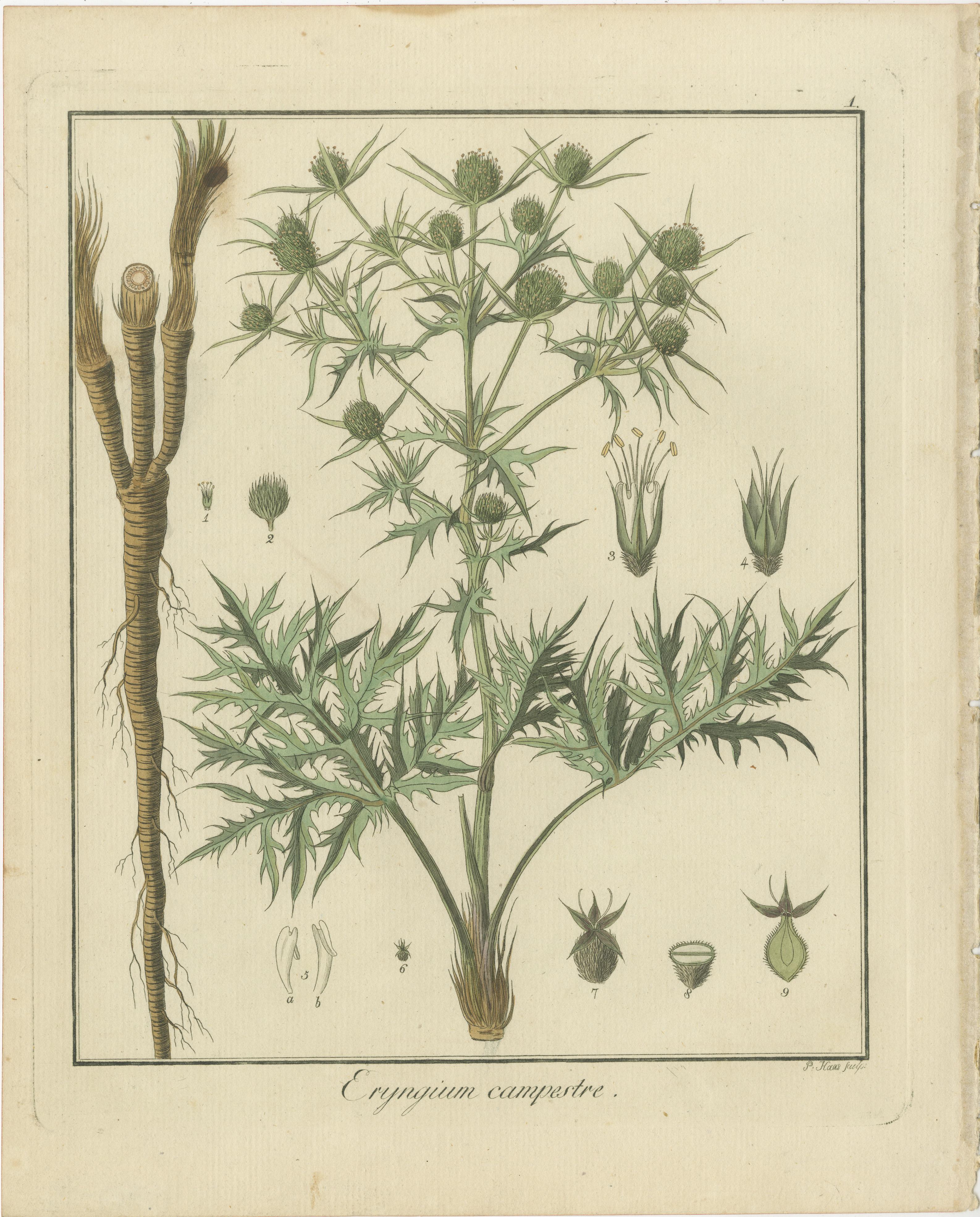
3. Eryngium campestre (Common Name: Field Eryngo) - The third engraving shows *Eryngium campestre*, commonly known as Field Eryngo. This plant is native to Europe and is found in dry, sandy soils, fields, and grasslands. It is known for its spiny leaves and globe-like inflorescences, which have a thistle-like appearance. Field Eryngo has been used traditionally in herbal medicine, particularly for its diuretic properties.
These botanical illustrations are from the 6th edition of *"Getreue Darstellung und Beschreibung der in der Arzenykunde gebrauchlichen Gewächse"* by Dr. Friedrich Gottlob Hayne, published in 1819. The engravings were made by skilled artists of the time, capturing the detailed anatomy of these medicinal and noteworthy plants.