About this sheet
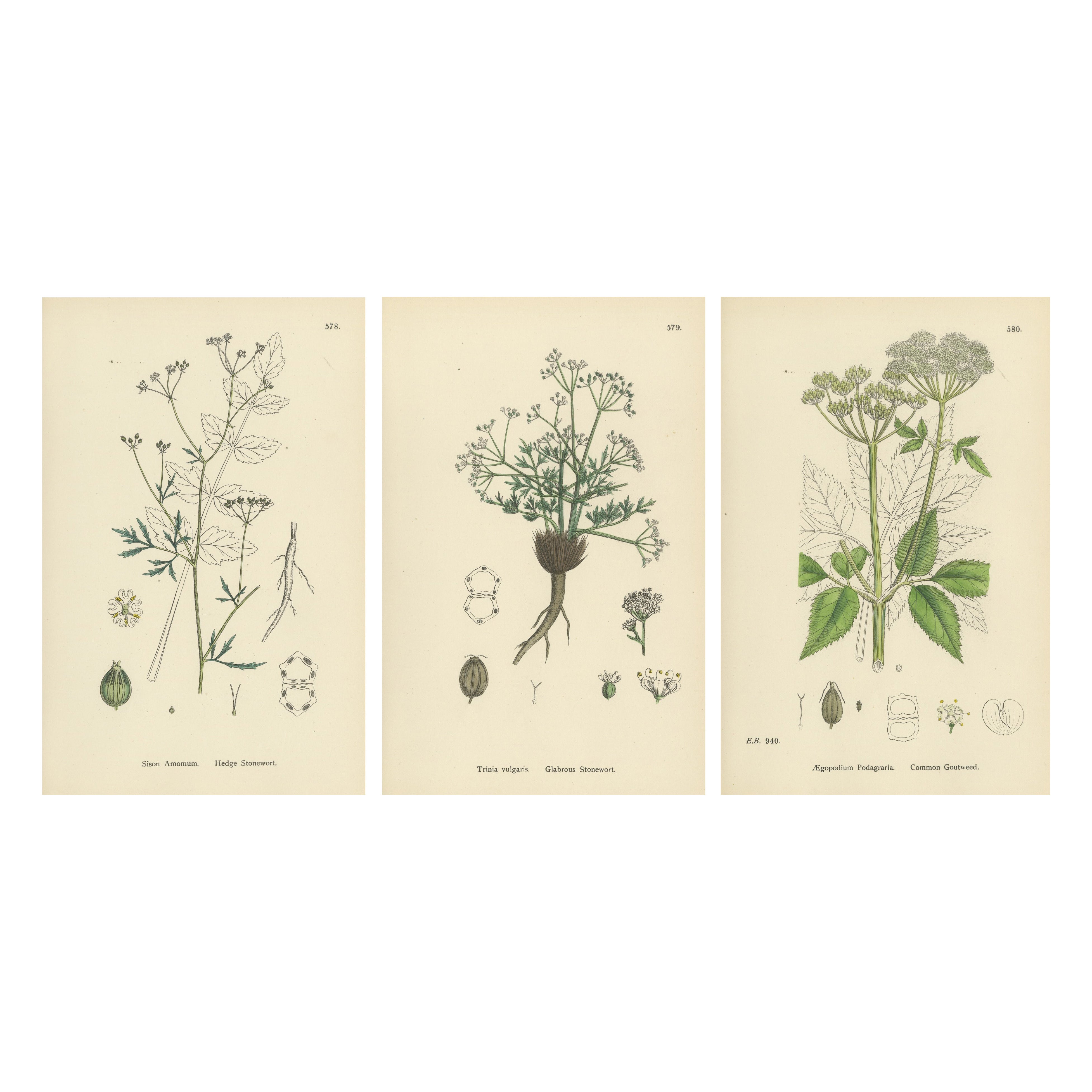
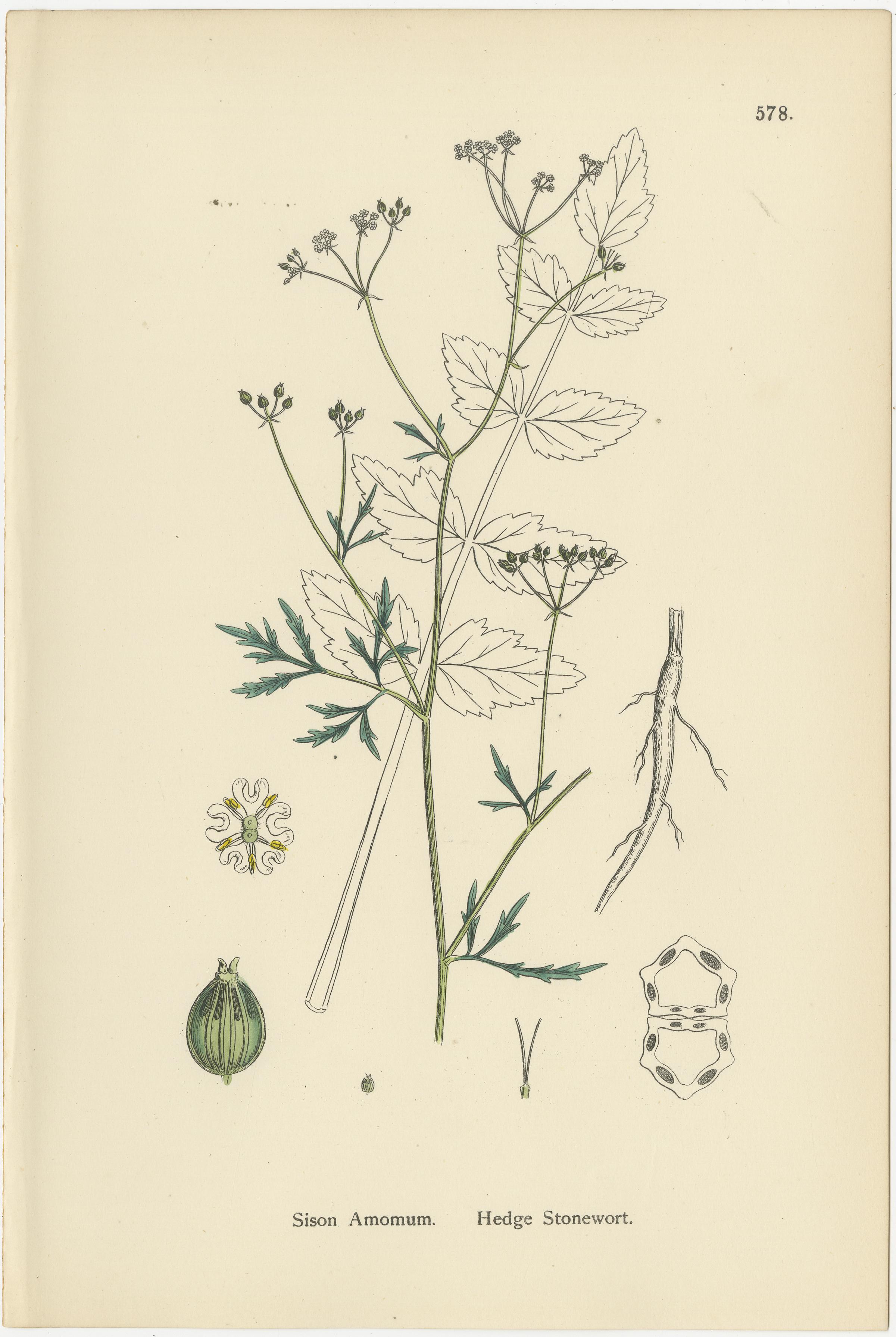
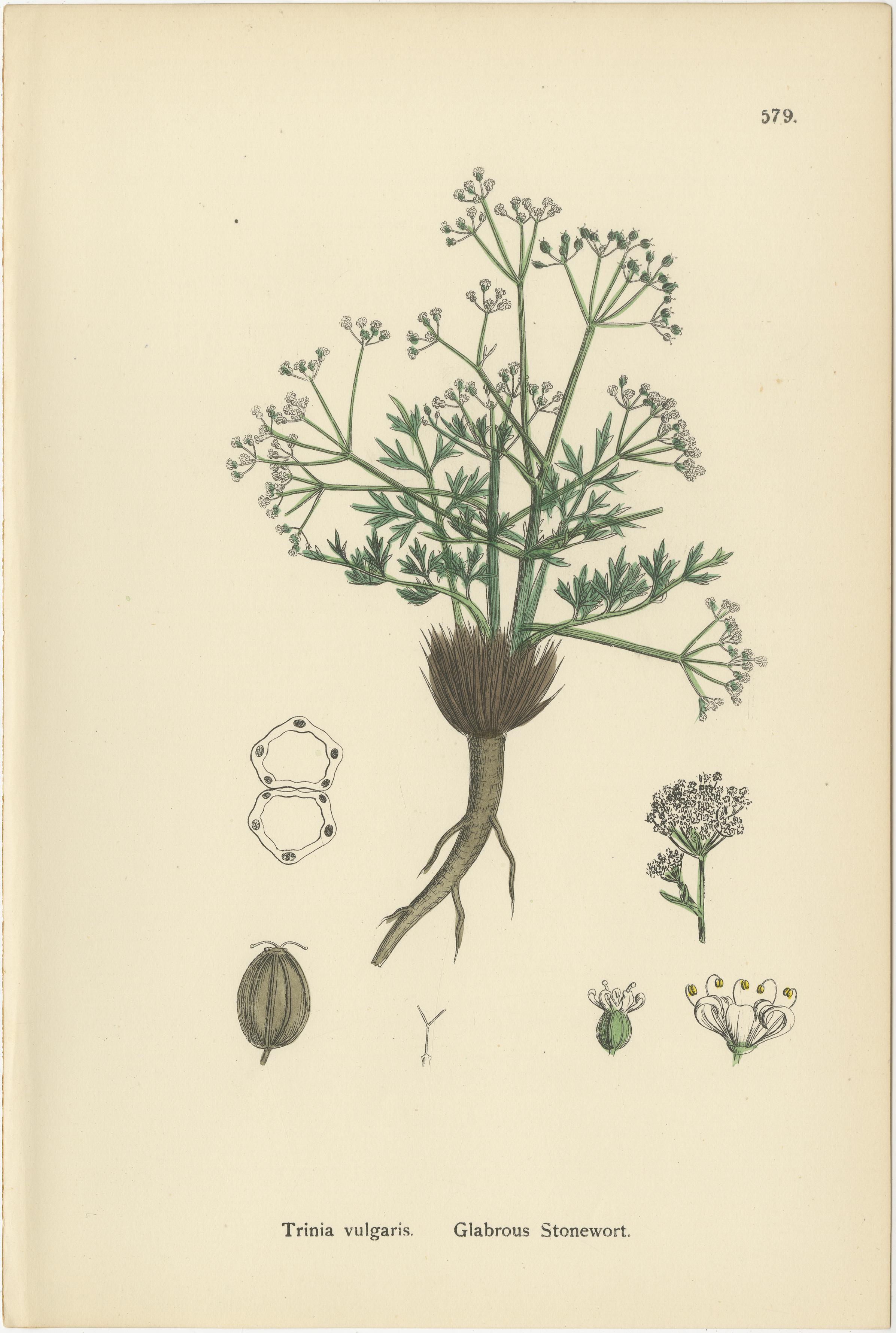
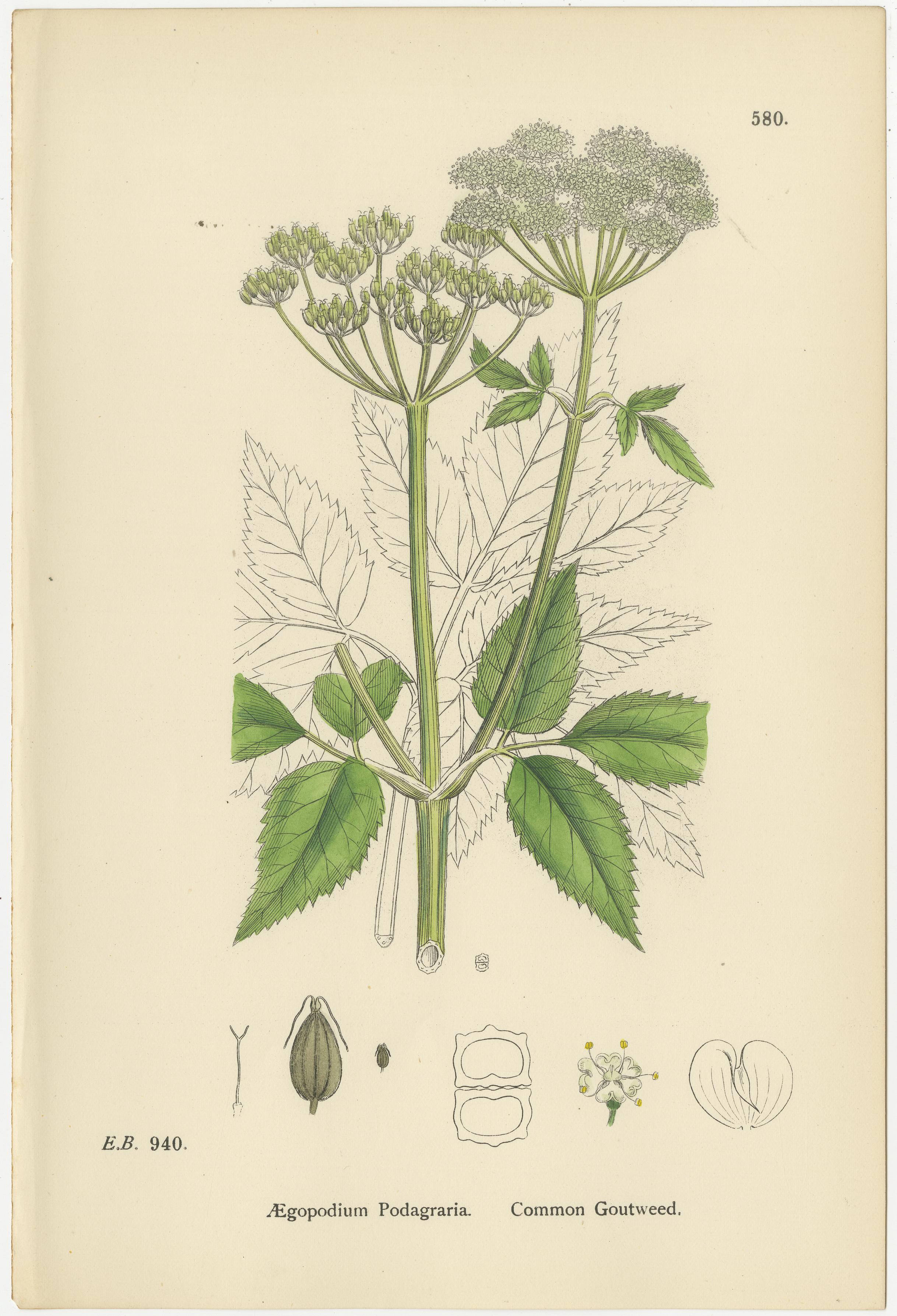
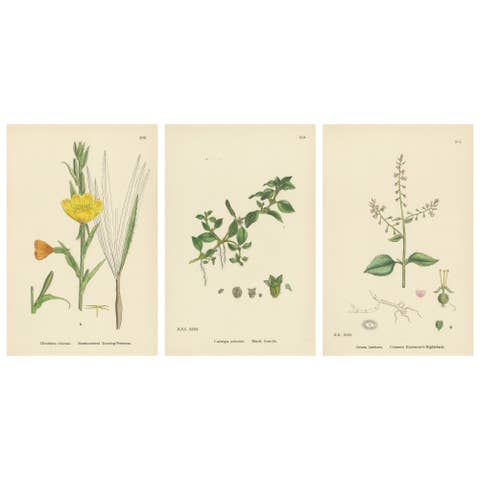
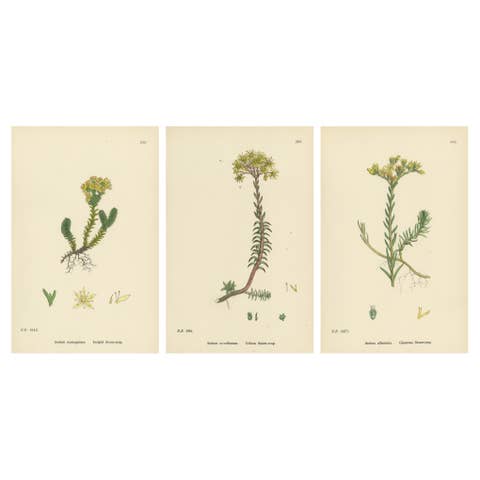
This fine trio of hand-colored botanical engravings from 1902 beautifully illustrates *Sison Amomum* (Hedge Stonewort), *Trinia vulgaris* (Glabrous Stonewort), and *Aegopodium Podagraria* (Common Goutweed). The engravings combine meticulous scientific observation with the grace of classic botanical artistry, typical of early 20th-century natural history publications.
The first plate, *Sison Amomum*, shows the slender and elegant Hedge Stonewort, a plant of hedgerows and light woodlands known for its aromatic roots. The engraving highlights its divided leaves and fine umbels of tiny flowers, accompanied by detailed studies of the fruit and floral structure. The inclusion of the root system and cross-sectioned seeds demonstrates the precision typical of the Victorian scientific illustrators.
The central engraving, *Trinia vulgaris*, or Glabrous Stonewort, captures a compact perennial plant native to dry grasslands. Its delicate leaves, finely cut and feathery, give the species a light, airy form, perfectly rendered here through subtle green washes and fine stipple shading. The artist includes enlarged drawings of the fruit and flower, balancing visual beauty with educational accuracy.
The final plate depicts *Aegopodium Podagraria*, known as Common Goutweed or Ground Elder—a plant long associated with both herbal medicine and garden history. Its broad, bright green leaves and umbel clusters of white flowers are illustrated with characteristic crispness and balance. Once used in medieval monastic gardens as a treatment for gout, this plant’s robust habit made it both a healer’s ally and a gardener’s challenge.
Together, these three plates form a graceful study of the Apiaceae family, demonstrating its wide morphological variety and historical importance in both medicine and horticulture.
Condition report: Excellent condition with clear impressions, strong plate marks, and original hand-coloring. Light natural toning at the edges consistent with age.
Framing tips: Best presented as a botanical triptych in light oak, gilt, or black frames. Use soft ivory or moss-green mounts to bring out the natural tonal harmony of the leaves and flowers. Ideal for herb gardens, libraries, or natural history-themed interiors.
Technique: Hand-colored engraving
Maker: British, published London, 1902