About this sheet
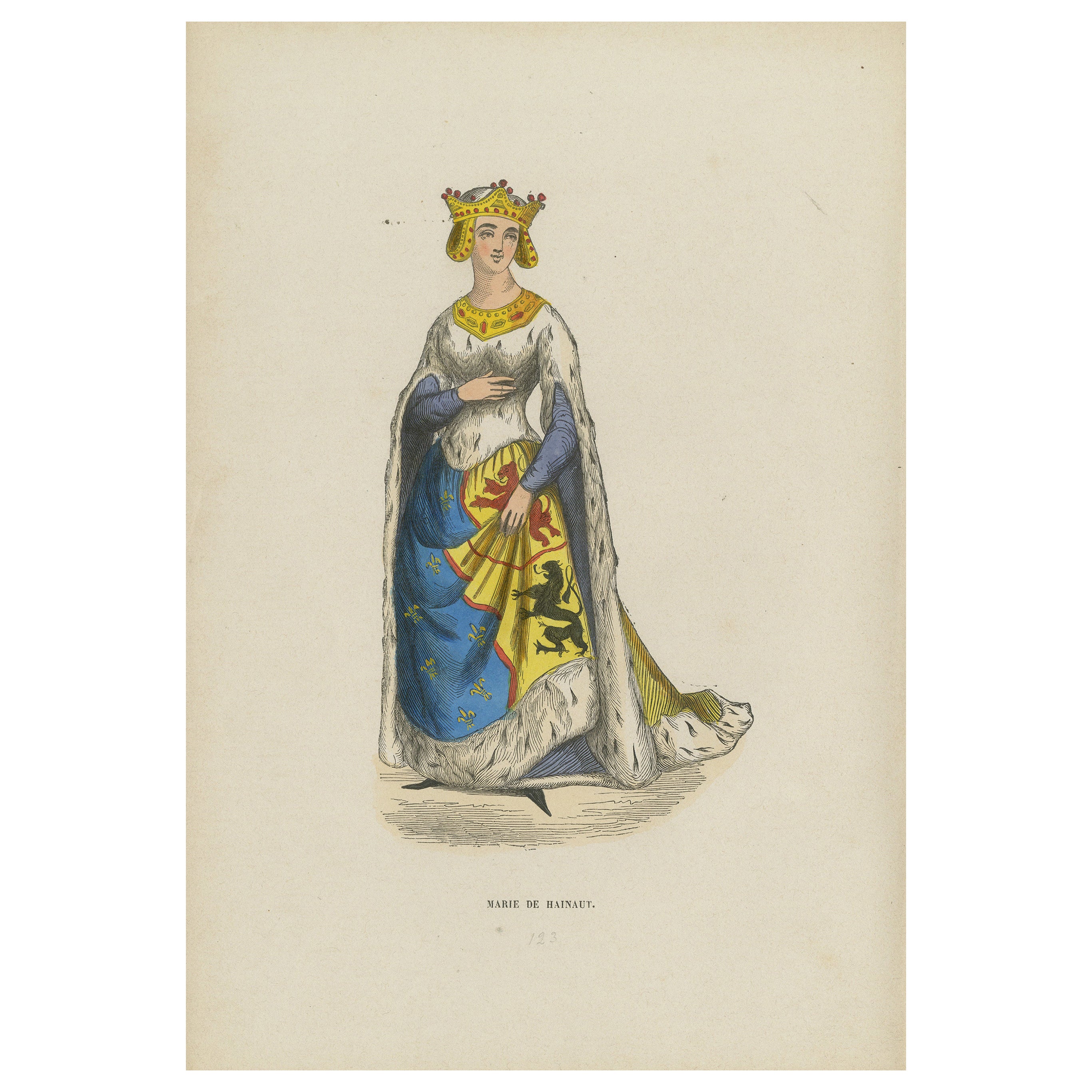
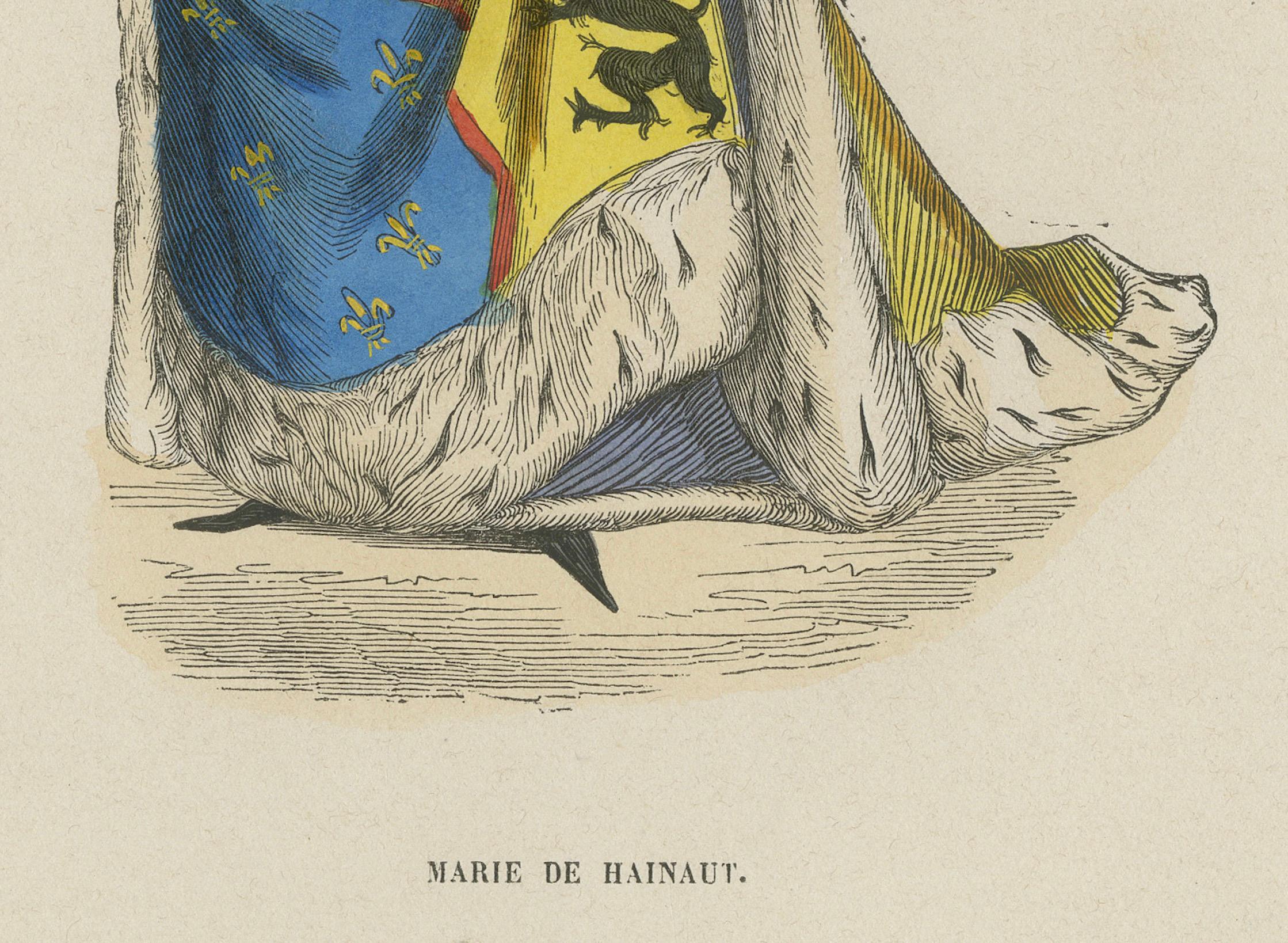
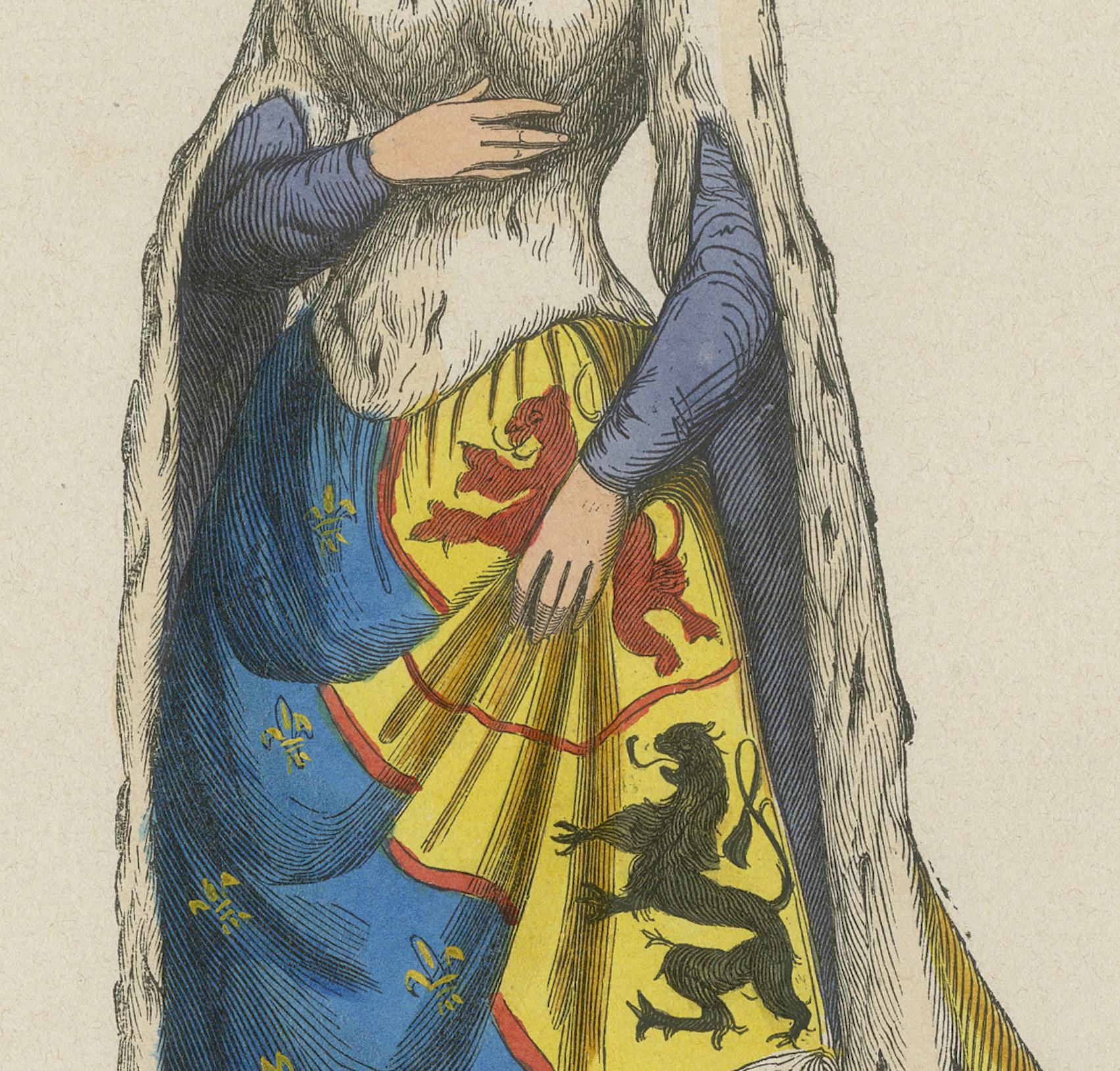
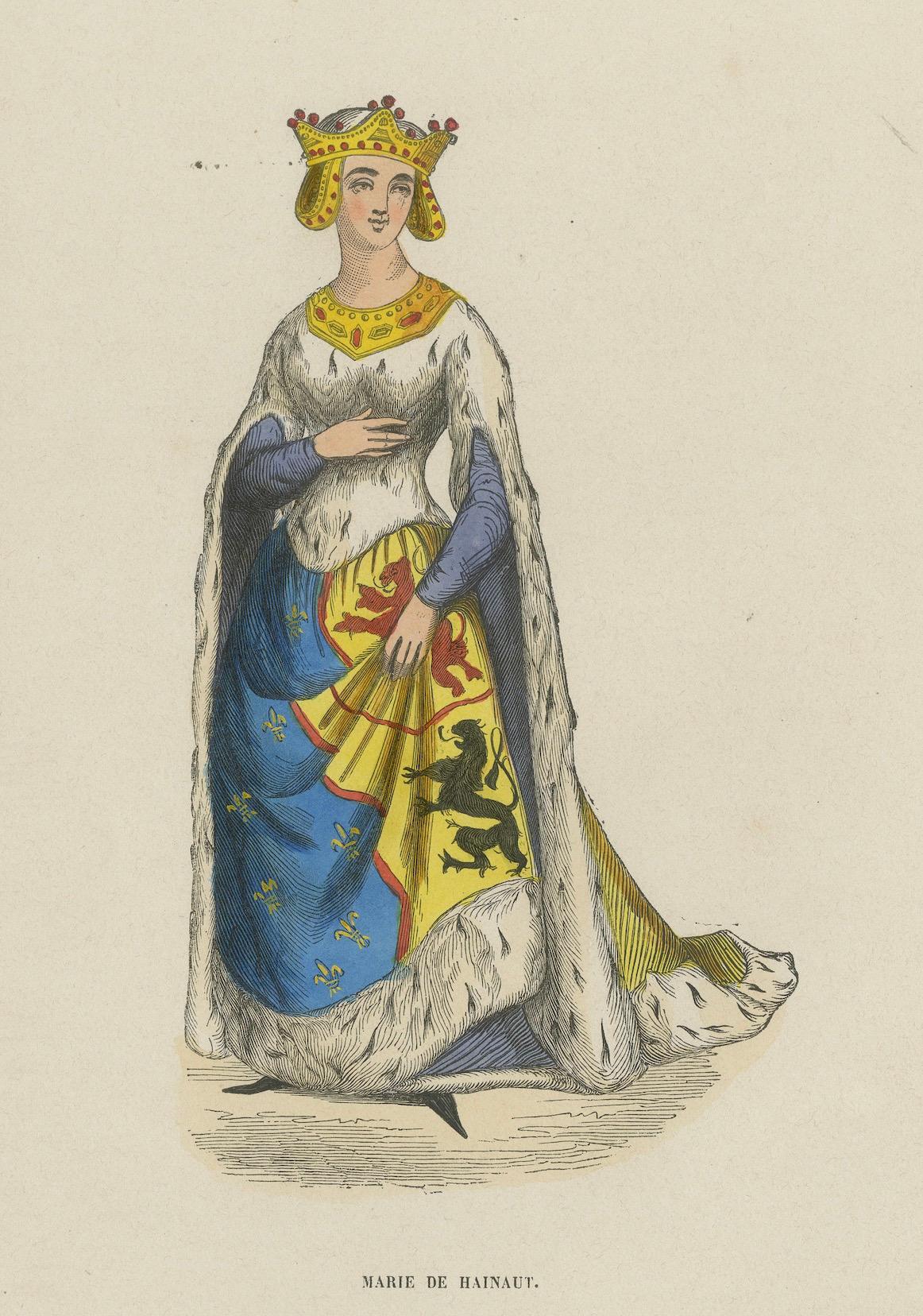
This captivating lithograph is a distinguished illustration from the 1847 collection "Costume du Moyen Âge," offering a vivid portrayal of Marie de Hainaut, a figure of nobility. The illustration highlights her with an air of grace and authority. She stands adorned in a majestic gown that cascades elegantly to the floor, with sleeves of a soft lavender hue that complement the deep blue of her dress. The dress itself is embellished with intricate golden fleurs-de-lis and a prominent heraldic lion, which may represent her noble lineage and the regal power she embodies.
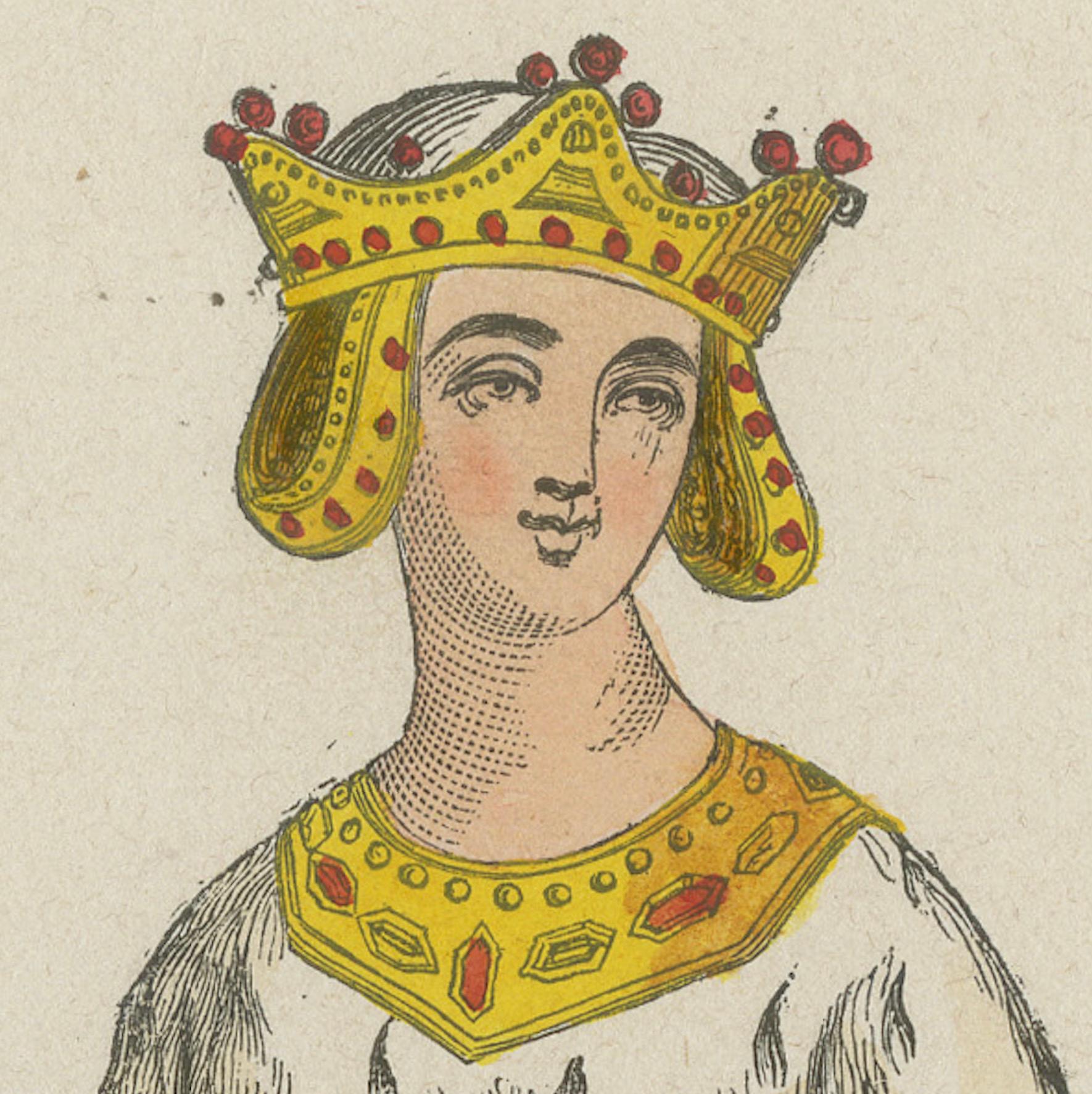
Marie's visage is framed by a delicate, golden crown studded with gems, suggesting her high status and royal connection. Her neck is graced with a necklace that echoes the richness of her crown, and her posture is upright, exuding confidence and composure. The outer cloak that drapes over her shoulders is made of luxurious fur, indicative of the wealth and prestige afforded to her status.
The artist's attention to detail is meticulous, from the finery of her attire to the poised expression on her face, which conveys a sense of serene command. The background remains intentionally unadorned, ensuring the viewer's focus is on the sophistication of her costume and the inherent nobility of her bearing.
This piece not only serves as a historical representation of the fashion of medieval nobility but also provides a narrative on the societal roles and expectations of women of high birth during the Middle Ages. It reflects a deep appreciation for the artistry of the time, achieved through careful study of medieval manuscripts, paintings, and contemporaneous monuments, bringing the richness of the past to the present through visual splendor.
The colors have a nice glow over them. Historically, egg whites, known as glair, and sometimes egg yolk were indeed used in illumination and painting, particularly in manuscripts, to give colors a brighter appearance and to add a sheen or gloss to the work. This technique was quite common during the Middle Ages and into the Renaissance.
Egg whites can be applied as a varnish over pigments to enhance their brightness and to protect the colors. This application could make the colors appear more vivid and also add a slight glossy sheen to the surface of the image.
Egg yolk, on the other hand, was commonly used as a binding agent in paint. It forms the basis of tempera paint, a medium that was widely used before the advent of oil painting. Egg yolk helps to create a durable and long-lasting color that adheres well to various surfaces.
In the context of the print from 1847, it's less likely that egg whites or yolks were used directly on the print, as by that time, commercial printing processes would have been more advanced and less reliant on such manual methods. However, if this print is a representation of an earlier style or is meant to mimic the appearance of hand-painted manuscripts, the original artists might have employed techniques or materials that gave a similar effect to those achieved with egg-based binders and varnishes.