About this sheet
Antique Persian Decorative Art Prints: Architecture, Ceramics, and Textiles, 1887
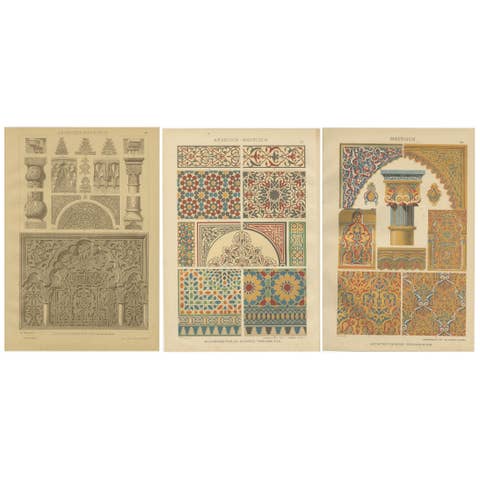
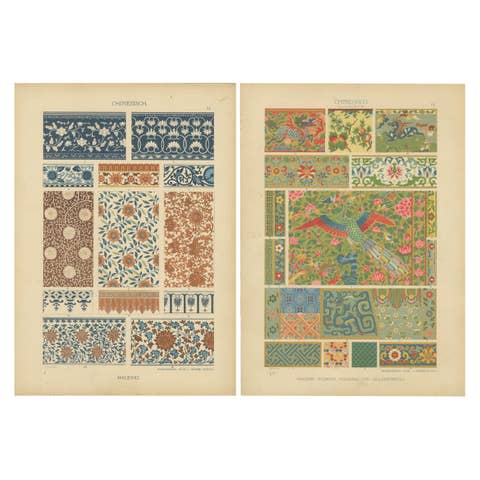
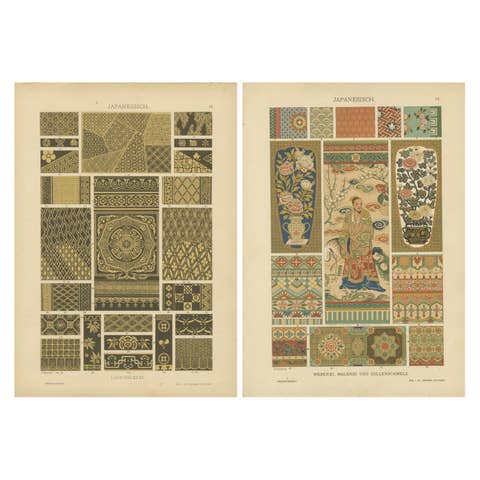
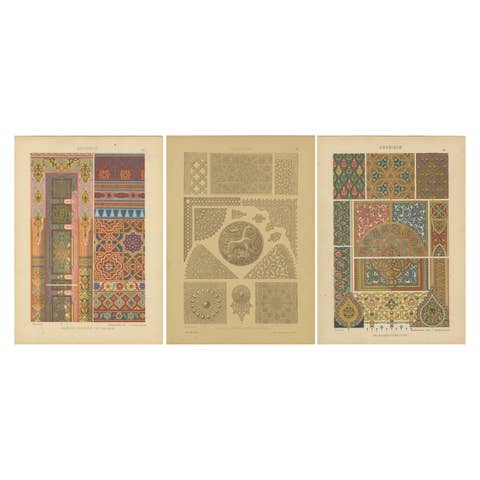
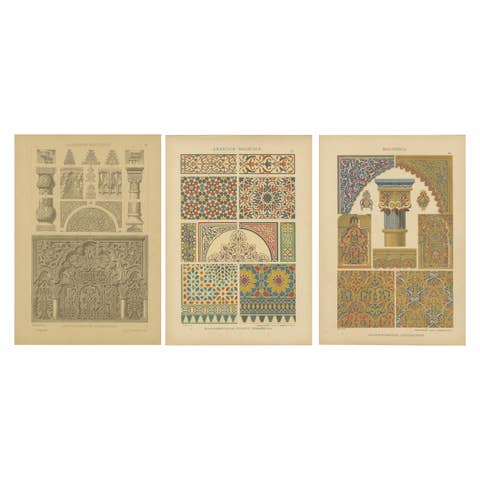
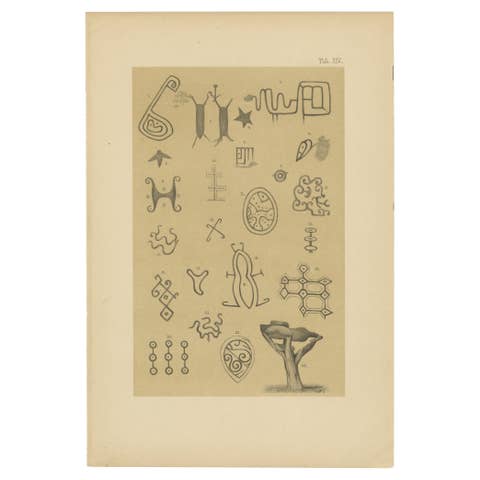
This stunning trio of antique prints offers an in-depth view into the refined beauty of Persian decorative arts, as illustrated in the 1887 design compendium Der Ornamentenschatz (The Treasury of Ornament), published by Julius Hoffmann in Stuttgart. Compiled by architect and art historian H. Dolmetsch, this series was one of the most comprehensive 19th-century attempts to document ornamental styles from around the world for artistic and scholarly study.
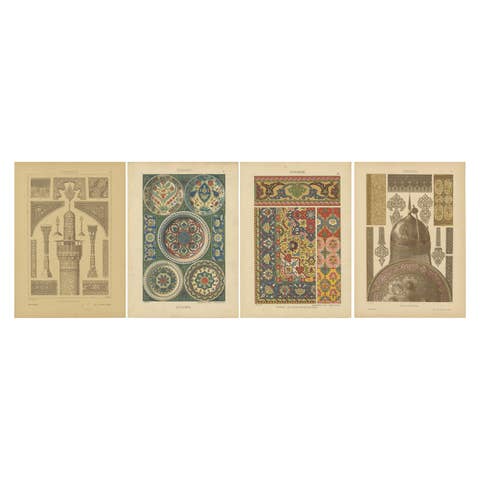
The first plate, labeled Architektur (Architecture), is a monochrome study of Persian architectural ornamentation, showcasing minarets, columns, arches, and cornices richly detailed with calligraphic panels and interlaced vegetal patterns. Islamic geometrical precision meets artistic delicacy, reflecting the influence of Safavid and Timurid aesthetics. The central tower, with its octagonal base and layered ornament, is flanked by intricately rendered columns and muqarnas-style spandrels, capturing the grandeur of Persian mosques and palaces.
The second plate, titled Keramik (Ceramics), bursts into vibrant color and celebrates the art of Persian glazed pottery. Five decorative dishes take center stage, each encircled by lush floral and geometric tile designs. The palettes of deep turquoise, cobalt blue, rich red, and ivory evoke the rich ceramic traditions of Isfahan and Kashan, known for their technical excellence and lyrical beauty. Each dish features symmetrically arranged flowers, peacocks, or arabesques that not only serve as decorative elements but also convey cultural meaning and symbolic harmony.
The third plate highlights Weberei und Manuskriptmalerei (Weaving and Manuscript Painting), and features brilliant examples of Persian textile and miniature design. Colorful floral medallions, ornate carpet motifs, and richly illuminated manuscript borders reflect the opulence and intellectual sophistication of Persian visual culture. The central composition resembles a carpet or tapestry, with swirling vine patterns and stylized blooms rendered in bright pinks, ochres, blues, and greens.
Together, these three prints offer a compelling journey into the world of Persian ornament—where architecture, ceramics, and fine art intersect in a language of elegance and precision.
These prints are in good antique condition. Color saturation remains strong on the chromolithographs, and the black-and-white architectural print shows excellent contrast. Minor age toning and the occasional foxing spot are consistent with their age. The paper is firm and clean, and the reverse sides are blank.
Framing Tips:
To display these as a cohesive set, use neutral-toned mats (off-white, light beige, or pale gray) and consider thin gold, dark wood, or black frames to complement both the monochrome and color elements. Spacing them evenly in a horizontal or vertical arrangement will emphasize their unity while allowing each theme—architecture, ceramics, and textiles—to stand out in its own right. Ideal for interiors that appreciate Islamic art, Middle Eastern history, or classical design heritage.