Original antique · The actual sheet photographed · Certificate of authenticity on request · Sold unframed · Worldwide shipping from € 15 (rates)
Date
1888
Mapmaker / artist
Albert Racinet, published by Firmin-Didot & Cie, Paris, circa 1876–1888
Technique
Chromolithograph
Sheet size
18.8 × 20.9 cm (7.4 × 8.2 in)
Condition
Good
Reference
BG-11635-4-75
What the condition grades mean
Excellent
Bright and clean, with no faults worth mentioning.
Very good
Only light signs of age, such as faint toning.
Good
Normal signs of age for a sheet of this period: toning, some foxing, small marks or neat old repairs.
Fair
Clear faults such as staining, tears or repairs, priced to match.
Every fault we see is written in the condition note, and the whole sheet is shown uncropped in the photos.
Condition
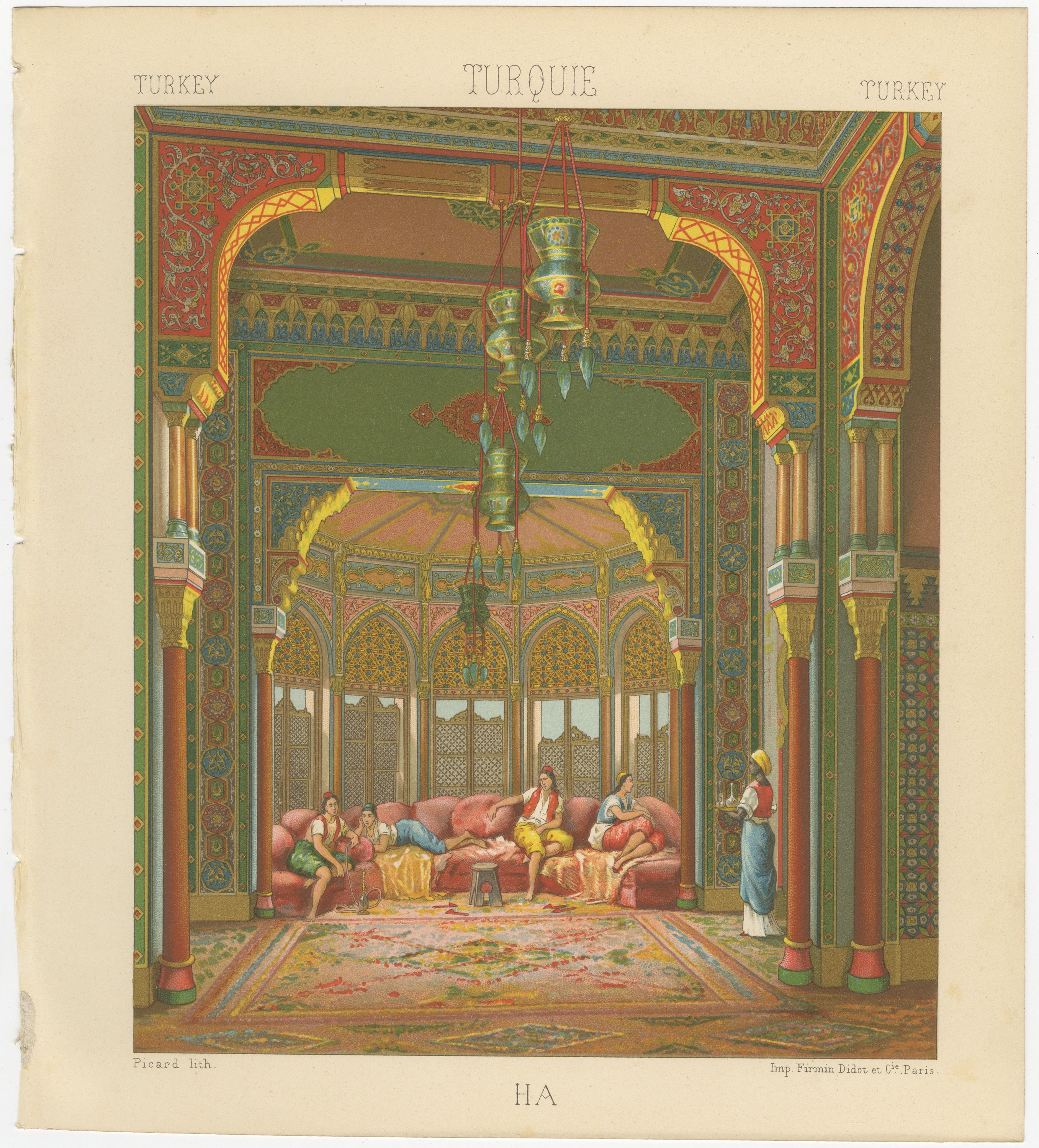
Good antique condition with age-related toning, light foxing, and minor edge wear. Some faint irregularities along the margins from original binding. Colors remain strong and well preserved. No major damage observed.
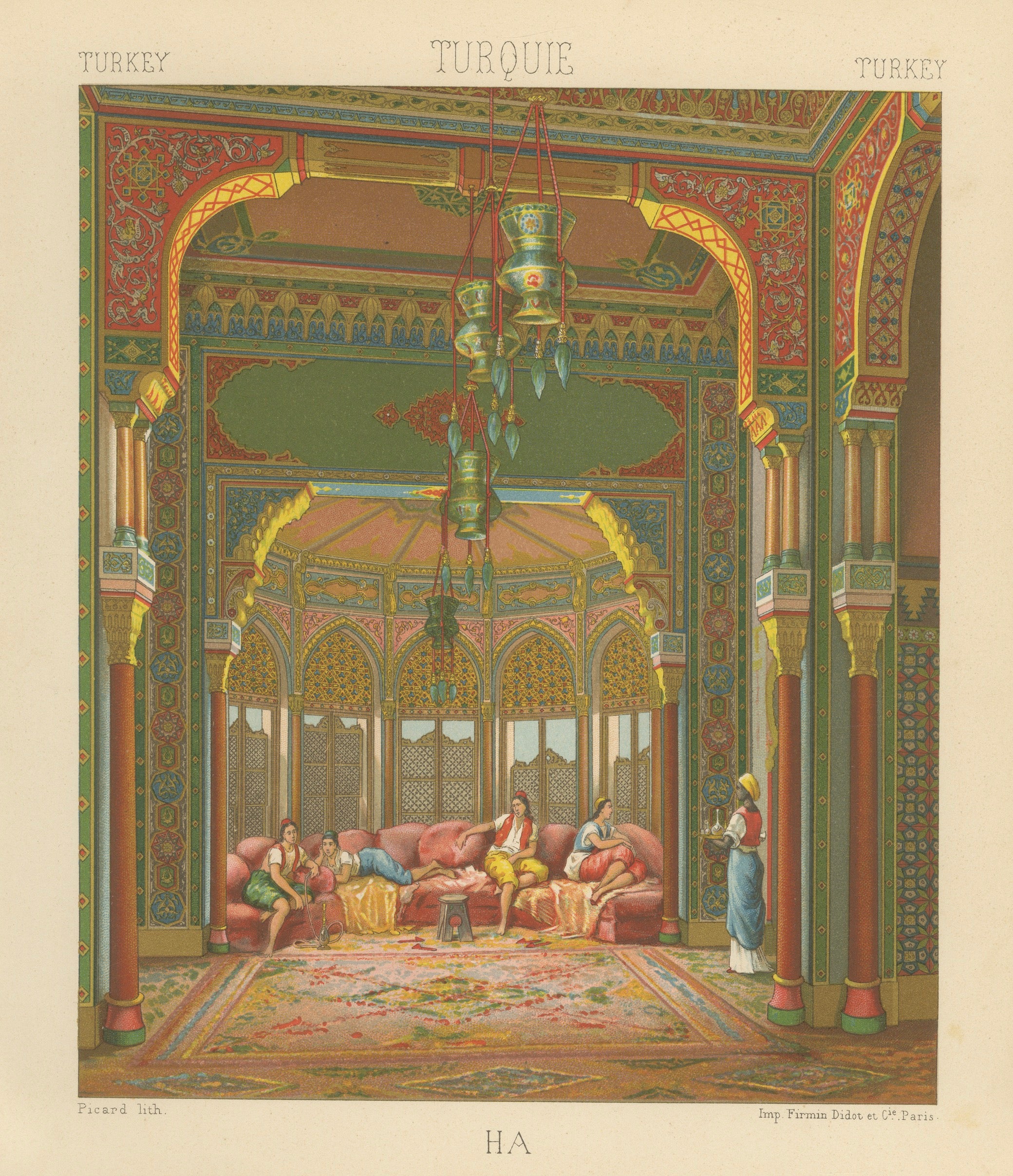
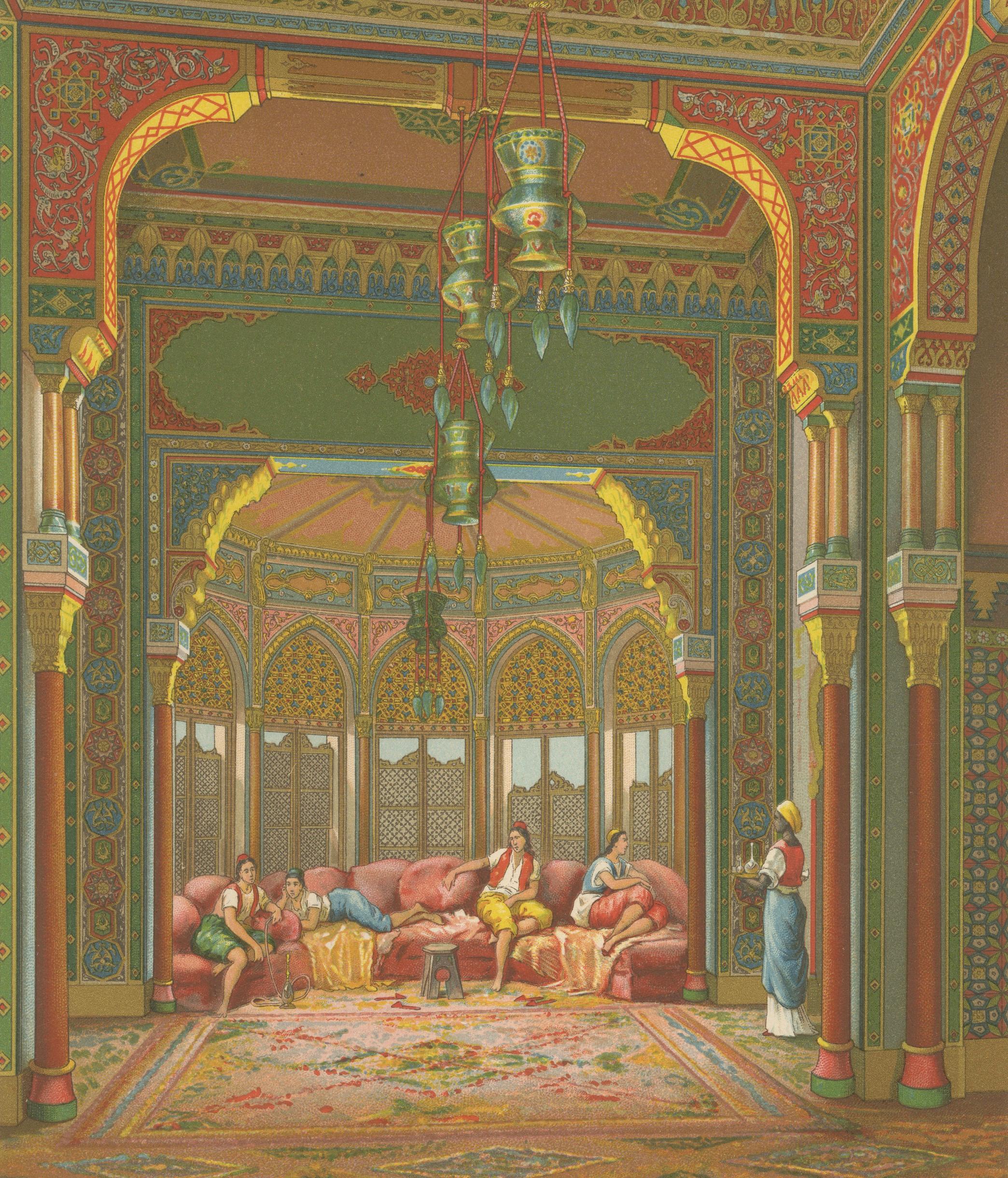
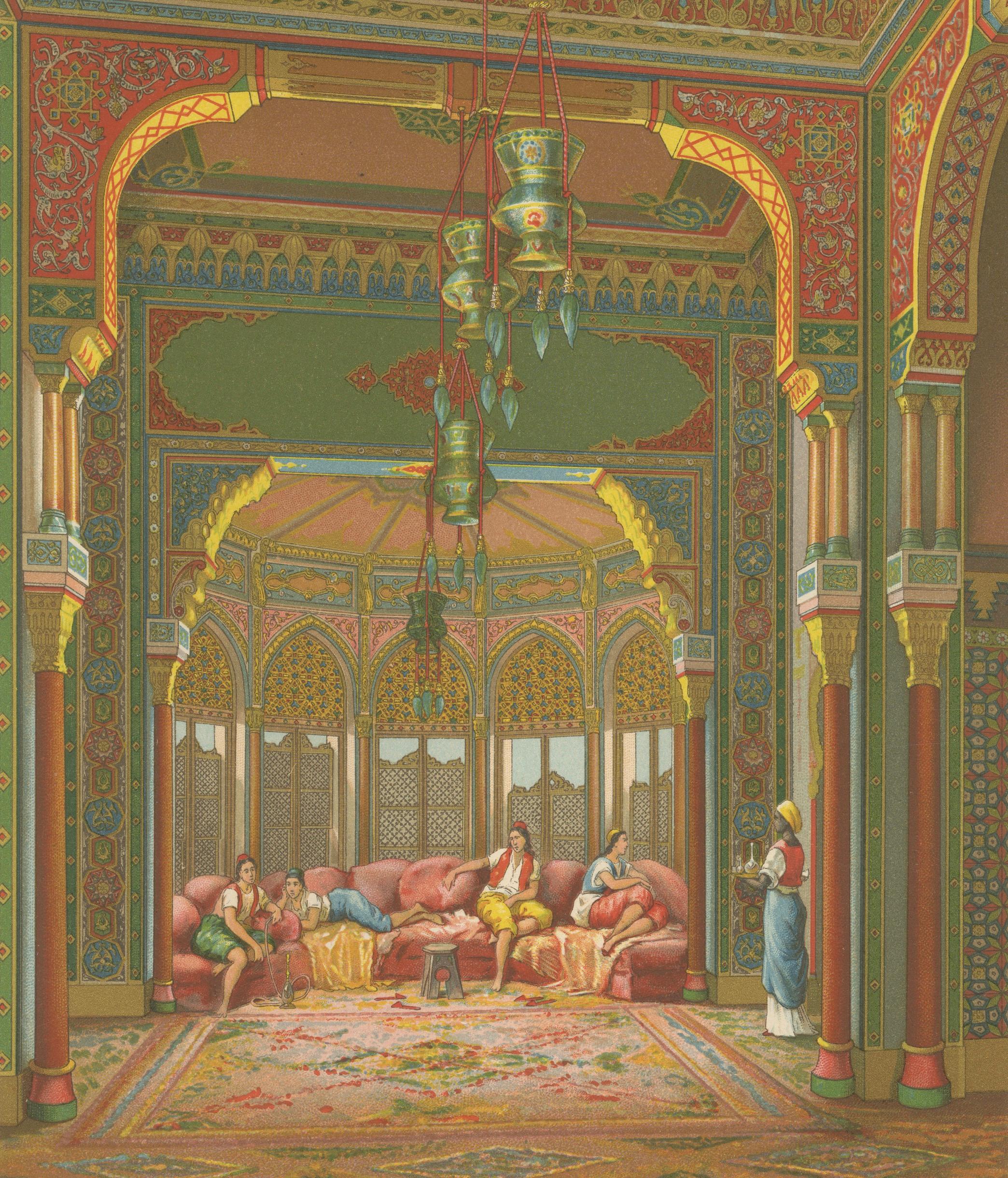
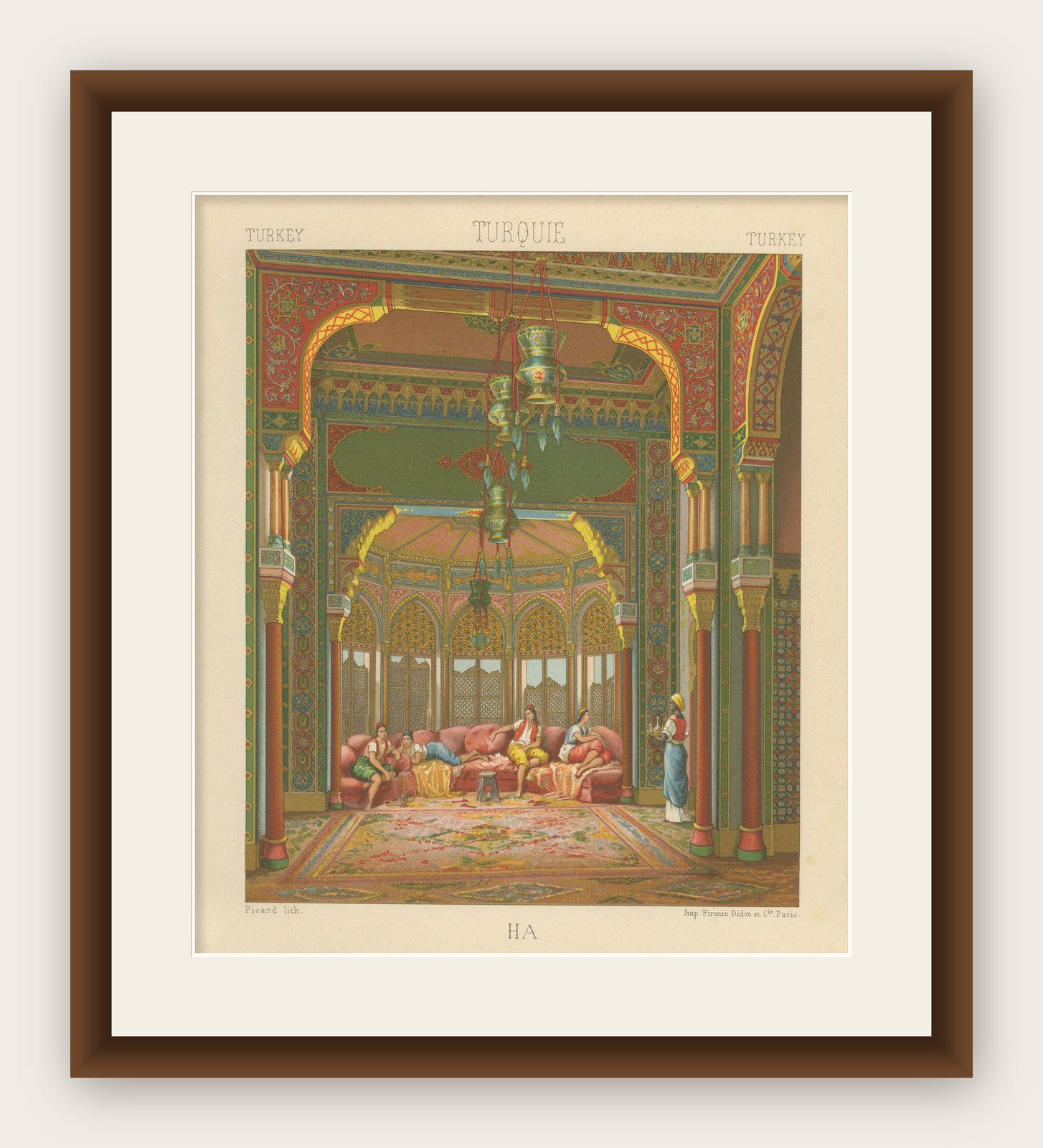
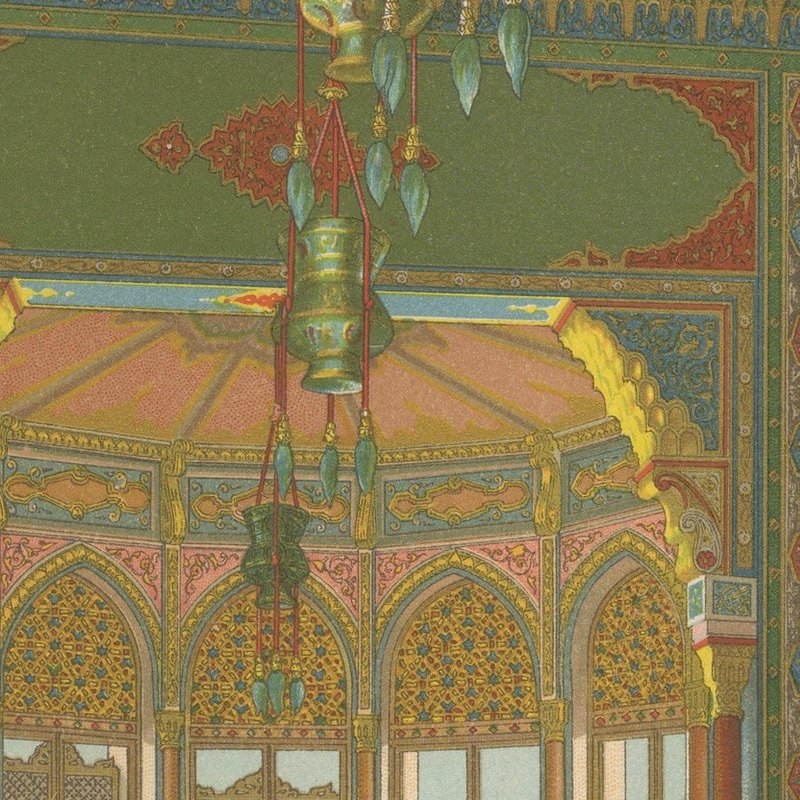
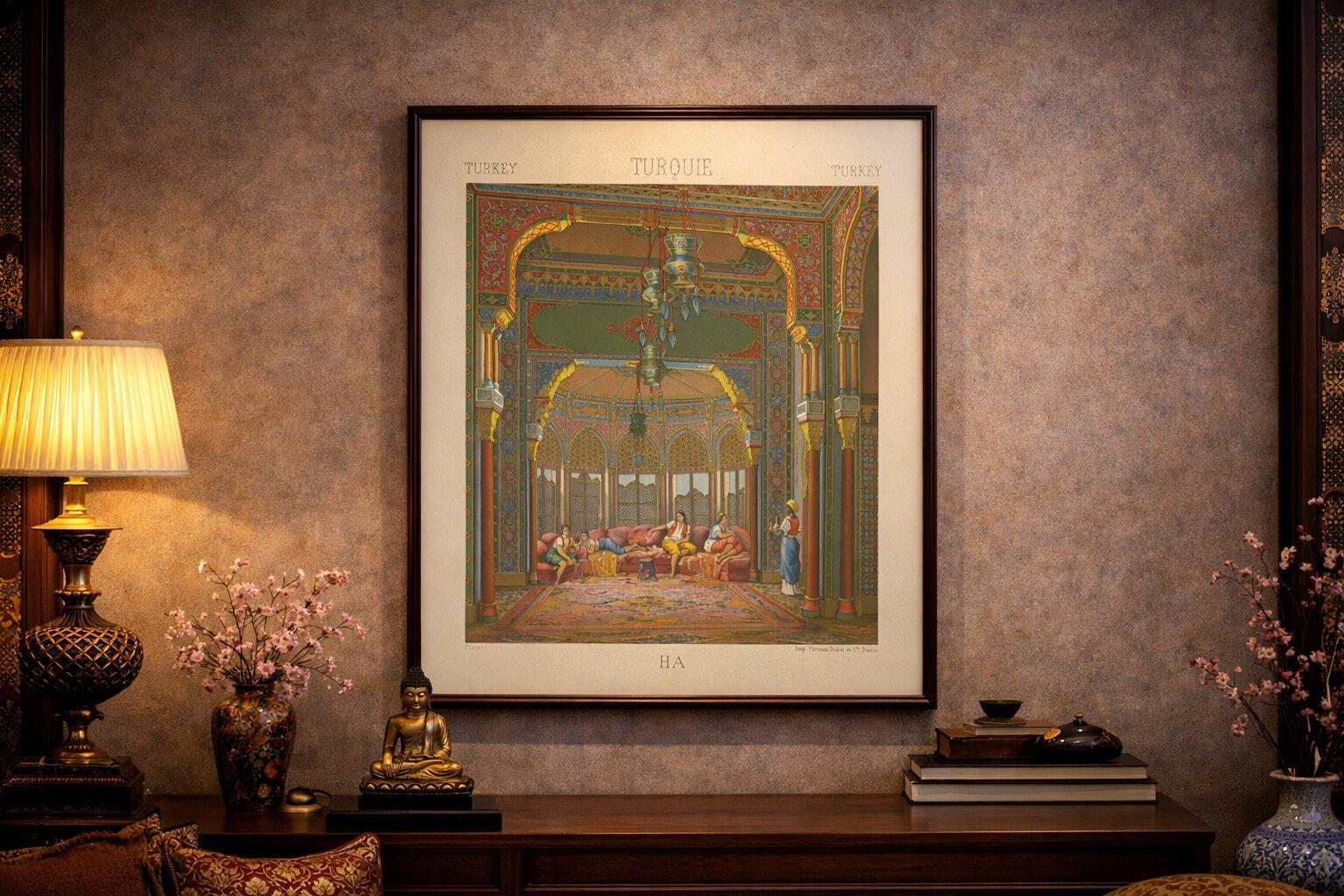
A richly detailed and highly decorative 19th-century chromolithograph depicting an opulent Ottoman interior, commonly identified as a Turkish harem or palace chamber. This striking composition originates from the celebrated publication Le Costume Historique by the French artist and historian Albert Charles Auguste Racinet, published in Paris by Firmin-Didot & Cie circa 1888.
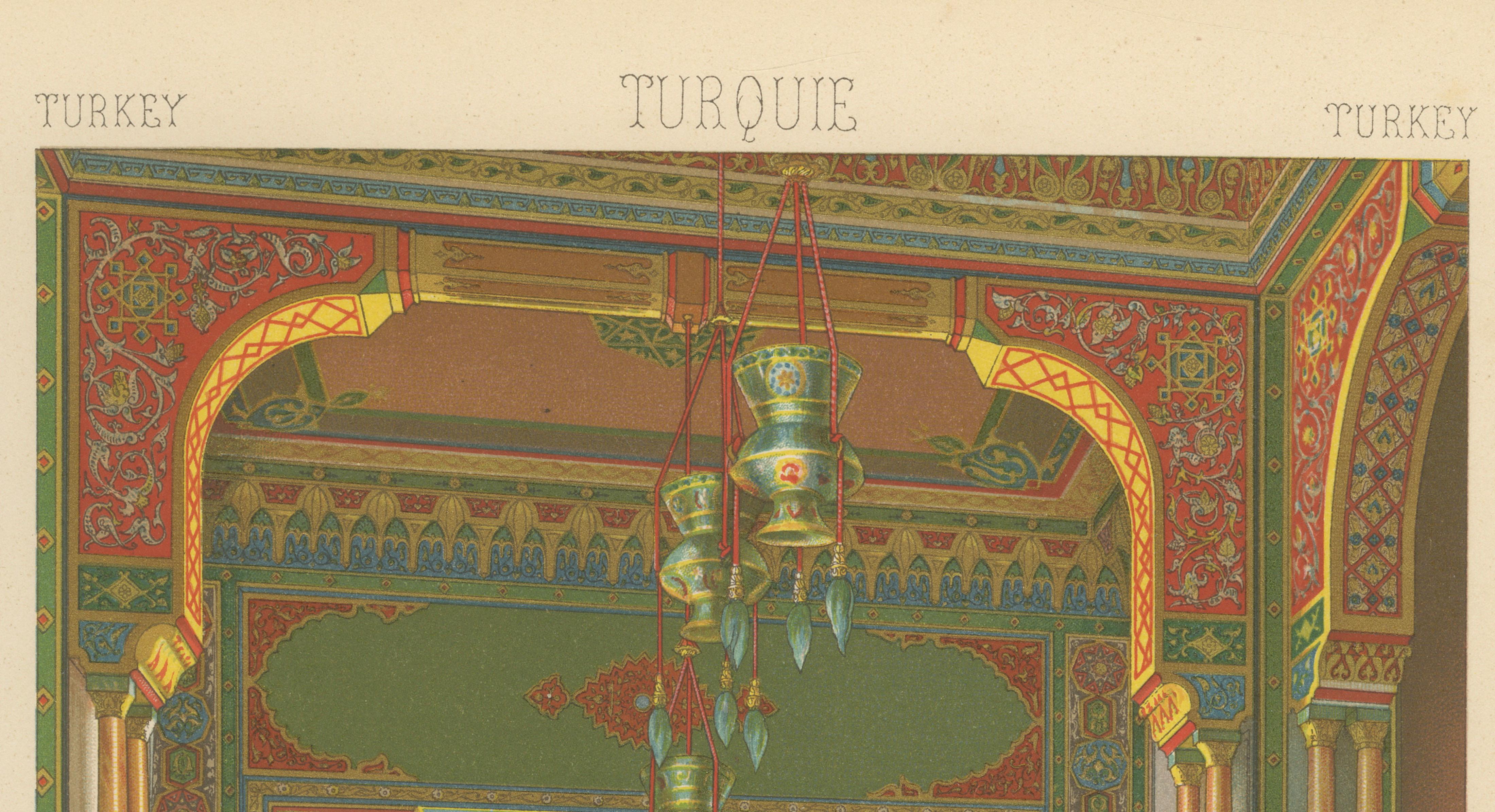
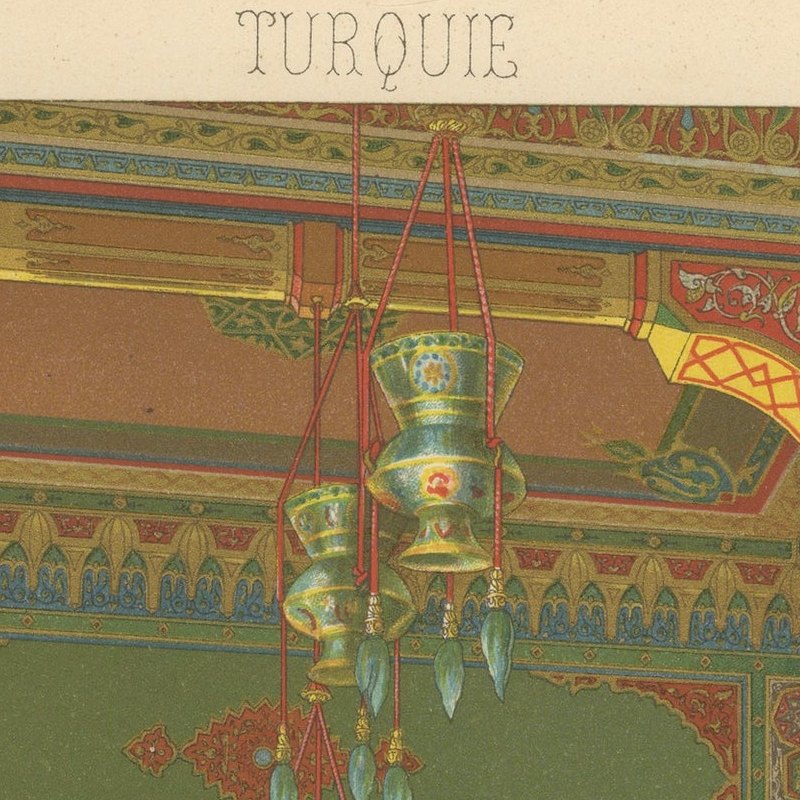
The scene presents an atmospheric and architecturally refined interior, characterized by elaborate Moorish-style arches, vividly colored ornamental panels, and finely patterned surfaces. A central domed alcove with delicate lattice windows forms the focal point, while richly decorated columns and intricate geometric motifs frame the composition. Suspended from the ceiling, ornate hanging lamps add vertical emphasis and reinforce the luxurious ambiance of the space.
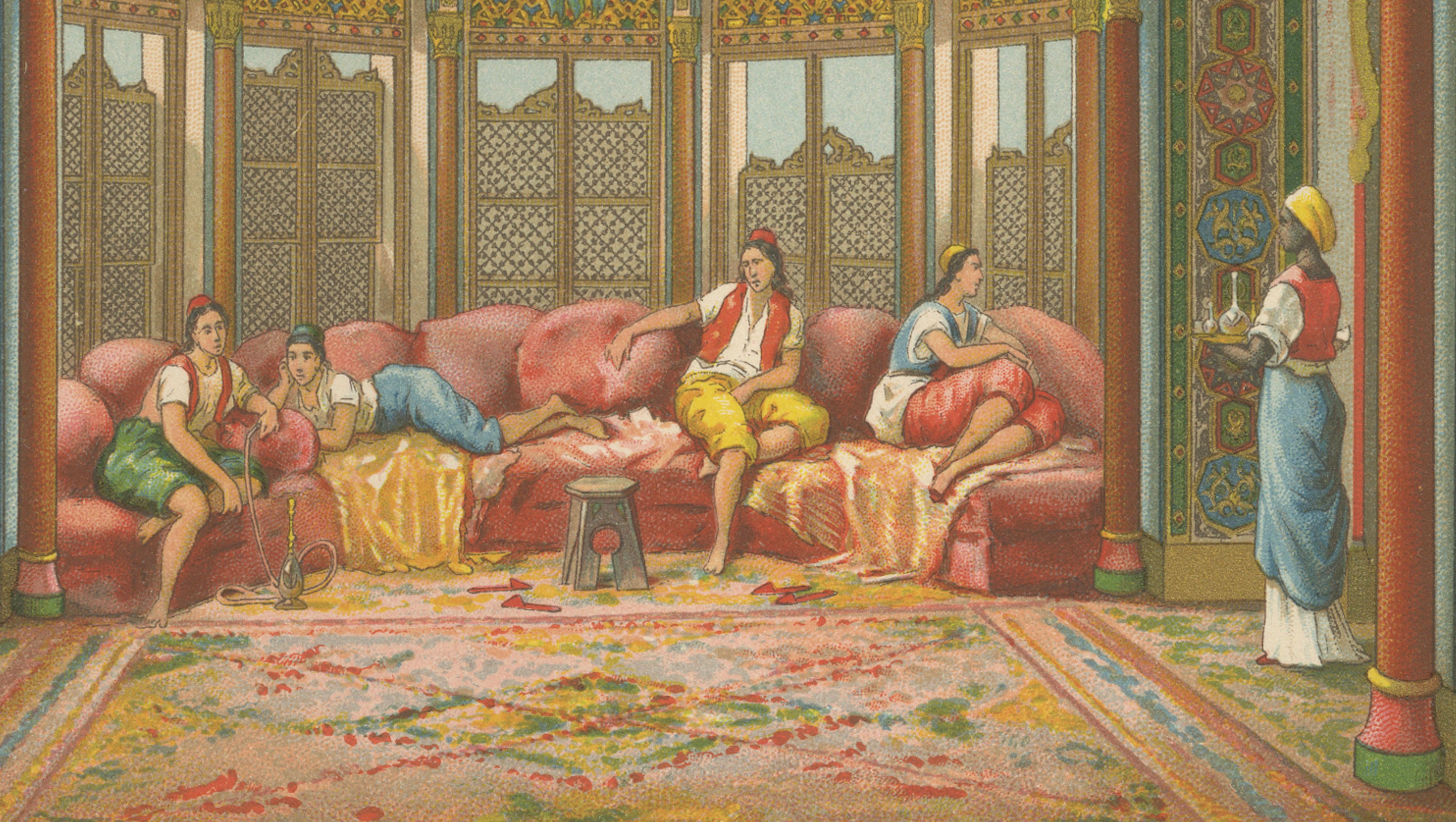
In the foreground, a group of figures reclines on plush cushions, dressed in stylized Ottoman attire. Their presence adds both narrative and scale, offering a glimpse—through a 19th-century European lens—into the perceived lifestyle of palace interiors within the Ottoman world. The composition balances architectural precision with decorative richness, making it both visually captivating and culturally evocative.
The lithograph was executed by Picard after a watercolor by Stéphane Baron, translating painterly detail into finely printed color. The chromolithographic technique achieves a vibrant yet harmonious palette, with deep reds, greens, and gold tones that enhance the sense of depth and ornamentation.
This print stands out as a statement piece, combining architectural elegance with historical imagination. It is particularly well suited for interior designers and collectors seeking a visually impactful work that blends cultural subject matter with strong decorative appeal.
Framing tips: This piece benefits from a wide ivory or warm off-white mat paired with a thin dark walnut or black frame. Its horizontal composition makes it ideal above a console, sofa, or desk, where it can function as a central focal artwork.
Note: The interior mockups are for visual inspiration only and do not represent the exact scale. We do not sell reproductions, only original works of art over 100 years old.