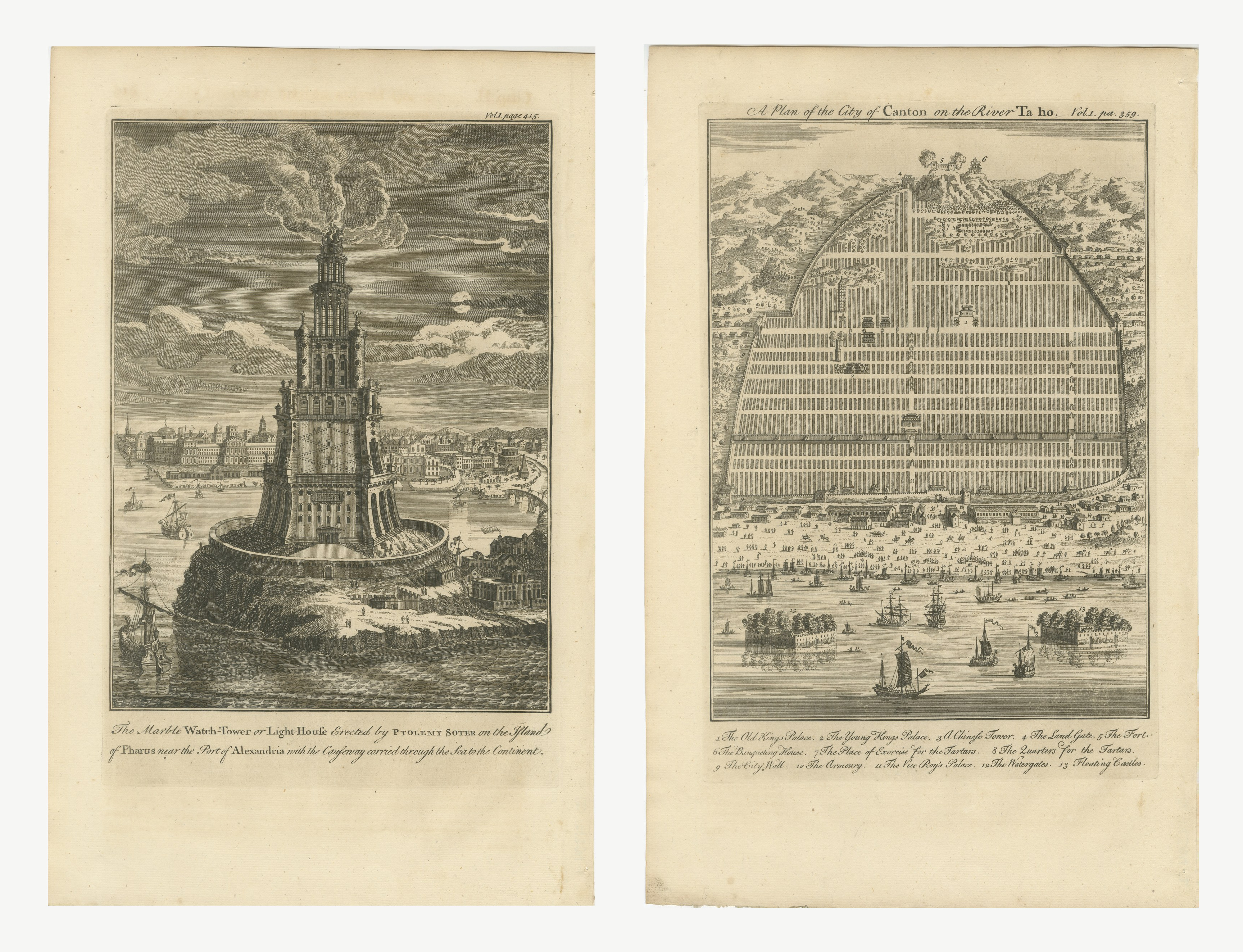
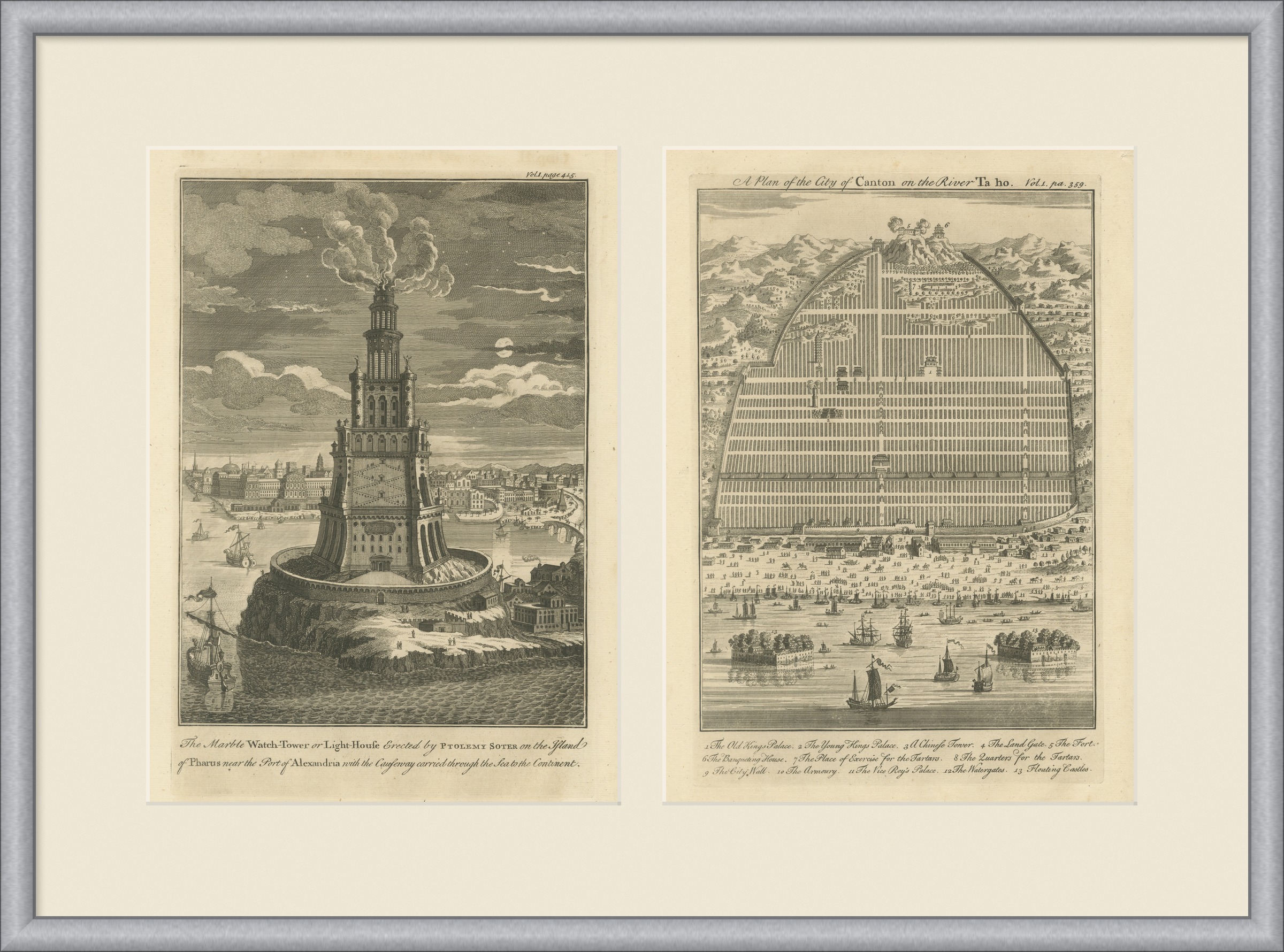
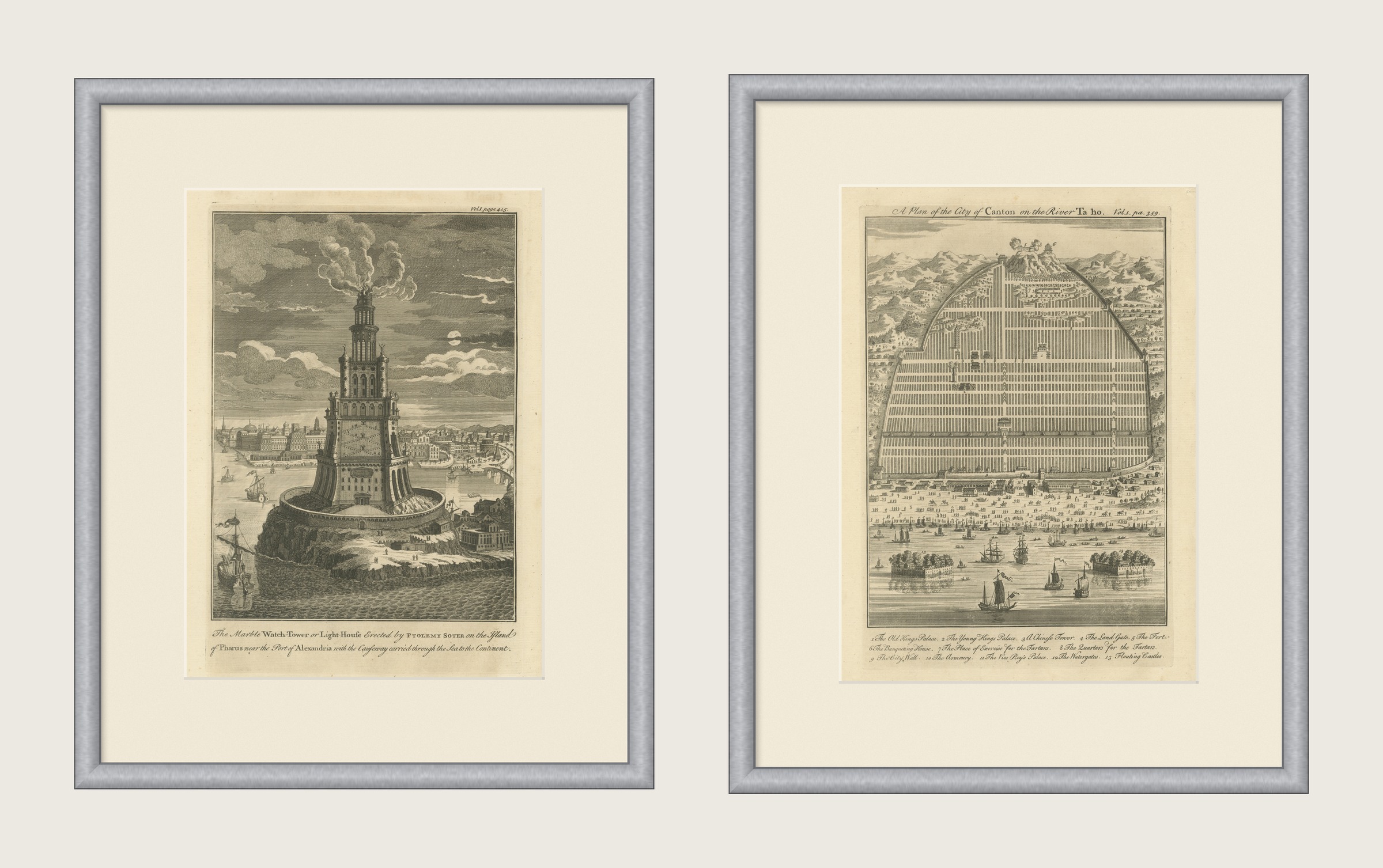
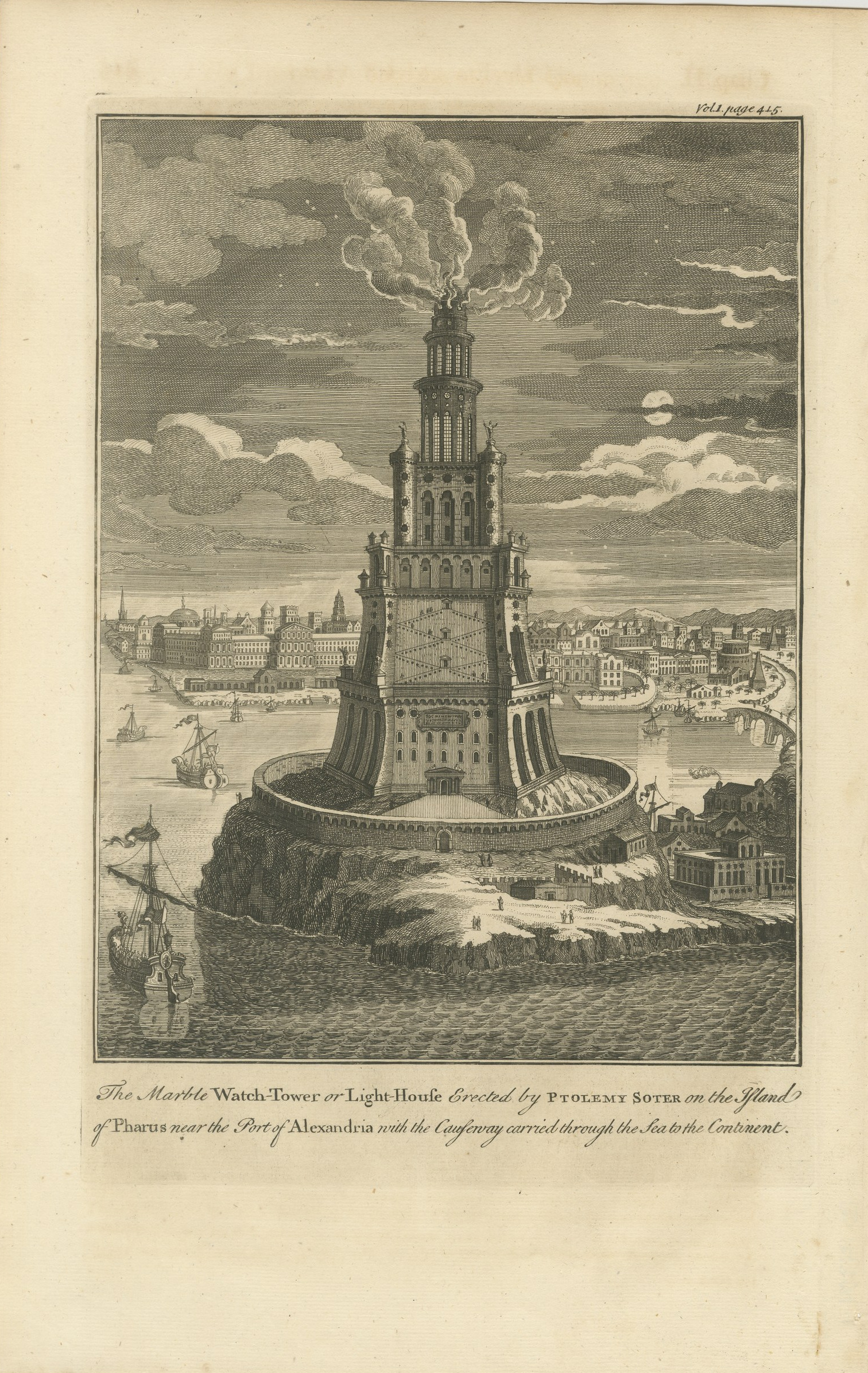
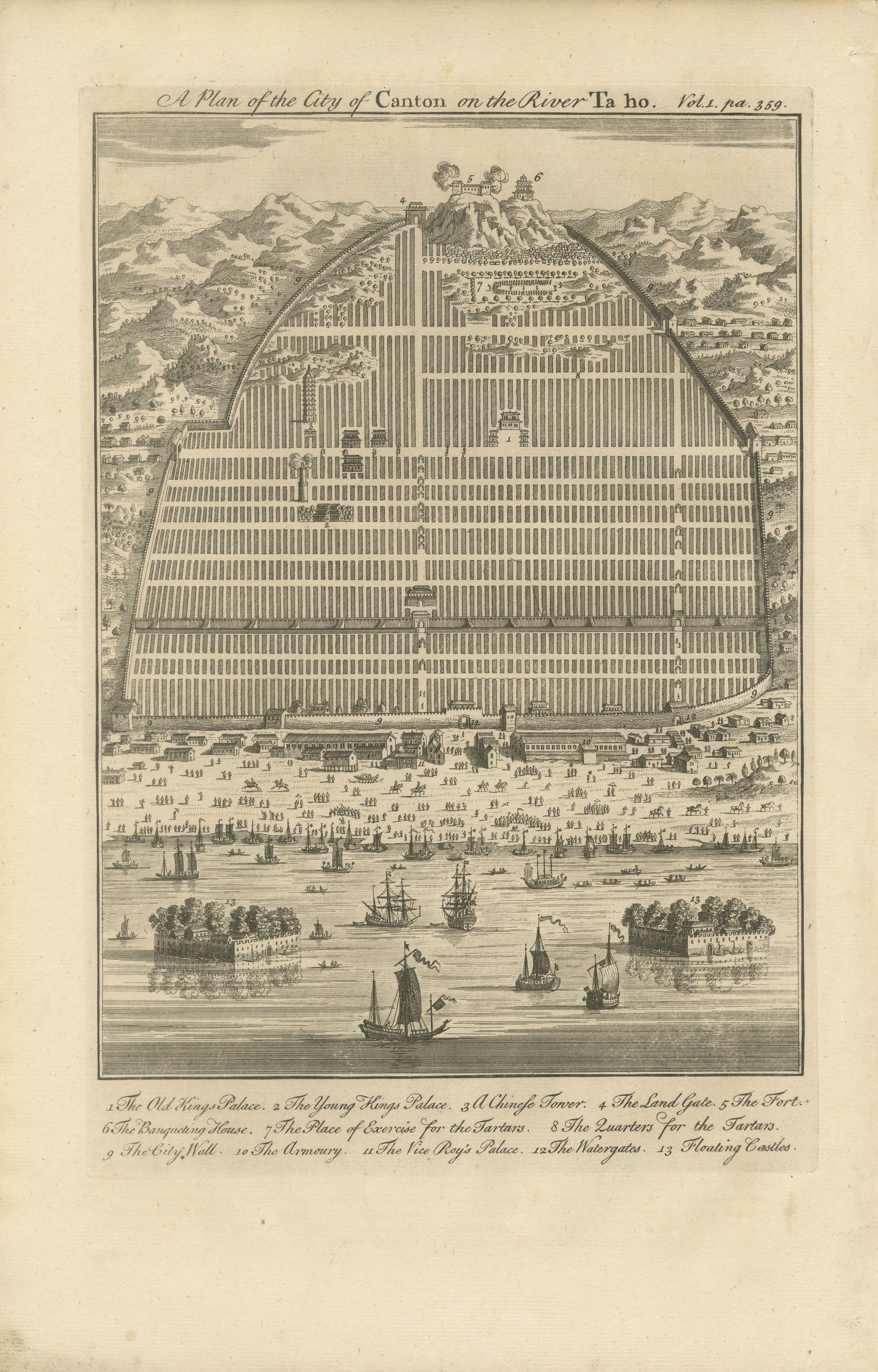
The Pharos of Alexandria and the City of Canton, Engravings, Pair, circa 1745
€ 660
Original antique · The actual sheet photographed · Certificate of authenticity on request · Sold unframed · Worldwide shipping from € 15 (rates)
Date
circa 1745
Mapmaker / artist
Emanuel Bowen, engraver, attributed
Publisher
Printed for T. Woodward and others, London
Technique
Copper Engraving
Coloring
Uncolored
Sheet size
40 × 25.5 cm (15.7 × 10.0 in)
Condition
Good
Reference
BG-14394-1
What the condition grades mean
Excellent
Bright and clean, with no faults worth mentioning.
Very good
Only light signs of age, such as faint toning.
Good
Normal signs of age for a sheet of this period: toning, some foxing, small marks or neat old repairs.
Fair
Clear faults such as staining, tears or repairs, priced to match.
Every fault we see is written in the condition note, and the whole sheet is shown uncropped in the photos.
Condition
Light uneven toning, browner towards the edges. Marked handling soiling along the edges of both sheets. Scattered foxing in the margins of both sheets. Slight wear at the corners of both sheets.
About this sheet
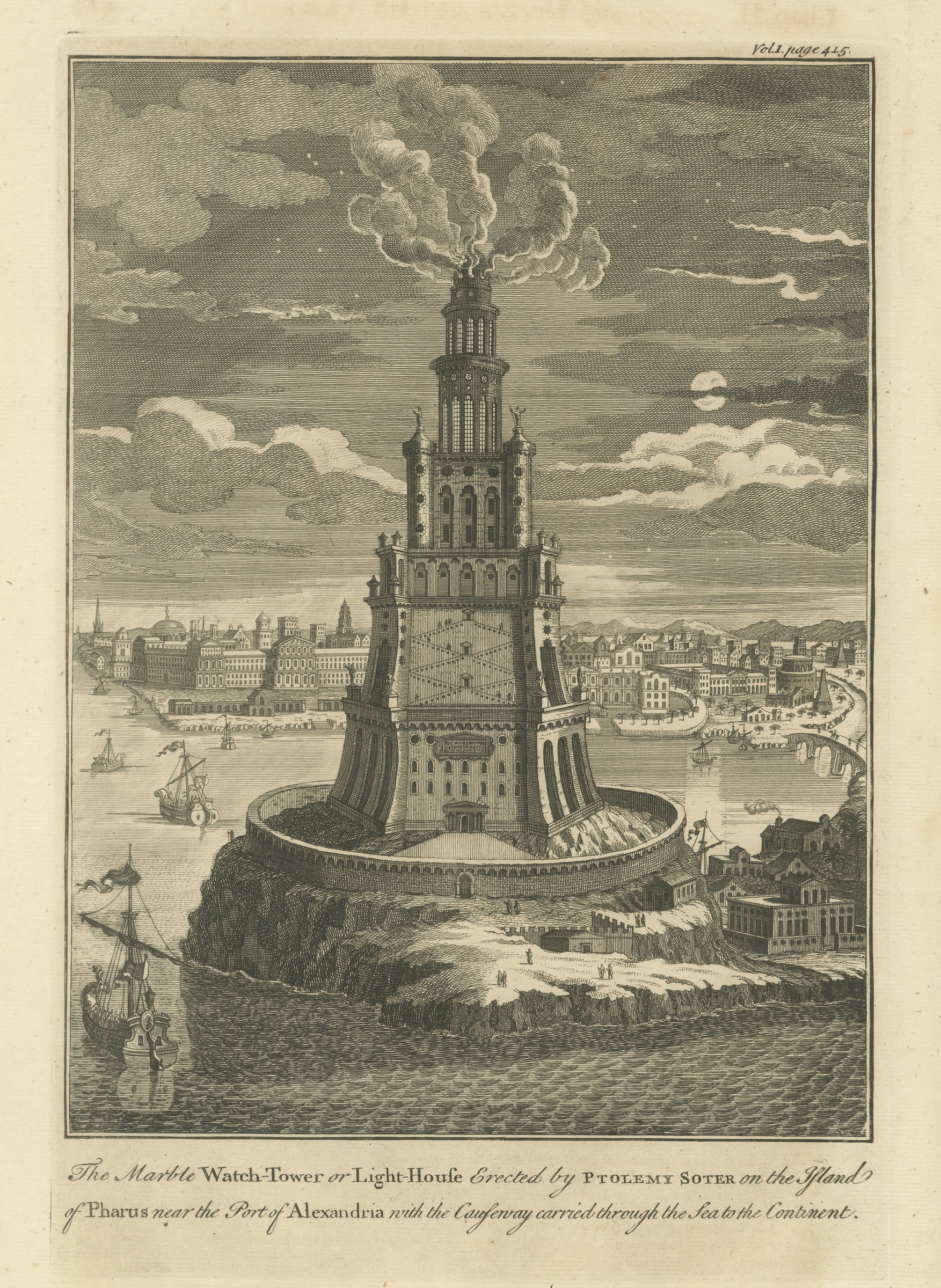
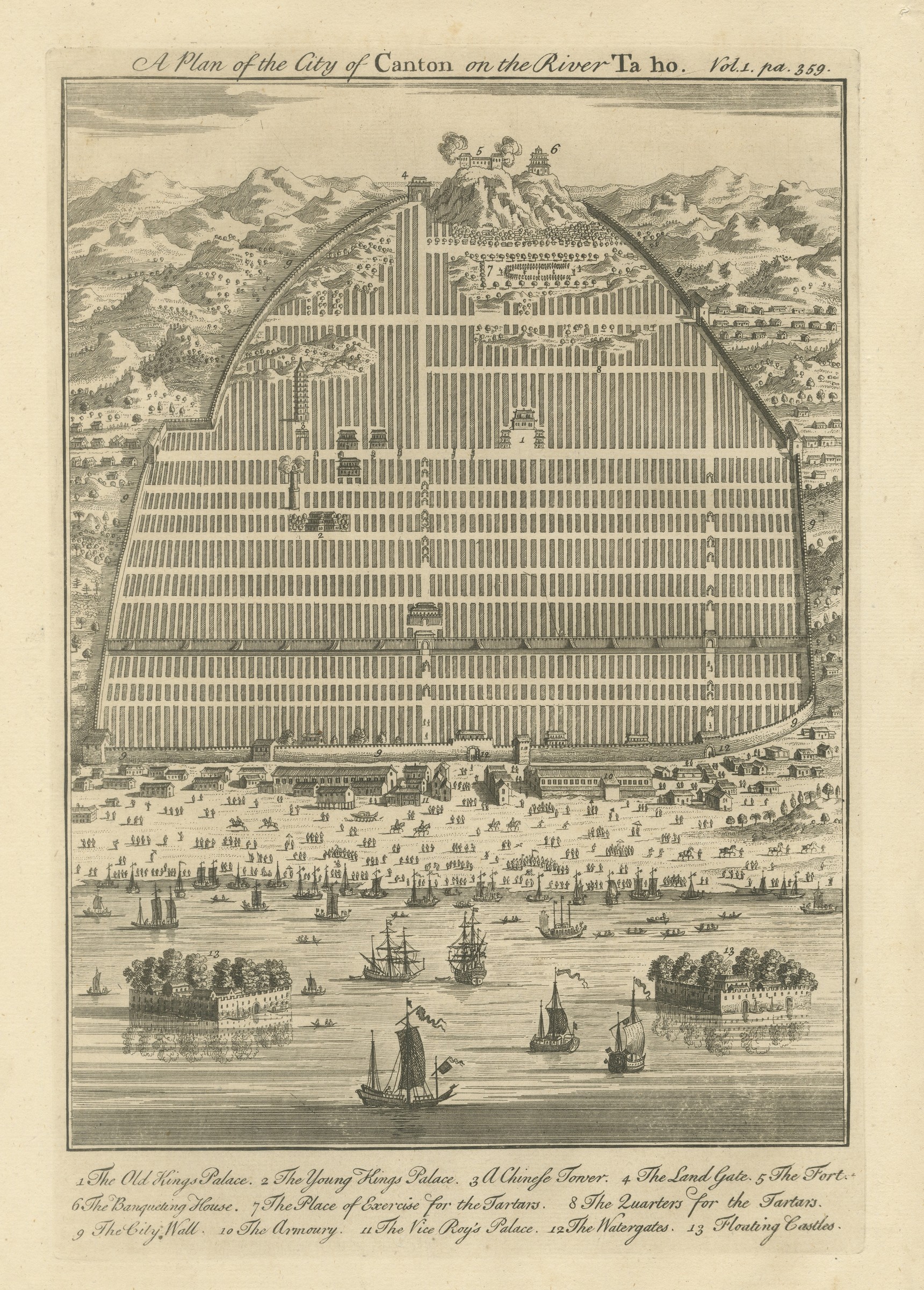
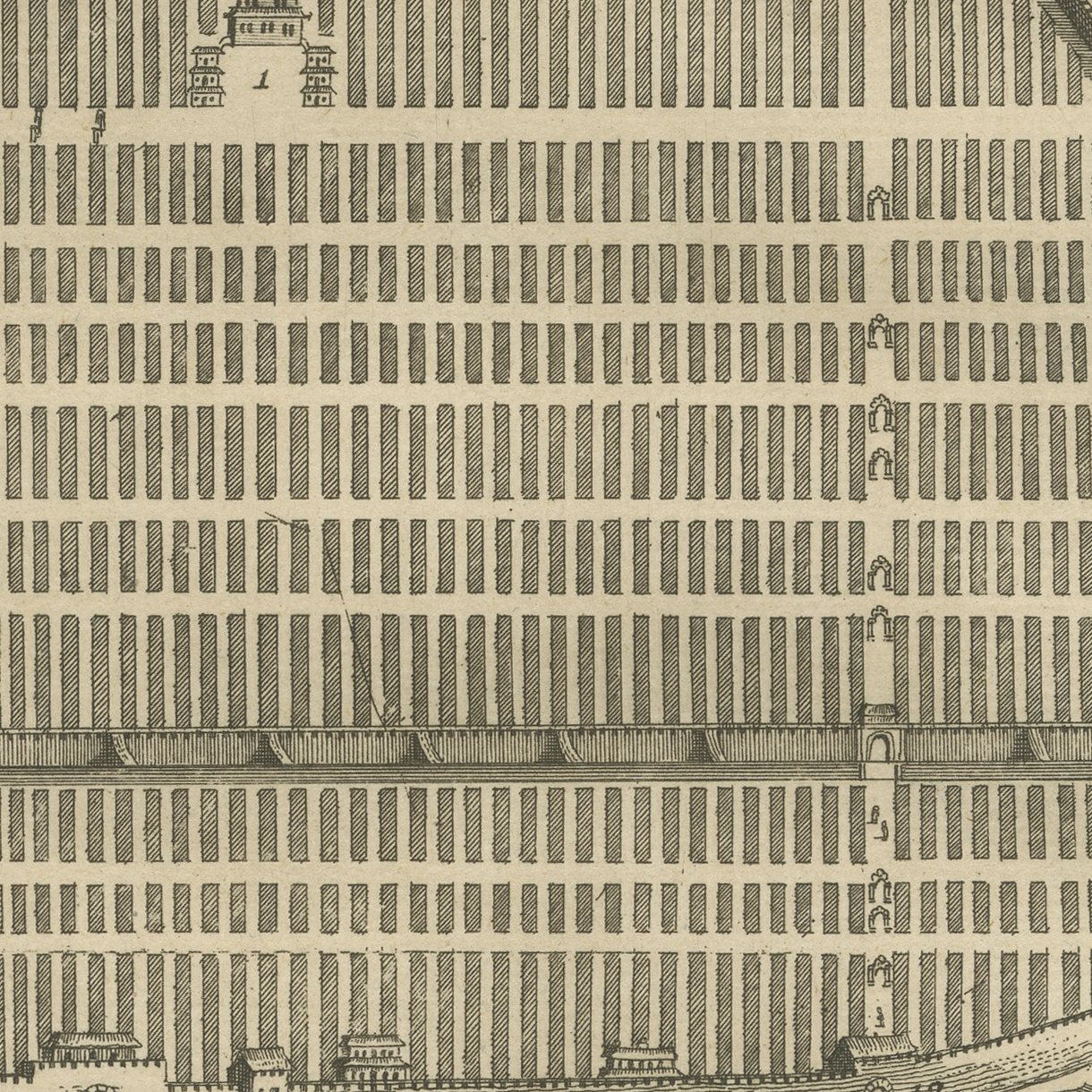
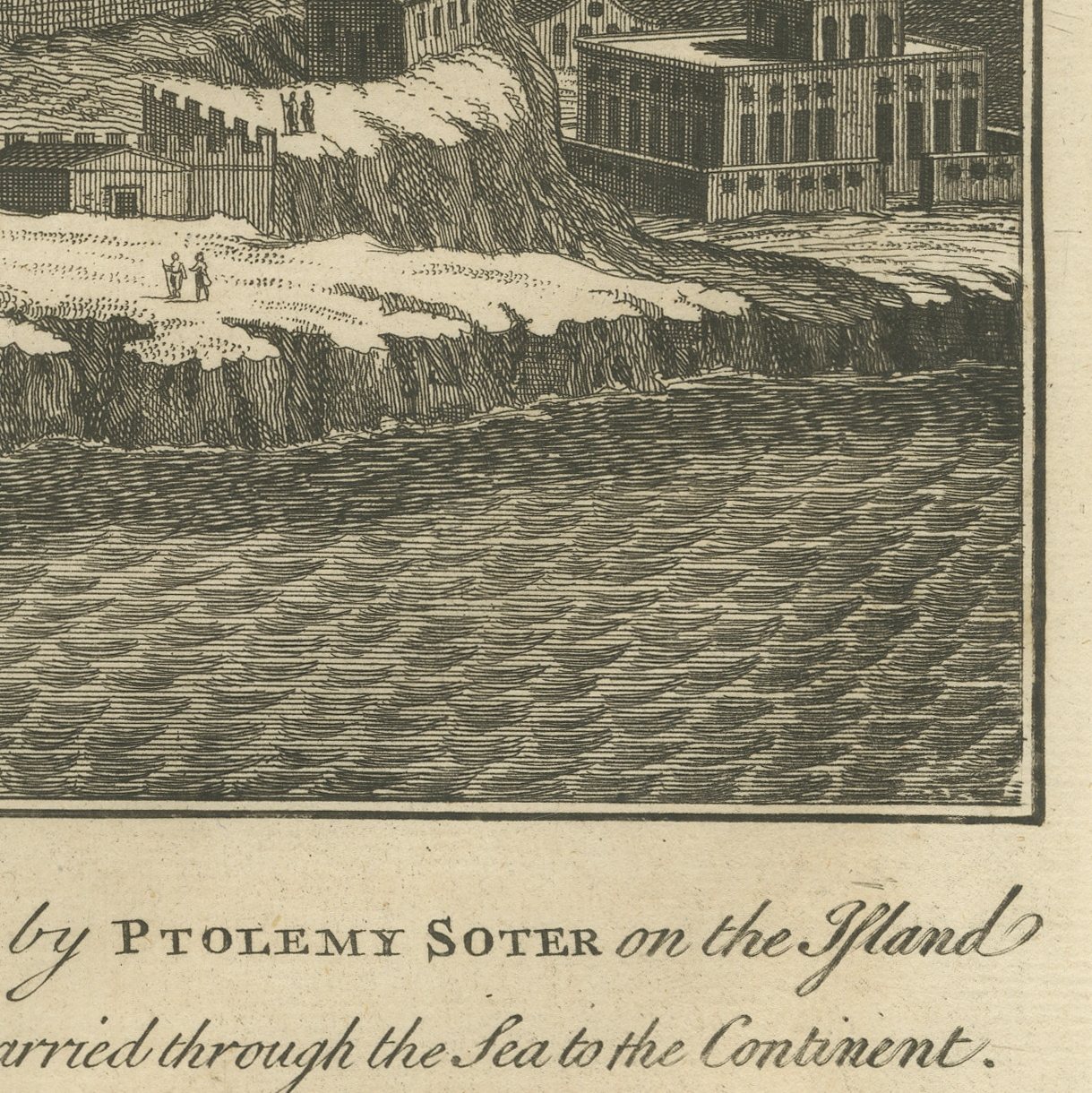
A pair of original antique copper engravings of two of the great cities of the east, one ancient and one then living, sold together and not separately. The first is lettered The Marble Watch-Tower or Light-House Erected by PTOLEMY SOTER on the Island of Pharus near the Port of Alexandria with the Causeway carried through the Sea to the Continent; the second is A Plan of the City of Canton on the River Ta ho, with thirteen numbered buildings keyed beneath it. Both are tall upright sheets of the same size, uncolored, on laid paper. They are two original sheets sold together as one lot, and the set is never split.
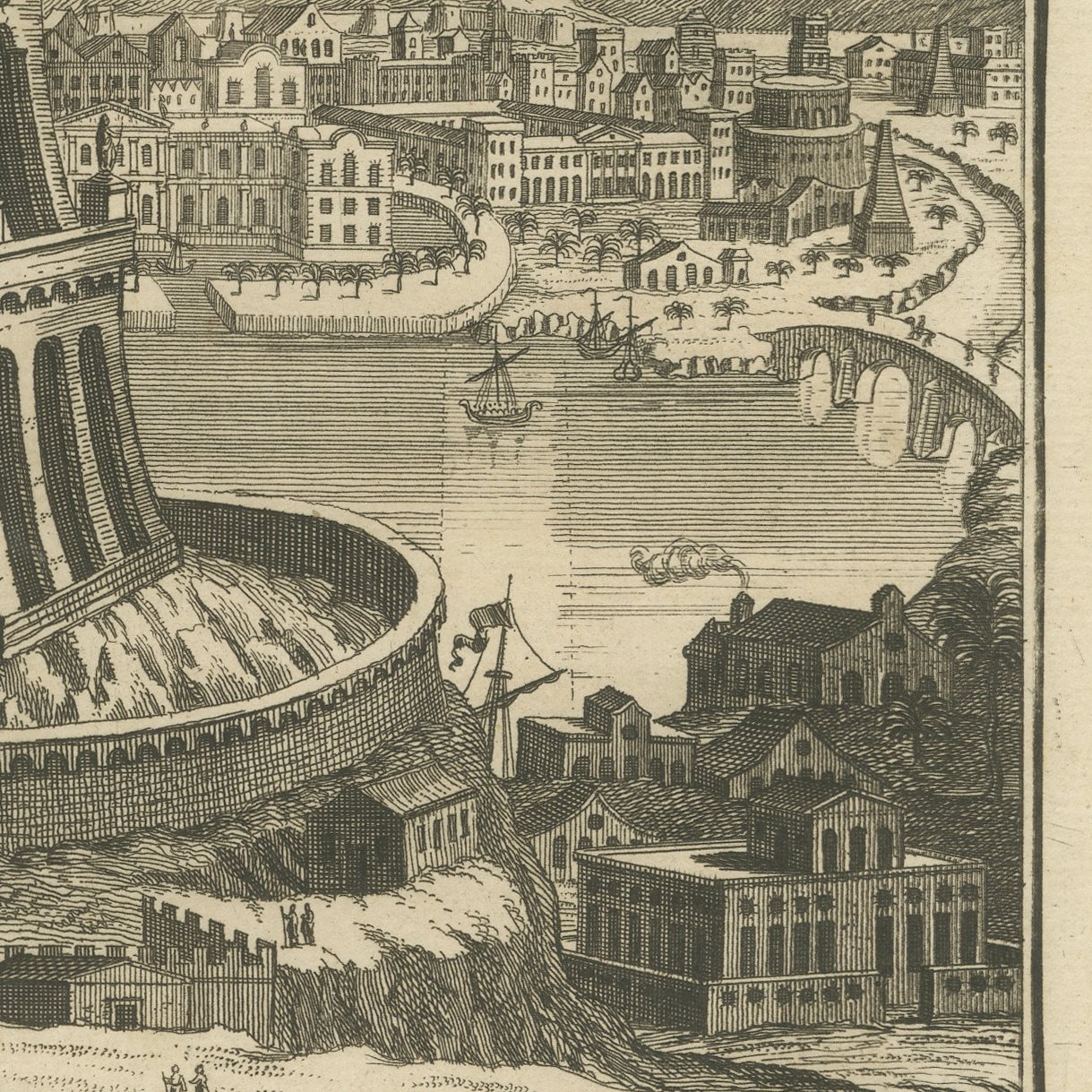
The Pharos sheet is lettered The Marble Watch-Tower or Light-House Erected by PTOLEMY SOTER on the Island of Pharus near the Port of Alexandria with the Causeway carried through the Sea to the Continent. The tower rises in three diminishing stages from a rocky islet with smoke blowing from its beacon, galleys under oar in the foreground and the causeway running away to the city behind. The Canton sheet is a bird's eye plan of the whole city, the walls drawn as a great pointed arch enclosing street after street of courtyard houses, with the river crowded with junks along the foot. Thirteen numbered items are keyed beneath it, among them the Old King's Palace, a Chinese Tower, the Place of Exercise for the Tartars, the Vice Roy's Palace, the Watergates and the Floating Castles.
Both plates were engraved for the enlarged edition of John Harris's Navigantium atque Itinerantium Bibliotheca, published in two folio volumes in London between 1744 and 1748 with text revised by John Campbell, and the view plates are generally attributed to Emanuel Bowen. The Pharos is an antiquarian reconstruction of one of the seven wonders of the ancient world, drawn from the classical descriptions; the Canton plan is a working document of the China trade, drawn from reports brought home by East India Company supercargoes. Set side by side the two sheets make an argument: the lighthouse that guided the ancient world's trade and the river city that dominated the modern world's. The Pharos is the rarer of the two and almost never appears on the market; the Canton plan reaches collectors of China trade material, who are numerous. Both are tall narrow compositions that frame identically and hang well as a pair in a study or a corridor.
Light uneven toning, browner towards the edges. Marked handling soiling along the edges of both sheets. Scattered foxing in the margins of both sheets. Slight wear at the corners of both sheets.
These are original antique prints, not modern reproductions. This item is sold unframed. Any framed or interior images are shown for presentation and inspiration only, unless the listing explicitly states that the item is sold framed.