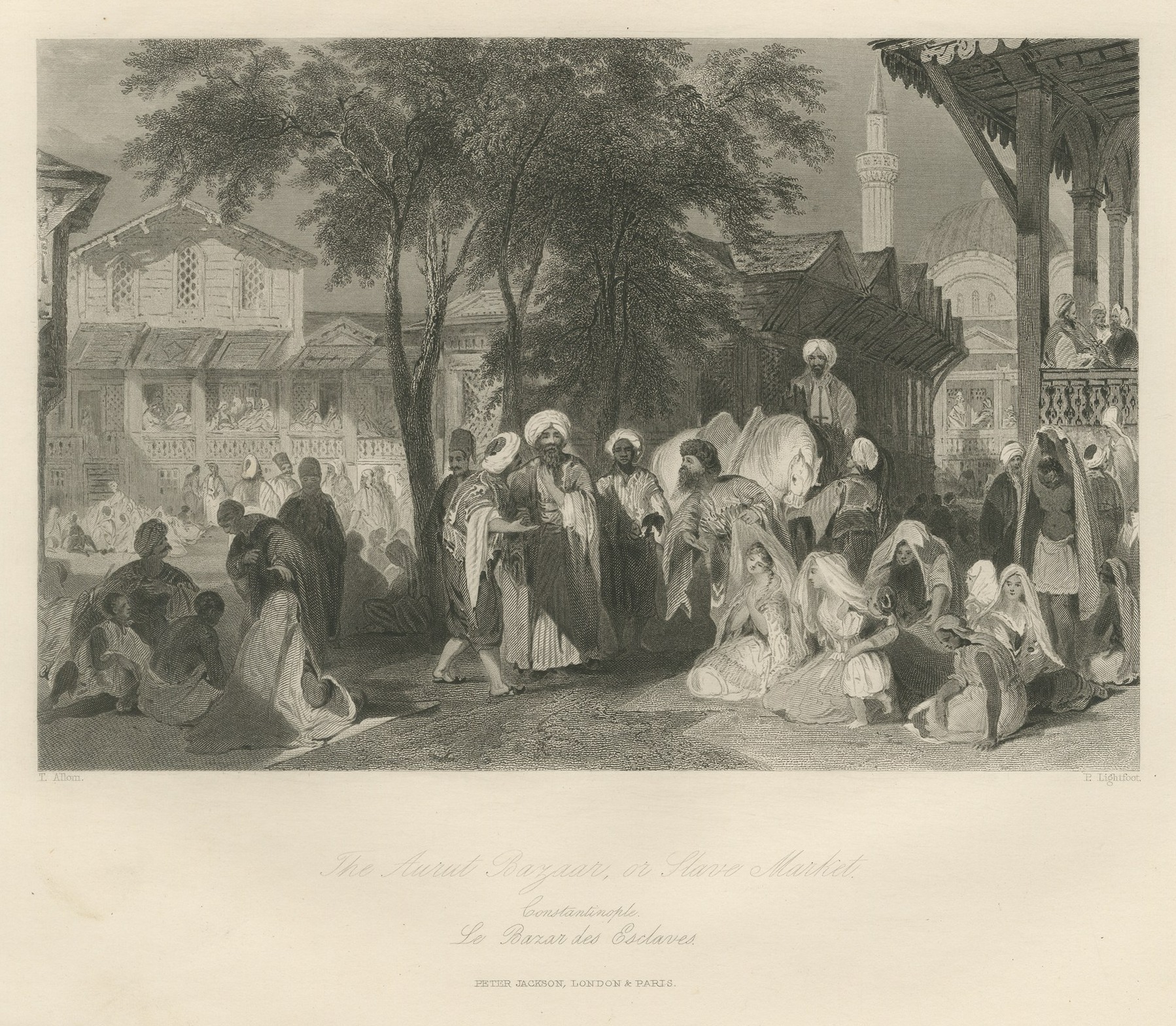
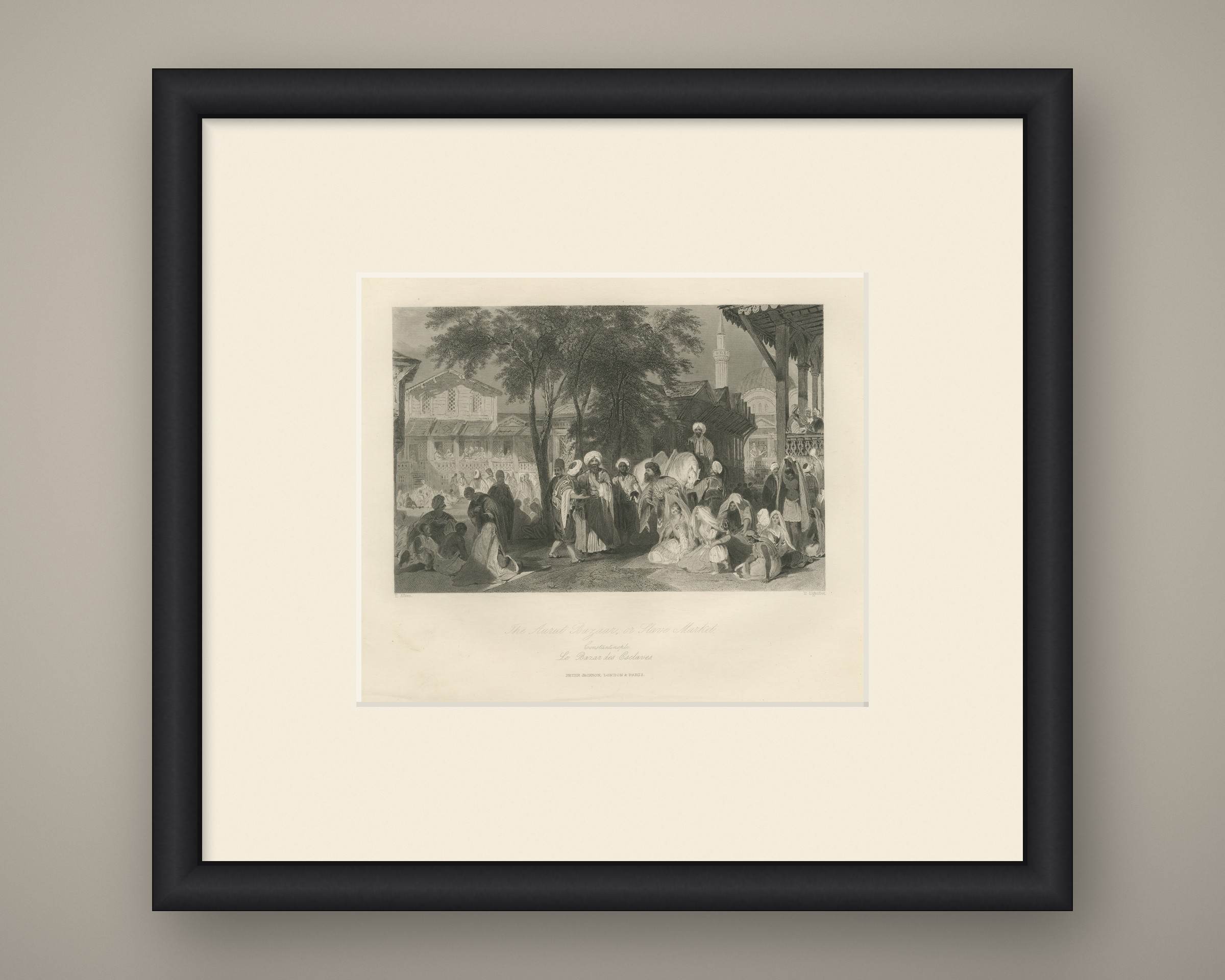
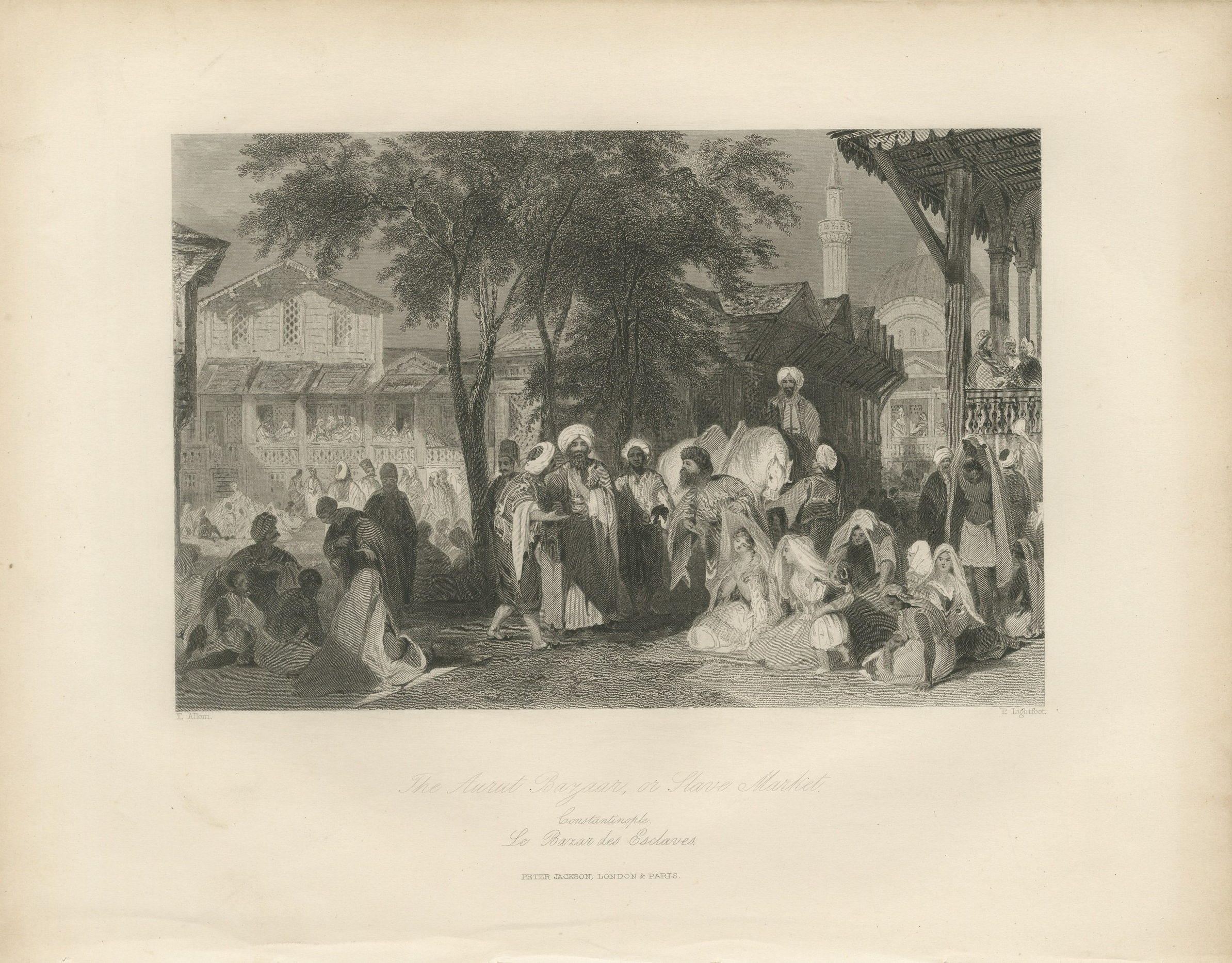
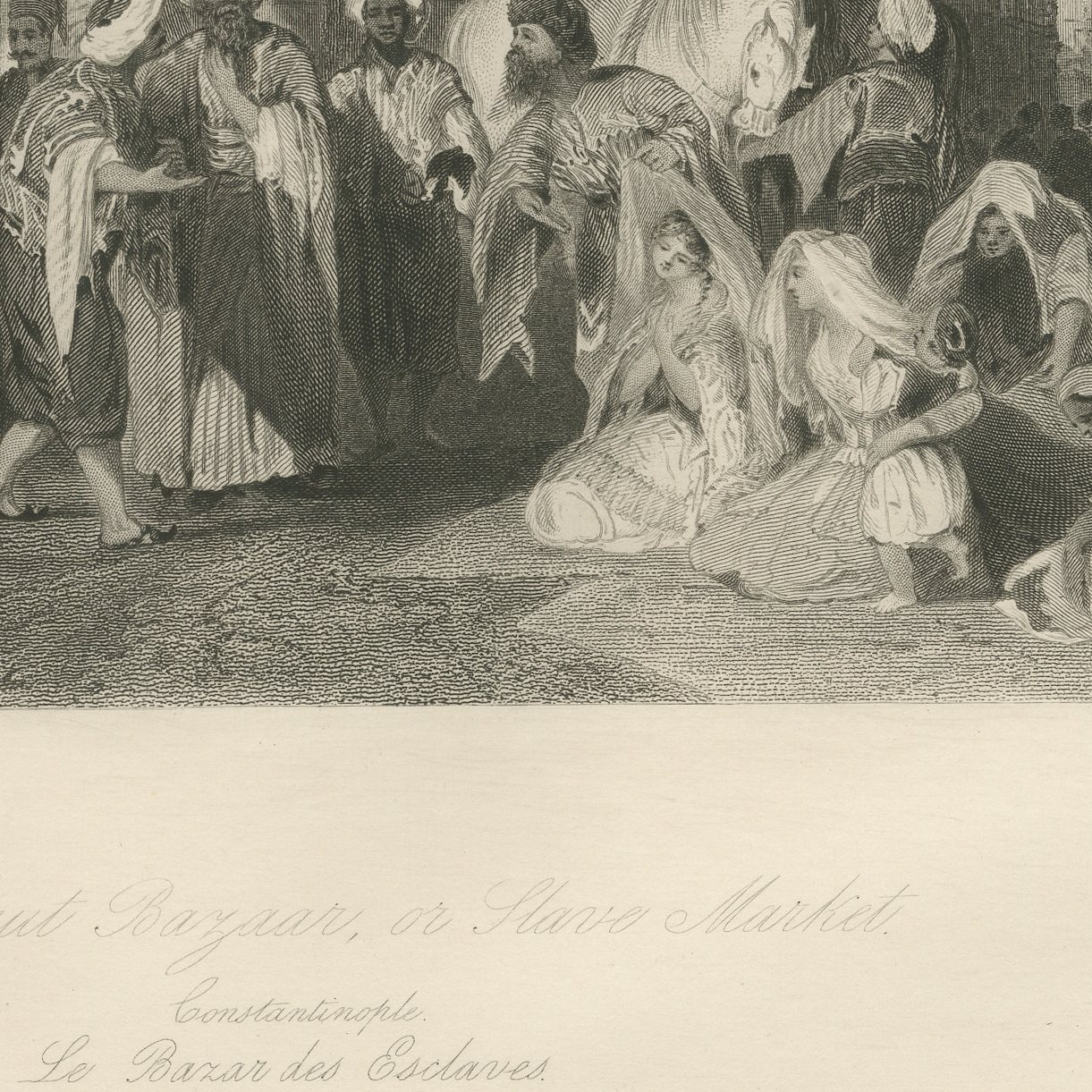
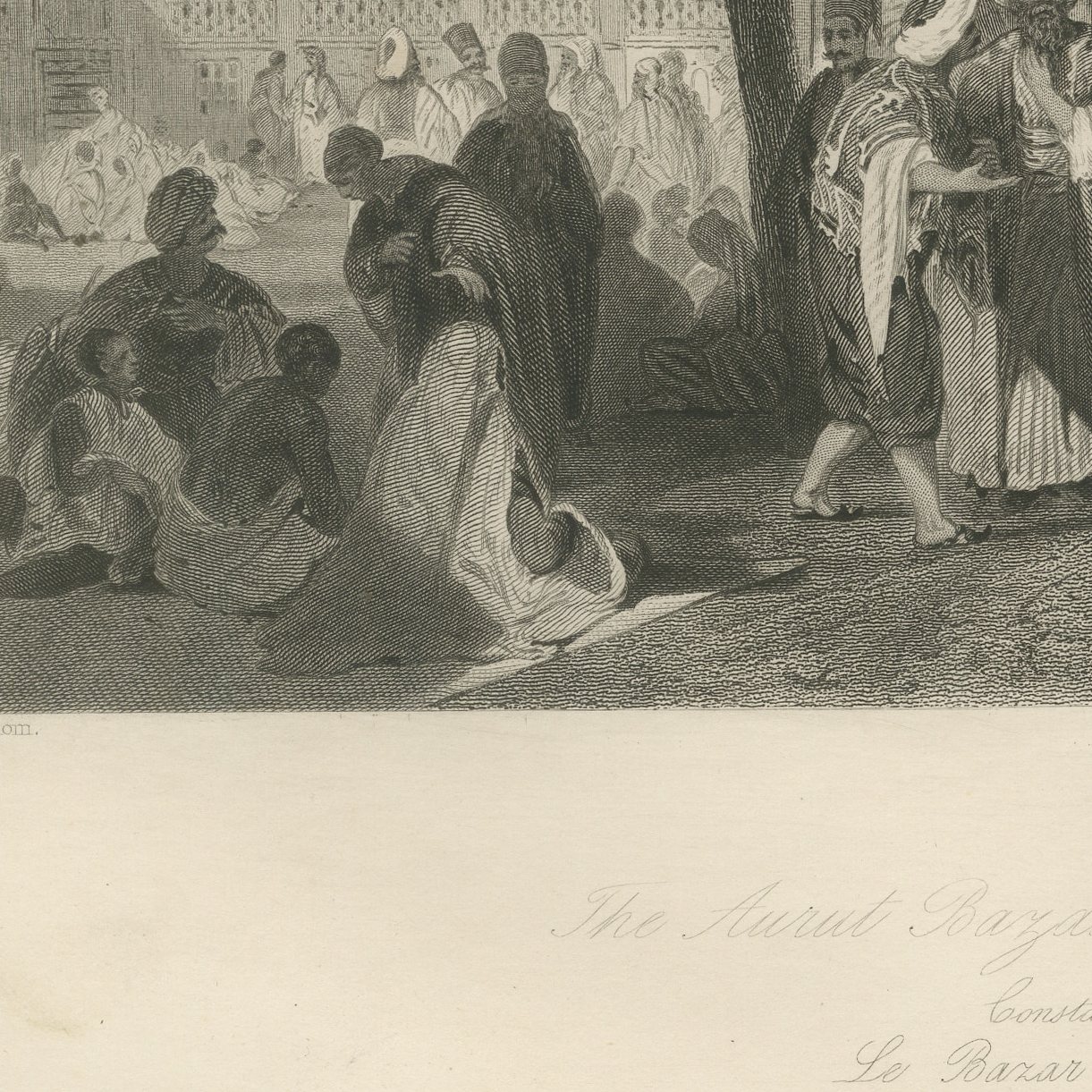
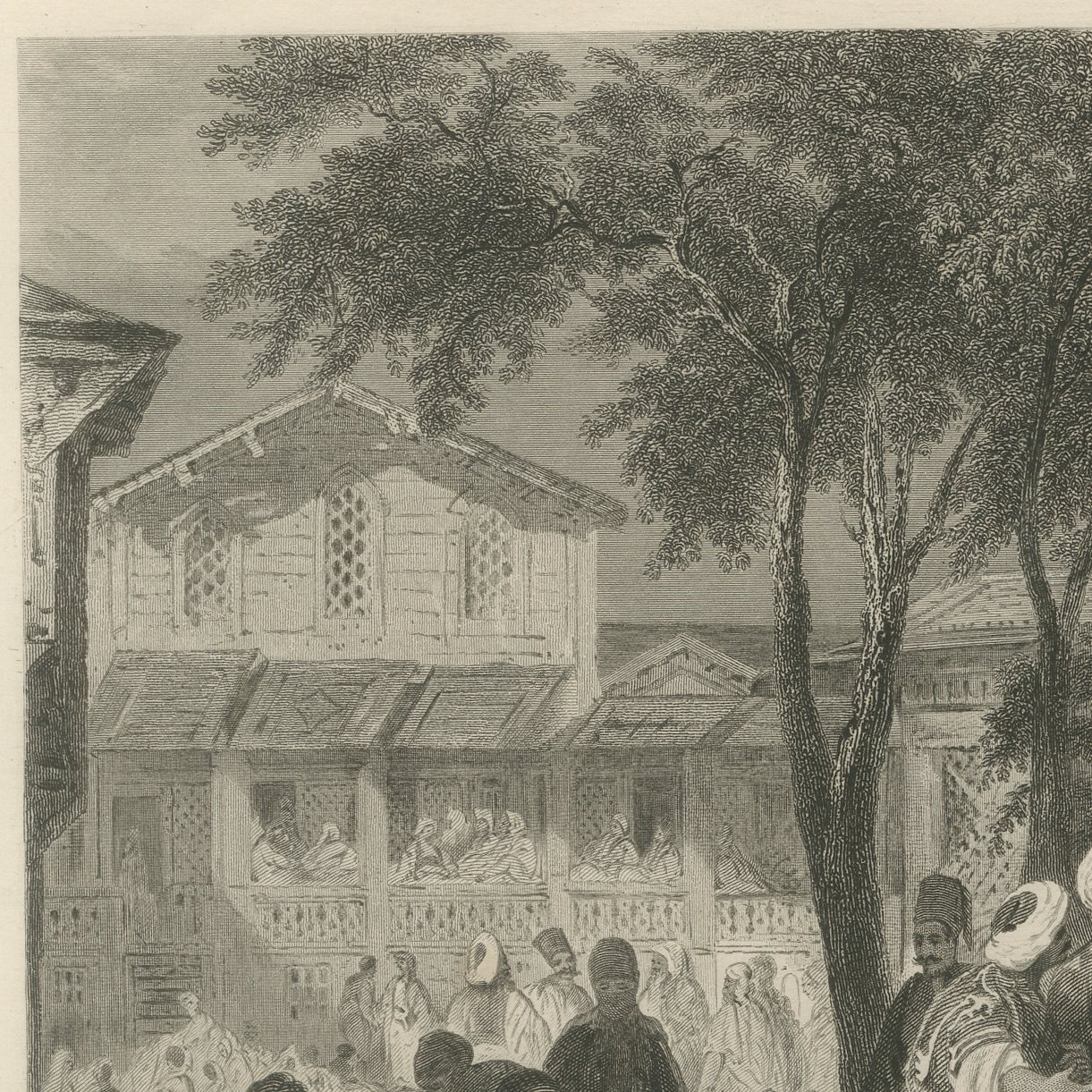
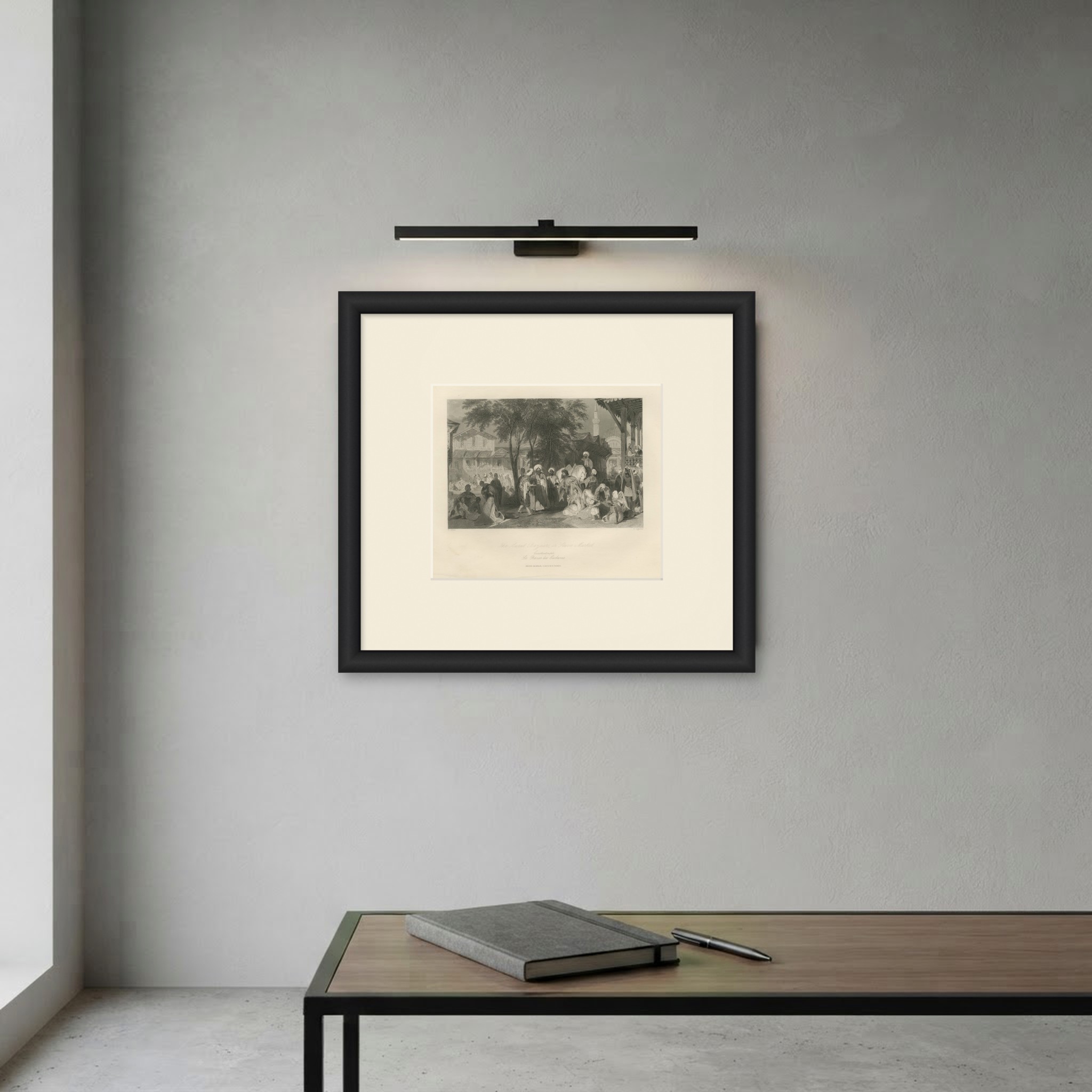
The Aurut Bazaar or Slave Market of Constantinople, circa 1850
€ 225
Original antique · The actual sheet photographed · Certificate of authenticity on request · Sold unframed · Worldwide shipping from € 15 (rates)
Date
circa 1850
Mapmaker / artist
Thomas Allom
Publisher
Peter Jackson, late Fisher, Son and Co., The Caxton Press, London
Technique
Steel Engraving
Coloring
Uncolored
Sheet size
21 × 27 cm (8.3 × 10.6 in)
Condition
Good
Reference
BG-14186-2-16
What the condition grades mean
Excellent
Bright and clean, with no faults worth mentioning.
Very good
Only light signs of age, such as faint toning.
Good
Normal signs of age for a sheet of this period: toning, some foxing, small marks or neat old repairs.
Fair
Clear faults such as staining, tears or repairs, priced to match.
Every fault we see is written in the condition note, and the whole sheet is shown uncropped in the photos.
Condition
Even age toning. Marked handling soiling along the left, right and top edges. Scattered foxing in the margin. All four corners complete.
About this sheet
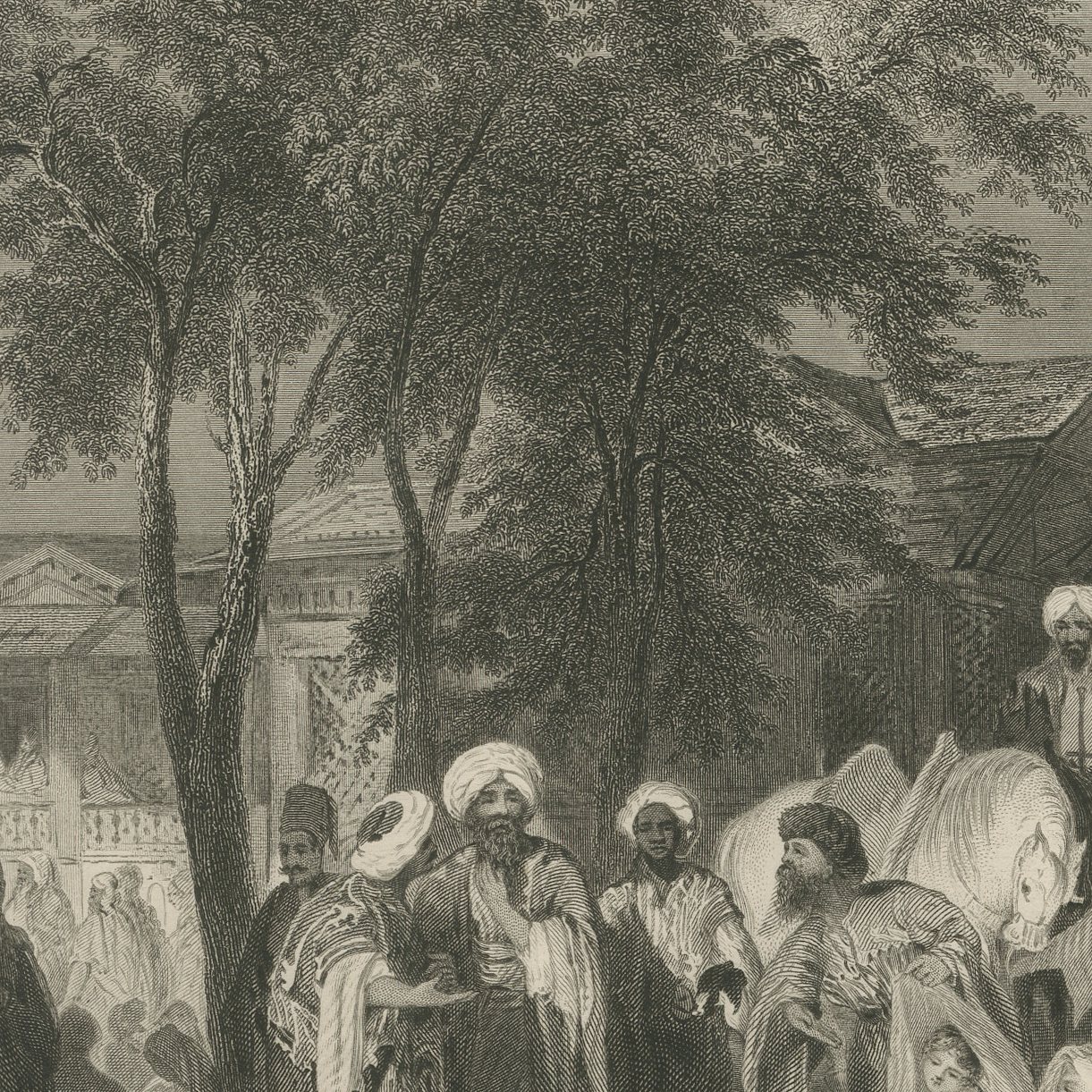
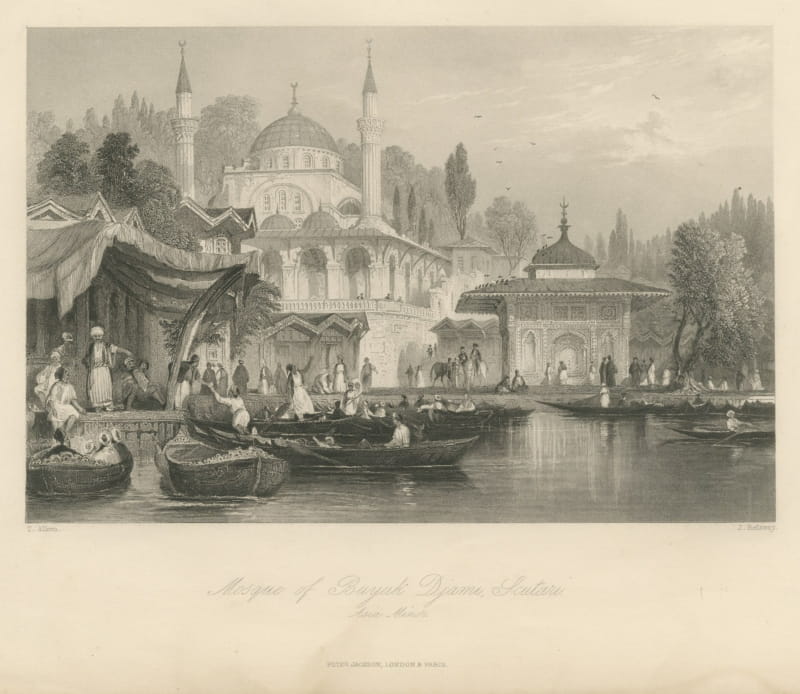
This original antique steel engraving, The Aurut Bazaar or Slave Market of Constantinople, is a plate from the second volume of The Turkish Empire Illustrated, published in London by Peter Jackson about 1850. The sheet shows the open court of the Avret Pazari under its trees and awnings, dealers and buyers in groups on the shaded ground, seated figures ranged along the colonnade and a line of arches and rooftops closing the far side of the square.
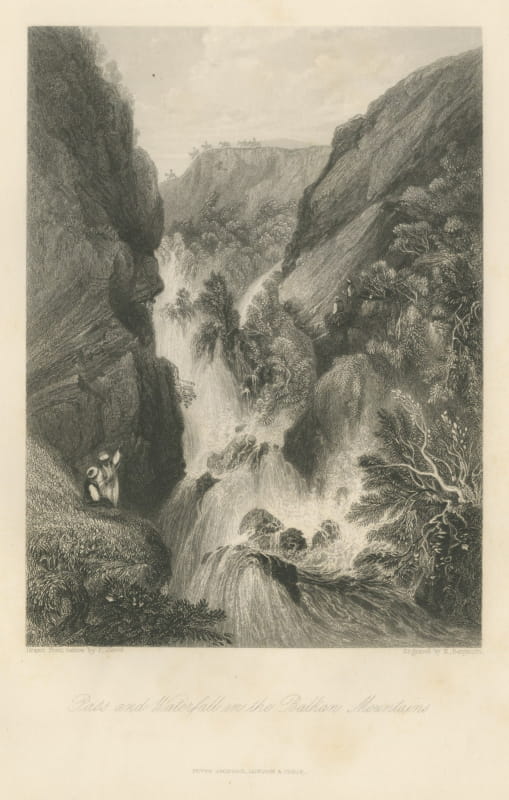
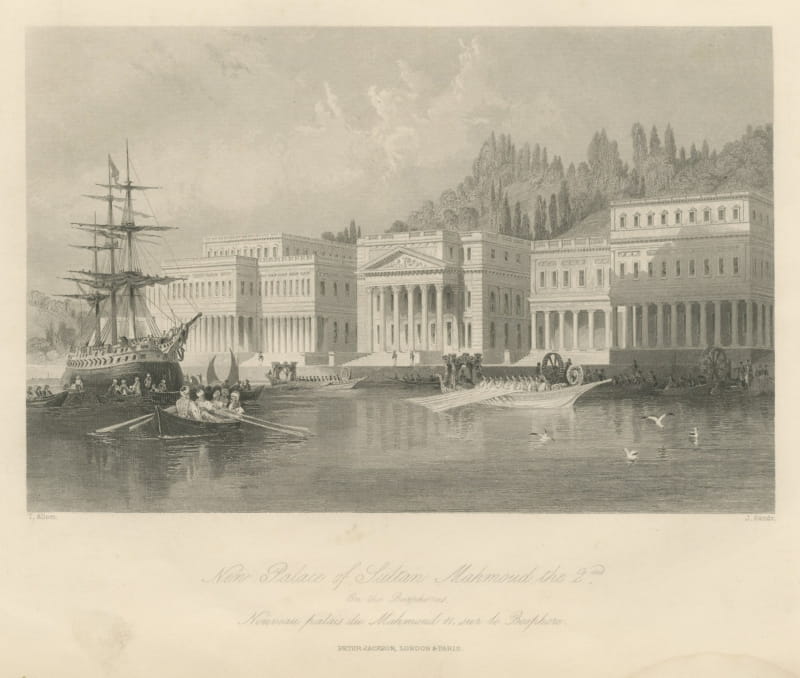
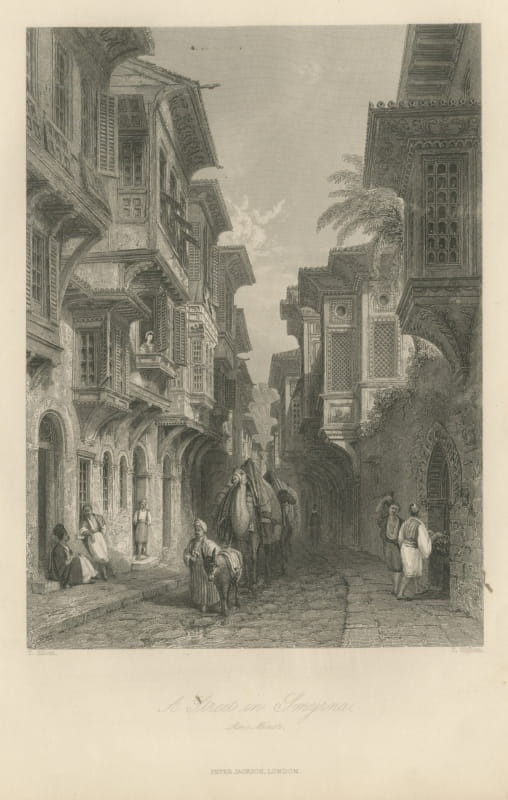
The plate comes from the second volume of The Turkish Empire Illustrated: Constantinople and its Environs, with the Scenery of the Seven Churches of Asia Minor, drawn from nature by Thomas Allom with descriptions by the Reverend Robert Walsh, chaplain to the British embassy at the Ottoman Porte. The steel plates were first cut for Fisher, Son and Company in the late eighteen thirties and printed again for this edition by Peter Jackson at the Caxton Press in Angel Street, Saint Martin's le Grand, London, about 1850.
The slave market of Constantinople was closed by the Porte in 1847 under British pressure, within a few years of this plate being drawn, so the sheet records an institution at the very end of its existence. It is collected as documentary evidence as much as decoration. The technique is steel engraving. A steel plate yields many thousands of impressions without the softening that copper suffers after a few hundred, and that is what made illustrated travel books on this scale possible. The result is the very fine close worked line seen here, particularly in the skies and the water, and an impression that stays crisp across the whole edition. A sheet of this size hangs well in a simple dark frame with a generous off-white mount, and a row of them along a hall or above a stair makes the kind of quiet topographical sequence that collectors of travel engraving look for.
Even age toning. Marked handling soiling along the left, right and top edges. Scattered foxing in the margin. All four corners complete.
This is an original antique print, not a modern reproduction. This item is sold unframed. Any framed or interior images are shown for presentation and inspiration only, unless the listing explicitly states that the item is sold framed.