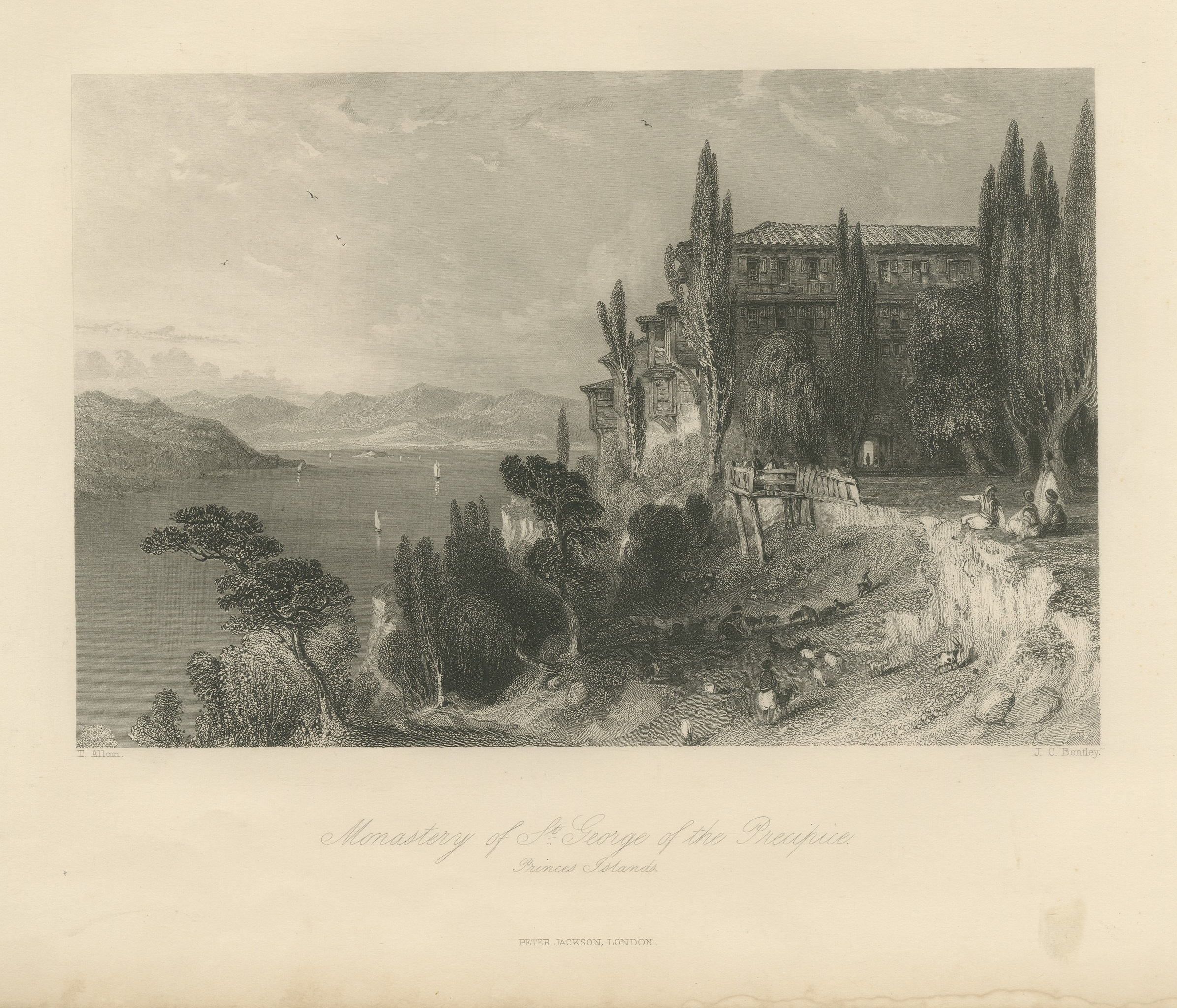
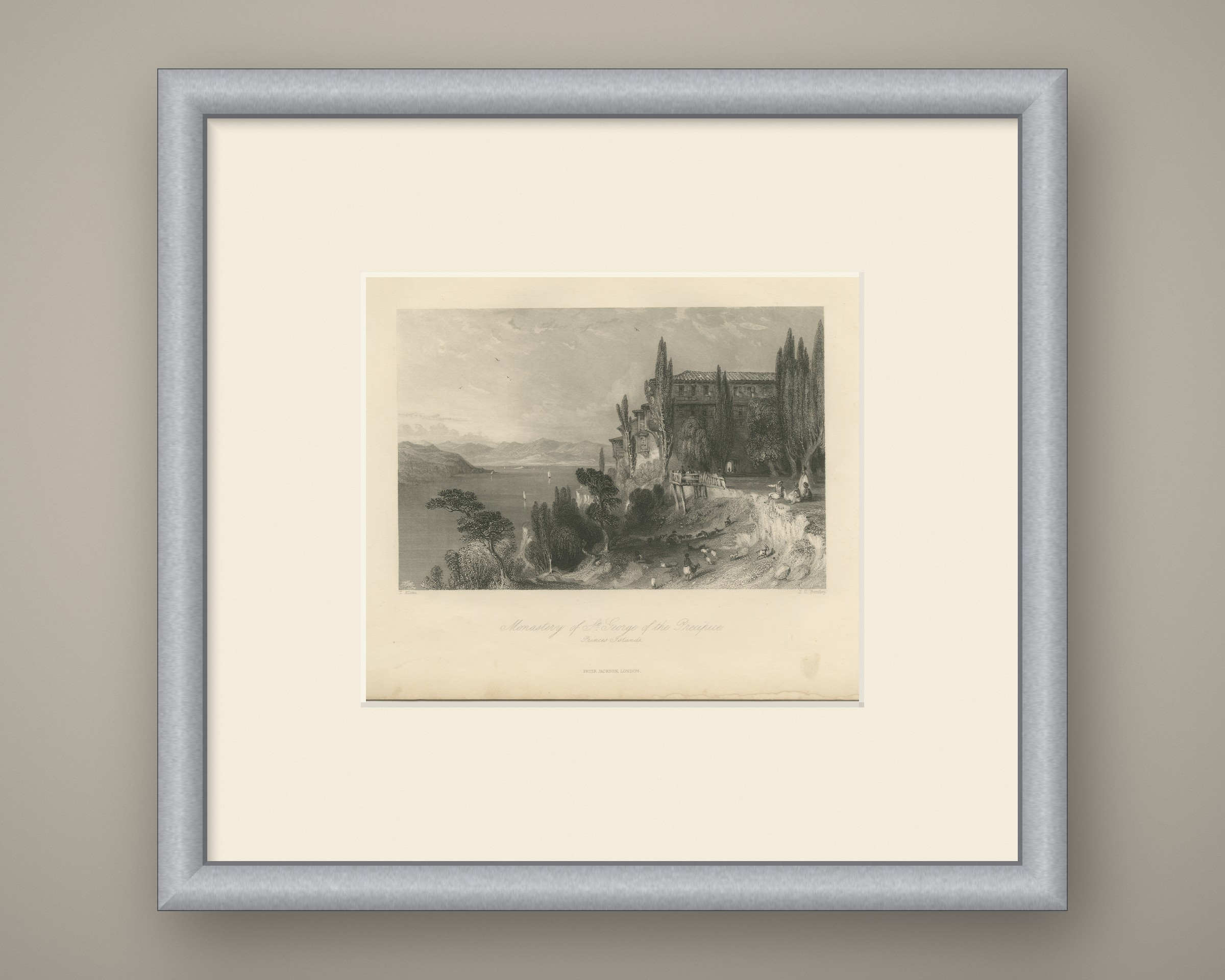
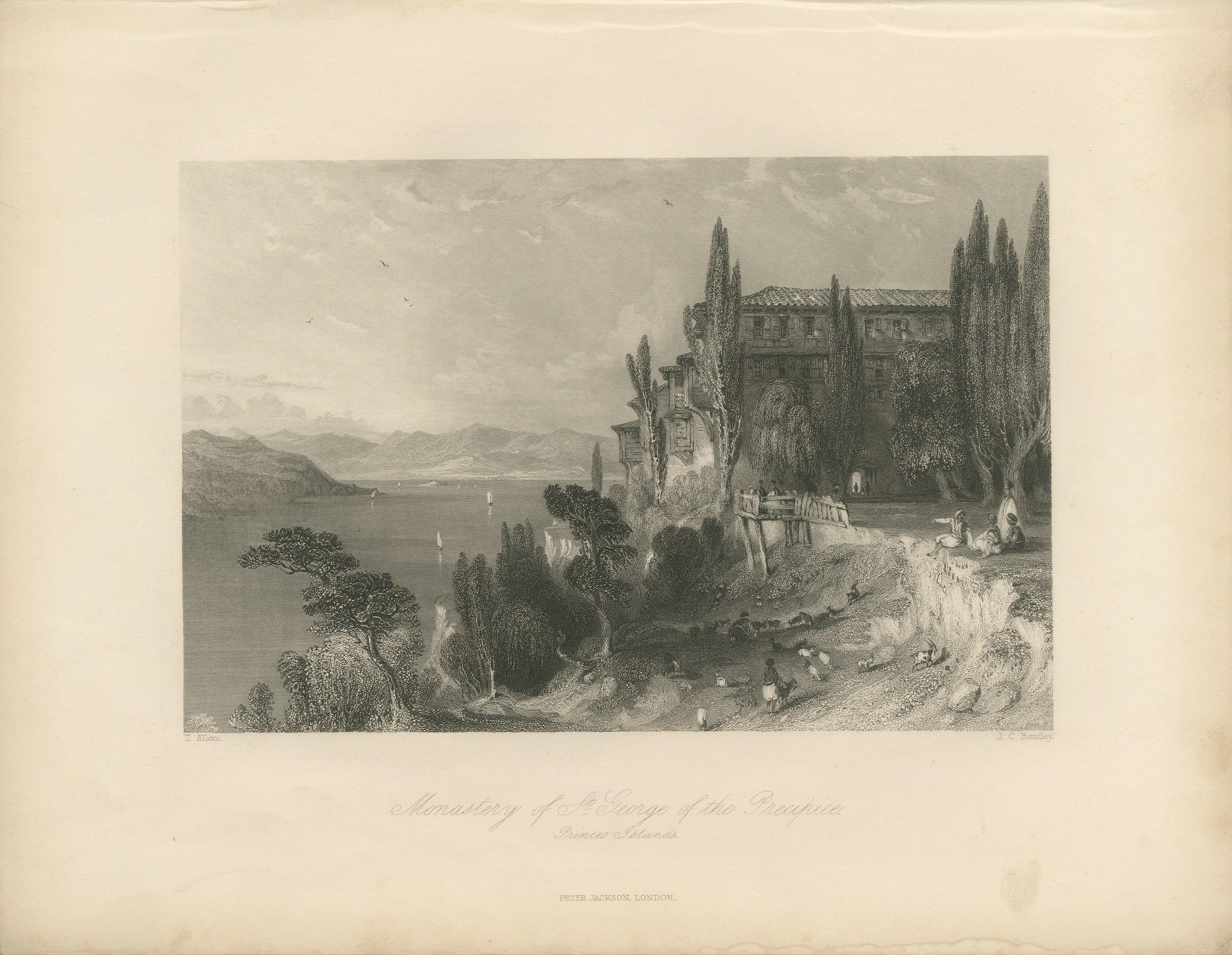
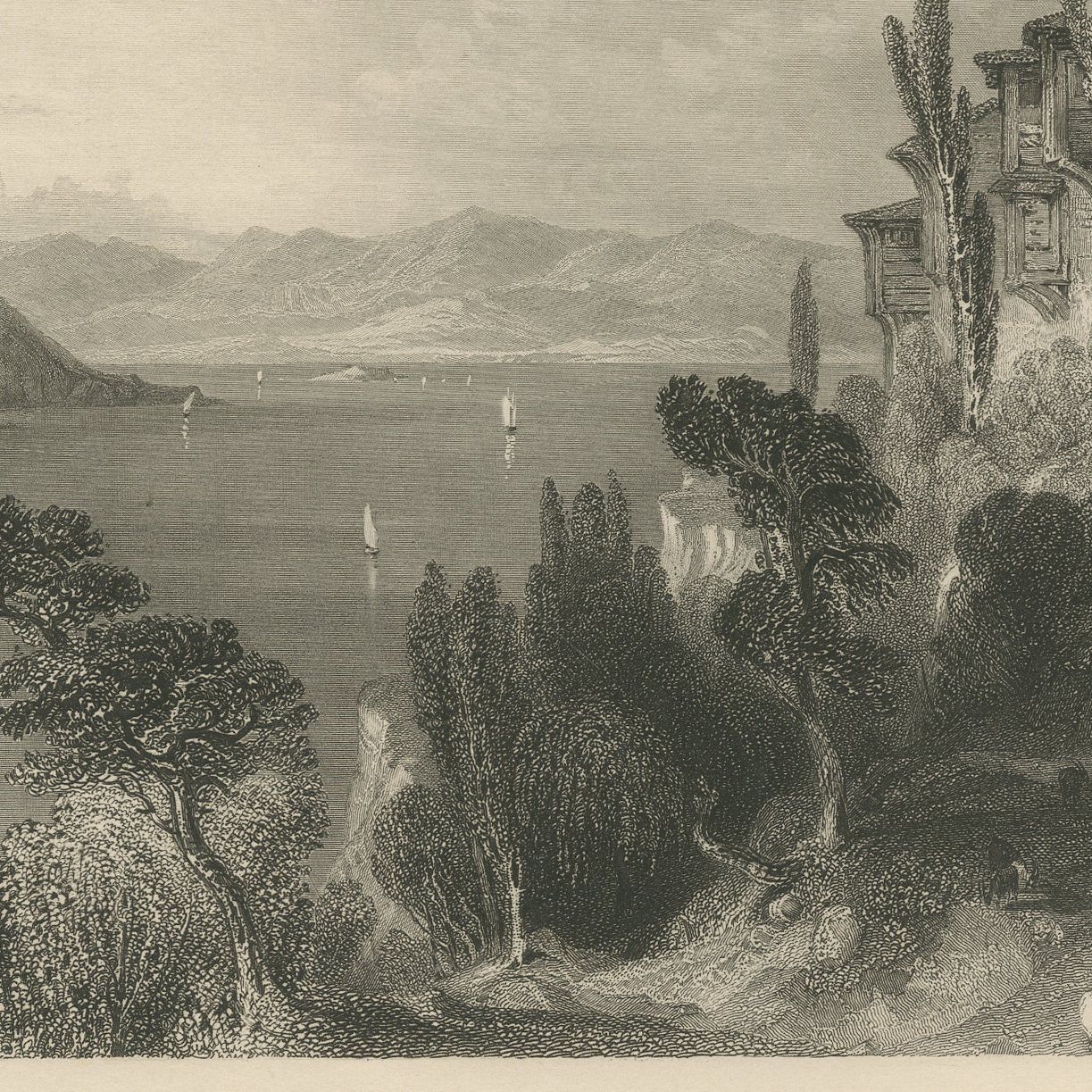
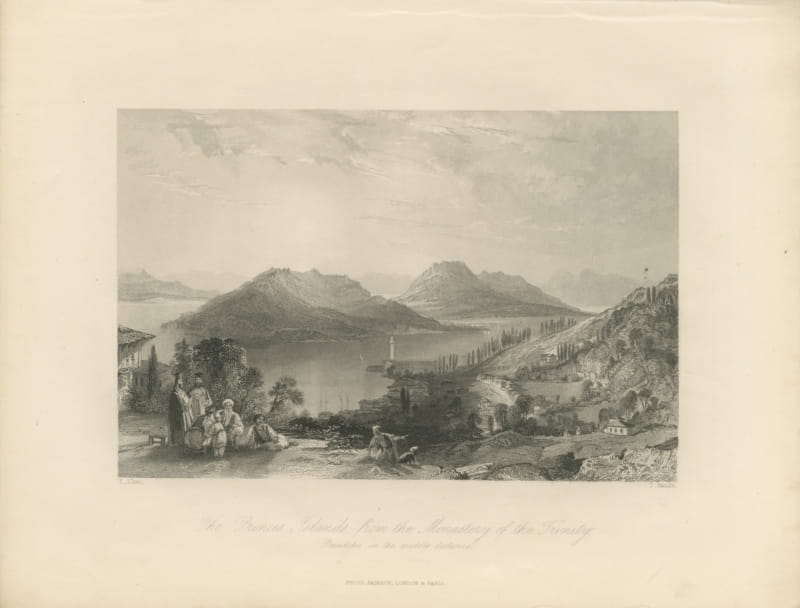
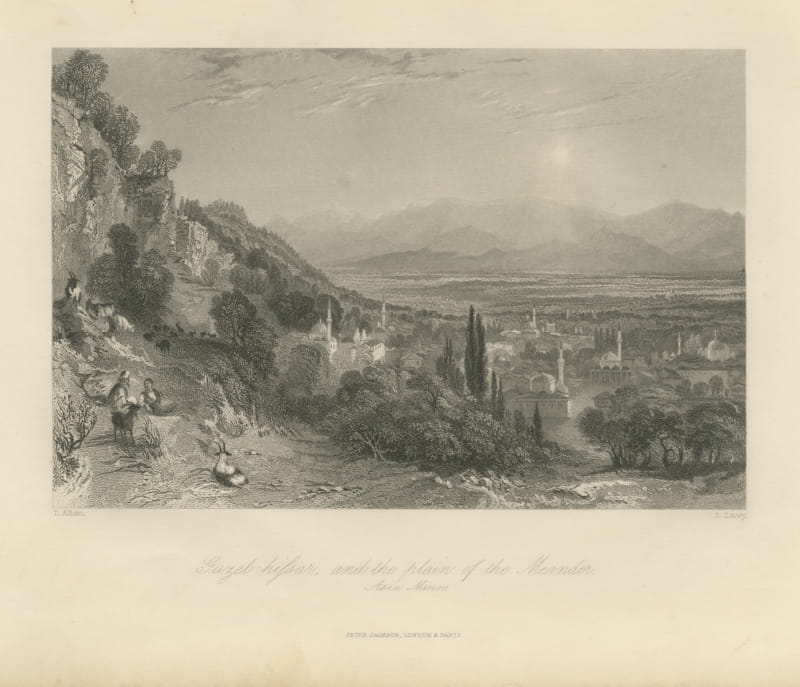
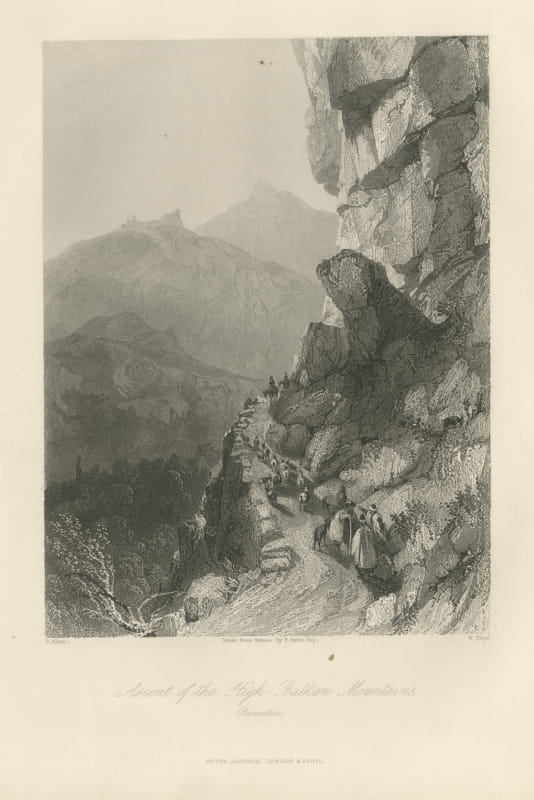
Monastery of Saint George of the Precipice, Princes Islands, circa 1850
€ 190
Original antique · The actual sheet photographed · Certificate of authenticity on request · Sold unframed · Worldwide shipping from € 15 (rates)
Date
circa 1850
Mapmaker / artist
Thomas Allom (after); engraved by J. C. Bentley
Publisher
Peter Jackson, late Fisher, Son and Co., London and Paris
Technique
Steel Engraving
Coloring
Uncolored
Sheet size
21 × 27 cm (8.3 × 10.6 in)
Condition
Good
Reference
BG-14186-1-13
What the condition grades mean
Excellent
Bright and clean, with no faults worth mentioning.
Very good
Only light signs of age, such as faint toning.
Good
Normal signs of age for a sheet of this period: toning, some foxing, small marks or neat old repairs.
Fair
Clear faults such as staining, tears or repairs, priced to match.
Every fault we see is written in the condition note, and the whole sheet is shown uncropped in the photos.
Condition
Even age toning. Marked handling soiling along the bottom, left and right edges. Scattered foxing in the margin. All four corners complete.
About this sheet
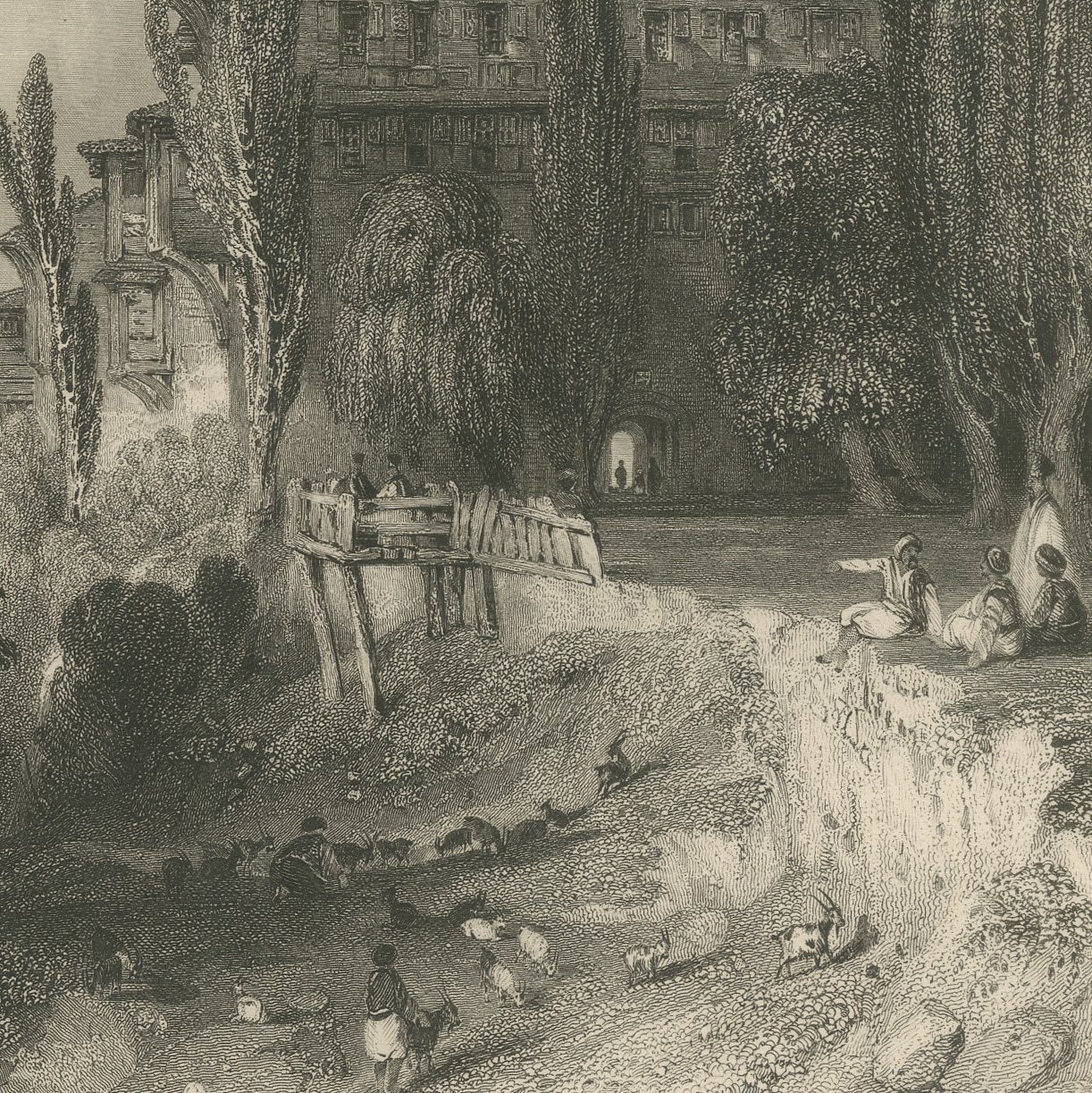
This original antique steel engraving shows Monastery of Saint George of the Precipice, Princes Islands, a plate from the first volume of The Turkish Empire Illustrated, published in London by Peter Jackson about 1850. The long monastery of Saint George standing on the lip of a cliff above the Sea of Marmara, cypresses and poplars crowding its walls, a wooden gallery cantilevered over the drop and goats and figures on the slope below.
This sheet was published in London about 1850 by Peter Jackson, late Fisher, Son and Company, in the first volume of The Turkish Empire Illustrated. Thomas Allom traveled through Constantinople and Asia Minor making the original drawings, and the Reverend Robert Walsh, who had served as chaplain at the British embassy to the Porte, wrote the letterpress. The plates are steel engravings, a technique that holds a far finer line than copper and allowed the long print runs these illustrated travel books required. Each plate in the series carries the draftsman at the lower left and the engraver at the lower right, both printed inside the plate mark, with the English title in script below and a French translation beneath it on many sheets, which is how the publisher sold the work on both sides of the Channel. The fine tonal gradation is the work of the burin alone, with no aquatint or added wash.
Cliff monasteries are the signature building type of the Greek islands under Ottoman rule, and this one, perched above the water with its timber balcony hanging over the precipice, is the most dramatic architectural subject in the Marmara section. Framed in gilt or in plain polished wood it suits a study, a library or a dining room, and it sits easily beside maps, marine prints and other nineteenth century travel material.
Even age toning. Marked handling soiling along the bottom, left and right edges. Scattered foxing in the margin. All four corners complete.
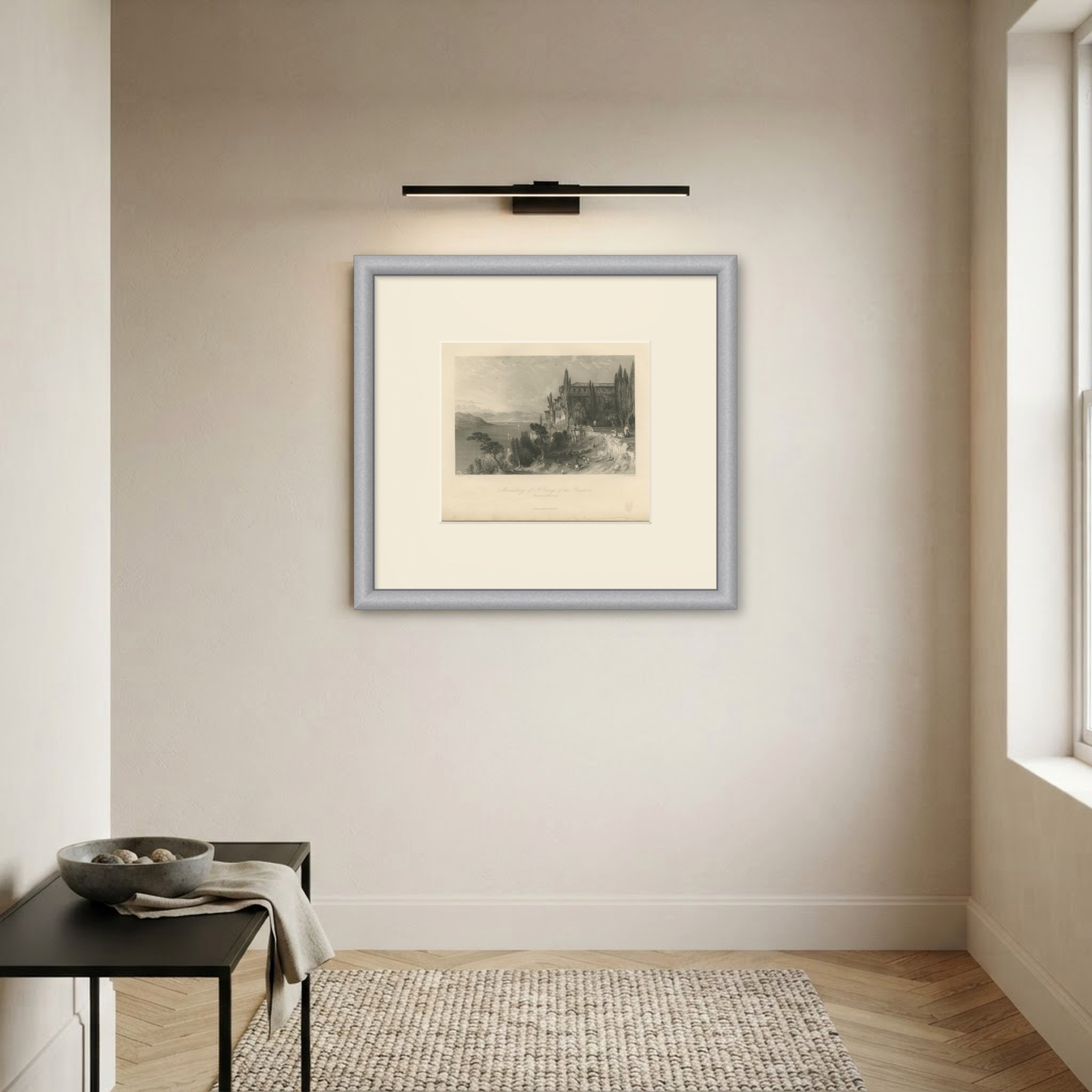
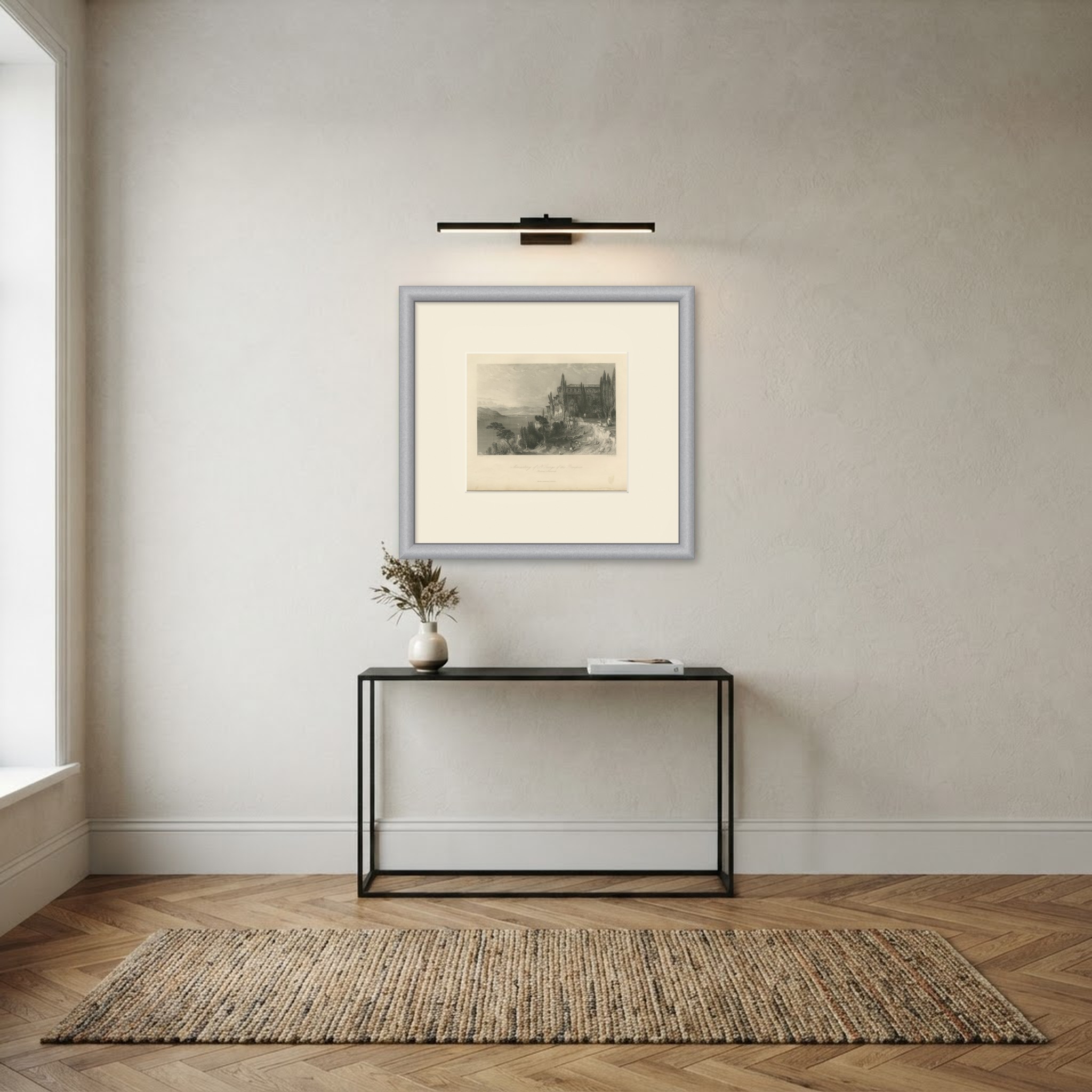
This is an original antique print, not a modern reproduction. This item is sold unframed. Any framed or interior images are shown for presentation and inspiration only, unless the listing explicitly states that the item is sold framed.