About this sheet
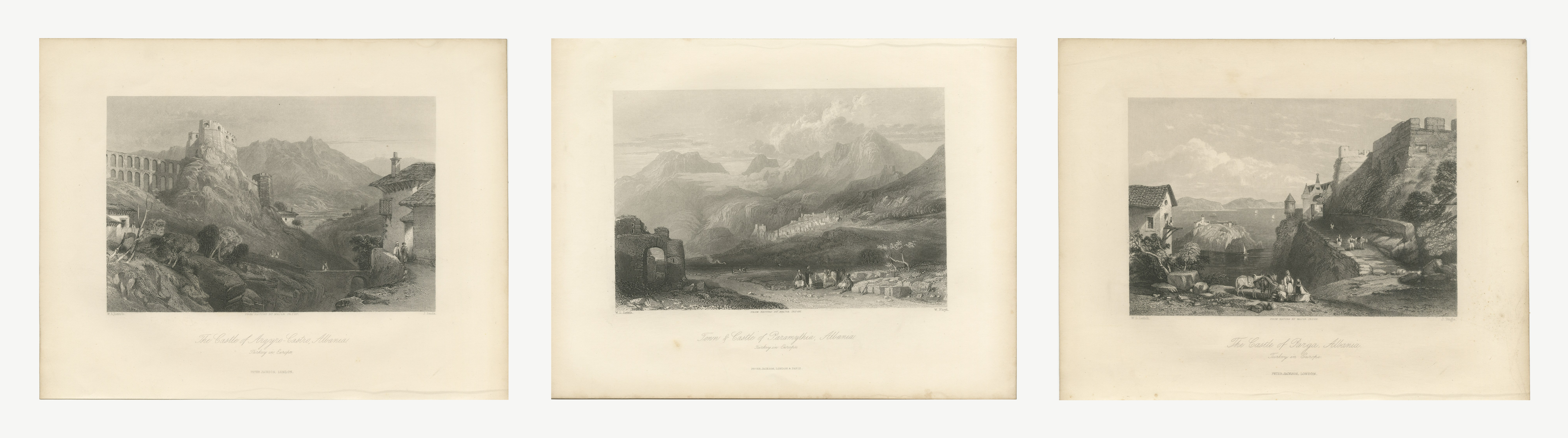
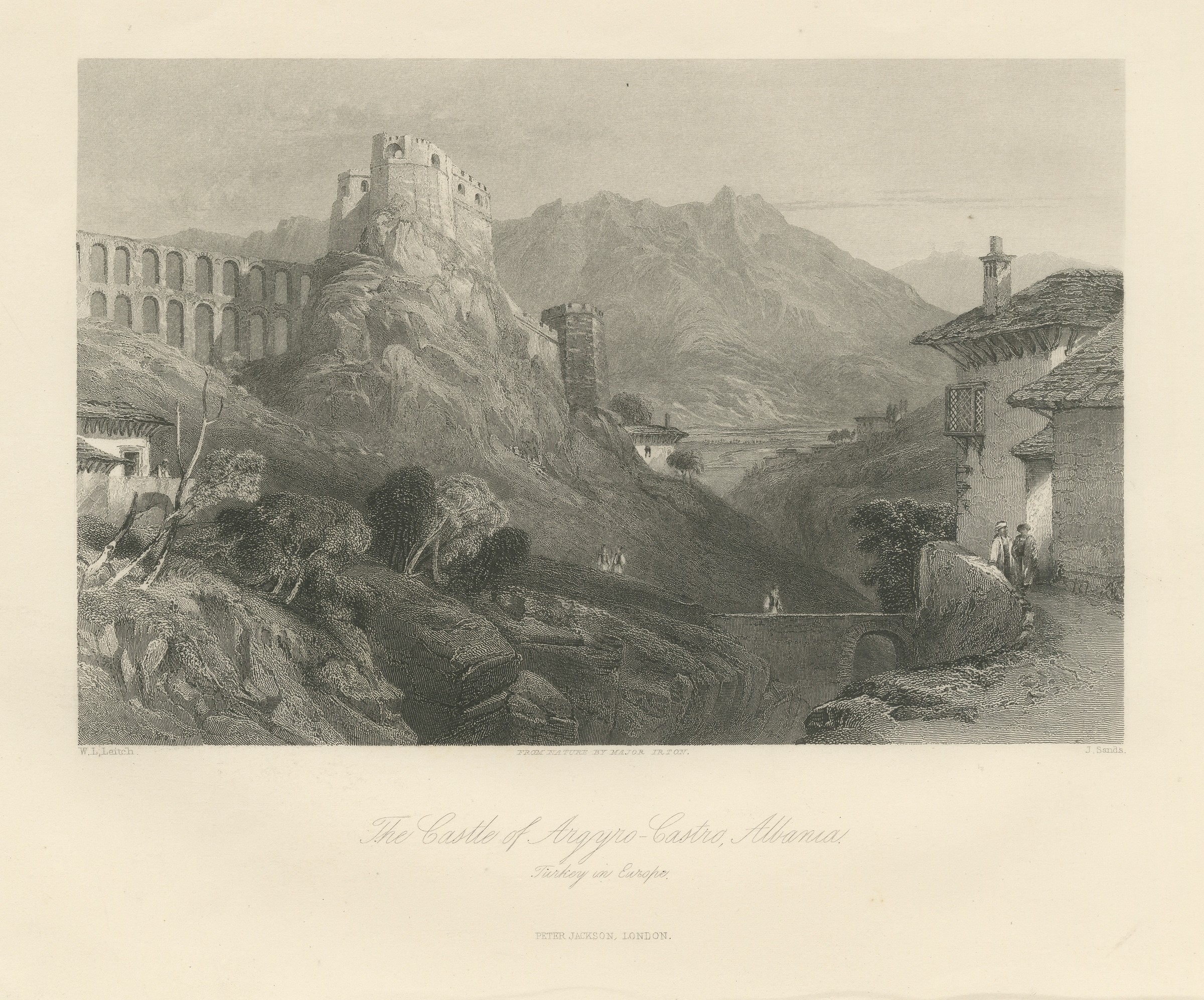
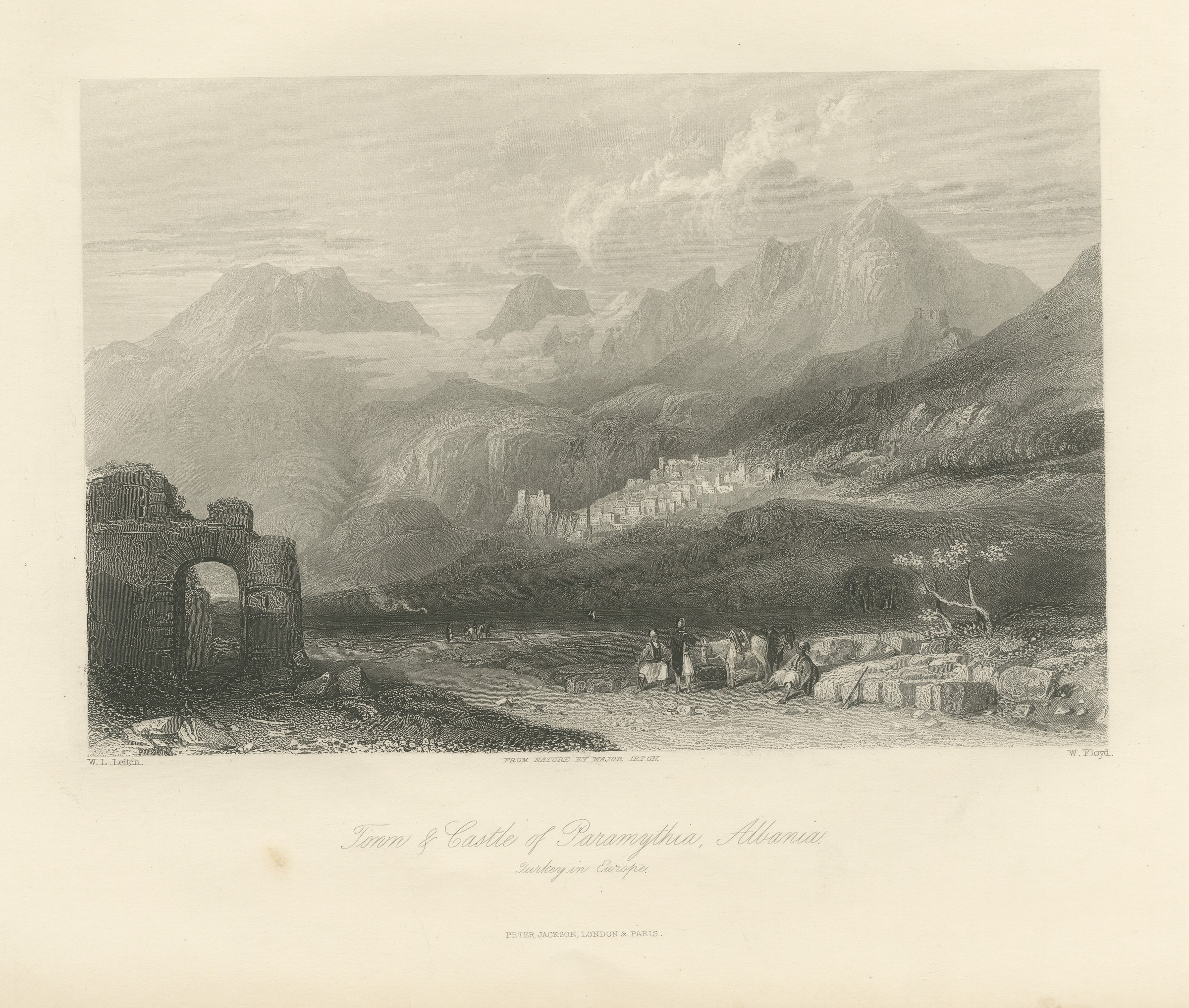
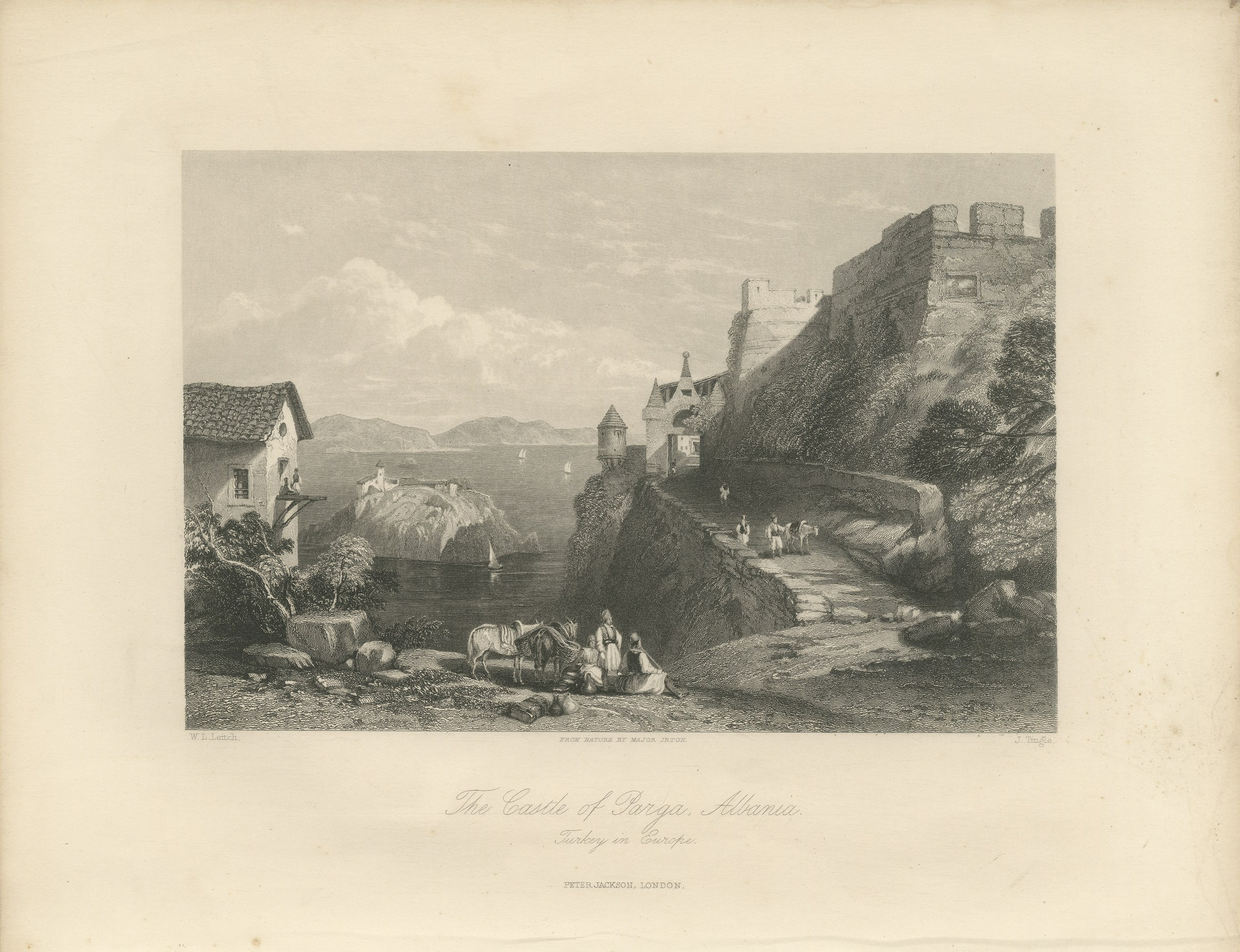
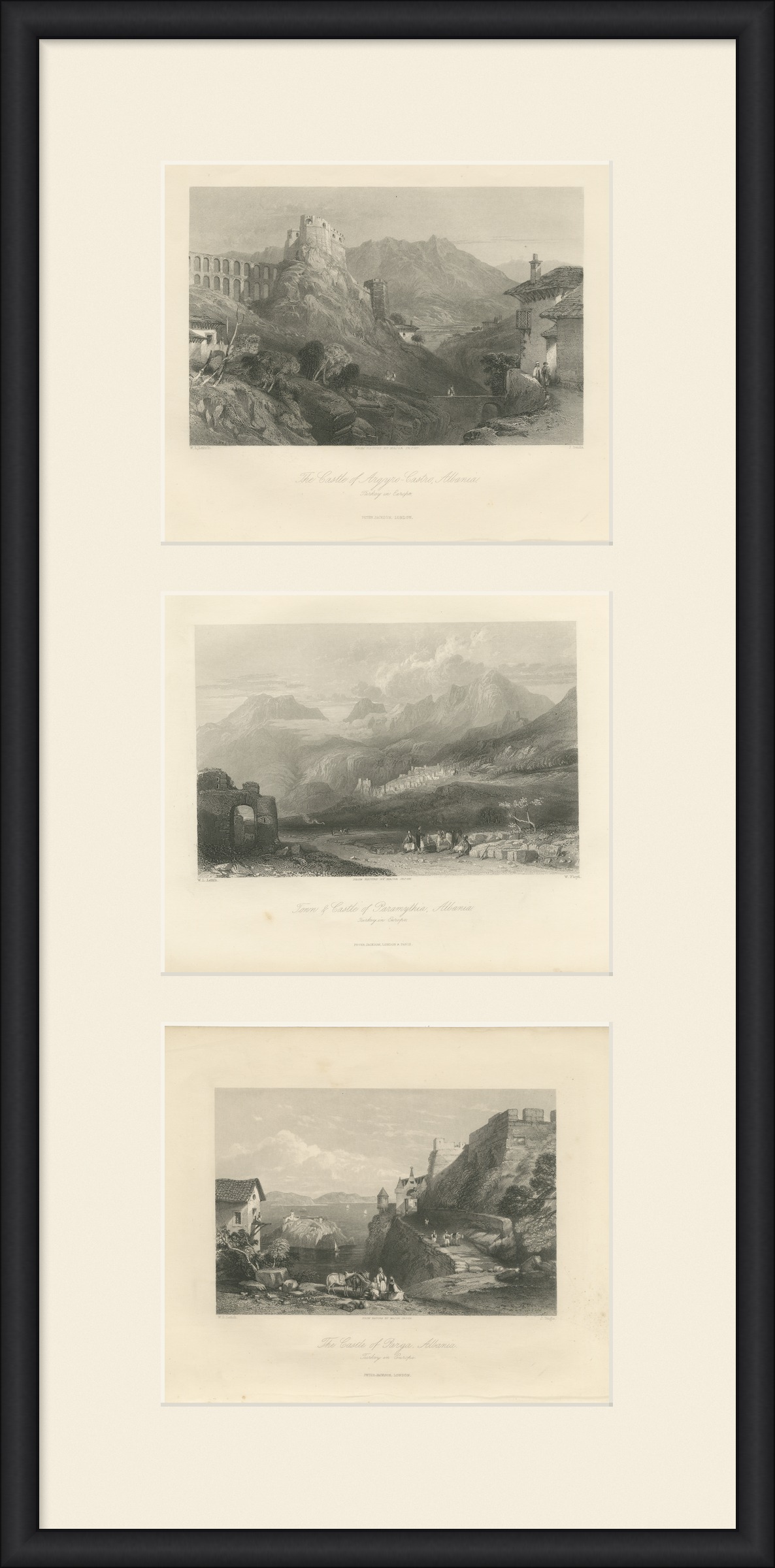
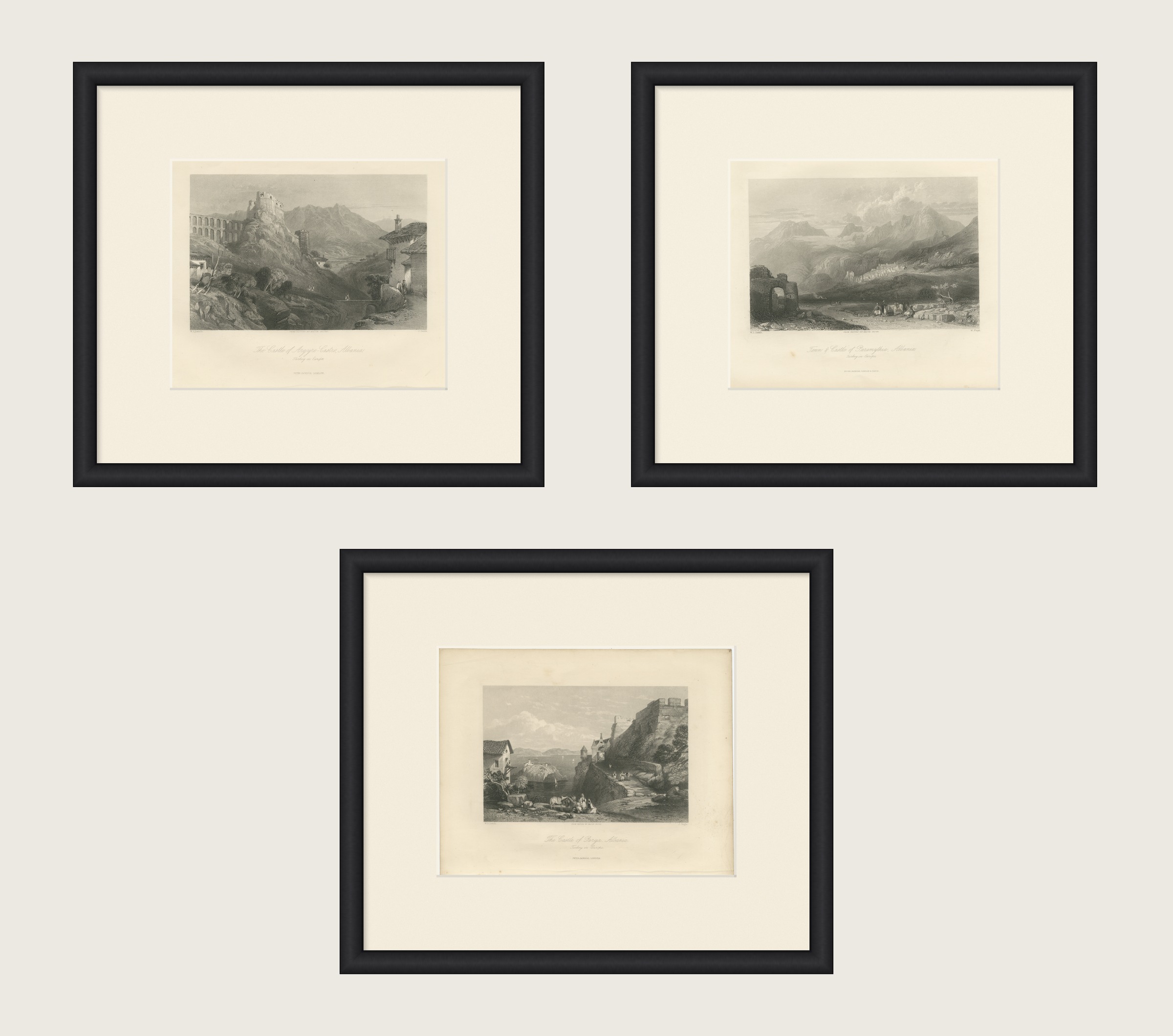
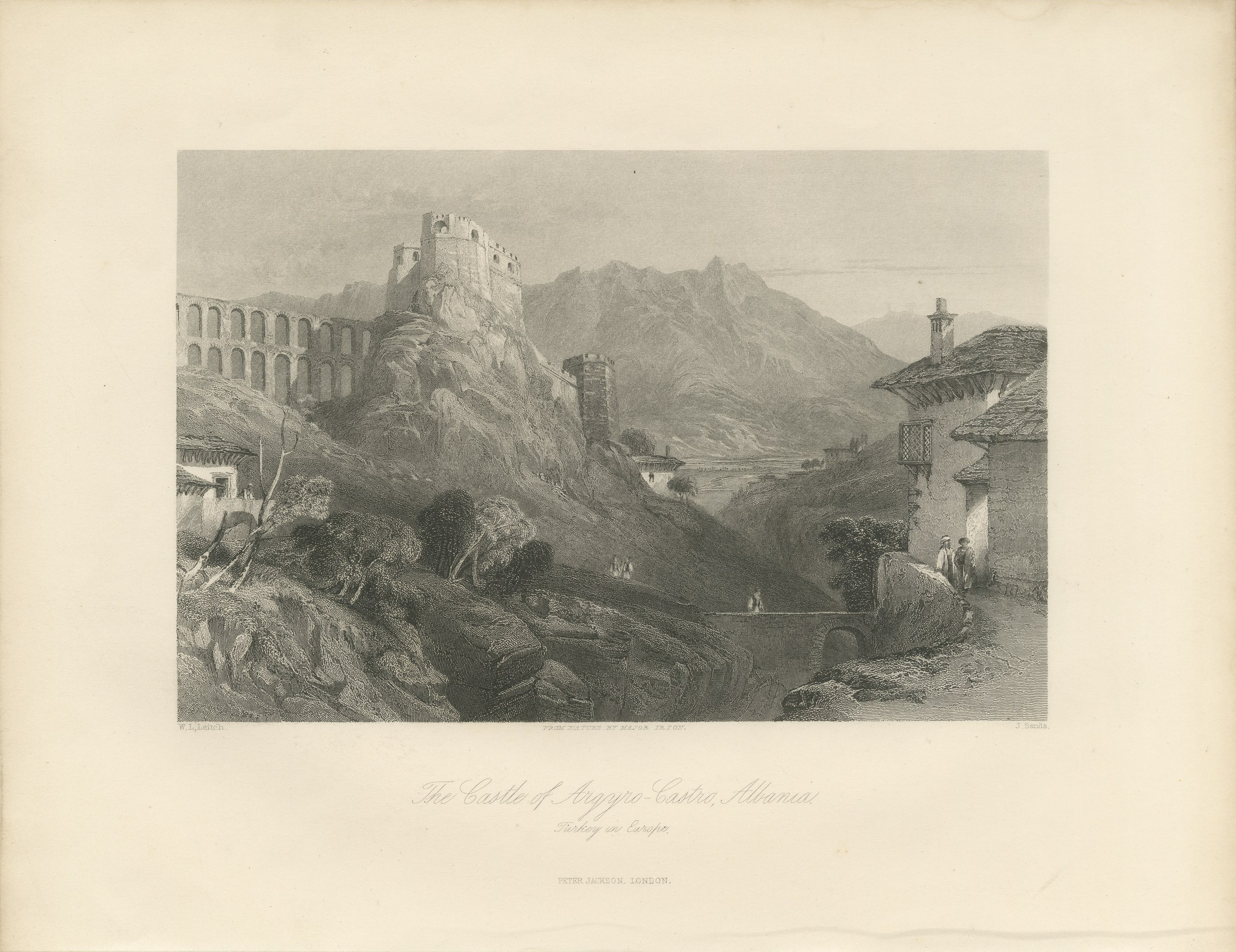
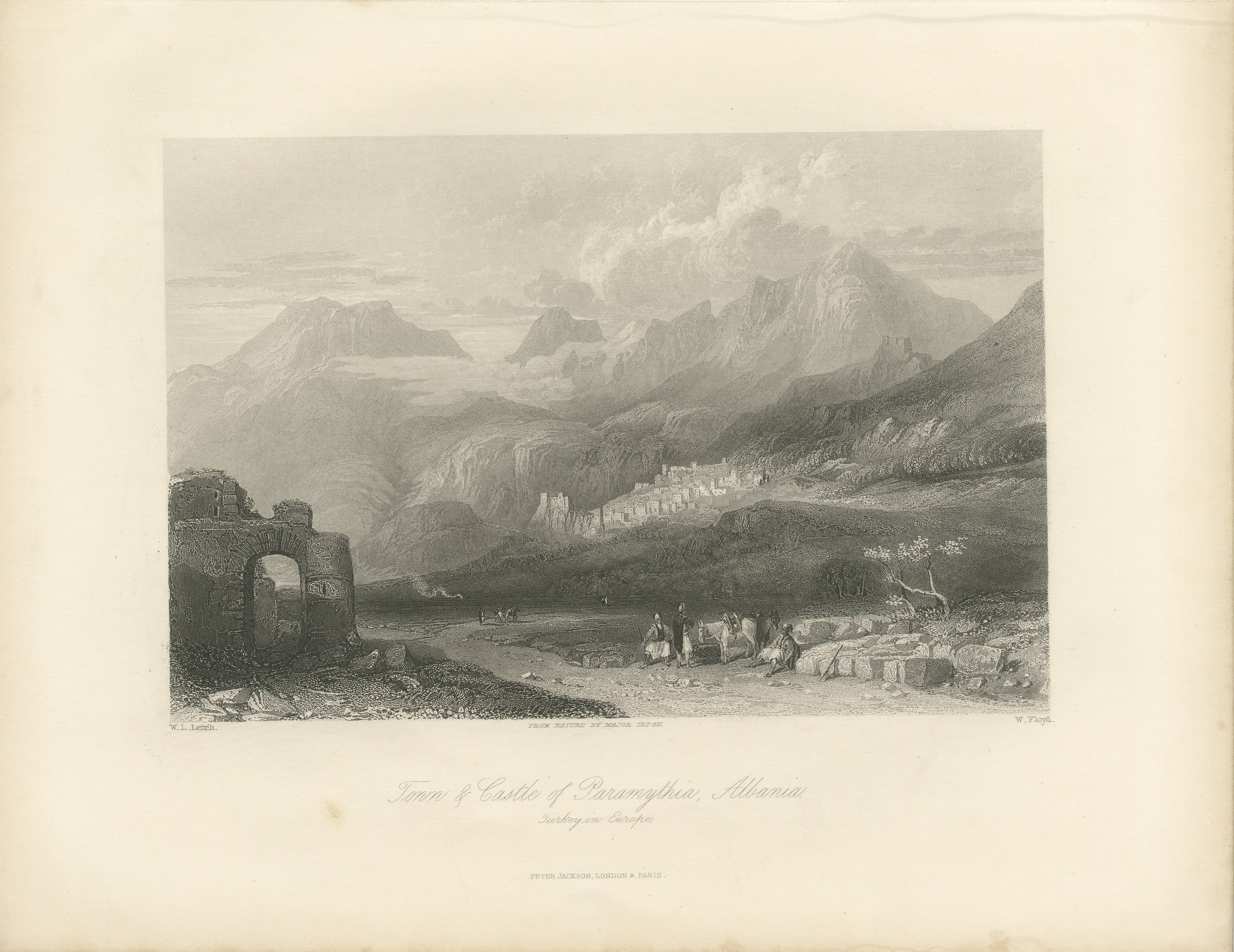
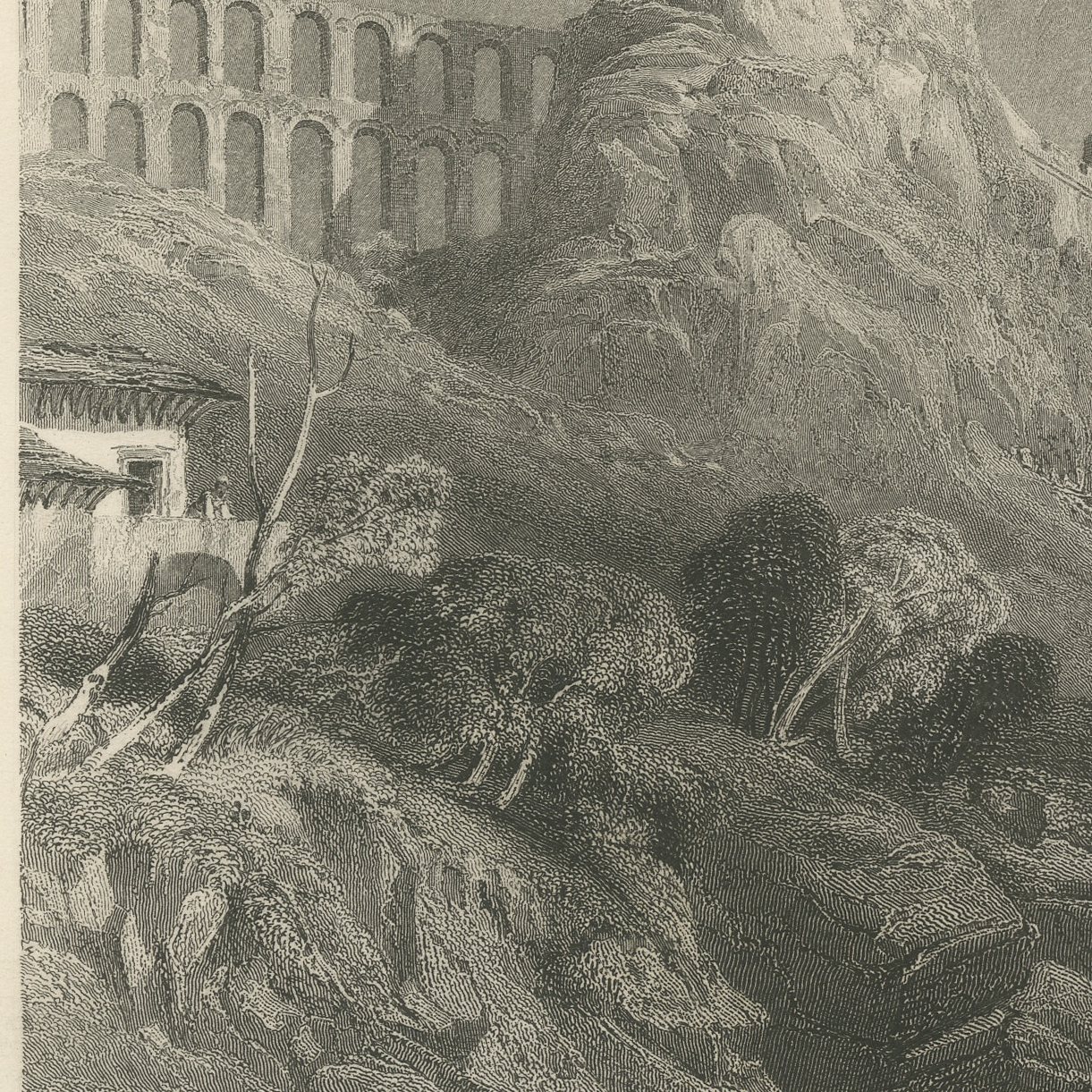
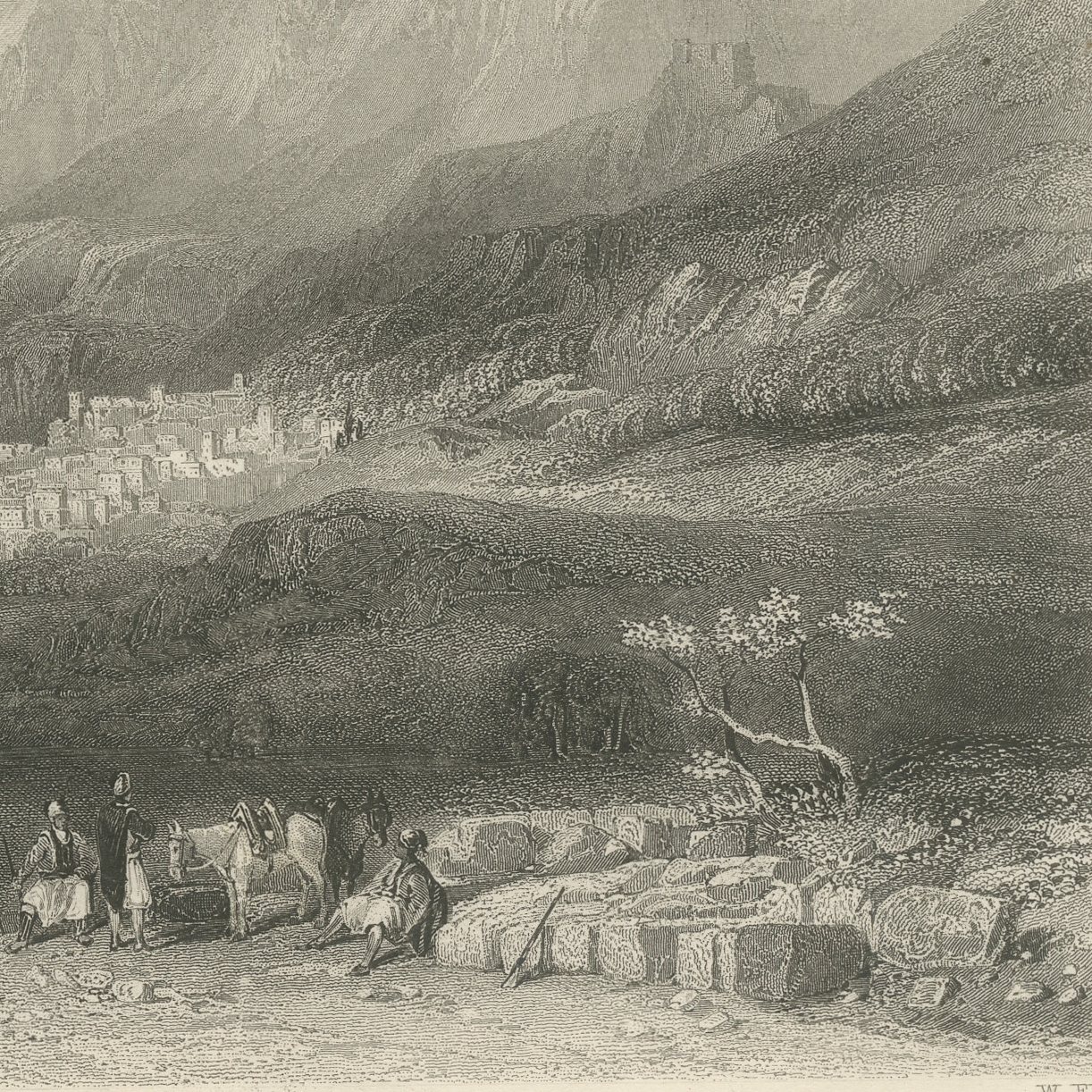
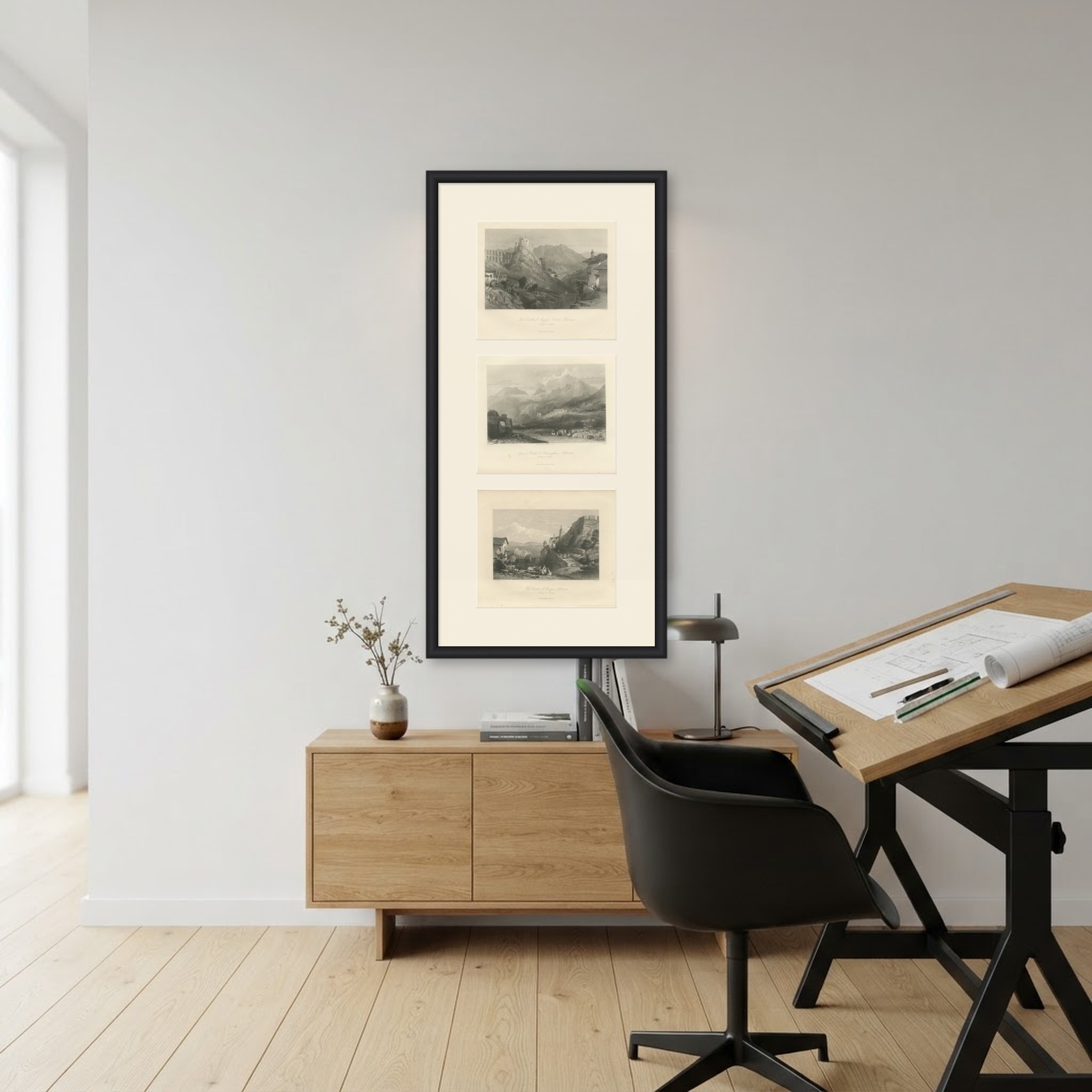
This is a set of three original antique steel engravings, sold together as one lot, from the first volume of The Turkish Empire Illustrated, published in London by Peter Jackson about 1850. The sheets are, in order: The Castle of Argyro-Castro in Albania; Town and Castle of Paramythia; The Castle of Parga in Albania. The castle of Argyro-Castro standing on its rock spur with a long arcaded aqueduct striding across the hillside toward it, stone roofed houses stepping down the slope at the right and a bridge over the ravine in the foreground. Paramythia strung along a high shelf beneath bare limestone peaks, a ruined Roman arch standing in the left foreground, a party of travelers with pack horses halted on the road and smoke rising from a fire in the valley floor. The Venetian castle of Parga on its headland above the sea, the town climbing the slope beneath its walls, a little island with a chapel lying offshore and villagers with a laden mule resting on the rocks in the foreground.
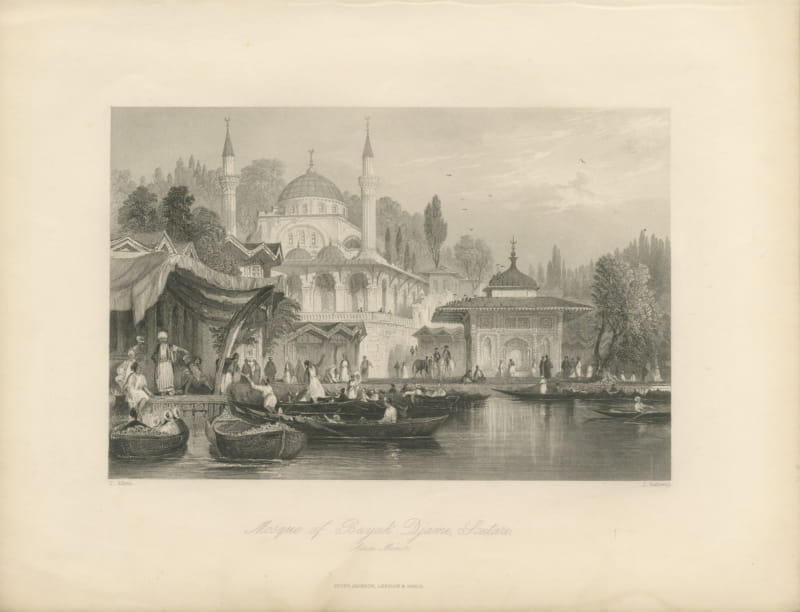
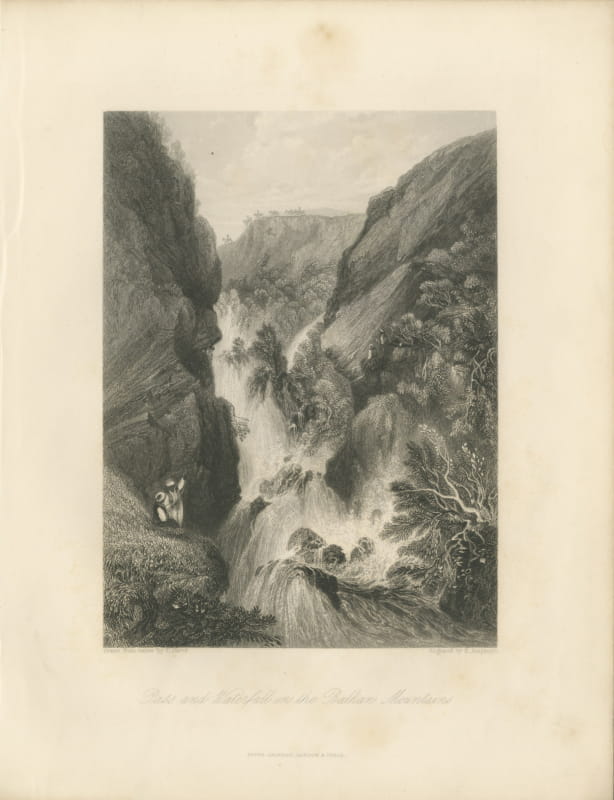
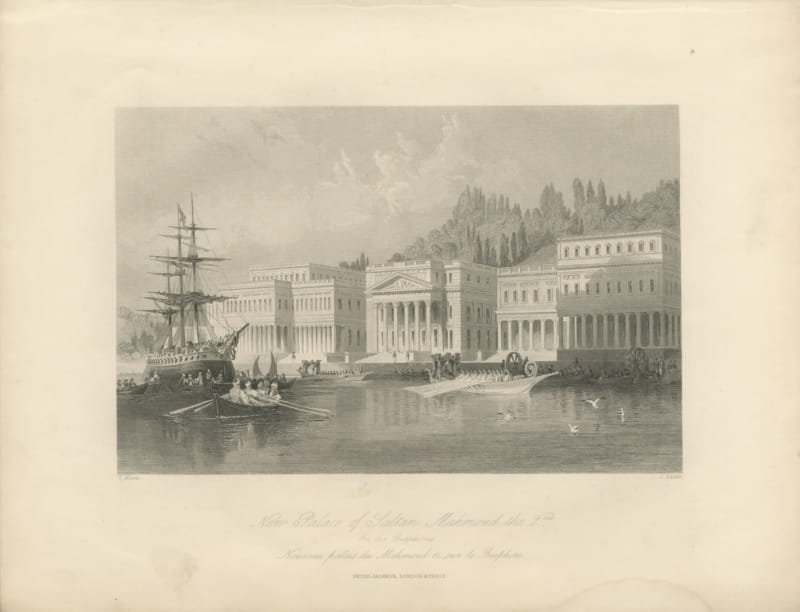
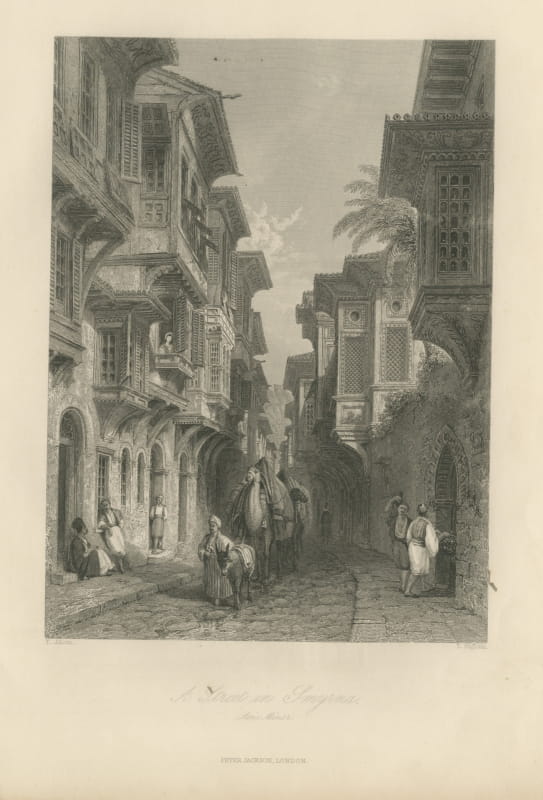
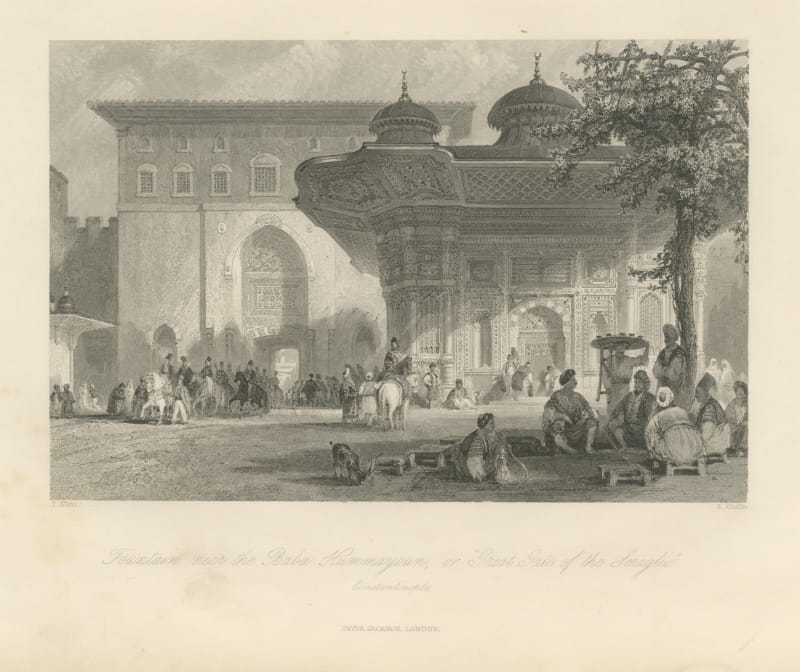
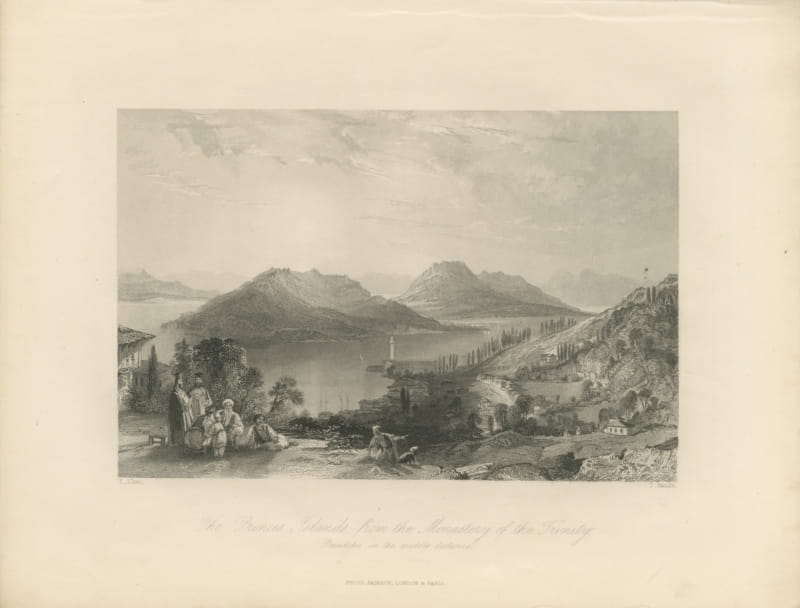
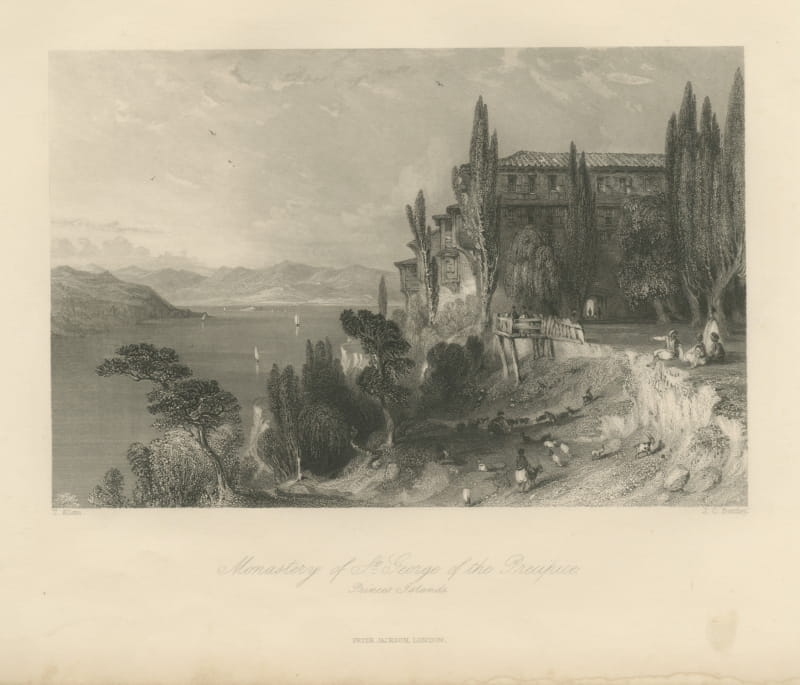
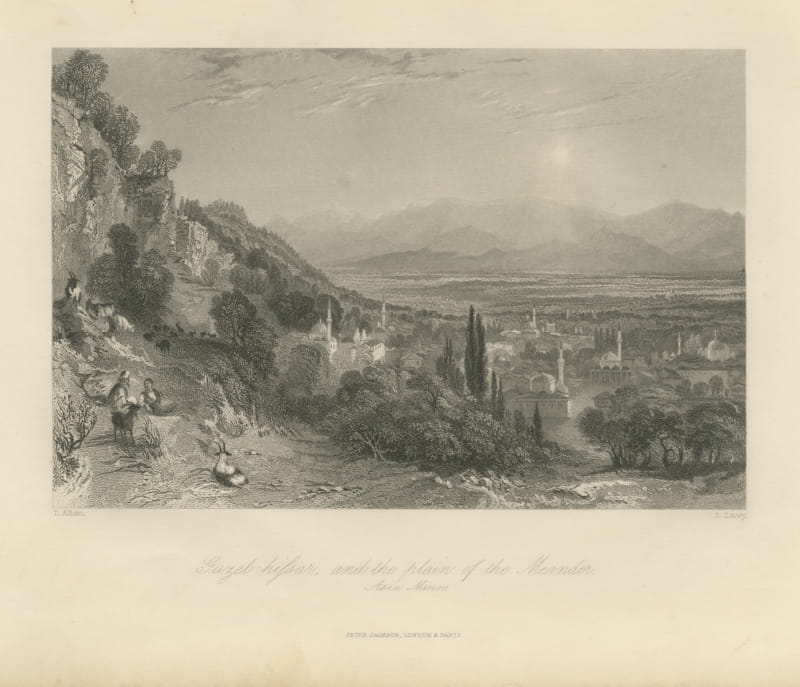
This sheet was published in London about 1850 by Peter Jackson, late Fisher, Son and Company, in the first volume of The Turkish Empire Illustrated. Thomas Allom traveled through Constantinople and Asia Minor making the original drawings, and the Reverend Robert Walsh, who had served as chaplain at the British embassy to the Porte, wrote the letterpress. The plates are steel engravings, a technique that holds a far finer line than copper and allowed the long print runs these illustrated travel books required. Each plate in the series carries the draftsman at the lower left and the engraver at the lower right, both printed inside the plate mark, with the English title in script below and a French translation beneath it on many sheets, which is how the publisher sold the work on both sides of the Channel. The fine tonal gradation is the work of the burin alone, with no aquatint or added wash.
Argyro-Castro is Gjirokaster, now a world heritage town, and the aqueduct in this plate was pulled down within a generation of the drawing, so the sheet is one of the few images that records it standing. Paramythia guarded the pass between the Epirot coast and the interior and was one of the last Ottoman strongholds in the region, and the broken arch at the left gives the composition the classical foreground that Leitch used throughout the Albanian plates. They are three original sheets sold together, and the set is never split. A matched group like this is easier to place than a single sheet, because it fills a wall on its own, and the common ground and plate size mean the frames can be identical.
Light uneven toning, browner toward the edges. Marked handling soiling along the edges of all three sheets. Scattered foxing in the margins of all three sheets. Slight wear at the corners of one of the three sheets.
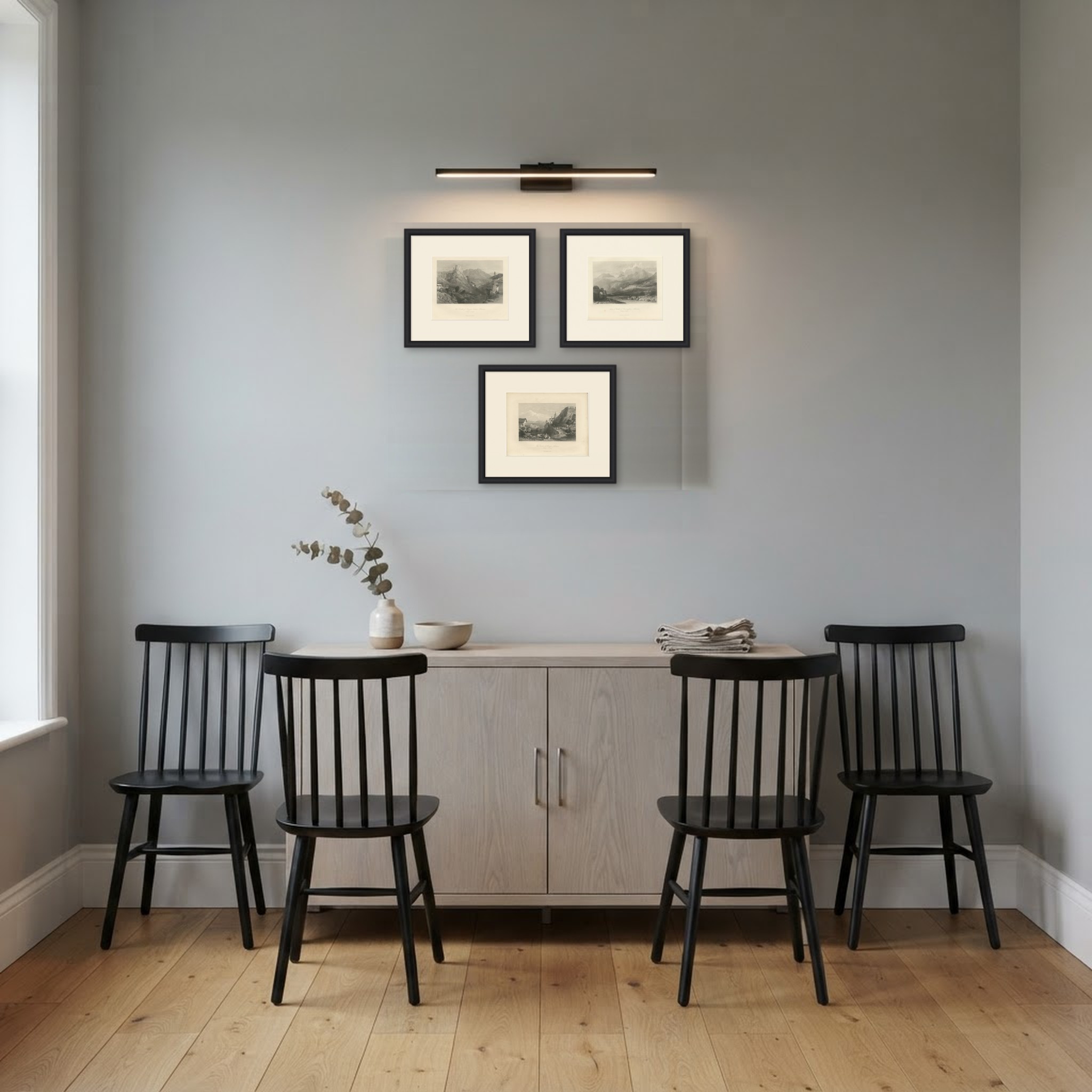
This is an original antique print, not a modern reproduction. This item is sold unframed. Any framed or interior images are shown for presentation and inspiration only, unless the listing explicitly states that the item is sold framed.