About this sheet
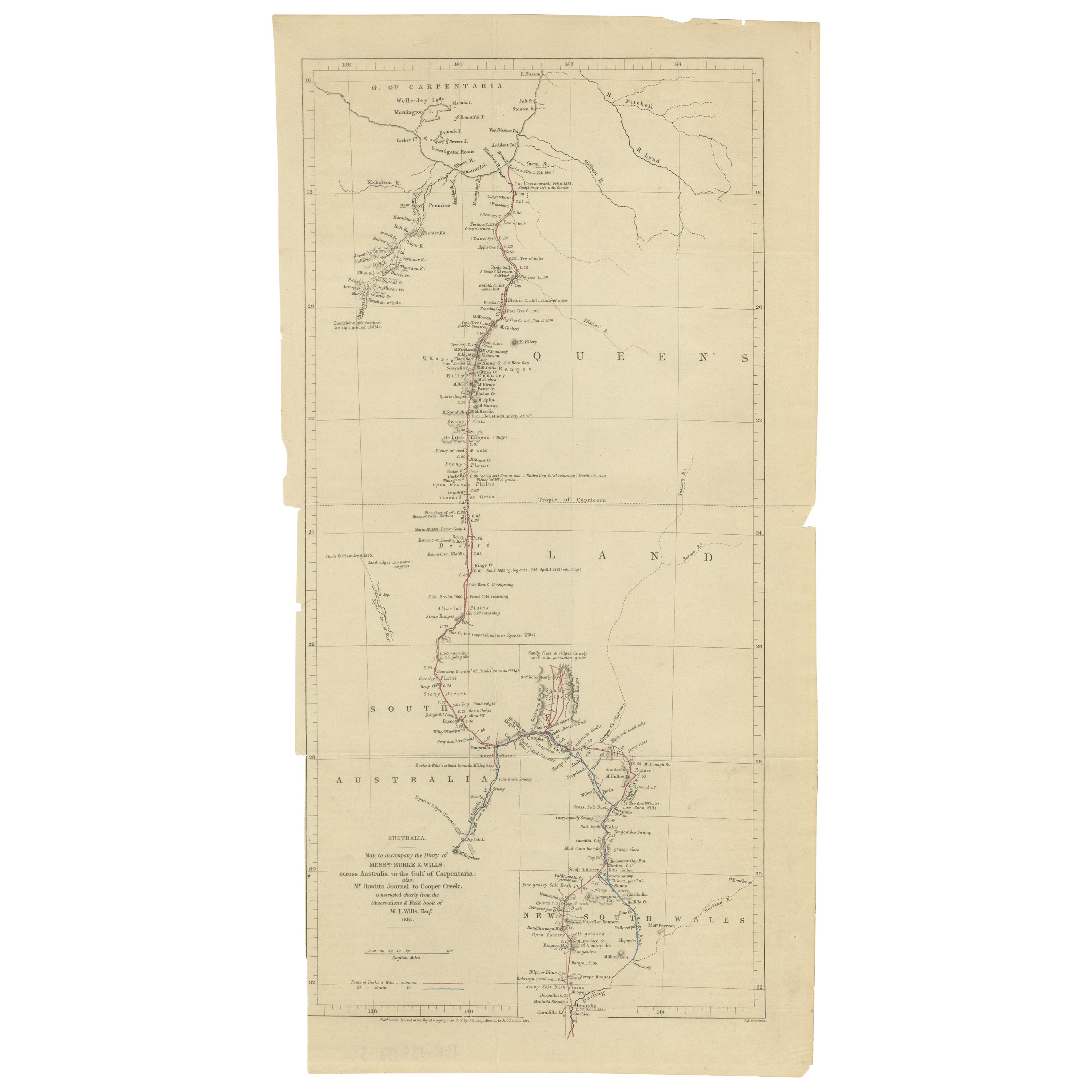
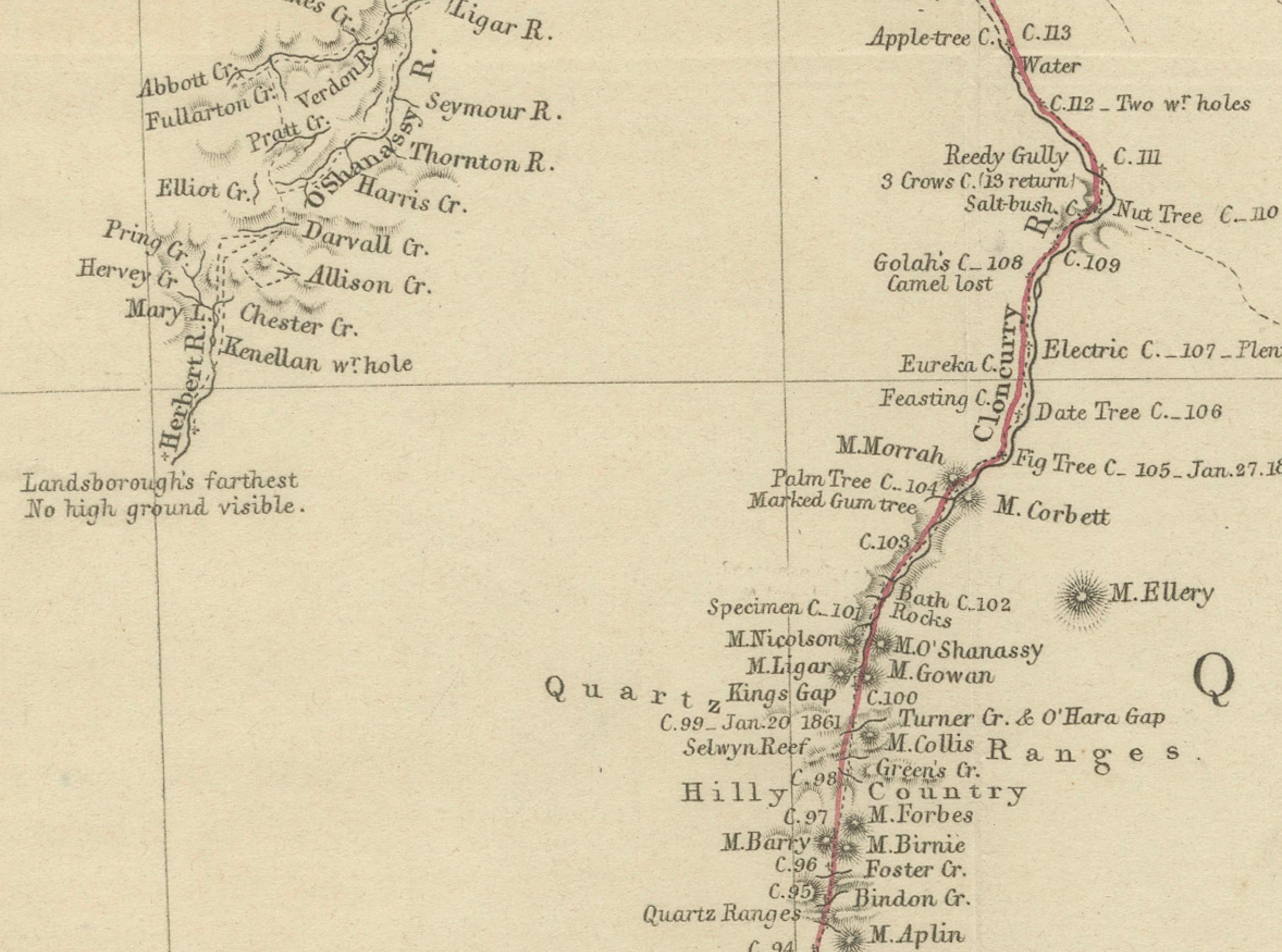
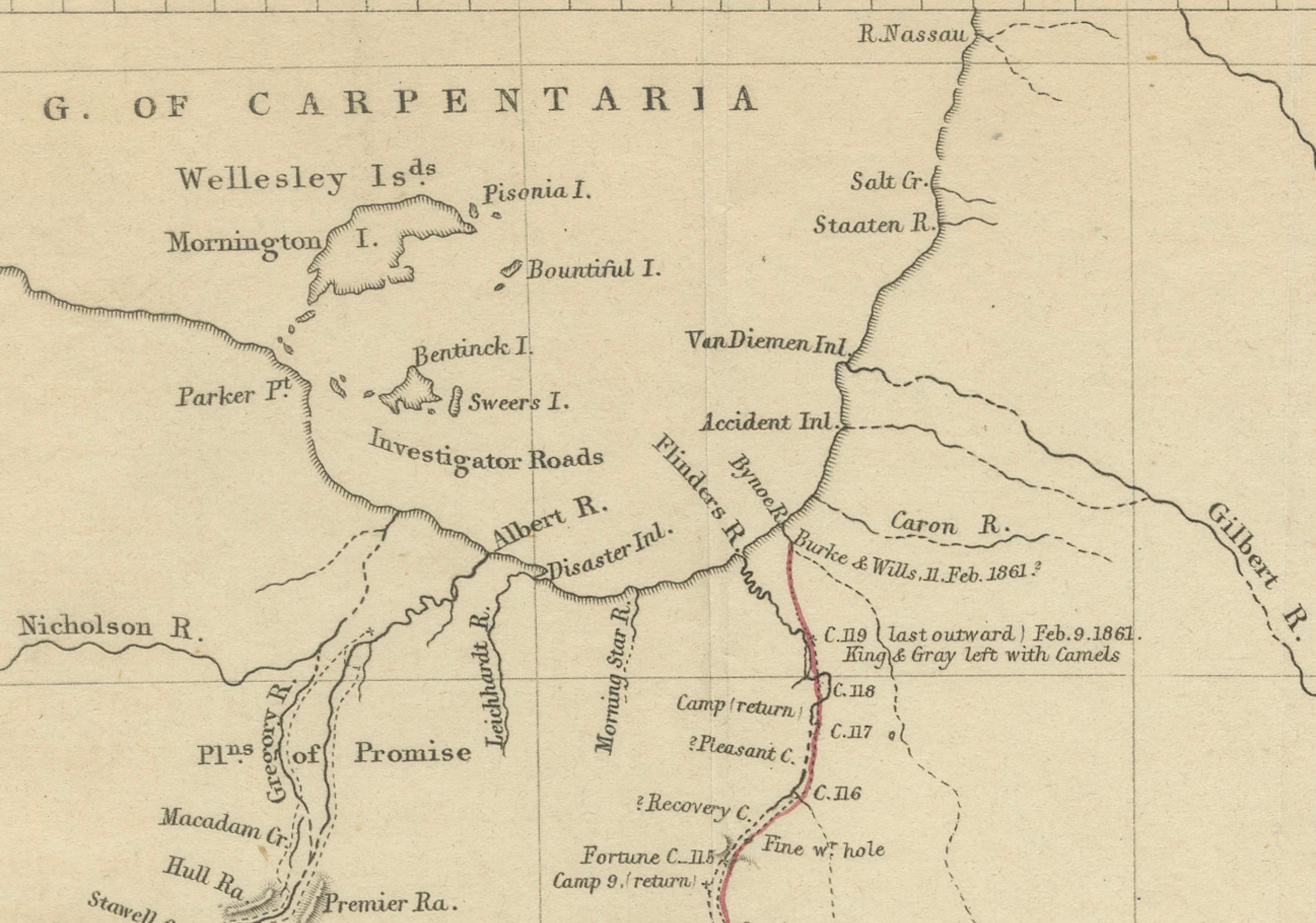
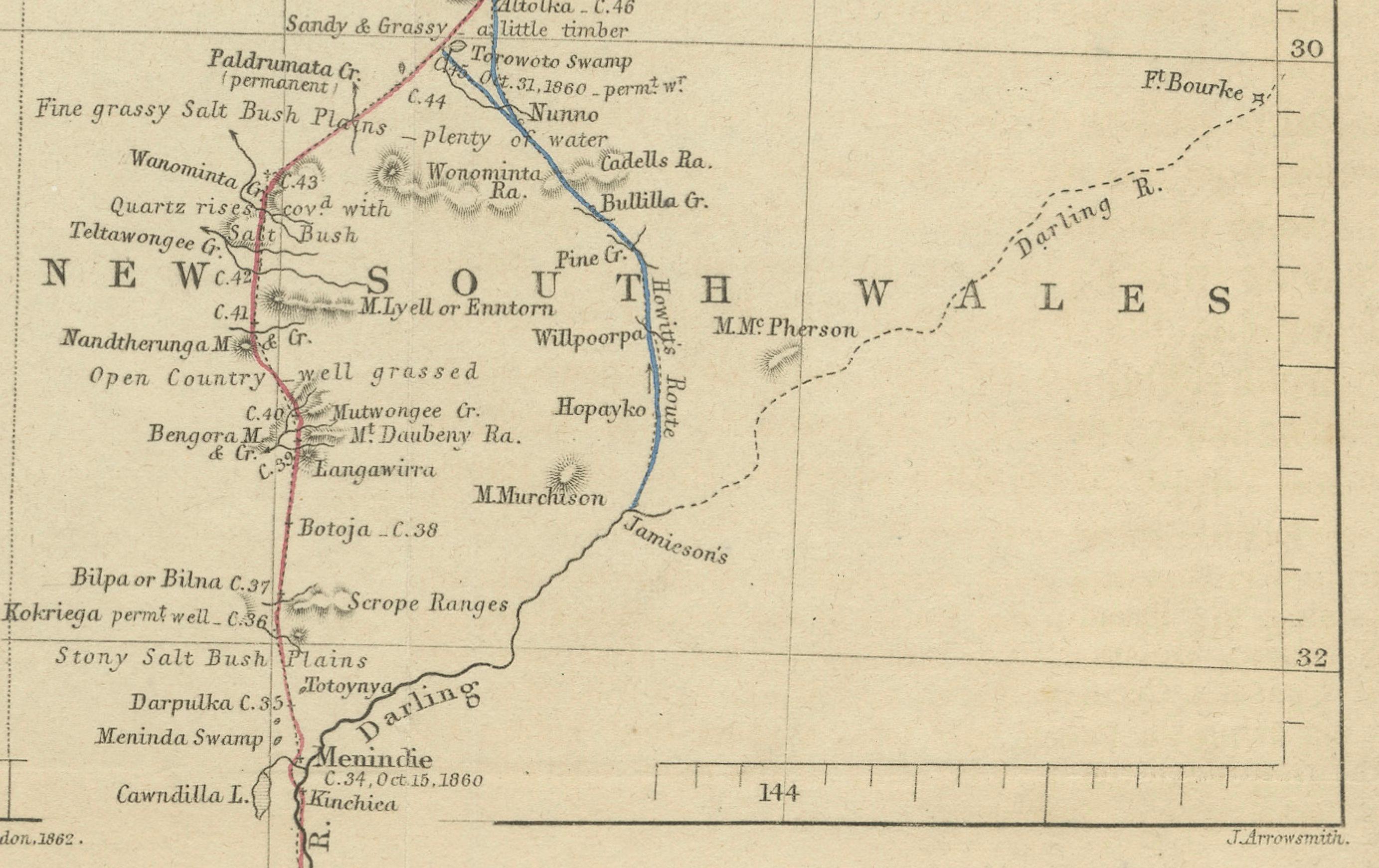
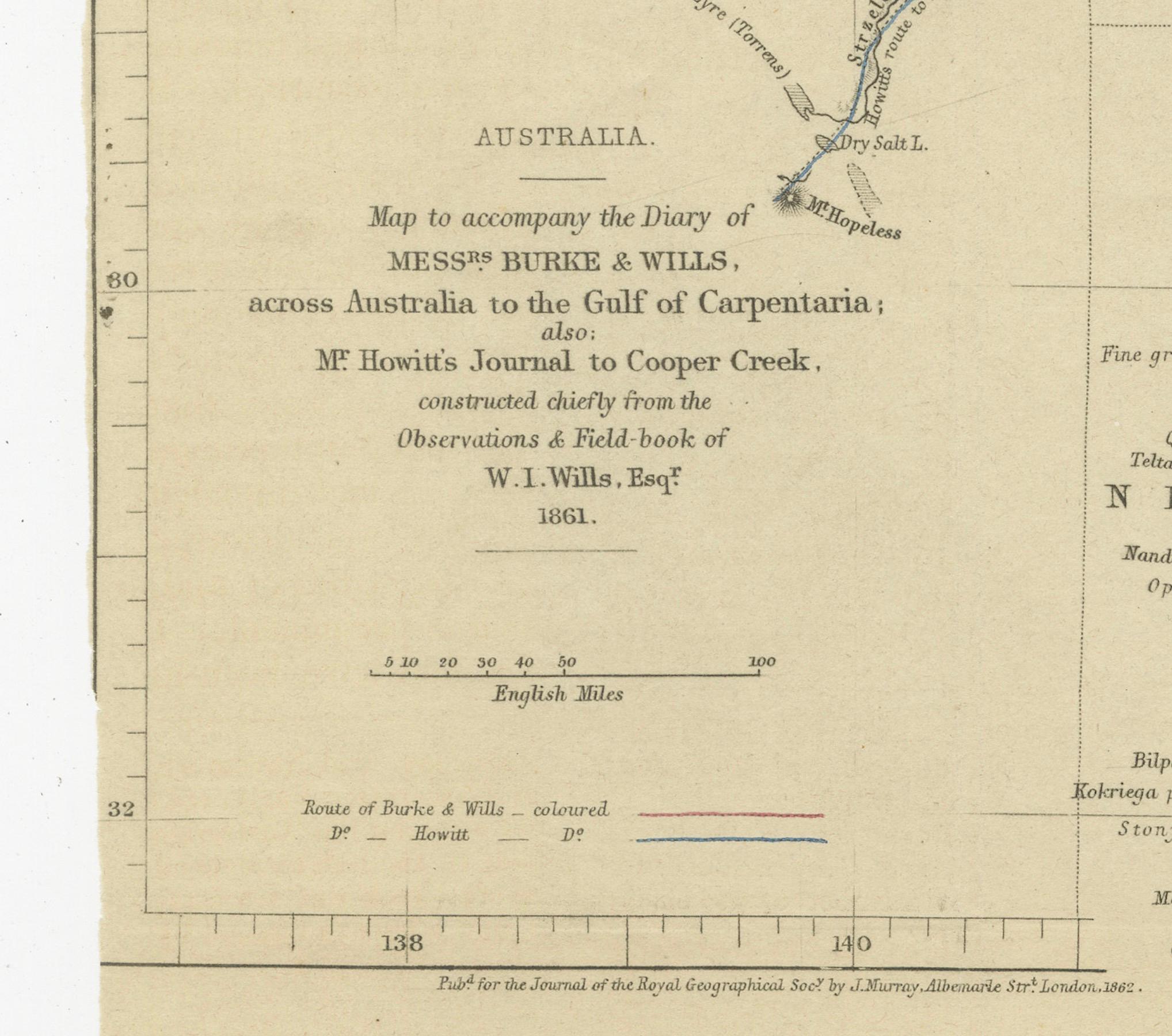
The map depicts the route of the Burke and Wills expedition, one of the most famous and tragic explorations in Australian history. This journey was the first to cross the Australian continent from south to north, starting in Melbourne and reaching the Gulf of Carpentaria. Led by Robert O'Hara Burke and William John Wills, the expedition set out in 1860 with the aim of opening up the interior for pastoral use and establishing a northern coastline for trade. However, due to a series of misfortunes and mistakes, both leaders perished on the return journey in 1861. The only surviving member of the expedition's leadership was John King, who was helped by the local Indigenous people.
The expedition in more detail:
The Burke and Wills expedition, formally known as the Victorian Exploring Expedition, was an ambitious undertaking to cross the Australian continent from south to north. It began in 1860, led by Robert O'Hara Burke and William John Wills, with the aim of charting a route from Melbourne in Victoria to the Gulf of Carpentaria in Queensland, which was believed to be Australia's inland sea, if it existed.
The venture was well-funded and equipped with the latest technology, including camels for desert transport. Despite this, the expedition is often remembered as a tragic example of poor planning and leadership. Burke, who had no exploration experience, made several critical errors in decision-making and management. The expedition reached the Gulf of Carpentaria in February 1861, but the return journey was marred by misfortune.
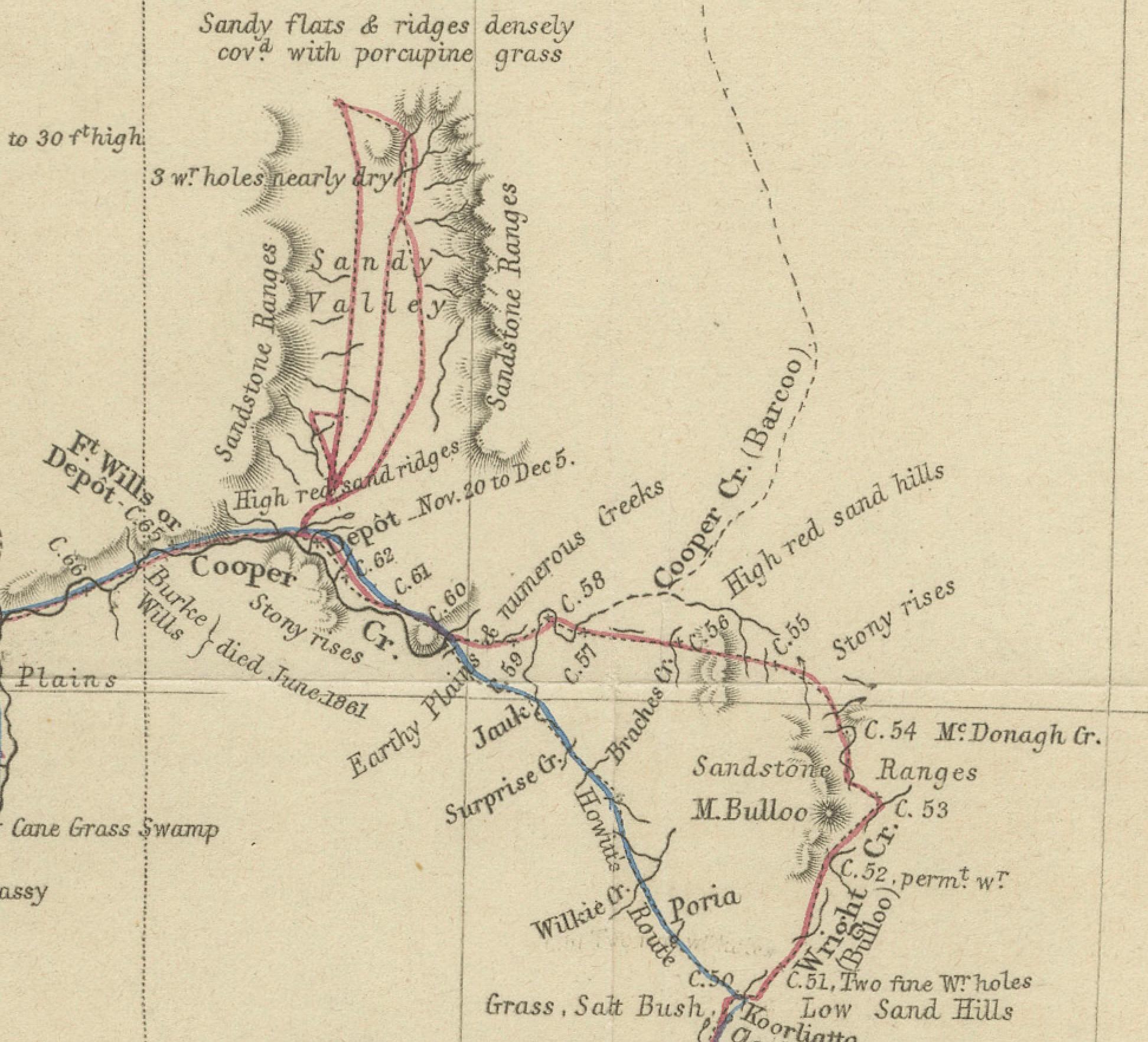
On their return, the main party was forced to leave supplies at Cooper Creek while Burke, Wills, King, and Gray attempted the final leg of the journey. Gray died along the way, and when Burke, Wills, and King reached the supply depot, they found it deserted, as the support team had waited longer than planned but finally left, believing the main party to be lost.
Burke and Wills both died of malnutrition and exhaustion in the harsh environment. John King was the sole survivor of the leadership group, thanks to the aid of local Indigenous people. The expedition's aftermath led to public outcry over the perceived mismanagement and became a cautionary tale of exploration in Australia.
Despite its tragic end, the Burke and Wills expedition is considered significant for the extensive scientific observations and surveys made, which contributed valuable knowledge of the Australian outback and its potential for agriculture and settlement.