About this sheet
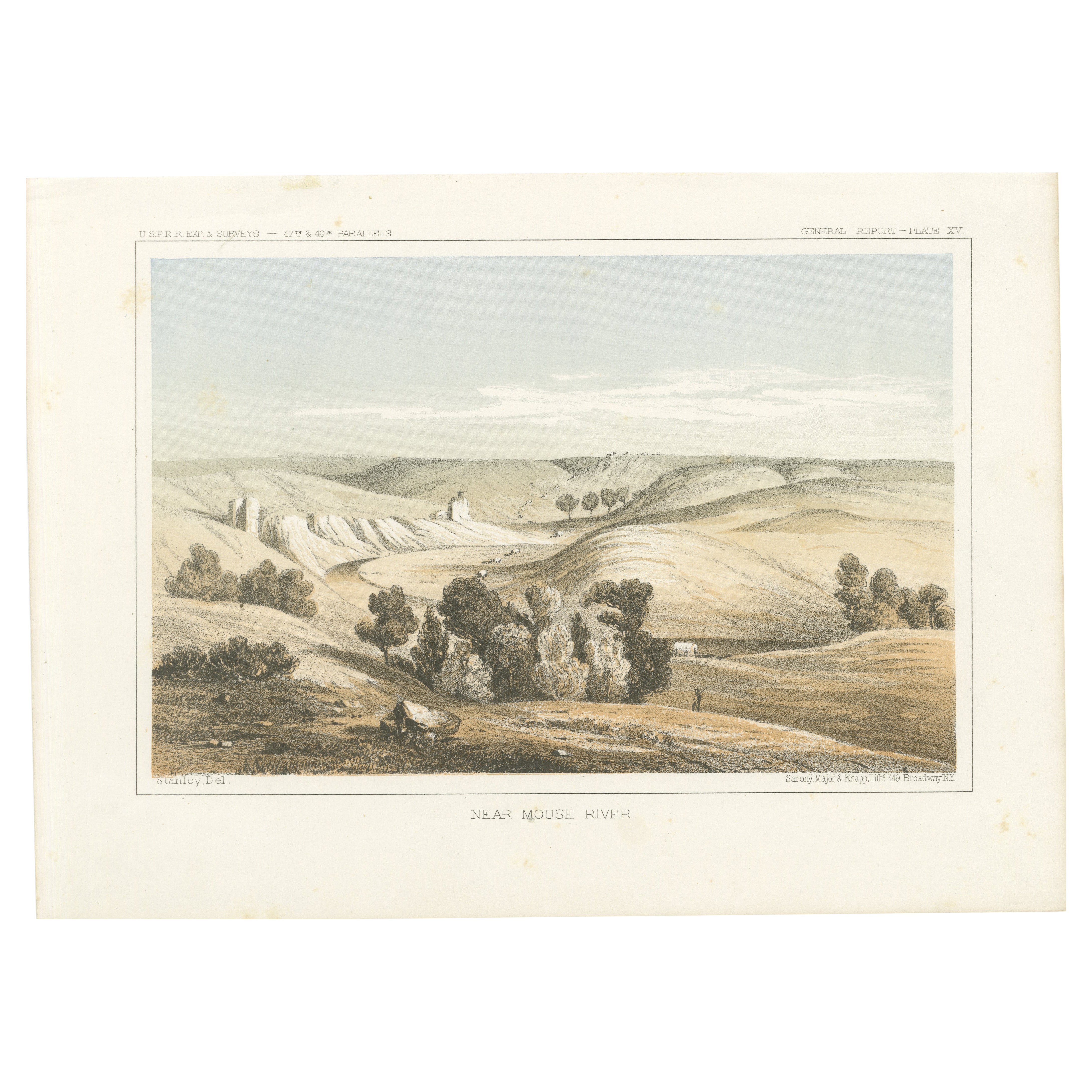
This serene lithograph, "Near Mouse River," captures the gentle undulating hills and picturesque valley of the Mouse River region in North Dakota. Published as General Report – Plate XV in the Pacific Railroad Exploration Survey reports of 1856, the print offers a view of a tranquil, pastoral landscape, showcasing the harmonious interplay of natural features and human activity.
The scene features a winding river flanked by soft hills, dotted with trees and patches of vegetation. Small figures and a structure in the background add a sense of scale and human presence to the idyllic scenery. The lithograph’s fine details and careful composition reflect the peaceful beauty of this region, which was documented during the westward expansion in the United States.
Created by Sarony, Major & Knapp, this tinted lithograph exemplifies the artistry and technical expertise of mid-19th-century printmaking. The subtle color gradients and precise shading emphasize the depth and warmth of the landscape, making it a stunning example of the era’s exploration art.
More about the Mouse River:
The Mouse River, also known as the Souris River, flows through the United States and Canada. In the U.S., it enters North Dakota from Manitoba, Canada, and flows southeast through cities such as Minot, Velva, Towner, and Rugby. After passing through central North Dakota, it curves back northward into Manitoba, where it eventually joins the Assiniboine River.
The Mouse River is unique because it leaves the U.S., flows into Canada, and then returns to the U.S. before re-entering Canada again. It has a history of flooding, including a major flood in 2011 that affected Minot, North Dakota. The name "Mouse River" is the English translation of the French "Rivière des Souris," used by early fur traders.
Condition: Very good, with minimal foxing on the margins. The image is crisp, and the colors remain vibrant and well-preserved. One very small pinhole in the title. Please check the scan carefully.
Framing Tip: Pair this lithograph with a soft cream or beige matte to complement the warm earth tones. A wooden or antique-style metallic frame would enhance its historical and aesthetic appeal, making it a perfect addition to a study, gallery, or collection focused on American landscapes or westward expansion.