About this sheet
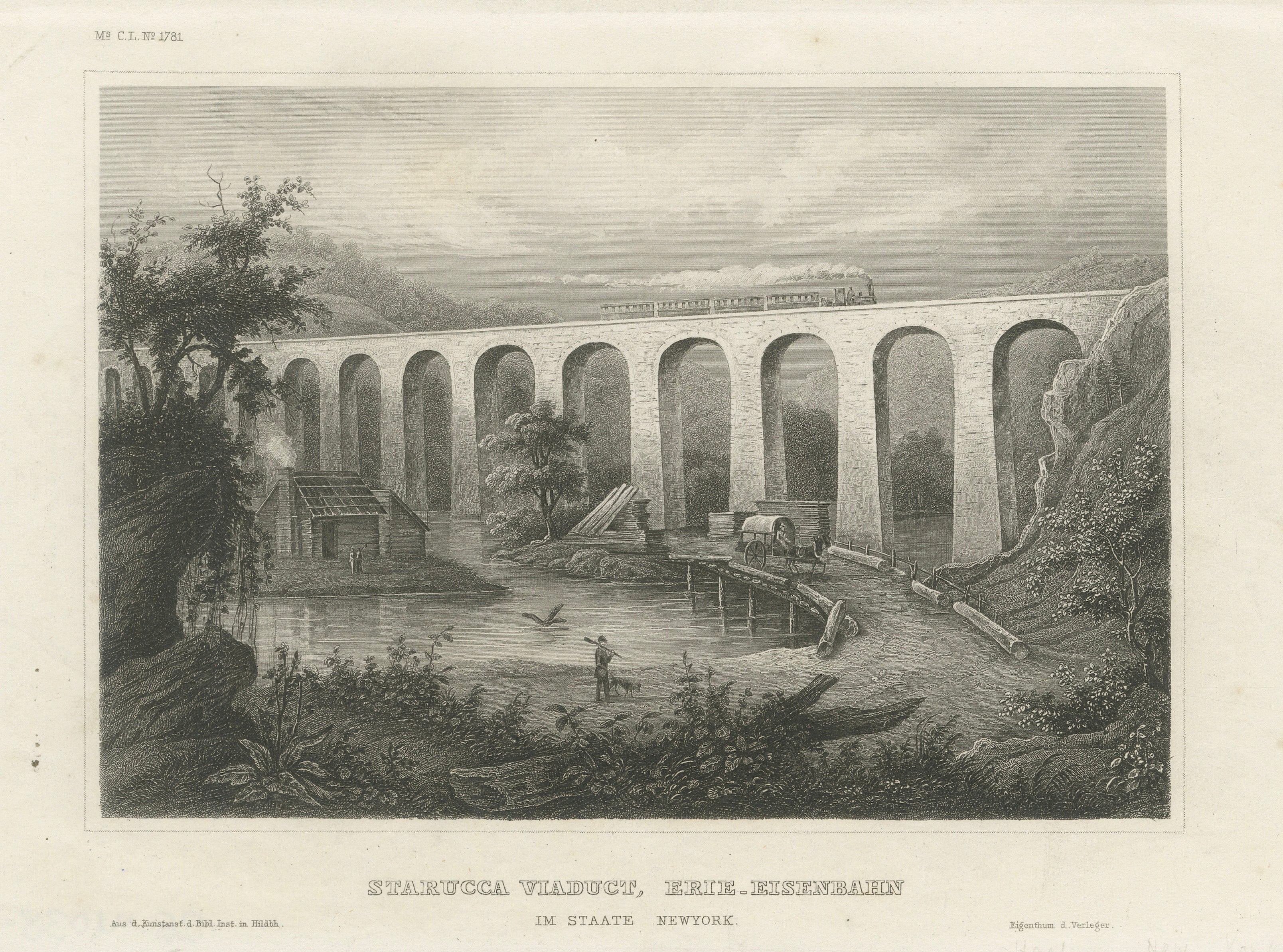
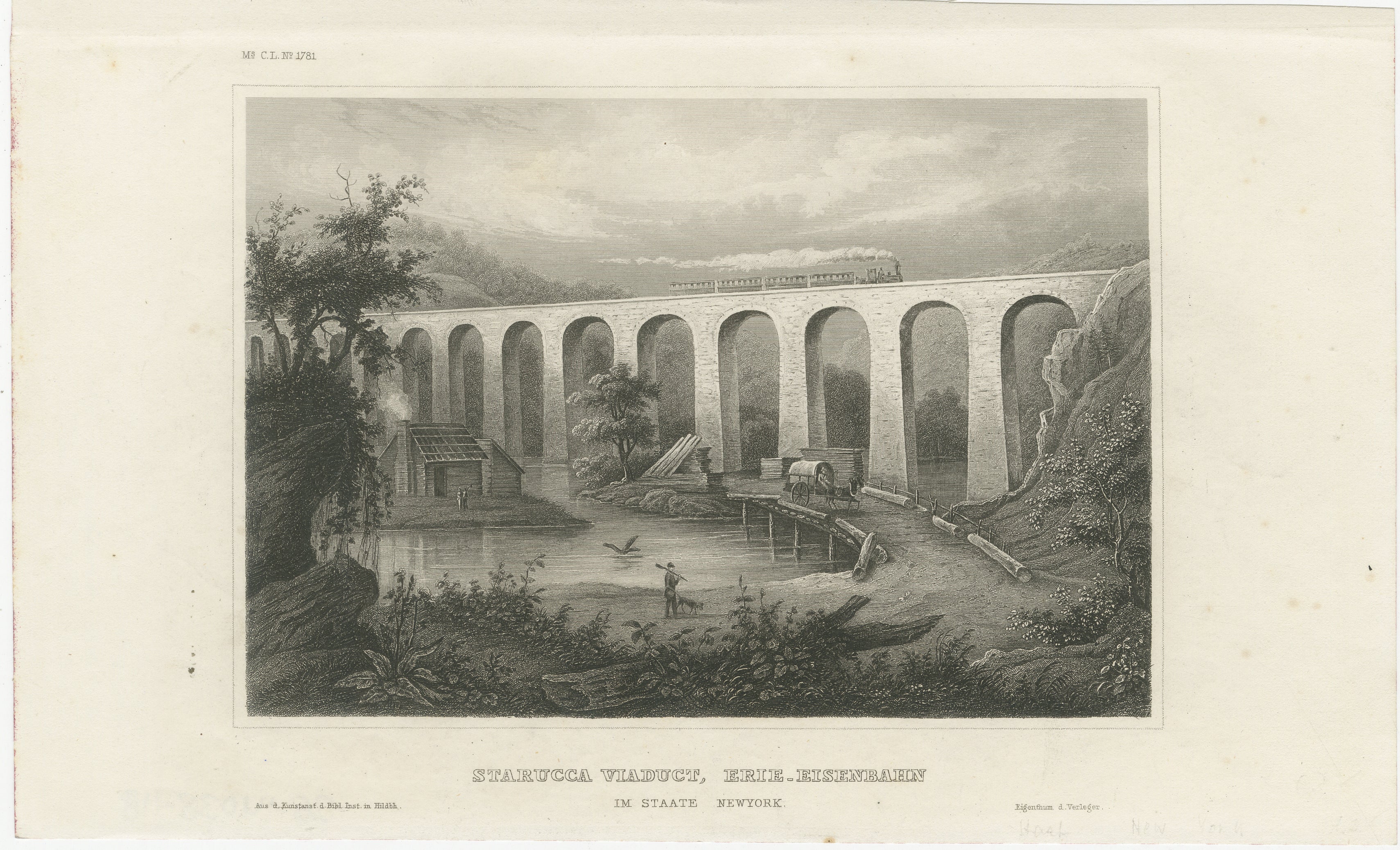
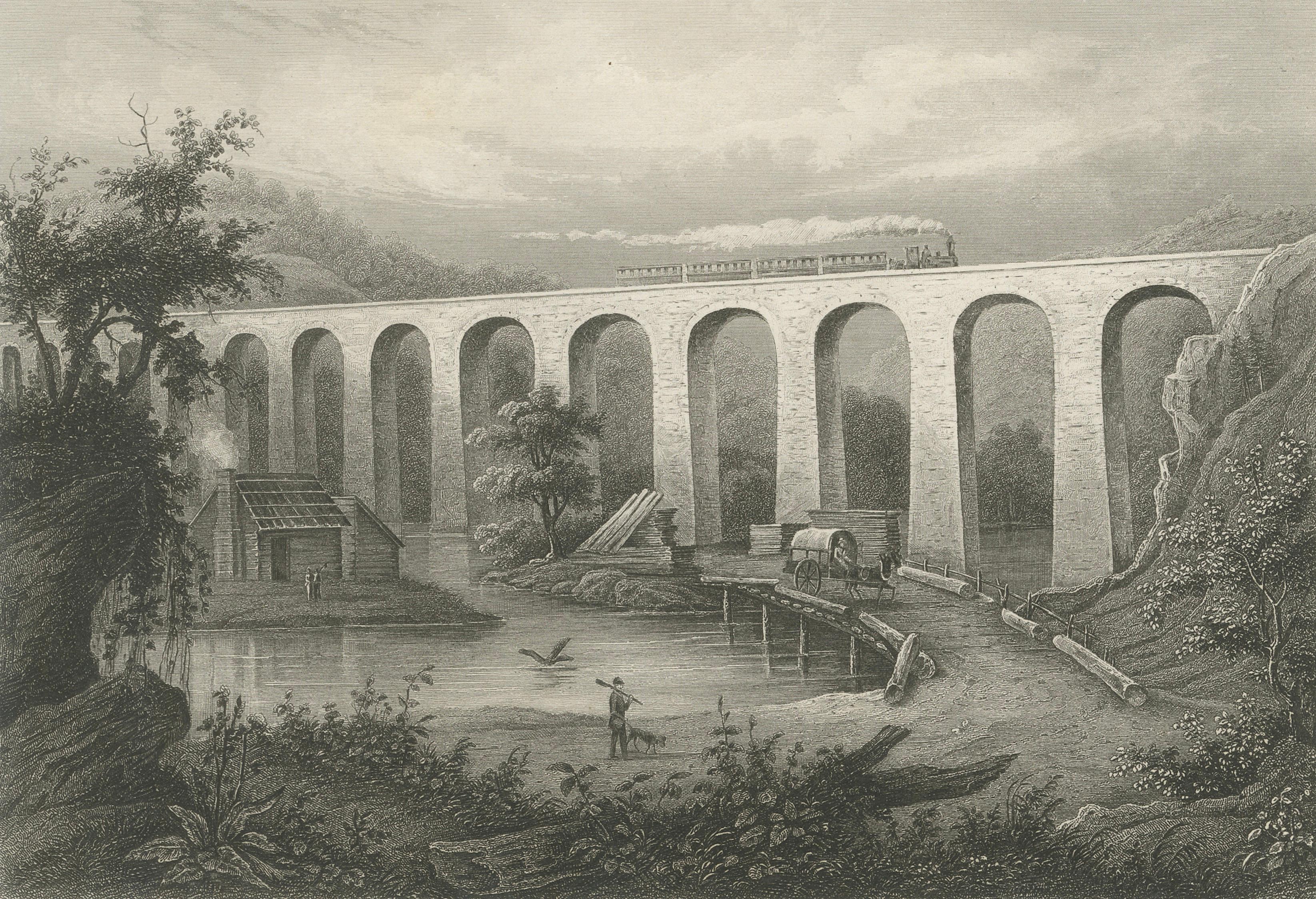
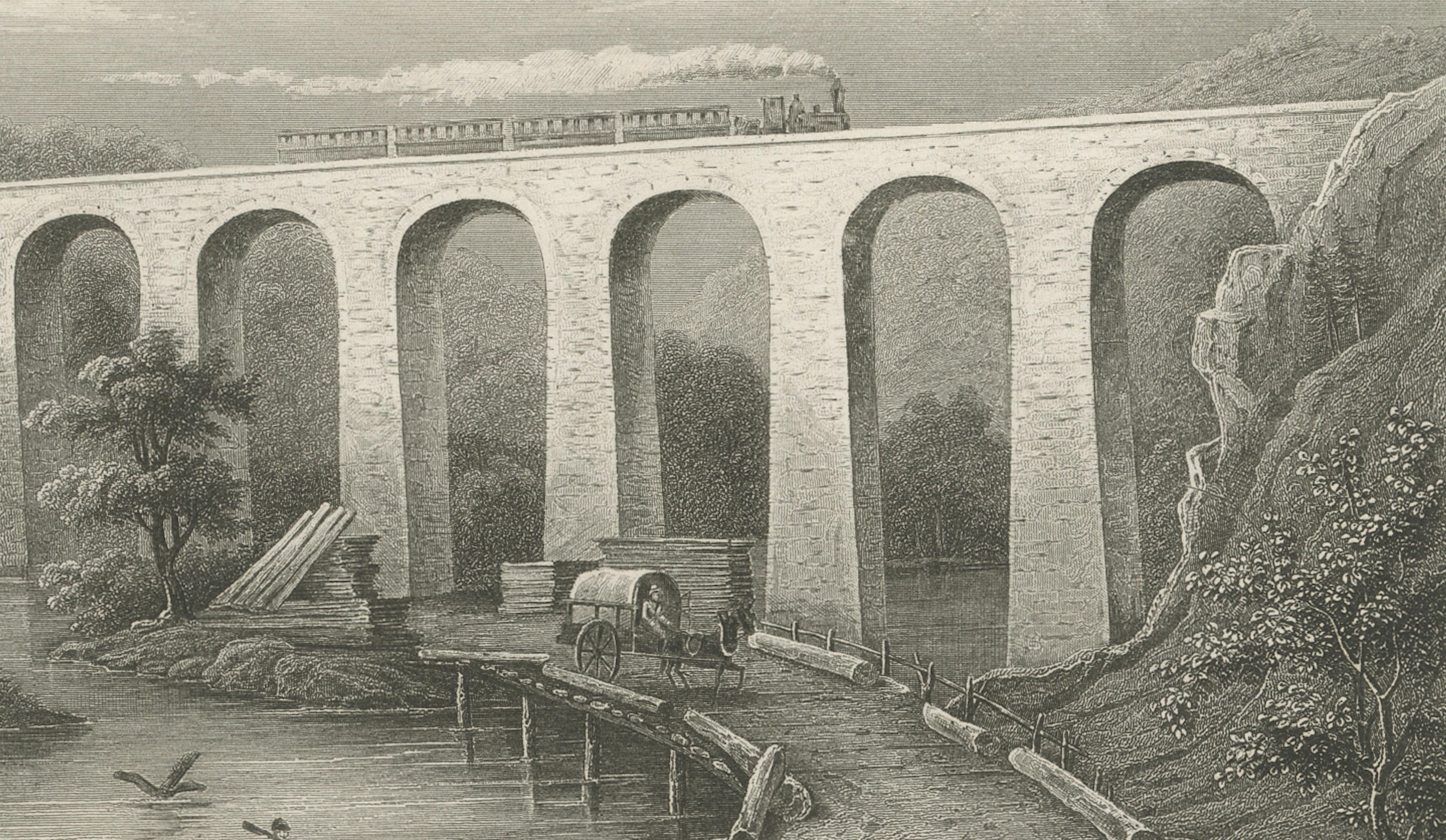
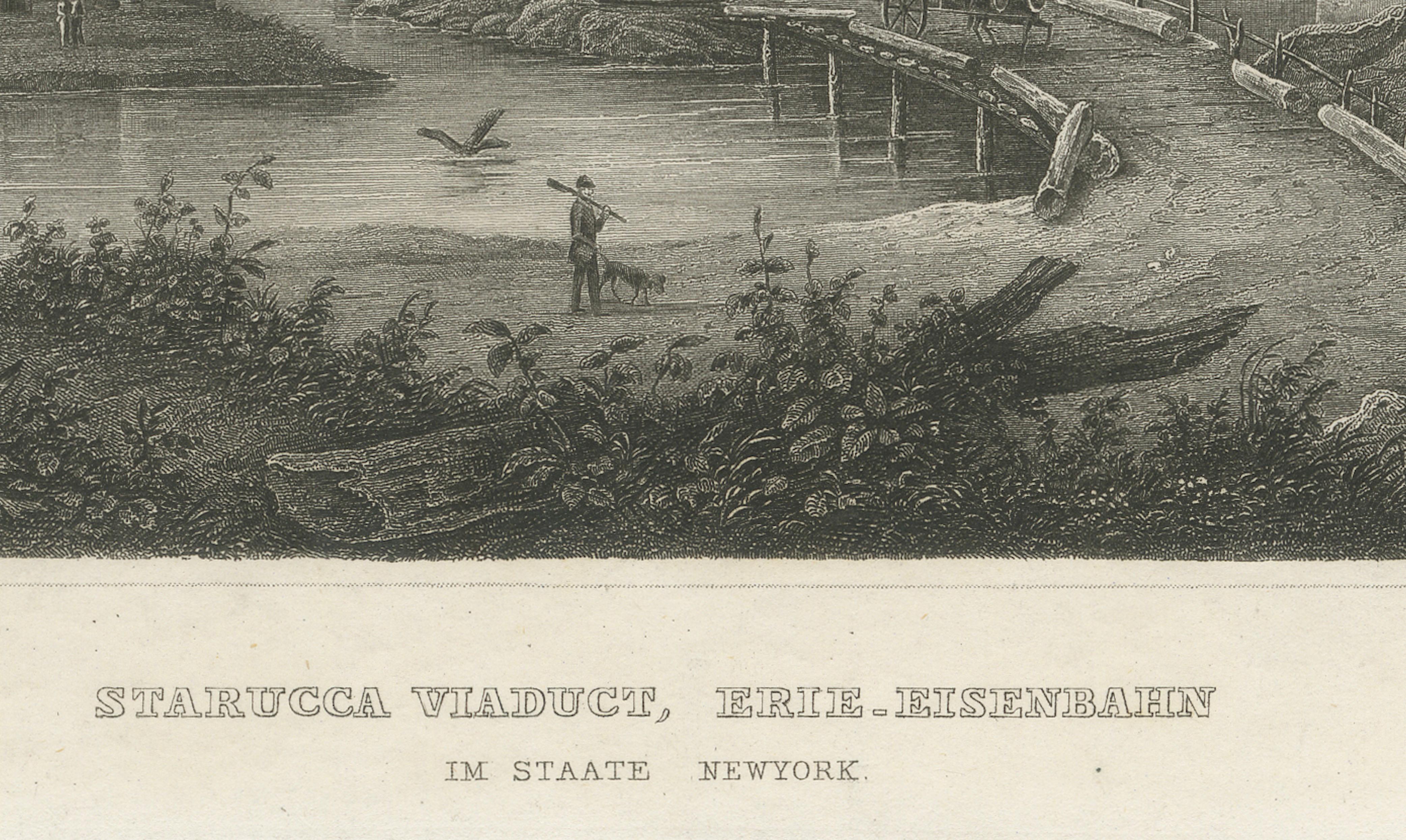
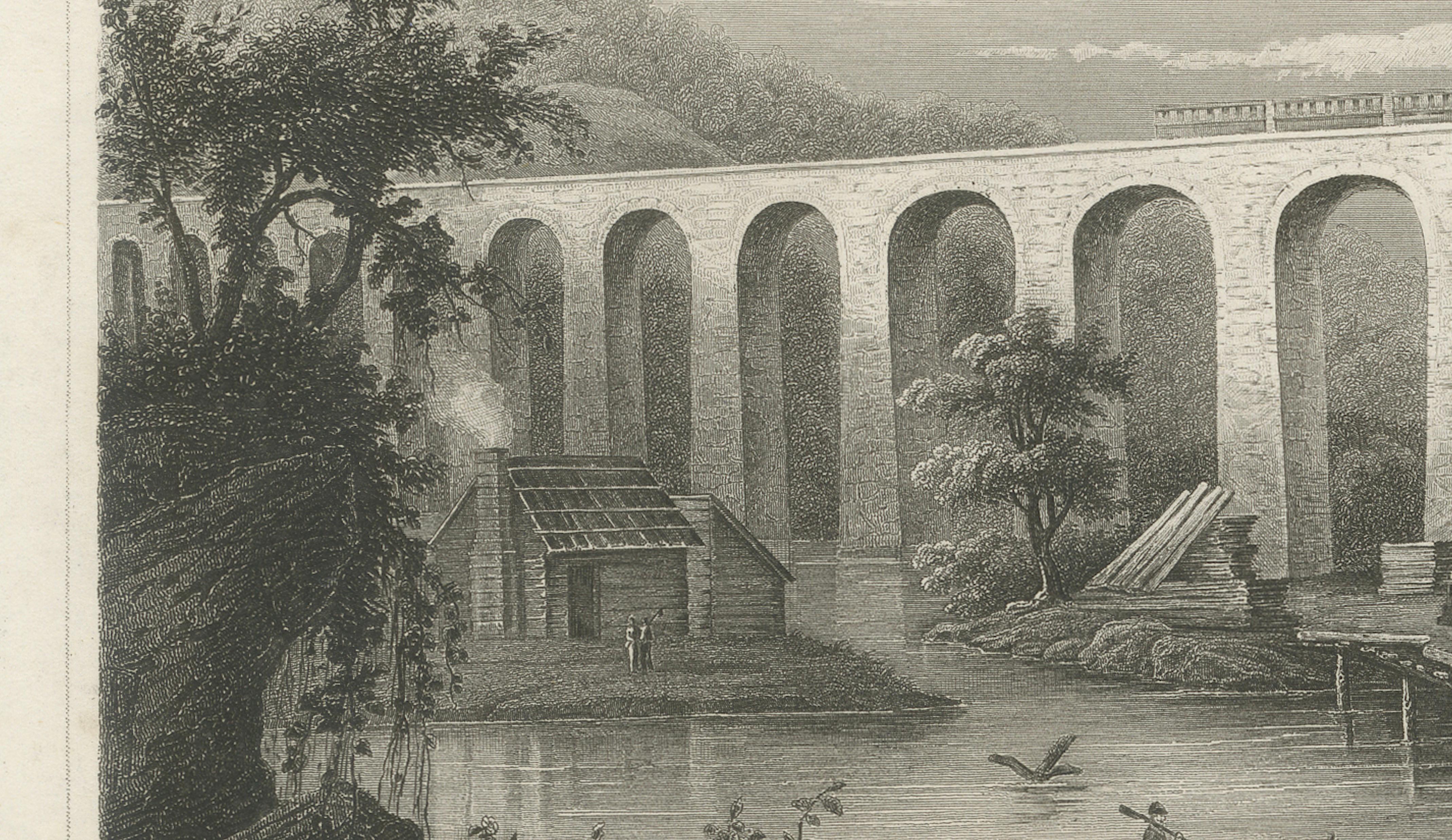
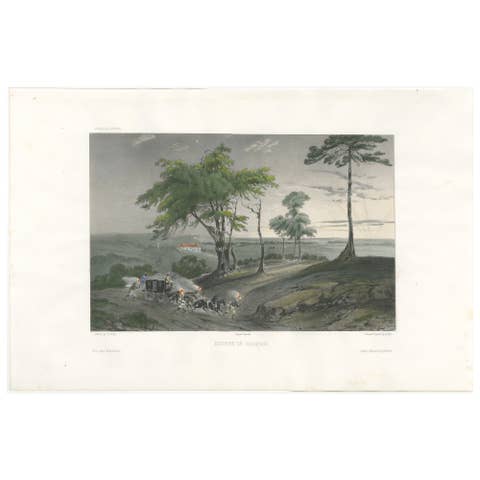
This impressive nineteenth-century engraving depicts the celebrated Starucca Viaduct, one of the great engineering achievements of early American rail transportation. The scene shows a steam locomotive crossing the monumental stone viaduct, its elegant series of arches spanning a valley below. In the foreground, a peaceful rural landscape of ponds, timber, workers, and woodland contrasts beautifully with the massive railway structure, highlighting the transformative impact of the railroad upon the American landscape.
The Starucca Viaduct was constructed between 1847 and 1848 for the Erie Railroad and remains one of the oldest and most significant stone railway bridges in the United States. Located near Lanesboro, Pennsylvania, close to the New York border, the viaduct formed a crucial part of the Erie Railroad's route linking New York with the expanding markets and settlements of the American interior. Designed by engineer Julius W. Adams under the direction of the renowned British engineer James P. Kirkwood, the structure quickly became a symbol of American industrial progress.
Built from locally quarried bluestone, the viaduct features seventeen magnificent arches and stretches more than 300 meters in length. At the time of its completion it was considered one of the finest railway viaducts in the world, attracting visitors, engineers, and artists eager to witness this remarkable feat of construction. The engraving captures both the architectural grandeur of the bridge and the optimism associated with the rapid expansion of rail transportation during the nineteenth century.
Published by the Bibliographisches Institut in Hildburghausen, Germany, this engraving reflects the widespread international fascination with American technological innovation. European audiences followed the growth of the American railway network with great interest, and views such as this helped illustrate the country's emergence as an industrial power.
Today, the Starucca Viaduct remains an iconic landmark and is listed on the National Register of Historic Places. Prints depicting the structure are highly sought after by collectors of railroad history, industrial heritage, American engineering, and nineteenth-century landscape engravings.
Condition report:
Good antique condition with age-related toning, scattered foxing, and minor handling marks consistent with age. The engraved image remains crisp and attractive, retaining excellent detail throughout. Please review the photographs carefully for the most accurate assessment of condition.
Framing tips:
This engraving displays beautifully in a silver, black, dark walnut, or gilt frame with an ivory or cream museum-quality mat. The strong architectural subject and historical significance make it particularly suitable for offices, libraries, studies, railroad collections, and interiors celebrating American history and engineering.
This offering is for an original nineteenth-century engraving, not a modern reproduction. Any framed room visualizations are intended solely to illustrate potential display options and may not accurately represent the print's exact scale relative to the frame or interior setting. The print is sold unframed.
Technique: Steel engraving
Maker: Bibliographisches Institut, Hildburghausen, Germany, 19th century.