Indian Follower of the Shaivite Sect – Sonnerat Voyage Engraving, 1806
€ 290
One of a kind: this is the sheet in the photographs. Ships from Langweer, the Netherlands.
Date
1806
Sheet size
28.5 × 21 cm (11.2 × 8.3 in)
Condition
Good
Reference
BG-13429-3
Condition
Good condition with light age toning, more around the edges. Slight scattered spotting at the margin edges, not affecting the image. Blank verso. Sharp impression on laid paper. Study the images carefully.
About this sheet
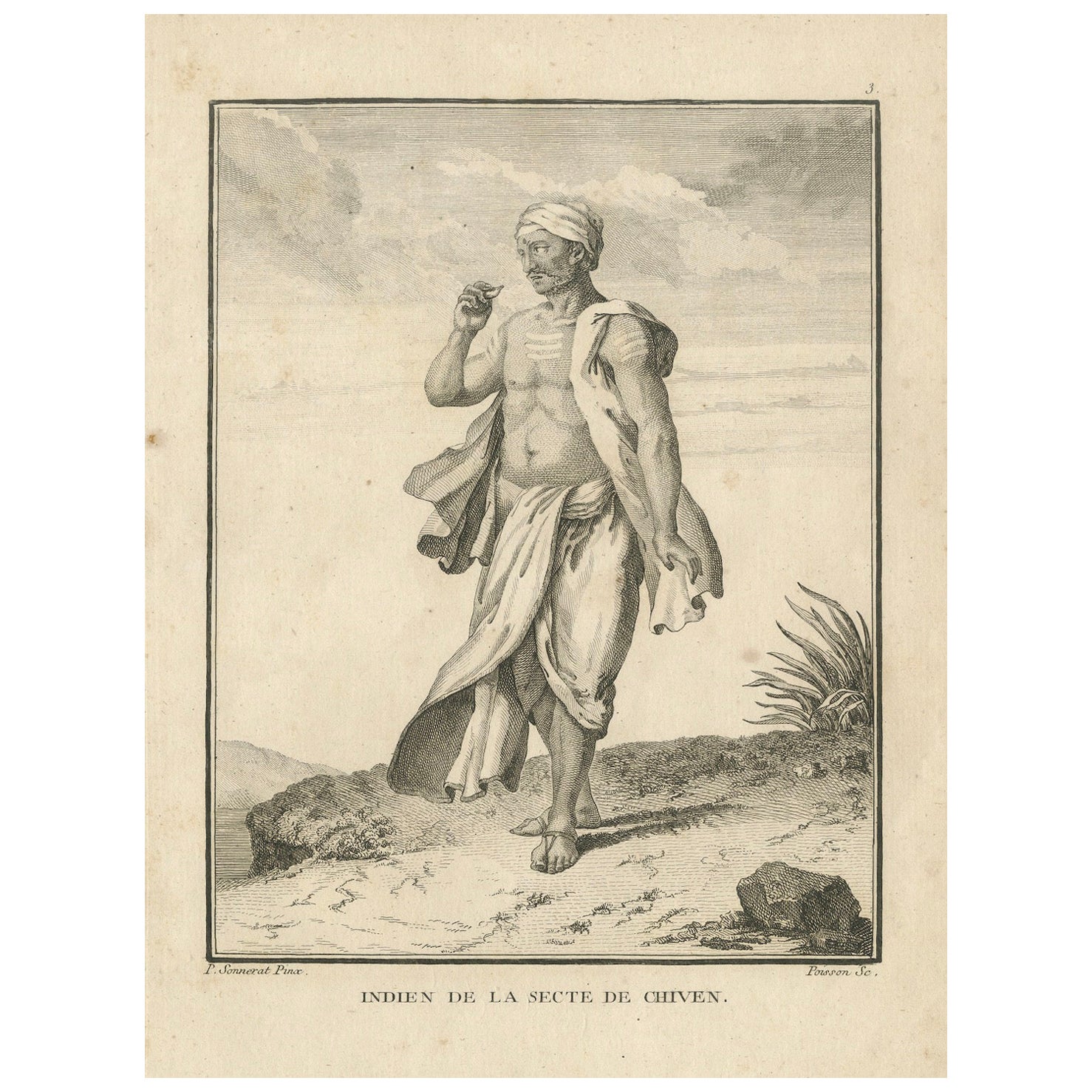
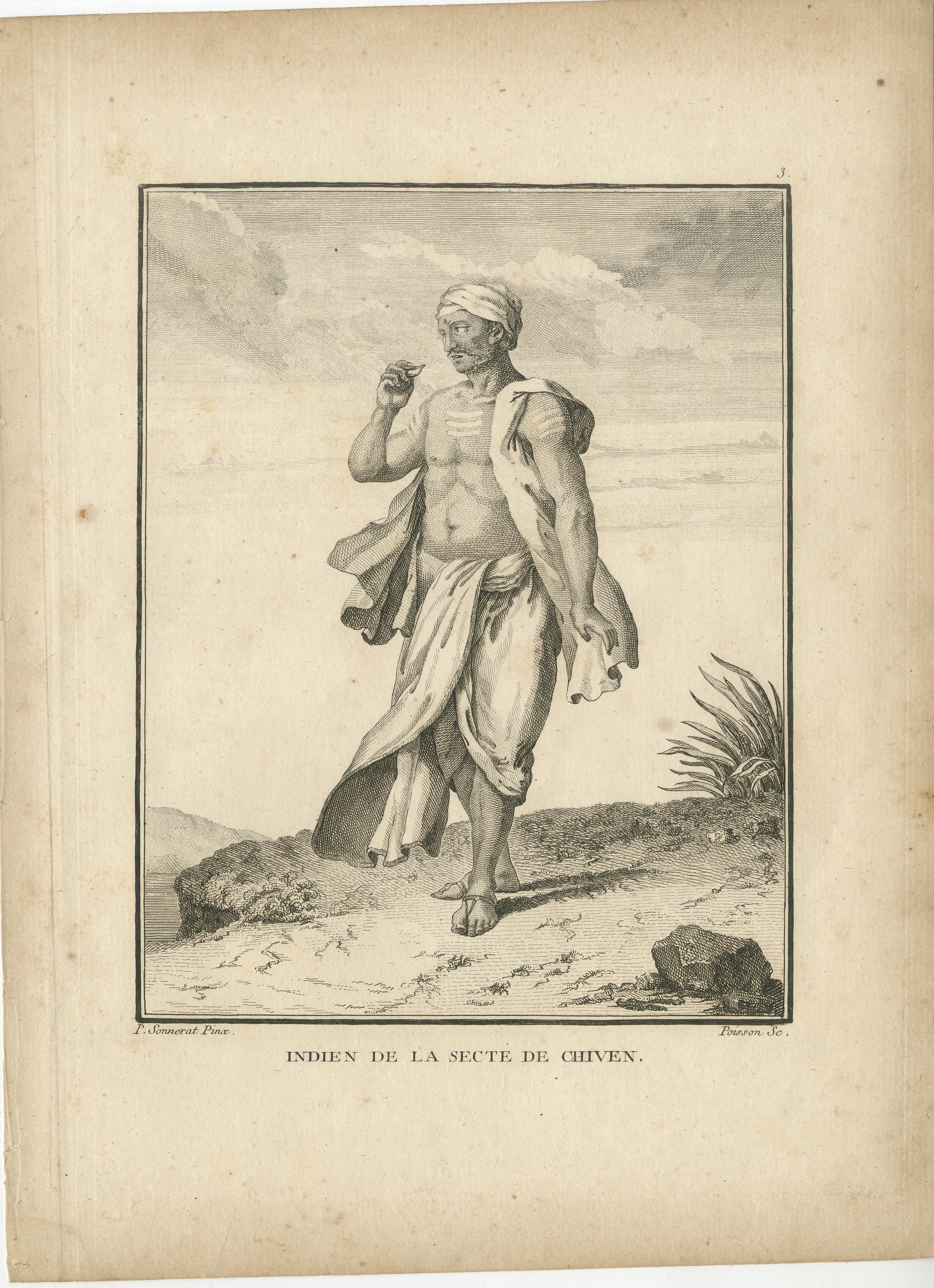
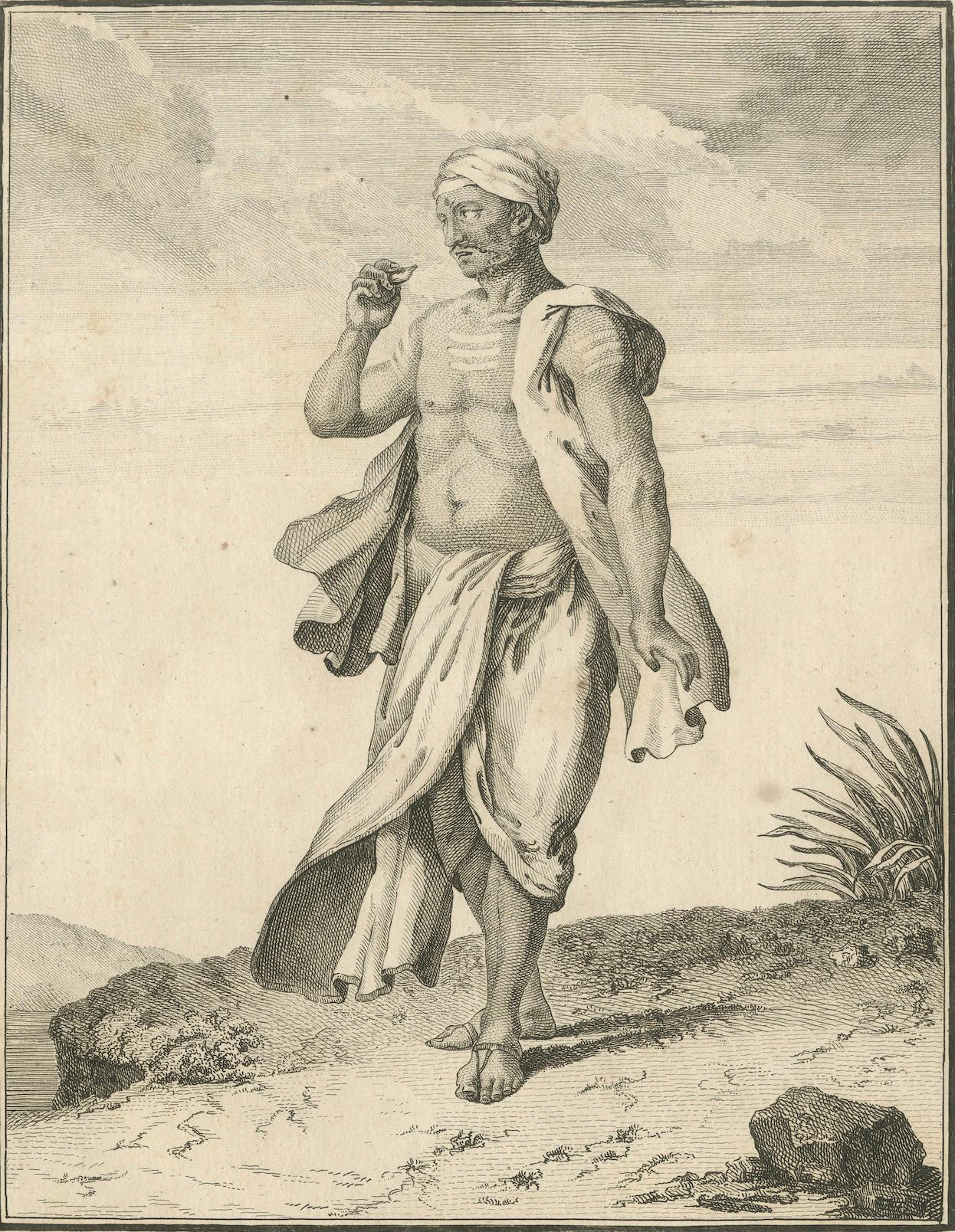
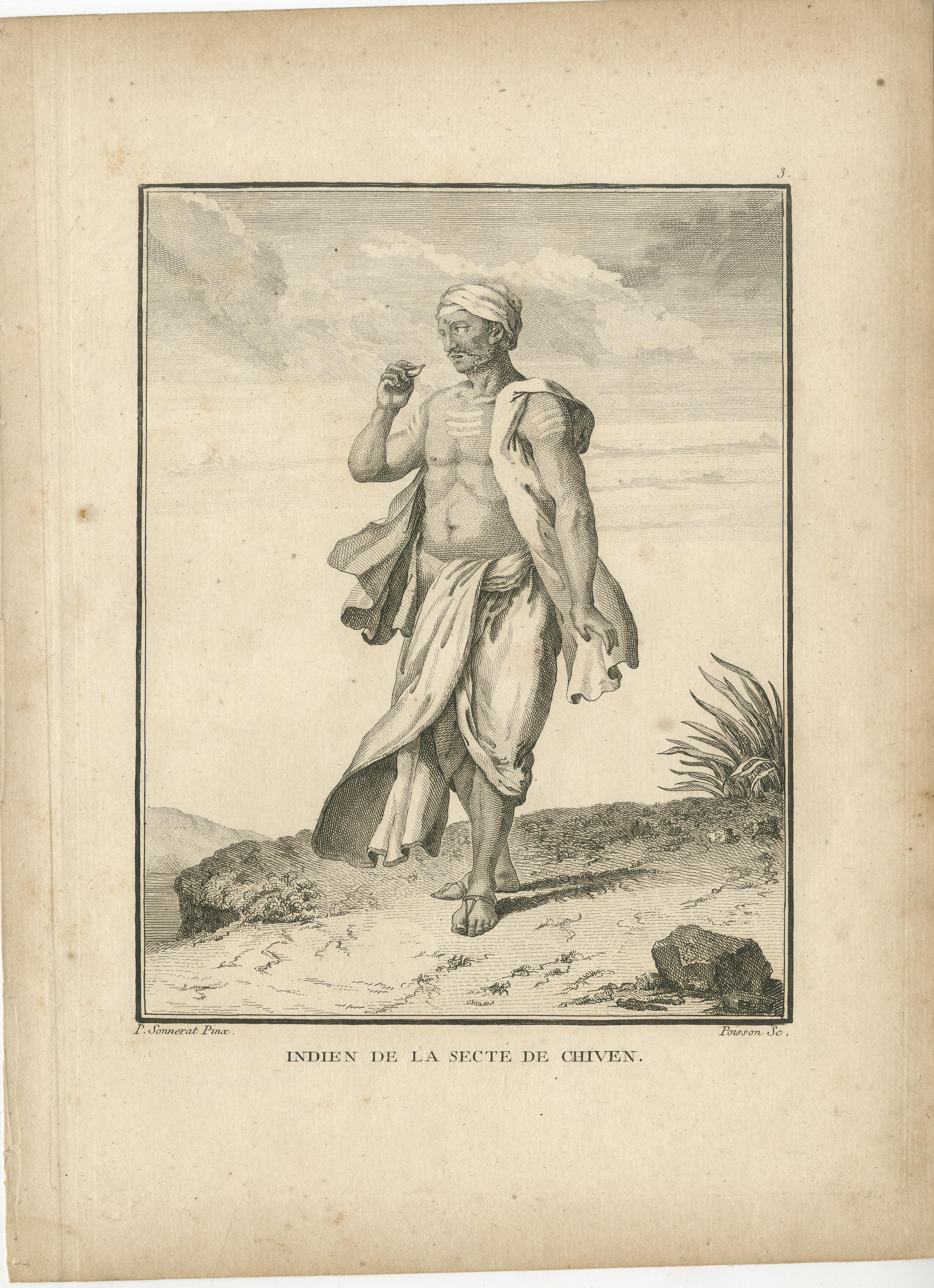
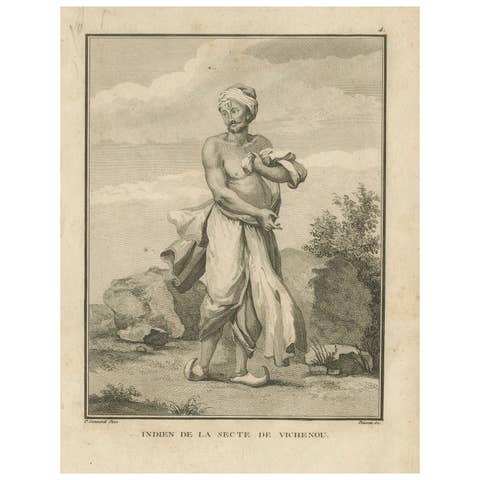
Indian Follower of the Shaivite Sect – Sonnerat Voyage Engraving, 1806
This antique copper engraving titled "Indien de la Secte de Chiven" (Indian of the Sect of Shiva) is plate number 3 from *Collection de Planches pour servir au Voyage aux Indes Orientales et à la Chine* by the French explorer Pierre Sonnerat, printed in Paris in 1806 by Dentu. This compelling image is part of a larger ethnographic and cultural survey that visually recorded the people, architecture, and customs encountered during Sonnerat’s travels through India and Asia in the late 18th century.
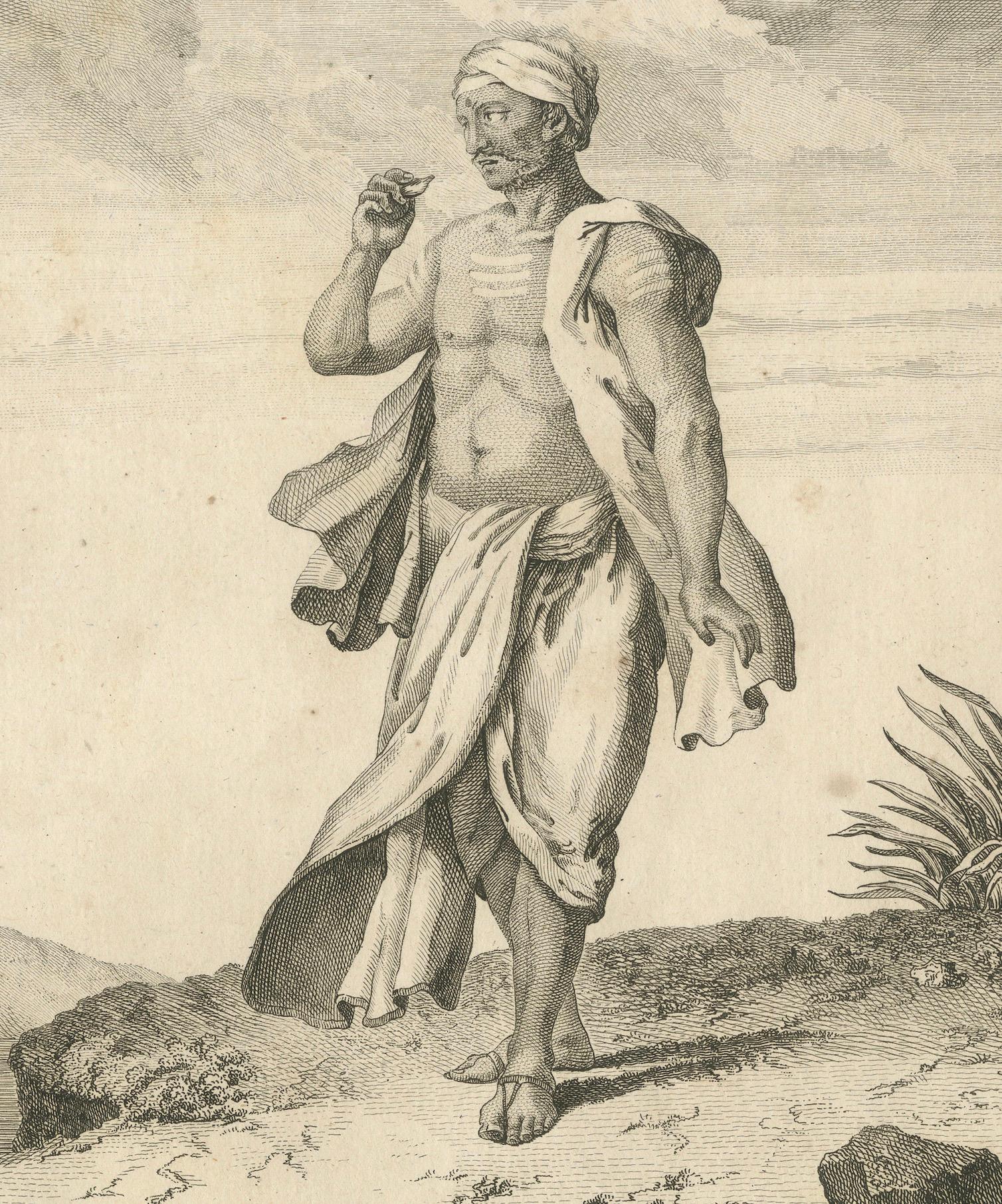
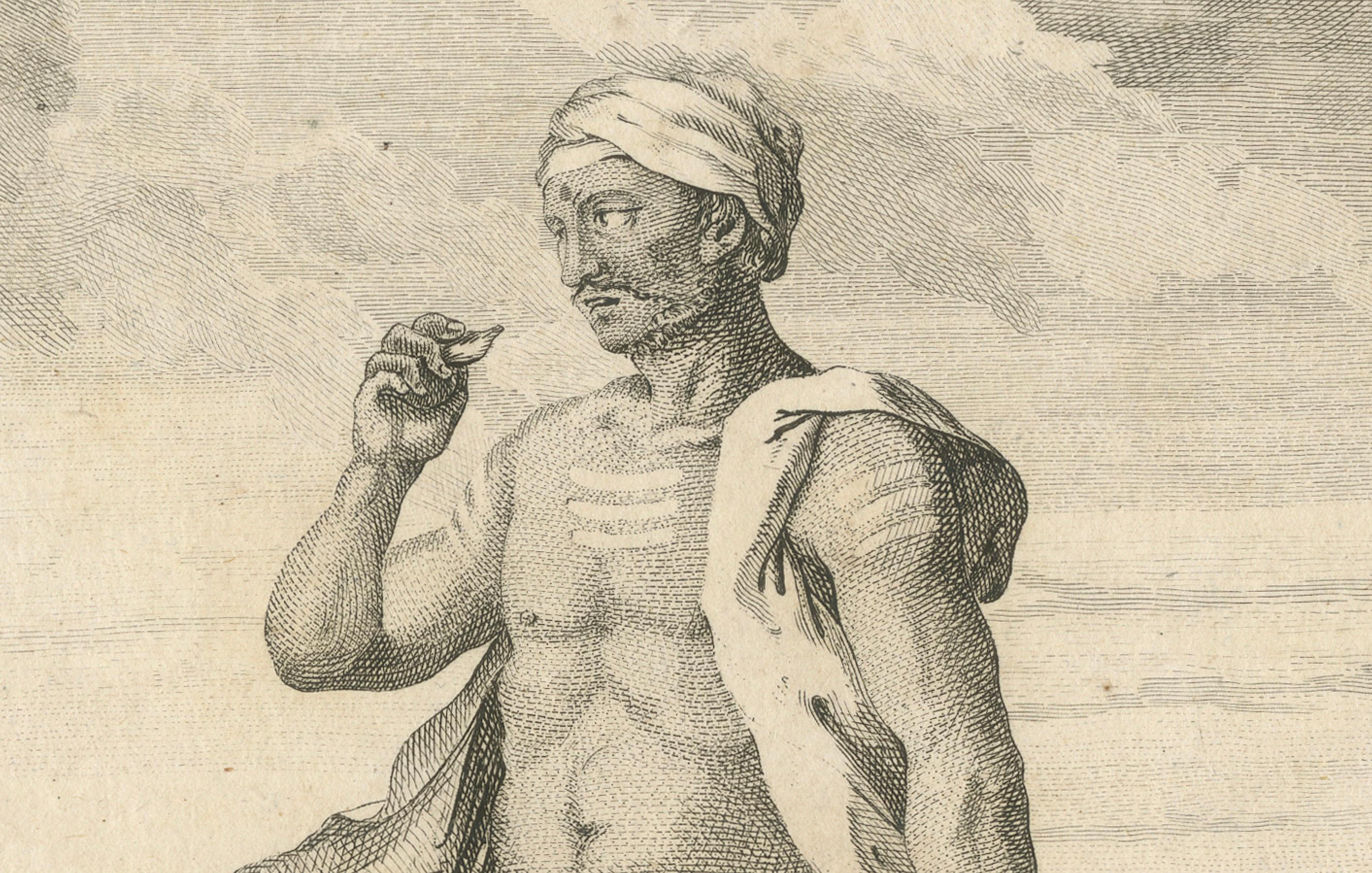
The figure depicted is a male devotee of the Shaivite sect, followers of the Hindu god Shiva (here written "Chiven" in the older French transliteration). He is shown in a contemplative pose, standing barefoot on a rocky landscape, with a dhoti-style garment wrapped around his lower body and a cloth draped over one shoulder. His chest bears three horizontal sacred ash markings, or "vibhuti," symbolic of devotion to Shiva. These ash lines are traditionally applied during religious rituals and signify spiritual purity and renunciation. He appears to hold a small object in his hand, possibly a flower, bead, or other ritual item.
The engraver has taken care to represent anatomical detail, gesture, and costume with a sense of realism, suggesting both artistic skill and ethnographic intention. The work captures not only the outer appearance of the man but also conveys a subtle sense of his spiritual life and identity.
This plate provides rare insight into religious dress and customs during the colonial era in India. Such visual records were among the earliest attempts by European travelers to systematically depict Indian religious diversity and contributed to the growing interest in Orientalist scholarship in Enlightenment Europe.
Condition: Good condition with light age toning, more around the edges. Slight scattered spotting at the margin edges, not affecting the image. Blank verso. Sharp impression on laid paper. Study the images carefully.
Framing suggestion: This plate would benefit from a neutral archival mat in warm white or ivory tones to complement the paper’s natural aging. A simple black or dark wood frame would emphasize the clarity of the linework and enhance its scholarly and historical appeal, suitable for both private collections and gallery walls.