About this sheet
Engraving of the Caravanserai of Cachan – Dutch 18th-Century View of Persian Architecture
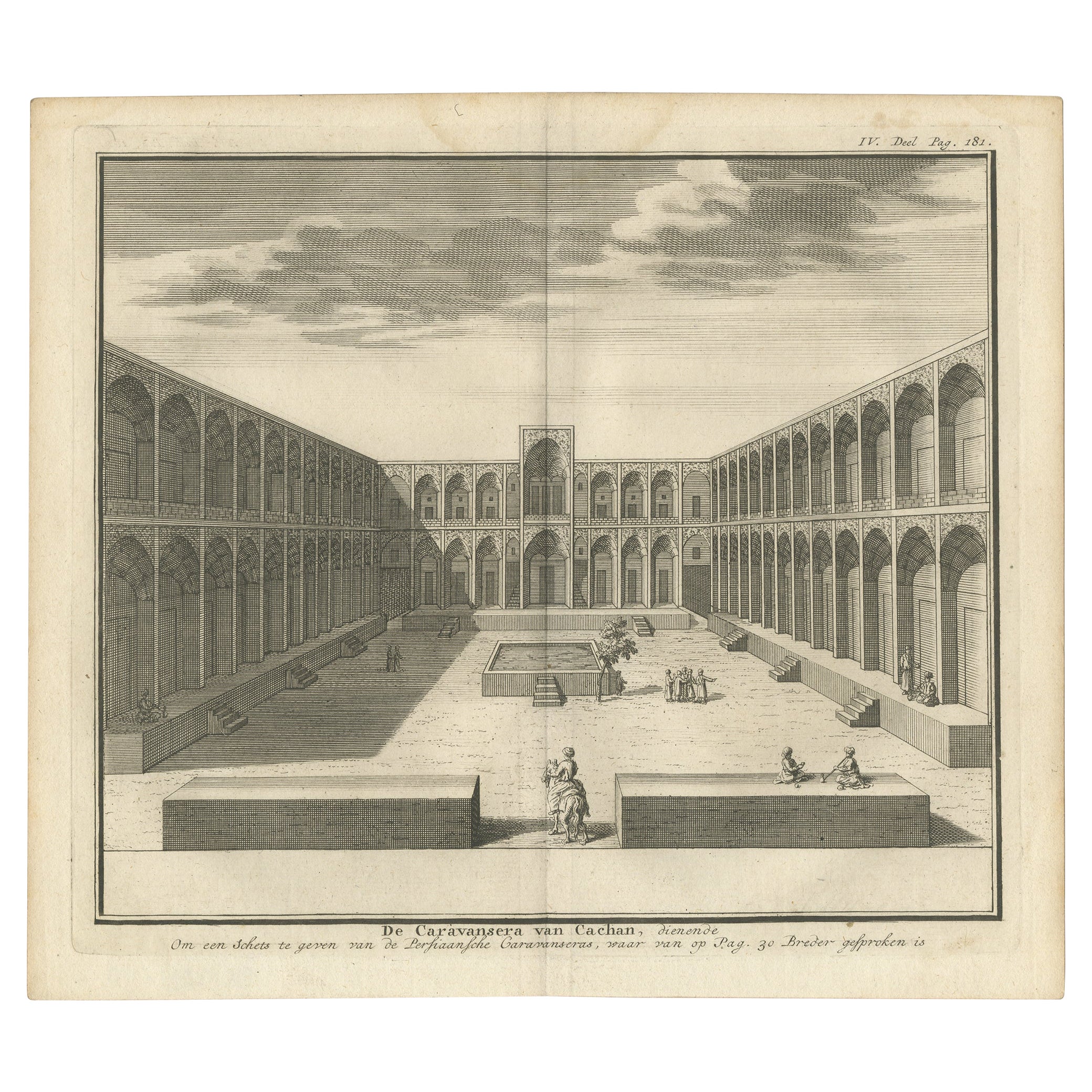
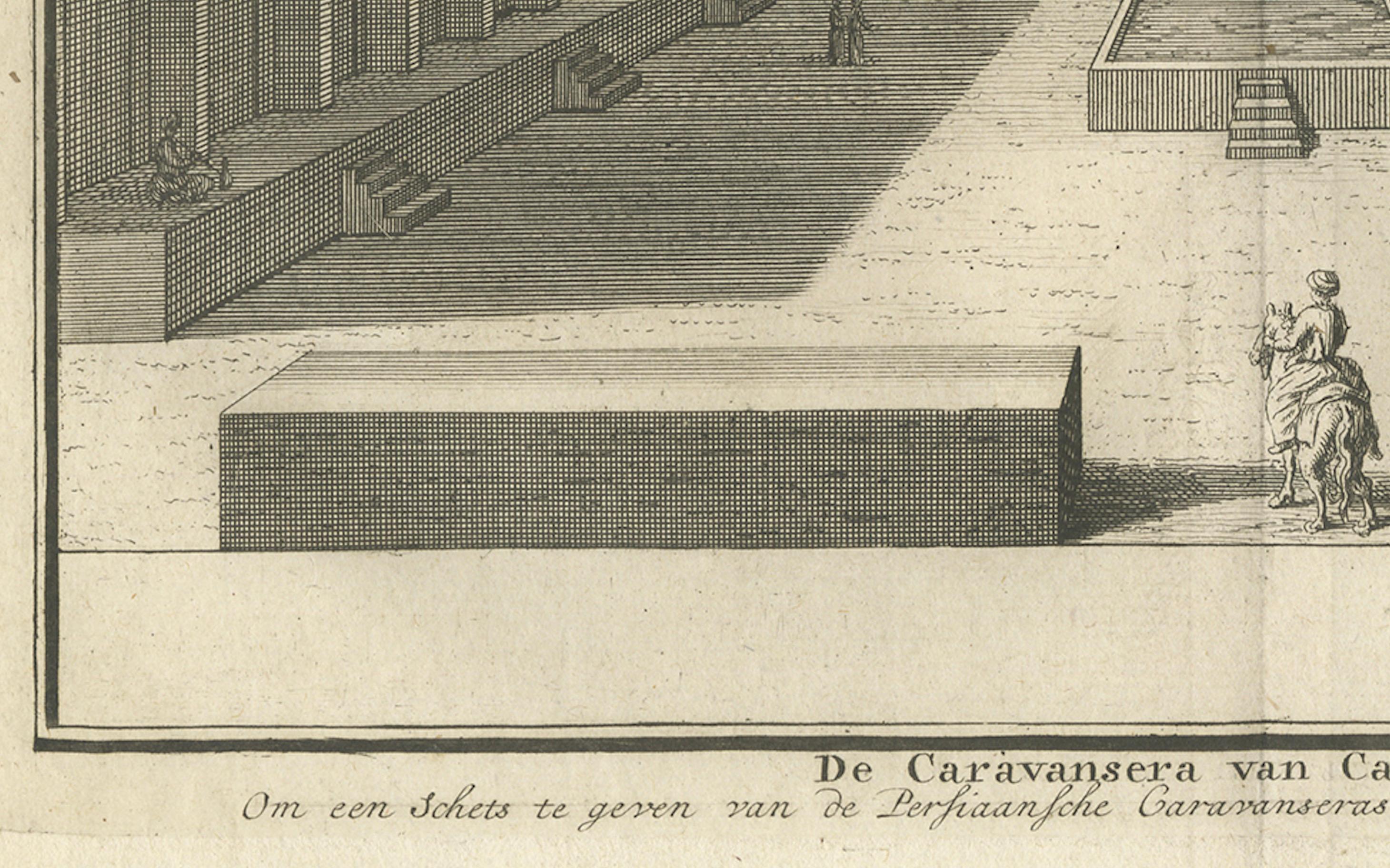
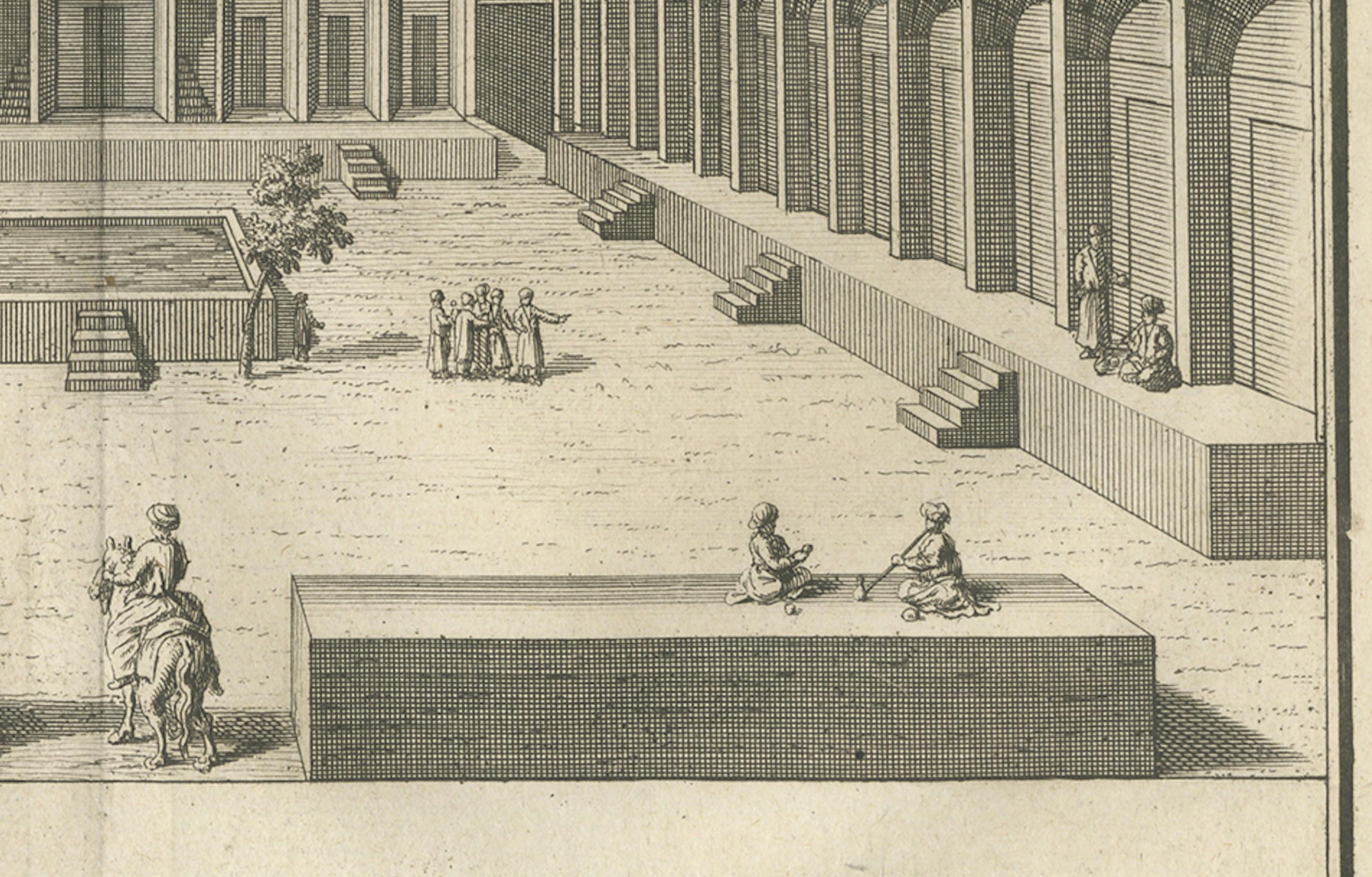
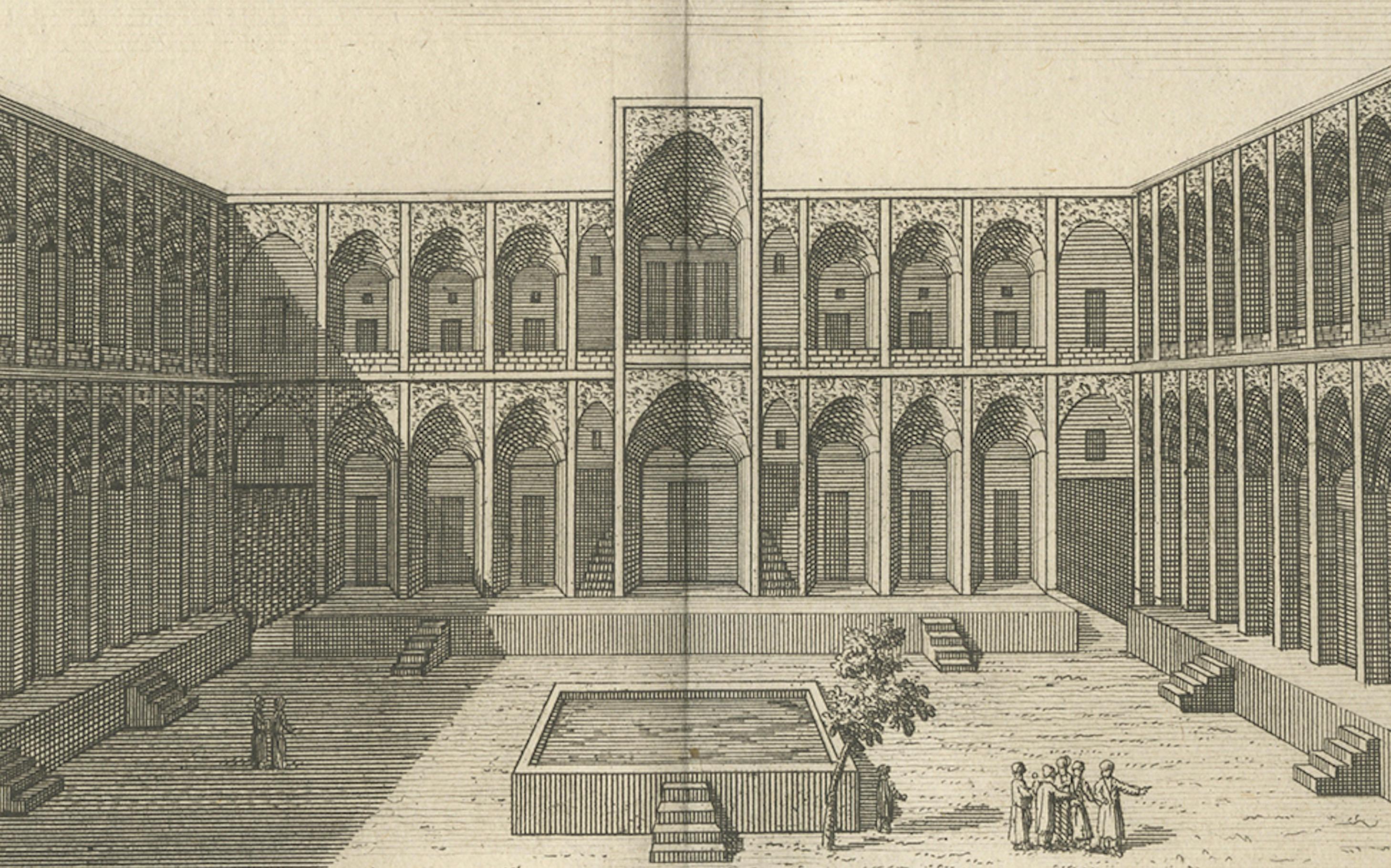
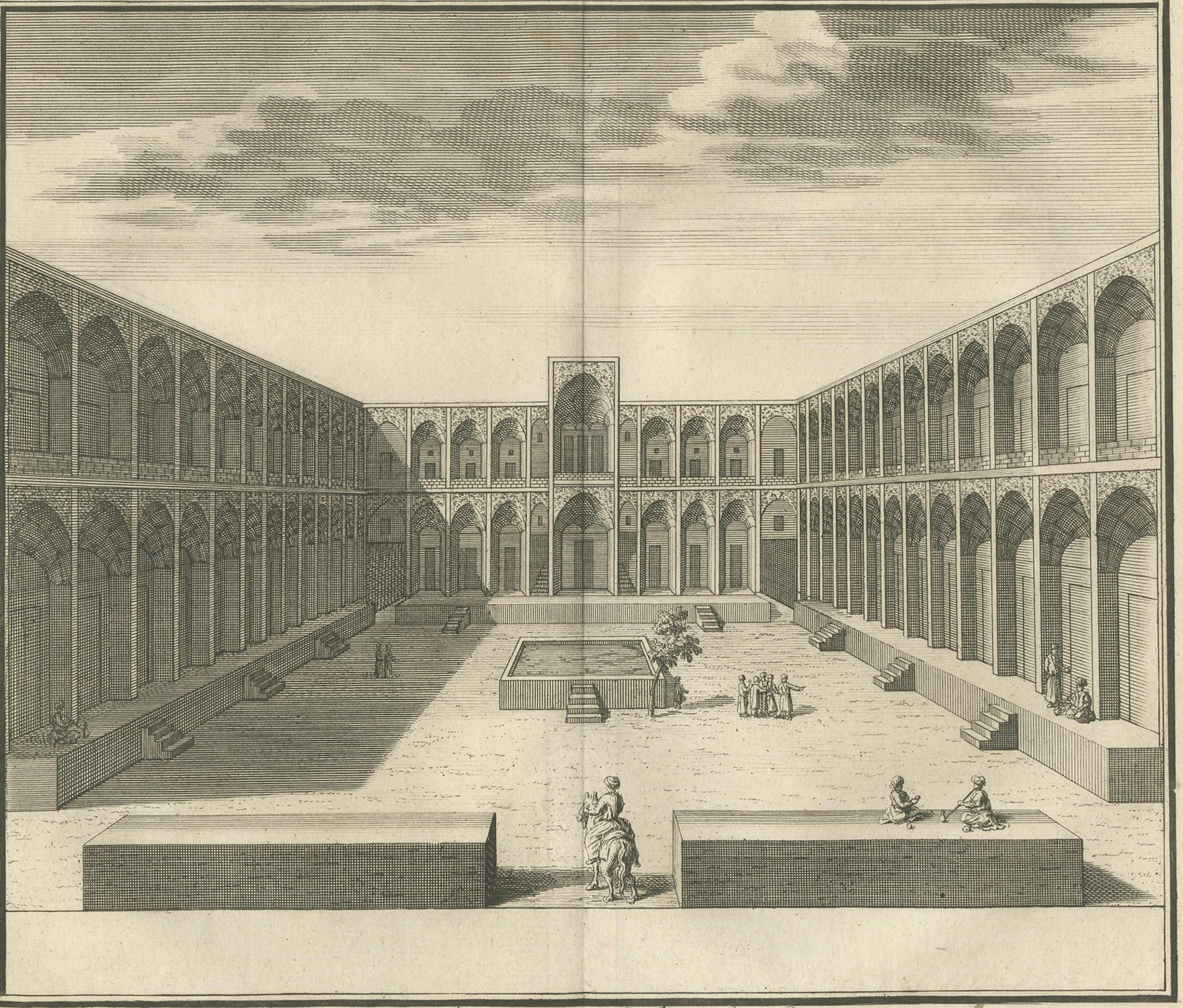
This fine architectural engraving depicts “De Caravansera van Cachan” (The Caravanserai of Kashan), offering a striking visual example of the traditional Persian caravanserai, an essential structure for merchants and travelers along ancient trade routes. The engraving was published in the mid-18th century, likely as part of a Dutch travel or geographic compendium, and is captioned in Dutch at the bottom: "Om een Schets te geven van de Persiansche Caravansaras..." indicating the purpose was to illustrate Persian caravanserais more generally.
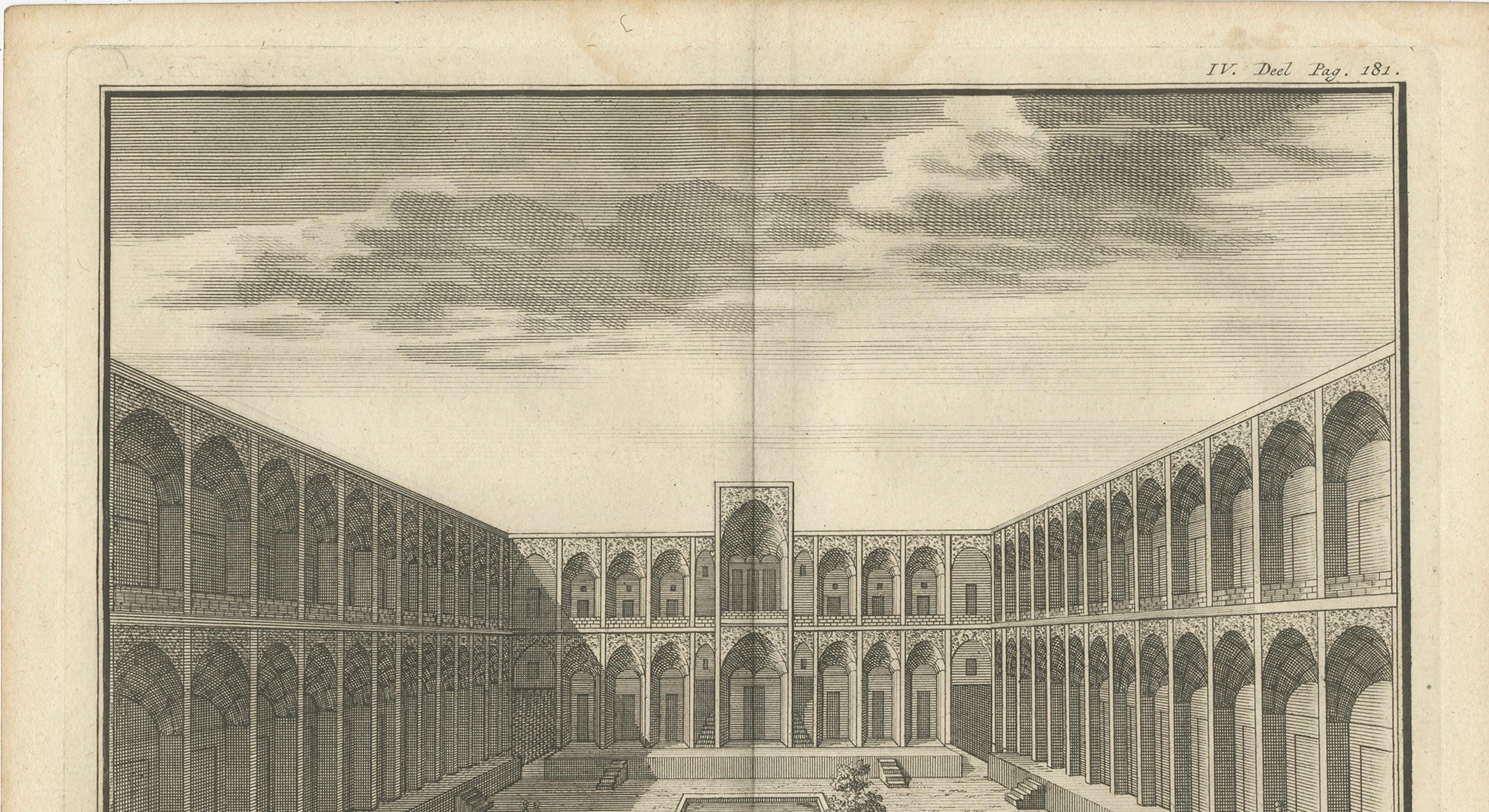
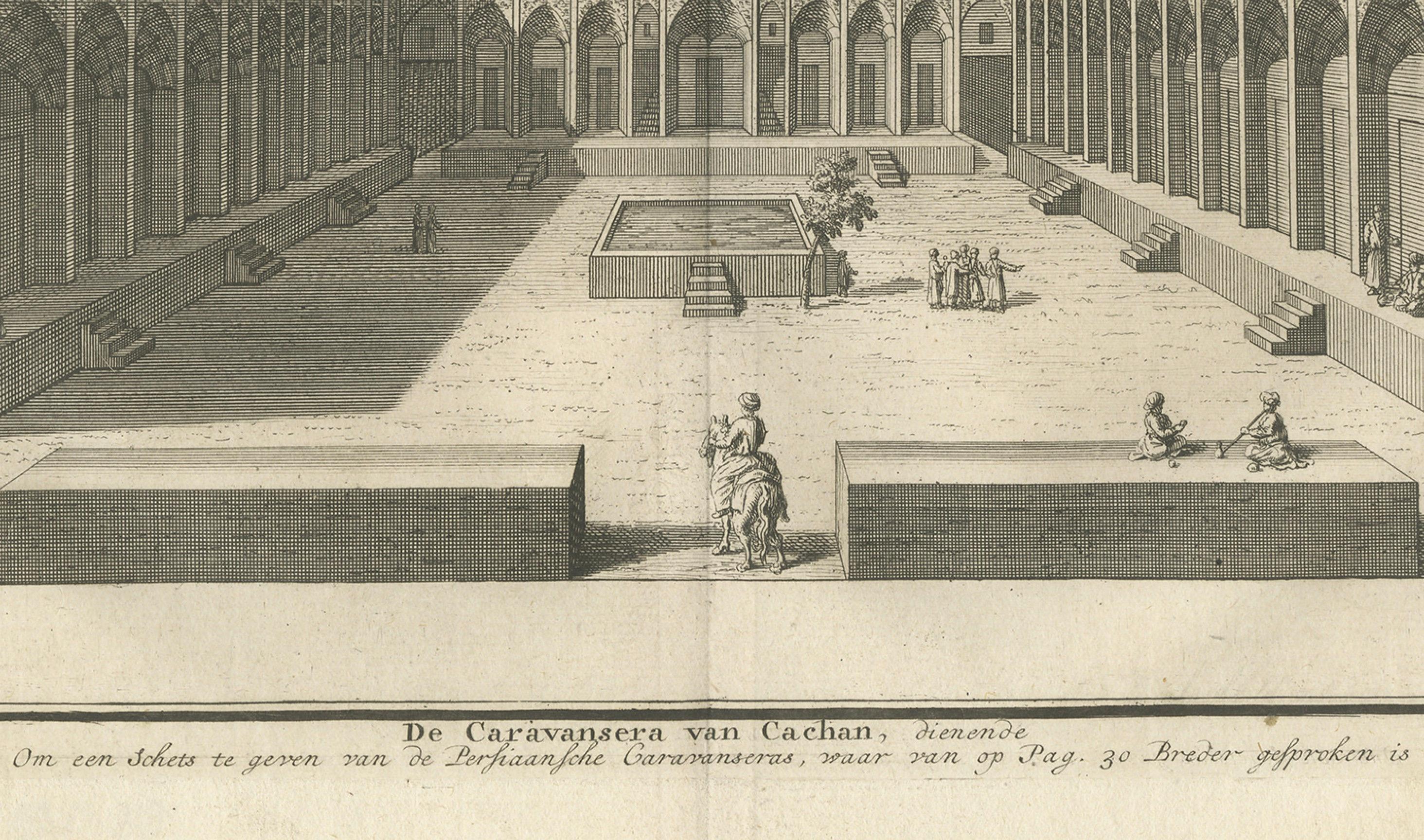
The composition features a large rectangular courtyard, surrounded by two-story arcades with pointed arches, reflecting classic Safavid-era Persian design. The central courtyard includes a water basin, with several figures engaged in conversation or rest, providing scale and insight into its social function. The architectural details are finely rendered, showing brick patterns, staircases, doorways, and balconies, offering a valuable historic reference to the grandeur and symmetry of these vital resting places along the Silk Road.
Kashan, located in central Iran, was a prominent stop between Tehran and Isfahan, known for its textiles, tiles, and trading posts. The caravanserais of the region were renowned for their size and elegant design. This print would have fascinated 18th-century European audiences eager to learn about exotic Eastern architecture.
Highly collectible, this engraving holds strong appeal for collectors of architectural prints, Middle Eastern history, and Persian cultural heritage. It also serves as a visual document of commercial infrastructure prior to the age of modern transportation.
Condition: Excellent impression with original folds as issued. Light toning along the top edge and a few faint handling creases. Wide margins and clean paper. No tears or losses.
Framing tips: A wide mount in warm cream or taupe, paired with a walnut or dark-toned wooden frame, will enhance the print’s depth and architectural geometry. UV-filtering glass is recommended for long-term preservation.
Technique: Copper engraving
Maker: Anonymous Dutch engraver, Netherlands, circa 1750