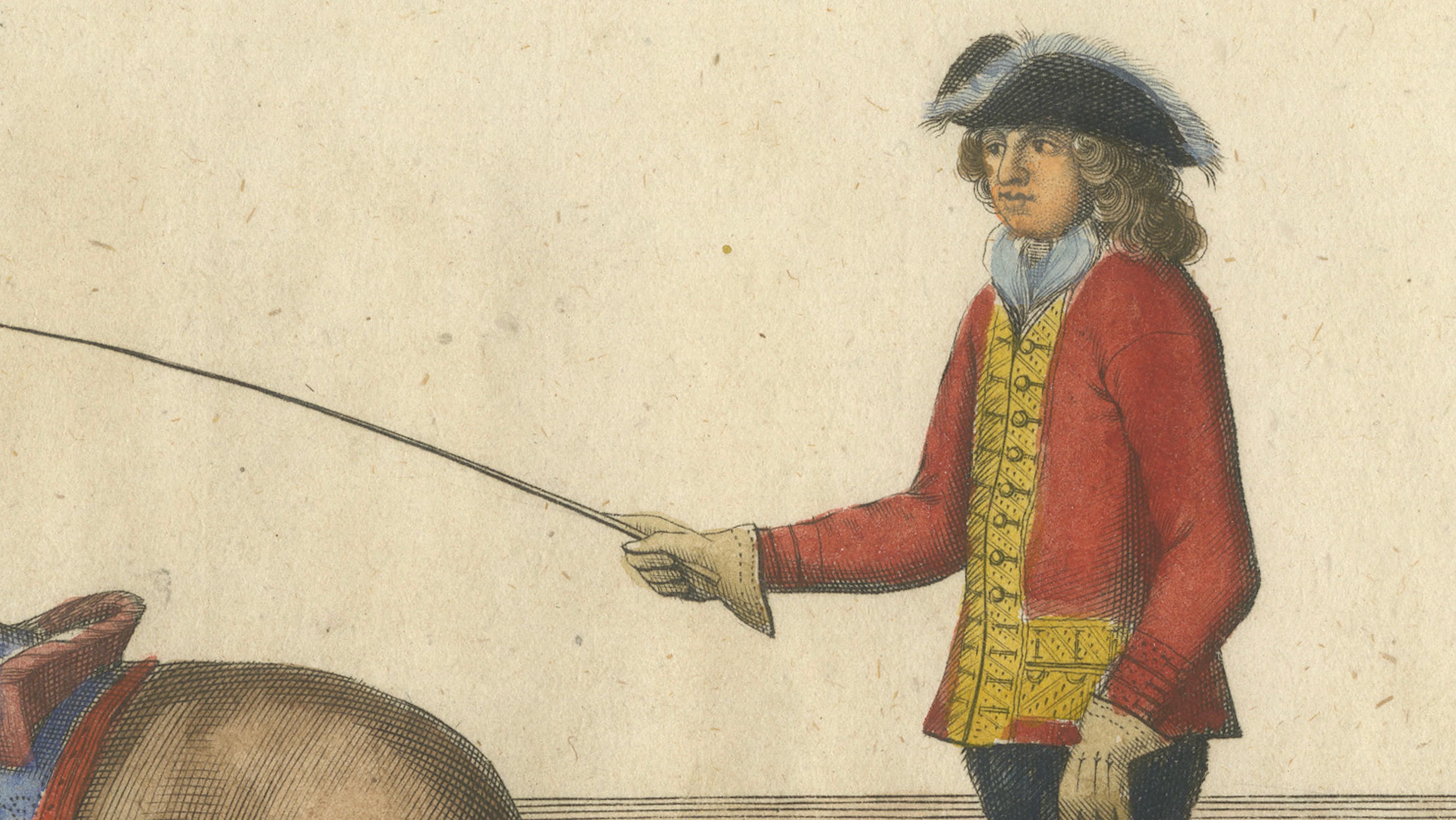
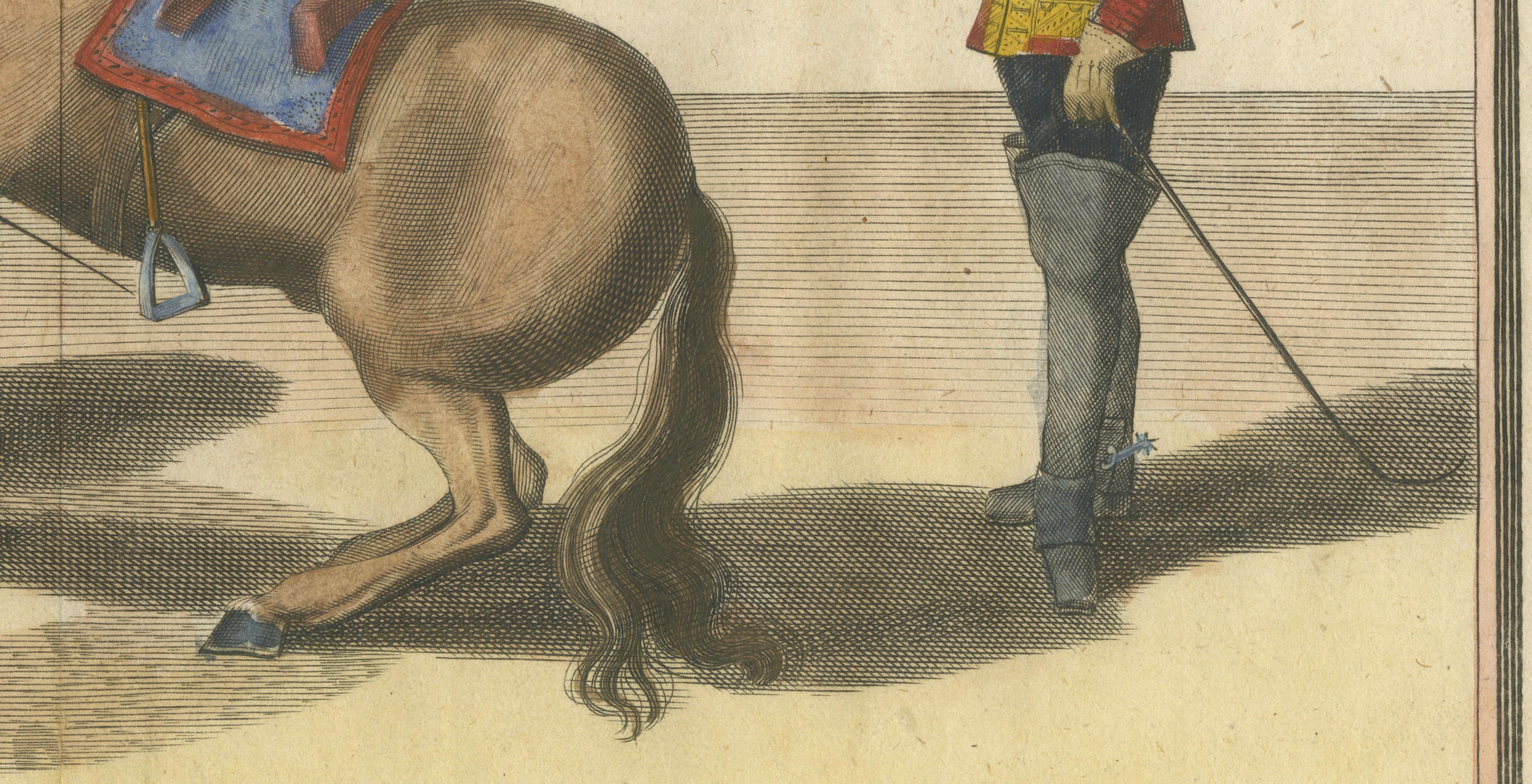
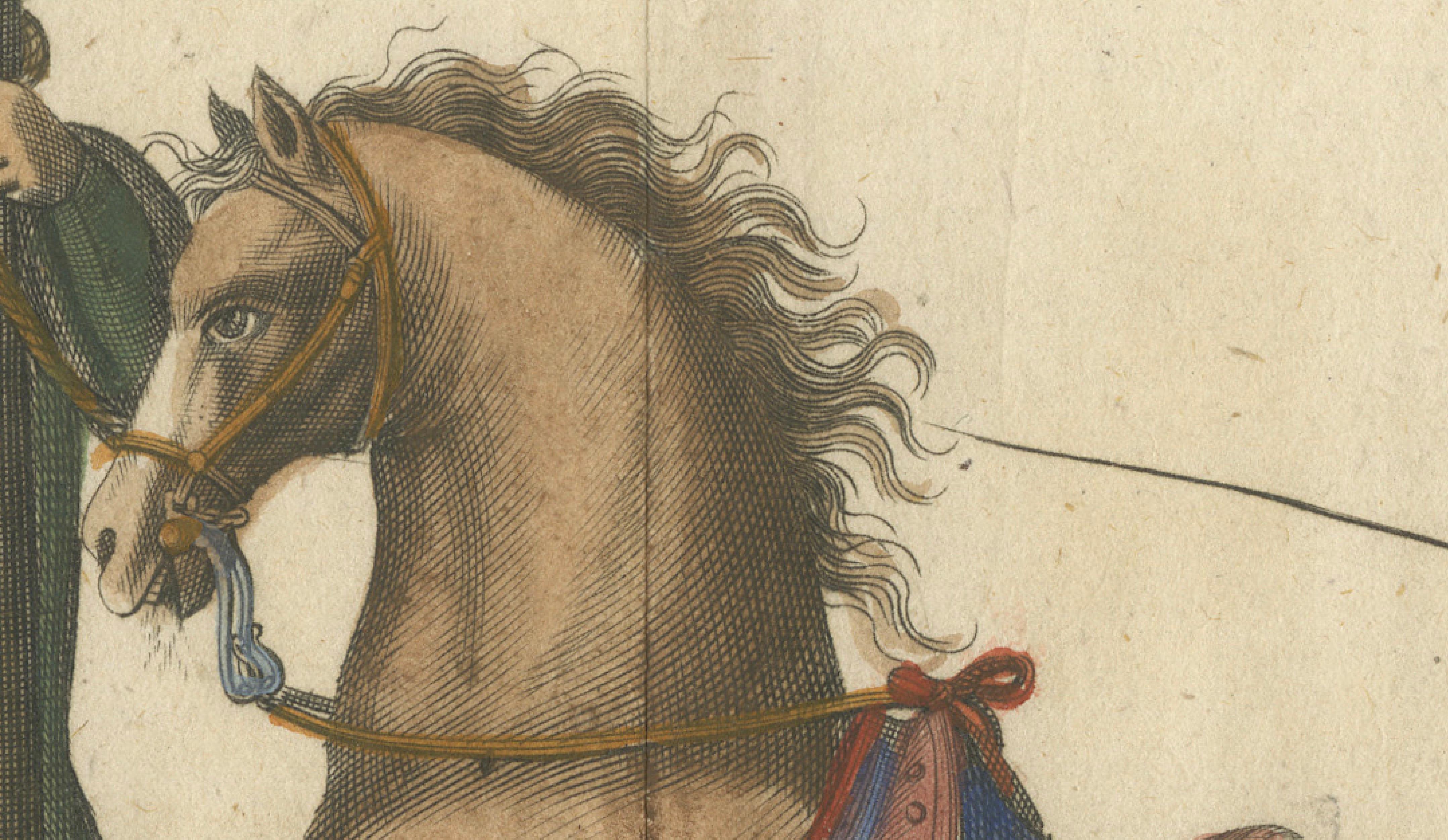
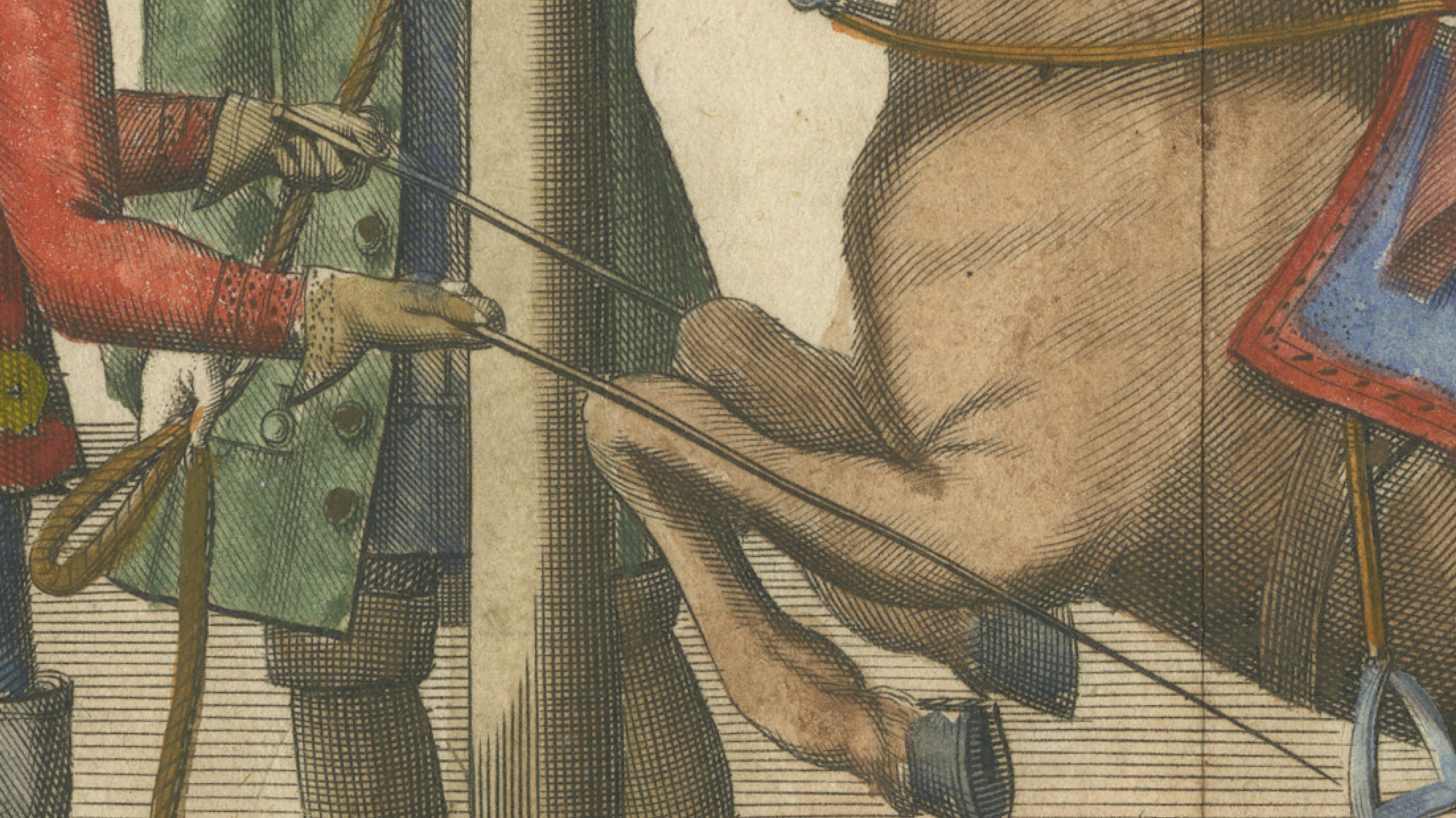
Baroque Courbette Horse Training - Antique Engraving after Newcastle, circa 1700
€ 399
Original antique · The actual sheet photographed · Certificate of authenticity on request · Sold unframed · Worldwide shipping from € 15 (rates)
Date
1700
Mapmaker / artist
William Cavendish, Duke of Newcastle, England, circa 1700
Technique
Copperplate engraving with original hand-coloring
Sheet size
30 × 37 cm (11.8 × 14.6 in)
Condition
Good
Reference
BG-14291-66
What the condition grades mean
Excellent
Bright and clean, with no faults worth mentioning.
Very good
Only light signs of age, such as faint toning.
Good
Normal signs of age for a sheet of this period: toning, some foxing, small marks or neat old repairs.
Fair
Clear faults such as staining, tears or repairs, priced to match.
Every fault we see is written in the condition note, and the whole sheet is shown uncropped in the photos.
Condition
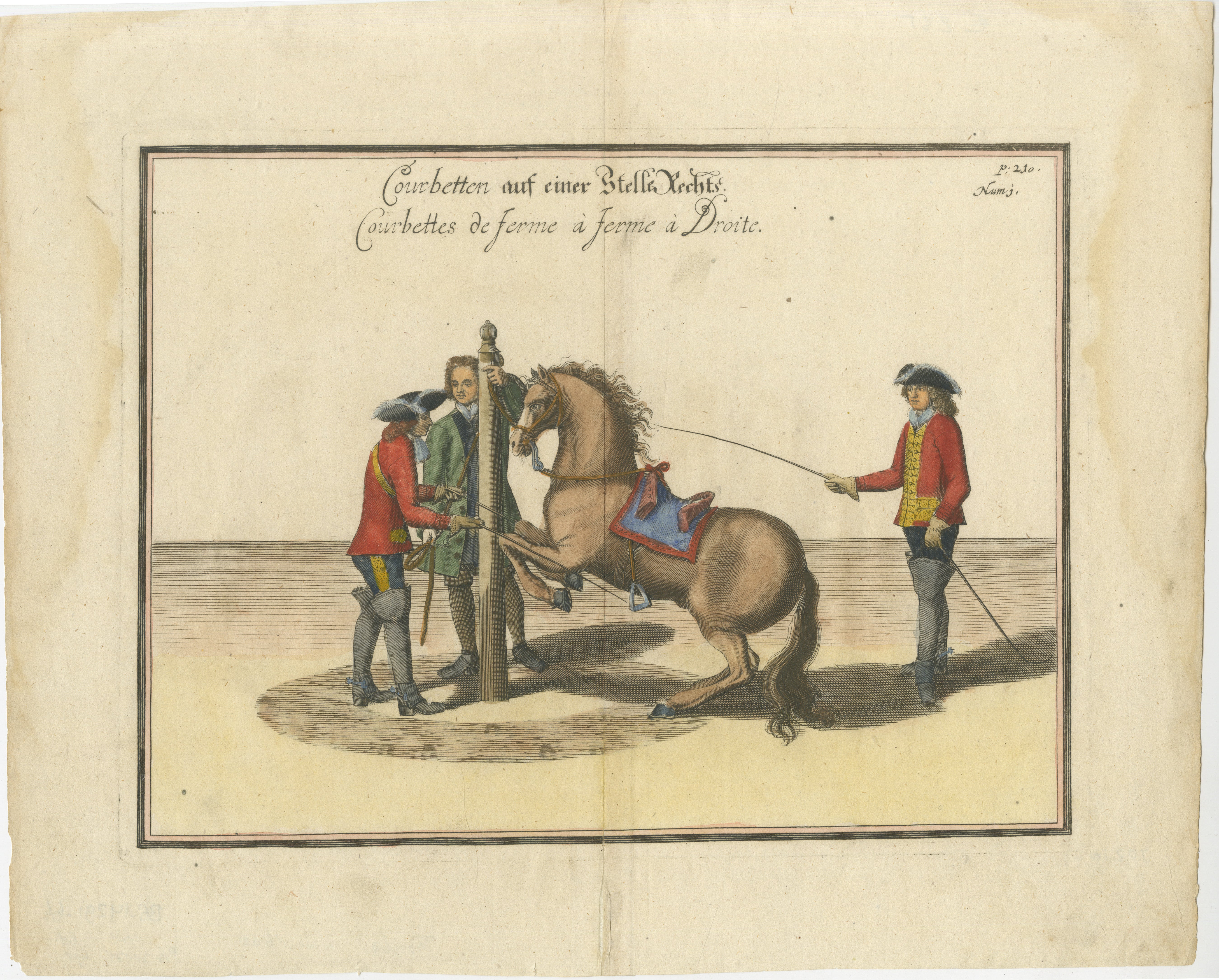
Good overall condition with age-related toning, a visible center fold as issued, light scattered foxing, and minor wear to the sheet edges consistent with age.
About this sheet
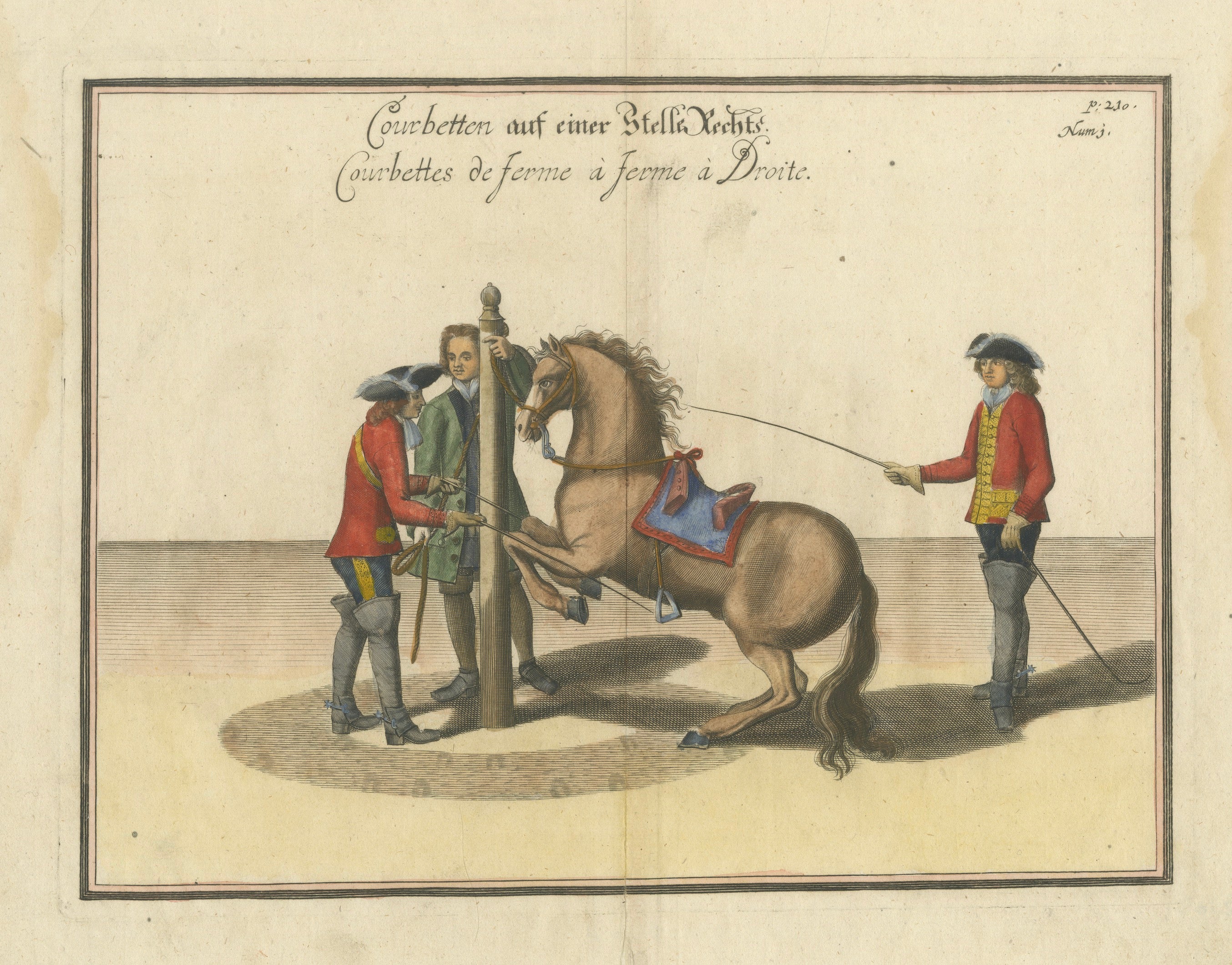
This rare and highly decorative original equestrian engraving originates from Des Welt-berühmten Hertzog Wilhelms von Newcastle Neu-eröffnete Reit-Bahn, published in Nuremberg around 1700. The work is based on the celebrated horsemanship teachings of William Cavendish, Duke of Newcastle, one of the most influential riding masters of the seventeenth century and a foundational figure in the development of classical dressage in Europe.
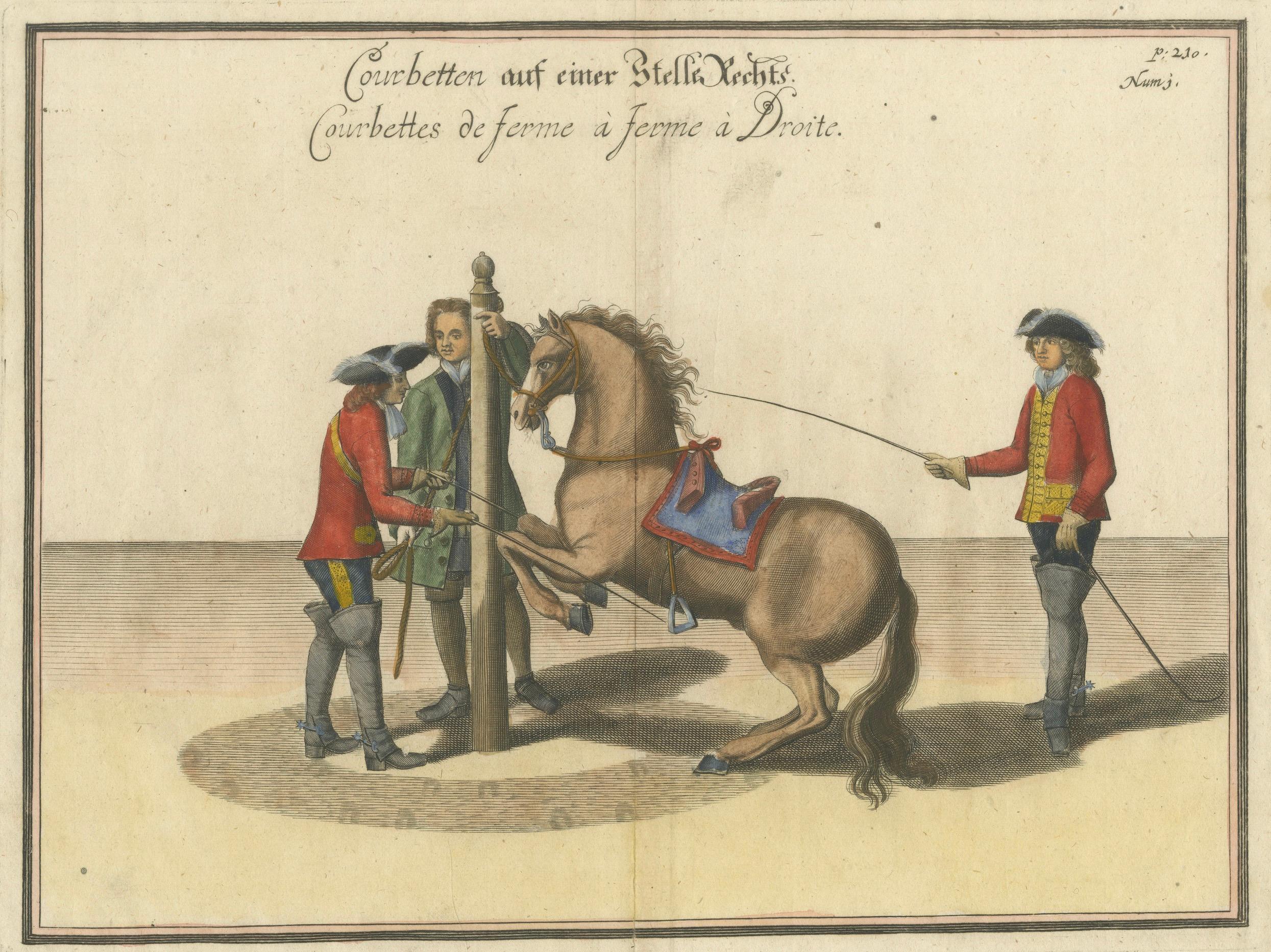
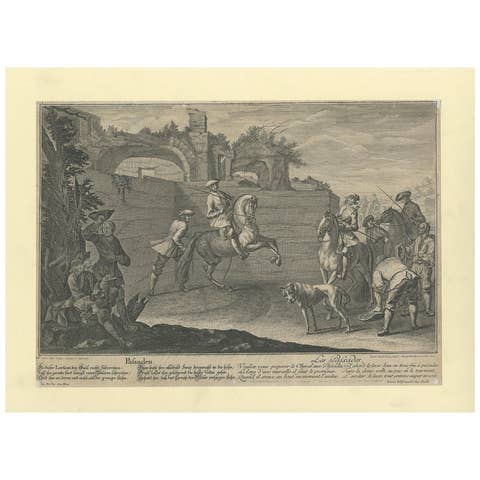
The engraving depicts an advanced dressage exercise identified as “Courbettes de ferme à ferme à Droite,” showing a highly trained horse performing controlled courbette movements while guided by several assistants around a central post. The composition beautifully captures the precision, theatrical elegance, and disciplined training methods practiced in the aristocratic riding academies of Baroque Europe.
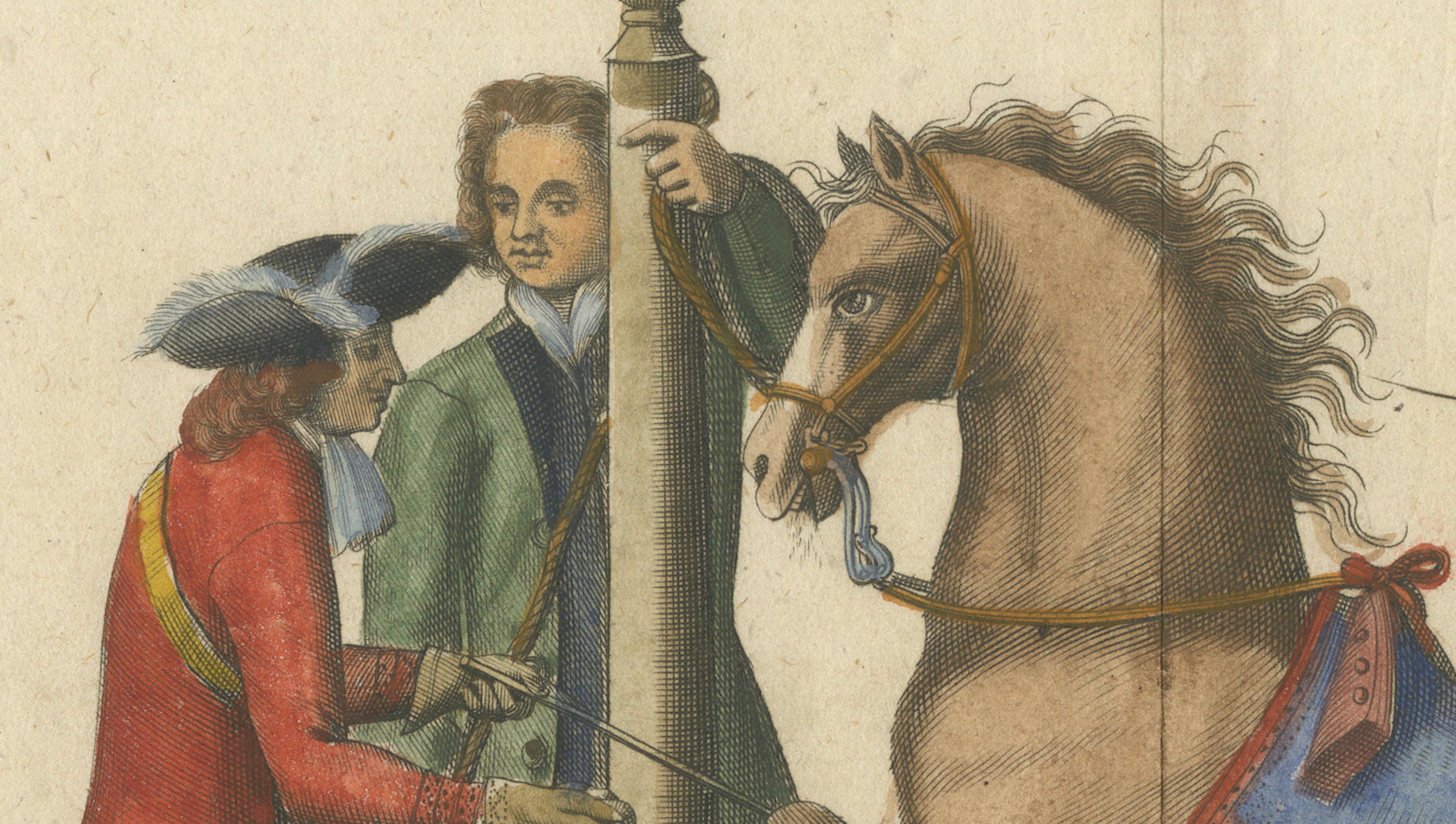
Rendered with fine original hand-coloring, the engraving possesses exceptional decorative appeal. The richly dressed attendants, elegant tack, and carefully observed horse anatomy reflect the prestige associated with noble horsemanship and courtly riding schools during the late seventeenth and early eighteenth centuries. Newcastle’s riding manuals became enormously influential throughout Europe and were prized by aristocrats, military officers, and professional riding masters interested in advanced equestrian technique and ceremonial riding.
The restrained composition and refined coloring allow the engraving to function both as an important historical document and as an elegant decorative artwork. It displays beautifully in libraries, country houses, riding schools, studies, and interiors devoted to sporting art or equestrian history. The print pairs exceptionally well with dark walnut, ebonized, or lightly gilt frames combined with warm ivory or parchment-toned mats.
This is an original engraving printed around 1700, not a modern reproduction. All items we offer are authentic period works of art over 100 years old. The engraving is sold unframed; any framed images shown are for presentation and interior inspiration only and may not always be to scale.
Condition: Good overall condition with age-related toning, a visible center fold as issued, light scattered foxing, and minor wear to the sheet edges consistent with age.
Framing tips: Displays exceptionally well in dark walnut, museum black, or lightly gilt frames with a generous ivory mat, complementing the warm hand-coloring and refined Baroque equestrian character of the engraving.