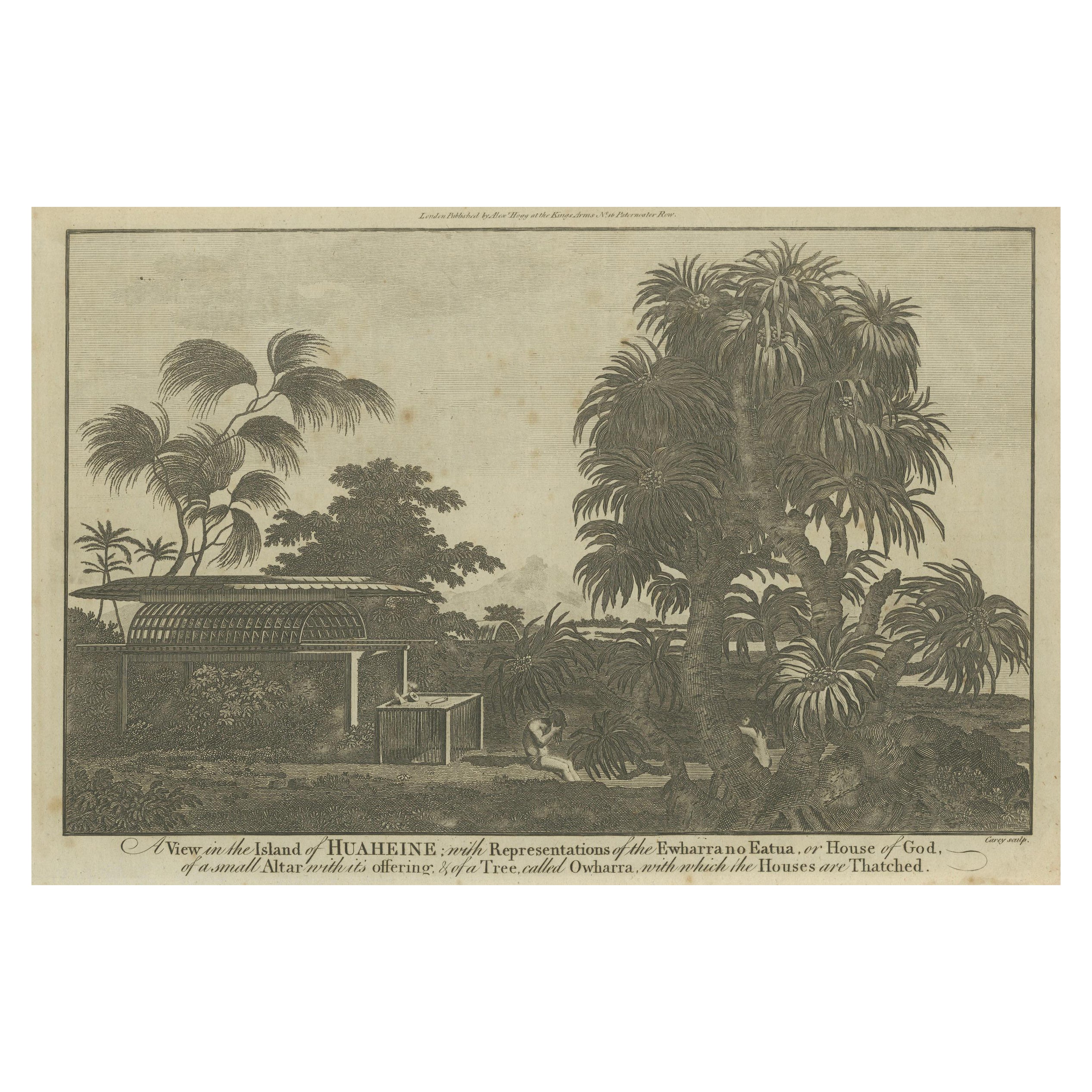
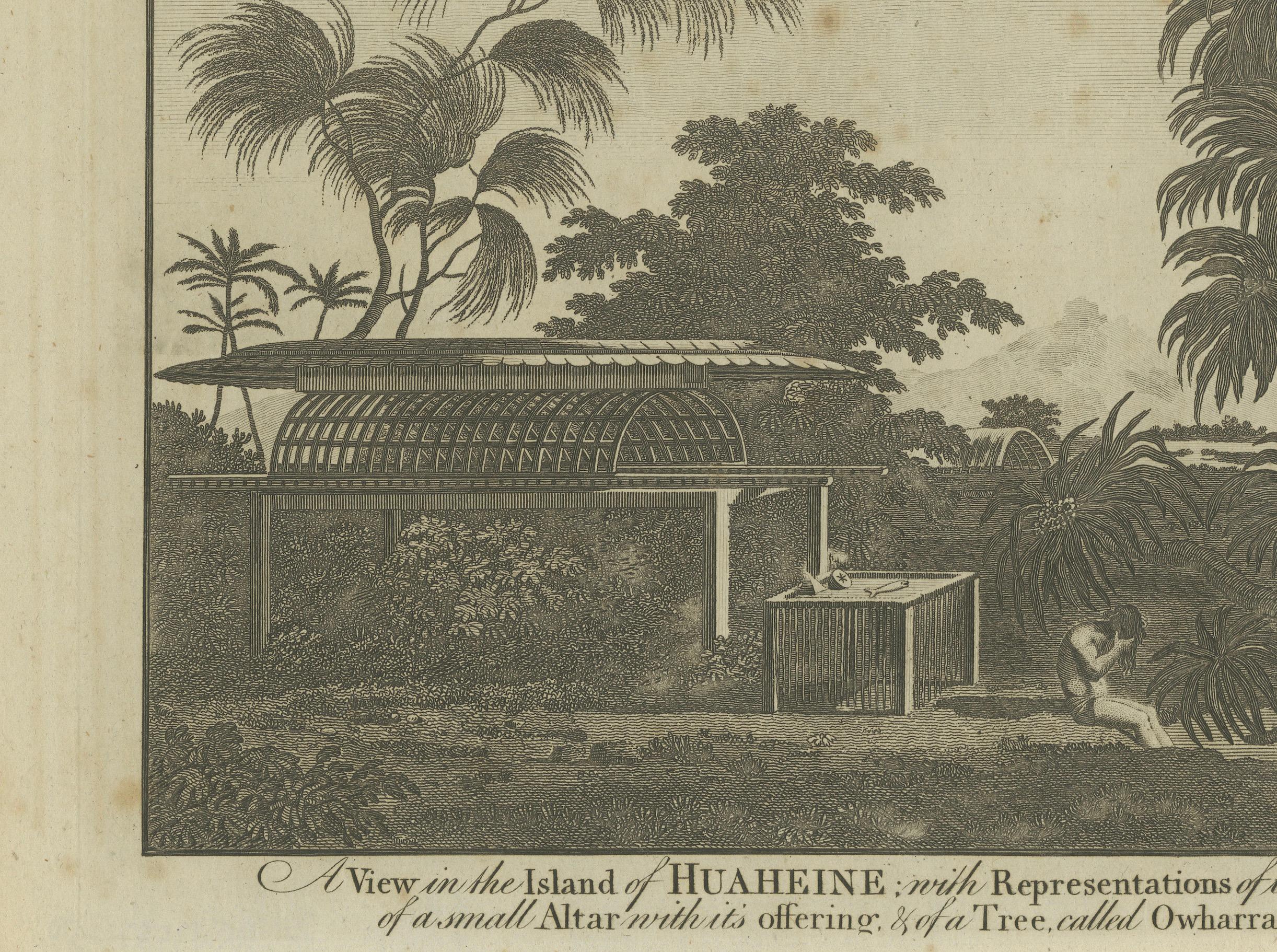
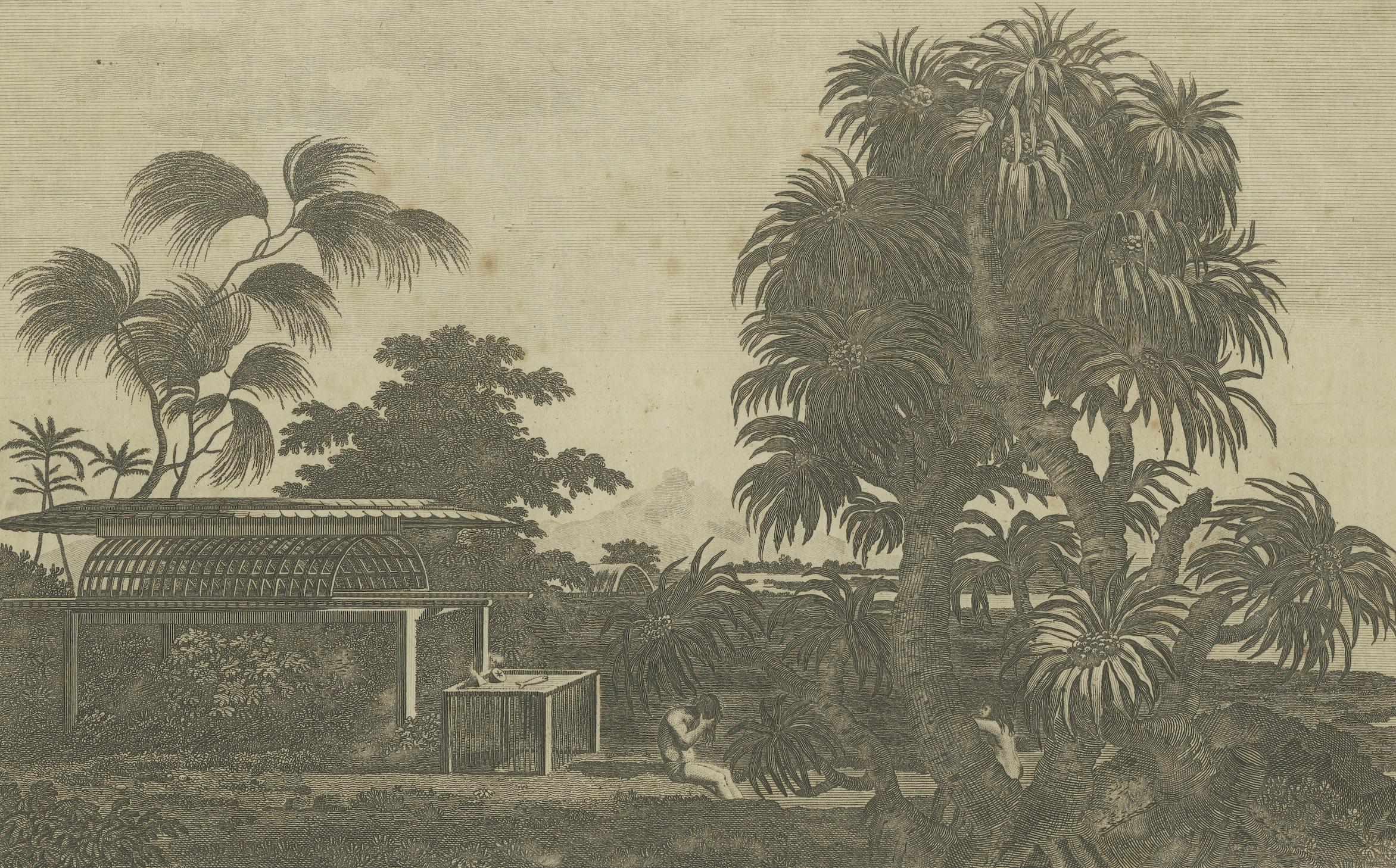
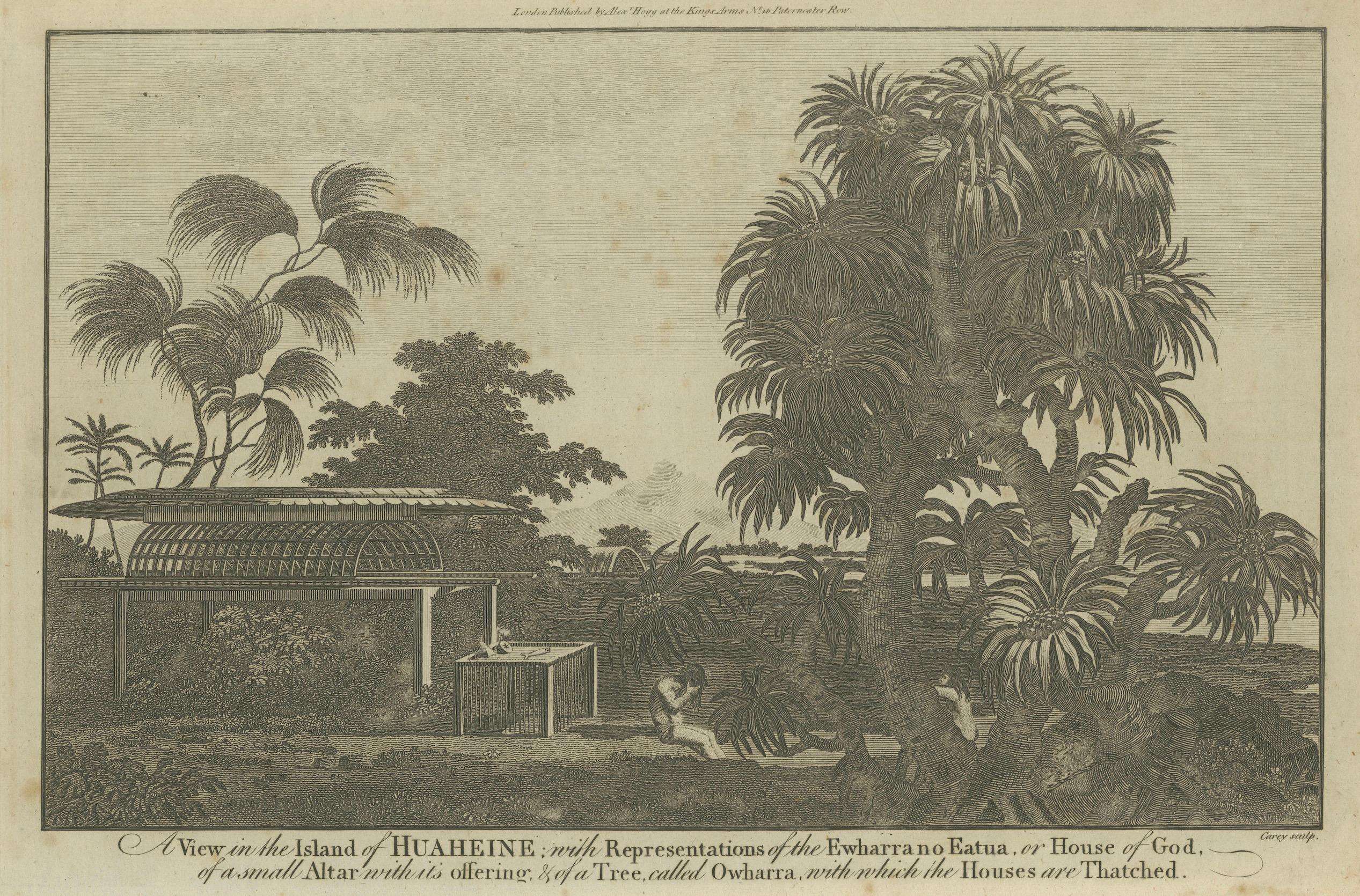
A View of the Ewharrano Eatua, or House of God, in Huahine from Cook's Voyages
€ 120
One of a kind: this is the sheet in the photographs. Ships from Langweer, the Netherlands.
Sheet size
24.5 × 38.5 cm (9.6 × 15.2 in)
Reference
BG-13597-50
Condition
fair, given age. With soiling and some foxing. General age-related toning and/or occasional minor defects from handling. Study images carefully.
About this sheet
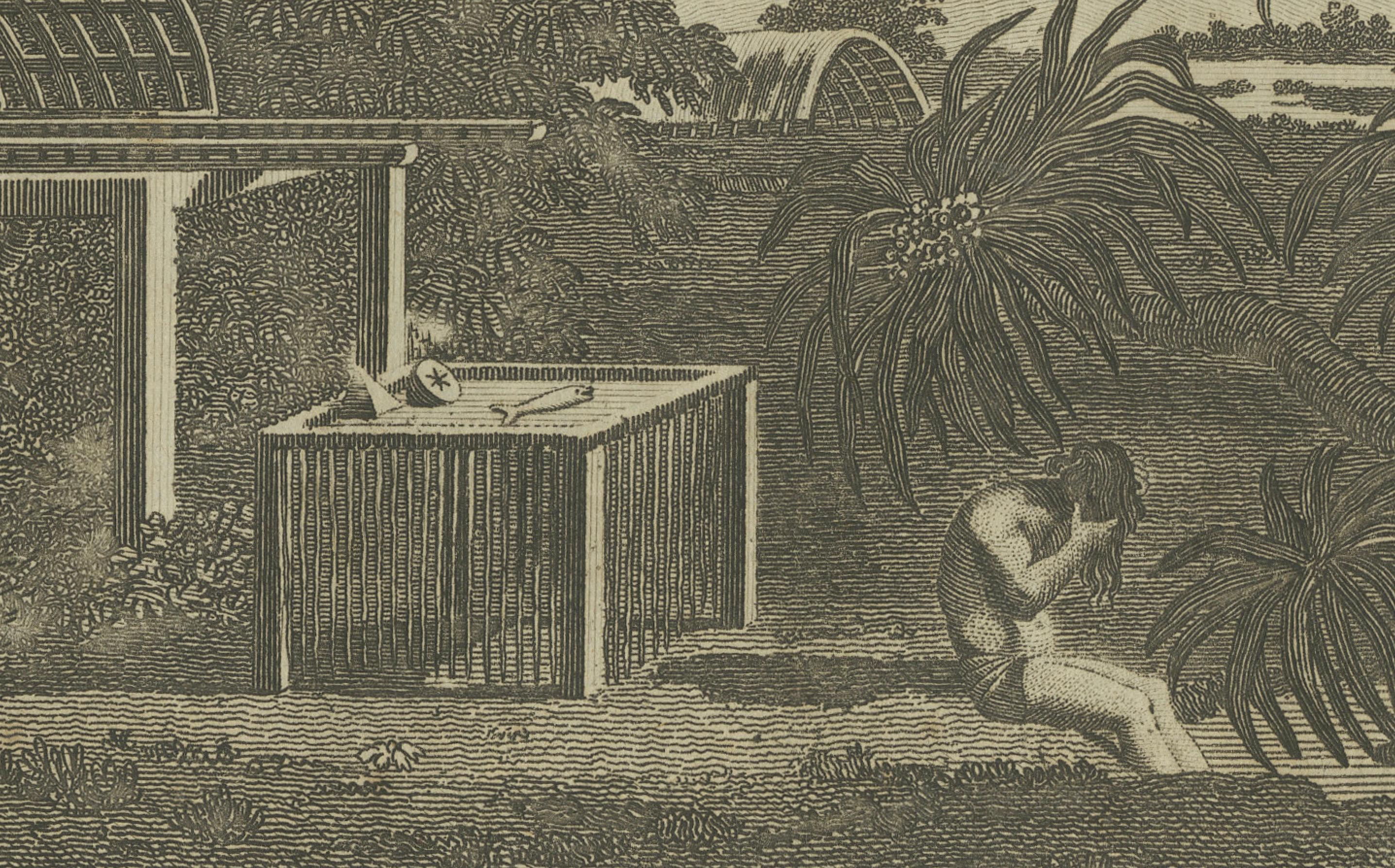
This engraving, drawn from the 1784-86 publication "A New, Authentic, and Complete Account of Voyages Round the World" by Captain James Cook and George William Anderson, presents a scene from the island of Huahine in the Society Islands, visited during Cook’s voyages. The image highlights the Ewharrano Eatua, described as a "House of God," alongside a small altar with offerings. The scene offers a glimpse into Polynesian religious architecture and landscape, framed by tropical vegetation including the **Owharra** tree, which is used to thatch the houses.
Context: The print originates from the comprehensive account of Captain Cook’s voyages, published by George William Anderson between 1784 and 1786. This publication was meant to offer a full historical account of Cook's explorations, providing European readers with descriptions and illustrations of the places and peoples encountered. The voyages of Captain Cook were significant in expanding European knowledge of the Pacific, and these engravings contributed to shaping the public’s perception of these distant cultures.
Significance: This engraving, like others in Anderson’s work, served to inform and entertain readers about the exotic and unfamiliar lands that Cook encountered. The House of God depicted in the image may represent a sacred or ceremonial site for the islanders, and its inclusion demonstrates the European interest in understanding the spiritual practices of Indigenous peoples, although often through a European lens.
Interesting Aspects: - The setting in Huahine emphasizes the lush tropical environment, with carefully drawn details of the local flora, particularly the Owharra tree. - The architectural representation of the Ewharrano Eatua demonstrates the European attempt to document Polynesian structures, though interpretations of their purpose or construction were often filtered through a lack of deeper cultural understanding. - The engraving was included in a work that not only documented voyages but also served as a tool of imperial expansion, reflecting the broader aims of European exploration during the period.
This scene is a visual documentation of the cross-cultural encounters that were a hallmark of Cook’s Pacific explorations and offers insight into how European publications represented Indigenous practices to a European audience during the 18th century.