About this sheet
Original Antique Print of Roman Chariot Racing and Circus Maximus by Bertuch, c. 1800
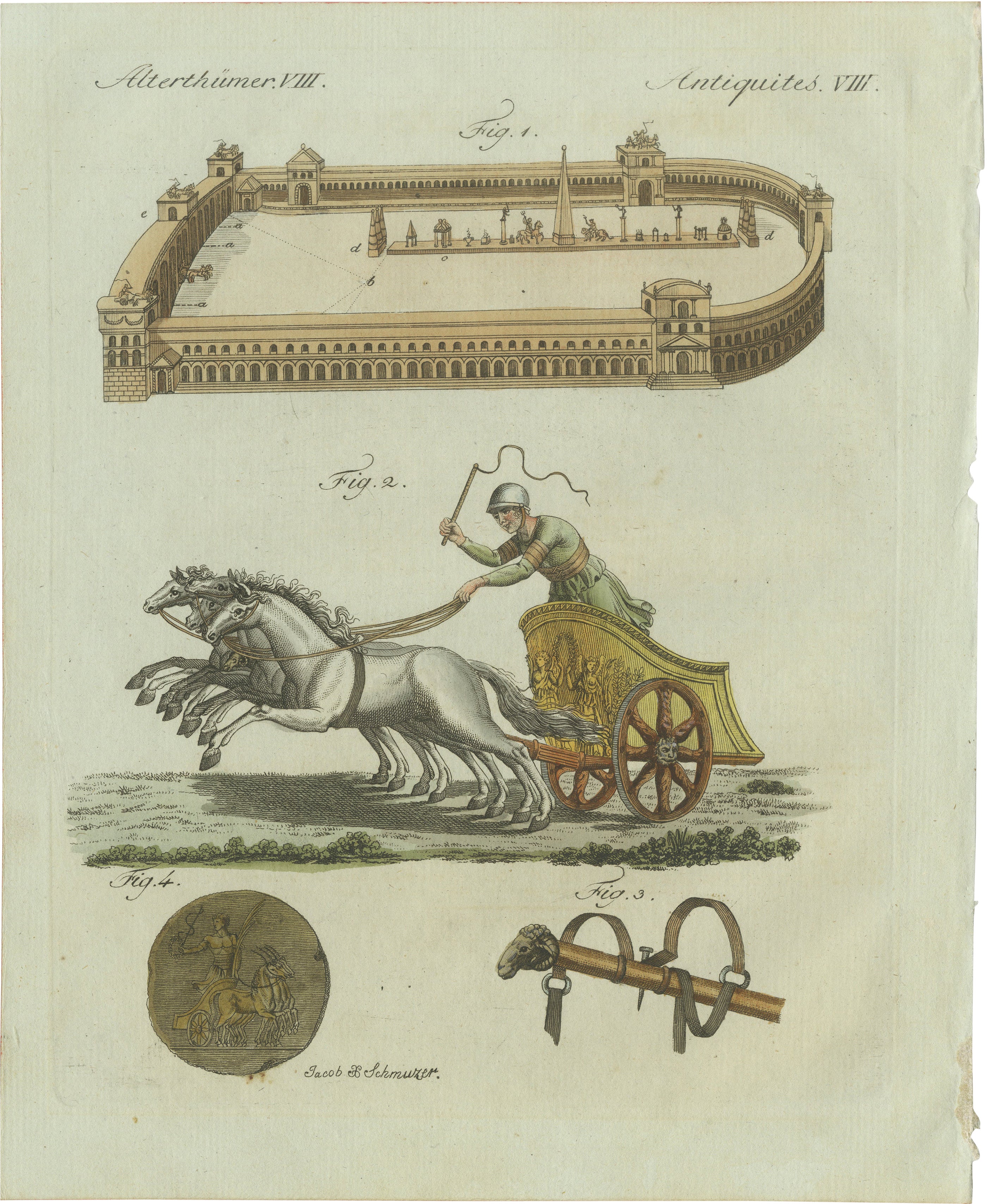
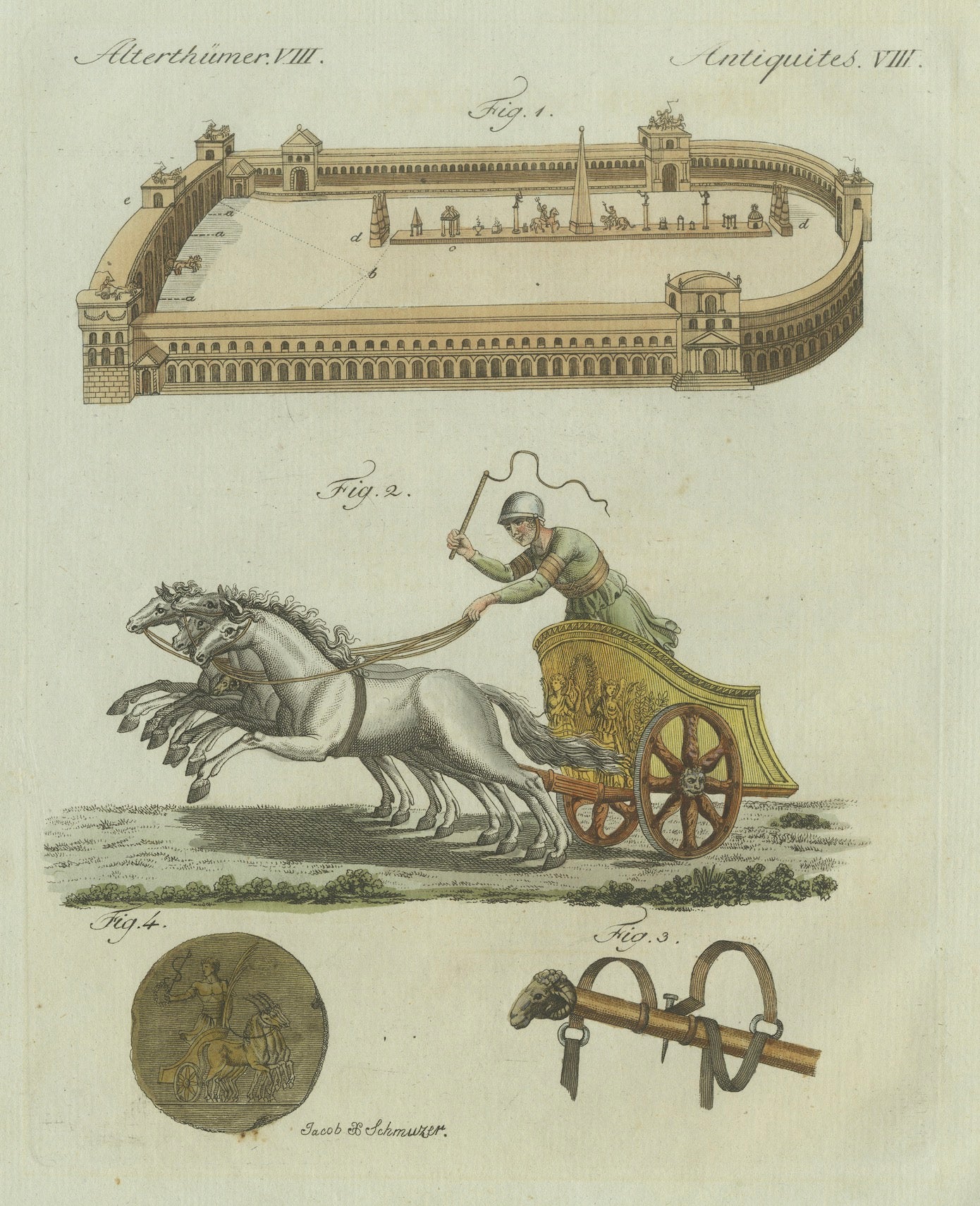
Original antique hand-colored copper engraving illustrating ancient Roman chariot racing and the Circus Maximus, published in Friedrich Justin Bertuch’s celebrated “Bilderbuch für Kinder” around 1800.
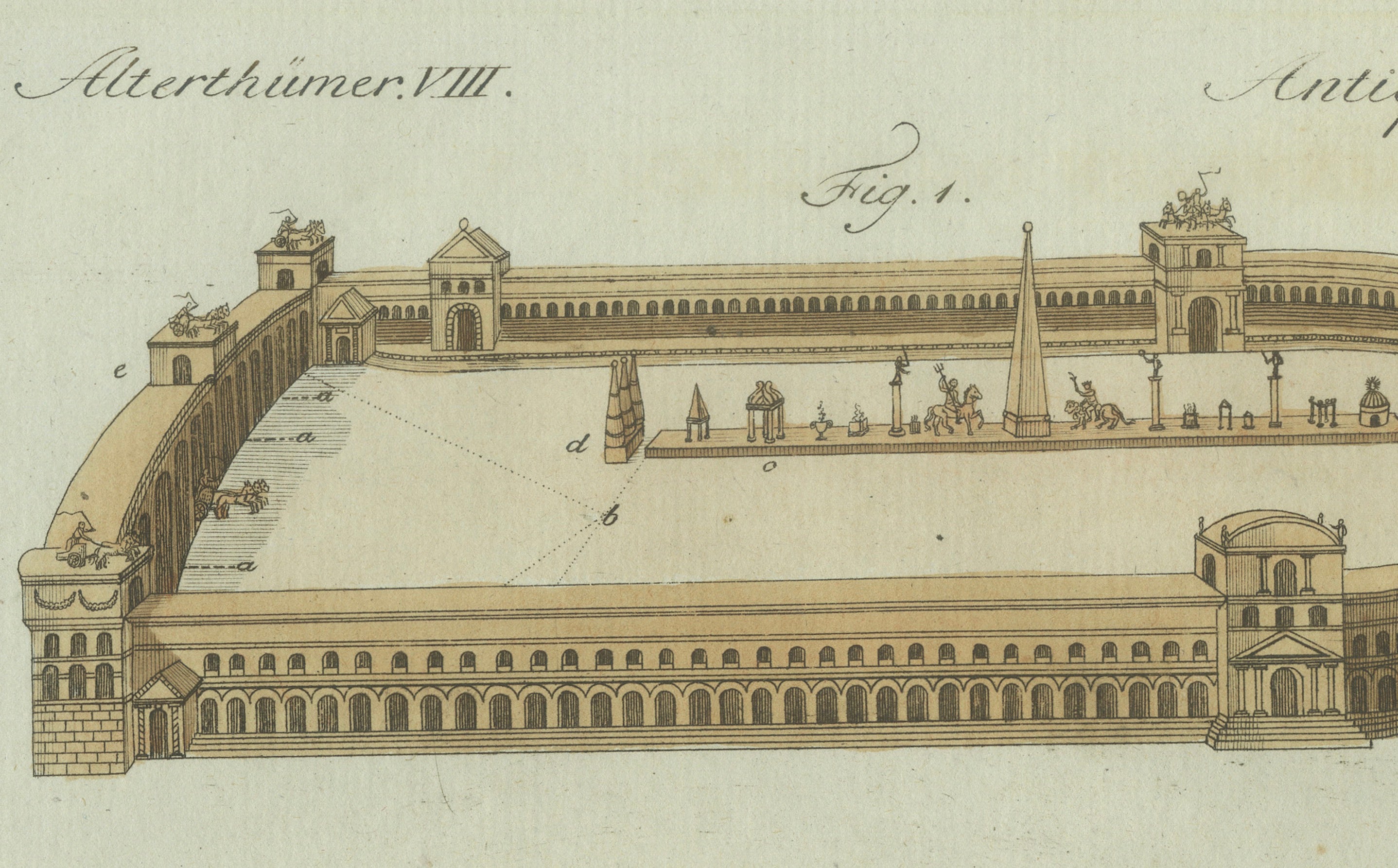
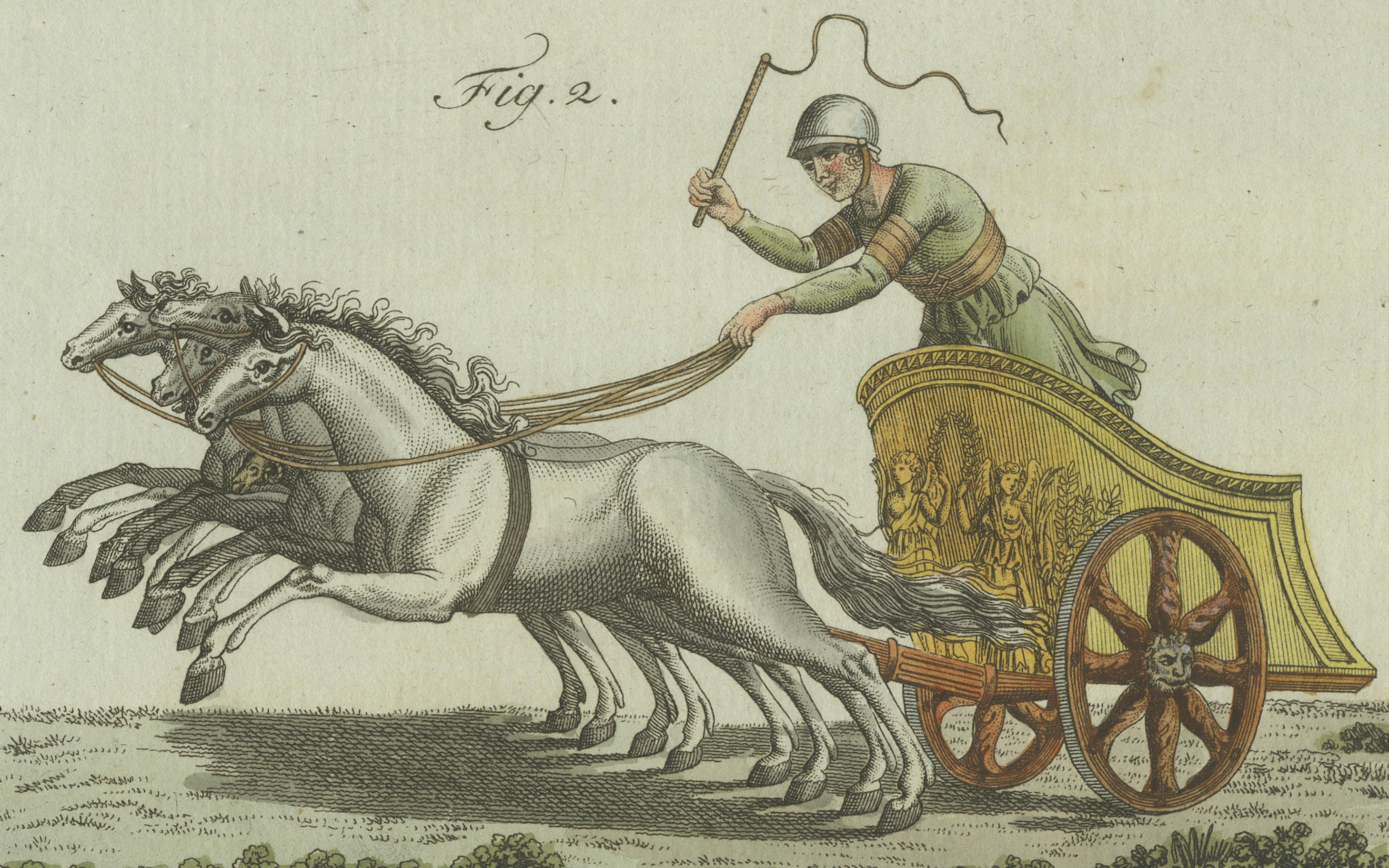
The plate is titled “Alterthümer VIII / Antiquités VIII” and contains four illustrations relating to Roman chariot racing and the famous circus games of antiquity.
Fig. 1 presents a reconstruction of the Circus Maximus in Rome, the enormous ancient arena used for chariot races and other public spectacles. The elongated track is shown surrounded by tiers of seating, monumental entrances and the central barrier or spina, decorated with an obelisk, statues and other monuments.
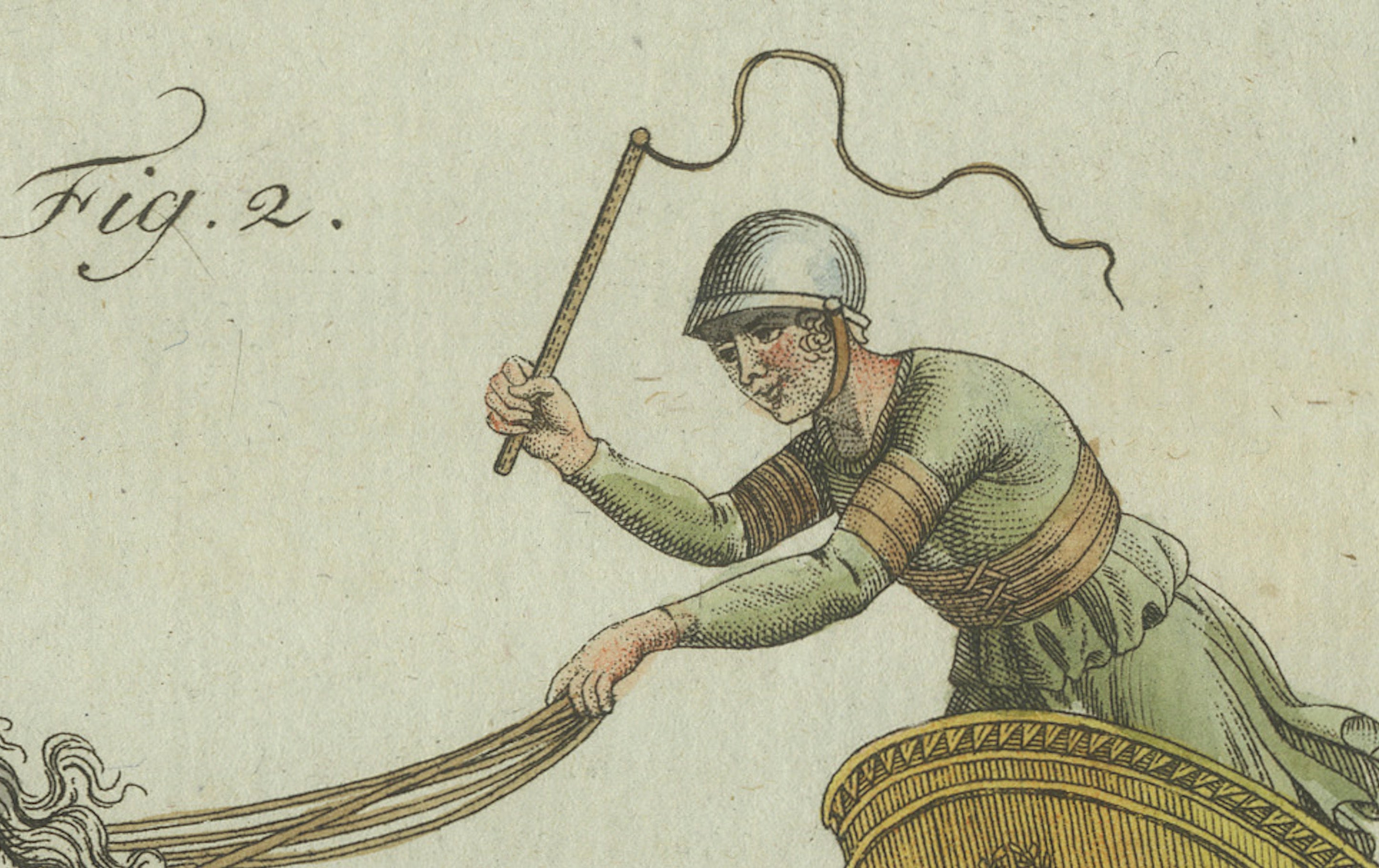
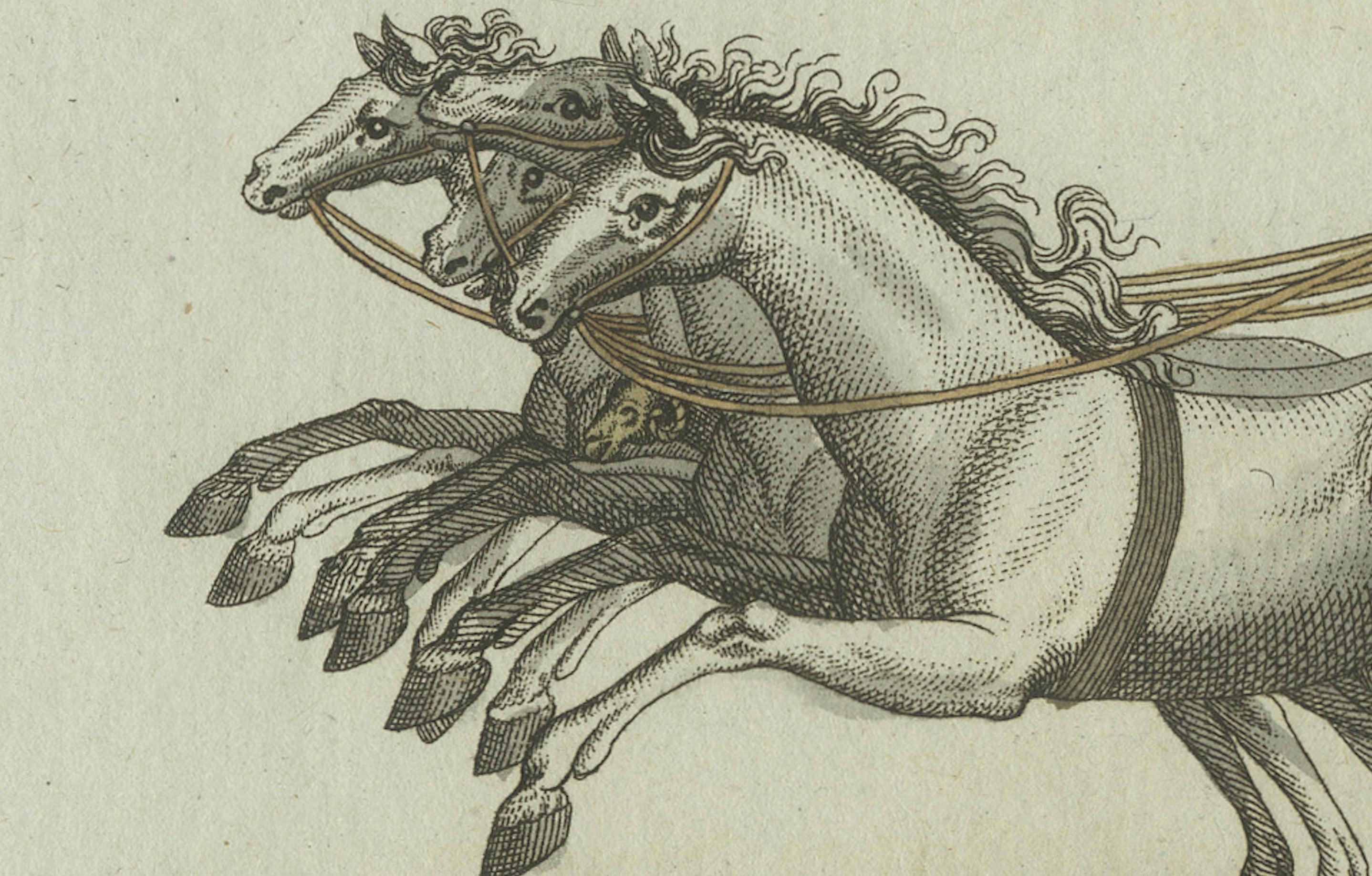
Fig. 2 depicts a dramatic Roman quadriga: a four-horse chariot racing at speed, with the charioteer leaning forward and wielding his whip. The richly ornamented chariot and animated horses make this the visual centerpiece of the plate.
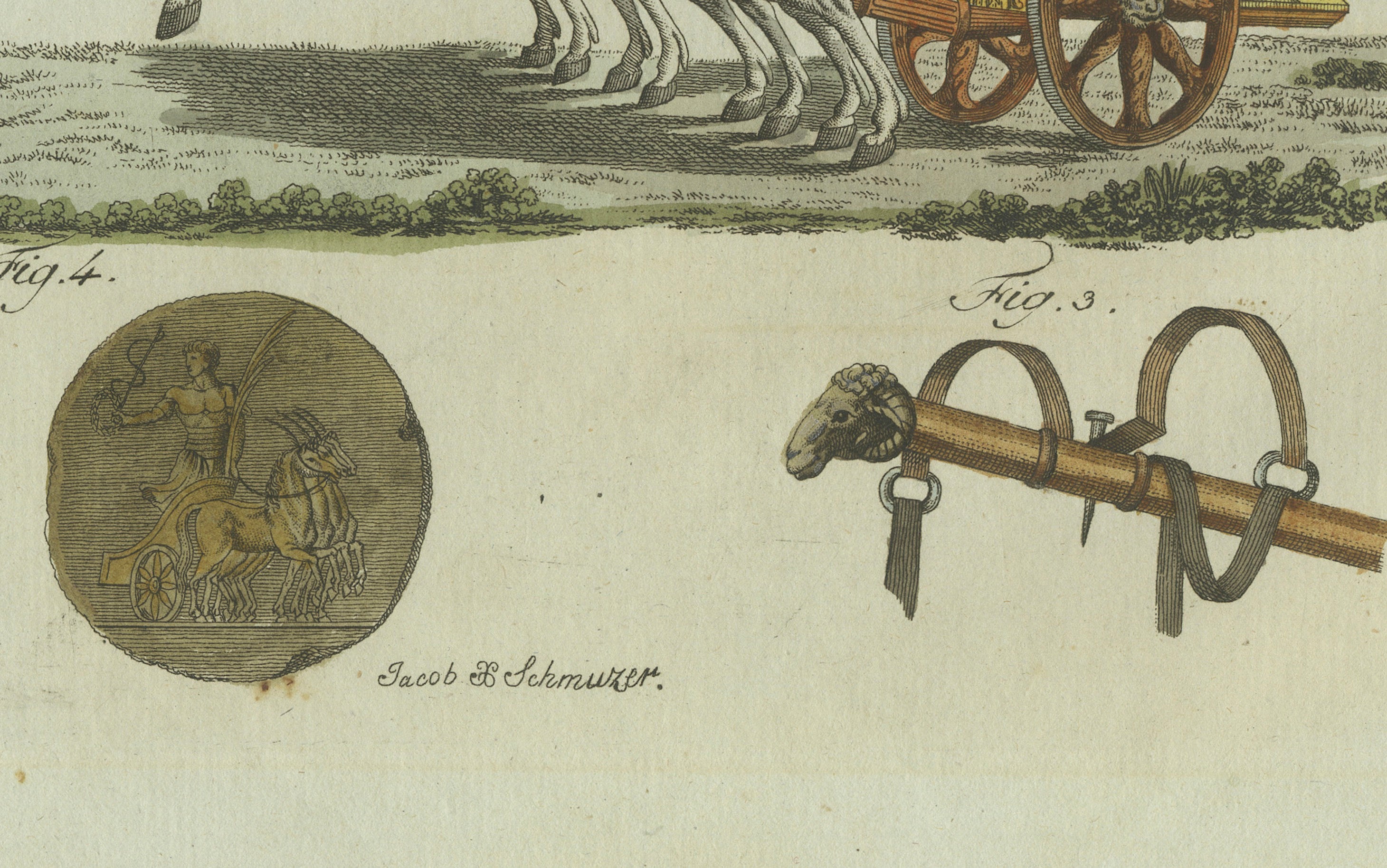
Fig. 3 illustrates details of an ancient horse harness or bridle, while Fig. 4 reproduces an ancient representation of a chariot and driver.
The engraving is delicately enhanced with original hand coloring in restrained shades of green, ochre, red and brown and bears the engraved signature “Jacob H. Schmuzer” beneath Fig. 4.
Friedrich Justin Bertuch (1747–1822) was a German publisher, writer and patron of the arts. His monumental “Bilderbuch für Kinder” (Picture Book for Children) was one of the great illustrated educational encyclopedias of the late 18th and early 19th centuries. Published in Weimar from 1790 onward, the work contained hundreds of engraved and hand-colored plates covering natural history, geography, science, technology, mythology, ancient history and costumes.
An attractive early 19th-century representation of ancient Rome, particularly appealing to collectors of classical antiquity, equestrian subjects and Grand Tour imagery.
Creator:
Friedrich Justin Bertuch (1747–1822)
Engraver:
Jacob H. Schmuzer
Source:
Bilderbuch für Kinder
Plate:
Alterthümer VIII / Antiquités VIII
Place of Publication:
Weimar, Germany
Date of Manufacture:
Circa 1800
Period:
Early 19th Century
Style:
Neoclassical – In the Period of
Medium:
Original hand-colored copper engraving on paper
Condition:
Good. Wear consistent with age and use. Light age-related toning and scattered minor spotting. Some wear and irregularity along the right sheet edge and minor marginal imperfections. Original hand coloring remains attractive. Please refer to the photographs for further details of condition.
Please note:
This is an original antique print from circa 1800, not a modern reproduction. The print is sold unframed. Framed images or interior views, if shown, are for presentation and inspiration only.
Keywords:
Roman chariot print, chariot racing, Circus Maximus, ancient Rome print, Roman quadriga, four horse chariot, Roman horses, Roman antiquities, classical antiquity, Grand Tour print, equestrian engraving, Bertuch print, Friedrich Justin Bertuch, Jacob Schmuzer, hand colored engraving, Neoclassical print, antique Roman print